Kits
Arrange a main product and supporting components in an intentional removal sequence.

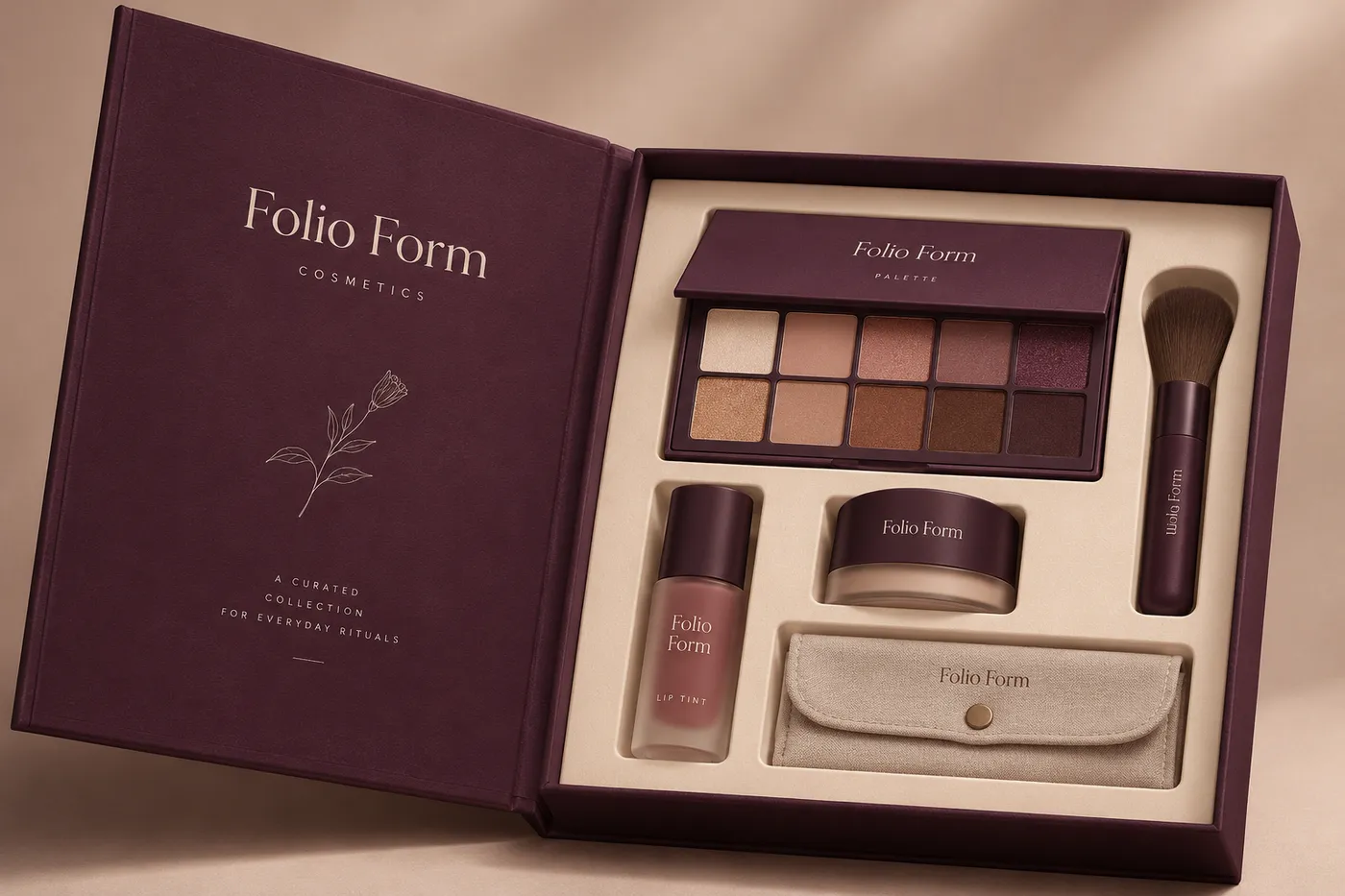
Open aubergine book-style rigid box with a palette and accessories arranged in fitted cavities.
Rigid Boxes
Create a hinged presentation box around the product, insert layout, opening sequence, and closure, with a confirmed low minimum order from Easybox Packaging.
Last updated
Working quote
Product brief
A low-MOQ route to a book-style presentation box
Custom book-style rigid boxes give a product a hinged, cover-led reveal while keeping the pack’s geometry stable in use. The confirmed minimum order is 50 units (boxes), making the format accessible for a focused launch, limited edition, sampling program, or a smaller branded run. Starting with 50 units (boxes) also gives a team room to specify the opening experience around the actual packed contents instead of adapting artwork to a generic stock format.
The useful starting point is the product itself: its finished length, width, height, weight, and the way it should be removed. Those inputs determine the internal fit, the position of any cavities, and how much clearance the cover needs as it opens. Easybox Packaging can use that brief to shape a custom presentation book box without assuming that every package contains one product.
Specify the spine before styling the cover
The spine is a working part of this structure. Its crease pattern needs to let the hinged cover travel through the intended opening arc without forcing the wrapped surface or making the lid feel loose. The right relationship depends on the finished box dimensions, the cover construction, the wrap, and how the box will be handled. For that reason, the packed product and the desired opening sequence should be reviewed together before artwork is finalized.
Cover wrap durability should also be treated as a specification question, not a universal promise. Fold areas, printed coverage, surface treatment, repeated handling, storage, and the delivery route can all influence the choice. Category-level directions include Kraft Paperboard, SBS Paperboard, and Corrugated Board, but the suitable construction must be confirmed for this product rather than inferred from the category alone.
Choose a closure that supports the reveal
Magnetic and ribbon closures are relevant options for this format. A magnetic closure can support a contained, cover-led opening, while a ribbon can provide a visible pull or tie detail. The better choice depends on how the customer should open the pack, whether the closure needs to remain discreet, and how the finished box will be handed over, stored, or placed inside an outer shipper. Closure placement should be coordinated with the spine and insert so the elements do not compete during opening.
Build the interior around the assortment
A multi-cavity layout can organize kits, palettes, and editions that contain several components. Each cavity should begin with the component dimensions and removal method rather than an assumed grid. A palette may need clear access around an edge; a kit may need a deliberate sequence; an edition may need distinct positions for the main item and its accessories. The insert layout should be reviewed with product weight, orientation, and presentation order in mind.
This approach also helps avoid an overbuilt interior. If the product count, dimensions, or arrangement may change, identify that early so the cavity plan and printed panels can be developed from the same approved configuration. The goal is a fitted presentation box whose structure, insert, closure, and graphics describe one coherent opening experience.
Plan artwork around moving and folded areas
The cover, spine, and interior panels create different printed surfaces. Important marks should be placed with the spine creases, wrap edges, and closure position in view. Available category directions include Matte Lamination, Gloss Lamination, Spot UV, Foil Stamping, and Embossing/Debossing. These are design routes to discuss, not confirmed specifications for every order. Final selections should follow the approved structure, print coverage, handling expectations, and artwork review.
Order with the packed product defined
To request 50 units (boxes), provide the finished product dimensions, weight, component count, preferred orientation, insert needs, opening style, closure preference, print coverage, and delivery route. Include how the customer should remove each item and whether the presentation box will travel inside an outer shipper. Easybox Packaging can then review the connected decisions—fit, spine movement, cover wrap, closure, cavity layout, and printed surfaces—before the construction is confirmed.
Proof points
The draft separates supplied facts from choices that require a product-specific review.
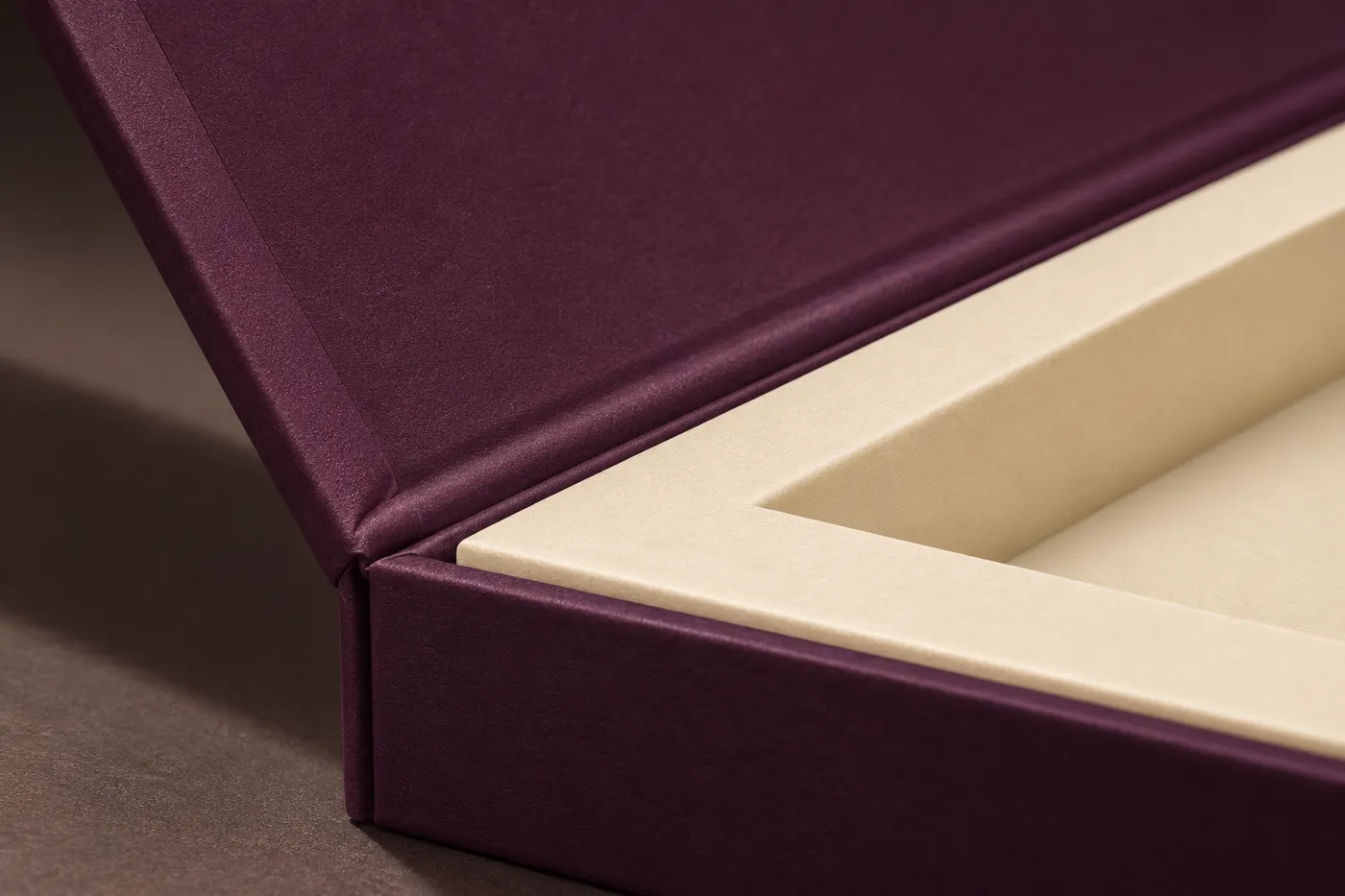
The cover, spine creases, wrap, closure, and insert should be specified together so the opening motion and internal presentation work with the packed product.
Arrange a main product and supporting components in an intentional removal sequence.
Use a fitted cavity plan that provides appropriate access around the packed item.
Coordinate the cover-led reveal, accessories, closure, and printed panels around the approved assortment.
Artwork should account for the spine creases, wrap edges, closure, and the difference between exterior and interior panels. Final options require confirmation against the chosen construction.
A clear product and handling brief keeps structural and graphic choices aligned.
Define the cover motion, product reveal, and removal path before placing key artwork.
Map each product or accessory to its intended position and access point.
Confirm whether the presentation box is handed over, stored, or transported inside an outer shipper.
| Attribute | Book-style rigid box | Drawer rigid box |
|---|---|---|
| Opening motion | A hinged cover opens around a spine crease. | An inner section follows a guided pull-out motion. |
| Primary design decision | Coordinate spine movement, cover wrap, and closure. | Coordinate pull access, sleeve clearance, and product removal. |
| Best brief input | Desired cover-led reveal and interior presentation order. | Desired pull-out sequence and access to the inner tray. |
Ordering starts with the packed product and ends with a reviewed relationship between structure, insert, closure, and artwork.
Provide finished dimensions, weight, component count, orientation, and removal method.
Describe the intended cover motion, presentation order, insert layout, and preferred closure direction.
Supply artwork goals and print coverage with the spine, wrap edges, and closure position in view.
Explain storage and delivery, including whether the box will travel inside an outer shipper.
Need help with structure, materials, or production planning? See how we manufacture custom packaging.
Use physical references to discuss opening motion, wrapped surfaces, closure feel, and print directions, then confirm the final construction against the actual packed product.
Shipping charge: $19.99. Credited toward your first order.
Request a Sample KitFind clear answers about fit, materials, and ordering below.
The confirmed minimum order is 50 boxes of this packaging.
Yes. Magnetic and ribbon closures are relevant options. The suitable direction depends on the desired opening sequence, structure, insert, handling, and delivery route.
A multi-cavity layout can be developed for kits, palettes, and editions. Each cavity should be planned from the component dimensions, orientation, and removal method.
Provide the finished product dimensions, weight, component count, orientation, insert needs, opening style, closure preference, print coverage, and delivery route.
Category directions include Kraft Paperboard, SBS Paperboard, Corrugated Board, Matte Lamination, Gloss Lamination, Spot UV, Foil Stamping, and Embossing/Debossing. The final specification must be confirmed for the product.
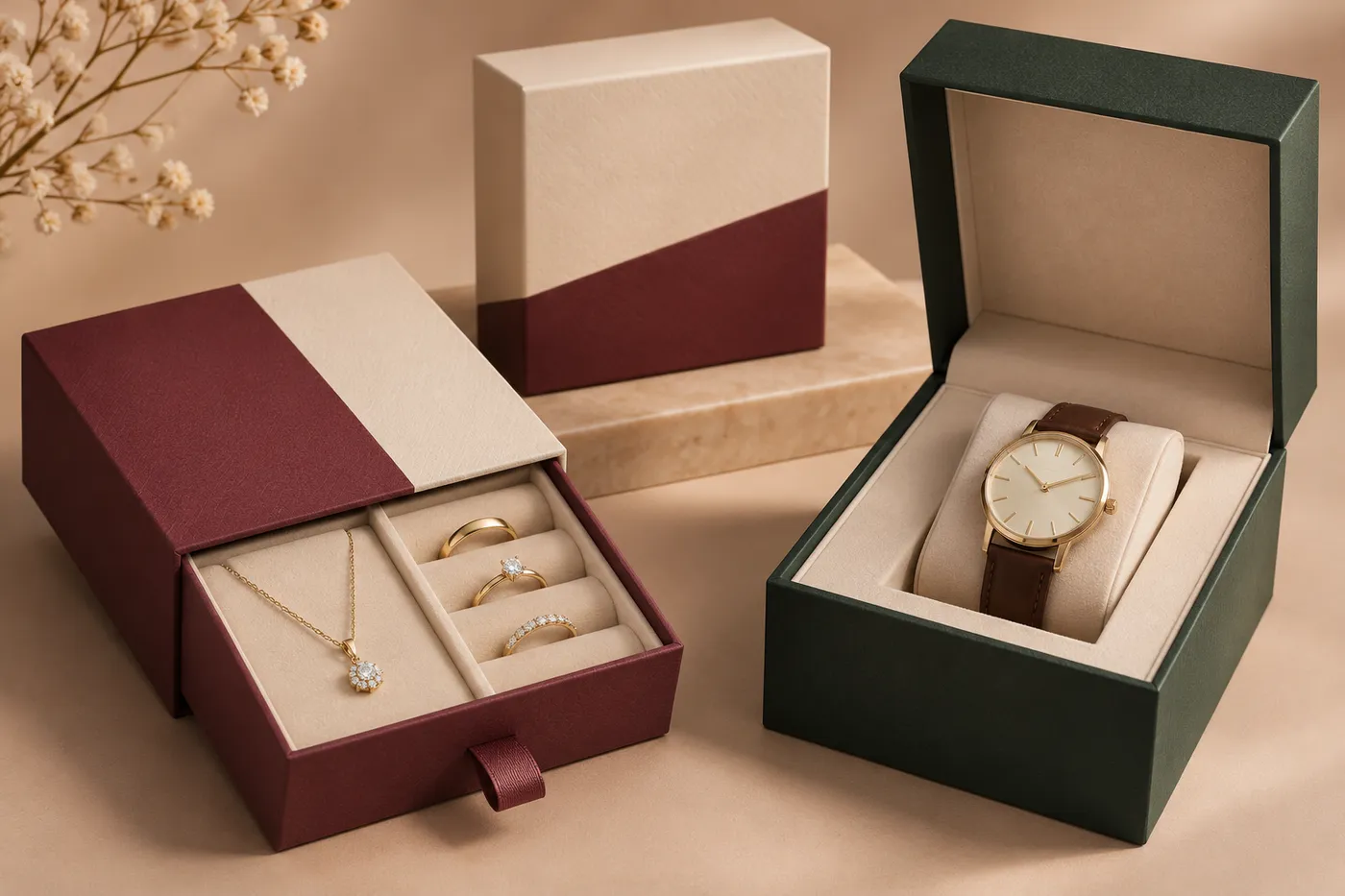
Compare nearby products and request the format that best fits your next run.

Available product
Available product

Available product

Available product
Custom book-style rigid boxes
Share the packed-product details, cavity plan, closure preference, artwork needs, and delivery route for a product-specific review by Easybox Packaging.
Add your product details to see a quote summary.