Botanical supplement retail pack
A folding carton can organize one bottle and its approved label panels for a shelf or ecommerce shipment.

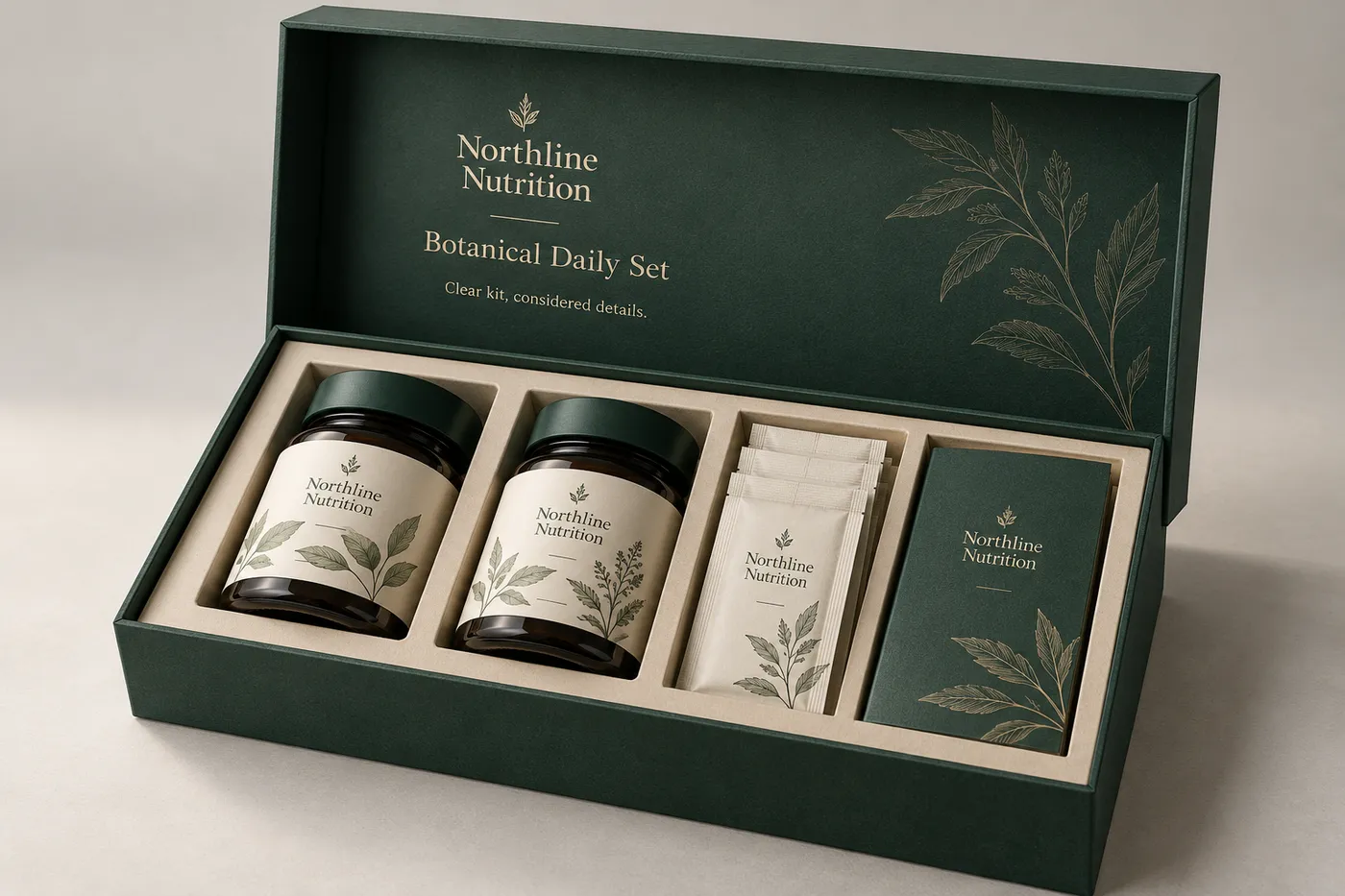
Open forest-green nutraceutical kit with amber jars and a fitted tray.
Pharmaceutical & Healthcare Kits
Custom nutraceutical retail kits coordinate an outer carton or rigid box, insert tray, and printed guides around a vitamin, botanical, functional food, or sports nutrition container. The quote brief keeps the structure, label-panel space, and retail presentation aligned.
Last updated
Product brief
What Is Nutraceutical Packaging?
Nutraceutical packaging is the outer carton, insert, and printed materials used for vitamins, botanical supplements, functional foods, and sports nutrition products. It is designed around the primary container and the required label panels — Supplement Facts or Nutrition Facts, ingredient list, and net quantity — confirmed before the dieline is drawn.
What Is a Custom Nutraceutical Retail Kit?
A custom nutraceutical retail kit coordinates the outer carton or rigid box, an inner insert tray, and any printed materials — instruction cards or product guides — into one packaging brief. The structure is sized around the primary container, and panel space is confirmed for the applicable regulatory label before production is approved. It is used by nutraceutical brands, contract manufacturers, wellness teams, and retail buyers that need the container and presentation considered together. Easybox Packaging produces the packaging only; formulation, filling, and regulatory sign-off remain with the responsible partner.
Who Uses Nutraceutical Retail Kits?
This format is for teams packaging vitamins, botanical supplements, functional foods, sports nutrition, and other wellness products that already know the primary container or can share a representative sample. A kit can support a retail shelf, ecommerce shipment, subscription presentation, or multi-product set. The brief should identify whether it contains one bottle, several sachets, a pouch, a printed guide, or a combination. That list determines whether a folding carton, fitted insert, sleeve, tray, or rigid compartment structure is useful.
What Label Information Should a Nutraceutical Kit Carry?
The compliance and panel plan should be treated as a structured checklist before the dieline is confirmed:
The regulatory team remains responsible for approving the copy. Easybox Packaging can coordinate the available printed surfaces and insert relationship, but a packaging quote is not a regulatory determination. If the product is sensitive to moisture, the brief should also state whether an inner pouch, liner, or other barrier is being handled by the filling partner.
Which Nutraceutical Kit Structure Fits the Brief?
The table compares the common kit directions at the first briefing stage. The frequent mistake is choosing a structure from the product name alone; the actual container, panel copy, insert, quantity, and channel should set the direction.
| Format | Best for | Label panel flexibility | MOQ direction | Channel |
| --- | --- | --- | --- | --- |
| Folding carton + insert | One bottle, pouch, or sachet with a simple guide | Broad printed faces; confirm panel allocation before dieline | Starts at the standard 50-unit path | Retail shelf or ecommerce |
| Rigid box + tray | Premium retail, gifting, or a coordinated daily set | Large lid and base faces with tray-dependent copy areas | Starts at the standard 50-unit path | Retail, subscription, or gifting |
| Two-piece rigid with compartments | Multiple products such as morning/evening sets | Several faces plus compartment cards; copy density needs review | Starts at the standard 50-unit path | Wellness retail or direct shipment |
A sleeve plus tray can also be considered when the buyer wants the insert and a printed guide visible together. The selected structure is confirmed against the packed product, orientation, clearance, and opening route rather than an assumed standard size.
What Goes Into the Production Brief?
Send the primary container dimensions, packed weight, full kit contents, orientation, panel copy, artwork status, preferred material, desired structure, quantity, and destination. State whether the kit needs an instruction card, product guide, certificate-of-analysis cover, divider, window, seal, or blank lot and expiry area. For a bottle, include its cap profile and label overlap; for pouches and sachets, include the sealed footprint and any header or tear feature that remains inside the carton. These details give the structure review a usable starting point.
Orders start from 50 units on the standard fulfillment path. Production is from 7 business days after digital proof approval, subject to the quoted structure, quantity, artwork, and finish. Pricing remains quote-only because the final size, material, insert, print coverage, and quantity define the specification. A sample kit can be requested when comparing a carton, tray, and rigid presentation; the sample program has a $19.99 shipping charge credited toward the first order.
How to Brief a Nutraceutical Packaging Manufacturer
Review the Proof Before Production
The proof should show the assembled outer box, primary container, insert relationship, printed panel allocation, opening direction, and any requested window or seal. Check that the applicable Facts panel and supplied copy are on the intended faces, that the container is held without an assumed clearance, and that the fictional mockup is replaced with approved artwork. If the container, quantity, or label copy changes, request a revised structure review instead of assuming the first dieline still applies.
The result is a nutraceutical packaging brief that connects the container, tray, printed materials, and customer route. It gives the packaging team enough information to quote a folding carton, rigid box, sleeve, or compartmented kit while keeping product formulation, filling, and regulatory approval with the responsible partner.
Proof points
The proof connects the actual container to the box, tray, panel allocation, and opening route so the buyer can review the whole kit before production.
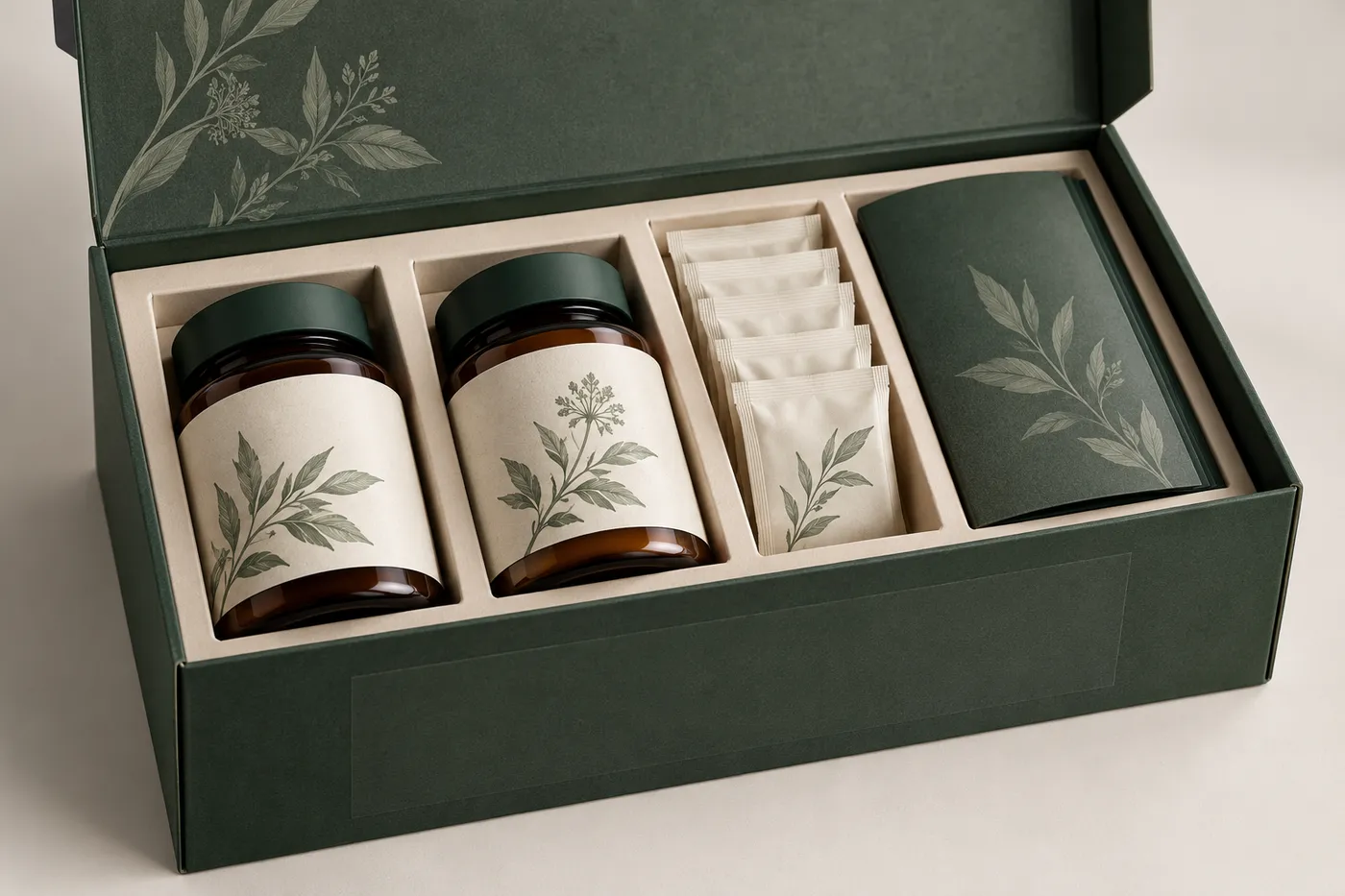
The kit starts with the filled bottle, pouch, sachets, or other primary container and adds the outer structure, tray, and printed materials around it. Share the packed arrangement and panel copy before the dieline and artwork are treated as final.
A folding carton can organize one bottle and its approved label panels for a shelf or ecommerce shipment.
A carton or sleeve with a tray can keep pouches or sachets in a defined order and leave space for a guide.
A rigid lid-and-base box can hold a container, sachets, and a printed routine card in compartments.
A coordinated kit can present several products and instructions when the buyer supplies the actual contents and copy.
Use the available carton or rigid-box surfaces for clear brand information and the supplied label copy. Finishes should be selected after panel size, copy density, and proof readability are reviewed.
A focused brief lets the structure review connect the primary container, applicable label panel, insert, presentation route, and production quantity.
List every bottle, pouch, sachet, guide, scoop, liner, or other component and share packed dimensions and orientation.
Provide the current Facts panel, ingredient list, net quantity, address, disclaimer, warnings, and any blank lot or expiry areas.
State whether the kit is for retail, subscription, ecommerce, gifting, or another defined customer handoff.
A clear sequence keeps the container, label panel, insert, artwork, and quantity aligned before production is approved.
Share filled-container dimensions, weight, components, orientation, photos or sketches, and destination.
Provide the applicable Facts panel, ingredients, net quantity, disclaimer, address, warnings, and variable-field copy.
Note the folding carton, rigid box, sleeve, or compartment direction along with insert, window, seal, and finish preferences.
Check fit, panel readability, opening sequence, artwork version, and quote details before approving production.
Need help with structure, materials, or production planning? See how we manufacture custom packaging.
A sample kit can help compare the surface, tray relationship, and opening route before the product-specific proof. Shipping is $19.99 and is credited toward the first order.
Shipping charge: $19.99. Credited toward your first order.
Request a Sample KitFind clear answers about fit, materials, and ordering below.
The packaging structure is usually similar, but the applicable regulatory panel and claim language can differ. A supplement may use Supplement Facts while a functional food may use Nutrition Facts. Confirm the category and approved copy with your regulatory team before the dieline is drawn.
Yes. Printed inserts, instruction cards, and product guides can be included in the kit brief. Share the insert dimensions, page count, paper direction, and copy requirements so the tray, folding carton, or rigid box can be quoted as one coordinated presentation.
Yes. A window can be worked into the outer carton where it does not interfere with required label panels or the structural strength of the box. Share the primary-container dimensions and approved panel layout so the window location can be reviewed before the dieline is confirmed.
The standard fulfillment path starts at 50 units. Share the full kit contents, packed dimensions, applicable panel copy, artwork status, and preferred structure so the quote review can account for the complete nutraceutical packaging specification.
Compare nearby products and request the format that best fits your next run.
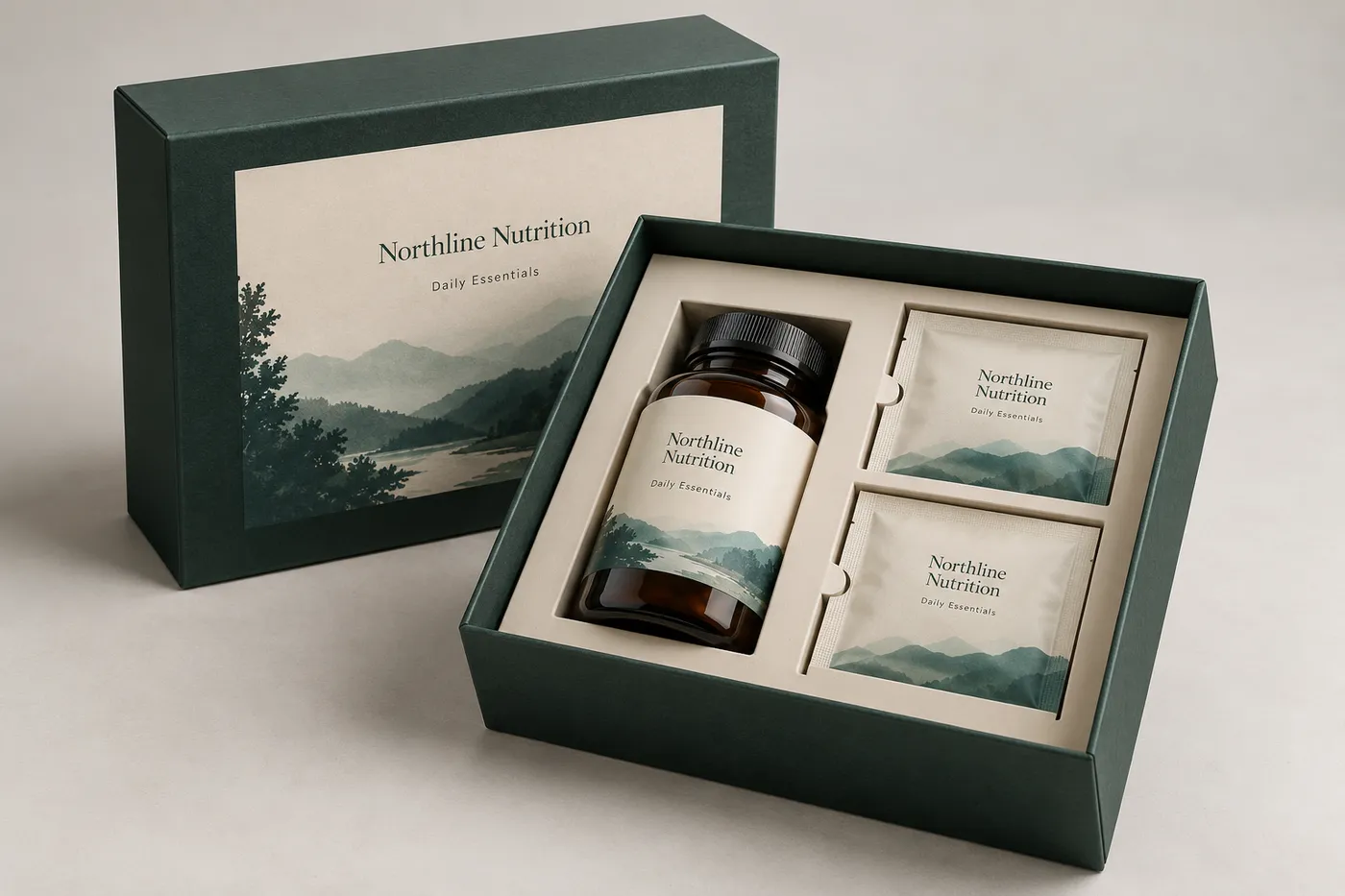
Available product
Ready to scope the kit?
Tell us what sits inside, which Facts panel applies, what printed materials are needed, and how the customer should open the kit. Easybox Packaging can then review the outer structure, tray, print surfaces, and proof around the actual product.
Add your product details to see a quote summary.