Vitamin bottle retail pack
A folding carton can organize one bottle and its required label panels for a shelf or ecommerce shipment.
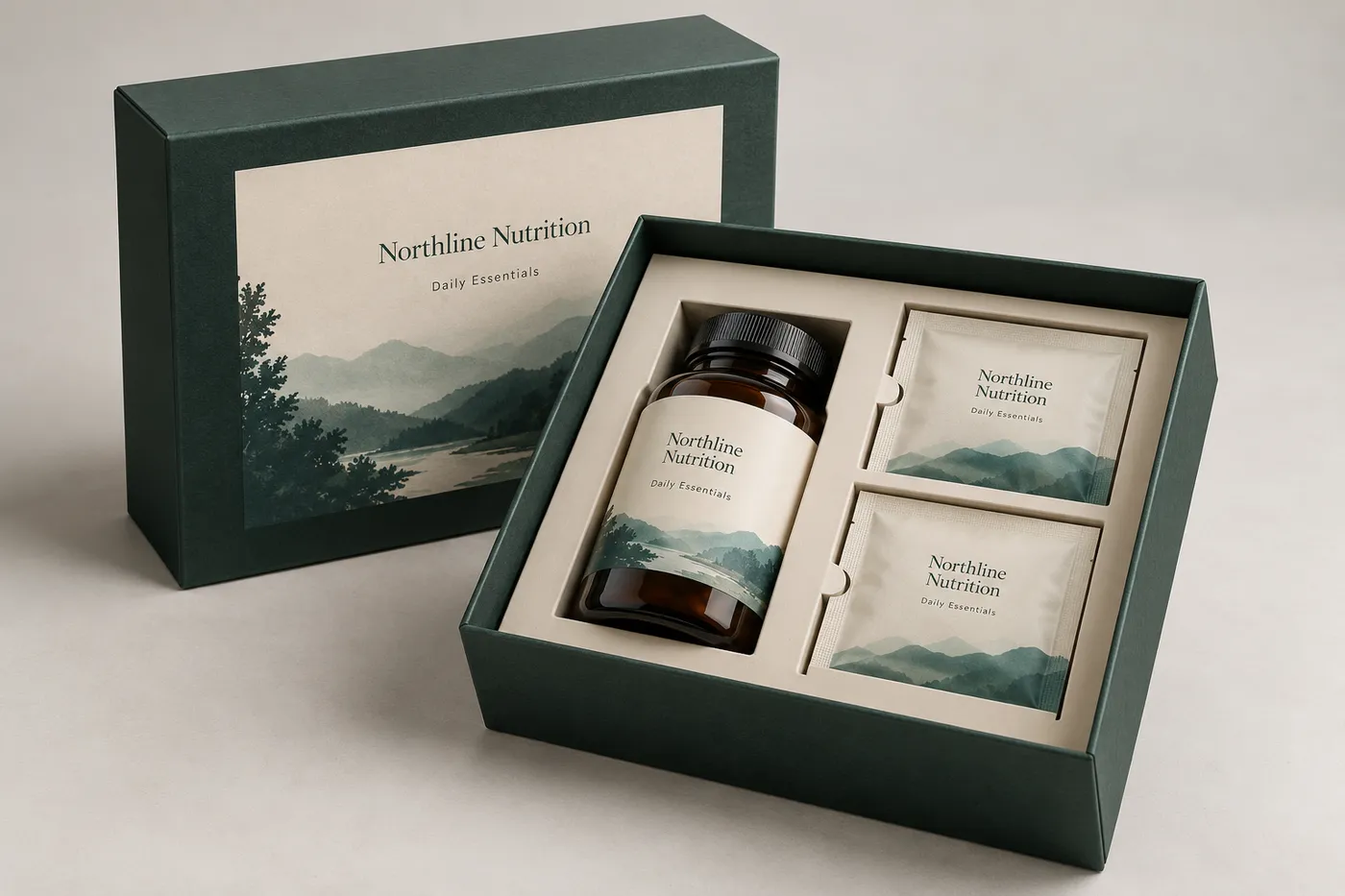
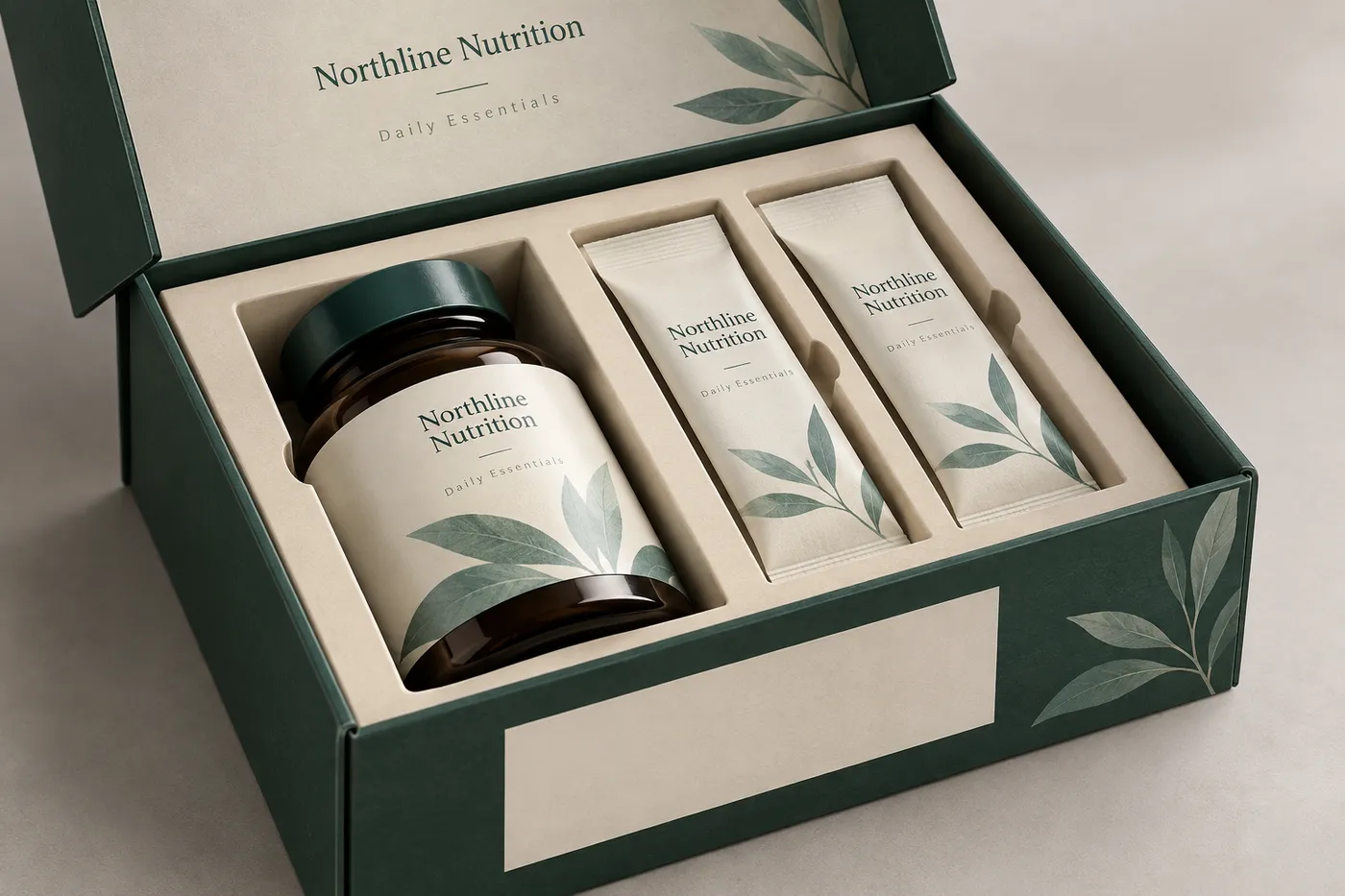
Open forest-green supplement box kit with an amber bottle, two sachets, and a fitted paperboard insert.
Pharmaceutical & Healthcare Kits
Custom supplement box kits coordinate an outer folding carton or rigid box, an insert or tray, and the label panels needed around a bottle, pouch, or sachet. The format is for vitamin, mineral, and wellness brands preparing a quote-based packaging brief.
Last updated
Working quote
Product brief
Supplement products typically need a folding carton or rigid box sized around the primary container, bottle, pouch, or sachet, with panel space confirmed for the Supplement Facts label, ingredient list, net quantity statement, and manufacturer address. Child-resistant closures are required for some product types under the PPPA.
A custom supplement box kit is a packaging set that coordinates the outer carton or rigid box, an inner insert or tray, and the printed panels required for FDA supplement labelling. The kit is sized around the primary container and reviewed for label space compliance before the dieline is confirmed. It is used by supplement brands, contract manufacturers, and wellness teams that need the box structure and printed information considered together. Easy Box Packaging produces the packaging only; formulation, filling, and regulatory approval remain with the buyer and its qualified partners.
This format is for vitamin, mineral, botanical, gummy, powder, sachet, and wellness-product teams that already know the primary container or can share a representative sample. It can support a retail shelf, subscription shipment, ecommerce unboxing, or a small multi-component set. The kit brief should state whether the pack contains one bottle, several sachets, a pouch, an insert card, or a combination. That list determines whether a simple carton, fitted insert, tray, or rigid base-and-lid structure is appropriate.
Begin with the filled container as it will be packed, not an empty bottle specification. Share the packed length, width, height, cap or closure profile, label overlap, weight, and orientation. For pouches or sachets, include the sealed footprint and any tear notch or header that remains inside the box. For gummies or powders, note whether a liner, scoop, or desiccant needs a defined location. These details allow the usable cavity and insert clearance to be reviewed before the artwork is placed.
A folding carton can use a tuck-end or auto-bottom construction when the kit needs a familiar retail format. A rigid lid and base can suit a gift-ready or subscription presentation where the opening sequence matters. A sleeve with tray can organize a bottle and printed card without enclosing every face, while a window carton can show sachets or strips when the visible product is part of the brief. None of these choices replaces a label review; the structure and panel plan are confirmed together.
The Supplement Facts panel, ingredient list, net quantity statement, manufacturer name and address, and applicable warnings need deliberate space on the printed surfaces. Send the current copy before the dieline is drawn so the panel can be placed without assuming that a short label will fit on every format. A regulatory team should confirm which statements apply to the finished product and whether a child-resistant closure is required for the product type. Easy Box Packaging can reserve panel areas and coordinate the box surfaces, but the buyer remains responsible for approved wording.
If the product is hygroscopic, a moisture-barrier liner or an inner pouch may be part of the specification; the buyer should confirm material suitability with the filling partner. A child-resistant option can be discussed when applicable, but the quote should identify whether the closure is part of the outer packaging, the primary container, or a separate component. Lot, expiry, or variable print areas can also be designated when the packager needs them during fill and finish.
The table below compares the three common structure directions at the briefing stage. The most common mistake is choosing a box from the product name alone; the primary container, panel copy, insert, and route to the customer should set the format.
| Format | Planning focus |
| Folding carton | Efficient retail structure for one bottle, pouch, or sachet with clear printed panels and an optional insert card. |
| Rigid box with tray | More structured presentation for a gift, subscription, or multi-component kit; tray depth follows the actual contents. |
| Sleeve plus tray | Open presentation for ecommerce or clinical channels where the tray and printed card remain visible together. |
Send the product category, primary container dimensions, full kit contents, packed orientation, panel copy, artwork status, desired structure, quantity, and destination. A useful brief says whether the box must hold one bottle, multiple sachets, or a bottle plus guide; whether the customer sees the product on opening; and whether the inner tray is paperboard, a divider, or a fitted card. If you need a window, tear feature, tamper-evident seal, or blank lot and expiry area, list it before proofing.
Orders start from 50 units on the standard fulfillment path. Production is from 7 business days after digital proof approval, subject to the quoted structure, quantity, artwork, and finish. Pricing remains quote-only because the finished size, material, insert, print coverage, and quantity determine the specification. A sample kit can be requested when comparing rigid and folding structures; the sample program carries a $44.99 shipping charge credited toward the first order.
The proof should show the assembled outer box, primary container, insert relationship, readable panel allocation, opening direction, and any requested closure or seal. Check that the Supplement Facts panel and other supplied copy are on the intended faces, that the bottle or pouch is held without an assumed clearance, and that the printed brand mockup is replaced with your approved artwork. If the container, quantity, or label copy changes, request a revised structure review instead of assuming that the first dieline still applies.
Easy Box Packaging manufactures empty printed packaging only. We do not make, fill, sell, or distribute the products packed inside. The brand owner is responsible for product legality, licensing, required label and warning content, and compliance with federal, state, and local rules wherever the product is sold. A digital proof confirms layout and print. It does not confirm regulatory compliance.
This is secondary packaging. It is not a sterile barrier or primary drug packaging. Drug Facts, IFU, UDI, lot, and expiry content must be approved by your regulatory team before the dieline is final.
Proof points
The proof connects the actual container to the box, insert, panel allocation, and opening route so the buyer can review the whole kit before production.
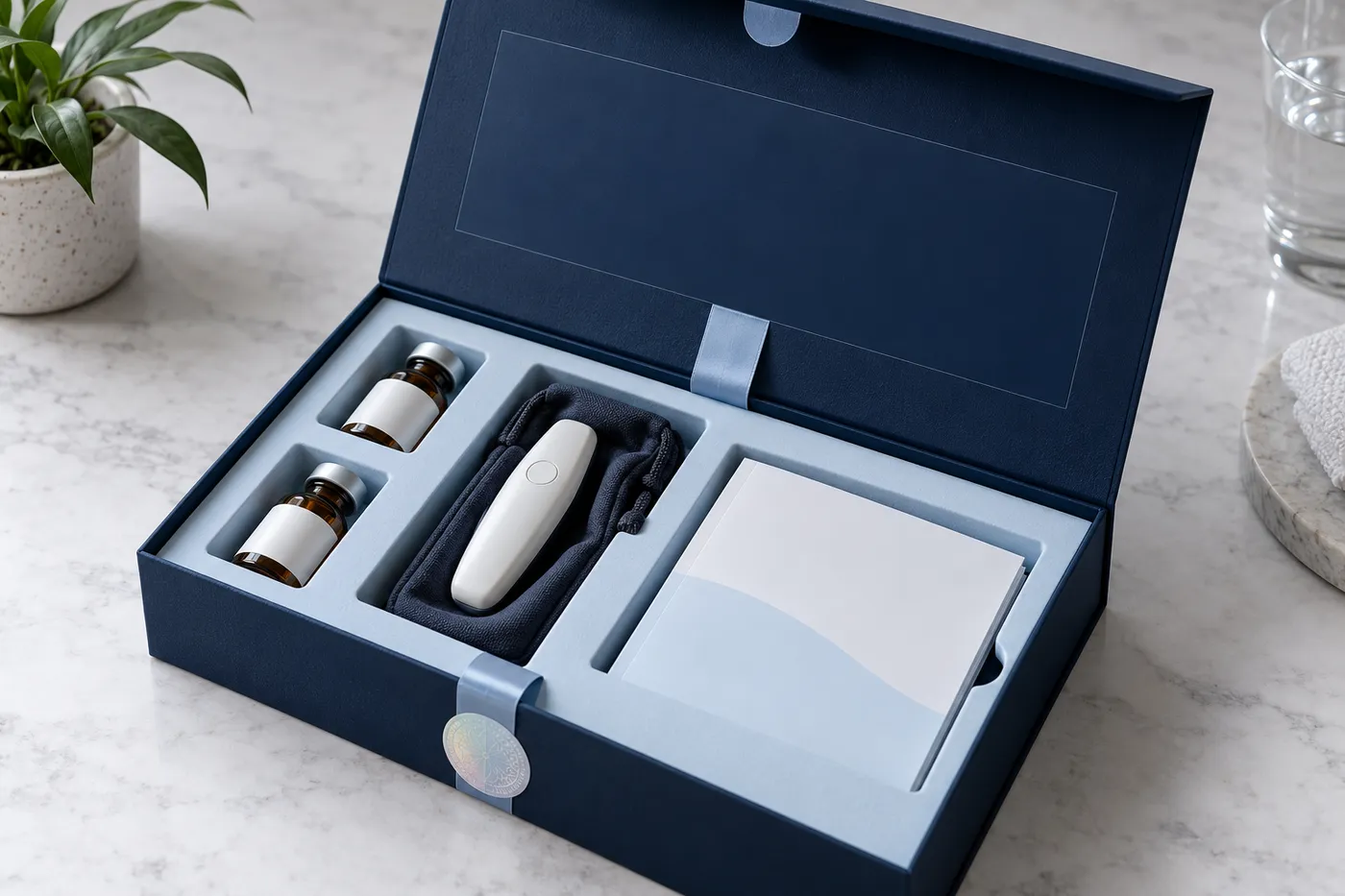
The kit starts with the filled bottle, pouch, or sachet and adds the outer structure, insert, and printed panel plan around it. Share the packed arrangement before the dieline and artwork are treated as final.
A folding carton can organize one bottle and its required label panels for a shelf or ecommerce shipment.
A carton or sleeve with a tray can keep sachets in a defined order and leave space for a product guide.
A rigid lid-and-base box can hold a bottle, sachets, and a printed routine card in compartments.
A structured kit can coordinate the product container and instructions when the briefing team supplies the required copy.
Use the available carton or rigid-box surfaces for clear brand information and the required label copy. Finishes should be selected after panel size, copy density, and proof readability are reviewed.
A focused brief lets the structure review connect the primary container, label copy, insert, presentation route, and production quantity.
List the bottle, pouch, sachets, cards, scoops, liners, or other components and share their packed dimensions and orientation.
Provide the Supplement Facts copy, ingredient list, net quantity, address, warnings, and any blank lot or expiry areas.
State whether the kit is for retail, subscription, ecommerce, clinical supply, gifting, or another defined handoff.
A clear sequence keeps the container, panel copy, insert, artwork, and quantity aligned before production is approved.
Share the filled container dimensions, weight, components, orientation, photos or sketches, and destination.
Provide Supplement Facts, ingredient, net quantity, address, warning, and any variable-field copy for panel planning.
Note the folding carton, rigid box, or sleeve-and-tray direction along with insert, window, seal, and finish preferences.
Check fit, panel readability, opening sequence, artwork version, and the quote details before approving production.
Need help with structure, materials, or production planning? See how we manufacture custom packaging.
A sample kit can help compare the surface, insert relationship, and opening route before the product-specific proof. Shipping is $44.99 and is credited toward the first order.
Shipping charge: $44.99. Credited toward your first order.
Request a Sample KitFind clear answers about fit, materials, and ordering below.
Easy Box Packaging produces the custom packaging only. The supplement formulation and filling are handled by your contract manufacturer separately, while the box, insert, and printed panels are reviewed as a packaging brief.
The box should allow space for the Supplement Facts panel, ingredient list, net quantity of contents, manufacturer name and address, and applicable warnings. Share the approved copy before the dieline is drawn so panel space is reviewed first.
Yes. Rigid lid-and-base kits can be considered for premium, gift, or subscription supplement formats. Share the filled-container dimensions, kit contents, opening route, and insert needs for a structure review before a quote is prepared.
The standard fulfillment path starts at 50 units. Share the container dimensions, kit contents, artwork status, label copy, and requested structure so the quote review can account for the complete specification.
Common uses include vitamin bottle retail pack, sachet or powder set, subscription wellness kit, and clinical or practitioner handoff. The final specification is set by the packed product and how it will be handled.
Production runs from 7 business days after digital proof approval. Complex or high-volume orders can take longer, and the timing is confirmed in your quote.
Yes. Free US shipping is included on the standard fulfillment path. Delivery timing and carrier details are confirmed when your quote is prepared.
The brand owner. Easy Box Packaging supplies empty printed secondary packaging and prints the Drug Facts, IFU, and label content your regulatory team approves. We do not sell the product or review the artwork for legal compliance.
Compare nearby products and request the format that best fits your next run.
Available product
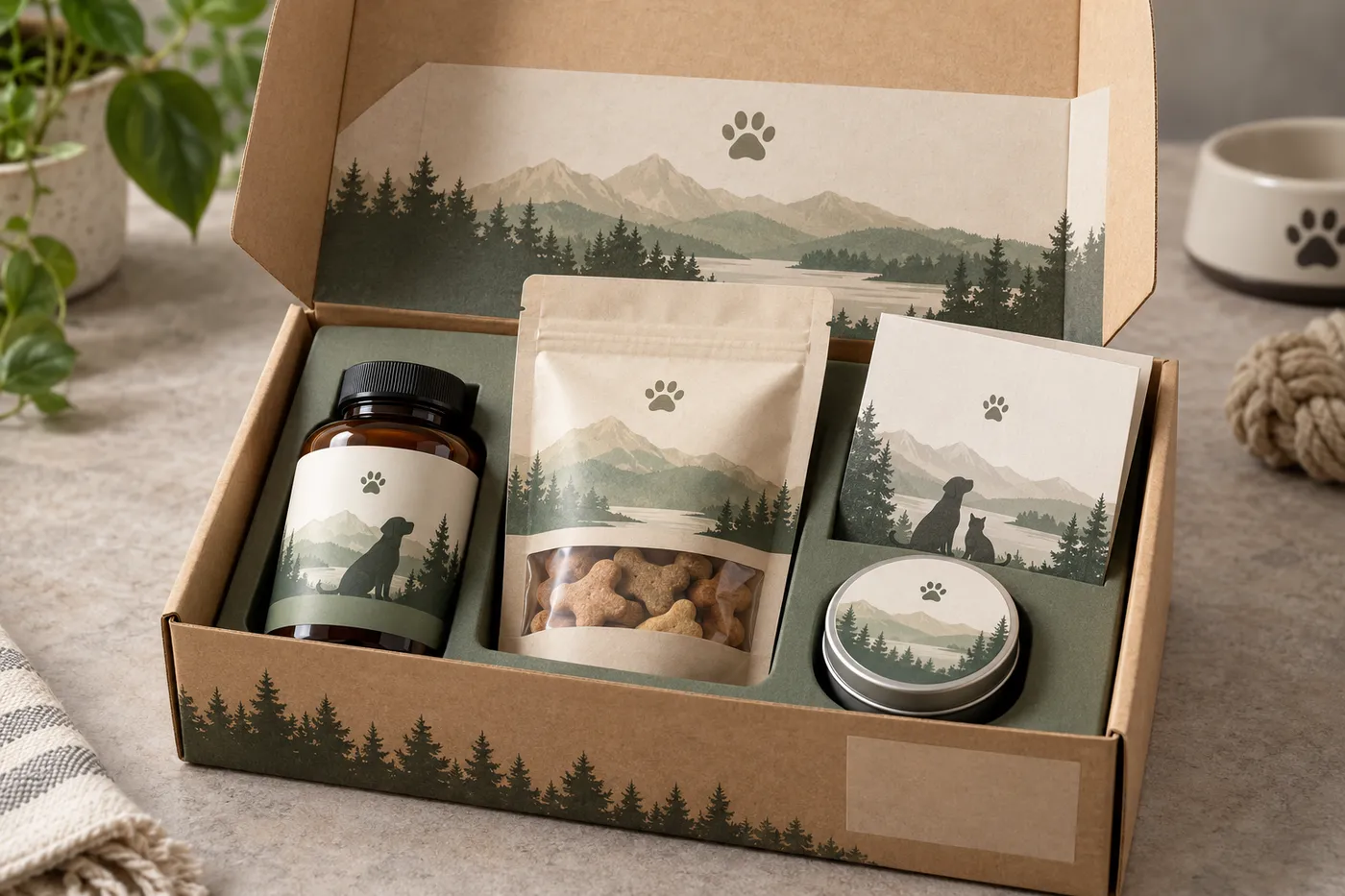
Available product
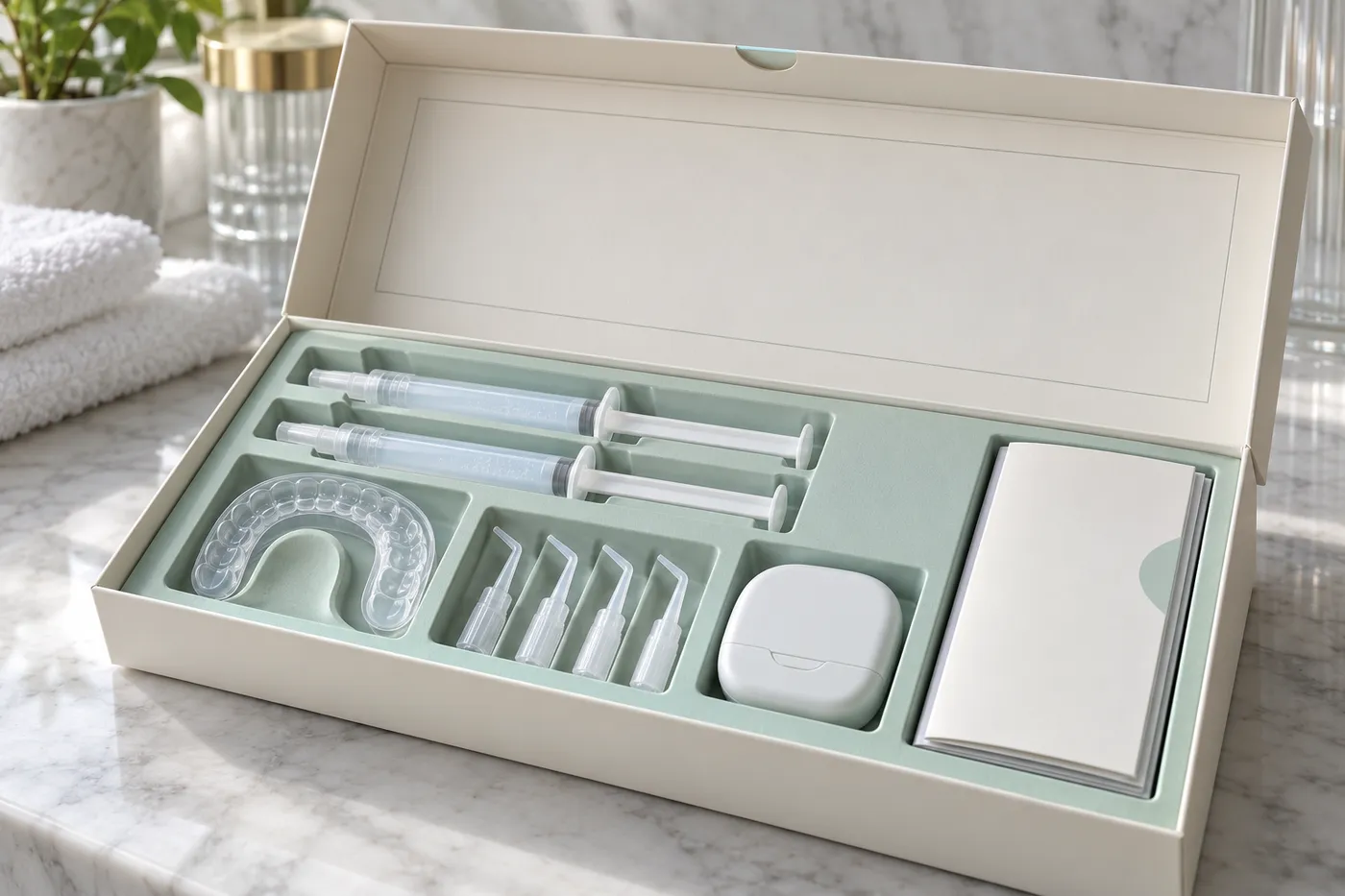
Available product
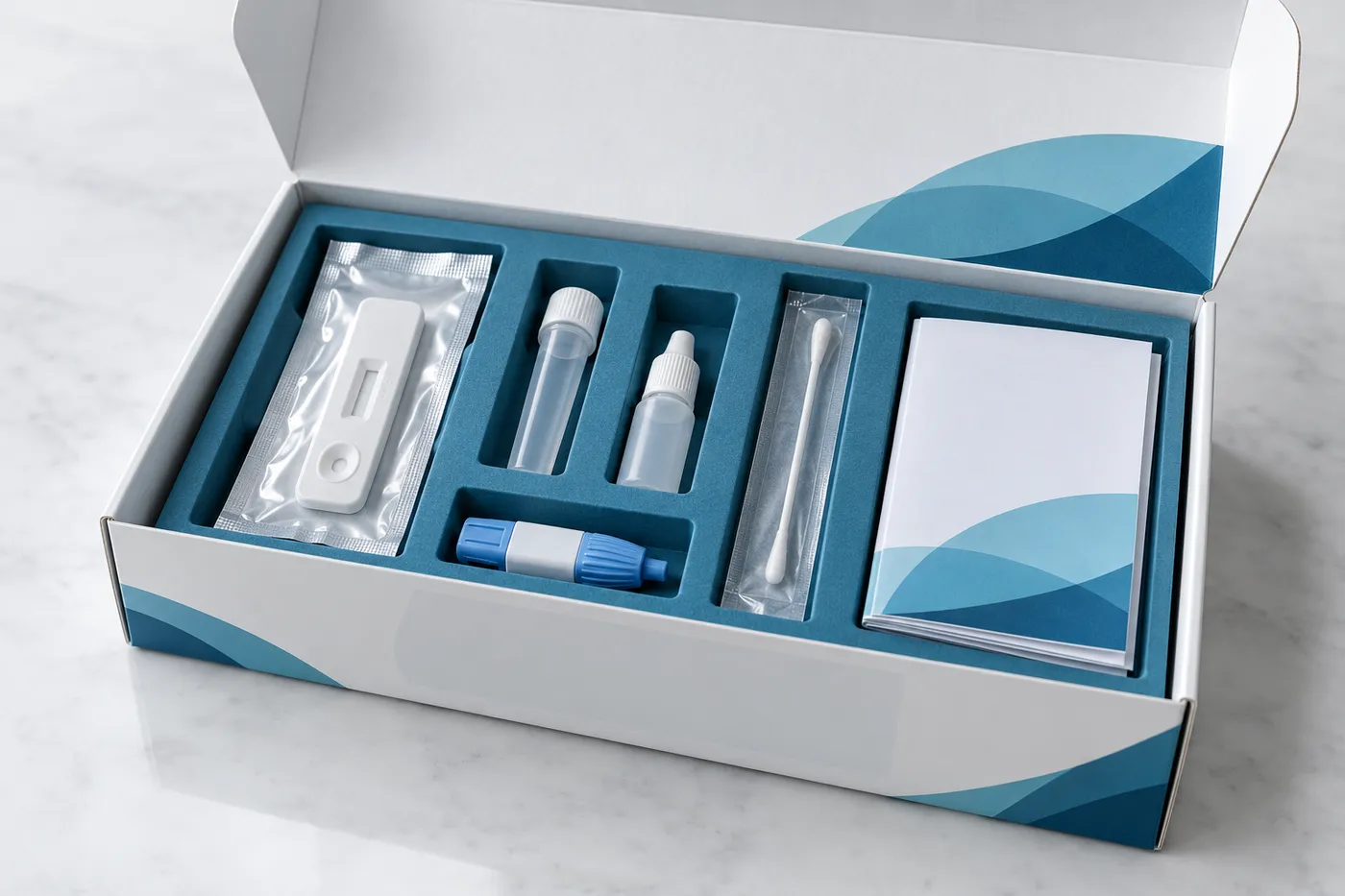
Available product
Ready to scope the kit?
Tell us what sits inside, which panel copy is required, and how the customer should open the kit. Easy Box Packaging can then review the outer structure, insert, print surfaces, and proof around the actual product.
Add your product details to see a quote summary.