Shelf-ready folding cartons
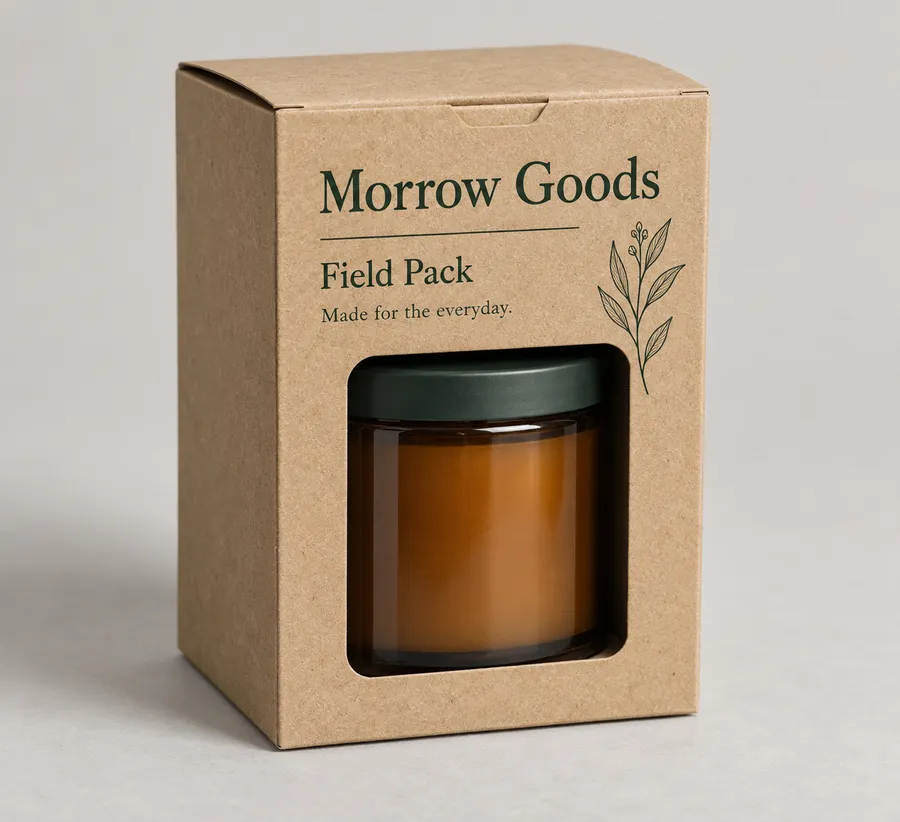
A white kraft folding carton can give a small food, cosmetic, candle, or consumer item a readable front panel while the side panels carry supporting information.

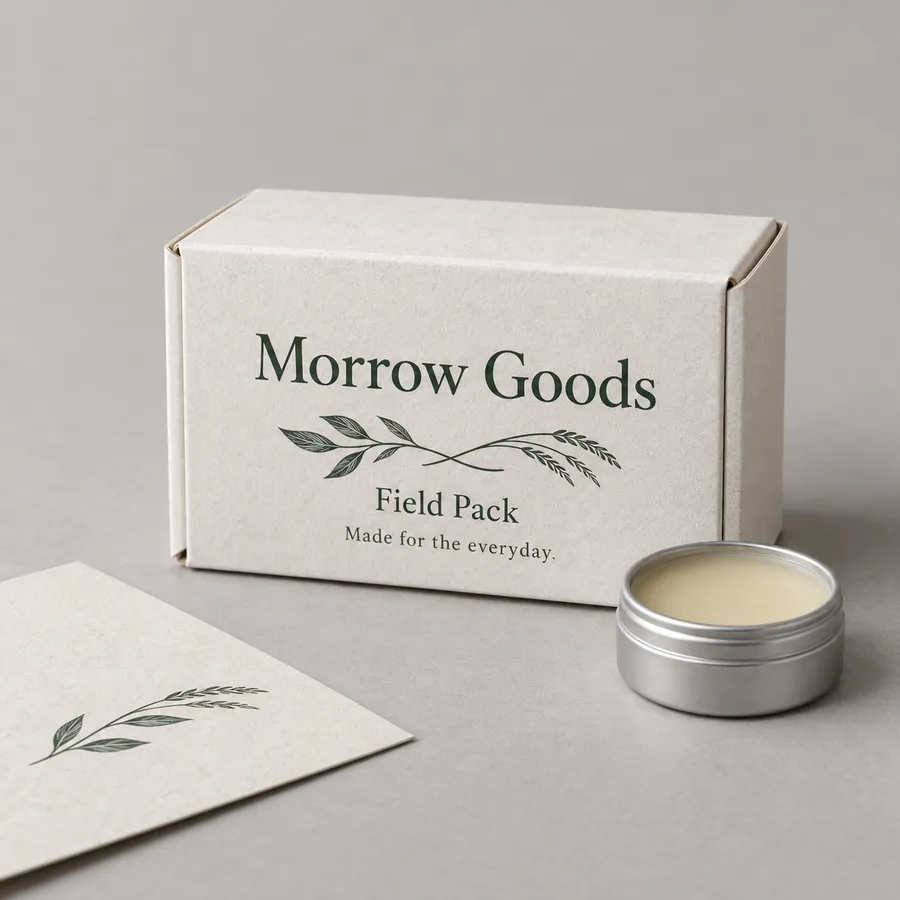
White kraft folding carton with green Morrow Goods print beside a small balm product
Kraft Boxes
Custom white kraft boxes give product brands a light paperboard presentation while keeping the structure, print coverage, closure, and fit tailored to the item inside. Share the packed product dimensions, box style, opening sequence, artwork, and handling context so a white kraft paperboard specification can be reviewed before production.
Last updated
Working quote
Product brief
Custom white kraft boxes are made for buyers who want a paperboard package with a lighter visual face than brown kraft while retaining a tactile paper character. The important first decision is how the box should hold, open, and present the product. Describe whether the pack is a folding carton, tuck-end box, mailer-style construction, or another paperboard format. Then provide the product's packed length, width, height, orientation, clearance needs, and the moment at which the customer first sees the front panel.
The standard fulfillment path starts at 50 units. Production is from 7 business days after digital proof approval, so the brief should identify the box style, dimensions, print intent, and artwork status before a proof is prepared. Pricing remains quote-only because board choice, dimensions, quantity, print coverage, finishing, and packing requirements determine the final specification.
A white kraft box can be built as a compact folding carton for a shelf-ready item, a tuck-end pack for a small product, or a mailer-style box for a parcel journey. Those structures are not interchangeable: the panel sequence, locking tabs, depth, and opening direction change how the product sits and how the artwork is read. State which panels should face outward, whether the box is packed by hand or on a bench, and whether the package must be opened once, resealed, or displayed upright.
Provide the packed product size rather than only the nominal product size. Include any cap, pump, lid, wrap, sleeve, or accessory that travels inside the box. Note if a riser, divider, or separate insert is needed for geometry, weight, orientation, fragility, presentation, fulfillment, or product-to-box clearance. Internal support may be integrated into the paperboard structure or provided as a separate insert after the specification is reviewed; it should not be assumed from one factor alone.
For shipping or ecommerce use, describe the parcel route, likely stacking, label placement, and the panels that may meet handling surfaces. For shelf or counter use, identify the readable face, the desired front-to-back depth, and whether the opening should reveal the product immediately or keep it contained until unboxing. This information lets the dieline be planned around the actual job instead of a generic rectangle.
White kraft paperboard can provide a clean field for dark artwork, restrained color, or a small mark while still showing paper texture at close range. Explain whether the white surface should remain open around the print or whether a larger ink area is part of the design. Share the required copy, brand colors, barcode or regulatory text, quiet zones, and the panel where the product name must remain legible. Artwork that crosses a score, tuck flap, or glue panel needs to be reviewed at the finished box orientation, not only on a flat artboard.
Category finish directions include Matte Lamination, Spot UV, Foil Stamping, and Embossing/Debossing. These are options for review, not automatic requirements. A selected finish should be considered with the paperboard surface, fold lines, artwork scale, and the part of the box that is touched or displayed. Foil or spot contrast can be reserved for a wordmark or small detail, while a matte direction can keep the printed face visually quiet; final suitability depends on the specific artwork and construction.
A quote-ready brief should include the packed product dimensions, quantity, preferred box style, opening direction, insert or divider needs, artwork status, print coverage, and any finish direction. Add a photo or sketch when the product has an unusual cap, handle, corner, or orientation. If the box must fit into a mailer or shipper, provide that outer constraint as well. If the package is for a shelf, state the viewing distance and the panel that must carry the clearest product information.
Easy Box Packaging includes free US shipping and dieline and proof review on the standard fulfillment path. Quote requests are typically answered the same business day and always within 24 hours. A sample kit carries a $44.99 USD shipping charge credited toward the first order when you need to compare paper character, white-surface contrast, or finish direction in hand. Those service facts do not replace a product-fit review: the proof still needs to show panel order, score lines, closure, print boundaries, and any internal support.
Use the digital proof to check the flat dieline and the assembled reading of the box together. Confirm the front panel, side-panel copy, opening direction, tuck or mailer closure, glue areas, barcode clearance, and how the product sits inside. Review the printed white kraft tone at the intended scale, especially where a fold or overlap changes the visible area. If a finish is requested, confirm its exact placement rather than treating the whole box as automatically coated or embossed.
A strong approval brief also records what is intentionally absent: no extra window, no unplanned insert, no copy hidden under a flap, and no finish applied to a panel that must remain writable or scannable. Once the structure, measurements, artwork, and handling context agree, the box can move from a concept to a quote-ready production review. Send the product dimensions, chosen construction, quantity, artwork status, and any support or shipping constraints to begin.
Proof points
The digital proof should connect the flat dieline to the assembled package so fit, opening, print placement, and finish intent can be checked together.
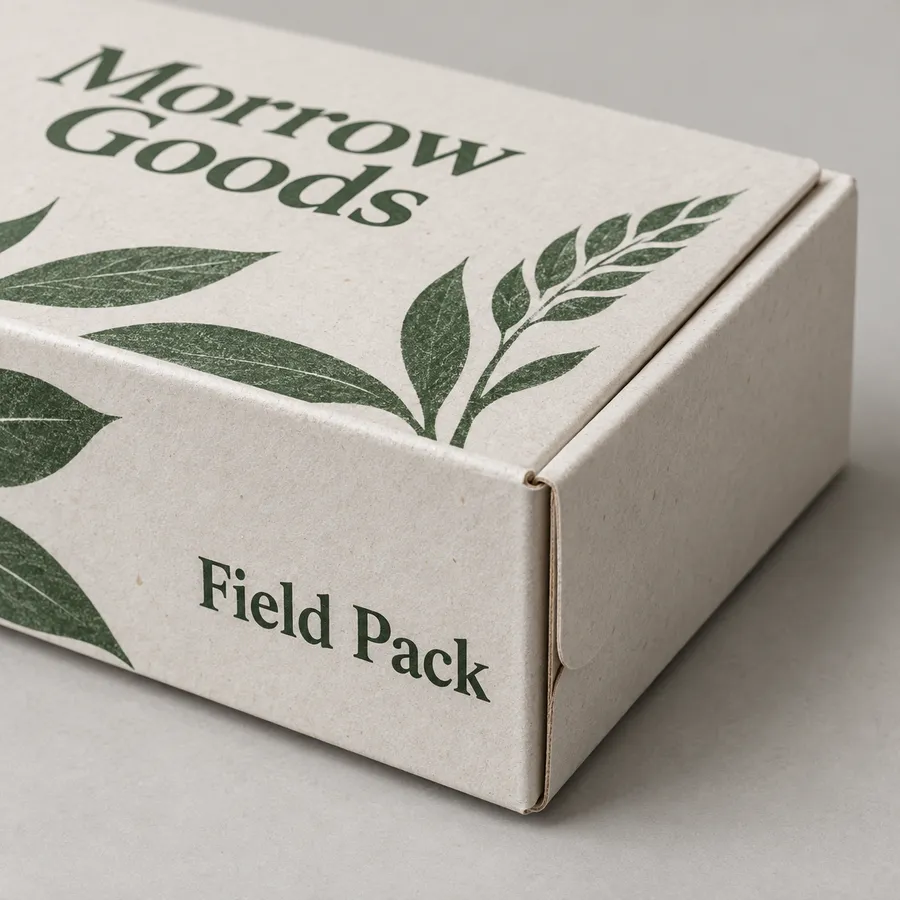
Box style, panel sequence, packed dimensions, closure, print coverage, and support requirements determine whether a white kraft package is workable. Share those variables before artwork is treated as final so the review reflects the assembled box rather than a generic flat layout.
A white kraft folding carton can give a small food, cosmetic, candle, or consumer item a readable front panel while the side panels carry supporting information.
A compact tuck-end box can organize a small item and its accessory, with the closure and opening direction planned around the customer's first view.
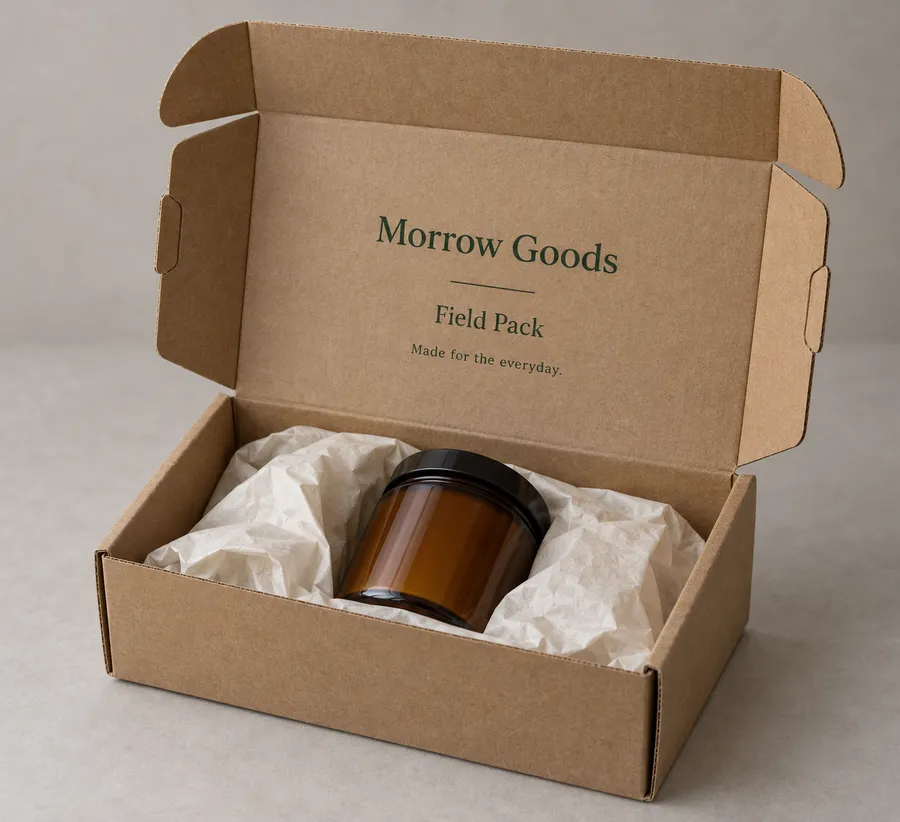
A mailer construction can combine a branded white kraft exterior with a structured opening sequence when the package must travel through an ordinary parcel route.
A light paperboard face can carry a restrained name, message, or motif while the box depth and insert arrangement create a deliberate reveal.
The lighter paperboard face can act as a quiet field or a stronger printed panel. Choose artwork coverage and finish with the folds, closure, readable information, and touch points in mind.
A specific product brief keeps the white kraft box tied to a real opening, fit, and handling job.
Provide the filled product dimensions, orientation, cap or accessory profile, desired clearance, and any area that must remain visible or protected.
State folding carton, tuck-end, mailer-style, or another format, plus closure direction, packing method, parcel route, stacking, and label constraints.
Share the front panel, required copy, print coverage, barcode or regulatory text, edge margins, and any Matte Lamination, Spot UV, Foil Stamping, or Embossing/Debossing direction.
A quote is easier to evaluate when the product, structure, measurements, artwork, and handling route are described together rather than reduced to a color or box name.
Provide length, width, height, orientation, cap or accessory profile, desired clearance, and any support or reveal requirement.
State folding carton, tuck-end, mailer-style, or another format, plus closure, opening sequence, packing method, and shipping constraints.
Share front and side-panel copy, colors, print coverage, barcode or regulatory text, safe areas, and any finish direction.
Confirm the flat dieline, assembled panel order, fit, closure, print placement, support, and finish representation before production begins.
Need help with structure, materials, or production planning? See how we manufacture custom packaging.
A sample kit ships for a $44.99 USD charge credited toward your first order, useful when you need to compare white kraft paper character, printed contrast, fold feel, or finish direction before approving a custom box.
Shipping charge: $44.99. Credited toward your first order.
Request a Sample KitFind clear answers about fit, materials, and ordering below.
They are custom paperboard packages with a light white-faced presentation, tailored dimensions, closure, print, and finish. The box style can be reviewed as a folding carton, tuck-end, mailer-style construction, or another described format.
Share the packed product length, width, height, orientation, clearance, cap or accessory profile, and any internal support or reveal requirement. A photo or sketch helps when the product has an unusual shape.
A mailer-style or other shipping-oriented construction can be reviewed for the parcel route, closure, stacking, label placement, and product fit. The box should be specified around the actual handling context rather than assumed from color alone.
Direct printed artwork can be planned around the white kraft face. Matte Lamination, Spot UV, Foil Stamping, and Embossing/Debossing are finish directions subject to artwork scale, fold lines, paperboard, and placement review.
The standard minimum is 50 units, and the approved production estimate is from 7 business days after digital proof approval. Free US shipping is included on the standard fulfillment path.
Your final unit price is confirmed in a quote because dimensions, box style, board direction, print coverage, finish, quantity, and support requirements define the final specification. Send those inputs for a product-specific quote.
Orders start at 50 units and scale up to 500,000 for bulk runs, with pricing from $0.26 per unit on larger quantities. Standard production is from 7 business days after digital proof approval.
Compare nearby products and request the format that best fits your next run.
Available product
Available product
Available product
Available product
Plan the box around the product
Send the packed product dimensions, chosen construction, quantity, artwork status, support needs, and preferred print or finish direction. Easy Box Packaging can then review fit, panel hierarchy, closure, and white kraft surface as one quote-ready brief.
Add your product details to see a quote summary.