Candles
Plan the cylinder around the actual vessel dimensions, weight, orientation, and removal space.

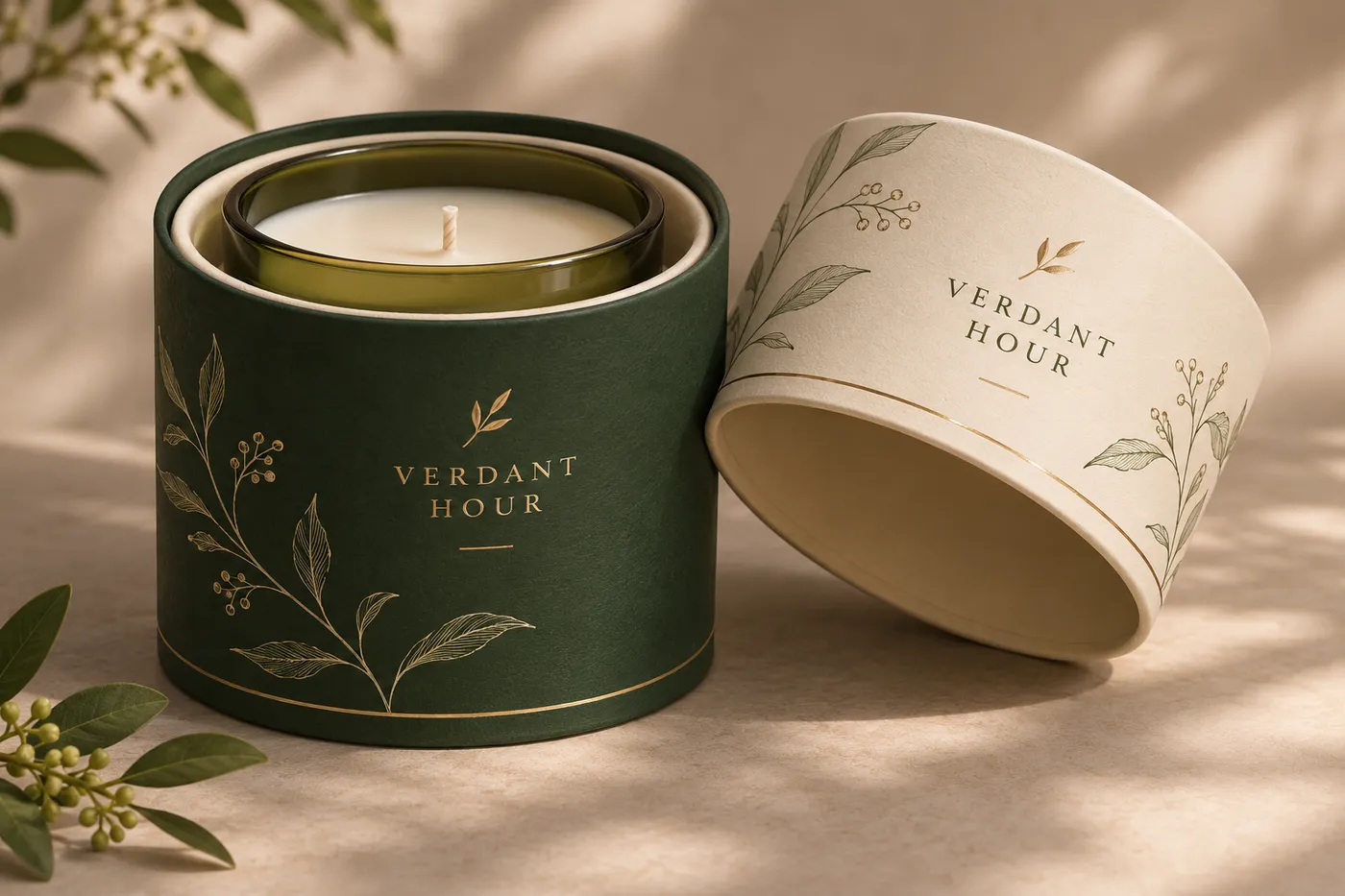
Green cylindrical rigid candle box with botanical artwork beside its cream lid and seated candle.
Rigid Boxes
Cylindrical rigid packaging planned around product fit, lid movement, rolled edges, inner liners, artwork, and the way the finished box will be handed over or shipped.
Last updated
Working quote
Product brief
Start with the product and the opening experience
Custom round rigid boxes give candles, cosmetics, tea, coffee, and gifts a cylindrical presentation rather than the straight edges of a rectangular rigid box. Easybox Packaging can discuss an order starting at 50 units of packaging, which makes this format accessible for a focused launch, seasonal presentation, or smaller branded run. The minimum remains 50 units of packaging; it describes the quantity of boxes ordered, not the number of products that fit inside each box.
The right specification begins with the packed product. Its finished dimensions, weight, orientation, and any separate components determine the internal space and whether an inner liner should be considered. A candle jar may need a different interior arrangement from a cosmetic container or a grouped gift set. If the box will be shipped, the intended outer shipper and delivery route also need to be discussed rather than assuming the presentation box alone provides shipping protection.
Plan the cylindrical structure
The defining feature is cylindrical board construction. Unlike a folding carton, the rigid form is intended to hold its shape. The diameter and height should be developed from the actual packed item and the intended opening sequence. A box that is too loose can let the product move, while a box specified too tightly can make packing and removal awkward. Final dimensions therefore need confirmation before a construction is recommended.
Rolled edges are an important visual and handling detail because they shape the circular rim where the lid and base meet. Their appearance should be reviewed alongside the wrap and the lid style. The curved wall also changes how artwork is seen: a viewer sees only part of the design at once, so logos, product names, and required copy should be positioned for a clear primary view rather than treated like one flat front panel.
Specify lid fit deliberately
A cylindrical gift box with a lid should open with a controlled, practical movement. Lid fit depends on the final construction and packed-product requirements, so it should be confirmed with a physical sample or approved production specification. Avoid treating a visual mockup as proof of closure tolerance. The goal is a lid that supports the intended presentation without making the box frustrating to open or easy to separate during routine handling.
The desired reveal also matters. A taller lid can create a different opening sequence from a shorter lid, while the relationship between lid and base affects the visible break line around the package. These are design choices to settle before artwork is finalized because the wrap, motif, and text must account for the lid edge and the way the two sections align.
Decide whether an inner liner is needed
An inner liner can help organize the presentation around a candle, cosmetic item, tea or coffee pack, or gift. Its layout should follow the real product shape, number of components, and removal method. It should not be described as protective or food-contact suitable without product-specific verification. For tea and coffee applications, the packaged goods and their primary container should be identified so the presentation box is not mistakenly treated as the direct food-contact layer.
Color and material appearance inside the cylinder can also influence the reveal. A contrasting liner may frame the product; a coordinated liner may create a quieter transition from exterior to interior. Either direction should be checked against the product surface, cap or lid, and any labels that remain visible when the package opens.
Build artwork for a curved surface
Artwork should be reviewed as a wrap, not only as a flat file. Key information needs a deliberate viewing zone, and motifs should be checked where the printed surface joins. Category-level directions include Matte Lamination, Gloss Lamination, Spot UV, Foil Stamping, and Embossing/Debossing, but availability and suitability for this cylindrical construction require confirmation. The same applies to Kraft Paperboard, SBS Paperboard, and Corrugated Board: they are useful discussion directions, not confirmed product specifications.
Prepare the order
To request a quote, provide the packed product dimensions and weight, the desired internal fit, the lid and base relationship, liner needs, artwork coverage, finish direction, order quantity, and delivery route. Orders can begin at 50 units of packaging. Easybox Packaging can then review the brief and identify which structural, sampling, print, and delivery details still require confirmation before production.
Proof points
The confirmed facts establish the format and starting quantity; construction details beyond that remain specification decisions.
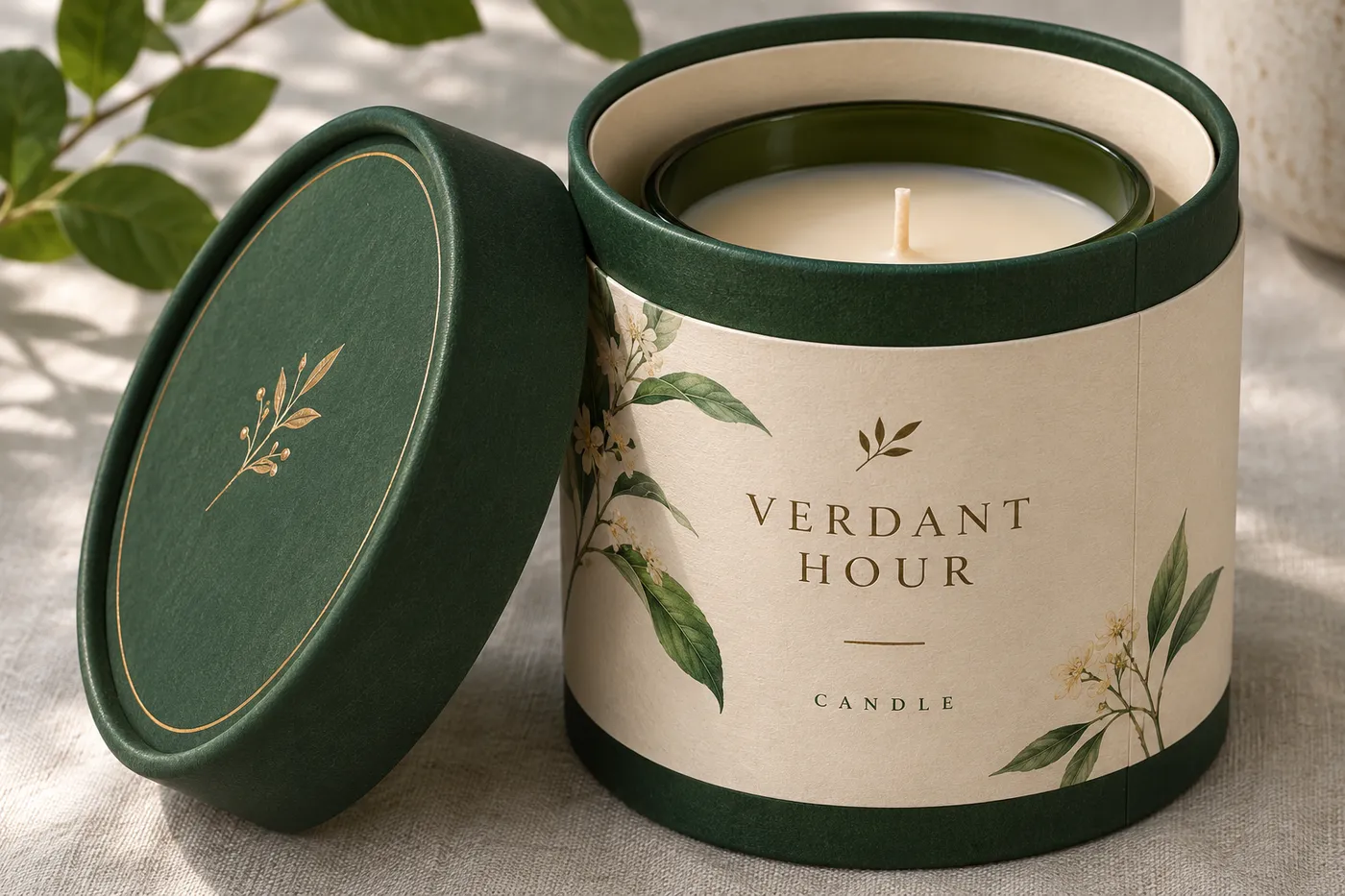
The packed product's dimensions, weight, orientation, and removal method guide the cylinder size, lid relationship, and any inner-liner layout. Artwork must also account for the curved wrap and the break between lid and base.
Plan the cylinder around the actual vessel dimensions, weight, orientation, and removal space.
Use the curved wall as a deliberate primary brand view and check how the container sits within the box.
Treat the rigid box as presentation packaging around a separately identified primary pack unless food-contact suitability is verified.
Coordinate the lid reveal and any liner with the number, shape, and removal order of the components.
Develop the design for a curved wrap and confirm production suitability before approval. The following are category-level finish directions, not guaranteed product specifications.
A useful brief connects the circular geometry to packing, opening, printing, and delivery.
Confirm finished product dimensions, weight, orientation, and removal space before setting the cylinder.
Review lid movement, visible break line, rolled edges, and the reveal created when the lid is removed.
Place the primary brand view deliberately and check motifs, joins, and copy around the wrap.
| Attribute | Application | Specification priority |
|---|---|---|
| Candle | Cylindrical presentation around a jar or vessel | Confirm product dimensions, weight, orientation, and removal space |
| Cosmetics | Curved branded surface with a controlled reveal | Plan primary artwork view, lid fit, and any liner around the actual container |
| Tea or coffee | Presentation box around a separately packed product | Identify the primary container and do not assume direct food-contact suitability |
| Gift set | Coordinated opening and product arrangement | Confirm component count, liner layout, removal method, and handling route |
A complete brief helps separate confirmed requirements from details that still need sampling or production review.
Provide finished dimensions, weight, orientation, component count, and how the product should be removed.
Explain the preferred lid relationship, rolled-edge appearance, and whether an inner liner is needed.
Identify the primary viewing area, wrap coverage, motif placement, and finish direction.
State the order quantity and explain whether boxes are handed over, stored, or shipped inside an outer shipper.
Need help with structure, materials, or production planning? See how we manufacture custom packaging.
Ask how the proposed cylinder, lid movement, rolled edges, inner liner, printed wrap, and finish can be evaluated for your packed product.
Shipping charge: $19.99. Credited toward your first order.
Request a Sample KitFind clear answers about fit, materials, and ordering below.
The confirmed minimum is 50 boxes. This is the quantity of packaging ordered, not the number of products each box holds.
The cylinder should be planned from the packed product's finished dimensions, weight, orientation, removal space, and any liner or additional components. Final dimensions require confirmation.
Lid fit is a relevant specification detail and should be reviewed with the proposed construction. Confirm the intended opening movement and lid-to-base relationship through an approved specification or physical sample.
An inner liner can be considered around the real product shape and removal method. Material, layout, and performance should be confirmed for the application.
They can be used as presentation packaging for tea or coffee products. Do not assume the rigid box is suitable for direct food contact; identify the primary product container and verify any food-contact requirement separately.
Kraft Paperboard, SBS Paperboard, Corrugated Board, Matte Lamination, Gloss Lamination, Spot UV, Foil Stamping, and Embossing/Debossing are category-level directions. Availability and suitability for this product require confirmation.
Compare nearby products and request the format that best fits your next run.

Available product
Available product

Available product

Available product
Plan your cylindrical box
Send Easybox Packaging your product details, quantity, liner needs, artwork direction, and delivery route for a specification review.
Add your product details to see a quote summary.