Mints, tea, and small treats
A shallow container can present compact goods when the product height, closure, and access pattern are known before sizing.

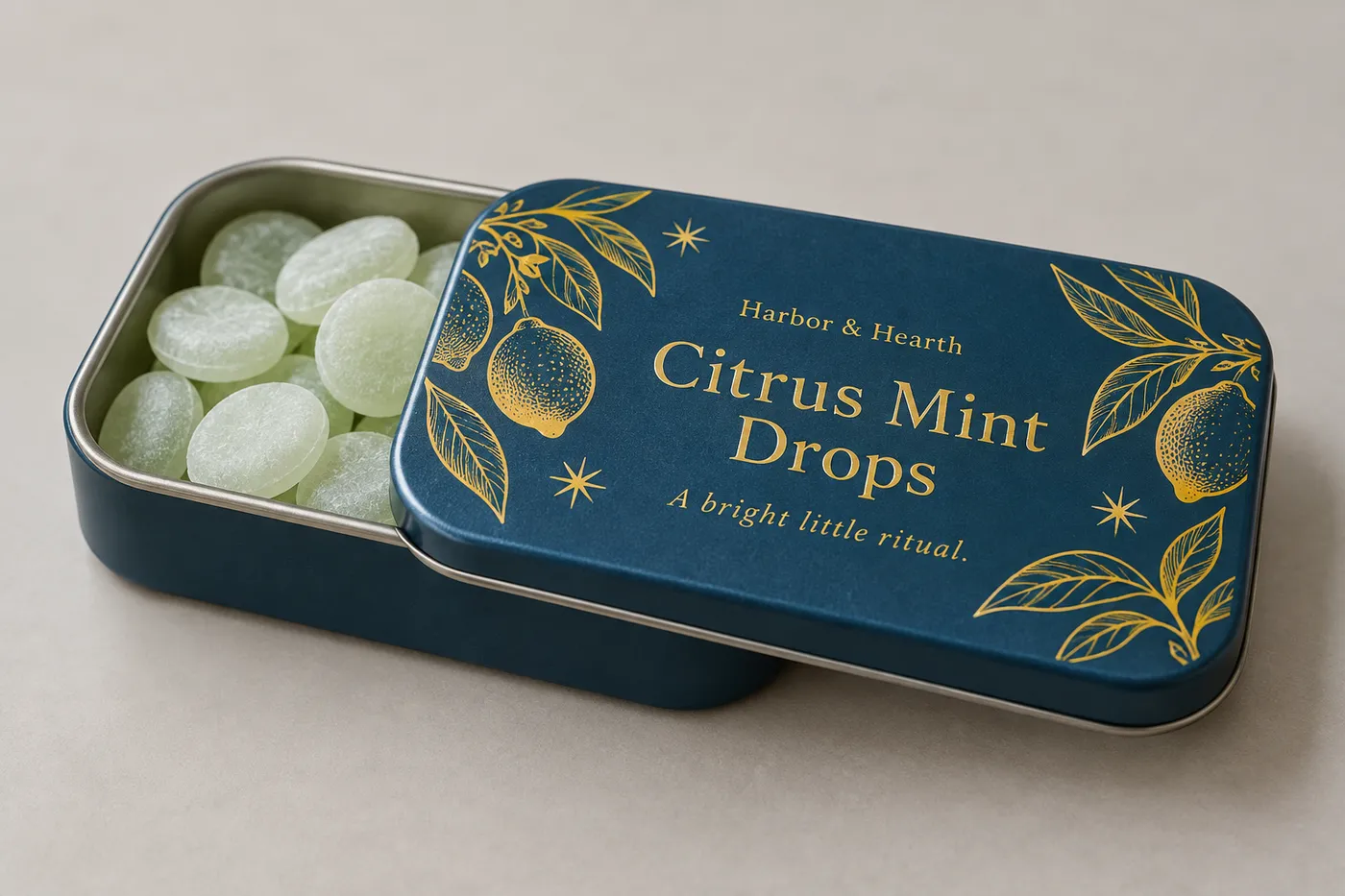
Deep blue printed small tin container with slip lid, citrus motif, and mint drops
Tin Boxes
Small tin containers are reusable metal packs for compact goods, samples, keepsakes, and giftable products. The right format follows the packed item's length, width, height, weight, and handling route, with a slip lid or hinged lid considered around the opening pattern. Share the real contents and artwork so the tin footprint, lid clearance, print coverage, and shipping plan can be reviewed together.
Last updated
Working quote
Product brief
Small tin containers give a compact product a reusable metal home and a broad, visible surface for a name, product information, or a small illustration. They can suit mints, tea, spices, confectionery, samples, accessories, or keepsakes when the package needs to be more useful than a one-way carton. The practical decision is not simply choosing a small-looking tin. The length, width, height, weight, orientation, and opening route of the packed item determine whether the container feels purposeful or leaves a product loose inside.
Start with the product in its finished packed state. Record 3 measurements, length, width, and height, at the widest or tallest points, then note the approximate packed weight. Include a cap, tab, wrap, pouch, label, or other component that will remain inside the tin. If several pieces share one container, describe their actual arrangement and the space between them rather than adding individual dimensions without a layout. This brief gives the structural review something real to work from and helps avoid selecting a footprint from a generic stock photograph.
A slip lid can suit a shallow tin that is opened by sliding the top away from the base, while a hinged lid can keep the top attached when the container is used repeatedly at a counter, desk, or event. The choice depends on how the customer will reach the contents, whether the tin will be opened with one hand, and whether a lid should remain connected during reuse. A lid must clear the contents without catching on a raised cap, a folded label, or a product that sits close to the rim.
Small does not mean one universal cavity. A low, broad mint assortment, a narrow tea sample, and a group of tiny accessories can all need different interior proportions. If the contents should stay separated, mention the requested divider or paperboard support and explain which pieces need their own position. If the product should be loose for easy access, say so. The final cavity, lid relationship, and any support are checked against the actual contents before artwork is approved.
Tinplate Metal provides the formed container and a consistent panel for printed artwork. The lid often carries the first brand message, while the base and side walls can hold product information or a quieter repeat of the motif. Map the artwork on the assembled container so the reading direction stays correct when the lid is lifted, slid, or hinged open. Keep important text away from seams, corners, and areas where the lid overlaps the base.
Matte Lamination can reduce glare for a restrained presentation, while Gloss Lamination creates a brighter reflective surface. Spot UV can reserve a small glossy accent for a mark or illustration. Foil Stamping and Embossing/Debossing can add a defined detail when the artwork and formed panel support it. These are finish directions to review, not guarantees that every effect belongs on every edge or corner. A simple front panel with a clear product name is often more useful than covering every surface with competing effects.
The printed example in the images shows print placement only. Production artwork should replace it with the approved brand, product, and regulatory information for the order. No real logo or existing trademark is implied.
A small tin may be opened many times, so check how the lid will be handled after the first use and whether the outside should be easy to wipe and read. For e-commerce, the tin still needs an outer protective shipper selected around the packed weight, the number of tins in a carton, and the movement expected in transit. A reusable container does not remove the need for a route-specific packing plan. For retail, confirm the visible panel, shelf orientation, and whether the tin will sit beside similar formats. For event or promotional use, confirm the quantity, filling process, and whether the same printed design will be used across a run.
The standard fulfillment path starts at 50 units, and production is from 7 business days after digital proof approval. Free US shipping and dieline and proof review are included at no extra charge. A sample kit carries a $44.99 USD shipping charge credited toward your first order if you need to compare metal feel, lid movement, print coverage, and finish direction in hand. Pricing remains quote-only because the tin footprint, lid style, cavity, support, print coverage, finish, quantity, and destination change the specification.
Send the packed length, width, height, approximate weight, item count, lid preference, interior arrangement, artwork status, print coverage, finish direction, and delivery destination. Quote requests are typically answered the same business day and always within 24 hours. When the digital proof arrives, check the lid-to-base relationship, the way the contents sit, panel orientation, legibility at the intended viewing distance, seam clearances, and the outer shipping plan.
A useful small tin container is a coordinated system: formed metal, lid, cavity, artwork, finish, and handling route. A precise product brief lets the packaging review make those decisions around the real contents without inventing a stock measurement or a generic price.
Proof points
The digital proof should make the assembled tin and its use clear. Compare the lid relationship, packed contents, print orientation, finish placement, and shipping assumptions with the information supplied for the quote.
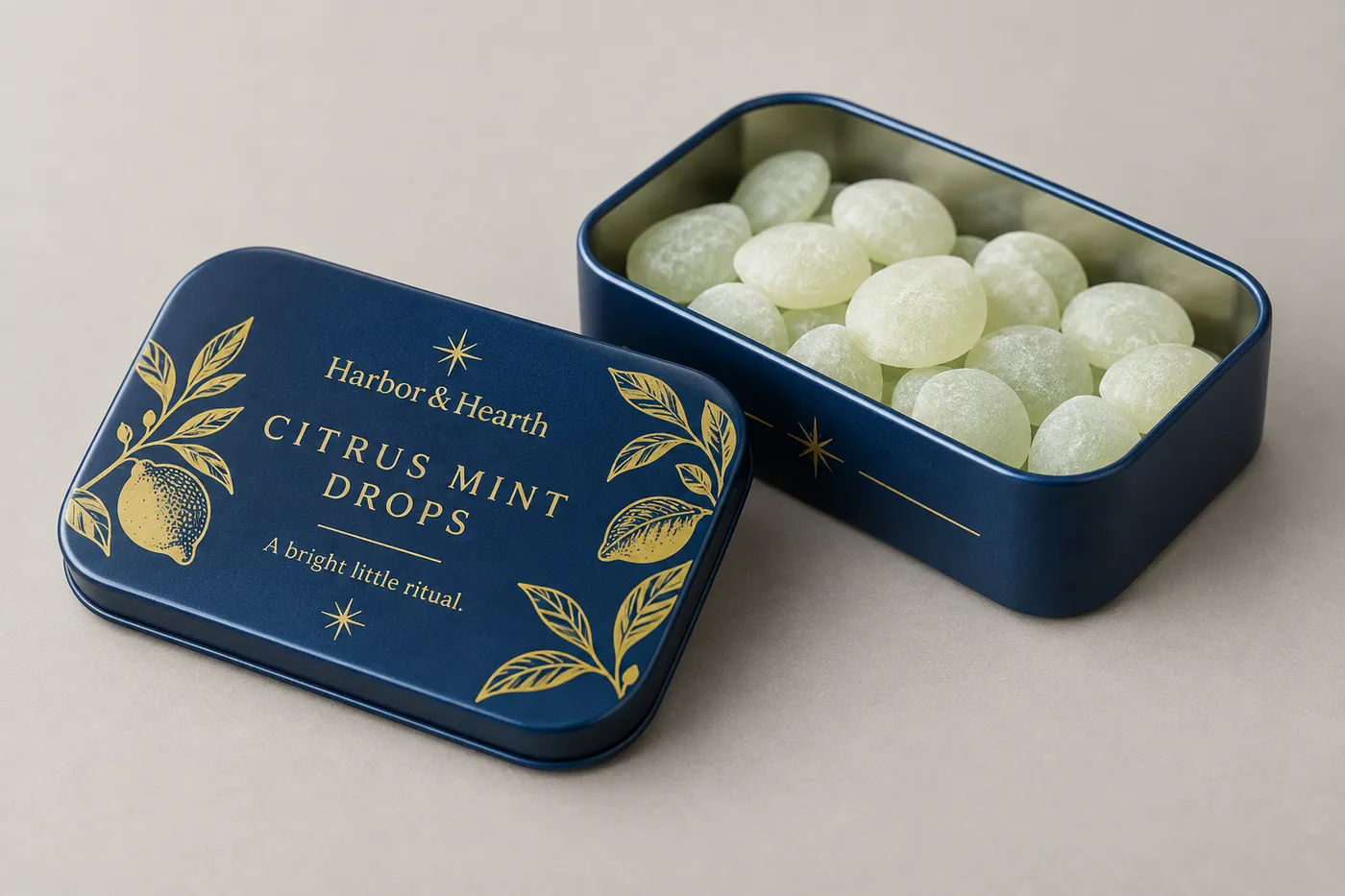
The useful format follows the packed product's 3 measurements, weight, orientation, and handling pattern. Decide whether a slip lid or hinged lid suits the opening, then review the cavity, clearance, and print panels around the actual contents rather than a generic stock footprint.
A shallow container can present compact goods when the product height, closure, and access pattern are known before sizing.
A branded lid can carry a concise message for an event or sample run when filling and quantity are planned together.
Small parts or keepsakes can use a reusable metal home with a cavity or divider suited to their actual arrangement.
A defined print panel and selected finish can make the container part of a seasonal release while remaining useful after opening.
Map artwork on the assembled container so the lid, base, side walls, seams, and opening route keep the brand and product information correctly oriented.
The metal body, lid, cavity, and artwork work as one package. Depending on the product geometry and item count, the tin may use an open cavity or a divider or paperboard support reviewed after the contents are known.
A slip lid or hinged lid can be considered around the way the customer reaches the contents and reuses the container.
The base is reviewed around the packed footprint, height, weight, and any cap, tab, wrap, or raised feature.
A divider or support can be discussed when small items need defined positions rather than moving together inside one cavity.
A useful quote begins with the packed item and the way the tin will be opened, filled, shipped, and reused. The following information turns that brief into a reviewable container specification.
Provide length, width, height, approximate weight, item count, orientation, widest points, and any cap, tab, wrap, or unusual projection.
Explain whether a slip lid or hinged lid suits the handling pattern and what the customer should see first.
Show the arrangement of pieces, tissue, pouch, card, divider, or support that changes the occupied space.
Share the print coverage, panel priorities, artwork status, and any preference for Matte Lamination, Gloss Lamination, Spot UV, Foil Stamping, or Embossing/Debossing.
Check lid movement, packed position, seam clearance, text orientation, legibility, and finish representation on the assembled tin.
Need help with structure, materials, or production planning? See how we manufacture custom packaging.
A sample kit carries a $44.99 USD shipping charge credited toward your first order, useful when you need to compare metal feel, lid movement, printed coverage, and finish direction before approving a custom tin.
Shipping charge: $44.99. Credited toward your first order.
Request a Sample KitFind clear answers about fit, materials, and ordering below.
Compact goods, samples, keepsakes, accessories, mints, tea, spices, and other small packaged products can be considered. The useful format depends on the finished length, width, height, weight, item count, and whether the contents need a divider or support.
A slip lid can suit a shallow container opened by sliding the top away, while a hinged lid keeps the top attached during repeated use. The choice follows the handling pattern, access route, and any raised feature near the rim.
Not automatically. An open cavity may suit stable contents, while a divider or paperboard support can help when pieces need defined positions. The decision is reviewed against product geometry, weight, fragility, orientation, and the intended reveal.
Tinplate Metal is the category material direction. Matte Lamination, Gloss Lamination, Spot UV, Foil Stamping, and Embossing/Debossing can be considered for selected panels and artwork, subject to the formed surface and seam review.
The tin should travel inside an outer protective shipper selected around packed weight, the number of tins per carton, and the movement expected in transit. A reusable metal container still needs a route-specific packing plan.
The standard fulfillment path starts at 50 units. Production begins from 7 business days after digital proof approval, with free US shipping and dieline and proof review included at no extra charge.
Orders start at 50 units and scale up to 500,000 for bulk runs, with pricing from $0.15 per unit on larger quantities. Standard production is from 7 business days after digital proof approval.
Compare nearby products and request the format that best fits your next run.
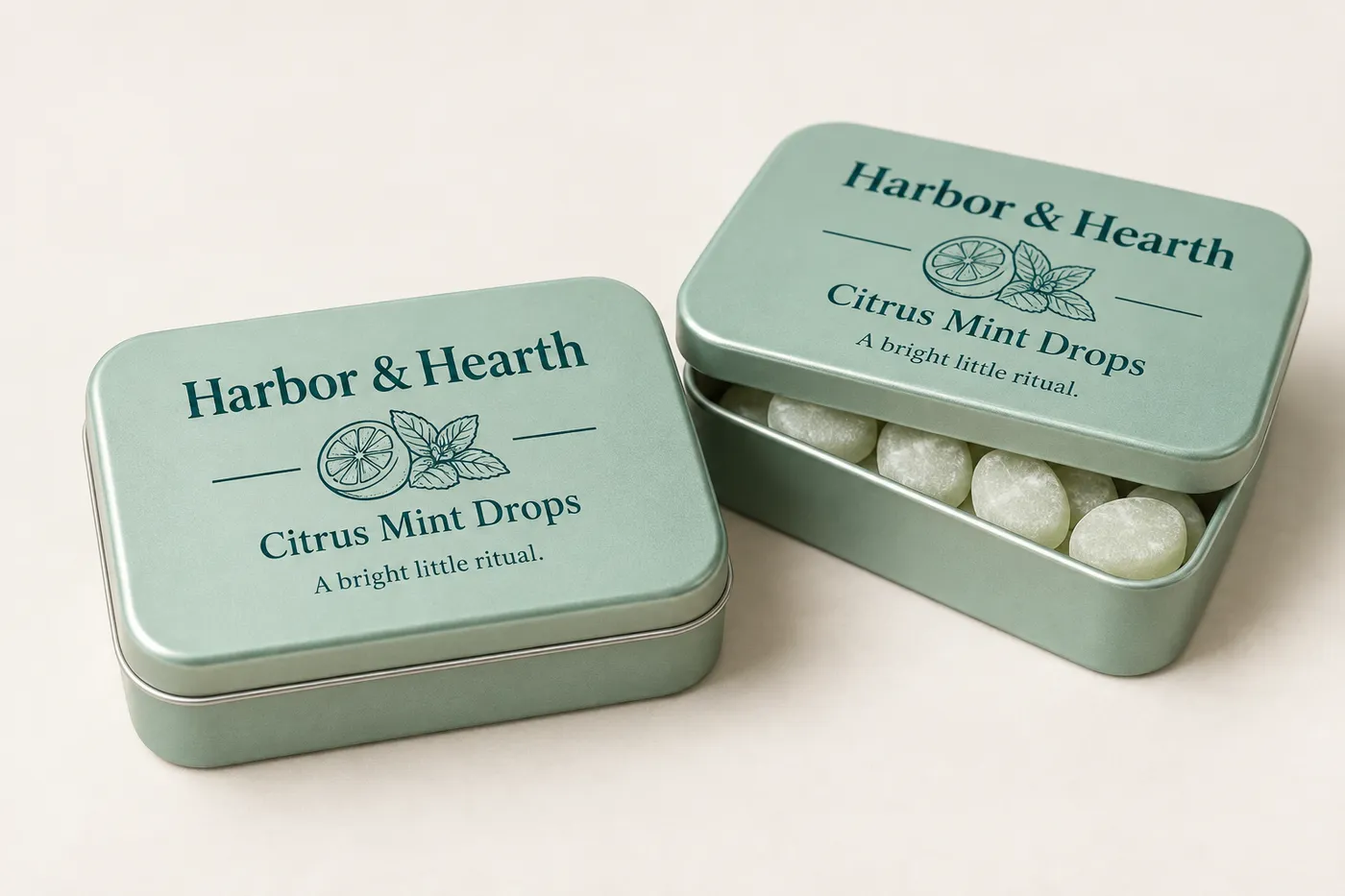
Available product
Plan the reusable tin
Send the packed measurements, item arrangement, lid preference, print coverage, finish direction, artwork status, and destination. Easy Box Packaging can then review the metal body, lid, cavity, printed panels, and shipping route as one quote-ready specification.
Add your product details to see a quote summary.