Shelf-ready assortment
Present a short row of products on a shelf with an opening and header that keep the product face readable.

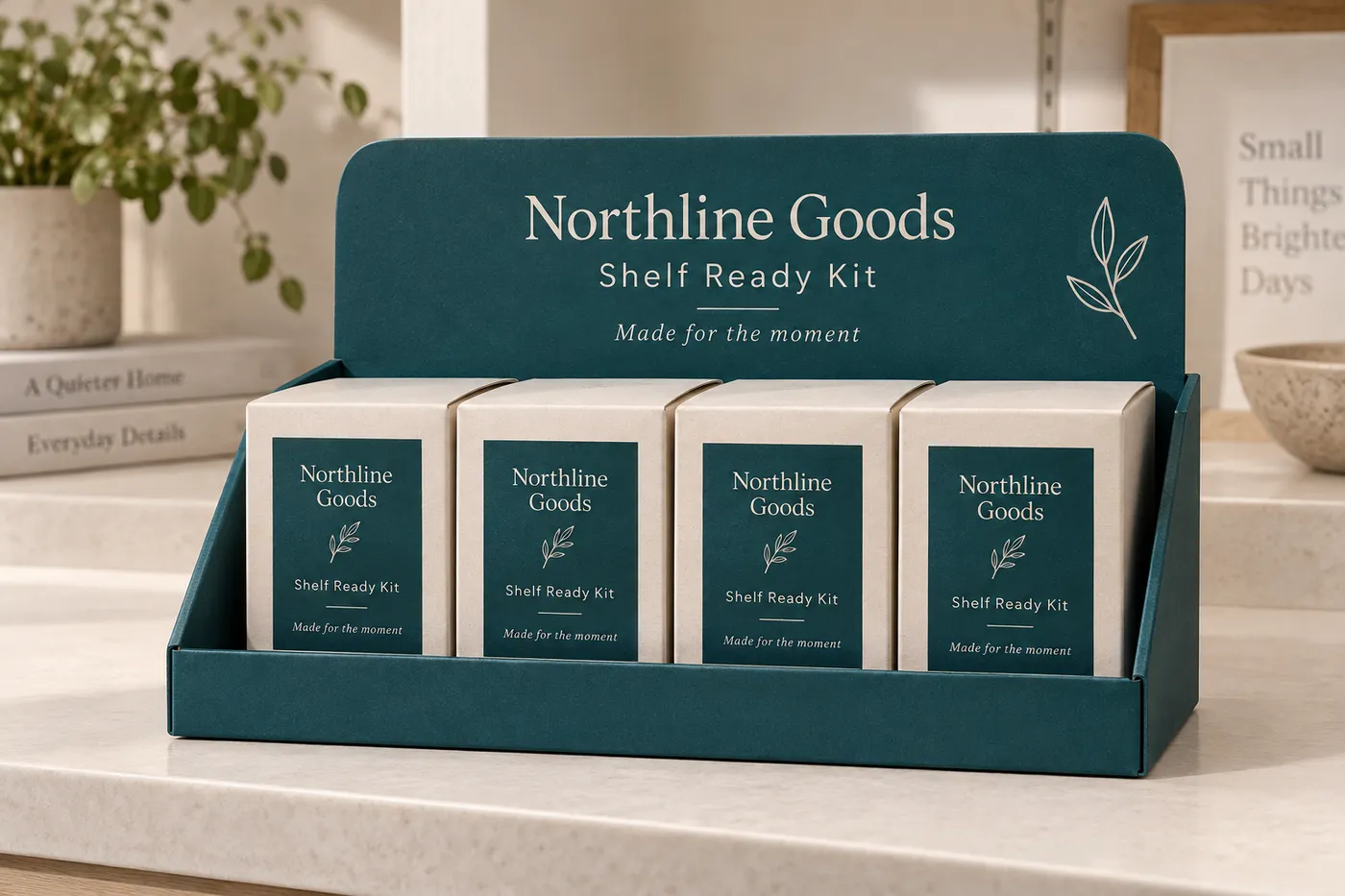
Deep-teal open-front retail display box with four fictional cartons and Northline Goods header print.
Retail Packaging
Retail display boxes give a product a defined shelf, counter, or checkout presentation while keeping loading and replenishment practical. Choose an open-front tray, raised header, divider, or tear-away access panel around the packed product, visible facings, available footprint, handling route, and the printed message that must remain readable after filling.
Last updated
Working quote
Product brief
A retail display box has two jobs in the same footprint: present the product clearly and give staff a practical way to load, replenish, and move it. Start with the location and the packed product rather than a generic carton shape. A low open-front tray can keep the first row visible, a raised header can carry the main message above the products, and a tear-away front can make a shipping-ready unit easier to open at the fixture. These structures answer different handling needs even when their outside silhouette looks similar.
Describe the setting in the brief. Note whether the box sits on a shelf, counter, checkout ledge, pickup point, or event table; which direction shoppers approach from; how many facings should be visible; and whether staff load from the front, top, or rear. A display intended for a short local handoff has a different handling conversation from one that travels through a parcel network. The final format should follow the packed item's dimensions, weight, stability, access pattern, and the way the display is replenished.
Measure every product in the orientation it will occupy. Record the packed height, width, and depth, then include a cap, closure, tab, sleeve, handle, or other projection that changes the profile. Share the number of units per row, the number of rows or tiers, the desired front-facing count, and the loaded weight. If the display holds several variants, identify which one leads the arrangement and whether each variant needs a divider. A photograph or physical sample is useful when the product has a shoulder, uneven base, protruding feature, or label that needs to face a particular direction.
The available fixture matters as much as the product. Provide the maximum footprint, height restriction, approach direction, hand clearance, and any shelf lip or counter edge. Product geometry drives the interior layout, which drives the outside dimensions and base construction. A change from 2 rows to 3 rows, a different facing count, or a new loading direction can require its own dieline. Final allowances are confirmed during the structure review instead of copied from an arbitrary clearance rule.
An open-front tray works when customers should pick up the first row directly. A low front wall can keep labels visible while still organizing the products. A raised back panel or header creates a vertical printed area for the campaign, product name, or approved brand message. A stepped interior, divider, or rear loading panel can help when multiple facings must remain orderly. A perforated or tear-away panel may suit a unit that arrives in a shipper and becomes a shelf display after opening, but the access line still needs to be reviewed against product stability and the route from stockroom to fixture.
These choices are not interchangeable. A tall product may need a deeper base or a higher backer; a small light item may need lanes that prevent it from spreading; a broad product may need fewer facings across the same footprint. If the display will be moved while filled, explain the handoff and loaded weight. If it remains in one position, explain how staff replenish it. The selected structure should make the customer-facing reveal and the everyday operation agree.
SBS Paperboard can be considered when a smooth printed face needs small type, crisp color fields, or a clean product hierarchy. Kraft Paperboard can support a warmer paper character when the artwork uses natural tones. Corrugated Board can be discussed when the display must coordinate with a sturdier packed configuration or a heavier filled arrangement. The category material names are design directions, not a promise of a particular grade, gsm, flute, load rating, food-contact approval, or recycling outcome. Final suitability remains tied to the product and handling route.
Finishes should serve reading and handling. Matte Lamination may reduce glare under bright store lighting, while Gloss Lamination gives selected artwork a more reflective surface. Spot UV can focus attention on a logo or short message. Embossing/Debossing can add tactile relief, and Foil Stamping can provide a controlled accent. Review finish areas against artwork scale, fold positions, cut edges, exposed corners, and the surface where shoppers will read the display.
Plan the artwork panel by panel. Keep the product name, variant, size, or approved copy on the surface that remains visible after loading. The header can carry the strongest brand message, while the front edge and side walls can use quieter supporting graphics. If a product row hides a lower panel, move the key information higher rather than assuming the shopper will see the whole dieline. The digital proof should show the flat artwork and the assembled presentation so folds, access openings, print placement, and finish areas are reviewed together.
The fictional Northline Goods mockup is a visual direction for the pack, not a real brand or product claim. Any final artwork should be supplied or approved by the customer. A display printed for a seasonal reset may change its outer message while retaining the same product-specific structure, but a different product profile or facing plan normally deserves a fresh fit review.
Send the packed length, width, and depth; projecting features; unit count; facings; preferred orientation; maximum footprint; height limit; loaded weight; loading and access direction; artwork status; material direction; finish request; and delivery destination. State whether the unit ships flat, arrives assembled, or opens from a tear-away panel. Include a photograph or physical sample when the pack has a curved wall, closure, sleeve, handle, or unusual base. That information helps the team discuss an open tray, header, divider, or rear-loading style against the actual retail setting.
The verified standard minimum order is 50 units. Production is from 7 business days after digital proof approval, and Free US shipping is available on the standard fulfillment path. A sample kit has a $44.99 USD shipping charge credited toward the first order. Pricing remains quote-only because footprint, product count, board direction, print coverage, finish, and handling route can change the specification.
Review the assembled proof with the packed product or a close reference. Confirm that the first facing is readable, the header is not blocked, the front opening matches the loading motion, and the side walls do not crowd the product. Check that the display can be lifted or moved in the intended way, and that the printed message remains legible when one or more units have been removed. Confirm the board and finish direction against the artwork, fold lines, exposed edges, and display lighting.
The order path begins with a product and fixture brief, continues through a reviewed dieline and digital proof, and then moves to production after approval. Easy Box Packaging can scope the display around the packed item instead of treating retail display boxes as interchangeable with a mailer, folding carton, or shipping box. Share the real handling route, the 50-unit starting quantity, and the 7-business-day production estimate in the planning conversation so the quote reflects what the display actually needs.
Proof points
The proof should make the physical and printed decisions visible at the same time. Check the packed product, display opening, readable panels, and finish placement before the production path begins.
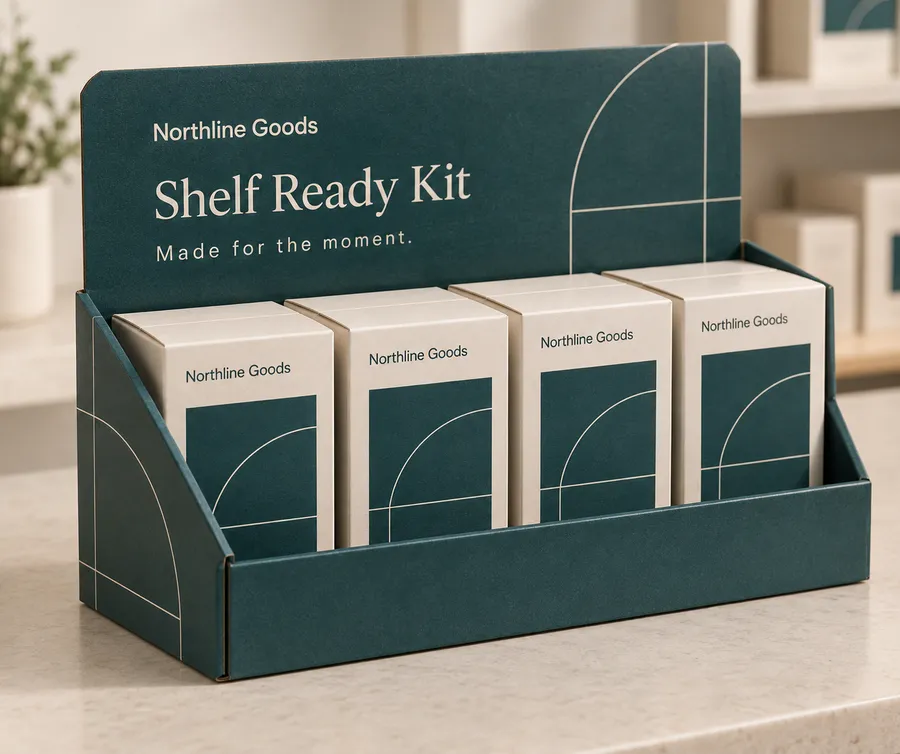
An open-front tray, raised header, divider, or tear-away access panel can be evaluated around the actual product profile. The display footprint, facings, refill direction, printed panels, board direction, and handling route are reviewed together so the finished unit is not treated like a generic carton.
Present a short row of products on a shelf with an opening and header that keep the product face readable.
Use a compact tray and back panel when a new product needs a defined presentation near a checkout or service counter.
Plan the footprint, message, and access for a product group that moves through a pickup point, pop-up, or event table.
Change the printed outer message for a campaign while keeping the display structure tied to the same packed product format.
Keep the main product and brand message on the panel customers can actually see after loading. The supplied material and finish directions can be compared with the artwork hierarchy, display light, fold positions, exposed edges, and handling context.
A useful brief connects shopper visibility with the way staff load and replenish the unit. Three decisions usually set the direction: which product face must stay readable, where the main message belongs, and how the display moves from storage to shelf, counter, or pickup point.
Set the front-wall height and header position around the product face that must remain visible after loading.
Share the available width, depth, height, approach direction, and hand clearance so the display fits the retail setting.
Choose front, top, rear, or tear-away access according to how staff remove, replace, and replenish the products.
A complete product and fixture brief lets the quote focus on the right display geometry instead of a generic shelf or counter silhouette.
Send length, width, depth, projecting features, product count, facings, loaded weight, and preferred orientation.
Identify the shelf, counter, checkout, pickup point, event table, or stockroom handoff and the available footprint.
Note front, top, rear, or tear-away loading, header needs, approved copy, board preference, and finish direction.
Check the flat dieline and assembled display for product visibility, access opening, panel placement, and finish areas.
The standard minimum order is 50 units and production is from 7 business days after digital proof approval.
A sample kit can help you compare paperboard character, print treatment, front-wall visibility, and the way a packed product sits in a display. The kit carries a $44.99 USD shipping charge credited toward your first order.
Shipping charge: $44.99. Credited toward your first order.
Request a Sample KitCustomer reviews
5 out of 5 from 25 reviews.
We're pleased with our custom retail packaging. It protects and presents our product well, and the custom sizing made a noticeable difference for our business.
We compared several packaging options before ordering retail packaging. The strong branding and an easy retail opening gives our product a cleaner presentation and makes the customer experience feel more considered.
The artwork on our custom retail packaging came through clearly, and the structure feels right for products displayed on shelves and counters. We were happy with the communication and the finished packaging.
Our team needed strong branding and an easy retail opening for our products, so we chose Easy Box Packaging for retail packaging. The result is sturdy, practical, and well suited to our daily packing process.
We ordered custom Retail Packaging for our products displayed on shelves and counters, and the fit worked well. The strong branding and an easy retail opening made packing straightforward and the finished custom retail packaging looks professional.
We’re pleased with our custom packaging order from Easy Box Packaging. The boxes suit our products well, and we’d be happy to order again.
Find clear answers about fit, materials, and ordering below.
The display can be scoped around a defined packaged product, assortment, sample, accessory, or small retail item. The packed profile, unit count, facings, orientation, projections, and access route determine the base and header layout; the display does not replace any required primary pack.
An open front keeps the first row easy to see, while a tear-away or perforated access panel can be considered when staff open a shipping-ready unit at the fixture. The best direction depends on how products are loaded, removed, replenished, and moved.
The category material directions are SBS Paperboard, Kraft Paperboard, and Corrugated Board. SBS can suit a smooth printed face, Kraft can retain a natural paper character, and Corrugated Board can be discussed for a sturdier configuration. Final suitability depends on the product and handling route.
Send the packed length, width, depth, projections, number of units, facings, preferred orientation, display footprint, height limit, access direction, loaded weight, artwork status, board preference, finish request, and delivery destination. A product photograph or physical sample can clarify a closure, sleeve, handle, or unusual profile.
The standard minimum order is 50 units. Production is from 7 business days after digital proof approval, and the final quote still depends on the display footprint, product count, construction, board, print coverage, finish, and destination.
Yes. A sample kit can be requested when you need to compare board appearance, print treatment, front-wall visibility, or the way the packed product sits in the display. The kit carries a $44.99 USD shipping charge credited toward your first order.
Orders start at 50 units and scale up to 500,000 for bulk runs, with pricing from $0.34 per unit on larger quantities. Standard production is 5–7 business days from art or dieline approval.
Compare nearby products and request the format that best fits your next run.
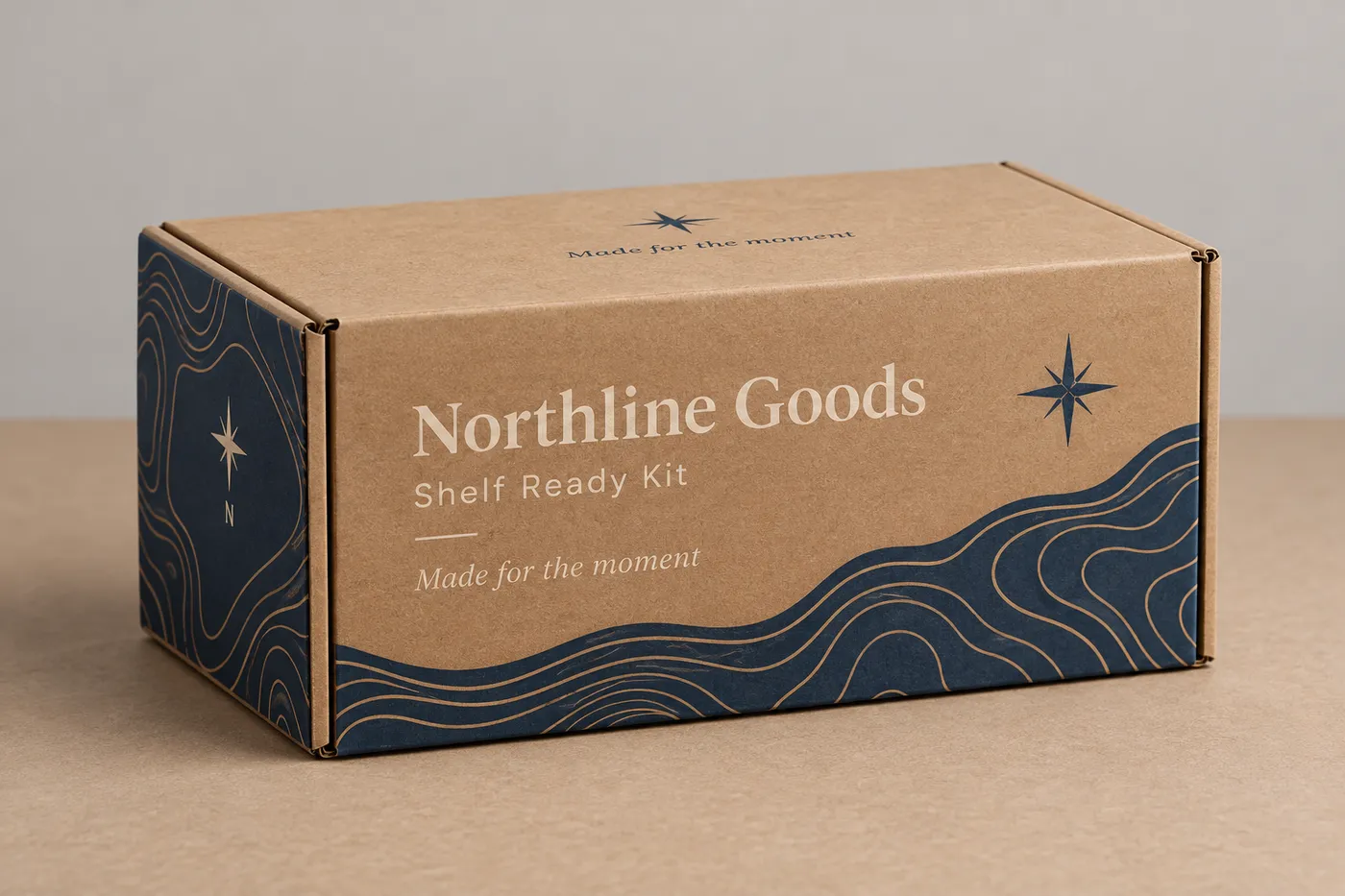
Available product
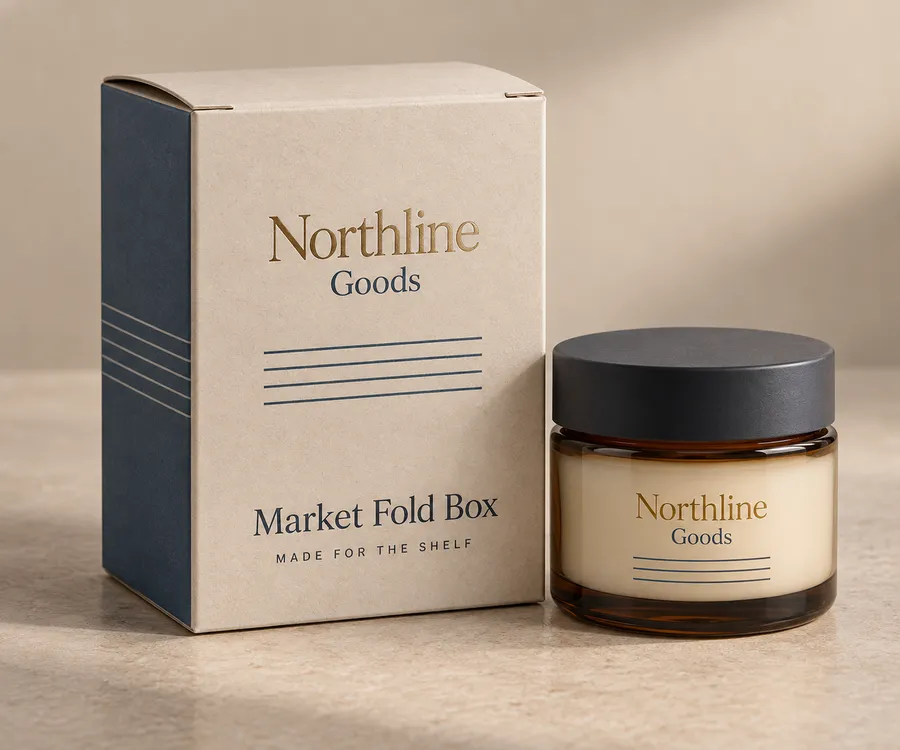
Available product
Display packaging for a defined retail format
Tell Easy Box Packaging what the display will hold, where it will sit, how staff will replenish it, and which printed panels matter most. We can then review the tray, header, access, board, artwork, and finish as one specification.
Add your product details to see a quote summary.