Small boxed goods
A roll can add separation around a retail carton or accessory box when the outer carton supplies the required structure.

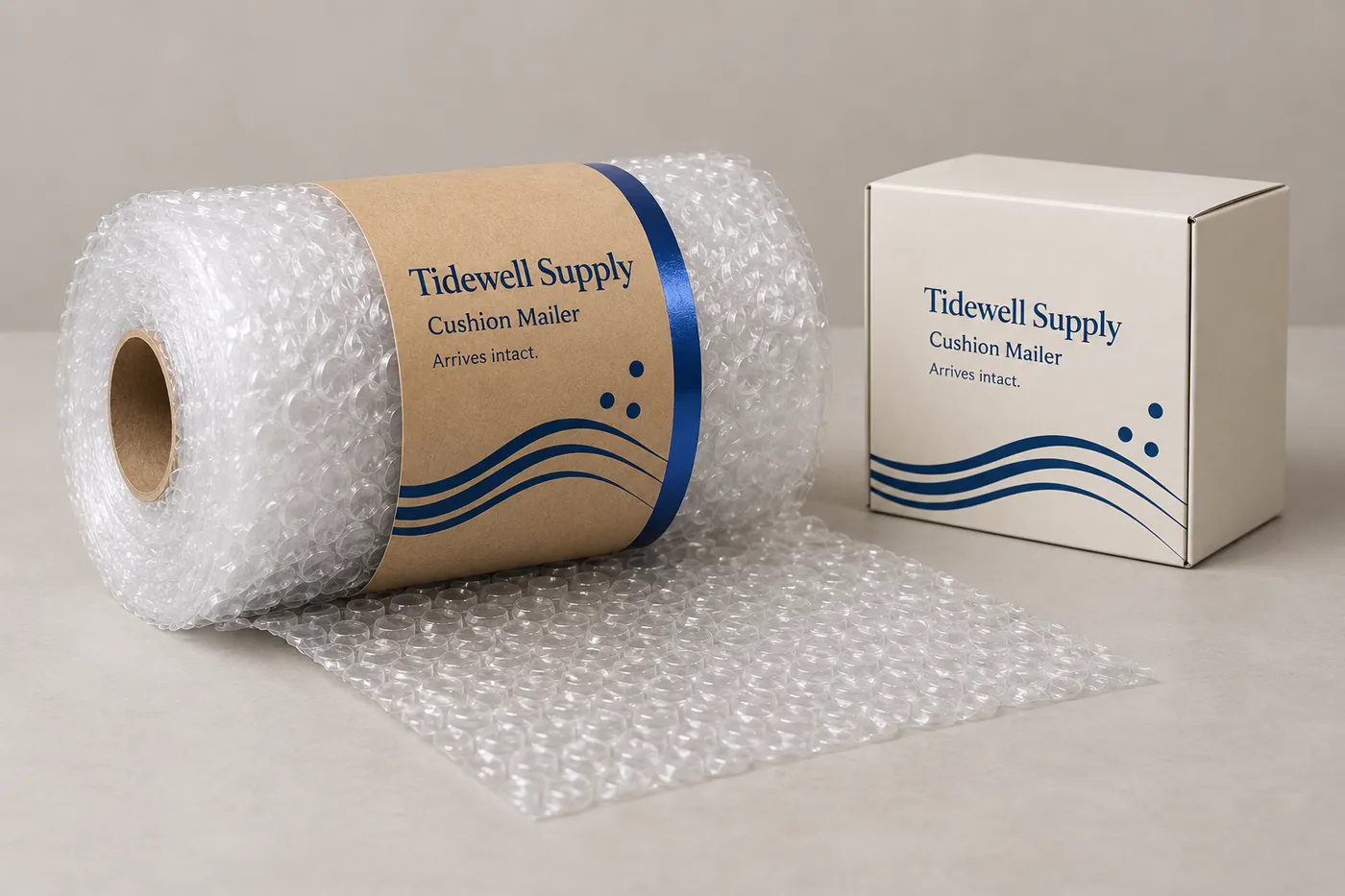
Clear bubble-wrap roll with paper band and unrolled cushioning beside a small carton
Bubble Mailers & Flyers
Bubble wrap rolls are flexible cushioning material for wrapping small goods, lining a mailer, or separating items inside a shipping carton. The roll format lets a packing team cut coverage around the product, while the actual item, edge profile, route, and number of layers determine whether the wrap is enough or should be combined with a rigid outer package.
Last updated
Working quote
Product brief
A bubble wrap roll is a flexible cushioning layer that can be cut around the product being packed. It may wrap an accessory, protect a small boxed good from scuffs and light knocks, line the inside of a mailer, or separate several pieces inside a carton. The roll is packaging material, not a finished mailer or a substitute for a rigid shipping box. The useful question is how the bubbles, film, cut length, and outer package work together for the actual shipment.
Start with the product rather than an empty roll. Record the packed length, width, thickness, widest points, hard corners, handles, caps, and any surface that should not rub against another item. Include a retail carton, sleeve, tissue, or insert if it will remain with the shipment. A soft accessory can need a different wrap path from a sharp-edged component, and a mixed order may need separate pieces of wrap instead of one loose layer around everything.
The roll format is useful when the packing team needs to cut a piece to the product rather than commit to a pre-sized envelope. Lay the item on the wrap, leave enough material to cover the faces that can contact the outer package, and keep seams or joins away from a sharp corner where possible. If the product has a protruding clasp or handle, note that projection before deciding how the wrap will fold. The final coverage should be checked with the product inside its mailer or carton, because the outer package still controls the shipment's crush and bend protection.
For a single small object, one continuous wrap piece may keep the packing motion simple. A layered wrap or a separate pad can be considered when the product has corners that need more separation from the carton wall. That decision depends on the product's geometry, weight, movement inside the outer package, and route; do not describe a fixed number of layers or a fixed bubble size unless those details are confirmed for the selected production specification. If an item can bend, crush, or shift, use the bubble wrap as one part of a broader package plan and consider a fitted insert or rigid carton.
A bubble-lined mailer already has an internal cushioning layer, so a roll may be useful for a second item inside the same order, a sharp edge that should be isolated, or a gap that needs controlled separation. A plain flexible flyer can carry flat documents or soft goods, but a wrapped object still needs enough room that the flap does not press on the product. In a carton, the wrap can create a soft boundary between items and the outer walls; it does not establish the carton size by itself. The product geometry first determines the clearance, then the inner arrangement and outer construction are reviewed around it.
At a packing station, cut length, wrap direction, tape or label placement, and the order in which items enter the carton affect speed and consistency. Share whether the wrap will be dispensed by hand, cut in batches, or prepared before the product reaches the station. If the shipment contains several sizes, describe the smallest and largest packed versions so the quote and proof can address the actual use instead of an average item that does not exist.
The category context covers flexible mailers and flyers, so the roll should be treated as a flexible cushioning component whose material, film appearance, and any printed carrier or label are confirmed for the order. Do not assume a bubble thickness, bubble diameter, recycled content, compostability, moisture barrier, or postal qualification from the product name alone. If a paper wrap, film direction, or printed sleeve is part of the brief, name it separately and request the supporting specification.
If the roll is supplied with a printed band or label, keep the artwork on that carrier rather than implying that the protective bubbles themselves provide a stable print panel. Matte Lamination, Gloss Lamination, Spot UV, and Foil Stamping are category finish directions for printed packaging surfaces; they are not automatic properties of the cushioning roll. Artwork should leave the cut edge, seam, and handling area clear so the packing team can still identify the material and use it correctly.
The standard fulfillment path starts at 50 units. Production is from 7 business days after digital proof approval, and Free US shipping is included on that path. Dieline and proof review are included on every order at no extra charge. A sample kit carries a $44.99 USD shipping charge credited toward the first order when you need to compare the roll feel, protective separation, carrier print, or packing sequence in hand. Pricing stays quote-only because roll length, width, material direction, packaging format, artwork, and quantity must be scoped together.
Send the product dimensions, packed weight, edge notes, outer mailer or carton, intended wrap path, approximate cut length, quantity, artwork status, destination, and whether the roll will be dispensed manually or in batches. Quote requests are typically answered the same business day and always within 24 hours. The digital proof should show the roll presentation, any printed carrier or label, cut and fold direction, and the relationship between the cushioning material and the outer package.
A clear brief keeps the roll useful without overpromising what flexible cushioning can do. Define the item, the contact surfaces, the amount of separation needed, the outer package, and the packing motion first. Then use the proof to confirm the material presentation and any printed component before production begins.
Bubble wrap rolls can support e-commerce orders, replenishment shipments, small accessories, boxed cosmetics, samples, and mixed orders when a cut-to-fit cushioning layer is practical. They can also help a packing team separate two items in one carton or protect a printed surface from rubbing against another package. A roll is less suitable when the product needs a fitted rigid insert, fixed presentation, or verified barrier performance; those requirements should be stated before the format is selected.
The best result comes from treating the roll as part of a complete packing method. Measure the item, describe the outer package, test the fold and closure, and keep the final copy specific about what is confirmed. That sequence gives Easy Box Packaging enough information to review the roll, any printed carrier, and the rest of the shipping package as one practical brief.
Proof points
Review the roll as it will be used, including its presentation, any printed carrier, the cut and fold direction, and the relationship between the wrapped item and its outer package.
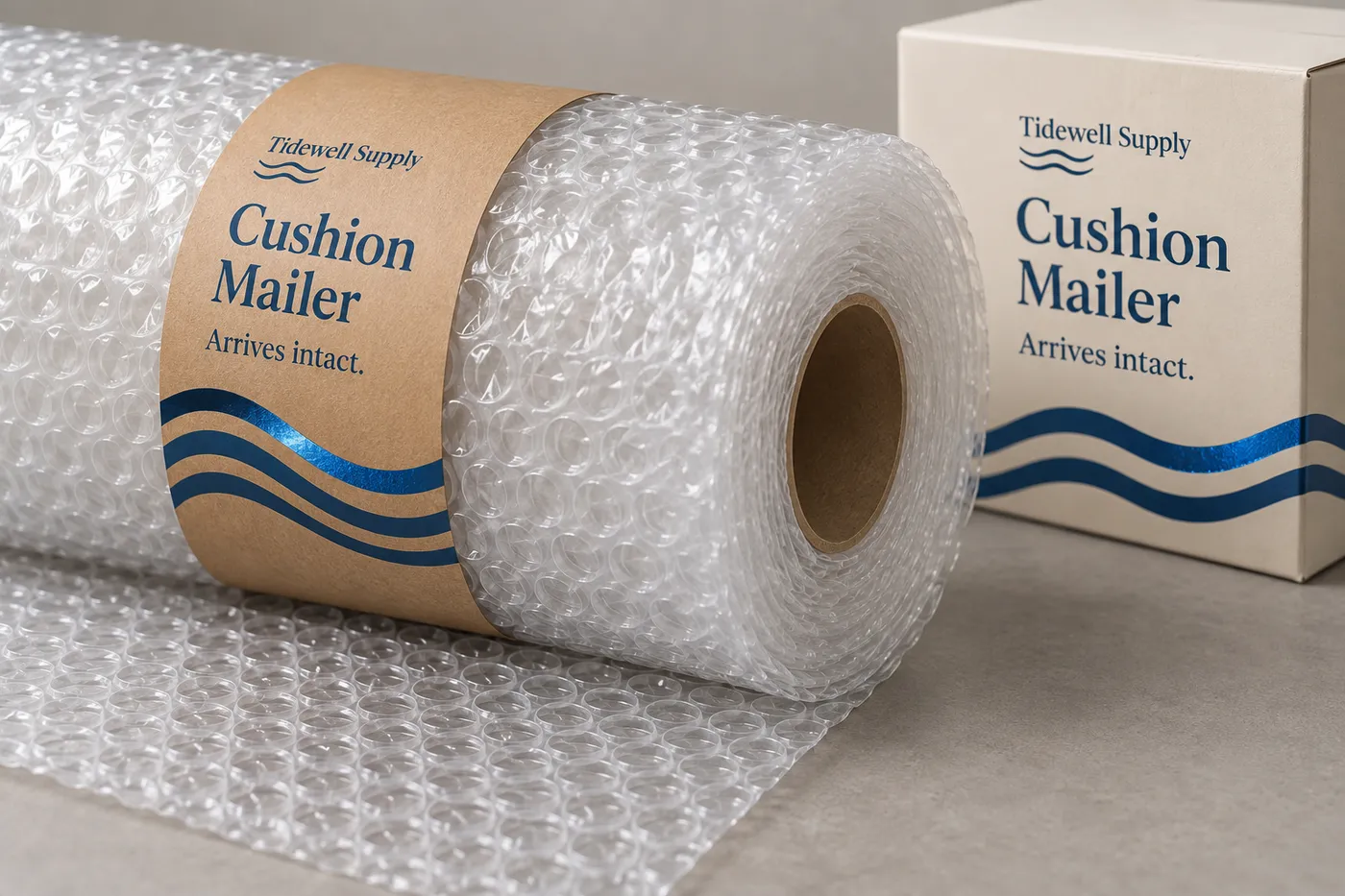
The roll is planned around the packed product, its contact surfaces, the outer mailer or carton, and the way the packing team cuts and closes the wrap. Share those details so the cushioning layer is reviewed as part of a complete shipping method rather than as an isolated material name.
A roll can add separation around a retail carton or accessory box when the outer carton supplies the required structure.
Cut-to-fit wrap can protect handles, caps, and finished surfaces before the item enters a flexible mailer or shipping carton.
Separate two products inside one carton with wrap pieces sized to the contact points and movement expected in transit.
A repeat shipment can use a consistent wrap path when the product dimensions, packing station, and outer package remain stable.
Bubble wrap itself is a functional cushioning surface. If the order needs a branded presentation, map the artwork to a paper band, label, or outer mailer so the mark remains readable without obstructing the packing use.
A practical roll brief connects the product geometry to the amount of separation needed, the cut and fold path, and the outer package that carries the shipment.
Length, width, thickness, hard corners, handles, and caps guide where the wrap must cover and where joins should stay clear.
Dispensing, cut length, wrap direction, tape or label placement, and batch preparation shape the packing routine.
A mailer or carton still supplies the main shipping structure; the wrap adds separation and cushioning where the product needs it.
A quote is easier to review when the wrapped item, outer package, cut path, and any printed carrier are described together.
Provide packed length, width, thickness, weight, hard corners, projections, and any retail carton, sleeve, or insert.
Explain whether the roll will wrap, line, layer, or separate the product and how the team will dispense and secure it.
Share the mailer or carton, interior arrangement, closure, and any areas that need extra separation.
Supply artwork status and preferences for a paper band, label, or outer printed mailer, including any finish direction.
Check roll presentation, cut and fold direction, printed carrier placement, and the packed relationship before production.
Need help with structure, materials, or production planning? See how we manufacture custom packaging.
A sample kit carries a $44.99 USD shipping charge credited toward your first order, useful when you need to compare wrap feel, cut and fold behavior, carrier print, or the packing sequence before approving the roll brief.
Shipping charge: $44.99. Credited toward your first order.
Request a Sample KitFind clear answers about fit, materials, and ordering below.
It is flexible cushioning material that can be cut around a small good, used to line a mailer, or placed between items inside a carton. The outer package still supplies the main rigid or flexible shipping structure.
Share the packed length, width, thickness, widest points, hard corners, projections, approximate weight, outer mailer or carton, and the way the wrap will be cut, folded, and secured.
No. The wrap can add separation and cushioning, but a product that can crush, bend, or shift may need a rigid carton, fitted insert, or another supporting package.
If a branded presentation is needed, place approved artwork on a paper band, label, or outer mailer. Do not assume the bubble surface is a stable print panel; finish placement is reviewed on the selected carrier.
The standard fulfillment path starts at 50 units. Production begins from 7 business days after digital proof approval, with Free US shipping and dieline and proof review included on the standard path.
A sample kit carries a $44.99 USD shipping charge credited toward the first order, so you can compare cushioning feel, carrier print, and the intended packing sequence in hand.
Orders start at 50 units and scale up to 500,000 for bulk runs, with pricing from $0.39 per unit on larger quantities. Standard production is from 7 business days after digital proof approval.
Compare nearby products and request the format that best fits your next run.
Available product
Available product
Available product
Available product
Plan the complete packing method
Send the packed product dimensions, outer package, wrap path, packing routine, artwork status, quantity, and destination. Easy Box Packaging can then review the cushioning material and any printed carrier as one quote-ready brief.
Add your product details to see a quote summary.