Branded Retail Packs
A small printed carton for one cigarette product, with the front face carrying the brand hierarchy and the side and back panels carrying supporting information.

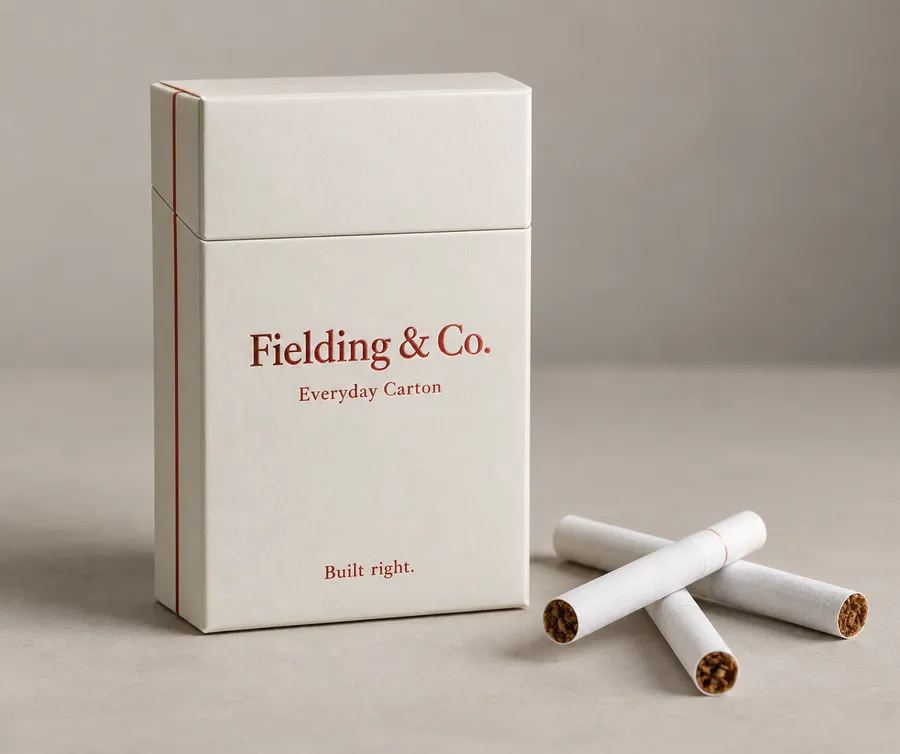
Closed custom cardboard cigarette box with a printed front panel and an unbranded inner pack
Cardboard Boxes
Custom cardboard cigarette boxes made to order around the inner pack, compact folding structure, top closure, and printed panel layout. Choose a paperboard direction and finish around the pack dimensions, artwork, and handling route so the carton is reviewed as a real retail package rather than a generic small box.
Last updated
Working quote
Product brief
A cardboard cigarette box has very little room for vague sizing. The starting point is the filled inner pack: its assembled height, width, depth, top edge, and any paper sleeve or inner frame that will sit inside the carton. The outside shape may look simple, but the top closure, side folds, seam, and front-panel proportions all depend on that packed profile. Share a physical sample or clear packed-product measurements when requesting a quote so the box is discussed around the item that will actually be sold.
The structure should make the opening action clear without making the package harder to fill or close. A compact folding carton can be developed with an upright rectangular body, a top lid, and an inner paperboard frame that keeps the retail pack aligned. The exact closure pattern is selected with the pack dimensions, opening direction, print coverage, and how the carton will be handled after filling. A lid that works for a single retail pack is not automatically the right choice for a multi-pack presentation, a sampler, or a carton placed inside an outer shipping box.
A different pack size also deserves its own dieline review. The same visual style can continue across a product family, but a short, tall, or wider carton changes the folds, panel proportions, and closure position. Treat the carton style as the repeatable design language and the dieline as the size-specific construction document.
Send the packed dimensions rather than an empty wrapper measurement. Include the full height, widest width, depth, top closure area, weight, orientation, and the number of packs the carton must hold. If a paperboard inner frame, sleeve, or divider is part of the concept, describe its folded position and the reveal you want when the lid opens. Internal support depends on the pack geometry, weight, orientation, closure, presentation, product-to-box clearance, and fulfillment route together; it may be integrated into the carton or reviewed as a separate paperboard component. The final allowance is confirmed during specification and dieline review instead of being guessed from a generic box size.
The intended handoff matters too. A carton carried from a retail counter has a different brief from one placed into a subscription shipment or packed inside a larger case. Tell the packaging team whether the box needs to stand upright on a shelf, sit in a display tray, or travel as a smaller unit inside another package. That context helps decide which faces need the clearest print hierarchy and which edges need the most attention during the proof review.
Kraft paperboard gives the artwork a natural paper character, while SBS paperboard provides a smooth, clean surface for a compact printed carton. Corrugated board is another category material direction to discuss when the outer handling route calls for a more structured board build, although its folded appearance and thickness need to be reviewed against the small pack format. Board choice is tied to the fold pattern, surface treatment, interior fit, and the way the package will be handled; no single cardboard direction should be assumed before the construction is scoped.
The category also includes a matte or gloss surface treatment and foil stamping for selected accents. A restrained finish can keep a small front panel readable, while foil can draw attention to a short wordmark or line of artwork subject to the selected board and proof. The artwork should be reviewed on the assembled carton, not only as a flat panel, because folds, seams, and the lid change what a customer sees first.
Supply the brand name, product name, panel hierarchy, and any text that must appear on the front, back, side, or lid. For cigarette-related packaging, the customer is responsible for confirming destination-market labeling, warnings, legal marks, and other required information before approving artwork; this page does not provide regulatory advice. Small text should be checked on the actual dieline so it does not land across a fold, seam, or closure. A digital proof review is included on every order at no extra charge, giving the buyer a defined point to check the copy, panel placement, finish coverage, and opening direction before production.
A useful quote brief includes the packed dimensions, number of packs, preferred folding structure, board direction, finish, artwork status, intended selling or shipping route, and whether an inner paperboard component is needed. The standard minimum order is 50 units. Production is from 7 business days after digital proof approval, and free US shipping is included on the standard fulfillment path. Quote requests are typically answered the same business day and always within 24 hours. A sample kit carries a $44.99 shipping charge that is credited toward the first order, which can help you review board feel, folded edges, printed coverage, and the opening action before committing to a full run.
Once the product measurements and artwork brief are in hand, the next step is a product-specific dieline and proof discussion. That review is where the closure, inner fit, board direction, finish, and mandatory pack information are checked together, so the finished cardboard cigarette box reflects the real pack rather than an assumed stock format.
Proof points
The finished package is reviewed as a compact folding carton around the inner pack, closure, printable faces, and the route it will take after production.
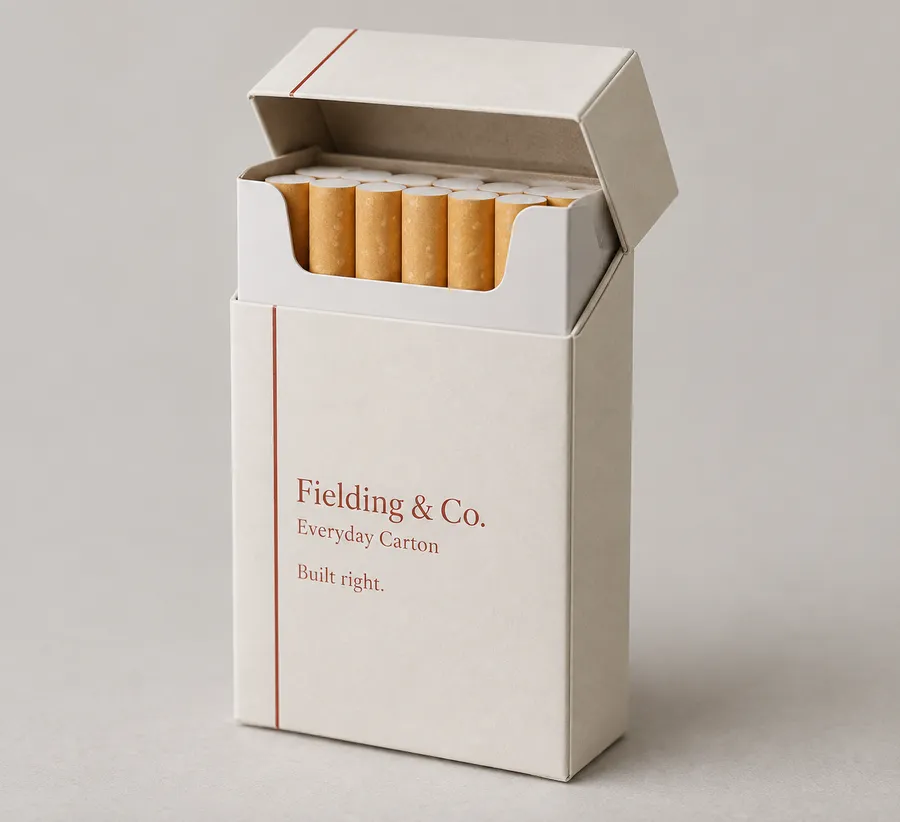
Sizing starts with the assembled inner pack and the way it enters, sits in, and leaves the carton. The dieline then coordinates the upright body, top lid, side seam, front panel, and any folded paperboard frame around that real packed profile.
A small printed carton for one cigarette product, with the front face carrying the brand hierarchy and the side and back panels carrying supporting information.
A coordinated carton system for different blends, flavors, or campaign editions where the structure stays related while the product wording changes.
A compact pack presented upright at a retail counter or in a display tray, with the lid, side seam, and front panel aligned for quick identification.
A branded inner carton placed into a larger subscription or direct-to-customer shipment, reviewed alongside the outer pack and its handling route.
Artwork is mapped to the assembled carton so the brand name, pack wording, side copy, lid, folds, and finish remain intentional after the box is folded.
The clearest brief connects the small pack to its opening action, board direction, artwork, and handling route so the quote can be reviewed around a complete package.
Share the filled pack dimensions, weight, widest points, top edge, orientation, and number of packs the carton must hold.
Explain whether the box is shelf-facing, handed over at a counter, placed in a display tray, or packed inside another shipment.
Review the front, back, side, and lid artwork on the folded carton, including seams, required pack text, and finish coverage.
The order path turns the filled pack and artwork brief into a confirmed carton structure, panel layout, and production-ready proof.
Provide the assembled dimensions, weight, top edge, orientation, number of packs, and any inner sleeve or frame.
Explain whether the box is shelf-facing, handed over at a counter, placed in a tray, or packed into another shipment.
Discuss kraft paperboard, SBS paperboard, or corrugated board with foil stamping, matte lamination, or gloss lamination.
Send the brand name, product name, required pack wording, panel priorities, and artwork status for the folding layout.
Check the front, back, side, lid, seams, inner fit, finish coverage, and customer-supplied required information against the actual pack.
Need help with structure, materials, or production planning? See how we manufacture custom packaging.
Review board feel, folded edges, printed coverage, closure action, and inner fit before a full run; the $44.99 sample-kit shipping charge is credited toward the first order.
Shipping charge: $44.99. Credited toward your first order.
Request a Sample KitFind clear answers about fit, materials, and ordering below.
Measure the assembled inner pack, including its height, width, depth, weight, widest points, top edge, and orientation. Also share the number of packs and any inner sleeve or frame so the dieline can be reviewed around the complete packed arrangement.
Kraft paperboard, SBS paperboard, and corrugated board are material directions in the cardboard-boxes category. The suitable direction depends on the fold pattern, printed surface, pack fit, finish, and handling route.
The minimum order is 50 units on the standard fulfillment path. Production begins from 7 business days after digital proof approval, and free US shipping is included.
Yes. Custom printed panels can be reviewed with foil stamping, matte lamination, or gloss lamination, subject to the selected board, folds, closure, surface coverage, and artwork.
The customer is responsible for confirming destination-market labeling, warnings, legal marks, and other required information before artwork approval. Easy Box Packaging can review how supplied artwork maps to the carton, but this page does not provide regulatory advice.
Send the filled pack dimensions and weight, number of packs, opening direction, quantity, intended handling route, artwork status, and any preferred board or finish. A physical sample or clear pack photos can help clarify the profile.
Orders start at 50 units and scale up to 500,000 for bulk runs, with pricing from $0.20 per unit on larger quantities. Standard production is from 7 business days after digital proof approval.
Compare nearby products and request the format that best fits your next run.
Available product
Available product
Available product
Available product
Get Started
Send the filled pack dimensions, number of packs, opening direction, quantity, board direction, finish, artwork status, and handling route to request a quote.
Add your product details to see a quote summary.