Subscription and repeat shipments
A coordinated lid, side panel, and interior message can give a recurring delivery a recognizable opening sequence while the structure is sized for the actual monthly assortment.

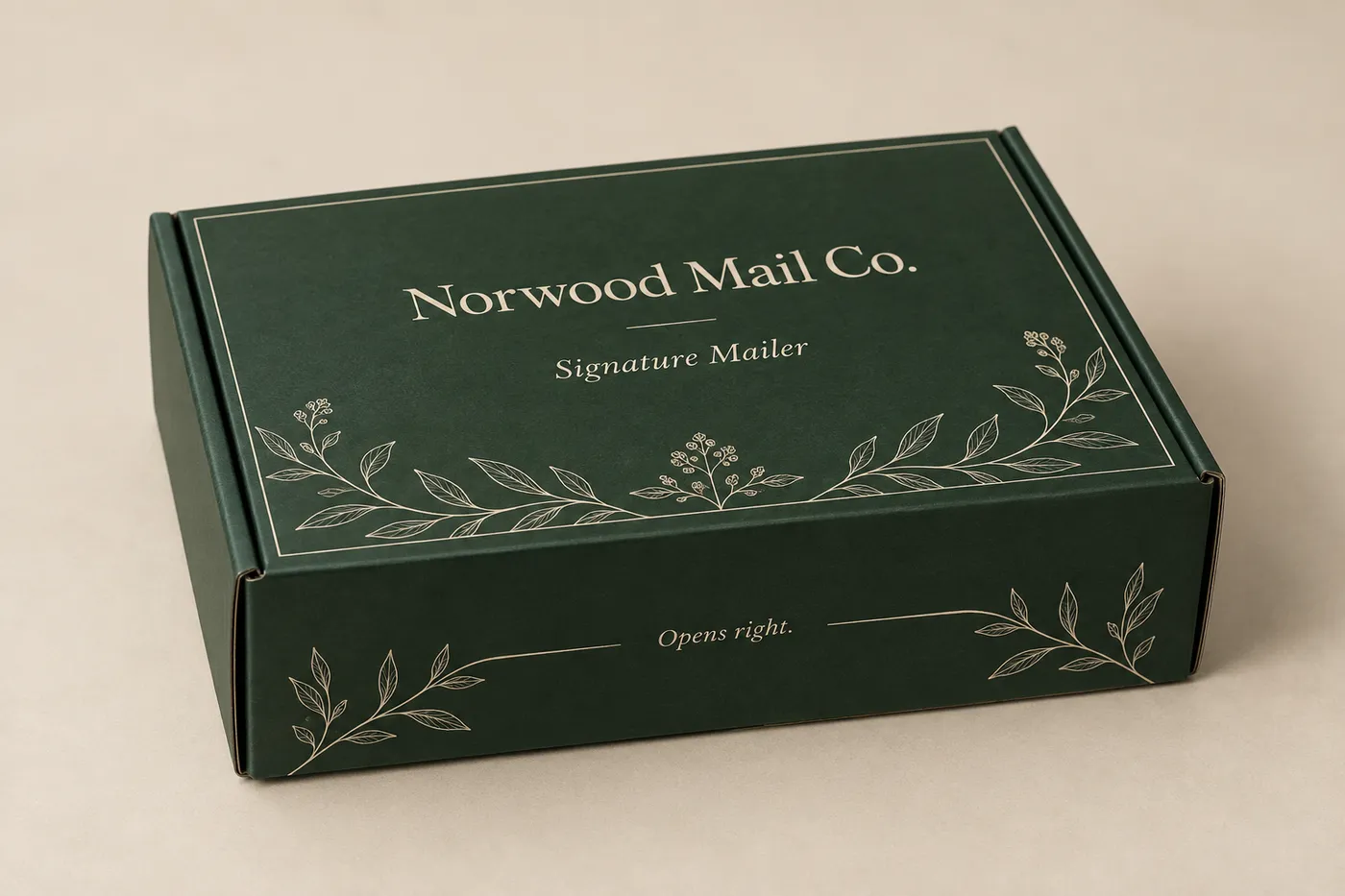
Closed custom decorative mailer box with forest green botanical print and tuck closure
Mailer Boxes
Custom decorative mailer boxes combine a printed exterior, a considered closure, and a product-sized folding structure for brands that want the delivery to feel designed before the package is opened. Choose paperboard or corrugated board around the packed product, then review the print coverage, finish, and interior presentation as one specification.
Last updated
Working quote
Product brief
A decorative mailer gives the delivery two jobs: carry the packed product through a shipping route and present a branded surface when the customer receives it. The decorative part is not just a pattern added after the box is chosen. It includes the visible lid, side walls, closure panel, interior, and the way the artwork works across folds. That makes this format a useful fit for subscription shipments, giftable ecommerce orders, apparel, small home goods, and other products where the package is part of the opening moment.
The box is made to order around the item you plan to ship. A folding paperboard mailer can suit a lighter product and a clean printed presentation, while corrugated board can be reviewed when the packed item needs a more structured shipping format. The right choice depends on product weight, fragility, packed dimensions, shipping distance, and whether the package needs internal support. A decorative treatment does not replace those construction decisions; it gives the chosen structure a more deliberate visual role.
The closure changes both handling and presentation. A tuck-style top can create a clear opening sequence and a straightforward flat-pack structure. An auto-lock bottom can be considered when the fulfillment team needs the base to form quickly and hold the packed product during handling. These are different decisions from the artwork itself, so the box style should be confirmed before the print layout is finalized.
For a light, neatly packed item, folding paperboard may provide the clean surface and crisp fold lines the design needs. For a heavier item or a route that calls for more structural support, corrugated board can be evaluated instead. The specification should account for the assembled box, the closure panels, and any internal paperboard riser, divider, or insert. No single closure or board family is right for every decorative mailer; the packed product sets the useful starting point.
A quote becomes more useful when the box is sized from the shipment rather than from a generic mailer label. Measure the packed product as it will actually be placed inside: overall length, width, and height; the number of items in one order; orientation; tissue, sleeve, or other packing material; and any part that projects, flexes, or needs to remain visible. Note whether the order contains one product or a small group, because quantity and arrangement can change the internal layout.
The final clearance is reviewed during specification and dieline work. A close fit can reduce unnecessary movement, but a decorative mailer also needs room for the closure to fold cleanly and for the customer to remove the item without catching the artwork or product. If the order includes several pieces, dividers or a fitted paperboard structure may be considered around the actual arrangement rather than added as a generic accessory.
Material changes the feel of the package before a customer sees the print. SBS paperboard offers a smooth printed face for a clean graphic treatment. Kraft paperboard keeps a more natural paper character and can make a restrained one- or two-color design feel intentional. Corrugated board brings a fluted shipping construction into the decision when the packed format needs more structure. The appropriate stock is confirmed against the product, closure, shipping route, and artwork rather than selected from appearance alone.
Matte lamination can give the printed panel a low-glare surface, while gloss lamination creates a higher-shine appearance. Foil stamping can highlight a selected wordmark, border, or line detail, subject to artwork review. These finishes should be planned around folds, closure edges, and the areas a customer touches first. If the design uses a decorative pattern, keep its repeat aligned with the dieline so an important motif does not land across a crease or disappear beneath a flap.
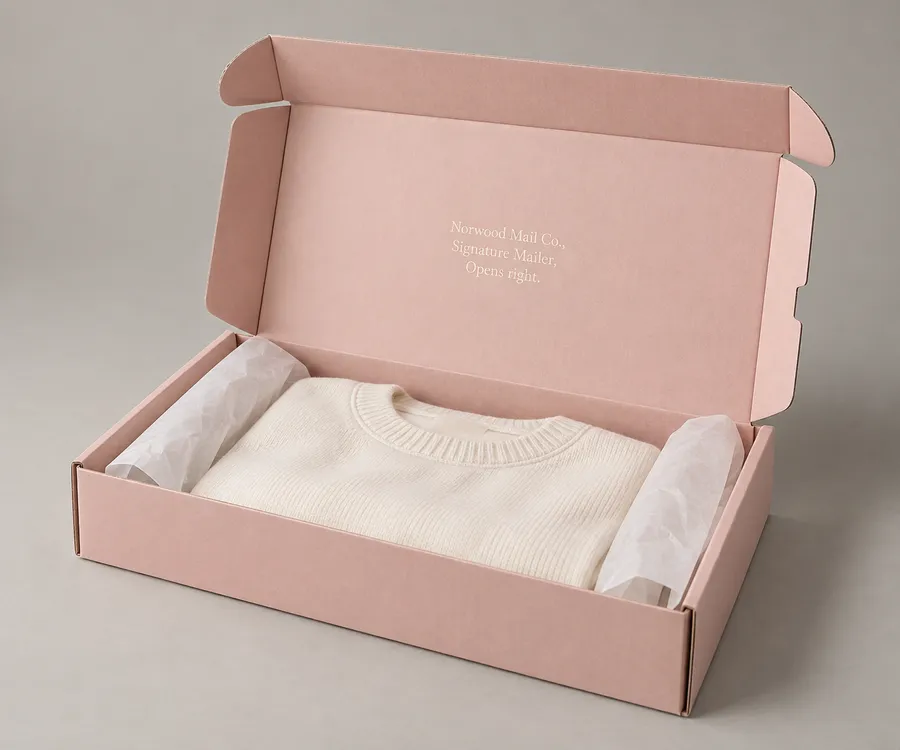
The exterior can establish the brand before the lid is lifted; the interior can carry a message, pattern, or color transition that appears during opening. Decide whether the important artwork belongs on the top panel, the front wall, the inside lid, or more than one surface. Interior printing is especially relevant when tissue, a product card, or a visible first layer is part of the intended reveal. The artwork still needs to respect the construction: glue areas, folds, locking tabs, and any insert location must remain clear in the approved layout.
A decorative mailer may use a full-coverage pattern, a restrained border, or a text-led treatment. The print direction should follow how the box is assembled and viewed, not just how the flat sheet looks on screen. Easy Box Packaging includes dieline and digital proof review, so the design can be checked against the actual panels before production begins.
The ordering process starts with the product dimensions, quantity, preferred construction, artwork status, finish direction, and shipping use case. Easy Box Packaging then scopes the structure, confirms the dieline, and prepares the digital proof for review. Production typically begins from 7 business days after digital proof approval. The standard minimum order is 50 units, and US shipping is included on the standard fulfillment path.
If you are still comparing structures, send the packed dimensions and a short description of how the package should open. That is enough to start a useful conversation about paperboard versus corrugated board, closure style, internal support, and the visible print surfaces. A $44.99 sample-kit shipping charge is credited toward the first order when a physical reference is useful before committing to the full run.
Include the packed product dimensions, product count per mailer, orientation, protective packing, expected shipping route, preferred board direction if known, exterior and interior print coverage, finish preferences, and any insert or divider requirement. If the artwork is ready, note which panels carry the key brand message and whether the design includes a repeating pattern. If it is not ready, describe the color, motif, and opening sequence you want the box to communicate. Those details give the quote and dieline review a specific starting point without forcing a generic box around the product.
Proof points
A useful decorative mailer specification connects the box a customer sees with the shipment the fulfillment team handles.
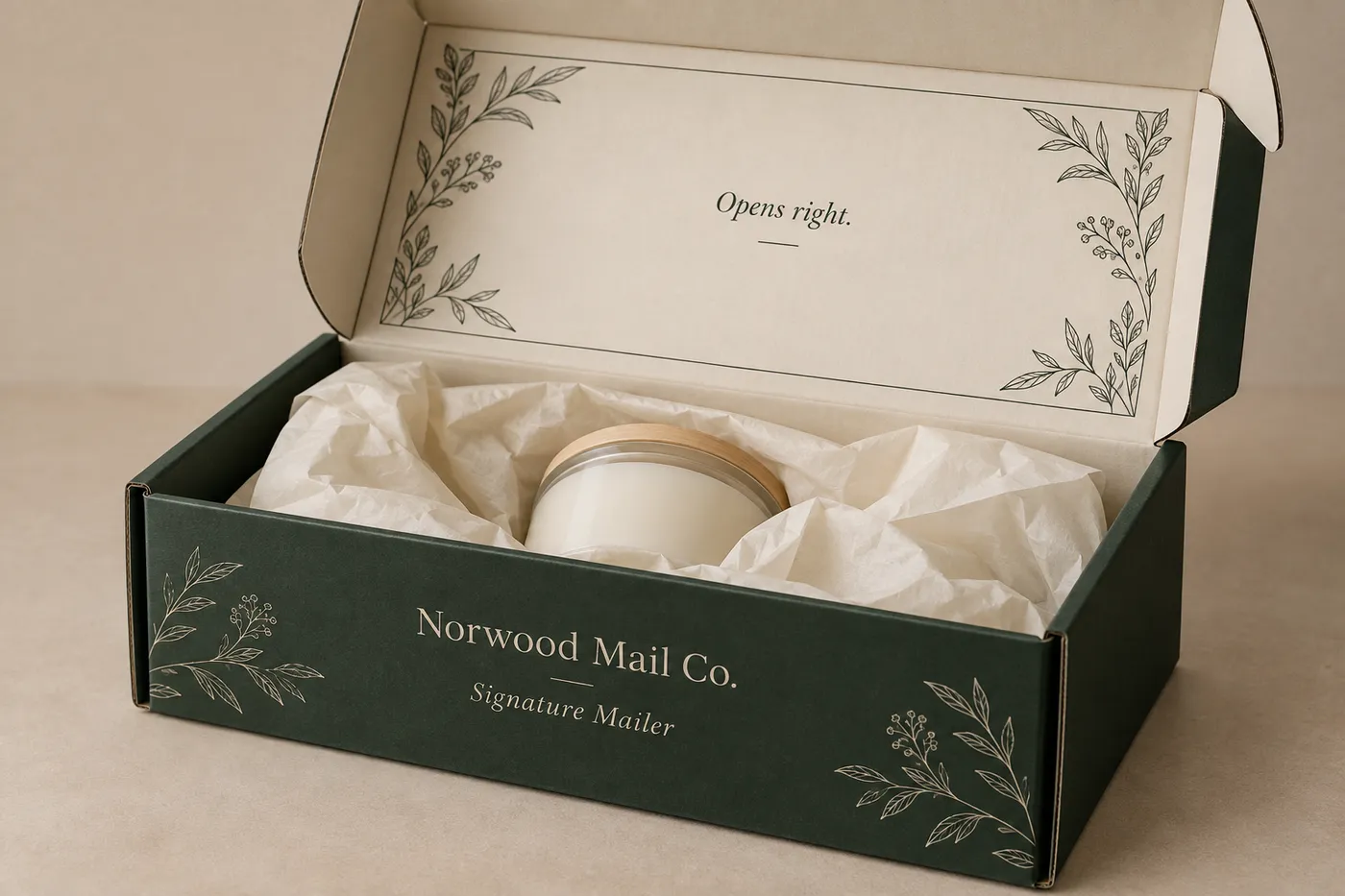
This made-to-order mailer format combines a folding paperboard or corrugated structure with coordinated exterior and interior print areas. Closure style, packed-product fit, and the first visible panel are resolved together so the decorative treatment belongs to the box rather than sitting on top of an unrelated shipping shape.
A coordinated lid, side panel, and interior message can give a recurring delivery a recognizable opening sequence while the structure is sized for the actual monthly assortment.
A decorative exterior and considered inside print can help a small gift set, accessory, or home item arrive in packaging that is ready to be experienced rather than hidden inside a plain carton.
A divider or fitted paperboard structure can be reviewed when several products travel together and the artwork needs to direct attention across the first-open view.
A folding mailer can organize a folded garment or textile item, with the board and closure selected around packed thickness, handling, and the desired printed presentation.
The decorative treatment can be planned across the lid, front wall, side panels, and interior opening area. Matte Lamination may suit a low-glare surface, Gloss Lamination may suit a higher-shine appearance, and Foil Stamping can highlight selected details, subject to artwork review.
The visible pattern works best when the physical construction has been considered first. These are the practical choices that keep the package specific to the shipment.
Review a tuck-style or auto-lock closure against how the team fills, closes, and opens the mailer; the best fit depends on the assembly sequence and packed product.
A paperboard riser, divider, or insert may be considered when product geometry, weight, fragility, orientation, and the desired reveal call for more than an open cavity.
Exterior and interior artwork should be placed with folds, tabs, glue areas, and the first-open panel visible in the dieline review.
The fastest route to a useful quote is a clear description of what goes inside and what the customer should see when the box opens.
Send packed dimensions, product count, orientation, protective materials, expected shipping route, and the preferred opening sequence.
The box structure, closure, board direction, internal support, and print coverage are scoped against the product rather than a generic mailer size.
Review the dieline and artwork placement across the visible panels, folds, tabs, and interior before production begins.
Production starts from 7 business days after digital proof approval, with the final schedule tied to the approved specification.
Need help with structure, materials, or production planning? See how we manufacture custom packaging.
A sample kit can help you compare board character, closure behavior, and print or finish direction before choosing the production specification. The sample-kit shipping charge is $44.99 and is credited toward your first order.
Shipping charge: $44.99. Credited toward your first order.
Request a Sample KitFind clear answers about fit, materials, and ordering below.
A decorative mailer treats the closure, exterior panels, and optional interior surfaces as part of the customer-facing package. It still needs to be sized and structured around the product, but the print plan is considered during the box specification rather than added as an afterthought.
Start with the packed product, weight, fragility, shipping route, and desired opening sequence. SBS or kraft paperboard can suit a lighter folding presentation, while corrugated board can be reviewed for a more structured shipping format. The final direction is confirmed during specification and dieline review.
Interior printing can be planned on supported mailer formats for an inside-lid message, pattern, or color transition. The artwork is mapped around folds, tabs, glue areas, and any insert so the opening sequence remains clear.
Share the packed length, width, and height, the number of products per mailer, orientation, protective packing, expected shipping route, preferred structure, print coverage, finish direction, and any support or divider requirement.
The standard minimum order is 50 units. Production starts from 7 business days after digital proof approval, and the final schedule follows the approved specification.
Orders start at 50 units and scale up to 500,000 for bulk runs, with pricing from $0.39 per unit on larger quantities. Standard production is from 7 business days after digital proof approval.
Common uses include subscription and repeat shipments, giftable ecommerce orders, small product collections, and apparel and soft goods. The final specification is set by the packed product and how it will be handled.
Compare nearby products and request the format that best fits your next run.
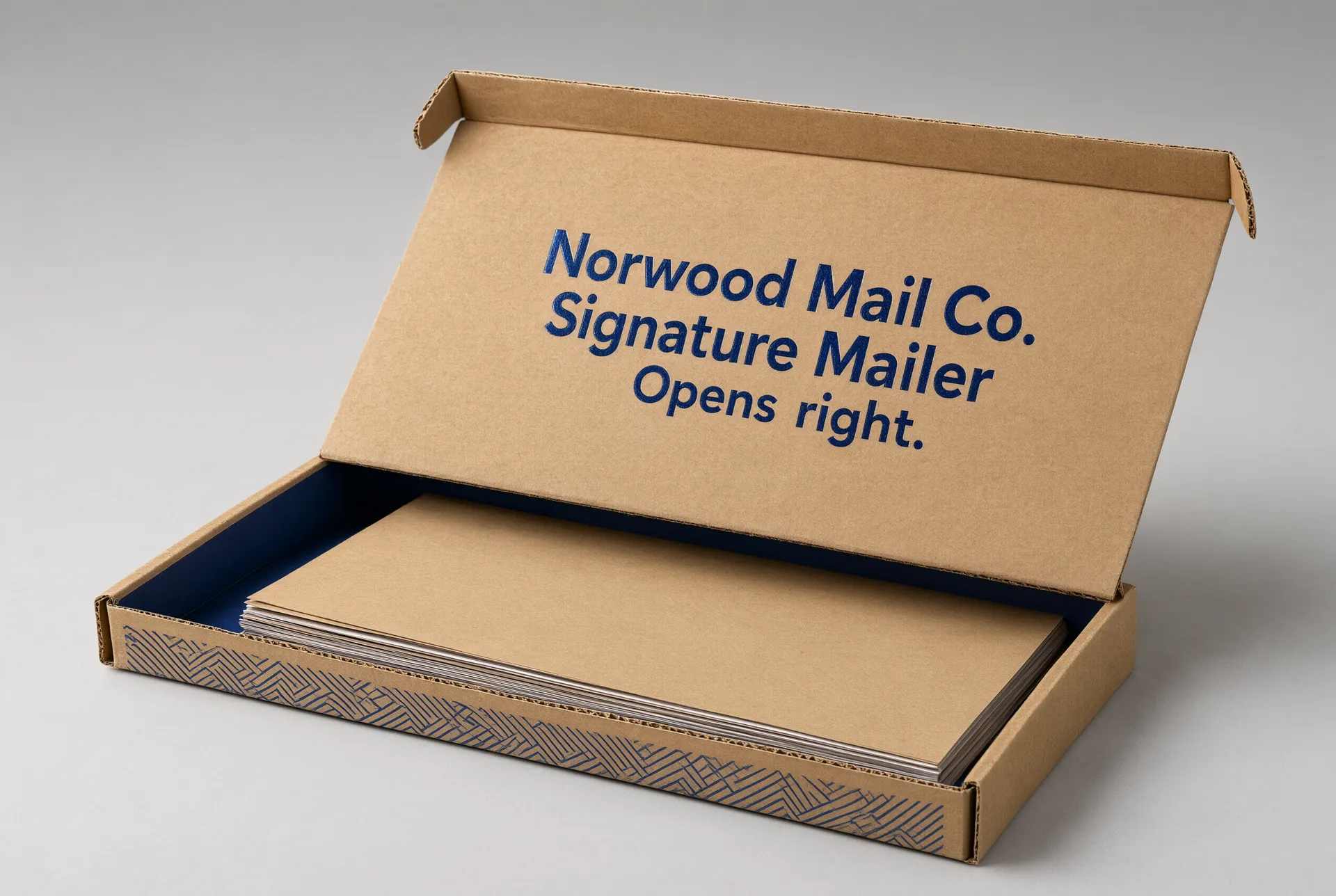
Available product
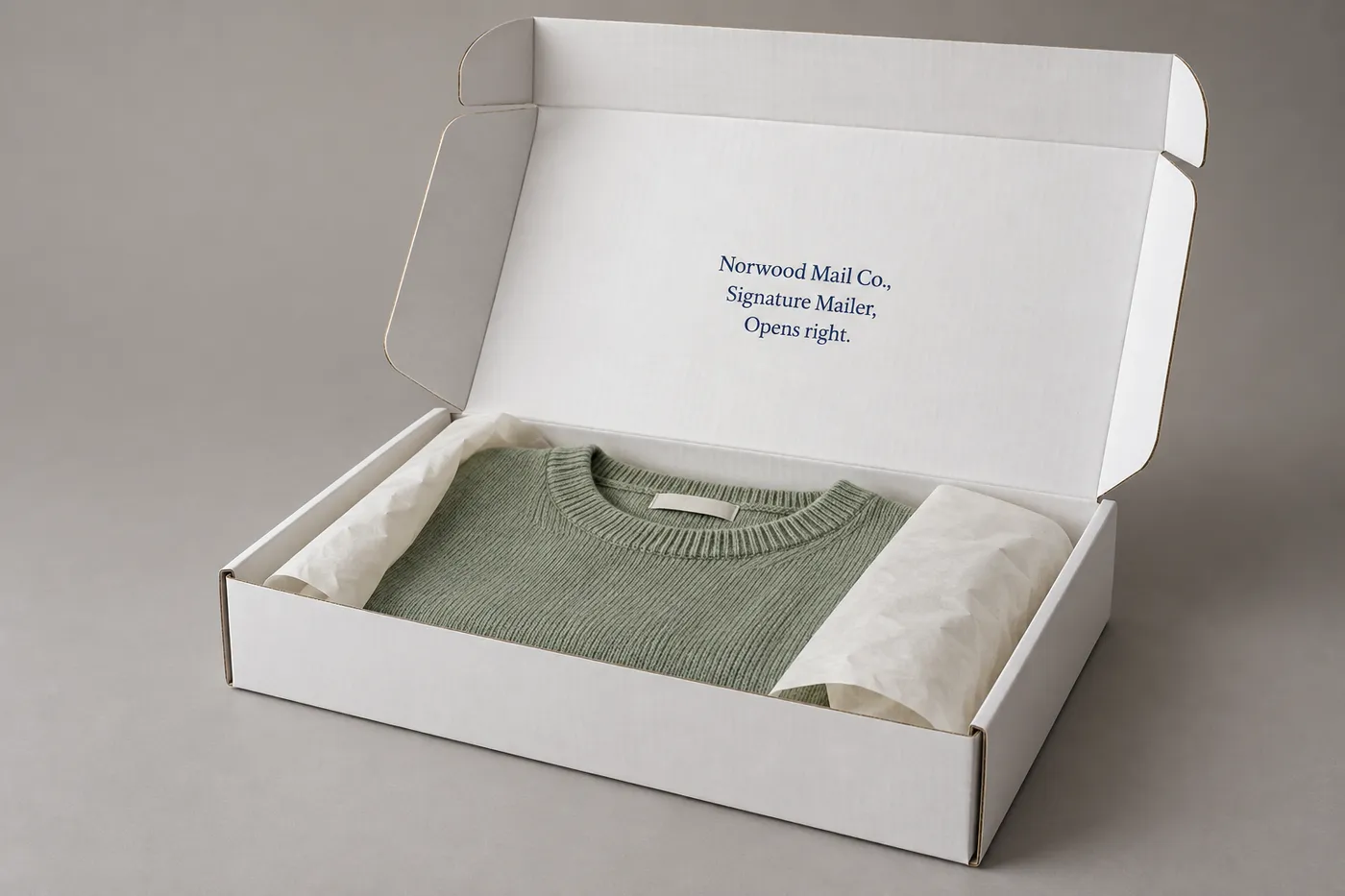
Available product
Available product
Available product
Build the opening around the product
Send the packed dimensions, quantity, board preference, artwork status, and the moment you want the customer to see first. Easy Box Packaging can then review the structure, print surfaces, and finish direction together.
Add your product details to see a quote summary.