Subscription shipments
A recurring set can use an ear-lock mailer when the product count, card, wrap, and opening sequence stay consistent from cycle to cycle.

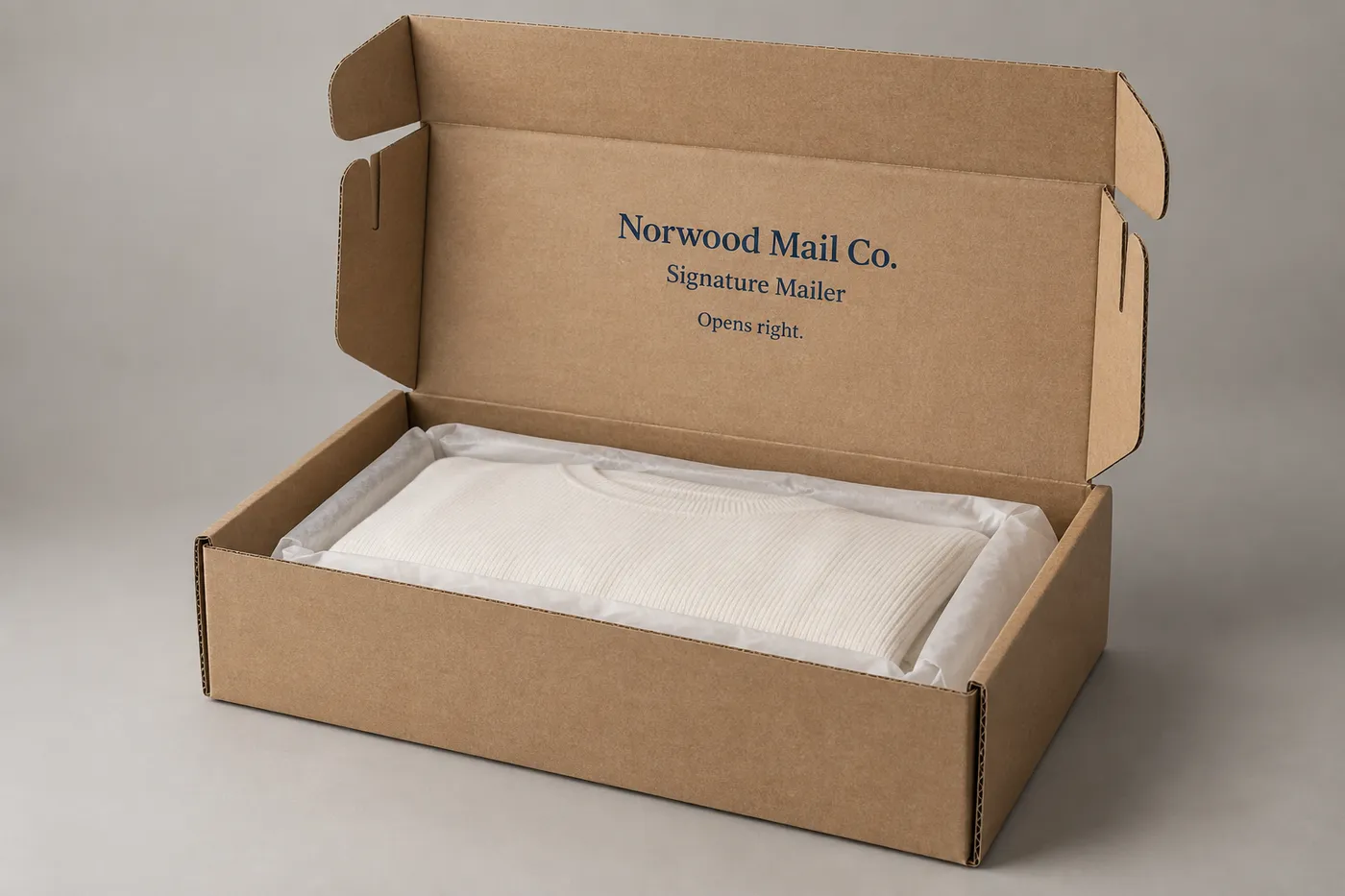
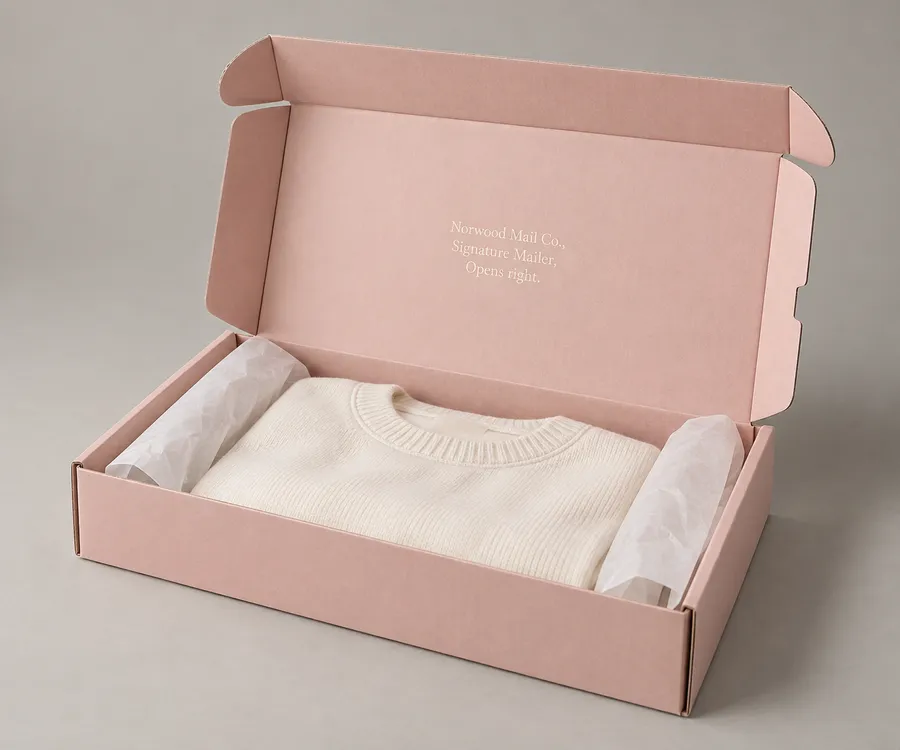
Open kraft ear-lock mailer box with folded soft good inside
Mailer Boxes
A custom ear lock mailer box uses integrated paperboard locking ears to create a clean folding closure around the packed product. The box is sized around the finished item, loading route, and desired opening sequence, then reviewed for board direction, print placement, and surface finish. It can suit e-commerce parcels, subscription shipments, and compact soft goods that need a structured mailer without a separate closure component.
Last updated
Working quote
Product brief
A custom ear lock mailer box is a one-piece folding mailer whose closing panels use shaped paperboard ears to engage with the body of the box. That closure is the defining choice. Instead of treating the lid as a generic flap, the specification considers the ear shape, fold lines, panel overlap, loading route, and the way the recipient will open the parcel. The result is a made-to-order mailer format that can keep the outside presentation controlled while the internal footprint is developed around a real packed product.
The product is not a pre-sized carton with a label added afterward. A quote should begin with the finished product or product set, including its packed length, width, height, weight, orientation, wrap, and any part that projects beyond the main body. Those details inform the cavity, lid depth, side panels, and ear engagement. The closure needs enough room to fold and seat as intended without being planned in isolation from the pack inside.
The ear-lock format makes the closure route visible in the dieline review. The ears, slots or receiving panels, creases, and lid return all need to agree with the direction in which the box is folded and opened. A mailer for a product placed from the side may need a different panel sequence from one packed from the front. Product count, weight distribution, fragility, orientation, internal support, and the desired reveal can also change how the structure should be reviewed.
The ear-lock approach can keep the closure integrated into the paperboard format, with no separate magnetic piece, rope, or hardware in the authored specification. That does not remove the need for a proof. A digital proof should show the ear positions, fold clearances, panel orientation, artwork boundaries, and the closed profile. If the packed item changes, the ear-lock geometry should be checked again rather than assumed to transfer unchanged.
Mailer-box materials are selected against the packed product and the shipping use, not by the closure name alone. Corrugated Board can be reviewed when the parcel needs a more structured shipping format and visible board character. Kraft Paperboard can keep a natural paper surface in the presentation, while SBS Paperboard can be considered when a smoother face is important for controlled print detail. The final choice remains part of the quote and dieline discussion.
Board direction also affects how the ear-lock folds read in the assembled box. Share whether the mailer will carry a folded garment, a compact accessory, a subscription set, or another defined pack. The product geometry, mass, orientation, and clearance should be reviewed together with the board direction. Internal support may be formed into the paperboard structure or handled as a separate insert when the specification calls for it; that decision depends on the product and presentation requirements rather than on weight alone.
An ear-lock mailer has panels that move across one another, so artwork should be planned with the opening sequence in view. A front wordmark may be placed on the panel that remains visible when closed. An interior message can be positioned where it appears after the lid is opened. Artwork near the ears, slots, fold lines, and cut edges should be checked in the proof so the closure remains legible and the printed message does not disappear into a crease.
Matte Lamination, Gloss Lamination, and Foil Stamping are the category finish directions to review. Matte or gloss treatments can change the surface response, while foil can highlight selected lettering or linework subject to artwork review. None of these choices should be treated as a substitute for a workable closure. Start with the ear-lock structure, then place the visual treatment around the panels that will actually be seen during packing, delivery, and opening.
A custom ear lock mailer box can suit recurring subscription parcels where the pack count and opening route are stable enough to define the structure. It can also fit e-commerce shipments for folded apparel, soft accessories, stationery bundles, or other compact goods when the packed profile is known. For a small accessory set, the quote can account for individual wrap, product orientation, and any internal support needed to keep the set presented as intended.
The format is also useful for a brand that wants a clear folding closure without moving to a rigid two-piece presentation box. That is a structural distinction, not a promise about shipping performance. Fragile products, irregular shapes, heavy packed sets, and long shipping routes may call for a more detailed review of board, clearance, and support before the mailer is approved.
The standard path starts at 50 units, and the approved production estimate is from 7 business days after digital proof approval. Free US shipping and dieline/proof review at no extra charge are approved service facts for the standard fulfillment path. The product remains quote-only because no product-specific unit price is confirmed in the available evidence. A quote request should include the packed dimensions, weight, product count, loading direction, artwork coverage, preferred material, finish direction, and destination.
A sample kit can help compare board feel, fold behavior, printed surface, and the way the ear-lock panels meet in hand. The kit carries a $44.99 USD shipping charge credited toward the first order. During proof review, check the assembled closure rather than only the flat artwork. Confirm that the ears, receiving cuts, lid return, print placement, and intended opening sequence describe the same box before production begins.
Proof points
The ear-lock detail is small, but it controls how the mailer is folded, closed, opened, and presented. These proof points keep that detail connected to the full box.
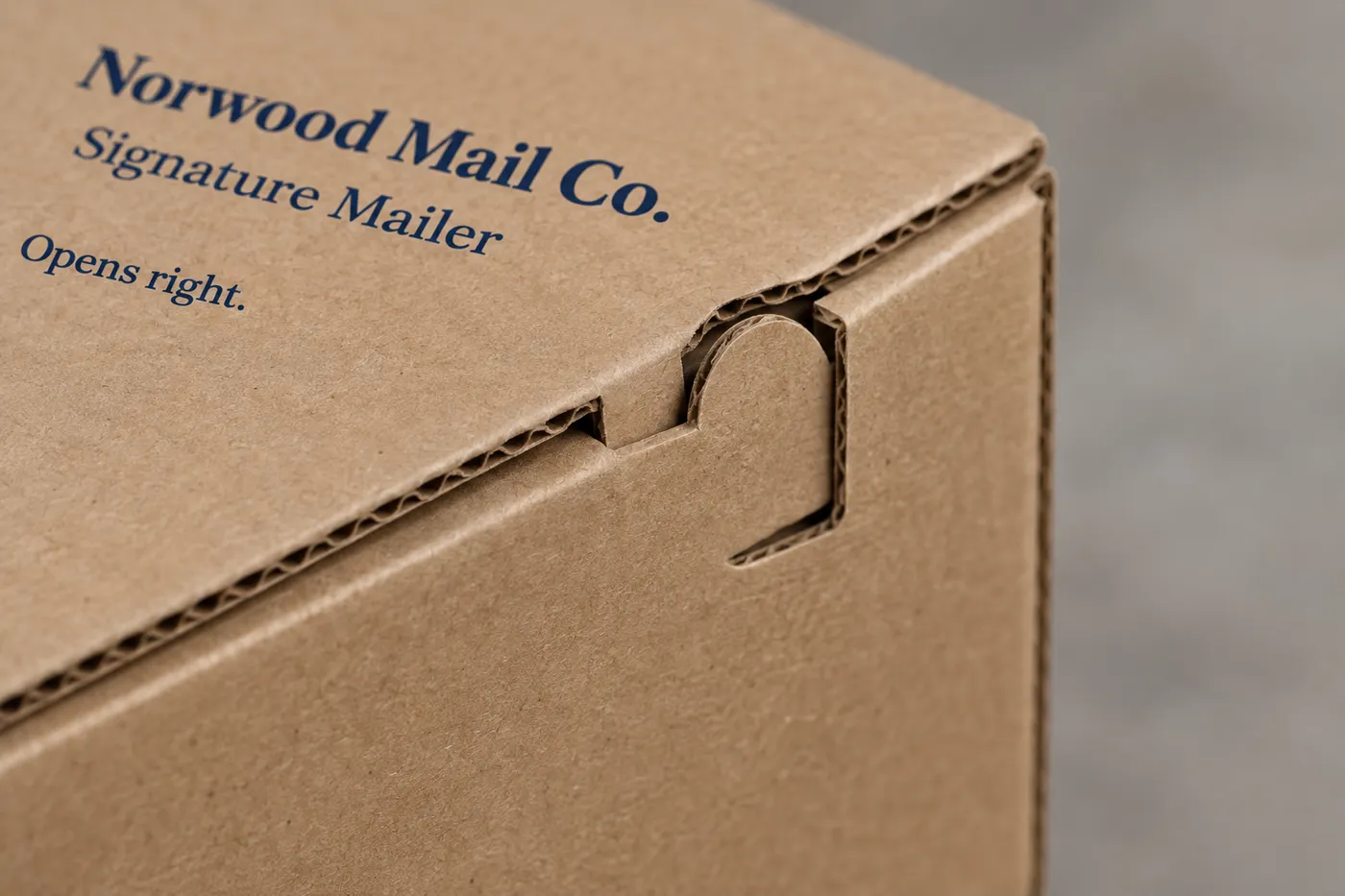
An ear-lock mailer makes the closure part of the box's folding structure. That gives the quote a clear construction question to solve: how the ears engage, how the lid returns, and how the packed product sits below the moving panels. Share the finished pack and opening route so the mailer can be reviewed as one assembled format rather than as artwork placed on an assumed carton.
A recurring set can use an ear-lock mailer when the product count, card, wrap, and opening sequence stay consistent from cycle to cycle.
Folded apparel or a soft accessory can be planned into a shallow mailer when the compressed bundle and any filler are included in the packed profile.
A paperboard mailer can contain a defined stack of cards, notebooks, or printed pieces when stack height and corner protection are part of the specification.
Small accessories can be grouped in an ear-lock format when product orientation, individual wrap, and internal support are reviewed together.
The ear-lock closure creates moving folds and receiving areas that should remain clear in the artwork. Place the main brand message on the panel that will be visible when closed, then review any interior message or selected finish against the actual opening path.
The closure is easiest to review when the product, packing route, and printed panels are described together. These inputs keep the ear-lock format tied to the actual order.
Provide finished length, width, height, weight, product count, orientation, wrap, and any projection that changes the interior clearance.
Review the ear shape, receiving panels, fold sequence, lid return, and the way the assembled box opens after packing.
Map the front, side, lid, and interior artwork around ears, slots, fold lines, and cut edges before selecting a finish.
A quote is easier to scope when the ear-lock closure is described alongside the packed product, loading route, artwork coverage, and intended shipping use.
Provide finished length, width, height, weight, product count, orientation, wrap, and any projection or filler that changes the fit.
Explain how the product will be loaded, where the ears should engage, and how the recipient should open the assembled mailer.
Share the preferred material, artwork coverage, interior or exterior print, and any request for Matte Lamination, Gloss Lamination, or Foil Stamping.
Check the packed fit, ear engagement, fold clearances, panel orientation, artwork boundaries, and finish before production begins.
Need help with structure, materials, or production planning? See how we manufacture custom packaging.
A sample kit ships for a $44.99 USD charge credited toward your first order, useful when you need to compare board feel, fold quality, printed surface, and the way the ear-lock panels meet before approving the custom mailer.
Shipping charge: $44.99. Credited toward your first order.
Request a Sample KitFind clear answers about fit, materials, and ordering below.
It is a one-piece folding mailer that uses shaped paperboard ears and receiving panels as part of its closure route. The ear positions, fold sequence, packed clearance, and opening direction are reviewed together in the dieline rather than treated as a generic lid.
Provide the finished packed length, width, height, weight, product count, orientation, wrap, filler, and any part that projects beyond the main body. A folded garment should be measured as a folded bundle, and a set should be described in the arrangement in which it will be packed.
Corrugated Board, Kraft Paperboard, and SBS Paperboard are the category material directions to review. Corrugated Board may suit a more structured shipping format, Kraft Paperboard keeps a natural paper character visible, and SBS Paperboard can be considered when a smoother face matters for controlled print detail.
Artwork near the ears, receiving cuts, creases, and cut edges should be checked in the digital proof. Exterior, interior, Matte Lamination, Gloss Lamination, and selected Foil Stamping directions can be discussed, but the printed treatment should preserve a clear opening route and legible closure panels.
The approved standard estimate is from 7 business days after digital proof approval. Orders start at 50 units, and free US shipping plus dieline and proof review at no extra charge are included on the standard fulfillment path. The final schedule follows the approved product specification.
Your final unit price is confirmed in a quote because no product-specific unit price is confirmed in the available evidence. A quote can be prepared from the packed product profile, closure route, material, print coverage, finish, quantity, and destination.
Orders start at 50 units and scale up to 500,000 for bulk runs, with pricing from $0.33 per unit on larger quantities. Standard production is from 7 business days after digital proof approval.
Compare nearby products and request the format that best fits your next run.
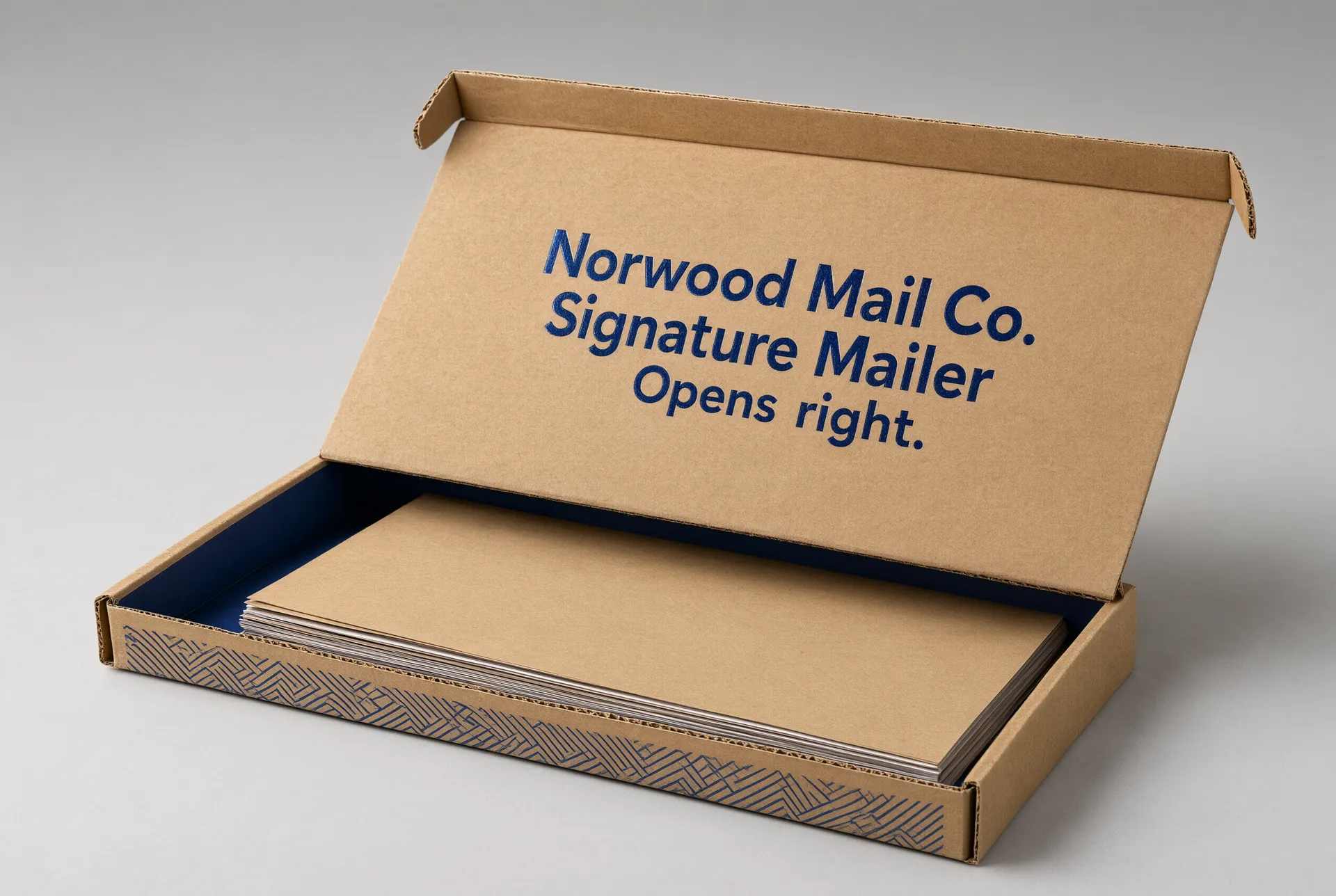
Available product
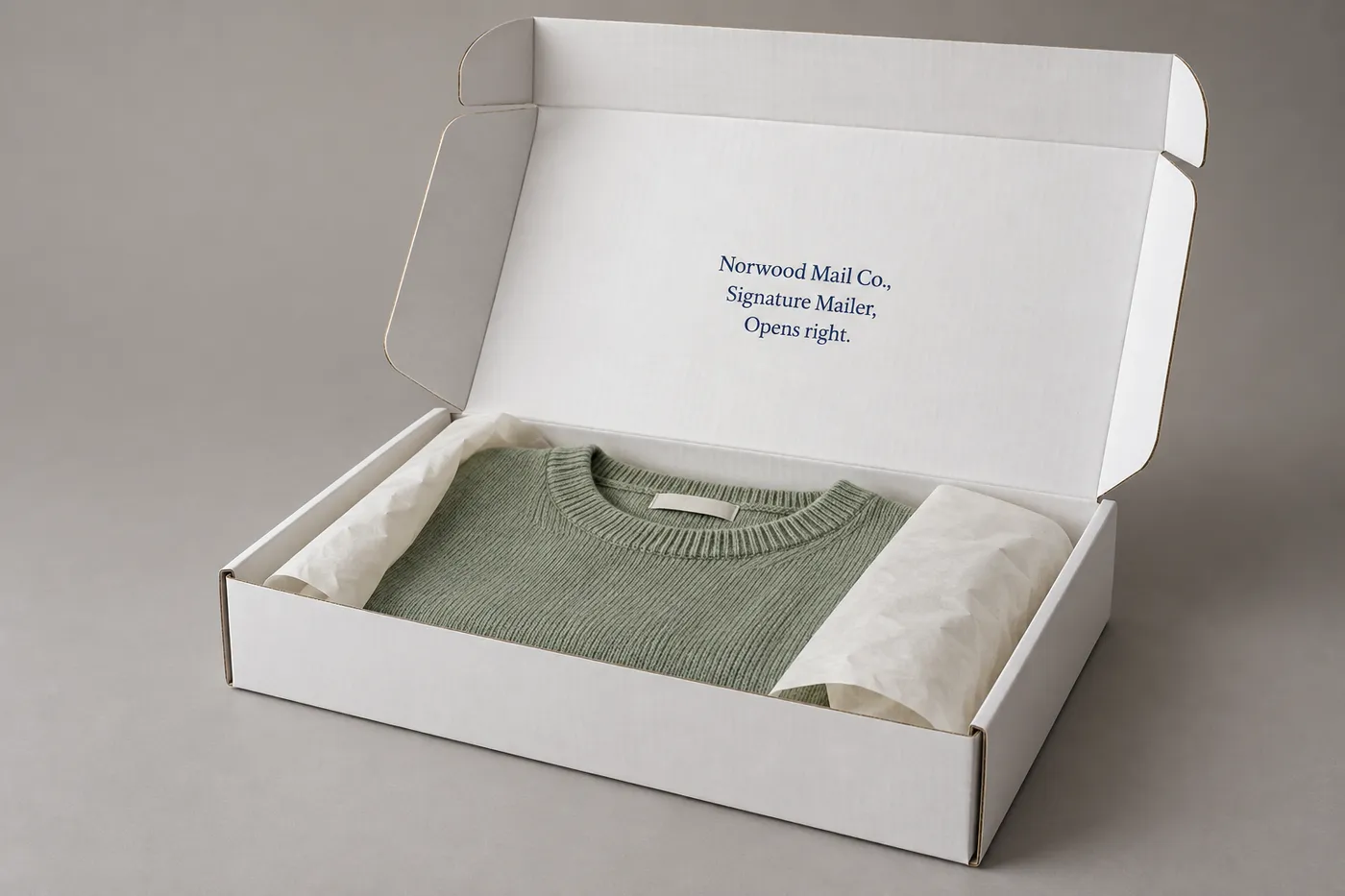
Available product
Available product
Available product
Build the closure around the pack
Send the packed dimensions, product count, loading direction, intended shipping use, and preferred material or finish. Easy Box Packaging can then review the ear-lock structure, panel visibility, and artwork as one quote-ready specification.
Add your product details to see a quote summary.