Subscription shipments
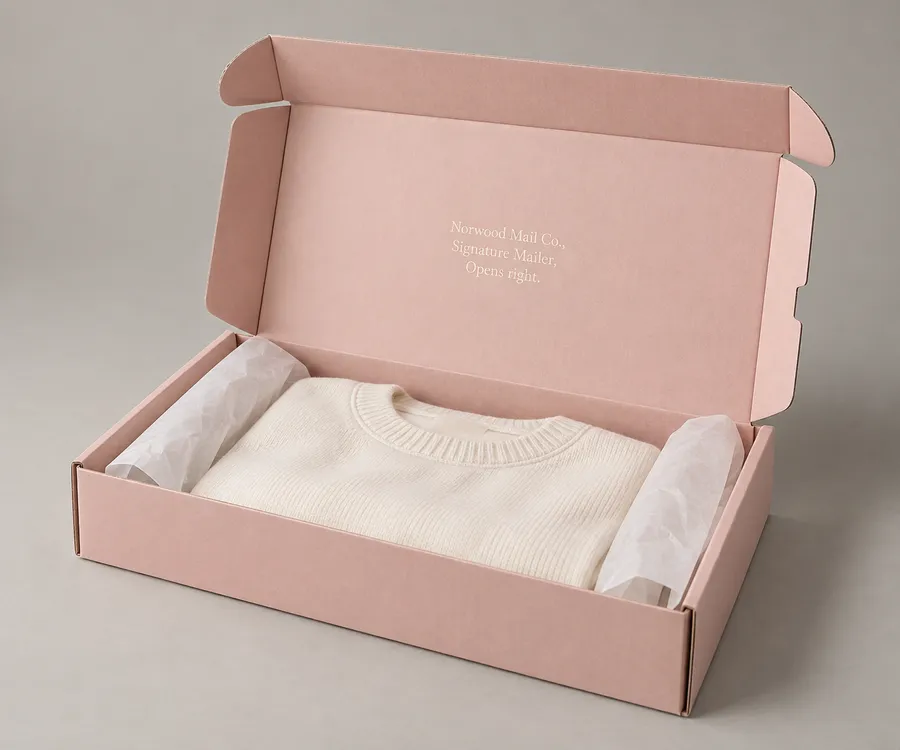
A repeat shipment can use a consistent folding mailer with a branded lid and an interior message that follows the opening sequence.

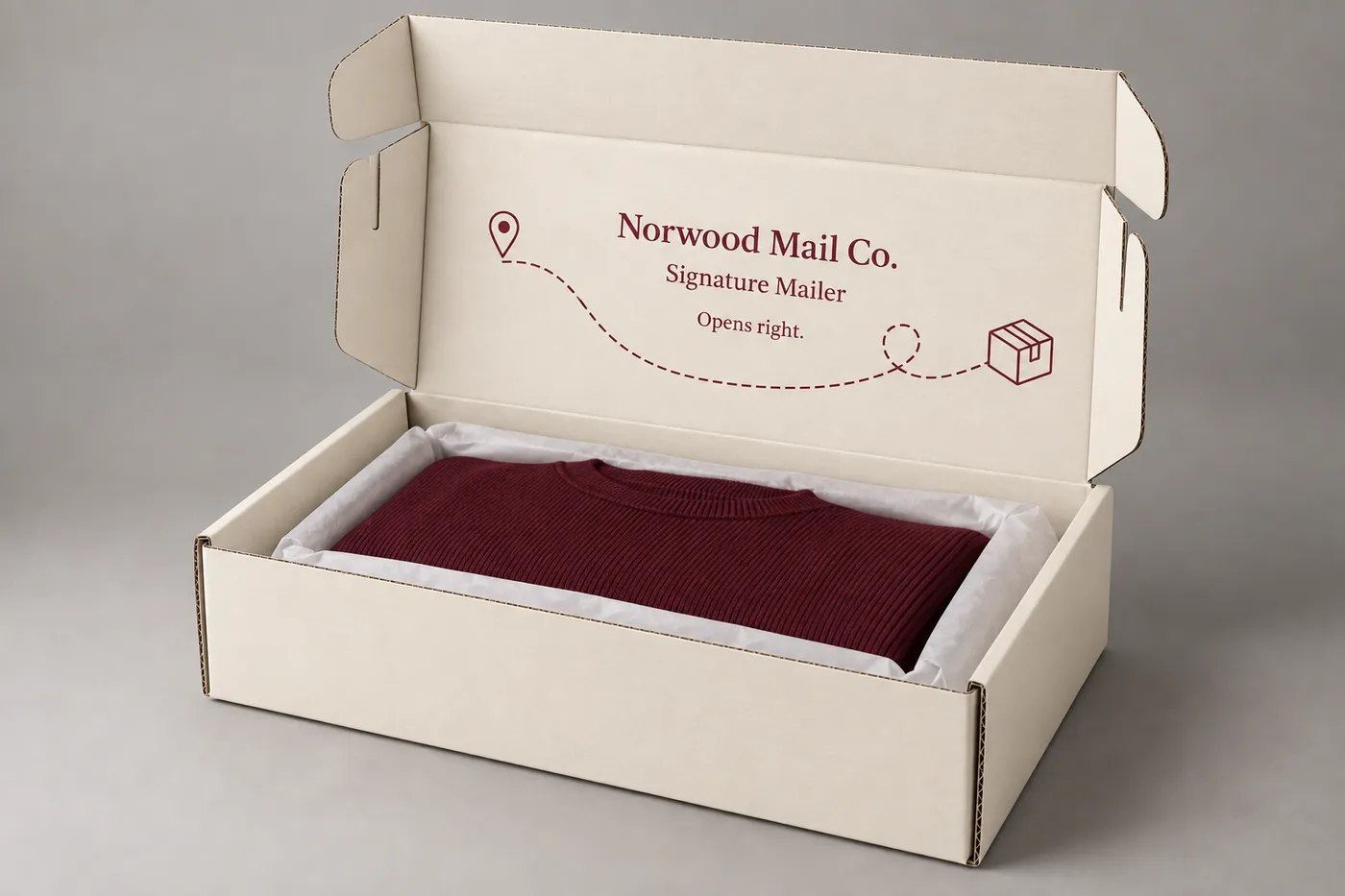
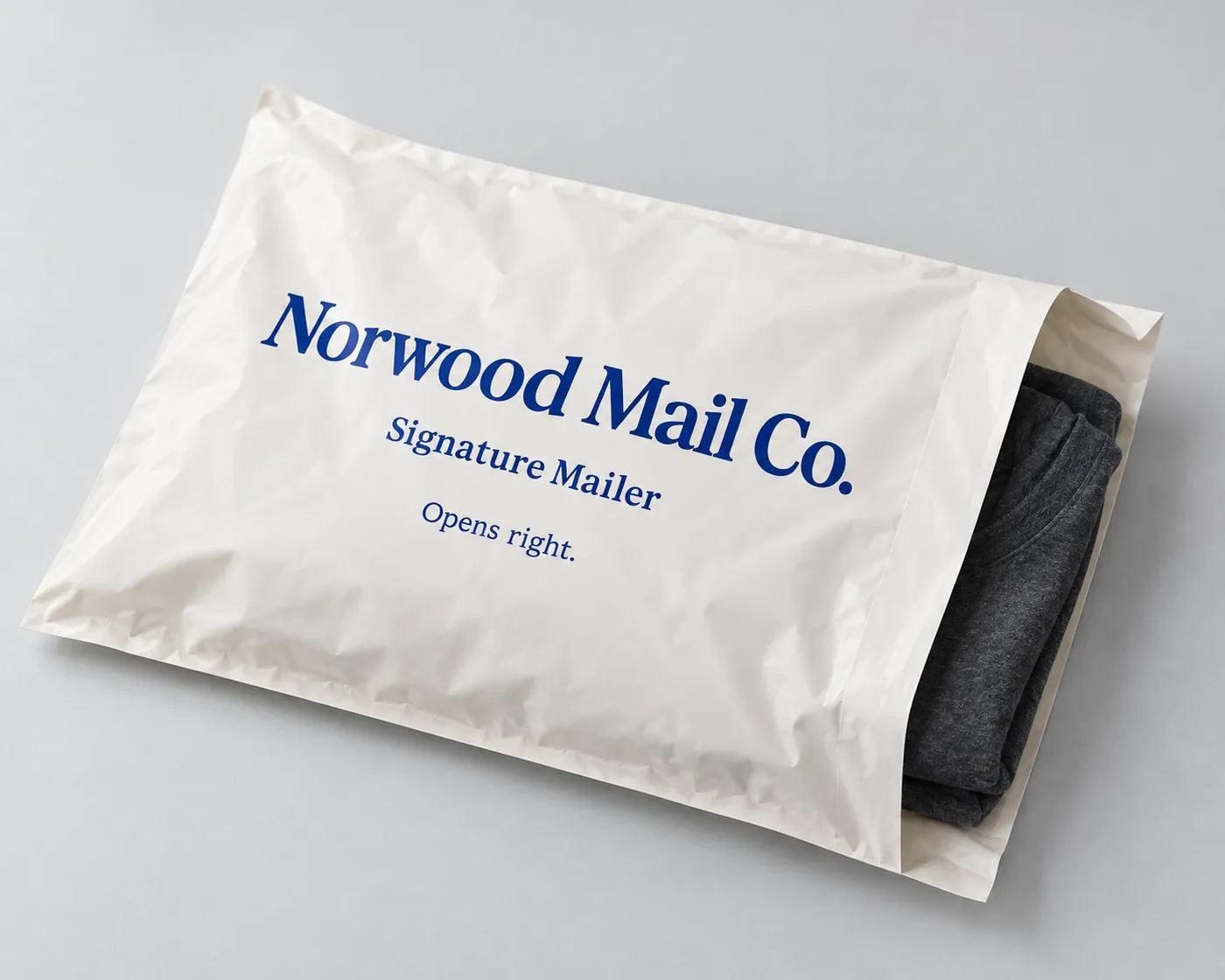
Open ivory ecommerce mailer with a folded burgundy knit garment and Norwood Mail Co. print on a studio surface
Mailer Boxes
Custom ecommerce mailer boxes are made-to-order folding boxes sized around the packed length, width, and height of your order. Choose a corrugated or paperboard format, an integrated tuck-in closure, exterior or interior print, and a finish that suits the unboxing experience without adding avoidable bulk around the product.
Last updated
Working quote
Product brief
Custom ecommerce mailer boxes give a shipped order a defined outer structure before it reaches the customer. The useful decision is not simply whether the box can carry the product. It is how the packed order, closure, board direction, print coverage, and handling conditions work together. A shallow mailer can suit folded apparel, subscription goods, books, accessories, or other products that need a stable presentation inside a parcel. A deeper or more supported format may be appropriate when the packed order has irregular geometry or a fragile surface. The quote should start with the order as it will actually be packed, not with a generic carton size.
An ecommerce mailer has to balance parcel handling with the moment of opening. The outer panels need a construction that can be formed, closed, labelled, and handled through fulfillment without turning the package into an oversized shell around the product. The inside also needs enough considered space for the confirmed product count and any tissue, sleeve, paper wrap, or other packing layer that belongs in the finished order. That balance changes with product weight, surface sensitivity, orientation, and the distance the parcel will travel. A mailer for a folded garment has a different brief from a mailer for several small retail items, even when both products are sold through the same store. Start the specification by describing the packed order and how it is placed into the cavity.
Measure the packed length, width, and height, then note the product count, orientation, closure area, and any packing layer that must remain inside the finished mailer. Irregular shapes, handles, protrusions, and products that shift during fulfillment need to be described rather than reduced to three outside measurements. The final allowance is confirmed during specification and dieline review, because a workable fit depends on the board direction, fold positions, closure geometry, and how the order is presented when opened. A single-product subscription mailer may use a shallow profile, while a mixed ecommerce order may need a different cavity and a more deliberate way to keep contents arranged. If your order changes size or count, flag that early so the dieline can be reviewed for the new format.
A folding mailer with an integrated tuck-in flap gives the fulfillment team a clear closing sequence and keeps the exterior readable for branding or shipping labels. Corrugated board can be considered when the packed order needs more structural support through handling. SBS paperboard or kraft paperboard can suit lighter products where a flatter printed presentation matters more than added board structure. The material choice should be made against product weight, edge sensitivity, parcel handling, print goals, and the amount of internal support required. Tissue, a sleeve, paper wrap, or another support layer may be reviewed when product geometry, orientation, fragility, and presentation call for it. The useful question is not whether an insert is standard. It is whether the confirmed order needs help staying arranged inside the chosen mailer structure.
Exterior print establishes the first visual cue before the lid is opened. Interior print can continue the brand story across the lid or inner walls, which makes sense when the opening sequence is part of the product presentation. Matte lamination can give artwork a softer visual character, gloss lamination can add a more reflective surface, and selected foil stamping can draw attention to a limited mark or detail. These choices are subject to artwork and board review; dense coverage, fine elements, fold positions, and the desired contrast all matter. If shipping labels or fulfillment marks occupy a defined panel, reserve that area before the artwork is finalized. A simple printed hierarchy often works better than covering every surface with competing messages.
Minimum order is 50 units. Production is from 7 business days after digital proof approval. The working sequence is specification confirmation, dieline preparation, artwork placement, digital proof review, approval, and production. A sample kit carries a $44.99 shipping charge credited toward the first order, which can help you review the board feel, fold behavior, print direction, and closure before committing to a larger run. Send the packed product or a clear dimensional brief, the expected quantity, the preferred material direction, and the print or finish requirements. The dieline review is where the product dimensions, fold positions, closure, and artwork coverage are checked together.
Include the packed product dimensions, product count per mailer, orientation, any tissue or sleeve, preferred closure direction, intended fulfillment use, artwork status, print coverage, finish preference, and any area that must remain clear for a label. If you are comparing corrugated board with paperboard, say what matters most: additional structure, lower bulk, print character, or a particular opening sequence. If the size or contents may change between product variants, list those variants separately. A useful quote brief gives the packaging team enough context to recommend a workable construction and identify what still needs confirmation. That makes the review more useful than sending only a product name and a target box length.
Proof points
The useful proof is a clear connection between the packed order, the chosen structure, and the artwork placement. The product dimensions should be checked against the cavity and fold positions, while the print brief should show which panels carry exterior or interior artwork and which area must remain clear for fulfillment marks. This is also where the material direction and any internal support are confirmed. A well-prepared brief makes the review specific without pretending that one mailer profile can serve every ecommerce variant.
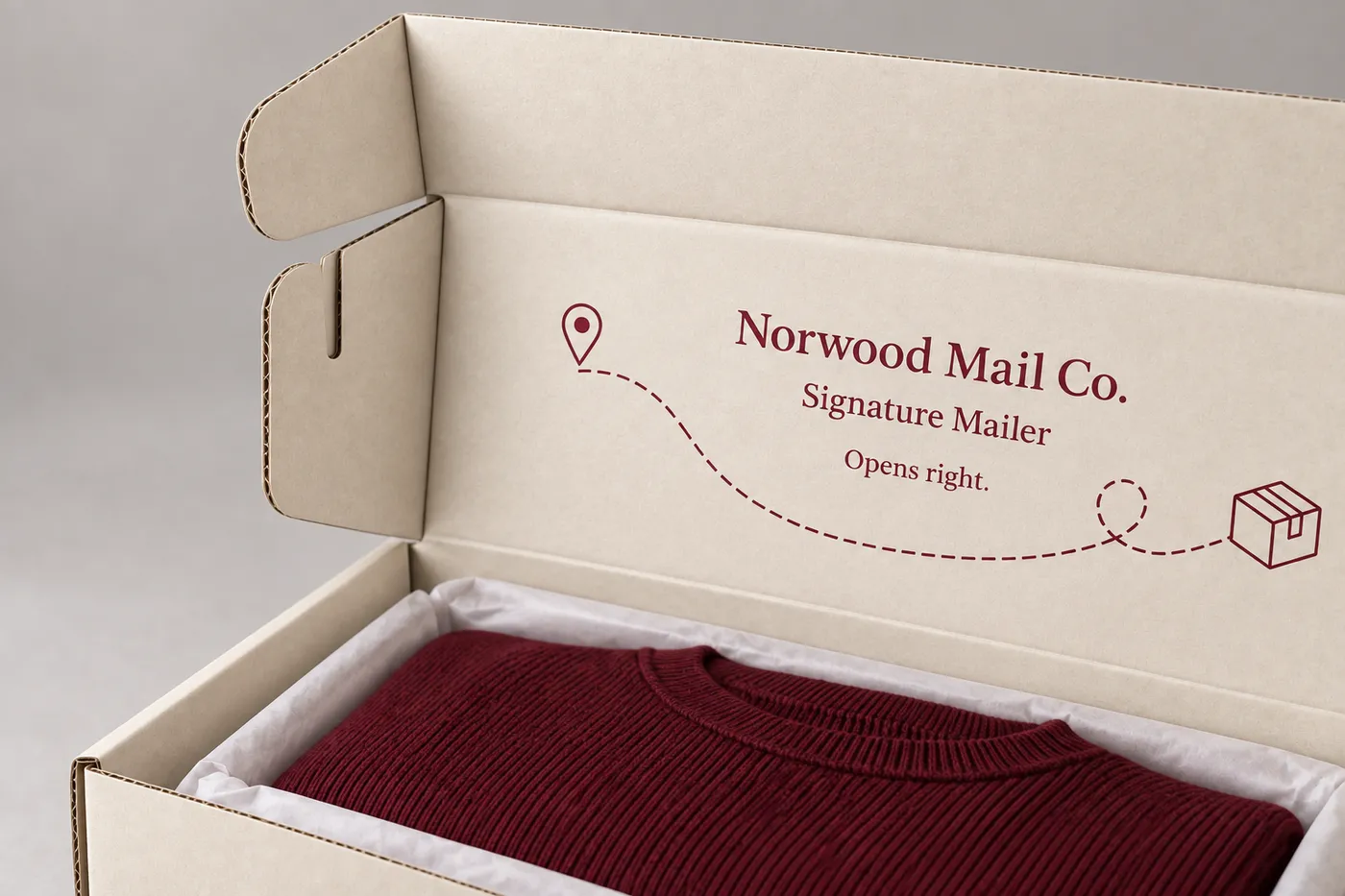
An ecommerce mailer should be sized from the packed order, not from a generic outside carton. Confirm the product length, width, height, count, orientation, closure area, and any tissue, sleeve, or wrap that will remain inside. That brief helps the dieline account for the actual opening sequence and for the way the order is placed during fulfillment. A shallow format can suit a folded garment or book, while a mixed order may need more cavity depth or a considered internal support layer. Unusual handles, protrusions, tapered items, and products that can shift during packing should be described separately. The final allowance is reviewed against the board direction, fold positions, and closure geometry before production. If the same ecommerce range includes more than one size or product count, list each variant so the structure can be reviewed instead of assuming one profile will suit every order.
A repeat shipment can use a consistent folding mailer with a branded lid and an interior message that follows the opening sequence.
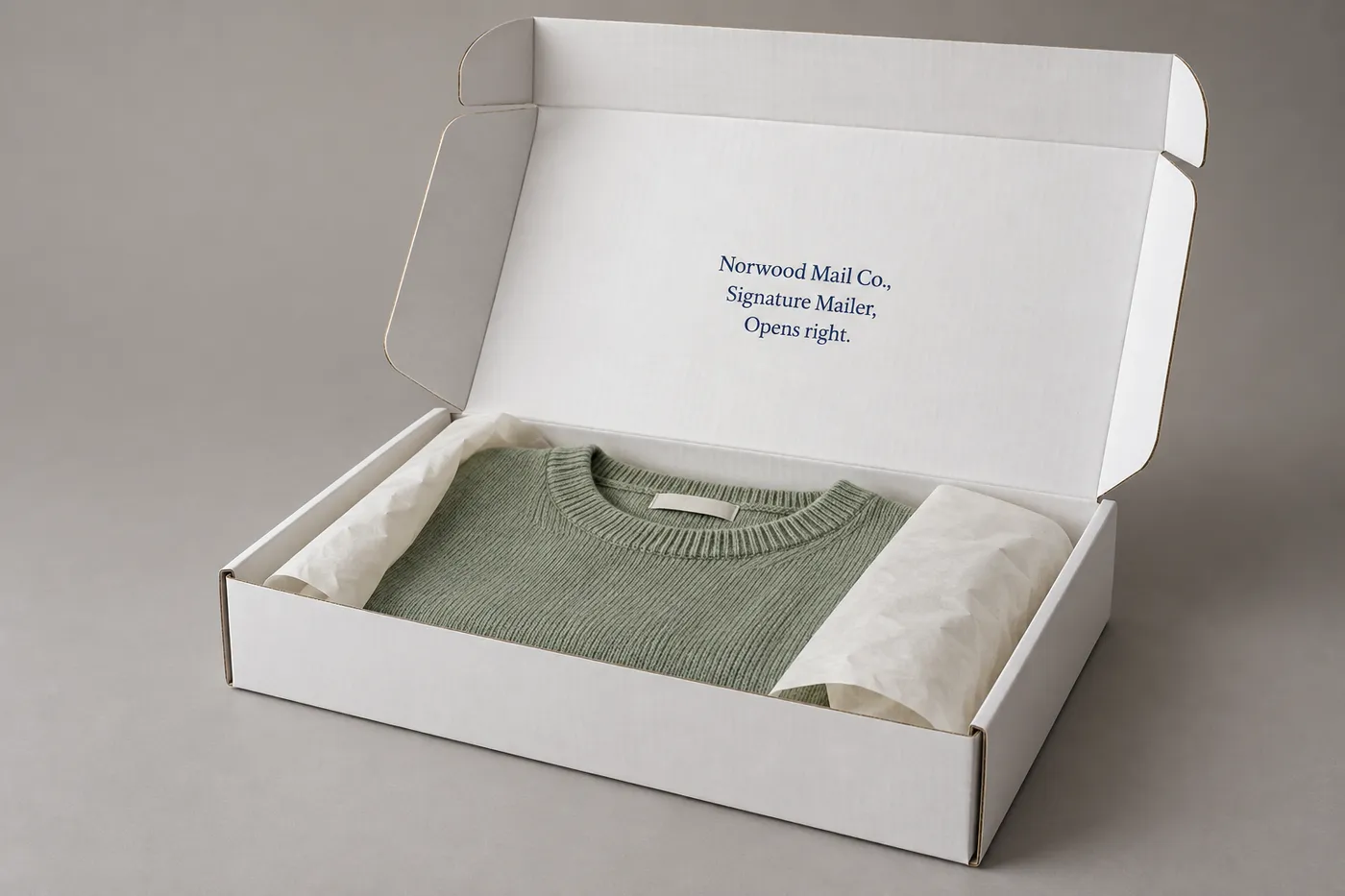
A shallow cavity can frame folded garments or accessories when the packed dimensions and packing layer are confirmed.
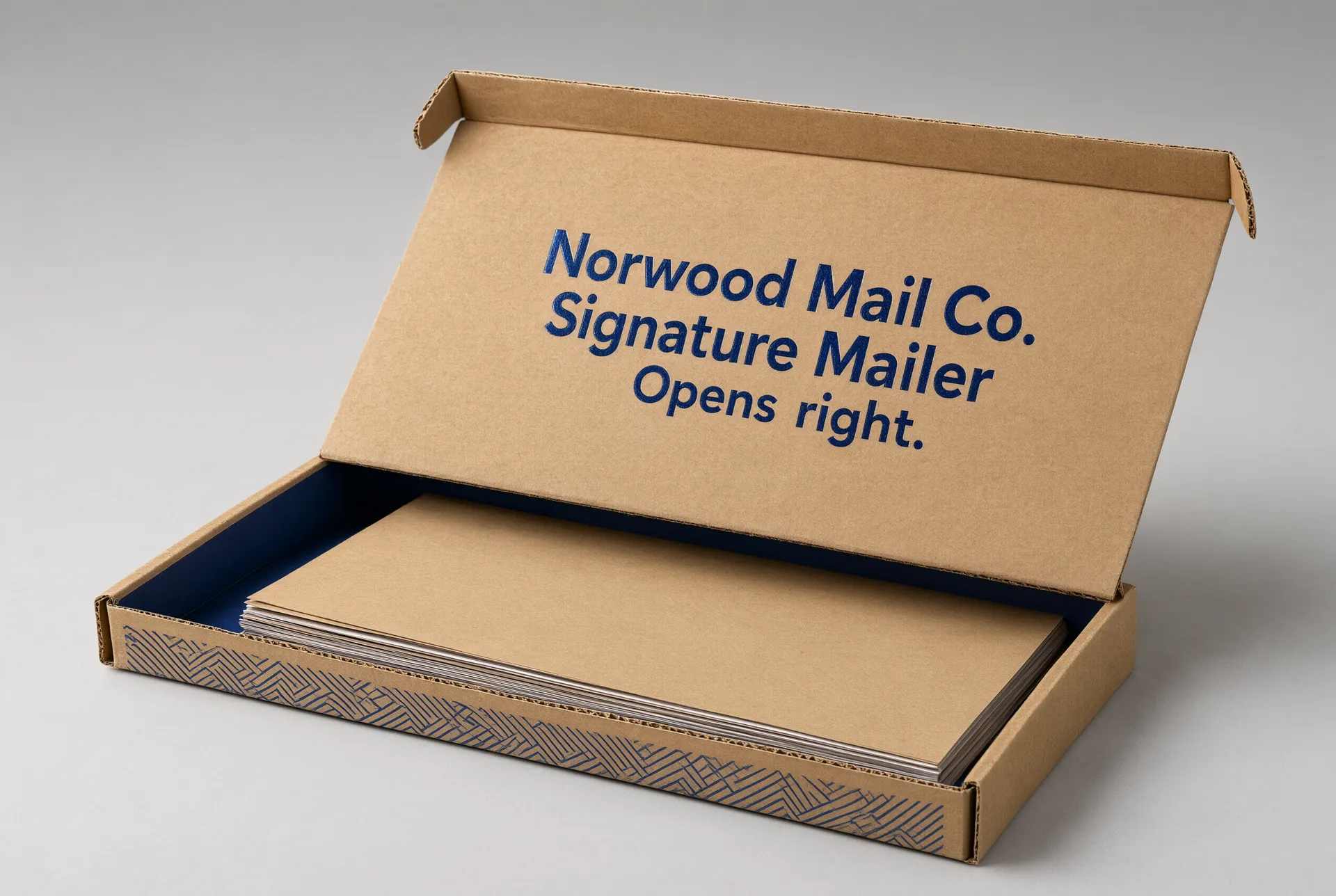
A mailer can be shaped around a flat product where the length, width, thickness, and edge sensitivity drive the fit brief.
Several ecommerce items may need a different cavity or internal arrangement so the opening presentation matches the way the order is fulfilled.
Yes. The mailer can be planned with exterior artwork, optional interior print, or a restrained combination of both. Exterior panels can carry the primary brand mark and fulfillment-facing information, while the inside lid or walls can carry a message that appears only after opening. Matte lamination, gloss lamination, and selected foil stamping can be considered for different visual directions, subject to artwork and board review. Fold positions, clear label areas, dense coverage, and small graphic elements should be discussed before final artwork is placed.
A folding mailer with an integrated tuck-in flap is a practical starting point for parcel fulfillment because the closing sequence is part of the package structure. Corrugated board can be considered when the packed order needs more support through handling, while SBS paperboard or kraft paperboard can suit lighter products where a flatter printed presentation is the priority. The choice also depends on product weight, edge sensitivity, orientation, and whether a tissue layer, sleeve, or other internal support belongs in the finished order. Those support decisions are reviewed against the product and the opening experience rather than treated as a default. If your order contains multiple items, share how they are arranged so the cavity and closure can be discussed together.
A built-in closing flap keeps the mailer structure and opening sequence in one folding format.
Corrugated board, SBS paperboard, and kraft paperboard each bring a different balance of structure, surface, and print character.
Tissue, sleeves, wraps, or other support layers can be reviewed when the product geometry and opening sequence call for them.
A useful quote request describes the packed order and the presentation you want the customer to see. The more clearly those inputs are separated, the easier it is to review structure, material, print, and any support layer together.
Provide the length, width, height, product count, orientation, and any sleeve, tissue, wrap, or other packing layer.
Note whether you prefer a shallow folding mailer, a more supported corrugated direction, or a paperboard presentation.
Identify exterior and interior coverage, clear label areas, brand panels, and any finish direction.
Confirm the cavity, folds, tuck-in closure, artwork placement, and product variants before approving the digital proof.
Once the proof and specification are approved, the confirmed package moves into production.
Need help with structure, materials, or production planning? See how we manufacture custom packaging.
Request a sample kit to review board feel, fold behavior, print direction, and closure details. The sample kit carries a $44.99 shipping charge credited toward your first order.
Shipping charge: $44.99. Credited toward your first order.
Request a Sample KitFind clear answers about fit, materials, and ordering below.
Provide the packed length, width, and height, then add the product count, orientation, and any tissue, sleeve, wrap, or other layer that will remain inside. Mention handles, protrusions, tapered sections, or items that need to stay arranged. Those details help the dieline review account for the actual order rather than a generic outside box.
Corrugated board can be considered when the packed order needs more structural support through parcel handling. SBS paperboard or kraft paperboard can suit lighter products where a flatter printed surface is the priority. The choice should also consider product weight, edge sensitivity, print direction, closure geometry, and whether an internal packing layer belongs in the finished mailer.
Yes. The mailer can carry exterior print, interior print, or a planned combination of both. The inside lid or walls can continue the brand message after opening, while the outer panels can carry the main identity and any reserved fulfillment information. Artwork coverage is reviewed against folds, clear label areas, board choice, and the intended opening sequence.
Usually, yes. A folded garment, a book, and a mixed small-item order can have different packed dimensions, orientations, and support needs. A change in product count or packing layer can also change the cavity and closure review. List each meaningful variant separately so the structure and dieline can be considered for the order it will actually carry.
The review starts with the packed-order brief, preferred material direction, print coverage, finish, and any internal support requirement. The specification and dieline are then checked together, followed by artwork placement and digital proof approval. Production begins after the approved proof, with the standard path listed as from 7 business days.
Orders start at 50 units and scale up to 500,000 for bulk runs, with pricing from $0.27 per unit on larger quantities. Standard production is from 7 business days after digital proof approval.
Custom ecommerce mailer boxes are made-to-order folding boxes sized around the packed length, width, and height of your order. Each order is made to order around your packed product and artwork, and the specification is confirmed against a digital proof before production.
Compare nearby products and request the format that best fits your next run.
Available product
Available product
Available product
Available product
Custom ecommerce packaging
Share the product dimensions, order arrangement, quantity, artwork status, and preferred print direction. We can then review the mailer structure, board choice, closure, and dieline inputs together.
Add your product details to see a quote summary.