Documents and card sets
A printed flyer can hold a measured document stack, cards, or certificates when some flexibility is acceptable and the flap clears the stack.

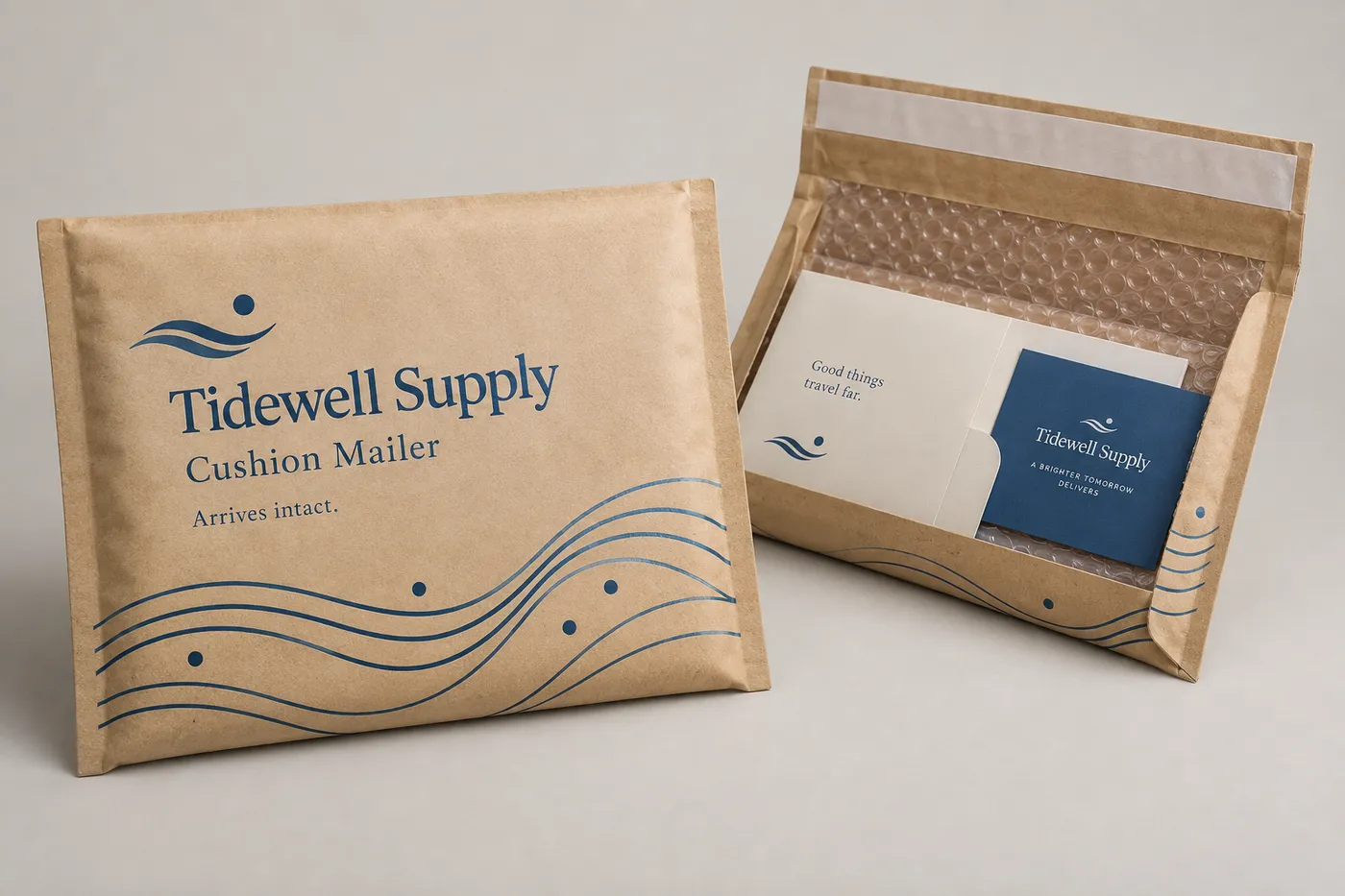
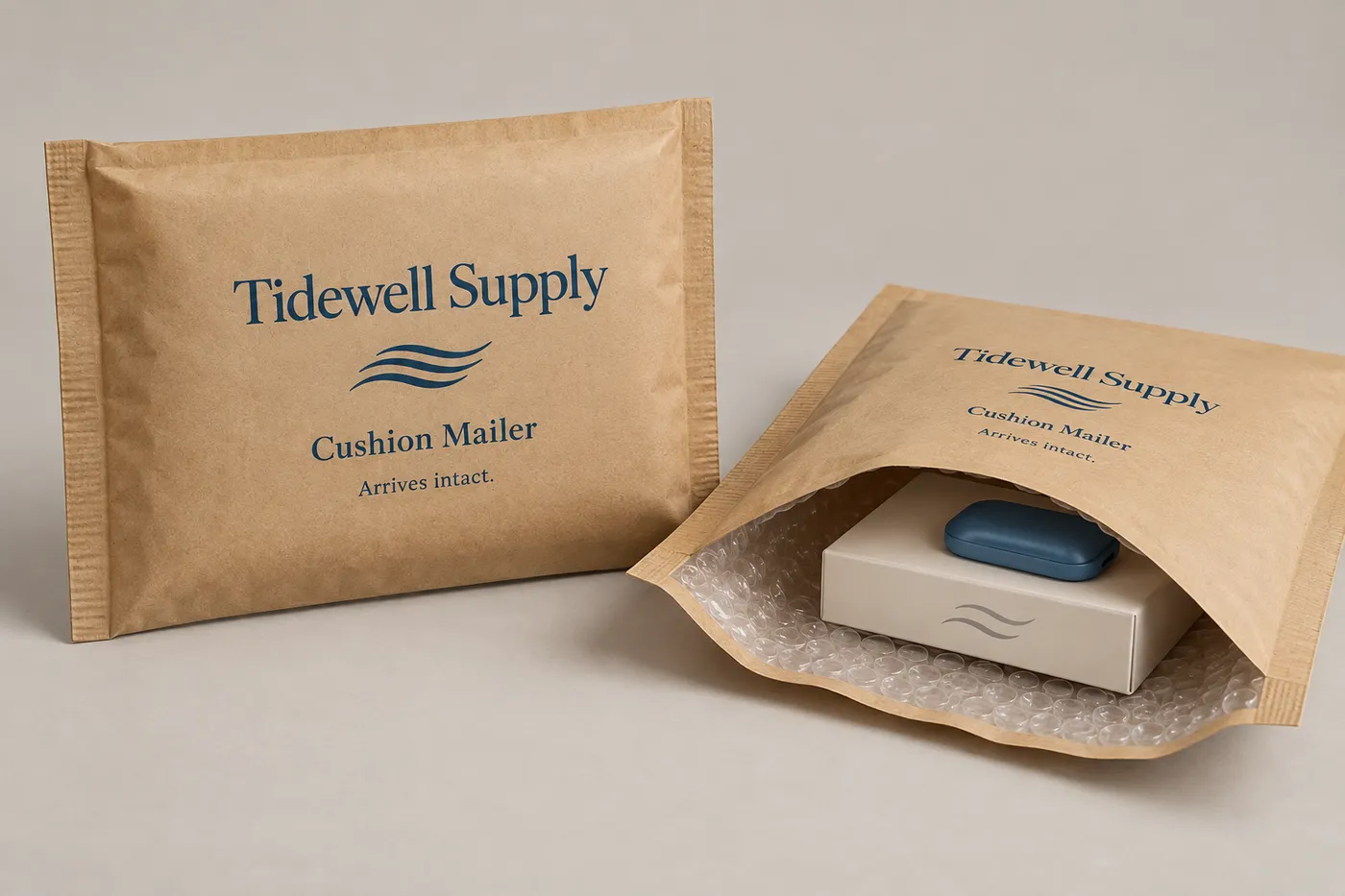
Printed kraft flyer mailer beside an opened padded envelope with a slim card sleeve
Bubble Mailers & Flyers
Custom flyers are flat, flexible mailing envelopes for documents, cards, samples, soft goods, and other contents that can tolerate a low-profile pack. A bubble-lined interior can add separation from light knocks while the front panel carries your printed message. Share the packed dimensions, thickness, edge profile, closure, artwork, and finish so the flyer is sized around the real shipment.
Last updated
Working quote
Product brief
Custom flyers in this category are printed flexible mailing envelopes. They are useful when a document, card set, sample, soft good, or slim retail pack needs an outer mailer that stores flat and opens simply. The term flyer can also mean a promotional leaflet, so the first step is to confirm the packaging brief: this page covers a flexible envelope with a closeable flap and an optional bubble-lined interior, not standalone paper handouts. The package remains flexible and should not be treated as a rigid carton for contents that can crush, bend, or shift.
A flat profile can keep storage and pick-and-pack work straightforward. The packed item slides through the opening, the flap closes over the filled envelope, and the broad exterior provides an area for a brand mark, product cue, return information, or handling note. A bubble lining may give a suitable lightweight shipment some separation from ordinary knocks, but it does not create fixed walls. The useful question is how the actual product behaves in the mail stream and whether it can tolerate flexible handling.
Measure the item as it will actually be mailed. Record packed length, width, and thickness at the widest points, then note hard corners, clips, clasps, caps, or other projections. Include any retail carton, tissue, insert, card, or sleeve that will stay inside. For a document or card set, describe the stack thickness and whether a bend is acceptable. For a sample or soft good, describe its filled or folded profile and the face that should sit against the cushioned side.
Usable interior space is different from outside dimensions because the lining, seams, flap overlap, and adhesive area occupy part of the envelope. If the order contains more than one version, provide the smallest and largest packed sizes and identify the version that should guide the dieline. A flat flyer can suit a slim shipment that enters easily and does not force the flap against an edge. A thicker or sharp-edged product may need a different mailer or a rigid inner pack. Sizing, opening direction, and printed panel placement should be reviewed together rather than guessed from a nominal envelope size.
The bubble-lined interior is one possible direction for a flyer mailer when light cushioning is useful. The final build still depends on geometry, weight, orientation, edge shape, moisture exposure, route, and the way the item is packed. A stack of cards, a sample envelope, and a boxed accessory can all be flat, yet their pressure points and opening needs differ. Describe the packed item and the handoff route so the flexible construction is not asked to do the job of a fitted box.
A peel-and-seal flap keeps the close quick after the product is inserted. A tear strip can make the recipient's first opening step clearer when that matters to the experience. The flap should close across the filled envelope without pressing on a hard corner or hiding a key printed panel. If a return direction or repeat-use opening is needed, say so at quotation; the closure and artwork map can then be considered as one assembled package.
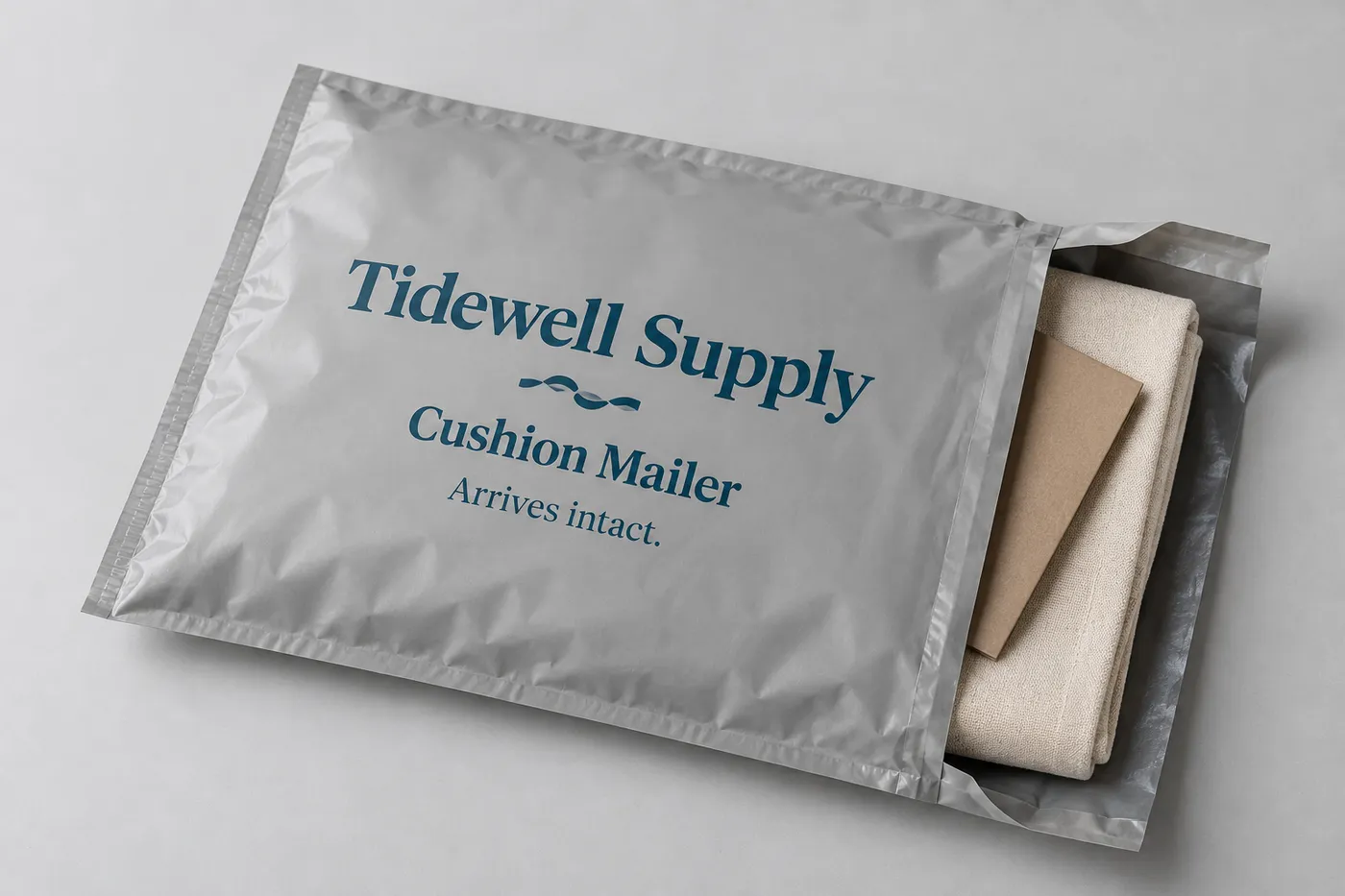
The outer face is the customer's first view of the shipment. The printed example in the images shows print placement only, and production uses your approved artwork. Matte Lamination can give the printed surface a lower-glare direction, while Gloss Lamination creates more reflection. Spot UV can highlight a selected mark, and Foil Stamping can accent limited lettering or linework; placement remains subject to artwork review around seams, folds, and the adhesive flap.
The images illustrate how print can sit on the package. Replace it in production artwork with the approved brand, product, regulatory, and return information. Check the assembled envelope, not only a flat artwork file, so the mark stays in the intended orientation when the flap is closed and the shipment is in hand.
The standard fulfillment path starts at 50 units. Production is from 7 business days after digital proof approval, with free US shipping on that path and dieline and proof review included at no extra charge. A sample kit carries a $44.99 USD shipping charge credited toward the first order if you want to compare the lining, flap, surface direction, and print treatment before approving custom flyers. Pricing remains quote-only because packed dimensions, material direction, closure, artwork coverage, finish, and quantity change the specification.
Send the packed length, width, and thickness, item count, approximate weight, edge notes, preferred opening, material direction, artwork status, print coverage, finish choice, and delivery destination. Quote requests are typically answered the same business day and always within 24 hours. During proof review, check the usable interior, flap overlap, seam position, printed orientation, return information, and any selected finish. If the contents need rigid walls, compression resistance, or a fitted cavity, say that before the flyer is specified so another structure can be considered.
A printed flat mailer can carry documents, cards, sample sachets, slim accessories, soft goods, subscription inserts, and replenishment pieces when the contents tolerate flexible handling. It can also serve as an outer envelope for a small retail pack that already has its own protection. The bubble lining and printed surface are useful only when they match the product's thickness, edge profile, route, and opening experience. A clear brief prevents the common mismatch of ordering a flat envelope for a product that really needs a rigid carton.
A well-specified custom flyer is a coordinated package: packed dimensions, lining, flap, seams, artwork, finish, and recipient opening should agree. Name those decisions in the quote brief, then use the digital proof to confirm the assembled result before production.
Proof points
The proof should show the filled flyer as an assembled package. Compare the usable interior, flap overlap, seam position, printed orientation, and selected finish with the information supplied for the quote.
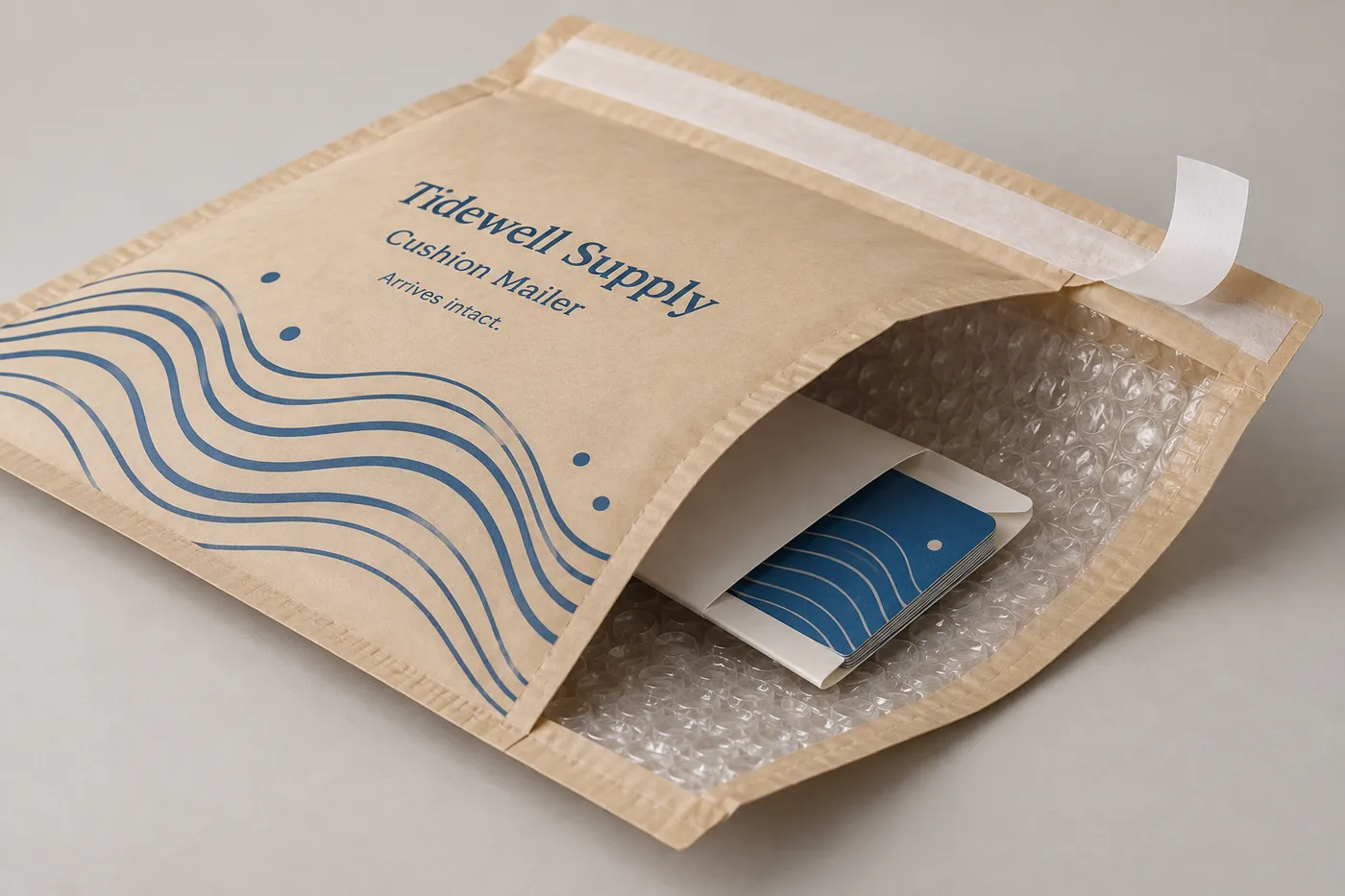
Use this format when documents, cards, samples, soft goods, or a slim retail pack need a flexible envelope with a low profile. Start with the packed size, thickness, edge profile, route, and opening experience so the lining and flap are reviewed for the real mailing task.
A printed flyer can hold a measured document stack, cards, or certificates when some flexibility is acceptable and the flap clears the stack.
Sample sachets, promotional inserts, and subscription pieces can use a flat padded envelope when their packed profile stays slim and easy to insert.
A lightweight accessory or small retail pack can travel in a printed flyer when it does not need the fixed walls of a carton.
A repeat shipment can use a printed flat mailer when the product, closure routine, return information, and recipient opening step stay consistent.
The front, back, flap, and seam areas are one flexible package. Map the artwork on the folded mailer so the brand mark, product information, return details, and opening line remain readable after the flap is closed.
The flyer size, bubble-lined interior, flap, seams, and printed panels work together. Depending on geometry, weight, orientation, and handling route, the specification may stay a simple flat mailer or require a different outer package for the contents.
The envelope is planned around the actual stack or slim product so the flap closes without forcing an edge into the seam.
The lining can create separation from light knocks for suitable documents, samples, and small goods without claiming rigid-box protection.
A peel-and-seal flap closes the pack, while a tear strip can define the recipient's first opening line when that detail suits the shipment.
A useful quote starts with the filled flyer and the opening the recipient should experience. The following information turns that description into a flexible package that can be checked before production.
Provide packed length, width, thickness, item count, orientation, approximate weight, widest points, and any hard corner, clip, clasp, cap, or sleeve.
Say whether the contents are documents, cards, samples, a soft good, or a slim retail pack, and whether an inner carton is already present.
Share a preference for a peel-and-seal flap and note whether a tear strip or other opening detail matters to the recipient.
Share any preference for Kraft Paperboard, Corrugated Board, Matte Lamination, Gloss Lamination, Spot UV, or Foil Stamping.
Check the filled profile, flap overlap, seam position, printed panels, return details, orientation, and finish representation in the digital proof.
Need help with structure, materials, or production planning? See how we manufacture custom packaging.
A sample kit carries a $44.99 USD shipping charge credited toward your first order, useful when you need to compare the bubble-lined feel, flap closure, surface direction, and print treatment before approving custom flyers.
Shipping charge: $44.99. Credited toward your first order.
Request a Sample KitFind clear answers about fit, materials, and ordering below.
No. This page describes a printed flexible mailing envelope with a closeable flap and optional bubble lining. If you need standalone promotional leaflet printing, that is a different product brief.
Documents, card sets, samples, soft goods, subscription inserts, and slim retail packs can fit when their packed thickness, edge profile, weight, and route suit a flexible envelope. A rigid inner pack or carton may be needed for contents that can crush or bend.
Send packed length, width, and thickness at the widest points, item count, approximate weight, orientation, hard corners or projections, and any carton, tissue, card, or sleeve that stays inside. The lining, seams, and flap reduce usable interior space.
Kraft Paperboard and Corrugated Board are category material directions. Matte Lamination, Gloss Lamination, Spot UV, and Foil Stamping can be considered for selected artwork. Final choices are reviewed with the assembled flyer and intended use.
The standard fulfillment path starts at 50 units. Production begins from 7 business days after digital proof approval, with free US shipping and dieline and proof review included at no extra charge. Your final unit price is confirmed in a quote because the packed contents, dimensions, closure, artwork, finish, and quantity determine the specification.
A tear strip can be considered when the recipient should have a defined opening line. It is reviewed with the flap, adhesive area, packed thickness, and printed panel so the opening step does not obscure important information.
Orders start at 50 units and scale up to 500,000 for bulk runs, with pricing from $0.32 per unit on larger quantities. Standard production is from 7 business days after digital proof approval.
Compare nearby products and request the format that best fits your next run.
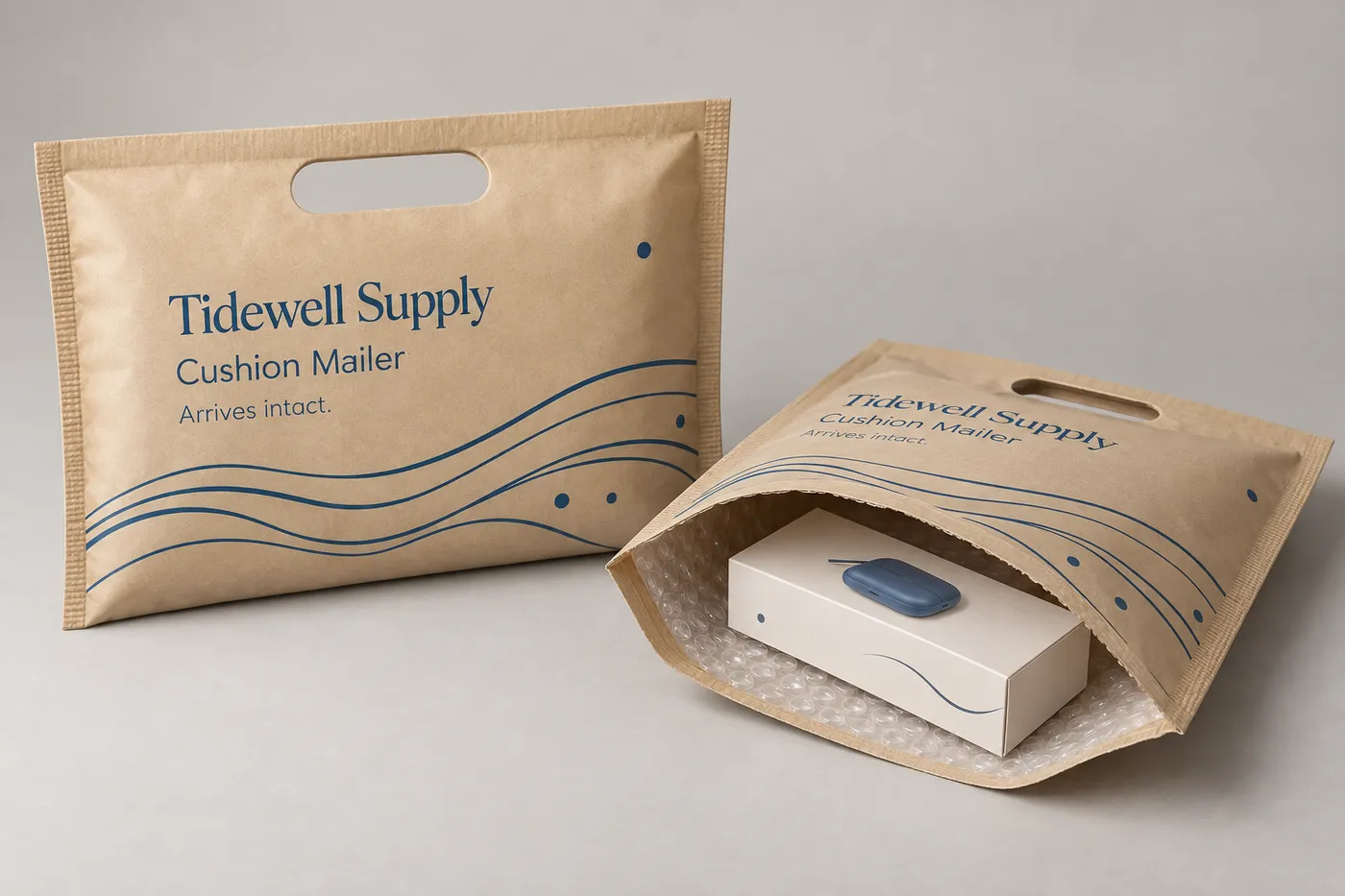
Available product
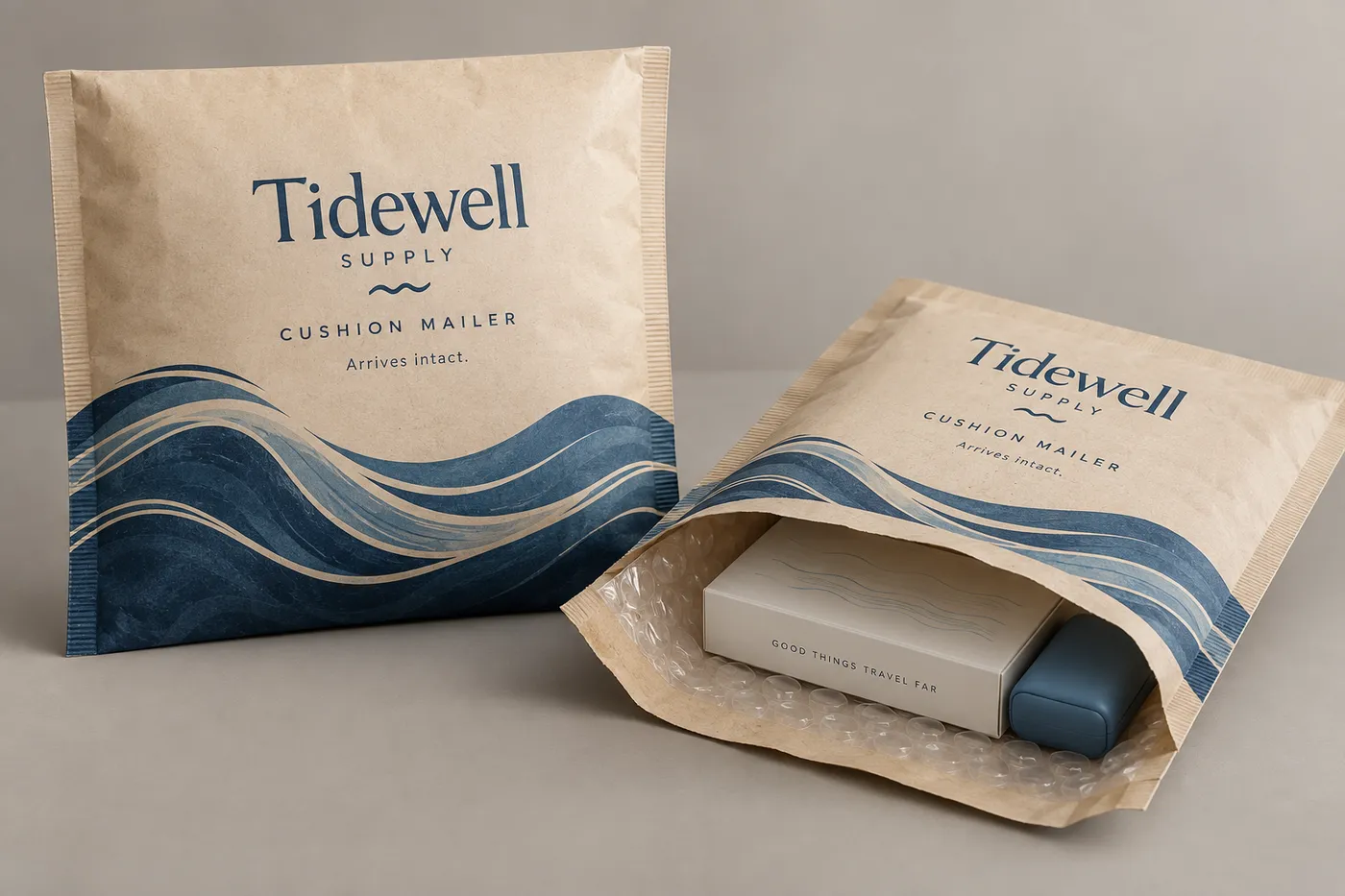
Available product
Available product
Available product
Plan the mailing format
Send the packed dimensions, contents, closure preference, material direction, artwork status, and finish choice. Easy Box Packaging can then review the lining, flap, seams, printed panels, and opening route as one quote-ready specification.
Add your product details to see a quote summary.