Single jar retail carton
Keep the brand and fragrance visible on a front panel while side or back panels carry care and required information.

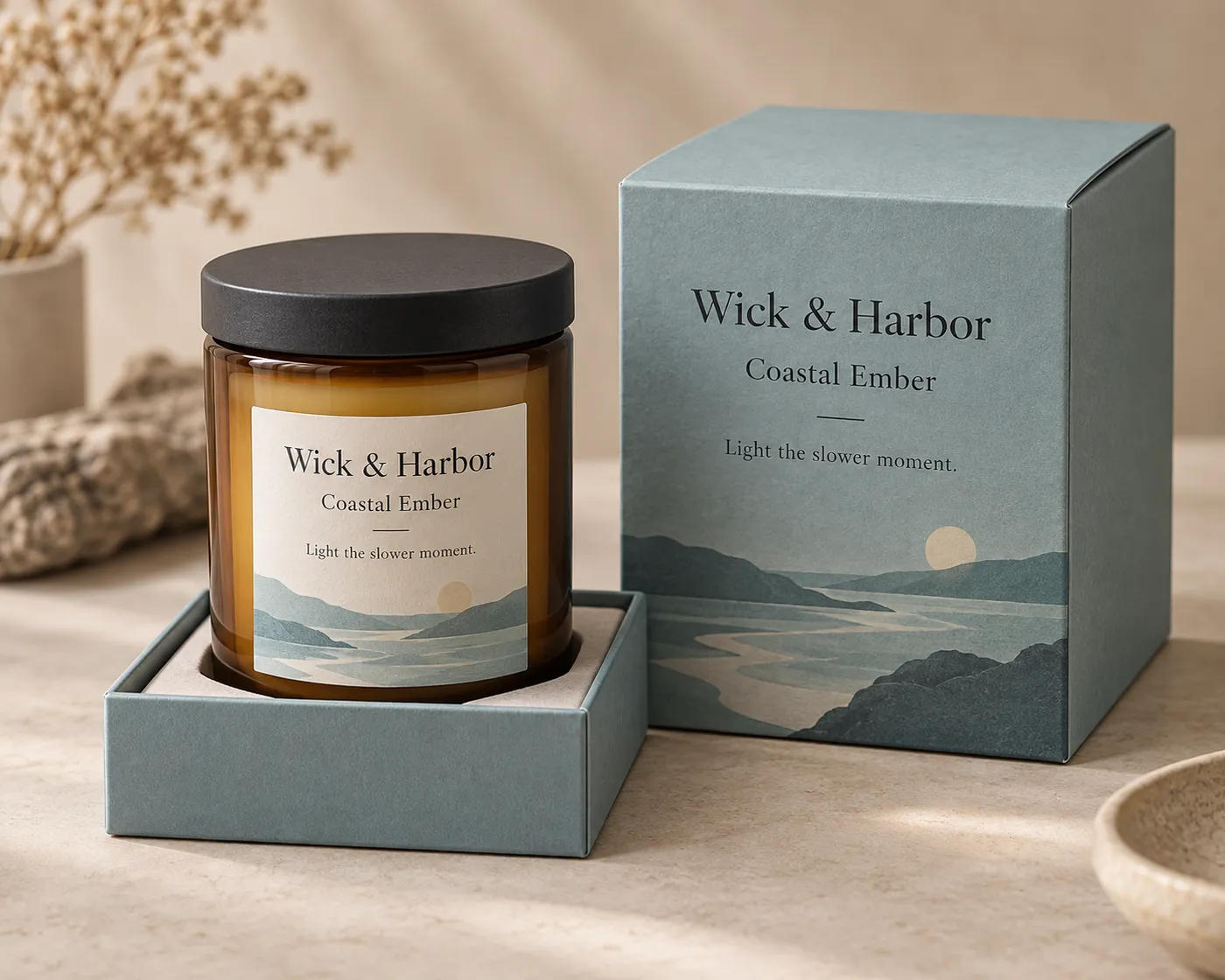
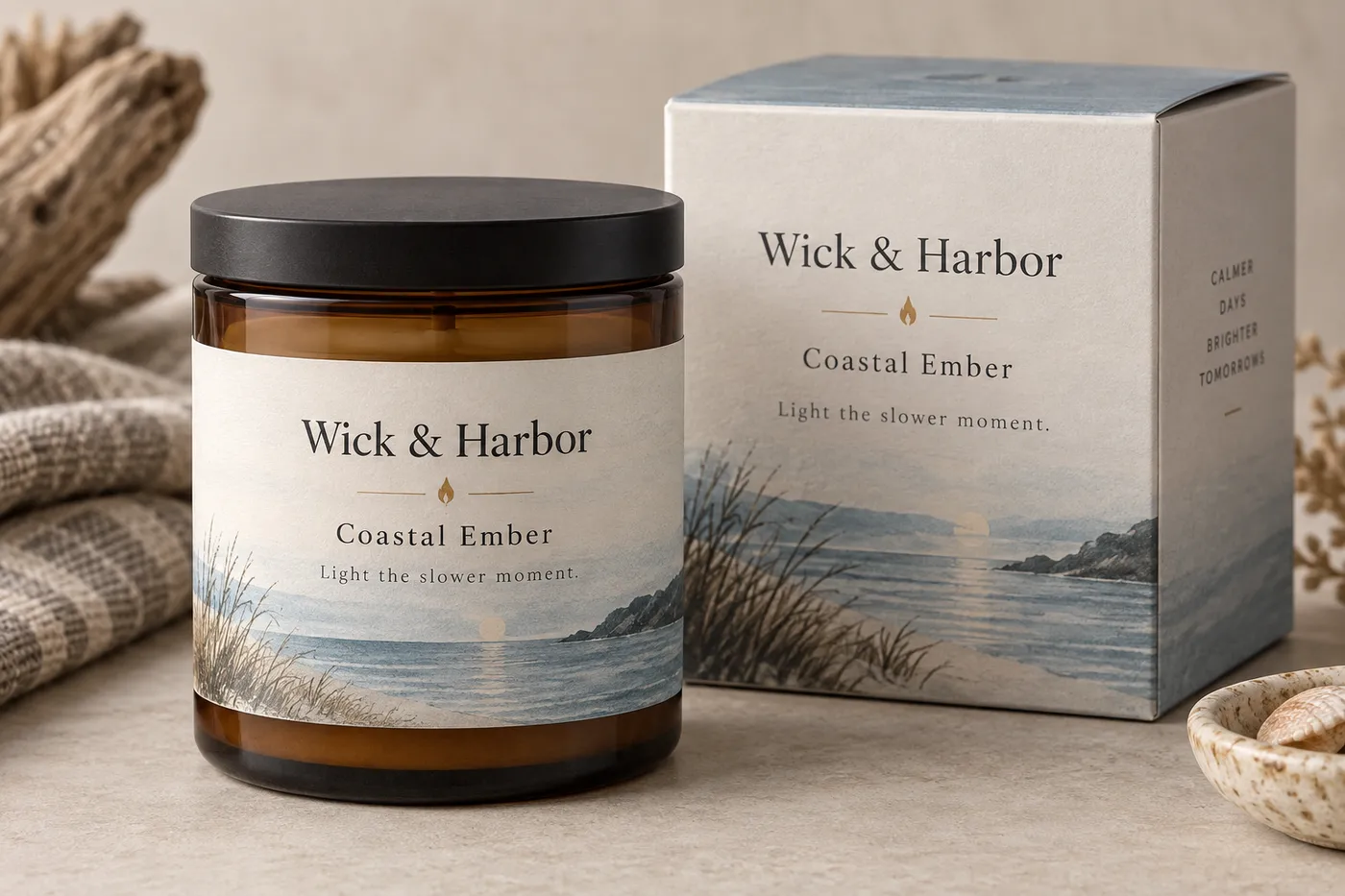
Custom jar candle box with an amber Wick & Harbor candle seated in a fitted paperboard tray.
Candle Boxes
Custom jar candle boxes are sized around the glass vessel, lid, and handling route so the candle stays centered and the fragrance story reads clearly. Share the jar diameter, total height, insert preference, board direction, artwork, quantity, and destination for a quote-ready package review from Easy Box Packaging.
Last updated
Working quote
Product brief
A custom jar candle box should keep a glass vessel from shifting while giving the brand, scent, and care information a clean place to read. The useful starting point is the finished candle, not a generic carton size. Record the jar's outside diameter, widest point, total height with the lid installed, lid overhang, base shape, and any shoulder or taper. Then decide how the box will be handled: a retail shelf carton may prioritize a crisp front panel, while an e-commerce pack may need an insert that limits movement and scuffing during the shipping route.
A single jar can be packed in a folding carton, a two-piece lid-and-base style, a sleeve over an inner tray, or a mailer-style structure. The right choice depends on the vessel, quantity per pack, opening experience, presentation side, and how much internal support is needed. A fitted paperboard insert can hold the jar at its body or base, leave clearance for the lid, and keep the printed panels facing the intended direction. It should not be assumed from the wax fill alone; the insert is designed around the actual outside profile and the box tolerances.
Measure a filled production sample or a representative jar with its final lid. Capture the diameter at the widest point, the height from base to lid top, the lid diameter, and the distance the closure projects beyond the glass. Note rounded shoulders, faceted walls, labels that add thickness, and any base foot that changes the footprint. A box that fits the glass body but ignores the lid can crush the closure or leave the upper half loose. A box that is too deep can let the jar travel inside even when the outside dimensions appear close.
State the desired clearance rather than asking for a universal fit. The dieline and insert can then be reviewed against the vessel, the artwork, and the intended opening sequence. If several jar sizes share a collection, list each finished size and identify whether each needs its own insert or a related carton. Include the packed orientation, the number of jars per box, and whether matches, a card, or another accessory sits beside the candle.
SBS Paperboard is a useful direction when fine fragrance copy and crisp color need a smooth retail face. Kraft Paperboard can support a natural visual language, while Corrugated Board can be considered when the pack has a longer shipping path or needs more cushioning. A folding carton can keep the pack light and efficient for a single jar; a rigid lid-and-base presentation can make sense when the opening ritual and gift positioning carry more weight. A sleeve can work when the jar already has a stable inner tray or another secure base.
The board choice, insert geometry, and closure should be evaluated together. A heavier board does not replace a correctly sized cavity, and an insert does not make an unsuitable shipping route safe by itself. Tell the packaging team whether the finished box will be placed in a shipper, displayed on a counter, packed into a subscription mailer, or handed over at a market stall. That context helps the specification balance presentation, assembly, storage, and movement.
Use the front panel for the brand, candle name, and scent cue that must be recognized first. Reserve a side or back panel for burn care, net contents, ingredients, warnings, and other buyer-supplied information. Matte Lamination can create a lower-glare reading surface; Gloss Lamination can add a brighter surface character. Spot UV, Foil Stamping, and Embossing/Debossing can isolate a wordmark, horizon line, or small motif instead of covering every panel in decoration. Final finish placement should be checked at the actual type size and against the board.
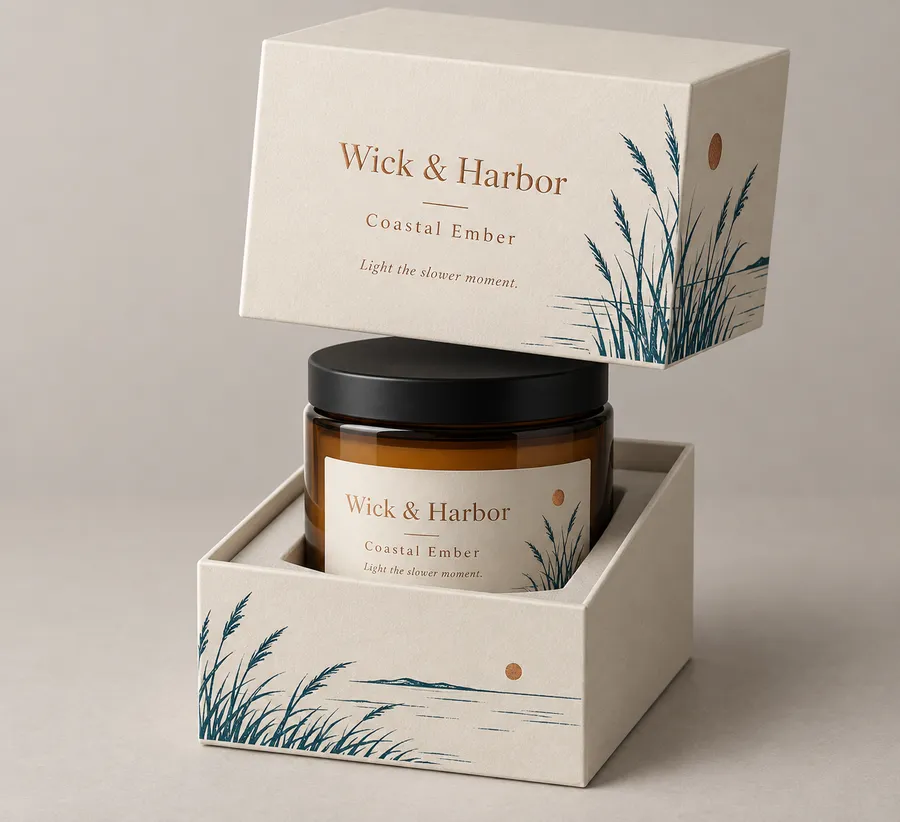
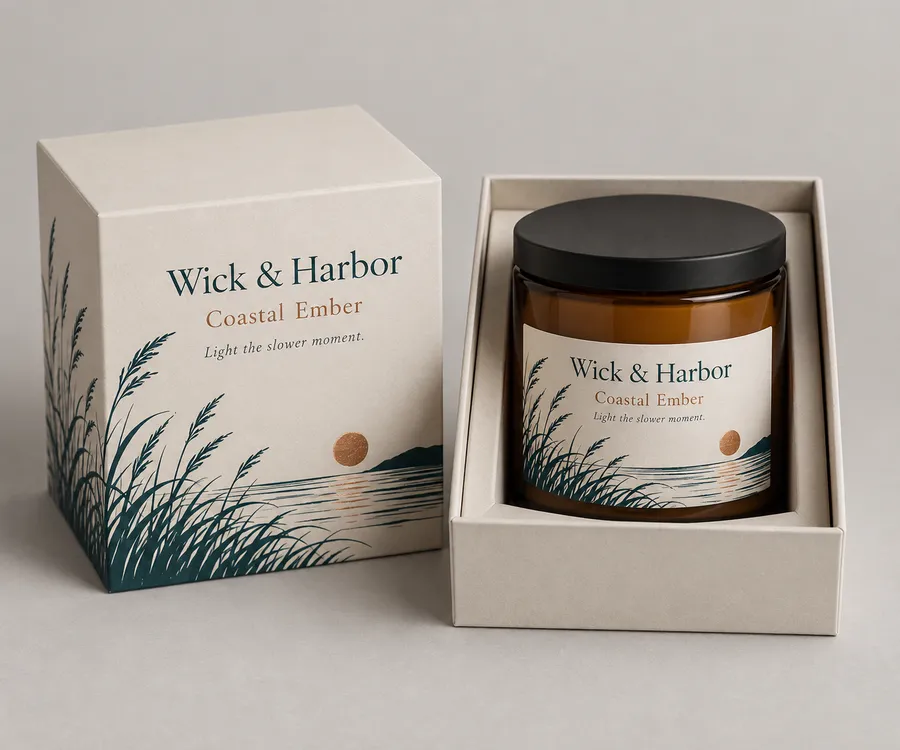
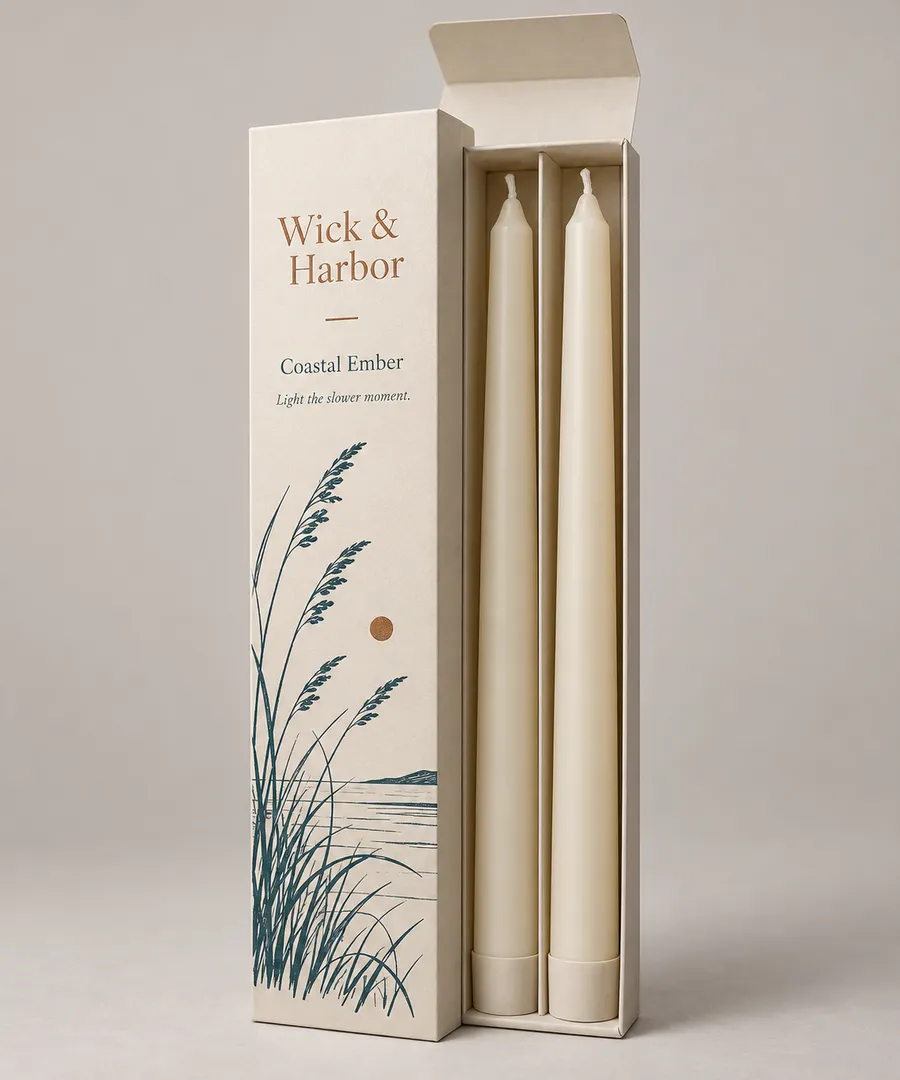
The images illustrate how print can sit on the package. Production artwork should use the approved brand, fragrance, copy, and regulatory information supplied by the buyer. A digital proof is where the team checks the dieline, panel order, insert position, lid clearance, color direction, and finish areas before production.
Send the jar material, outside diameter, total height with lid, lid profile, taper or shoulder notes, target box structure, insert preference, number of units per pack, artwork status, print coverage, finish direction, quantity, and delivery destination. Include photos or a physical sample when the jar is faceted, unusually small, heavy, or difficult to describe with a single diameter. If the candle will sit in a gift set or ship inside a second carton, show that relationship in the brief.
The standard fulfillment path starts at 50 units, and production is from 7 business days after digital proof approval. Free US shipping and dieline/proof review are available on the standard path, and quote requests are answered within 24 hours. Pricing remains quote-only because jar size, board, insert, structure, print coverage, finish, quantity, and shipping route determine the final specification. A sample kit has a $44.99 USD shipping charge credited toward the first order when you want to compare material and finish directions in hand.
Review the box with the actual jar, lid, and insert rather than only a flat artwork sheet. Check that the jar sits centered, the lid has room, the opening sequence is practical, and the most important copy faces the customer. Confirm that the carton closes without rubbing the glass, that the insert does not cover a front label, and that foil, embossing, or spot UV sits on the intended artwork. For a collection, review each vessel size and confirm whether the family uses one visual system with separate dielines.
A well-specified custom jar candle box connects measurable vessel geometry, internal support, board, print, finish, handling route, and the customer-facing reveal. When those decisions arrive together, Easy Box Packaging can turn the brief into a quote-ready structure and proof without assigning unsupported dimensions, prices, or performance guarantees.
Proof points
The proof should connect the flat artwork and dieline to the filled candle so fit, copy, opening, and finish can be checked together.
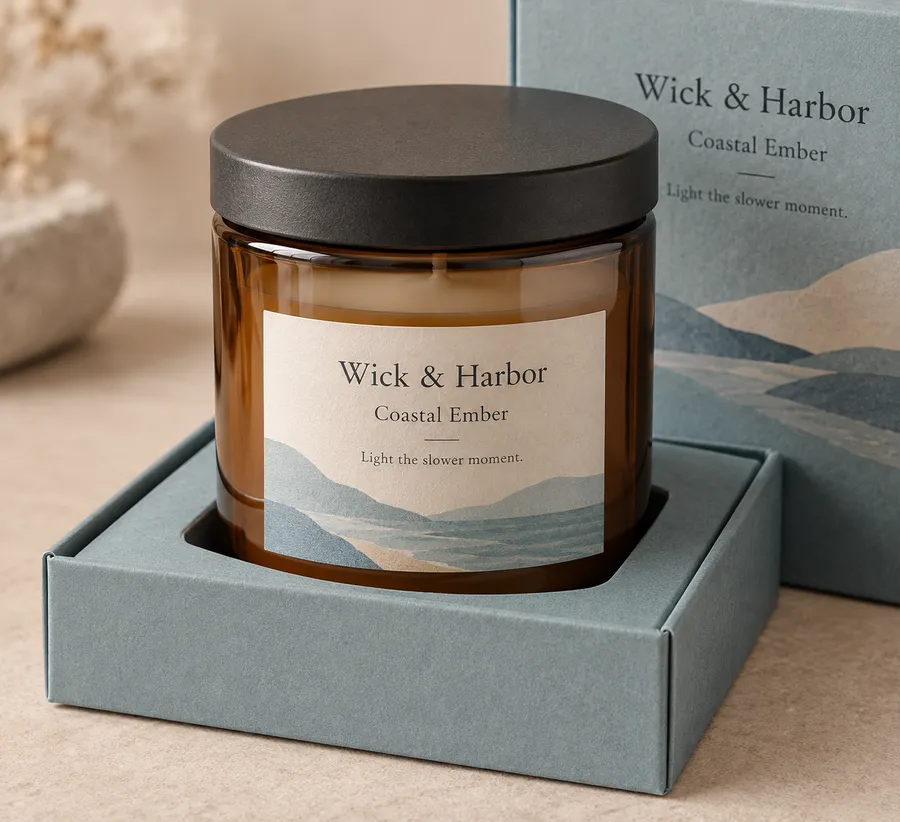
The jar, lid, insert, board, print, finish, and shipping route determine the useful box direction. Share those variables before a stock carton or artwork is treated as final.
Keep the brand and fragrance visible on a front panel while side or back panels carry care and required information.
Use a considered opening sequence and coordinated insert when the box is part of a seasonal or gifting experience.
Limit jar movement with a fitted insert and coordinate the candle box with the outer shipper and route.
Build a repeatable visual system across jar sizes while giving each scent a clear name and dedicated dieline.
The front, side, top, and back panels form one information system. Map the artwork on the assembled box so reading direction, insert position, and required copy remain intentional.
A focused brief connects the glass jar to its internal support and customer-facing panels before dimensions, artwork, and finish are finalized.
Provide outside diameter, total height with lid, widest points, lid overhang, taper, shoulder, and base notes.
Describe the insert, tray, sleeve, or cavity direction and whether the jar shares space with an accessory.
State where the box is displayed or packed so board, closure, orientation, and movement can be reviewed together.
A quote is easier to evaluate when the vessel, insert, structure, artwork, finish, and route are described together.
Provide material, outside diameter, total height with lid, lid profile, taper, shoulder, base, and photographs or a physical sample.
State a folding carton, lid-and-base, sleeve, tray, or mailer preference and explain the retail, gift, or shipping setting.
Identify the insert or cavity, panel order, brand and scent copy, artwork status, print coverage, board, and finish direction.
Confirm jar fit, lid clearance, opening sequence, copy, finish placement, and the outer-shipping relationship before digital proof approval.
Need help with structure, materials, or production planning? See how we manufacture custom packaging.
Request a sample kit to compare paper surfaces, print treatment, and finish direction. The $44.99 USD shipping charge is credited toward your first order.
Shipping charge: $44.99. Credited toward your first order.
Request a Sample KitFind clear answers about fit, materials, and ordering below.
Share the filled jar's outside diameter at its widest point, total height with the lid installed, lid overhang, taper or shoulder notes, and base shape. The box and insert should be reviewed against the actual vessel rather than a generic jar size.
A fitted insert or tray can limit movement and keep the jar centered when the handling route calls for internal support. Its shape and clearance depend on the jar, lid, board, box structure, and whether the candle ships inside another carton.
SBS Paperboard, Kraft Paperboard, and Corrugated Board are category material directions. The final board depends on print detail, presentation, storage, assembly, weight, and the retail or shipping route.
Yes. Share the jar, insert, accessory sizes, and opening sequence together so the team can review a divided insert, sleeve, tray, or related box family instead of treating each component as an isolated package.
Production is from 7 business days after digital proof approval on the standard path. Orders start at 50 units, and free US shipping is available on that path.
Your final unit price is confirmed in a quote because jar dimensions, lid clearance, structure, insert, board, print coverage, finish, quantity, and shipping route determine the final specification.
Orders start at 50 units and scale up to 500,000 for bulk runs, with pricing from $0.33 per unit on larger quantities. Standard production is from 7 business days after digital proof approval.
Compare nearby products and request the format that best fits your next run.
Available product
Available product
Available product
Available product
Plan the candle presentation
Send the finished jar details, insert direction, box structure, artwork status, finish preference, quantity, and destination. Easy Box Packaging can then review the pack as one quote-ready specification.
Add your product details to see a quote summary.