Retail jar presentation
A single scented jar can sit in a measured base while the lid carries the fragrance identity and lifts cleanly for a shelf or counter handoff.

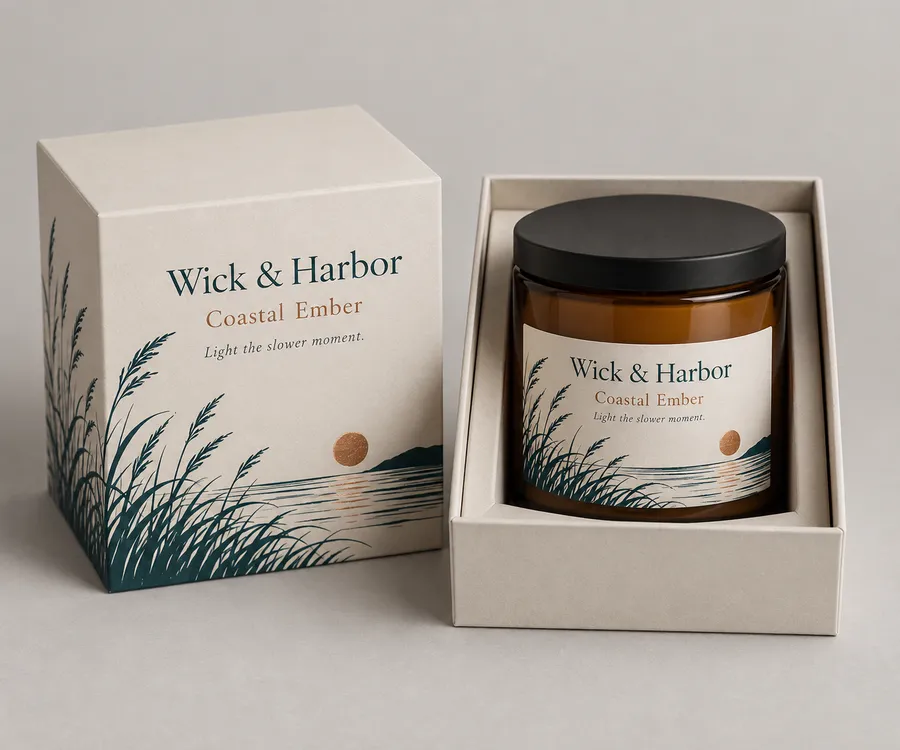
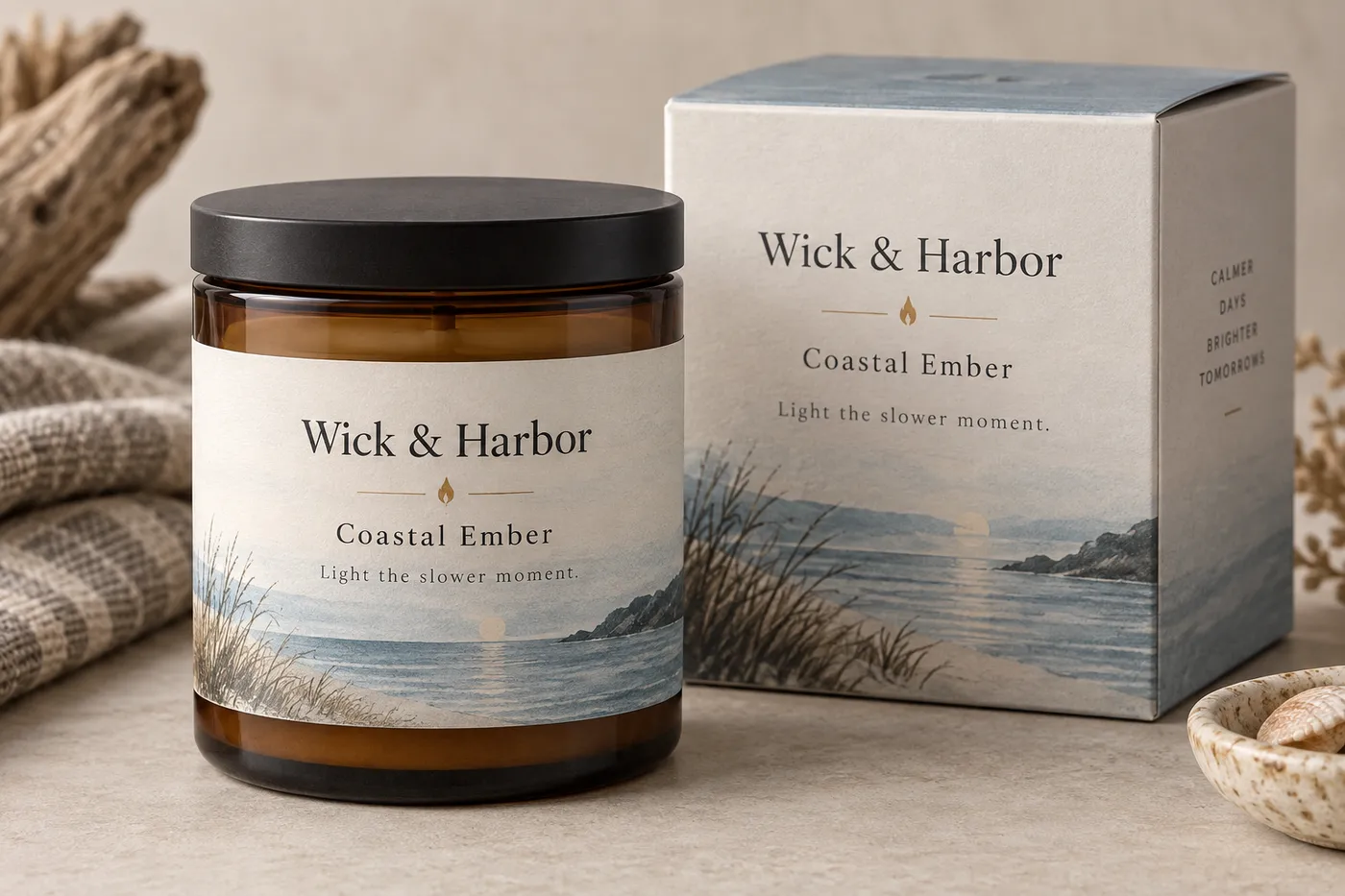
An ivory two-piece candle box presents an amber jar in a fitted base beside its lifted lid.
Candle Boxes
Custom two piece candle boxes use a separate base and lid to give a jar or tin a deliberate opening sequence and a stable presentation surface. The fit is planned around the vessel, lid clearance, insert choice, and route to shelf, handoff, or parcel. Share the packed dimensions, material direction, finish priorities, and quantity so the assembled box can be reviewed as one product.
Last updated
Working quote
Product brief
A two-piece candle box separates the base from the lid, so the customer lifts the cover instead of opening a glued side seam or tuck flap. That movement can suit a gift presentation, a retail set, or a candle that should remain composed when the lid is removed. The useful starting point is the packed vessel: measure the jar or tin at its widest point, include the full lid height, and note any label, sleeve, wrap, or protective cap that remains inside the box. A base that follows the vessel footprint can keep the product visually centered, while the lid carries the main brand panel and gives the opening a clear top-to-bottom sequence.
The format is not a promise that every candle needs a rigid construction. The decision depends on how the product is handed over, displayed, and shipped. A substantial base and lid can make room for a paperboard insert, a care card, or a second accessory. A lighter folding carton may be more suitable when the parcel route is short and the vessel already has a secure closure. The quote should therefore describe the product, the intended opening, and the handling route rather than assume that a nominal small or large size will fit.
The standard fulfillment path starts at 50 units, and production begins from 7 business days after digital proof approval. Pricing remains quote-only because the two-piece footprint, lid depth, insert geometry, board, print coverage, finish, quantity, and destination change the specification. Free US shipping and dieline and proof review at no extra charge are included on the standard path.
Send the outside diameter or packed length and width at the widest points, overall height including the lid, approximate weight, and the location of any shoulder, taper, rim, or projecting closure. A jar can be round while its lid is stepped or wider than the glass; a tin can have a rolled edge that changes the useful clearance. Include the label or sleeve thickness if it remains on the vessel, and state whether the lid should be removed before the box opens. Those details affect the base cavity, the inside wall, the lid overlap, and the point at which the product can be lifted without catching.
A paperboard insert can center one jar, divide two items, or leave a controlled pocket for matches and a card. It should be drawn from the assembled packed profile, not added as an afterthought. If the product has tissue, a dust cover, or an accessory, send the actual arrangement and approximate spacing. A physical sample or clear product photograph is useful for curved shoulders, glossy closures, fragile glass, and labels that need to face a particular side. The review can then check the removal path as well as the closed silhouette.
The base carries the candle and sets the footprint; the lid controls the reveal, stacking relationship, and first hand contact. A close-fitting lid can keep the box compact, while additional overlap or a measured insert can help manage a heavier jar or a longer handling route. Those are construction decisions to review with the packed weight and orientation, not universal performance guarantees. The two pieces should open without scraping the vessel, and the interior should leave enough clearance for the selected board, wrap, and finish.
SBS Paperboard gives a smooth printed face for fragrance names, burn instructions, and fine linework. Kraft Paperboard can support a warmer fiber-led direction when the artwork should retain more paper character. Corrugated Board can be considered when the outer pack also needs a more shipping-oriented structure. The final board depends on the base span, lid relationship, vessel weight, support needs, and route. An insert may be paperboard, a divider, or another approved support direction after the actual candle profile is reviewed.
Two-piece construction is useful for single-jar gift packs, seasonal launches, and counter presentations where the act of lifting the lid is part of the product story. It can also organize a candle with matches or a note card when the base has a defined accessory pocket. For a direct-to-consumer parcel, the closed box still needs a realistic review of movement, wrap, and outer shipping protection; a presentation lid alone does not replace a shipping plan.
The outer lid can carry the brand and fragrance name, while the base, side walls, or underside hold care copy, ingredients, barcode space, or a short scent description supplied in the artwork. Keep the opening path legible: artwork should not be cut across the lift edge, hidden under an overlap, or placed where fingers will repeatedly rub a small detail. Matte Lamination can create a low-glare surface for reading copy. Gloss Lamination changes how the box reflects light. Spot UV can isolate a logo or ember line, while Foil Stamping and Embossing/Debossing can add a selected tactile or metallic mark when the board and artwork support it. Finish placement remains subject to proof review around folds, seams, corners, and small type.
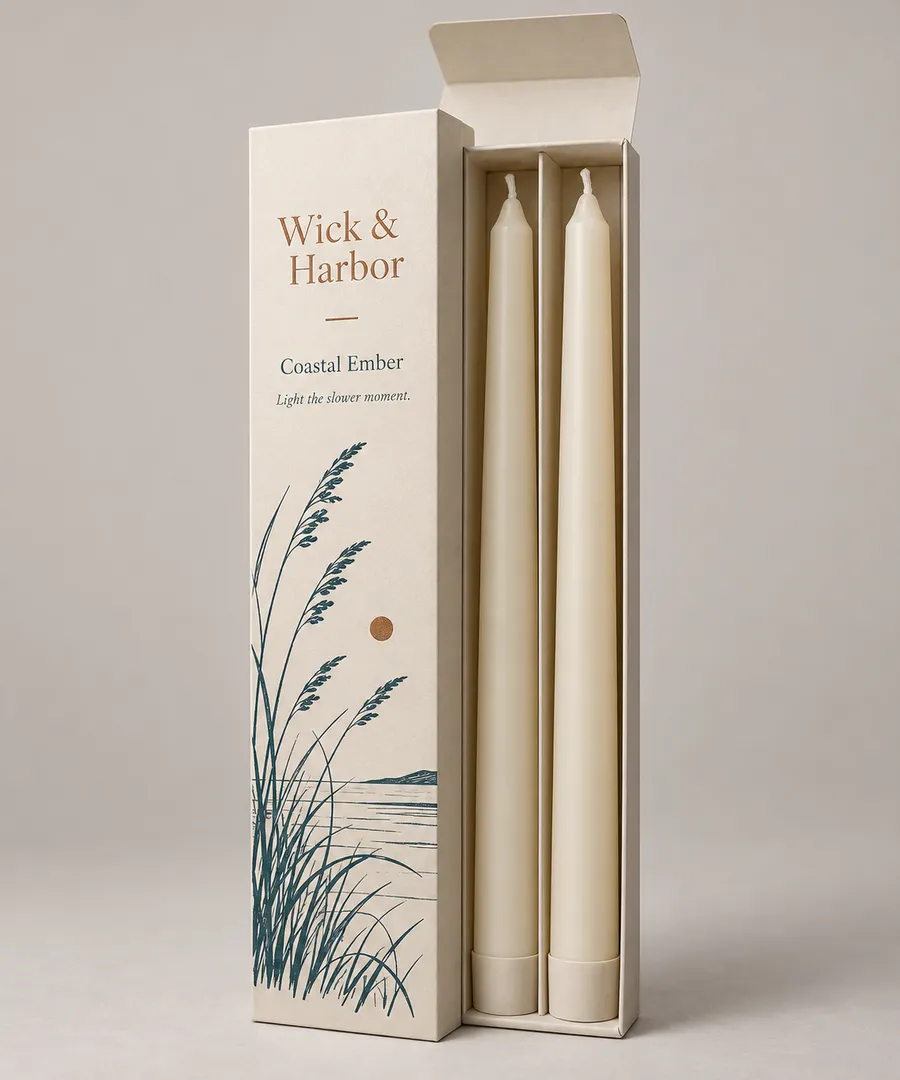
The printed example in the images shows print placement only. Replace it with approved brand, fragrance, ingredient, safety, and regulatory copy for production. Reviewing the closed and open views together helps keep the lid orientation, base edge, insert reveal, and printed panels in the right relationship.
A single scented jar can use a base-and-lid box when shelf presentation and a measured opening sequence matter. A shallow tin can use a lower profile with a lid that protects the top while leaving a deliberate reveal. A candle-and-matches gift set can use a divided base so the accessories do not travel against the glass. Seasonal or subscription programs can retain one outer identity while changing the cavity and insert for each vessel. Market or counter presentation can benefit from a lid that removes cleanly and becomes part of the handoff rather than a disposable flap.
For every use case, provide the number of items, packed orientation, desired opening, and any tissue, card, sleeve, or divider. The result should feel considered because the geometry and artwork agree, not because the copy promises protection or fit outside the approved specification.
Send the vessel measurements, lid and base preference, insert direction if known, quantity per box, artwork status, material direction, finish priorities, and delivery destination. Easy Box Packaging can review the closed silhouette, lid clearance, base support, printed panels, removal path, and any accessory pocket against that brief. Quote requests are answered within 24 hours.
After the dieline is prepared, inspect both the closed and open assembled views rather than only a flat artwork file. Confirm the jar or tin clearance, lid overlap, base wall, insert position, label orientation, seam and corner areas, finish map, and copy legibility. Production starts from 7 business days after digital proof approval. The standard fulfillment path starts at 50 units, and a sample kit carries a $44.99 USD shipping charge credited toward the first order when you need to compare board feel, print, finish, lid movement, and the way the candle sits in hand.
A useful two-piece candle pack gives the vessel a stable home, makes the opening sequence understandable, and gives the printer a defined surface to reproduce. A clear measurement brief lets the base, lid, insert, material, artwork, and route be reviewed as one product instead of disconnected options.
Proof points
Review the closed and open assembled pack so the base, lid, vessel, support, and printed panels can be checked together before approval.
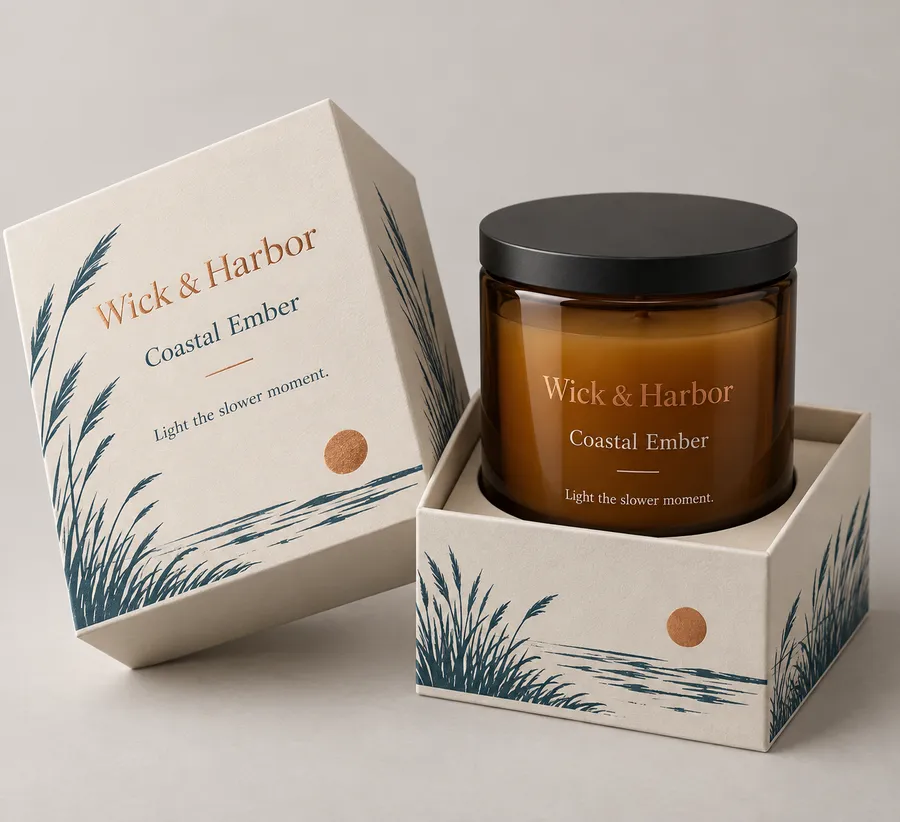
The base and lid should frame the candle, leave practical clearance, and make the first opening feel deliberate. Start with the full packed profile, desired reveal, insert direction, and handling route so the two pieces can be reviewed as one assembled pack.
A single scented jar can sit in a measured base while the lid carries the fragrance identity and lifts cleanly for a shelf or counter handoff.
A shallow tin can use a lower profile base and lid that protects the top while leaving board for care copy and brand artwork.
A divided base can organize the candle, matches, and card so accessories do not travel against the glass.
A repeatable outer identity can remain consistent while the cavity and insert are checked against each edition's vessel.
Map fragrance, care, and brand information on the assembled box so the lid, base walls, underside, corners, and lift edge remain correctly oriented. Finish choices should be reviewed with the artwork and board together.
A separate lid can protect the top and establish the opening sequence, while the base and an optional insert control position. The fit depends on geometry, weight, orientation, wrap, and handling rather than a generic box size.
The base footprint follows the jar or tin at its widest packed profile and leaves room for the selected support and wrap.
The lid relationship is reviewed for clearance, hand access, corner alignment, and the way the closed box presents on shelf or in hand.
A paperboard insert or divider can center a vessel, organize accessories, and keep the opening sequence understandable when the arrangement needs it.
A useful quote starts with the candle as it will actually be packed. These steps give the structural and print review enough information to distinguish a base-and-lid presentation box from a lighter folding carton.
Provide packed diameter or length and width, overall height including the lid, approximate weight, widest points, label, rim, taper, and closure.
State how the lid should lift, which face should lead, and whether the customer should see a label, wax surface, vessel material, or accessory.
Share whether no insert, a paperboard insert, or a divided support is preferred, along with the desired shelf, handoff, or parcel route.
Note any preference for SBS Paperboard, Kraft Paperboard, Corrugated Board, Matte Lamination, Gloss Lamination, Spot UV, Foil Stamping, or Embossing/Debossing.
Check the closed and open panels, lid overlap, vessel position, base edge, seams, finish placement, and copy legibility in the digital proof.
Need help with structure, materials, or production planning? See how we manufacture custom packaging.
A sample kit carries a $44.99 USD shipping charge credited toward your first order, useful when comparing paperboard feel, printed color, finish direction, lid movement, and how a vessel sits in a base.
Shipping charge: $44.99. Credited toward your first order.
Request a Sample KitFind clear answers about fit, materials, and ordering below.
Send the outside diameter or packed length and width at the widest points, overall height including the lid, approximate weight, label or sleeve, and any shoulder, taper, rim, or closure. Include the desired lid overlap and note the arrangement when more than one item will be packed.
No. An insert depends on vessel geometry, weight, fragility, orientation, lid clearance, route, and desired presentation. A single jar, shallow tin, and multi-item gift set can each call for a different support decision.
It can be considered for an e-commerce route, but the closed box, vessel movement, wrap, and outer shipping protection should be reviewed together. A presentation lid does not replace a shipping plan.
SBS Paperboard, Kraft Paperboard, and Corrugated Board are the category material directions. Matte Lamination, Gloss Lamination, Spot UV, Foil Stamping, and Embossing/Debossing can be considered for selected artwork, subject to review around corners, seams, edges, and small text.
The standard fulfillment path starts at 50 units. Production begins from 7 business days after digital proof approval, with free US shipping and dieline and proof review included at no extra charge. Your final unit price is confirmed in a quote because the vessel, base, lid, support, artwork, finish, and quantity determine the specification.
The outer identity can be adapted, but each vessel should be reviewed as its own packed profile. A jar diameter, lid height, label position, or set arrangement can change the base cavity, lid overlap, insert, and visible artwork area.
Orders start at 50 units and scale up to 500,000 for bulk runs, with pricing from $0.32 per unit on larger quantities. Standard production is from 7 business days after digital proof approval.
Compare nearby products and request the format that best fits your next run.
Available product
Available product
Available product
Available product
Plan the opening sequence
Send the vessel measurements, base and lid preference, insert direction, artwork status, material direction, and finish priorities. Easy Box Packaging can then review the closed box, opening path, support, printed panels, and removal route as one quote-ready specification.
Add your product details to see a quote summary.