Subscription shipments
A repeated product-and-insert layout can use the tear strip to make each monthly or periodic parcel easy to start opening.

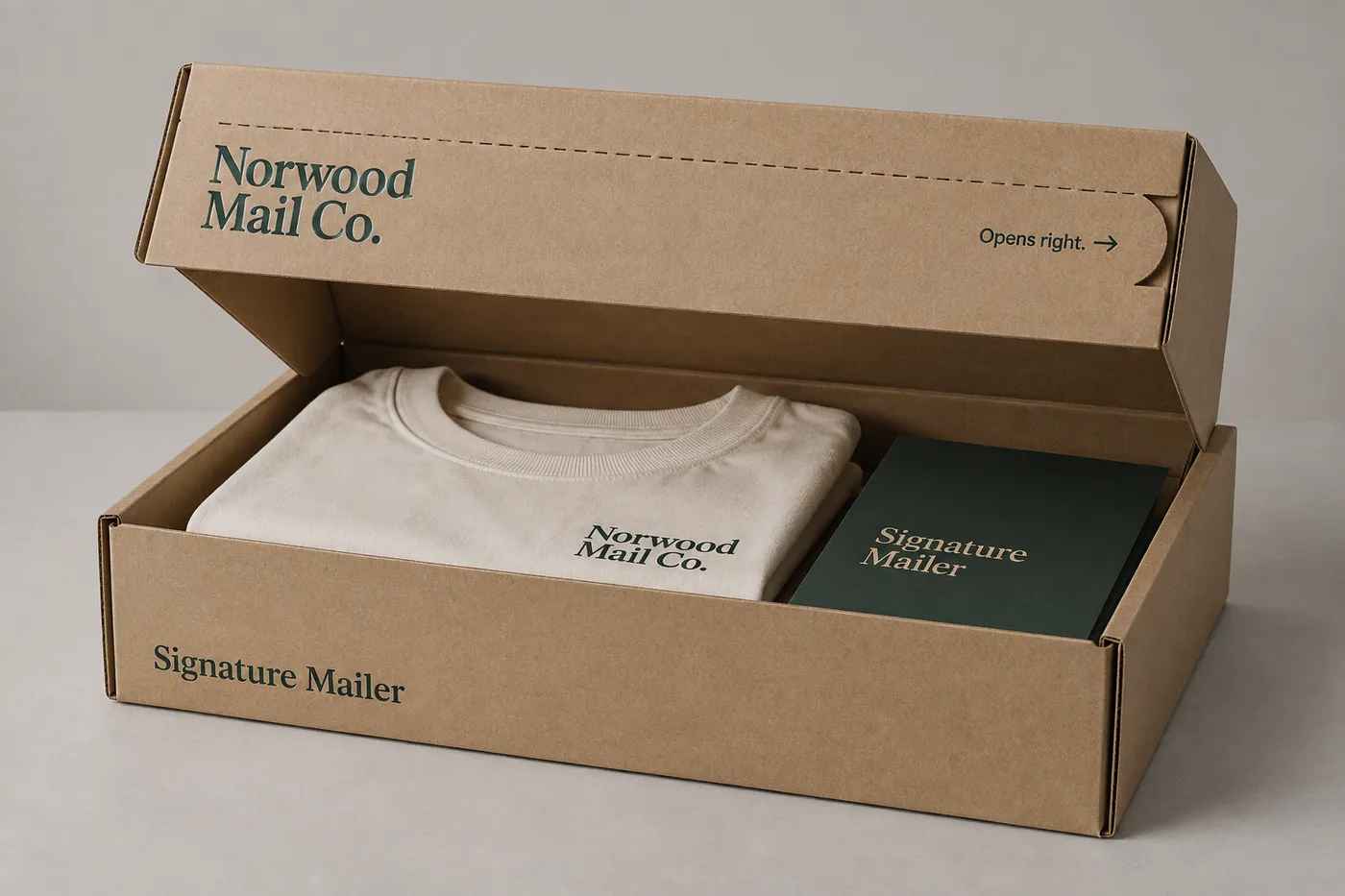
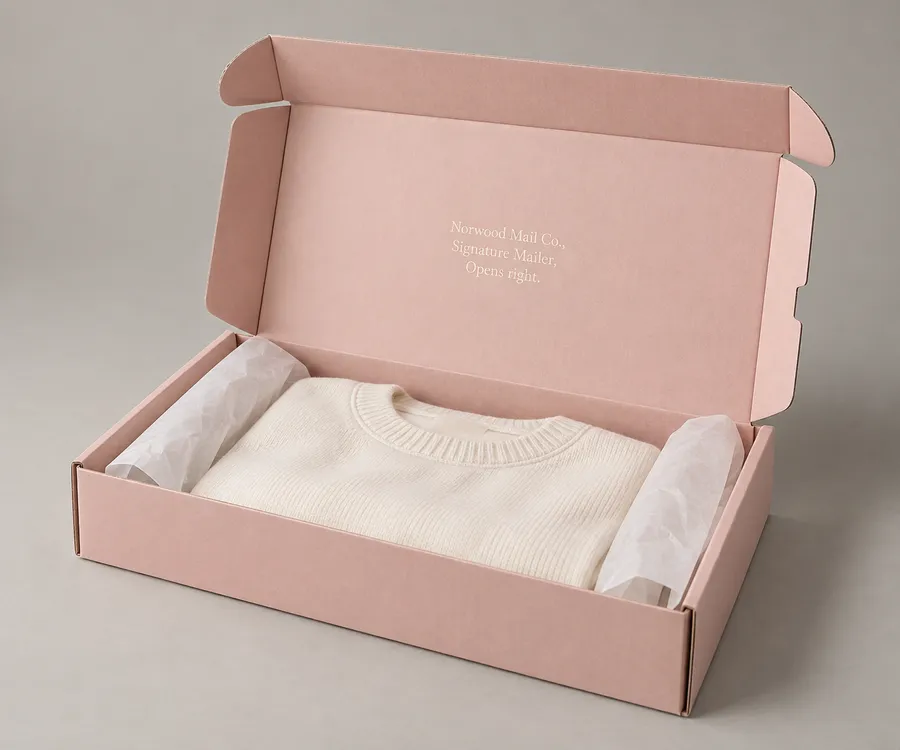
Open kraft corrugated mailer box with a visible perforated tear strip and Norwood Mail Co. print beside a folded cotton shirt.
Mailer Boxes
Custom mailer boxes with tear strip give e-commerce and subscription shipments a structured corrugated format with a defined first-open path. The box is sized around the packed product, then reviewed for board choice, closure geometry, print coverage, and finish so the opening feels intentional without turning a shipping package into a rigid gift box.
Last updated
Working quote
Product brief
Custom mailer boxes with tear strip combine a folding shipping format with a deliberate opening feature. The integrated perforated strip gives the recipient a clear place to start opening the parcel, while the mailer remains a box rather than a flat envelope. That distinction matters for subscription shipments, apparel accessories, small home goods, and other products that need a shaped outer package with room for brand artwork. The finished box is made to order by Easy Box Packaging from a dieline built around the packed product, not selected from a generic size list.
The tear strip is part of the closure geometry, so its position, pull direction, perforation path, and relationship to the printed panels need to be considered together. A well-planned opening path makes the first interaction easy to understand without adding a separate piece of packaging. It can also separate the opening action from the main tuck or locking panels, which keeps the box presentation intentional after the strip has been opened. The exact construction is confirmed in the dieline and digital proof; a strip should not be promised as a universal fit across every mailer style or size.
Sizing begins with the product in its shipping condition. Share the packed length, width, and height, along with any folded garment edges, accessory bundles, protective wrap, or presentation cards that must occupy the same interior. The required clearance depends on the product geometry, weight, fragility, orientation, structure, fulfillment method, and the desired reveal when the lid opens. Those inputs determine the internal footprint and panel proportions. A mailer that is too shallow can distort the closure; one that is too generous can let the contents move and can make the opening feel unconsidered.
Corrugated Board gives the mailer a fluted paperboard structure suited to a shipping format, while Kraft Paperboard can be reviewed where the product and handling conditions suit a paperboard mailer. The final choice depends on packed weight, parcel handling, dimensions, fold behavior, artwork coverage, and the intended surface appearance. A paperboard option is not automatically interchangeable with a corrugated construction: the material changes the fold, edge, and closure conversation. If a FSC-certified paper option is important, it can be requested as a material choice and reviewed for the selected specification; this page does not treat every box as certified.
The outside panels can carry a full brand system, shipping-facing information, or a restrained mark that makes the box recognizable before the lid opens. Artwork should leave the perforation path, fold lines, and closure edges readable in the dieline. Matte Lamination can be reviewed for a low-glare surface, while Spot UV, Embossing/Debossing, or Foil Stamping can be considered for selected artwork subject to artwork review. These finishes are choices to evaluate against the board and printed coverage, not guarantees that every line, color, or effect will reproduce identically across every construction.
This format works when a brand wants one outer package to carry the product, its small supporting pieces, and the opening moment. A subscription team may use the tear strip to create a repeatable first-open sequence; an apparel seller may size the box around a folded item and a card; a direct-to-consumer accessory line may use the lid and exterior panels to keep the shipping format visibly branded. The correct use case depends on packed dimensions and handling requirements, so the box should be evaluated with a real sample or accurate packing mockup before a production quantity is approved.
Send the packed-product measurements, product photos or a physical sample when available, the desired board direction, artwork files, print coverage, and any finish preferences. Easy Box Packaging prepares a dieline and digital proof for review. Production starts after digital proof approval and is from 7 business days. The standard minimum order is 50 units, and a $44.99 sample kit shipping charge is credited toward the first order. Free US shipping is available on the standard fulfillment path. Because there is no confirmed product-specific price range for this page, the final quote should be based on the chosen size, construction, material, print, finish, and order quantity rather than a generic unit price.
Use the first review to confirm the packed product and the interior clearance. Use the second to check the tear-strip path, fold lines, artwork boundaries, and any finish callouts on the digital proof. The final approval should cover the complete printed layout and the selected mailer construction. This sequence keeps the opening feature, shipping function, and brand presentation in the same conversation before production begins.
Proof points
The digital proof is the point where the physical opening feature and the visual system meet. Review the tear-strip location, fold and closure lines, packed-product orientation, print coverage, and any finish callouts before approving production.
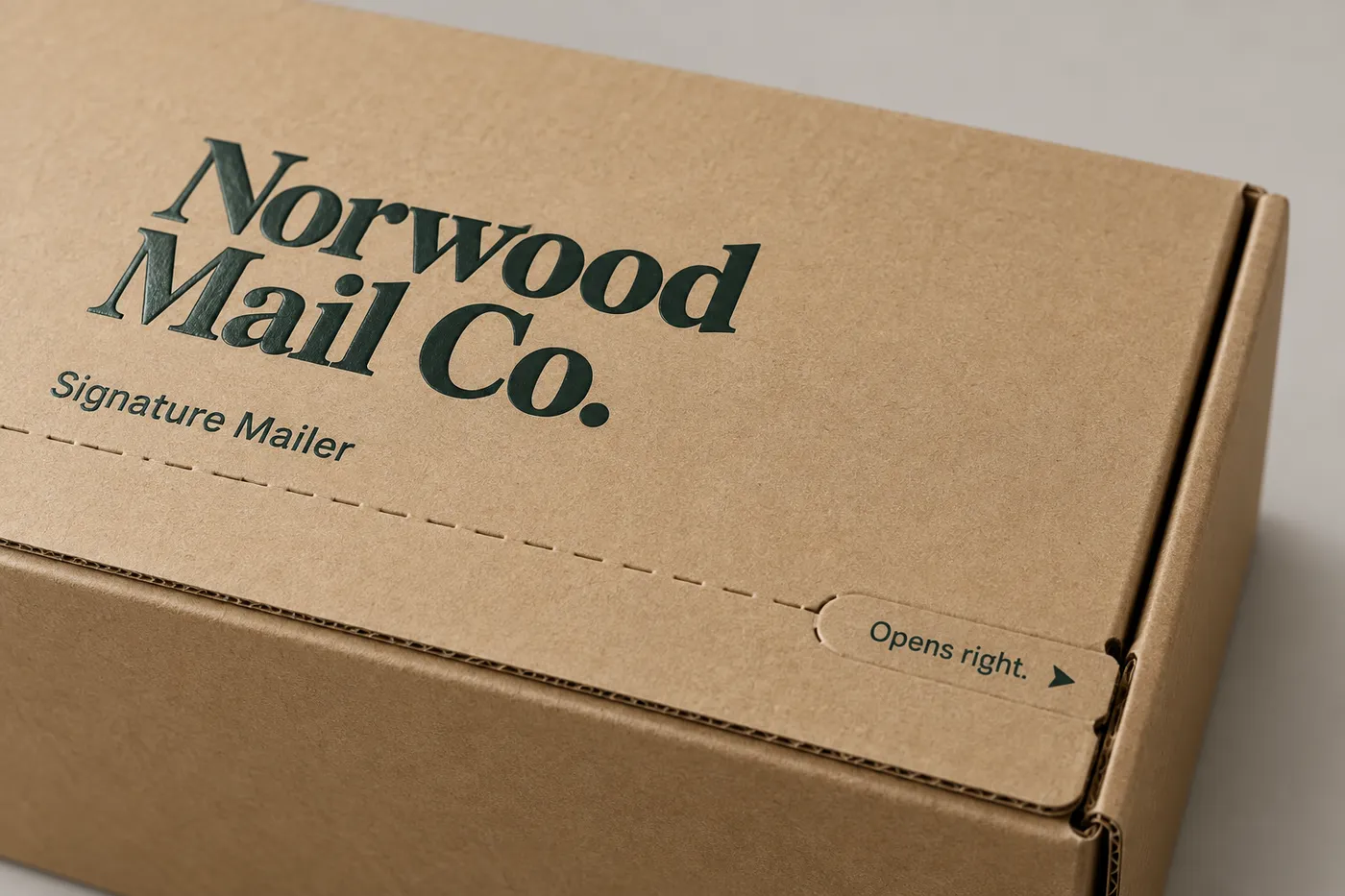
The integrated perforated tear strip gives this mailer a visible first-open feature without requiring a separate seal or label. The strip, closure panels, fold lines, and printed artwork are reviewed together because each one occupies the same dieline. The box remains a made-to-order folding mailer, with its exact proportions set by the packed product and the selected board construction.
A repeated product-and-insert layout can use the tear strip to make each monthly or periodic parcel easy to start opening.
The box can be planned around a folded garment, a compact accessory, and a card without presenting the package as a rigid gift box.
Printed exterior panels help a shipping carton carry the same visual system as the product while the closure remains practical for fulfillment.
Artwork can be planned across the lid, side panels, and base while keeping the tear-strip path and fold lines legible. Finish decisions should be checked against the selected board, ink coverage, and artwork detail; Foil Stamping, Spot UV, and Embossing/Debossing can highlight selected elements subject to artwork review.
A tear strip is easiest to use when the recipient can see where the opening begins and the printed design does not compete with the pull path. Reviewing the feature early also gives the artwork team a chance to keep key marks away from perforations and folds.
The perforated path gives the parcel a clear starting point for opening.
Interior proportions are set from the packed product and its required clearance.
Exterior panels can carry the brand system while the proof keeps artwork clear of folds and perforations.
The quote and proof process works best when the packed product and the intended opening experience are described together.
Send packed length, width, height, orientation, product photos or a sample, insert details, and the quantity range you are considering.
Check the tear-strip path, closure panels, fold lines, artwork boundaries, board choice, and finish callouts on the digital proof.
Confirm the complete printed layout and construction so production can begin from 7 business days after digital proof approval.
Need help with structure, materials, or production planning? See how we manufacture custom packaging.
Order a sample kit for a $44.99 shipping charge, credited toward your first order, and use it to review the folding format, printed surface, and opening experience before committing to production.
Shipping charge: $44.99. Credited toward your first order.
Request a Sample KitFind clear answers about fit, materials, and ordering below.
The integrated perforated strip creates a defined place to start opening the mailer. Its position and pull direction are confirmed with the closure geometry and printed artwork on the dieline.
Provide the packed product's length, width, height, orientation, and any supporting pieces. Easy Box Packaging uses those inputs to plan the interior footprint, clearance, fold layout, and closure.
Corrugated Board and Kraft Paperboard are the relevant category material paths to review. The selected board depends on packed weight, handling, dimensions, fold behavior, artwork, and the desired surface.
Yes. Exterior panels can carry brand artwork, and options such as Matte Lamination, Spot UV, Foil Stamping, and Embossing/Debossing can be reviewed against the board and artwork.
Share the packed-product details and artwork direction, review the dieline and digital proof, then approve the complete construction and print layout. Production is from 7 business days after digital proof approval.
Orders start at 50 units and scale up to 500,000 for bulk runs, with pricing from $0.18 per unit on larger quantities. Standard production is from 7 business days after digital proof approval.
Custom mailer boxes with tear strip give e-commerce and subscription shipments a structured corrugated format with a defined first-open path. Each order is made to order around your packed product and artwork, and the specification is confirmed against a digital proof before production.
Compare nearby products and request the format that best fits your next run.
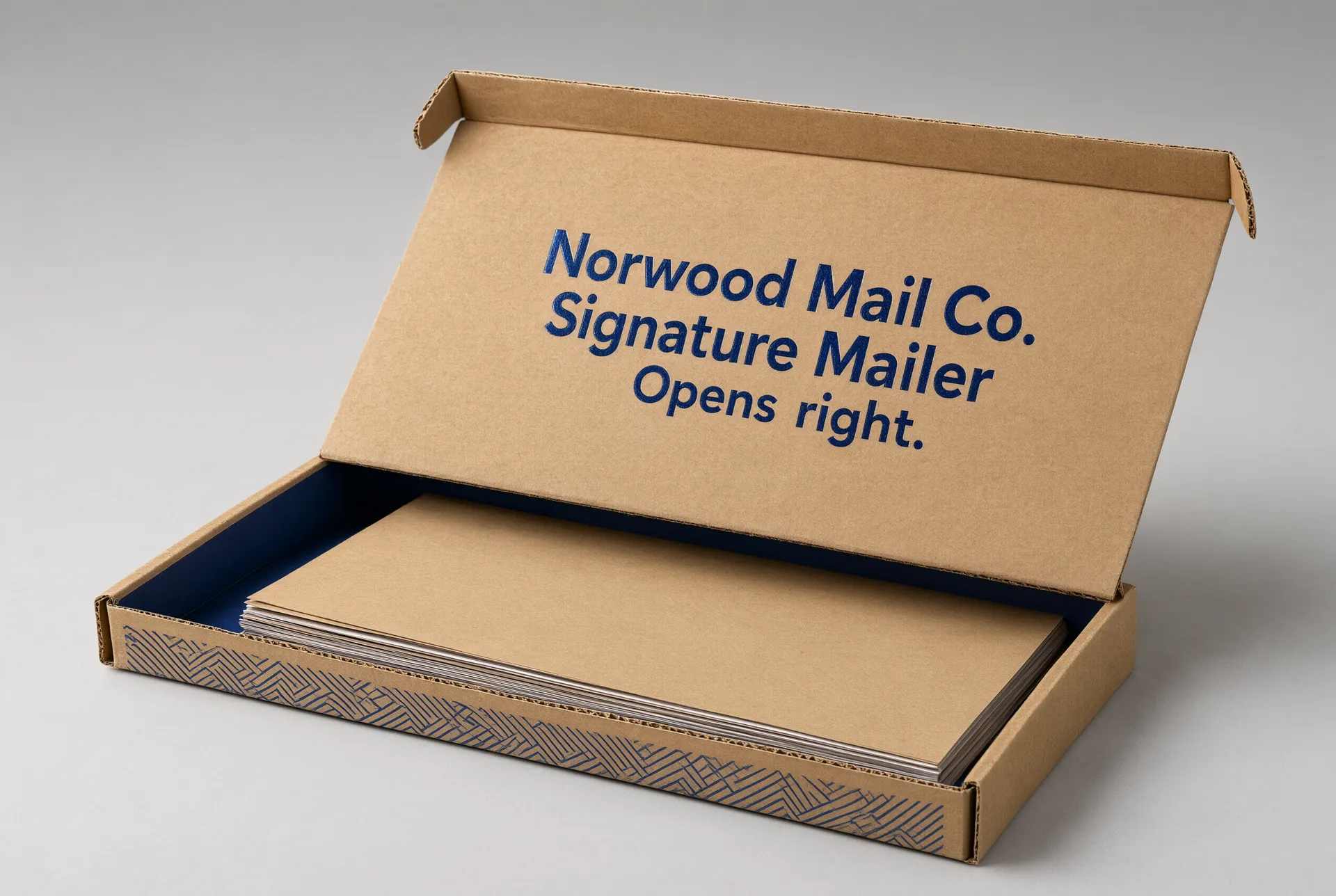
Available product
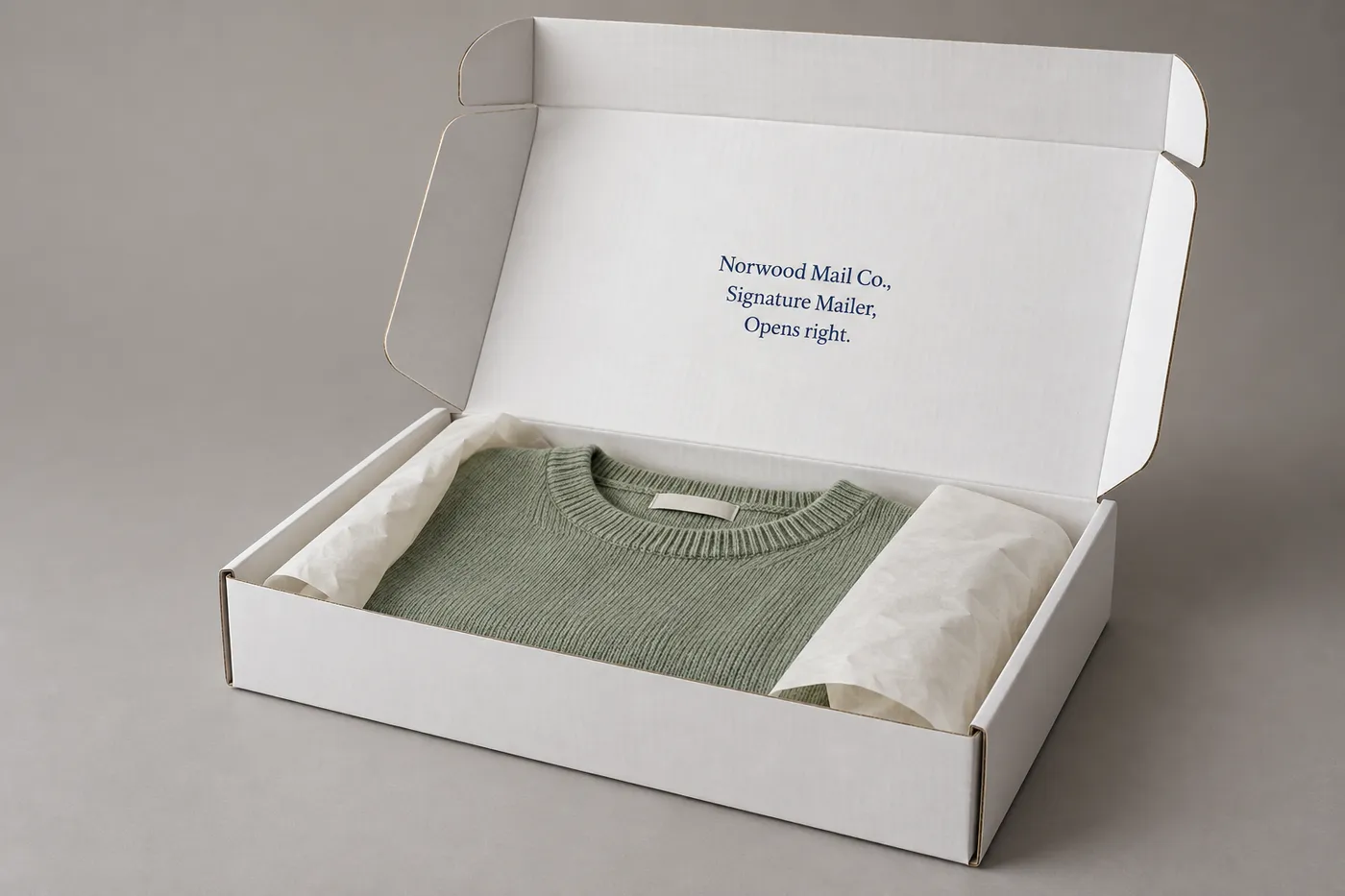
Available product
Available product
Available product
Ready to plan the opening?
Send the packed-product details, artwork direction, board preference, finish ideas, and quantity range. Easy Box Packaging can then confirm the dieline and quote the construction that fits the shipment.
Add your product details to see a quote summary.