Apparel dispatch
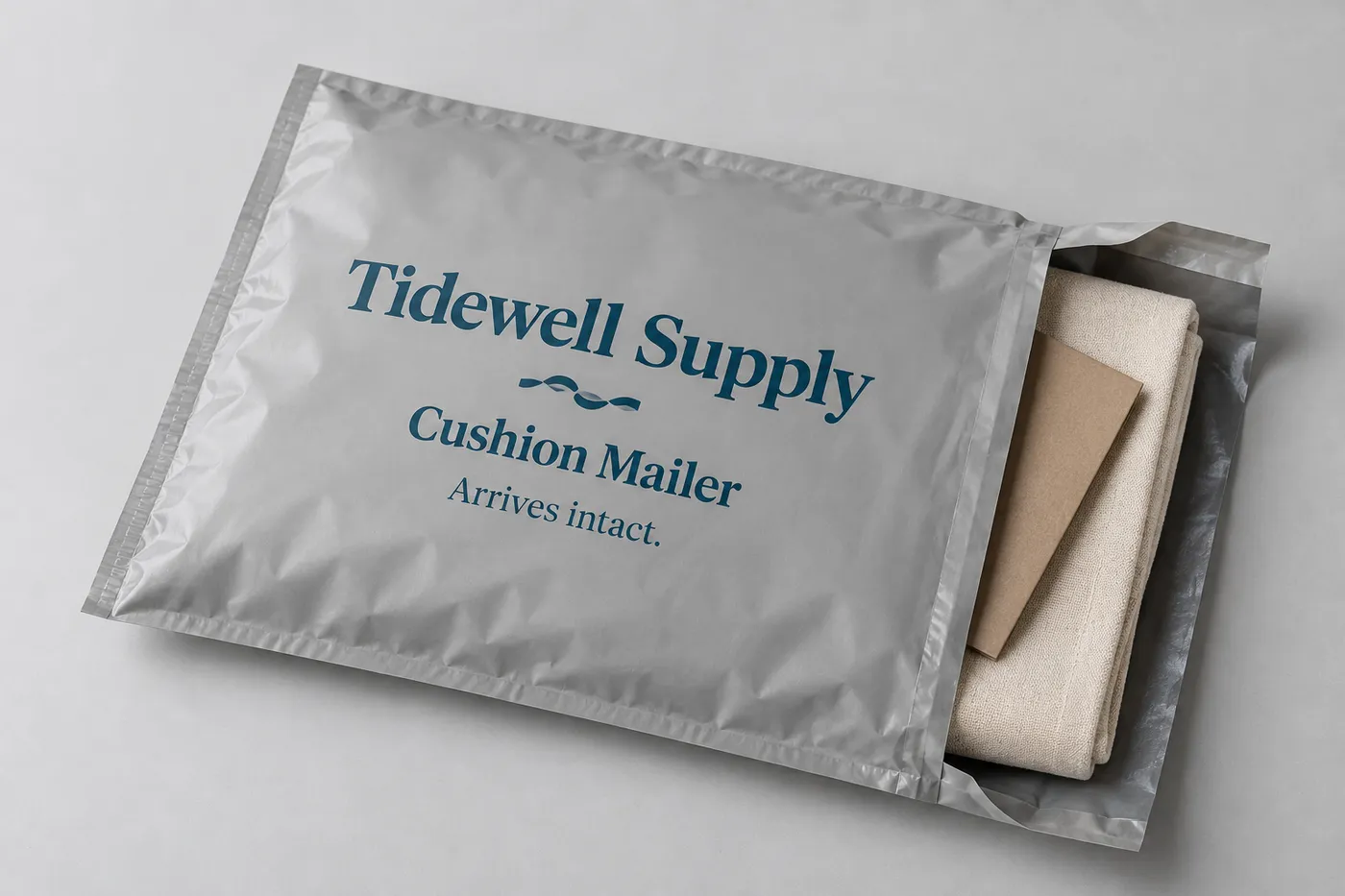
Folded shirts, lightweight garments, and similar soft goods can use the mailer when their packed footprint and closure area are clear.

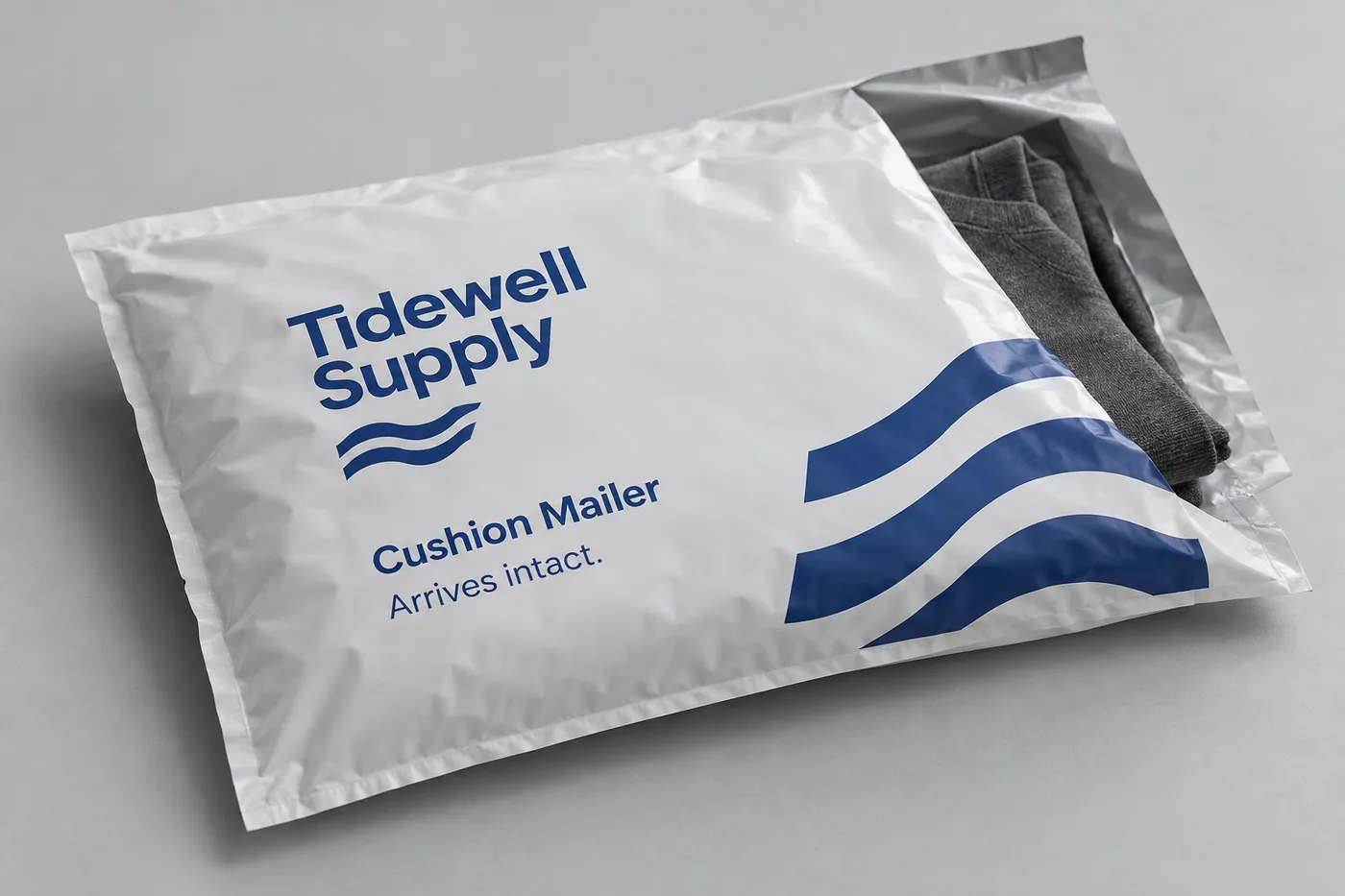
Warm-white flexible poly mailer with cobalt Tidewell Supply print and folded charcoal apparel visible inside
Bubble Mailers & Flyers
Custom poly mailers give apparel, soft goods, samples, and other suitable non-fragile products a lightweight flexible shipping format with a printed outer face. The bag is planned around packed dimensions, closure area, order volume, and mailing route, so the quote can address fit, print coverage, finish direction, and whether a flexible mailer is a better match than a box.
Last updated
Working quote
Product brief
Custom poly mailers are a practical starting point when an order needs a light outer bag rather than the fixed walls of a standing paperboard package. Folded apparel, fabric accessories, soft goods, samples, and other products that do not depend on crush-resistant structure can use the flexible format efficiently. The broad outer face also gives the brand a place for a wordmark, repeat pattern, color field, handling note, or return direction before the recipient opens the package.
The important decision is the match between the product and the format. A poly mailer can suit a soft or compressible pack, but it is not a substitute for a structured box when contents are breakable, have sharp projections, need controlled positioning, or are meant to arrive as a rigid presentation. Product geometry, packed weight, fragility, orientation, closure area, fulfillment handling, and the intended opening experience should be considered together before the mailer is sized.
Start with the contents as they will actually enter the bag, not the product in its loose, unfolded, or unbundled state. Share packed length and width, fullest thickness, orientation, and any part that changes the outline, such as a buckle, zipper pull, rigid label, bundled accessory, or flat card. Include tissue, thank-you cards, sleeves, or other items that travel inside because they change the packed profile and the space needed near the closure.
If a product line has several sizes, list each packed format separately. A custom poly mailer program can use a coordinated design across several sizes, but every finished size still needs its own dimensional review. The working allowance around the contents and closure area is confirmed during specification review rather than selected from an arbitrary category size. That keeps the bag from being based on an empty silhouette or on an average that does not represent the largest or thickest pack.
Flexible construction keeps the package easy to handle and avoids the footprint of a rigid mailer box, which can suit soft goods moving through a standard fulfillment route. The same flexibility means the bag does not provide the standing crush structure of a paperboard mailer. Compare the product's fragility, edges, packed weight, shape retention, fulfillment handling, and the presentation expected at delivery before committing to the format.
A folded garment has a different packaging need from a glass container, a product with a projecting corner, or a carefully arranged gift set. If the contents should arrive in a defined position or remain visibly presented as a set, a structured mailer or another construction may be a better comparison. Sharing the real packed item and handling context gives the quote team enough information to discuss that boundary without treating every shipment as a generic poly-bag job.
The outside face can carry the brand identity across the main panel, while the closure area needs enough room for the bag to be packed and sealed as intended. Keep critical artwork, instructions, and visual hierarchy coordinated with the flap and the way the recipient encounters the package. Interior printing can also be discussed when the opening moment matters, subject to the selected construction and print process.
Finish choices should follow the flexible substrate and artwork rather than being added as decoration after layout is complete. Matte Lamination can be reviewed for a lower-glare surface direction, Gloss Lamination can be considered when a higher-sheen look fits the design, Spot UV can highlight a selected mark, and Foil Stamping can be reserved for selected lettering or linework subject to artwork review. The digital proof is the point to inspect printable faces, closure relationship, chosen finish direction, and detail near an edge or fold.
Easy Box Packaging manufactures this format made to order. The standard minimum order is 50 units, production is from 7 business days after digital proof approval, and Free US shipping is available on the standard fulfillment path. Dieline and proof review are included on every order at no extra charge, giving the buyer a defined opportunity to check the bag size, closure area, artwork placement, and intended packed presentation before production.
A sample kit can be requested for a $44.99 USD shipping charge credited toward the first order. Pricing remains quote-only because the finished poly mailer depends on packed dimensions, quantity, print coverage, film and closure specification, finish direction, and shipping details. The quote request should include physical product information and the visual brief together instead of relying on the category name alone.
This format can suit apparel dispatch when folded garments need a light outer layer with a recognizable printed face. It can also fit subscription shipments built around soft accessories, fabric goods, and other non-fragile contents whose packed profile is consistent. Flat replenishment packs, samples, and simple direct-to-customer shipments can be considered when the product, any included card or tissue, and the closure area are described in the brief.
The use case changes when a product is fragile, sharp-edged, unusually heavy, shape-sensitive, or meant to arrive as a structured presentation. In those situations, say so early and compare the flexible bag with a mailer box or another construction family. That comparison is part of good specification work: the right format depends on what the package has to carry and how the recipient is meant to receive it.
Send packed length, width, fullest thickness, product orientation, product quantity, and a note about any flat additions or projections that travel inside the bag. Add artwork status, preferred exterior or interior print coverage, and any Matte Lamination, Gloss Lamination, Spot UV, or Foil Stamping preference. If several sizes share the program, provide each packed format rather than one average size.
Also explain the intended shipping route and whether the product is soft, rigid, fragile, shape-sensitive, or likely to puncture flexible film. The standard path starts at 50 units, production is from 7 business days after digital proof approval, and Free US shipping is available. Those facts help with planning, while the quote still needs the actual product, closure, artwork, finish, and destination details to determine the custom specification.
Proof points
A useful proof connects the flexible format to the goods it will carry and the artwork that will identify the shipment. It should make the bag silhouette, closure area, printed face, and approval point easy to inspect without treating a poly mailer as a rigid box.
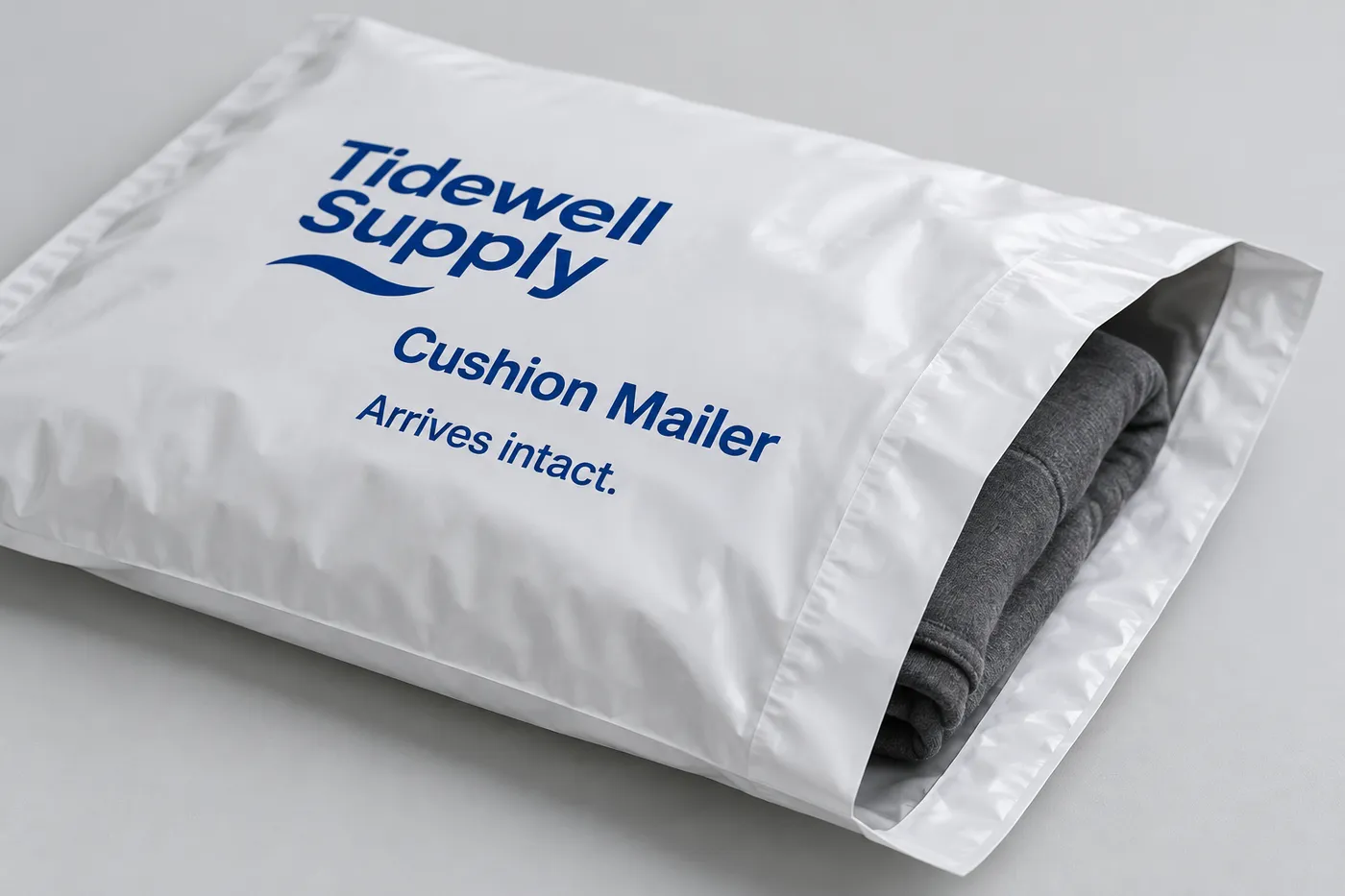
The familiar flexible bag is only the starting point. The finished mailer still needs a workable footprint, a closure area that suits packed thickness, a printable outer face, and a surface direction that matches the artwork. Share the product as it will be packed so the bag can be reviewed against the real shipment rather than an empty generic silhouette.
Folded shirts, lightweight garments, and similar soft goods can use the mailer when their packed footprint and closure area are clear.
Fabric accessories and other flexible goods can be grouped around a consistent bag size and printed dispatch face.
A recurring soft-goods shipment can use a coordinated mailer concept while each packed size receives its own dimensional review.
Simple samples, cards, and direct-to-customer refills can suit the flexible format when tissue, cards, and other additions are included in the packed specification.
Use the broad mailer face for the brand name, campaign artwork, repeat pattern, or handling message, then check the closure relationship in the proof. Interior printing can be discussed for an intentional opening moment. Matte Lamination, Gloss Lamination, Spot UV, and Foil Stamping each create a different surface direction and remain subject to construction and artwork review.
The poly format works best when product geometry, packed weight, fragility, orientation, closure, fulfillment handling, and the desired delivery presentation are considered together. A card or tissue layer may be part of the packed brief, while fragile or projecting contents may point toward a structured mailer instead.
Folded apparel, fabric accessories, and soft samples can suit the bag when their packed footprint, fullest point, and orientation are consistent.
Include packed thickness and any flat additions so the flap and seal area are reviewed with the actual contents.
Glass, sharp edges, heavy contents, and a box-led presentation are reasons to compare the flexible format with a structured mailer.
A clear quote starts with the product as it will be packed and ends with digital proof approval before production. Share the physical details and visual direction together so the flexible bag, closure, print, and route are considered as one specification.
Send packed length, width, fullest thickness, orientation, quantity, and any flat additions or projections.
Explain whether the contents are soft, rigid, fragile, shape-sensitive, or likely to puncture a flexible outer bag.
Describe exterior or interior print, preferred coverage, artwork status, and any Matte Lamination, Gloss Lamination, Spot UV, or Foil Stamping request.
Check the proposed bag size, closure area, printable faces, artwork placement, and finish direction against the packed product.
The standard minimum is 50 units, and production is from 7 business days after digital proof approval.
Need help with structure, materials, or production planning? See how we manufacture custom packaging.
Request a sample kit for a $44.99 USD shipping charge credited toward your first order. Use it to review the film feel, printed face, closure area, and finish direction before finalizing the custom mailer brief.
Shipping charge: $44.99. Credited toward your first order.
Request a Sample KitFind clear answers about fit, materials, and ordering below.
Folded apparel, fabric accessories, soft goods, samples, and other suitable non-fragile products can be starting points when their packed profile suits a flexible outer bag. Glass, sharp-edged, unusually heavy, or shape-sensitive products may need a structured mailer instead.
Send the packed length, width, fullest thickness, orientation, quantity, and any flat cards, tissue, sleeves, or projections that travel inside. A separate packed profile should be provided for each size in the program.
Exterior custom print is part of the core brief, and interior print can be discussed when the selected construction and print process support it. The digital proof is the point to review printable surfaces and artwork in relation to the closure.
Matte Lamination, Gloss Lamination, Spot UV, and Foil Stamping can be discussed with the selected construction and artwork. Final placement and suitability are reviewed during the proof process.
That depends on the product's geometry, weight, edges, orientation, and route. A flexible bag does not provide the standing crush structure of a box, so an item that can break, bend, puncture the film, or needs a structured presentation may need a different format.
The standard fulfillment path starts at 50 units. Production begins from 7 business days after digital proof approval, Free US shipping is available on the standard path, and dieline and proof review are included at no extra charge. Your final unit price is confirmed in a quote because the product, dimensions, closure, artwork, finish, destination, and quantity determine the specification.
Orders start at 50 units and scale up to 500,000 for bulk runs, with pricing from $0.30 per unit on larger quantities. Standard production is from 7 business days after digital proof approval.
Compare nearby products and request the format that best fits your next run.
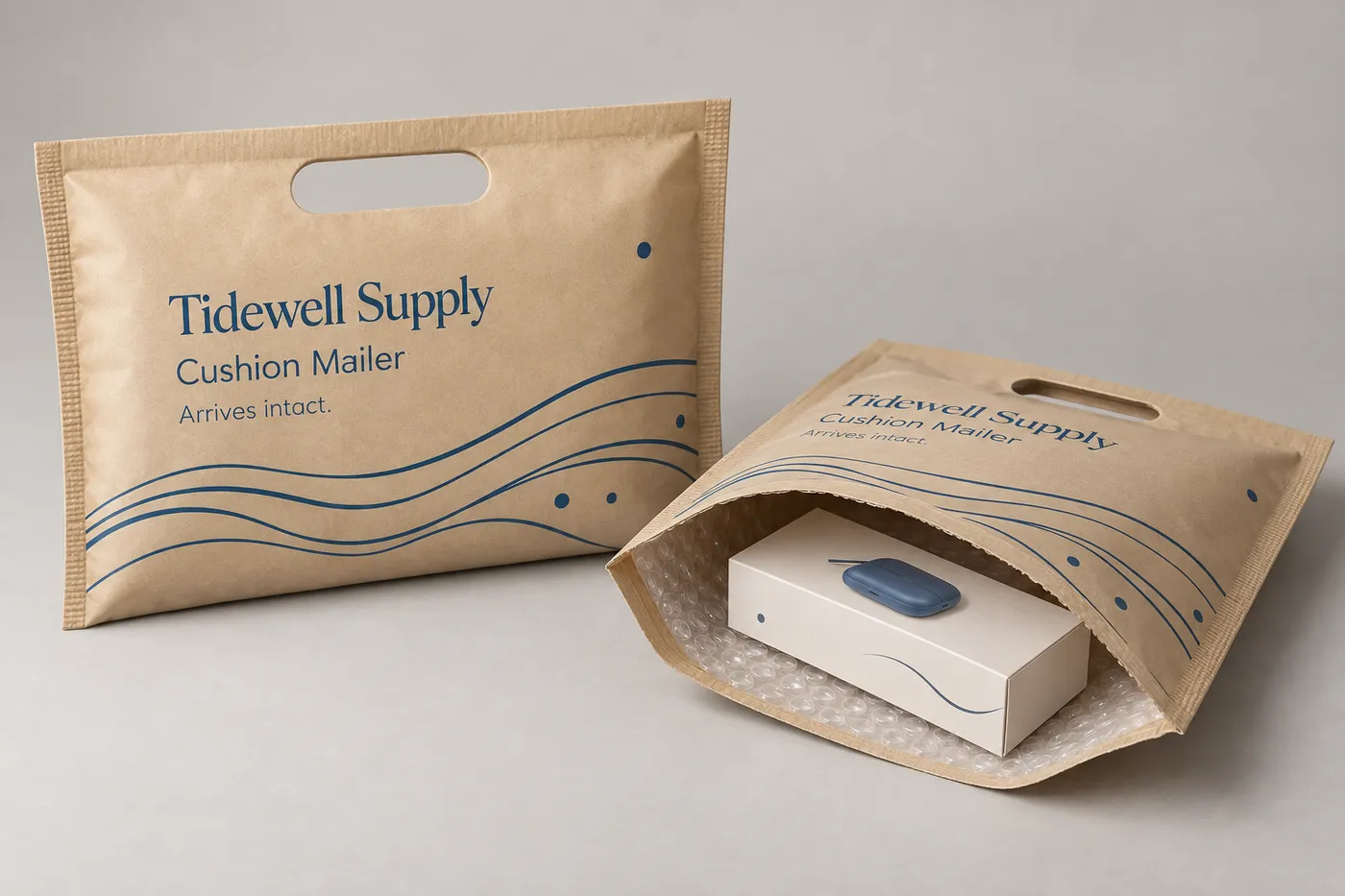
Available product
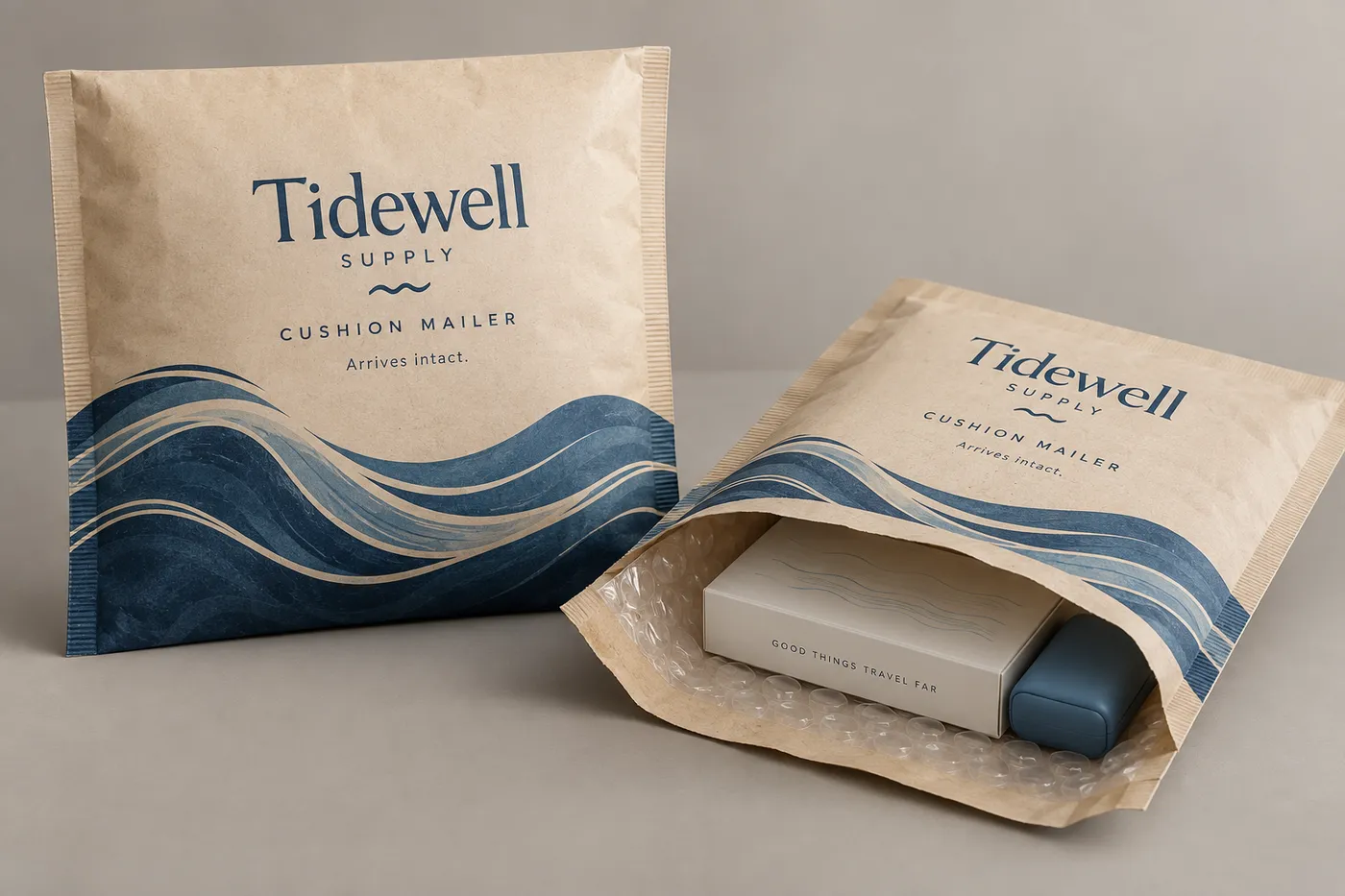
Available product
Available product
Available product
Plan the mailer around the packed product
Share the packed length, width, fullest thickness, quantity, destination, artwork status, and preferred print or finish direction. If you are unsure whether a flexible bag or structured mailer is the better fit, include the product's fragility and handling requirements so the format can be scoped accurately.
Add your product details to see a quote summary.