Retail breakfast cereals
Flakes, puffs, rings, and similar dry cereals can use a folding carton with a clear front face and supporting information panels.

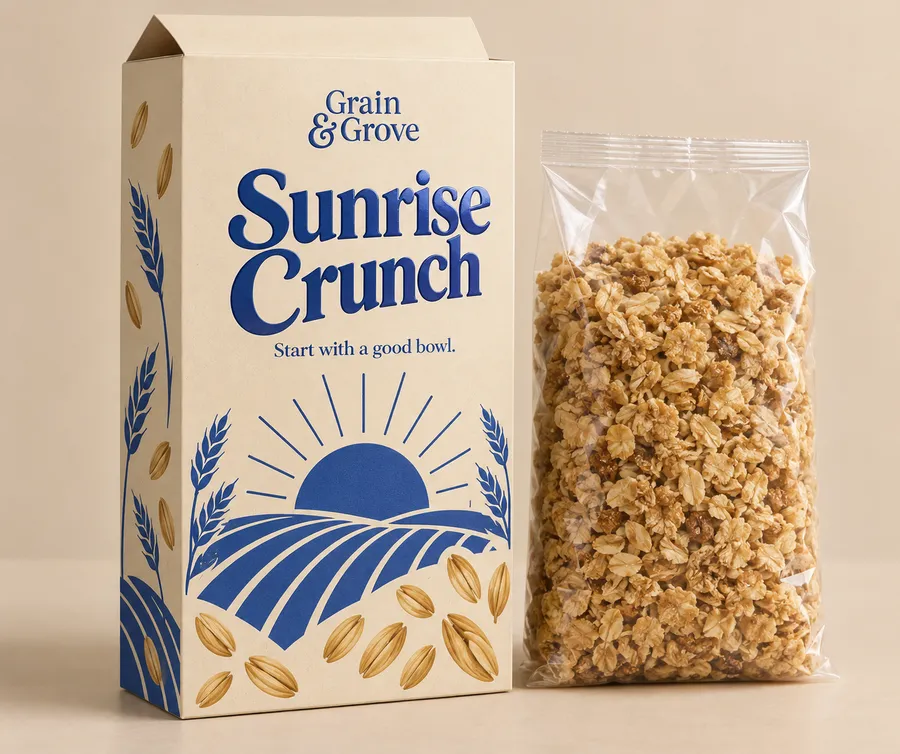
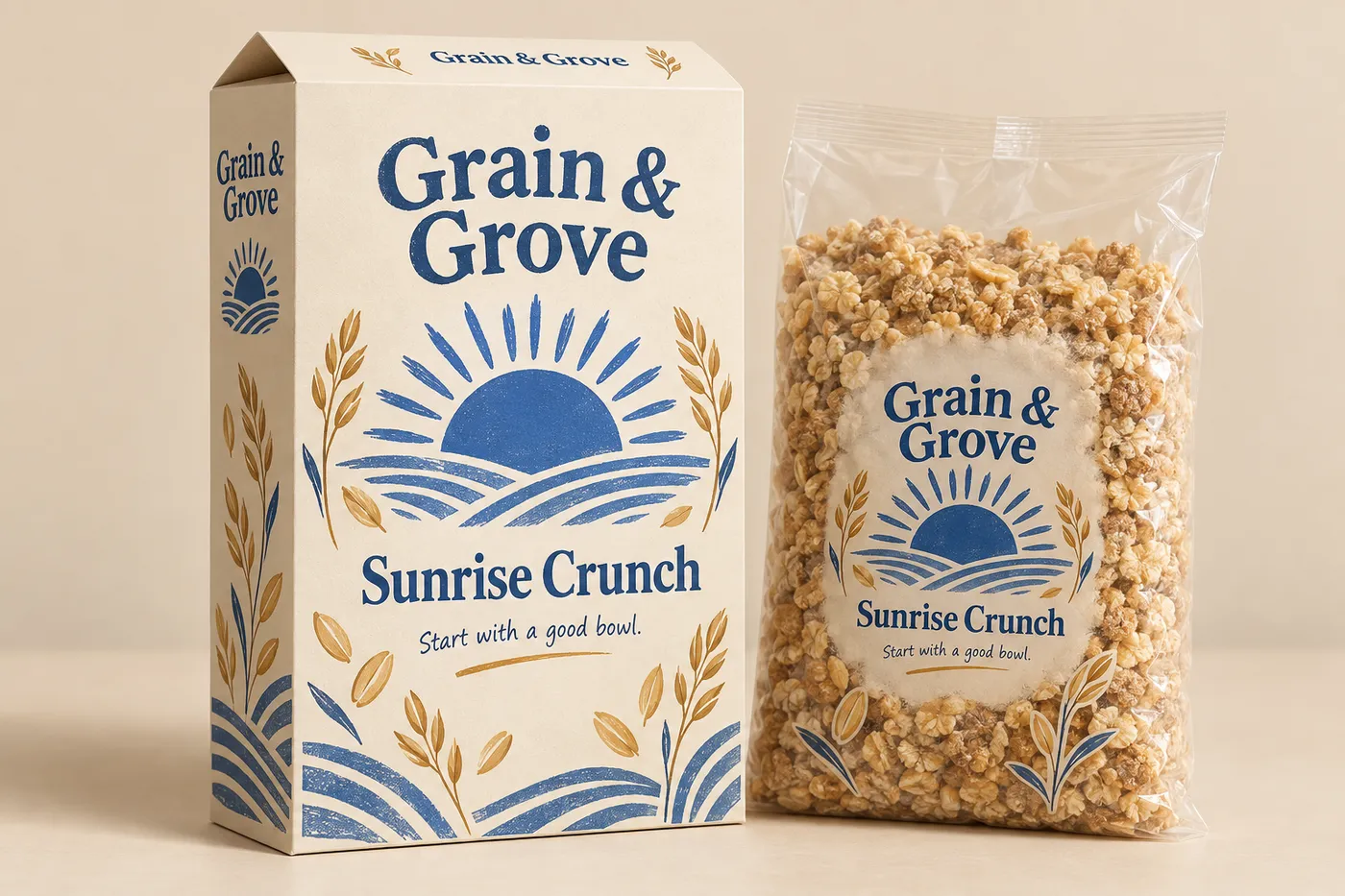
Printed Sunrise Crunch cereal carton with open flap and sealed oat bag
Cereal Boxes
Custom printed cereal boxes are folding paperboard cartons sized around a sealed inner bag of flakes, granola, muesli, or similar dry cereal. The front, back, side, top, and bottom panels can be planned for shelf recognition, product information, preparation details, and brand artwork. Share the filled bag dimensions, orientation, copy, artwork, and finish direction so the carton is reviewed around the real pack.
Last updated
Working quote
Product brief
A cereal carton has to make the product easy to identify before a shopper picks it up, while still leaving enough room for the information that belongs on the side or back. The product images show an illustrative print layout; your approved artwork replaces it at the proof stage. The other panels can be planned for ingredients, preparation guidance, storage notes, barcode placement, and brand story without crowding the primary face. The exact panel map depends on the copy and regulatory artwork supplied for the pack.
The carton is normally built around a sealed inner bag or liner. Send the filled bag, not an empty placeholder, when dimensions are available. Record its length, width, depth, widest points, seams, and the direction in which it will sit. If the pack includes a folded top, a scoop, a card, or another component, include that in the packed description. A box that is too loose can allow the inner pack to move; one that is too tight can change the opening and closing behavior. The quote and proof should follow the real packed footprint rather than a generic cereal size.
A folding carton is a practical starting point for a retail cereal format because it gives the brand a broad front face and several supporting panels. The top and bottom closure, side depth, and panel order should be reviewed together. A taller, narrower carton presents differently from a short, wide granola box, and the chosen orientation affects how the product reads beside neighboring packs. For a subscription or event shipment, the printed carton may travel inside a separate protective shipper; that outer shipping requirement should not be confused with the cereal carton itself.
Internal support is not a one-variable decision. It depends on the inner bag geometry, product weight, orientation, desired reveal, carton clearance, handling route, and whether the box will be displayed upright or laid flat. In many cereal formats the sealed bag carries the contents and the carton provides the printed outer presentation. If an additional paperboard component is needed, describe where it should sit and what movement it should control so the structure can be considered during quotation.
SBS Paperboard offers a smooth printed surface direction for detailed front artwork and small information panels. Kraft Paperboard can give the carton a natural paper character when that visual language fits the brand. Corrugated Board is a category option for a more protective outer pack or a cereal presentation that also needs shipping structure; it should not be assumed to replace the inner food bag. Board choice is reviewed with the carton geometry, handling route, artwork coverage, and intended shelf presentation. An FSC-certified paper option is available as a material direction, not a blanket certification for every finished box.
Finish selection should serve the artwork rather than obscure it. Matte Lamination and Gloss Lamination create different surface directions for the printed carton. Spot UV can be mapped to a selected logo, illustration, or flavor cue. Foil Stamping can mark a small accent, and Embossing/Debossing can add a raised or pressed detail where the board and artwork support it. Exact placement, fine detail, and edge clearances remain part of proof review.
Start the artwork with the finished carton orientation in mind. Keep the primary brand and product name on the front panel, then reserve the back and side panels for the copy that a buyer may need after picking up the box. Show the top and bottom closure direction so text does not turn unexpectedly at the shelf. Include the barcode area, nutrition or ingredient copy supplied by your team, preparation language, storage notes, and any legal marks in the files sent for review.
A digital proof is the point to check more than color. The pictured print is an example of artwork placement, and your approved brand artwork takes its place once the proof is signed off. Proof and dieline review are included at no extra charge. Quote-only pricing is appropriate because the final carton depends on the filled bag, board, coverage, finish, artwork, and quantity.
The standard fulfillment path starts at 50 units. Production is from 7 business days after digital proof approval, so the approval point matters when planning a launch, seasonal release, or restock. Free US shipping is included on the standard path. If you need to compare board feel or surface directions first, a sample kit carries a $44.99 USD shipping charge credited toward your first order.
To request a quote, send the filled inner-bag dimensions, approximate weight, cereal format, desired carton orientation, quantity, artwork status, panel copy, material direction, and finish preference. Easy Box Packaging can then review the folding structure, closure, panel map, print coverage, and any support requirement as one specification. The result should leave you with a carton that is sized to the actual pack and a proof that can be checked before production begins.
Proof points
The proof should show the carton as an assembled cereal package. Compare the filled-bag fit, closure orientation, panel map, artwork hierarchy, material direction, and selected finish with the information supplied for the quote.
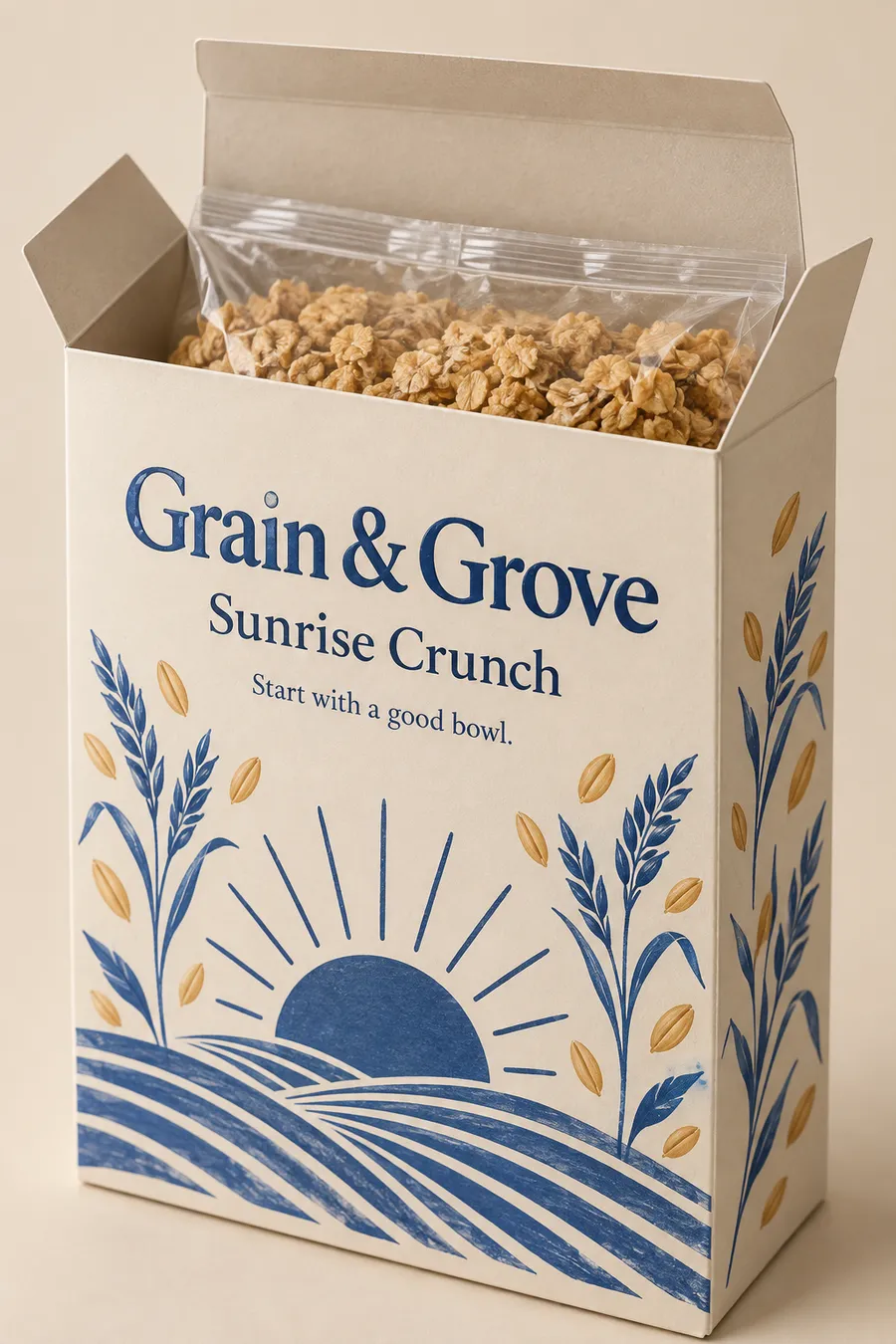
The carton should identify the cereal quickly, give the inner bag a controlled outer presentation, and keep the information panels readable. Start with the filled pack, the shelf orientation, the copy hierarchy, and the opening route so the folding structure can be reviewed around the actual product rather than a stock silhouette.
Flakes, puffs, rings, and similar dry cereals can use a folding carton with a clear front face and supporting information panels.
A short, wide, or tall carton can be planned around the bag and the amount of ingredient, serving, and flavor copy the range needs.
A printed carton can carry campaign artwork, a defined flavor story, and a changed front-panel treatment while retaining the same review process.
Compact branded cereal cartons can be considered when the package needs to present a single serving or small dry-food format in a controlled orientation.
The front, side, back, top, and bottom panels are part of one folded presentation. Map the artwork on the finished carton so the brand mark, product information, and finish accents remain correctly oriented when the box is shelved and opened.
The carton, inner bag, closure, and any internal component are considered as one packed format. Support depends on geometry, weight, orientation, clearance, handling, and the desired reveal; it may remain part of the folding structure or be reviewed as a separate paperboard component.
The filled bag sets the usable width, depth, and height of the carton, including seams, folds, and any product movement that needs to be controlled.
Top and bottom folds are planned with the shelf-facing artwork so the opening, panel order, and text orientation remain clear when the box is handled.
Front, back, and side faces can be assigned to brand identification, preparation details, ingredients, storage notes, barcode space, and supporting artwork.
A useful quote starts with the filled inner bag and the information the carton must carry. The following details turn that description into a folding package that can be checked before production.
Provide packed length, width, depth, widest points, seams, orientation, approximate weight, cereal format, and any folded top or extra component.
State whether the box will stand upright or lie flat, which face is primary, and what a shopper should see first.
Identify the product name, flavor, preparation notes, ingredients, storage information, barcode area, and any brand story that needs a panel.
Share any preference for SBS Paperboard, Kraft Paperboard, Matte Lamination, Gloss Lamination, Spot UV, Foil Stamping, or Embossing/Debossing.
Check panel order, closure direction, product image placement, copy legibility, barcode position, fold clearances, and finish representation in the digital proof.
Need help with structure, materials, or production planning? See how we manufacture custom packaging.
A sample kit carries a $44.99 USD shipping charge credited toward your first order, useful when you need to compare paperboard feel, print surface, fold definition, and finish direction before approving a custom cereal carton.
Shipping charge: $44.99. Credited toward your first order.
Request a Sample KitFind clear answers about fit, materials, and ordering below.
It is a printed folding paperboard carton sized around a sealed inner bag of cereal, granola, muesli, or a similar dry product. The carton provides the outer brand and information panels; the final fit, closure, and artwork are reviewed around the packed product rather than a generic stock size.
Send the filled-bag length, width, and depth at the widest points, approximate weight, seams, orientation, cereal format, and any folded top, scoop, card, or other component inside. A photo or sample of the packed bag can help clarify the actual footprint.
The front can identify the brand, product name, flavor, and serving image. The back and sides can be planned for ingredients, preparation, storage, barcode placement, and supporting copy. The final allocation depends on the volume and hierarchy of the supplied artwork.
SBS Paperboard and Kraft Paperboard are the main category material directions, with Corrugated Board available for a protective outer pack. Matte Lamination, Gloss Lamination, Spot UV, Foil Stamping, and Embossing/Debossing can be considered for selected artwork, subject to proof review.
Not automatically. Support depends on the inner-bag geometry, product weight, orientation, clearance, handling route, and desired reveal. Many formats rely on the sealed bag and folding structure; a separate paperboard component can be reviewed when the packed specification calls for it.
The standard path starts at 50 units. Production begins from 7 business days after digital proof approval, with free US shipping and dieline and proof review included at no extra charge. Your final unit price is confirmed in a quote because the filled pack, board, print coverage, finish, and quantity determine the specification.
Orders start at 50 units and scale up to 500,000 for bulk runs, with pricing from $0.30 per unit on larger quantities. Standard production is from 7 business days after digital proof approval.
Compare nearby products and request the format that best fits your next run.
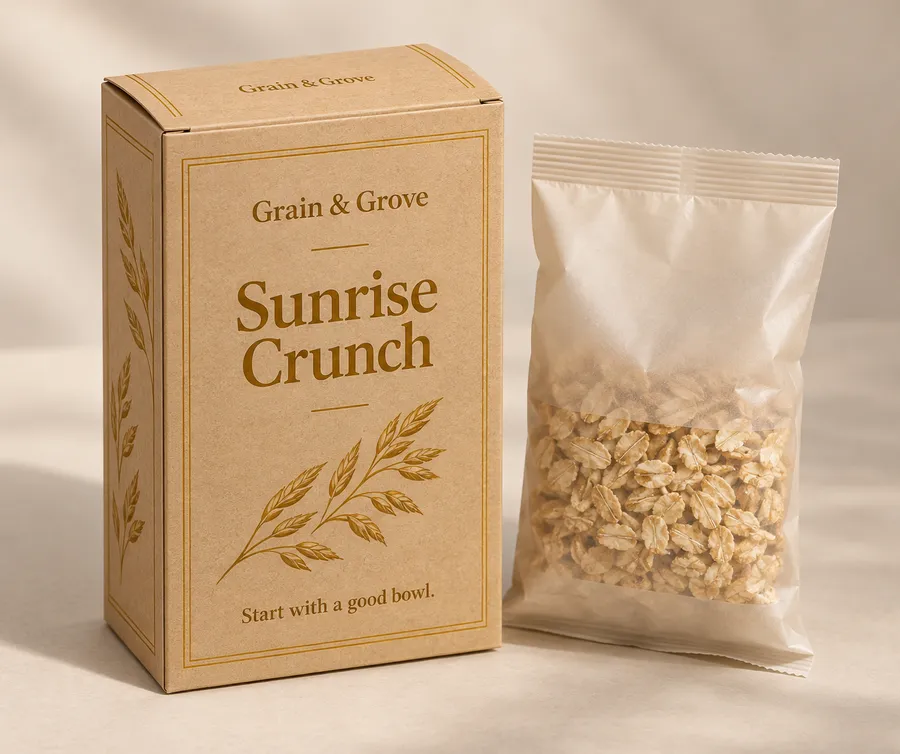
Available product
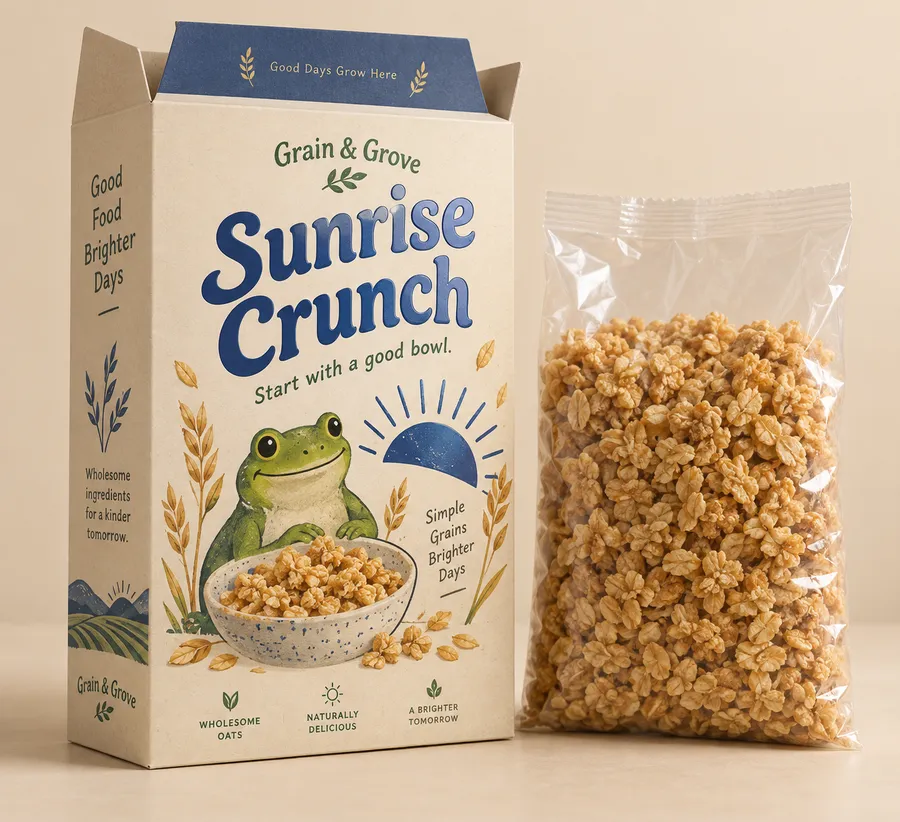
Available product
Available product
Plan the shelf pack
Send the filled-bag dimensions, cereal format, panel copy, artwork status, material direction, finish choice, and quantity. Easy Box Packaging can then review the folding structure, closure, print map, and any support requirement as one quote-ready specification.
Add your product details to see a quote summary.