Single-Serve Retail
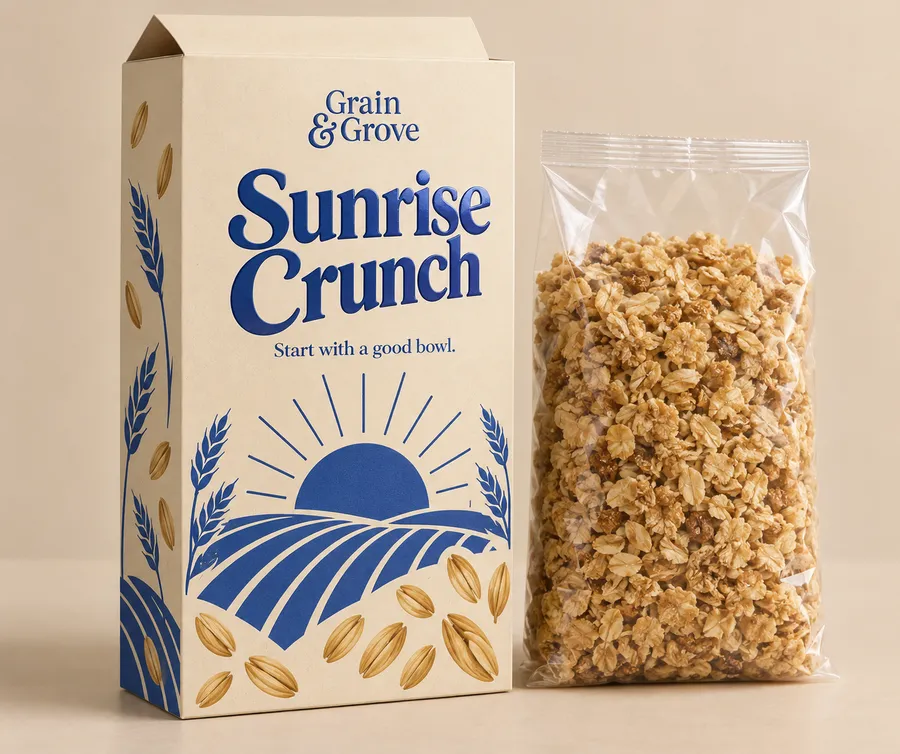
A small upright carton with a clear product name and front-panel hierarchy for a compact retail presentation.

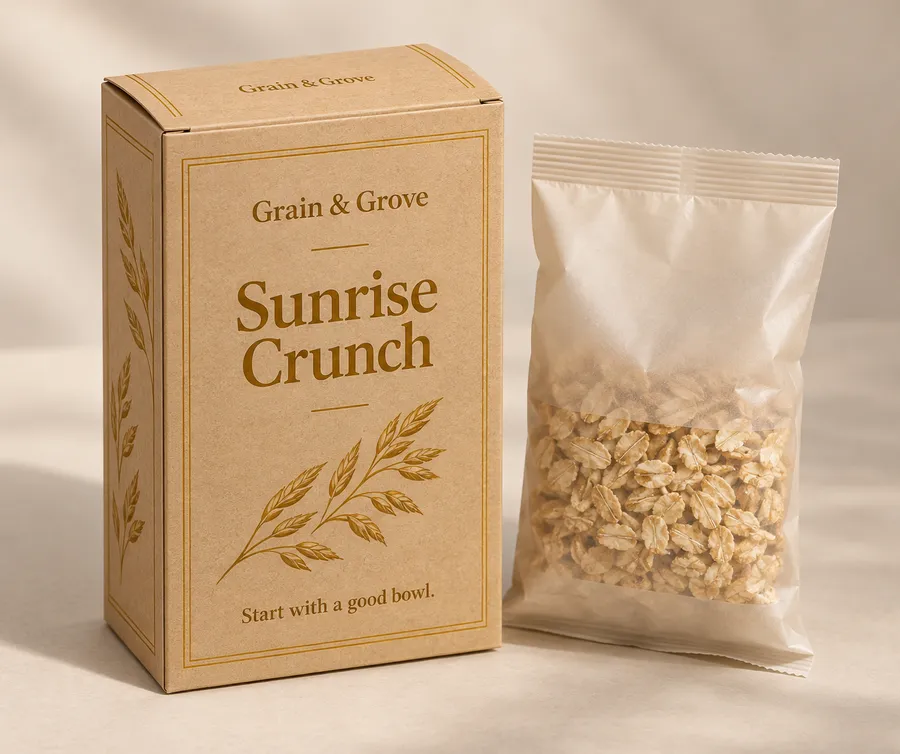
Closed mini cereal box beside a plain inner cereal pouch with oat-gold printed branding
Cereal Boxes
Mini cereal boxes are compact printed folding cartons for single-serve portions, tasting packs, hotel service, events, and small retail formats. The carton is sized around the filled inner pouch or portion, then coordinated with a practical top closure, readable front panel, and side-panel information without treating a small footprint like a scaled-down shipping box.
Last updated
Working quote
Product brief
A mini cereal box gives a small portion a clear branded presentation while keeping the inner food pack separate from the printed outer carton. The compact footprint makes every panel and fold matter: the front needs to identify the cereal quickly, the side may carry ingredients or preparation information supplied by the customer, and the top needs to open without obscuring the front artwork. It is a made-to-order folding carton, not a generic small box selected by a nominal label.
Begin with the portion as it will actually be packed. Share the filled inner pouch, liner, sachet, or small bag; its height, width, depth, weight, seal, fold, and any area that changes shape after filling. If a mini box will hold two portions, a sample pair, or a small variety set, describe the complete arrangement. A compact carton can be proportioned around one portion, but it can also be laid out for a bundle when the quantity and orientation are known before the dieline is prepared.
Measure the filled pack rather than an empty bag. Include the widest point, the sealed or folded top, and the direction in which the portion will sit. A soft cereal pouch may settle differently from a rigid sachet, and that profile affects panel width, side depth, and how the top flap closes. A photograph or simple side view is useful when the portion has a gusset, an uneven fill, or a closure that projects beyond the main body.
There is no universal clearance number for every mini cereal format. The allowance depends on the packed product, board direction, closure geometry, inner-pack count, and the handling route. The final space is confirmed during specification and dieline review. Avoid adding headroom just because the carton is small: excess movement can make a portion look loose, while too little space can interfere with the tuck or seam. If the same cereal is offered in several fill sizes, each size normally needs its own dimensional review even when the visual family stays consistent.
A short tuck-top folding carton can suit a single-serve portion that needs a recognizable opening sequence and a front face that remains upright. A straight tuck or reverse tuck direction changes where the top flap lands and which panel carries the seam, so the choice should follow the packed profile and the way the box will be displayed. A compact carton for a hotel tray may prioritize a simple top opening, while a tasting or event pack may need a front panel that reads clearly in a handout or small display.
The bottom lock, side seam, top flap, and panel widths are one connected structure. The artwork should be checked on the assembled package, not only on the flat sheet. A different portion height, count, orientation, closure, or window request can change the dieline even if the product is still called a mini cereal box.
Kraft paperboard can keep a natural surface character in the presentation, while SBS paperboard can provide a smoother, brighter base for small type and detailed illustrations. Corrugated board is a different structural direction and may be considered when the carton is part of a broader protective pack rather than a simple compact retail presentation. These are material choices to review against the packed portion and intended handling; the category context does not establish an unverified gsm, barrier, or food-contact specification. An FSC-certified paper option is available as a material direction when requested, subject to confirmation for the selected stock.
On a small carton, contrast and hierarchy are more useful than crowding every panel. Keep the product name and variant visible on the front, reserve side panels for supporting copy, and check that folds do not split the key line. Matte lamination can give the printed surface a lower-sheen look, gloss lamination can create a brighter reflection, and foil stamping can highlight a short mark or detail when the artwork and board support it. Finish coverage should be reviewed around the seam and top flap so the assembled package matches the intended presentation.
Mini cereal boxes can suit single-serve retail portions, hotel and café service, tasting kits, event handouts, and subscription inserts. These uses have different priorities. A shelf-facing portion needs a legible front and stable upright orientation. A hotel or café pack may need a compact footprint that is easy to place beside a bowl. A tasting set may use several related cartons or a grouped outer pack, which makes the count and orientation of inner portions important to the quote. A direct-to-customer insert should be discussed alongside the protective shipping pack rather than judged only by the printed face.
The production path starts with the packed portion, carton direction, quantity, artwork status, and finish preference. A dieline is then prepared for the chosen dimensions and closure. Review the digital proof with the actual filled portion: check the front-panel hierarchy, side copy, top flap, fold lines, seam, and the way the mini carton stands. Dieline and proof review are included on every order at no extra charge. After approval, production begins from 7 business days under the standard estimate.
Orders start at 50 units on the standard fulfillment path, and free US shipping is included. A sample kit can help compare board feel, print, closure, and fit before a larger run; its $44.99 shipping charge is credited toward the first order. Product-specific unit pricing remains quote-based because the supplied evidence does not establish a defensible price range for this mini format. Quote requests are typically answered the same business day and always within 24 hours.
Send the filled portion dimensions and weight, the number of portions per carton, intended orientation, order quantity, artwork status, and where the box will be displayed or handed over. Add any preferred board or finish direction, the front-panel wording, required side information, and whether the carton will travel inside another pack. If the portion changes shape after filling, mention that before the dieline is drawn.
The resulting review can connect the physical portion to the compact carton, printed panels, closure, and handling route. Confirm the digital proof against the real pack before approval, then use the approved layout as the reference for production.
Proof points
The compact package is reviewed as a folded carton around the filled portion, printed face, closure, and intended use.
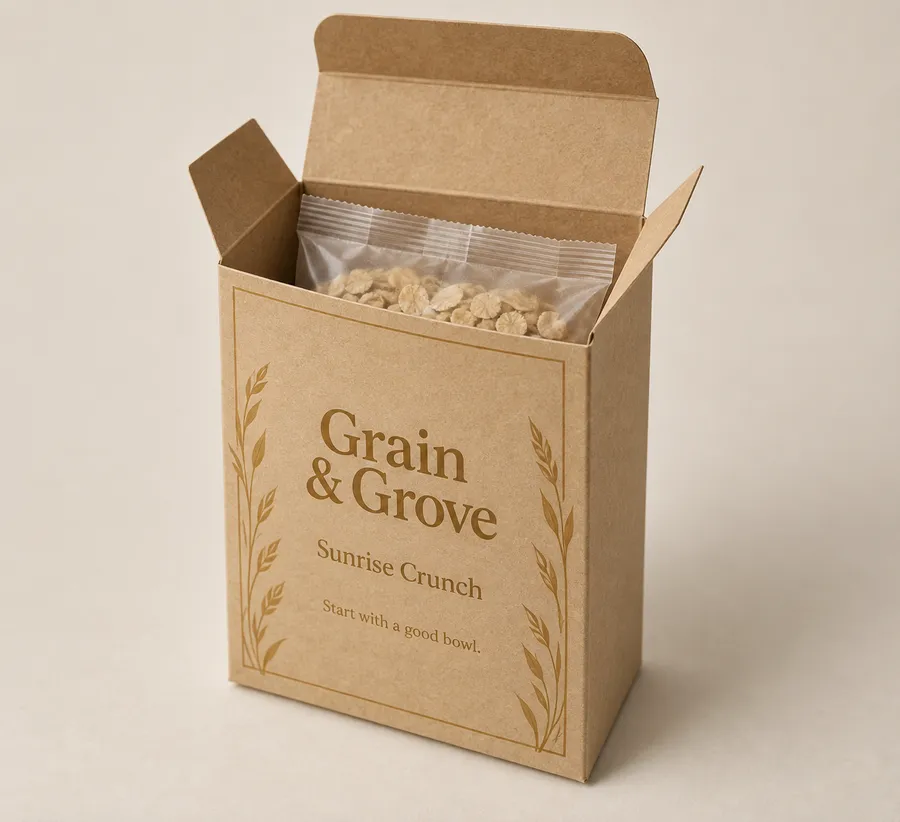
Sizing starts with the filled inner portion, its weight, profile, orientation, and count. The dieline then coordinates the compact panels, top closure, seam, and readable artwork around the package that will actually be sold or handed over.
A small upright carton with a clear product name and front-panel hierarchy for a compact retail presentation.
A branded portion pack designed to sit beside a bowl or beverage while keeping the opening sequence easy to understand.
A printed mini carton for samples, event handouts, or grouped variety sets where portion count and orientation need review.
A branded cereal portion placed inside a direct-to-customer shipment and reviewed with the protective outer pack.
Artwork is mapped to the assembled compact carton so the cereal name, variant, folds, top closure, and finish remain intentional after assembly.
A useful brief connects the small inner portion to the carton structure, artwork, and handling route so the review is based on a real package.
Share filled dimensions, weight, widest points, seal or fold, and the number of portions the carton must hold.
Explain whether the carton is shelf-facing, placed on a hotel tray, handed out at an event, or packed inside a shipment.
Review the front panel, side copy, seam, top flap, folds, and finish coverage in the digital proof.
The order path turns the filled portion and artwork brief into a confirmed compact structure, printed layout, and production-ready proof.
Provide packed dimensions, weight, seal or fold, portion count, and intended orientation.
Explain whether the carton is shelf-facing, placed on a tray, handed out, or shipped inside another pack.
Discuss kraft paperboard, SBS paperboard, or corrugated board with the intended print treatment.
Send the cereal name, variant wording, artwork, and panel priorities for the compact layout.
Check the front panel, side copy, folds, top closure, portion clearance, and finish coverage.
Need help with structure, materials, or production planning? See how we manufacture custom packaging.
Review board feel, printed surface, closure, and compact carton fit before a full run; the $44.99 sample-kit shipping charge is credited toward the first order.
Shipping charge: $44.99. Credited toward your first order.
Request a Sample KitFind clear answers about fit, materials, and ordering below.
Measure the filled inner portion, including length, width, height, weight, widest points, seal or fold, and orientation. Also share the portion count so the dieline is reviewed around the complete packed arrangement.
Kraft paperboard, SBS paperboard, and corrugated board are material directions for review. The right choice depends on the printed surface, compact structure, and whether the package is primarily shelf-facing or part of a protective shipment.
The minimum order is 50 units on the standard fulfillment path. Production begins from 7 business days after digital proof approval, and free US shipping is included.
Yes. Custom printed panels can be reviewed with foil stamping, matte lamination, or gloss lamination, subject to the selected board, folds, closure, surface coverage, and artwork.
Send the filled portion dimensions and weight, count, orientation, quantity, handling route, artwork status, and preferred material or finish. A filled-product photo or side view can clarify the portion profile.
Orders start at 50 units and scale up to 500,000 for bulk runs, with pricing from $0.22 per unit on larger quantities. Standard production is from 7 business days after digital proof approval.
Yes. Free US shipping is included on the standard fulfillment path. Delivery timing and carrier details are confirmed when your quote is prepared.
Compare nearby products and request the format that best fits your next run.
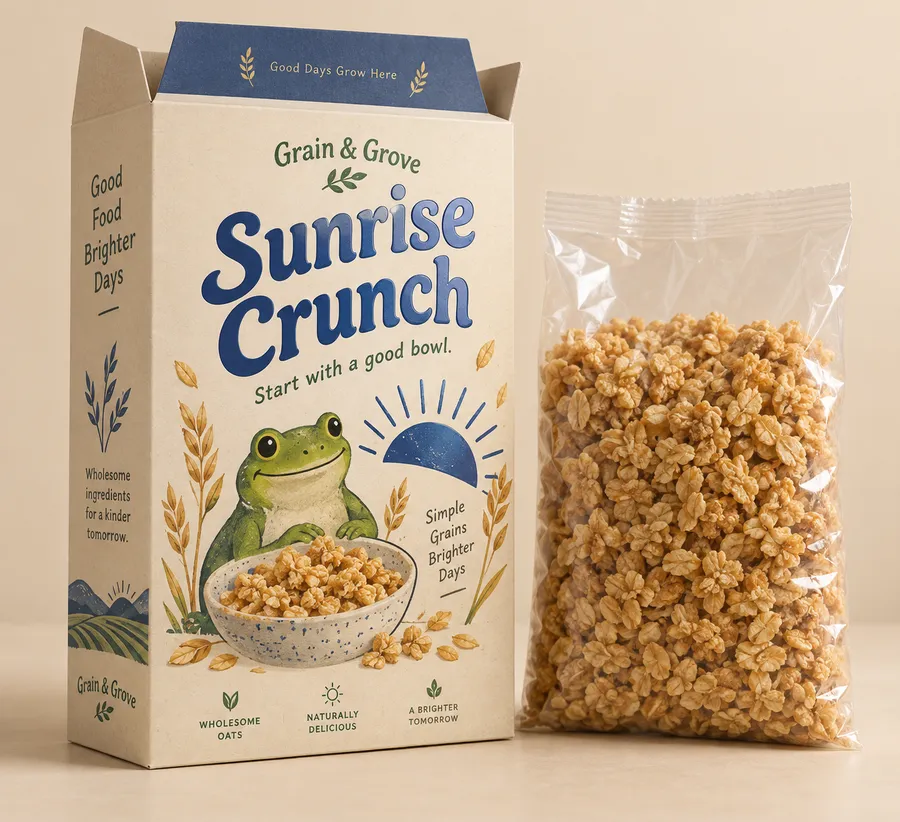
Available product
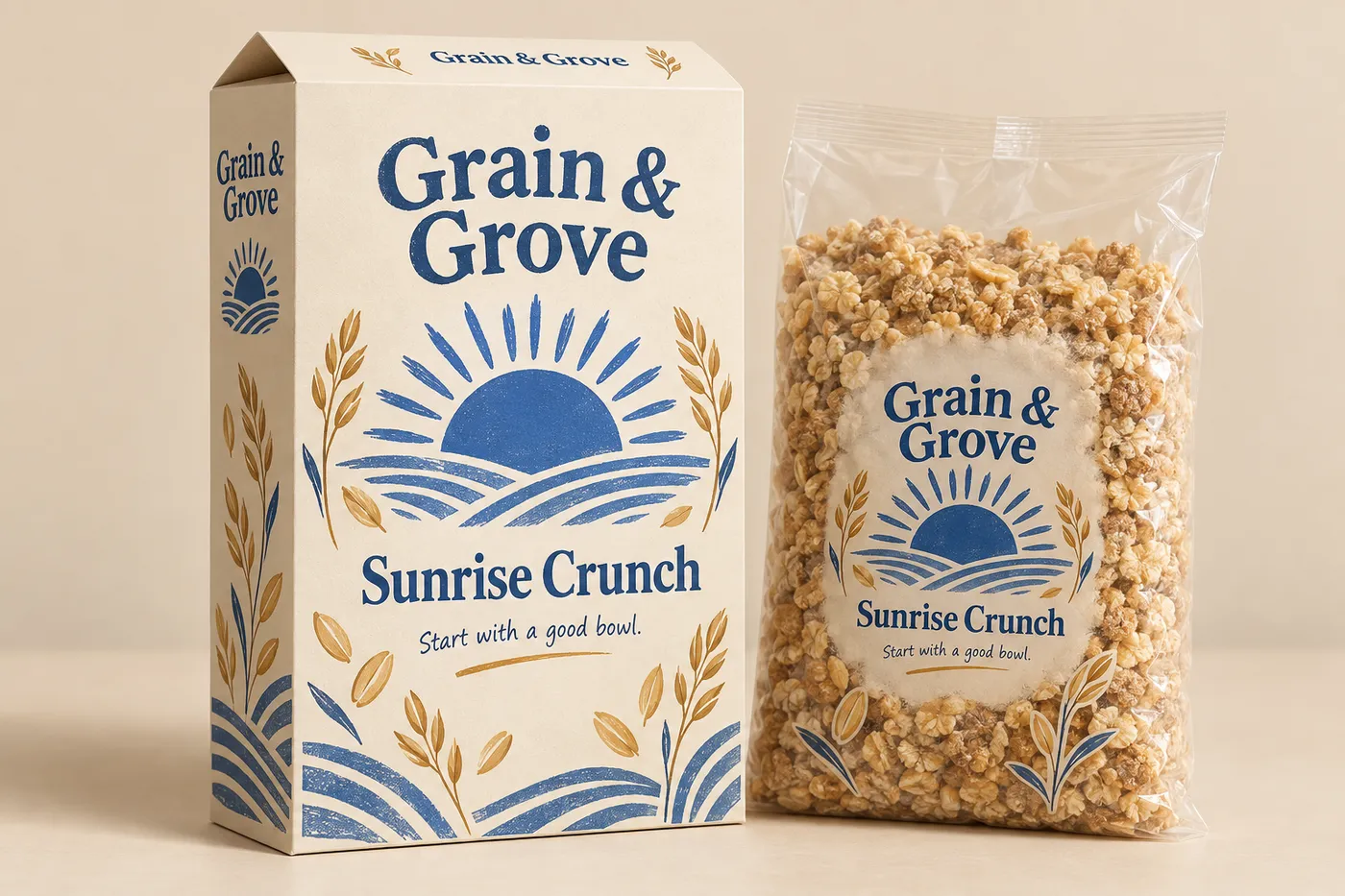
Available product
Available product
Get Started
Send the filled portion dimensions, portion count, orientation, quantity, material direction, artwork status, and intended handling route to request a quote.
Add your product details to see a quote summary.