Subscription shipments
A shallow custom mailer can organize a recurring product set while giving the lid and inner panel a place in the monthly opening sequence.

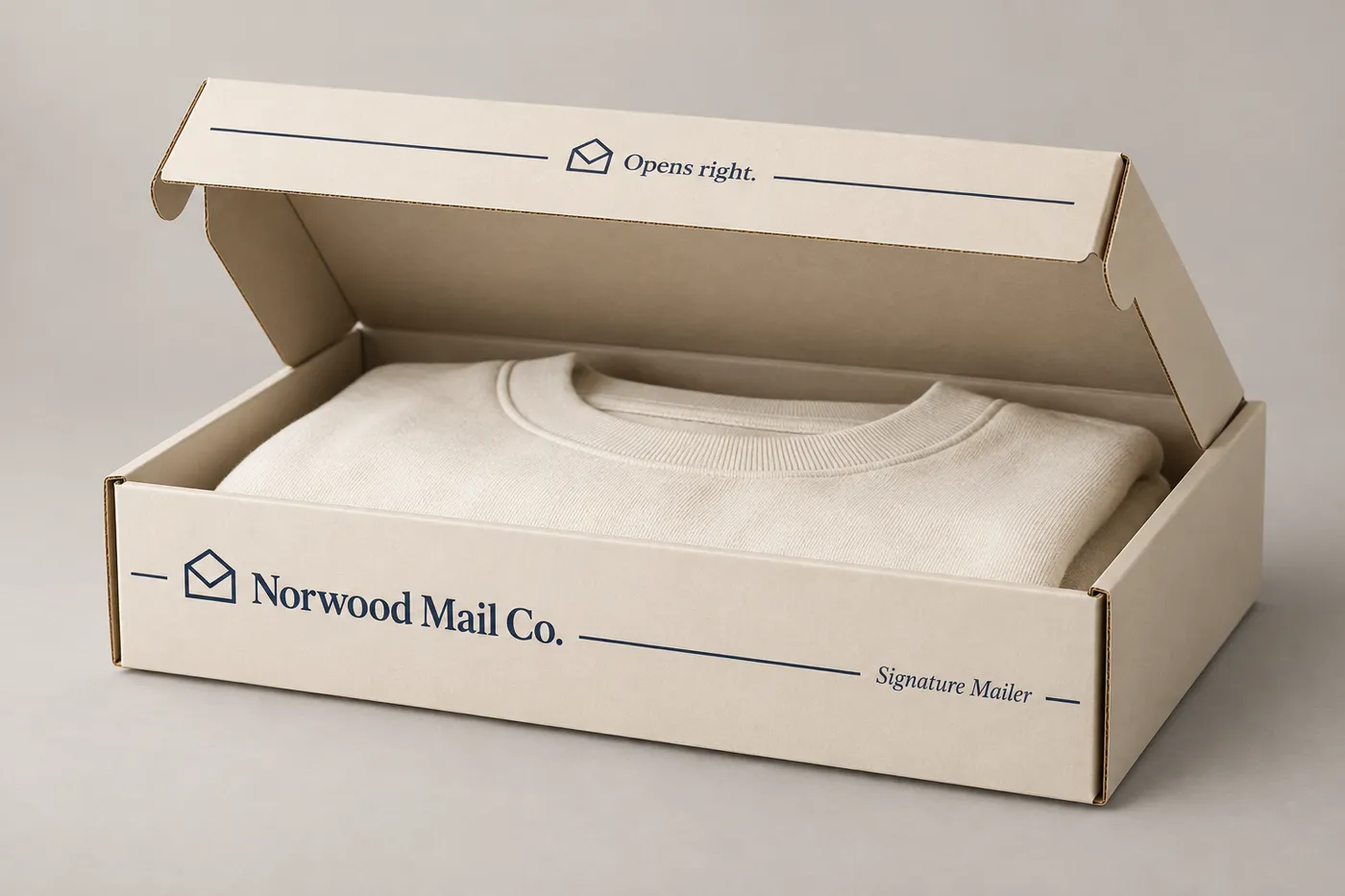
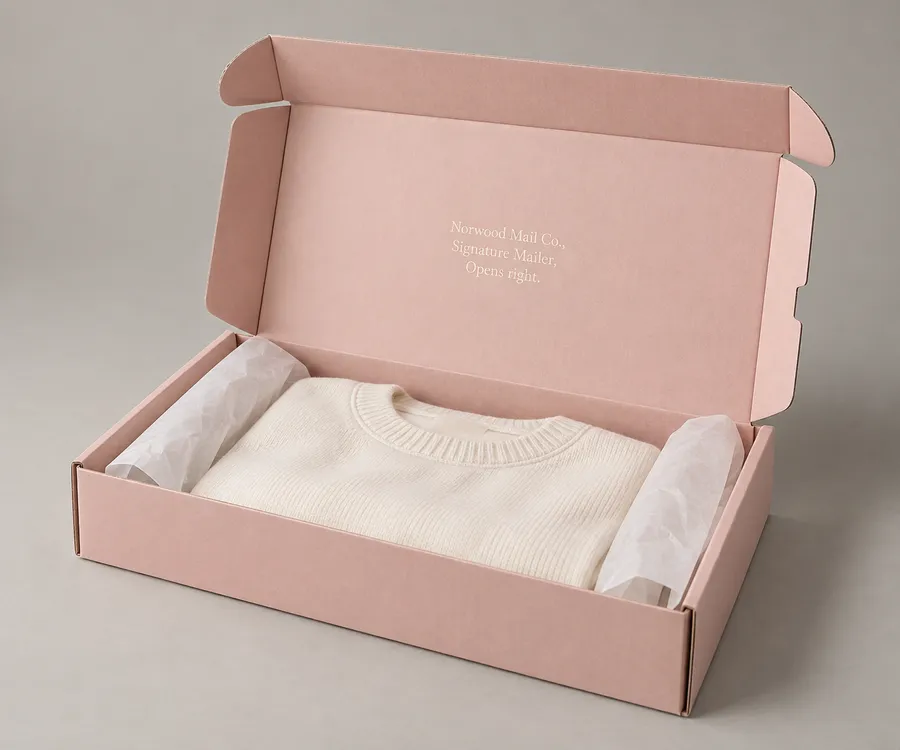
Open warm ivory tuck-top mailer box with folded cream apparel and navy Norwood Mail Co. print
Mailer Boxes
Custom tuck top mailer boxes give e-commerce, subscription, and direct-mail products a folding shipping format with an integrated lid that tucks into the front panel. The shallow rectangular structure can be planned around the packed product, then finished with custom exterior or interior print, board selection, and a surface treatment that fits the way the package is opened and handled.
Last updated
Working quote
Product brief
Custom tuck top mailer boxes are useful when the package needs a defined opening sequence as well as a practical shipping format. The lid folds over the top and tucks into the front panel, while side dust flaps help close the cavity around the packed product. That construction keeps the box visually simple at the handoff: the customer sees a front panel, lifts the lid, and finds the product inside without a separate lid or loose cover. The right version depends on the packed product, the way it is oriented, how much handling it will see, and whether the inside of the mailer is part of the brand presentation.
Send the packed length, width, and height for the product as it will actually sit in the mailer. Include the product count, orientation, packed weight, outer wrap, and any part that projects beyond the main body. If a folded garment, book, subscription bundle, or small retail carton is going inside, show its packed state rather than its loose state. A tuck-top mailer can be shallow and broad for flat products or deeper for a compact bundle; the structure should follow that geometry rather than a generic mailer-box ratio. Final clearance and panel allowances are confirmed during specification and dieline review, so a buyer should not copy a fixed tolerance from another box.
Corrugated Board can be reviewed when the shipment needs a more substantial folding shell and a visible scored construction. Kraft Paperboard gives the mailer a natural paper direction, while SBS Paperboard provides a smooth face for detailed printed artwork. These are different material paths, not interchangeable labels: board feel, fold behavior, packed weight, and the intended shipping route all affect the recommendation. Internal support is also a specification decision. Depending on the product geometry, weight, orientation, fragility, and desired reveal, support may be integrated into the paperboard structure or supplied as a separate insert. A change in product size normally calls for a fresh dieline review even when the tuck-top style stays the same.
The front panel and lid give the printed story two natural reading moments. Exterior artwork can identify the sender before opening, while a small interior pattern or message can continue the sequence on the lid and base. Matte Lamination can keep the surface low-glare, Gloss Lamination can add a higher-sheen appearance, and Foil Stamping can reserve a metallic or pigmented accent for selected lettering or linework. Spot UV or Embossing/Debossing may also be considered when the artwork benefits from contrast or touch, subject to artwork and dieline review. The digital proof is where the brand mark, opening direction, fold lines, and any interior print should be checked together.
The standard path starts at 50 units. Production is from 7 business days after digital proof approval, and Free US shipping is available on the standard fulfillment path. A sample kit has a $44.99 shipping charge credited toward the first order when the buyer needs to compare board feel, print coverage, or finish before committing to a larger run. Those commercial facts do not determine the box geometry; they describe the ordering path while the quote is scoped around the actual product. Send the packed dimensions, product count, weight, opening orientation, preferred board direction, print coverage, finish ideas, and artwork status with the request. If the package includes several items, list how they sit together and whether a divider or insert should be considered.
A useful quote brief names the finished product, the packed state, the intended quantity, and the shipping context. Add a quick sketch or reference photo if the tuck flap, dust flaps, or interior reveal needs to follow a particular customer motion. Note whether the box will be assembled by a fulfillment team or opened directly by the recipient, because that changes the emphasis placed on flat storage, closure engagement, and presentation. The production sequence then moves through specification confirmation, dieline preparation, artwork placement, digital proof approval, and production. Custom tuck top mailer boxes work best when the structural decision and the printed experience are reviewed as one package rather than as separate requests.
Proof points
The important proof questions are visible at the same time: does the tuck-top lid fold in the intended direction, does the front panel read before opening, and does the artwork stay clear of scores and closure edges? The board and finish should be reviewed as part of that same decision.
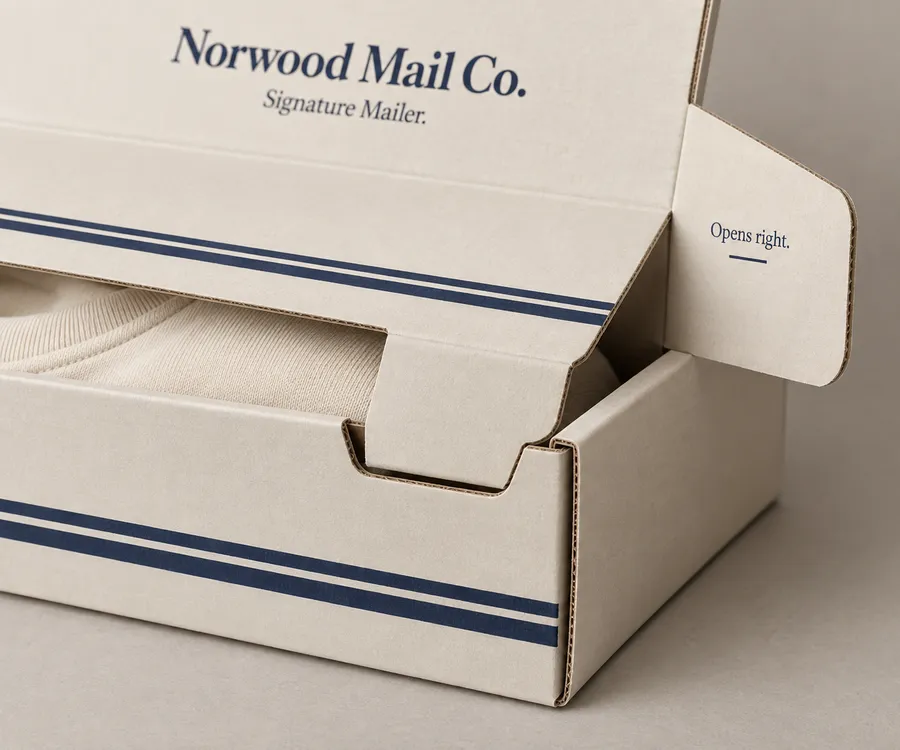
The tuck-top lid and side dust flaps create a recognizable opening motion without adding a separate cover. That makes the format a practical fit for subscription shipments, books, apparel, and compact retail bundles that need a printed front panel and a defined top closure. The finished box is still planned around the packed product's footprint, weight, orientation, and handling route rather than around the closure name alone.
A shallow custom mailer can organize a recurring product set while giving the lid and inner panel a place in the monthly opening sequence.
The rectangular format can be planned around books, stationery, or other flat products that need a folding shipping shell rather than a loose outer envelope.
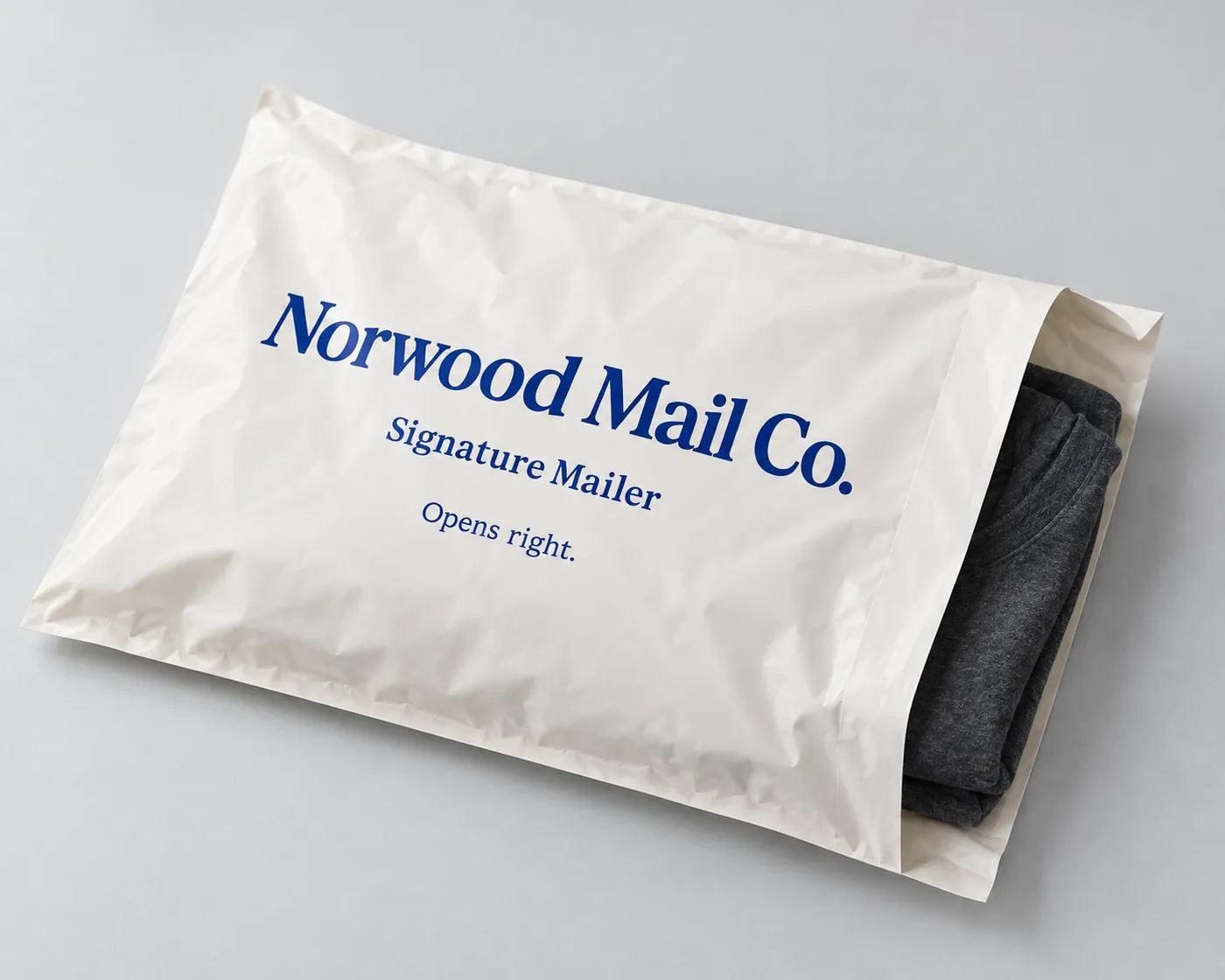
A folded garment or small retail bundle can use the mailer when the brand wants more structure and printed presentation than a flexible poly format provides.
Exterior print can identify the package before opening, while inside-lid or base artwork can extend the brand moment after the tuck-top flap is lifted. Matte Lamination, Gloss Lamination, Foil Stamping, Spot UV, and Embossing/Debossing each create a different visual or tactile direction; the appropriate combination depends on the artwork and is checked against the fold and closure layout.
A folded garment may need a different interior approach from a rigid retail carton or a multi-item subscription set. Internal support can depend on geometry, weight, orientation, fragility, the outer board construction, and the reveal expected at opening. Those variables are reviewed together so a tuck-top mailer does not gain an insert by assumption or leave a product-specific support decision unstated.
Share the product dimensions in its shipping state, including any wrap, sleeve, or bundled components.
Show where the top flap should land and whether the front panel, dust flaps, or interior lid carry important artwork.
Note whether the pack is assembled for parcel fulfillment, a subscription drop, or a direct customer opening.
A clear brief lets the tuck-top structure, material direction, and printed opening be resolved before production begins.
Provide finished dimensions, product count, orientation, weight, outer wrap, and any insert or divider requirement.
Review the tuck-top closure, panel proportions, board direction, and interior support against the intended shipping and opening experience.
Check the dieline, artwork placement, folds, closure edges, and digital proof before production.
Once the proof is approved, the made-to-order production path begins from the confirmed specification.
Need help with structure, materials, or production planning? See how we manufacture custom packaging.
A sample kit can help you compare paperboard feel, print coverage, and surface treatment before approving a custom tuck-top mailer direction. The $44.99 shipping charge is credited toward your first order.
Shipping charge: $44.99. Credited toward your first order.
Request a Sample KitFind clear answers about fit, materials, and ordering below.
Measure the product in its packed shipping state and provide length, width, height, count, orientation, weight, and any wrap or bundled components. A quick photo or sketch helps clarify unusual projections, stacked items, or the intended opening direction.
Yes, the inside lid or base can be considered for a pattern, message, or opening instruction. The artwork should be reviewed with the scored folds, flap edges, and the reading direction shown on the dieline.
No. Corrugated Board, Kraft Paperboard, and SBS Paperboard are material directions in the mailer-box taxonomy. The suitable path depends on the packed product, desired board feel, printed surface, and handling context.
No. The closure style can stay familiar while the dieline changes with the product footprint, depth, flap proportions, and support needs. Each product size should be reviewed against its own packed dimensions.
The standard estimate is from 7 business days after digital proof approval. The quote and proof still need to reflect the confirmed product dimensions, construction, artwork, and finish decisions.
Orders start at 50 units and scale up to 500,000 for bulk runs, with pricing from $0.21 per unit on larger quantities. Standard production is from 7 business days after digital proof approval.
Custom tuck top mailer boxes give e-commerce, subscription, and direct-mail products a folding shipping format with an integrated lid that tucks into the front panel. Each order is made to order around your packed product and artwork, and the specification is confirmed against a digital proof before production.
Compare nearby products and request the format that best fits your next run.
Available product
Available product
Available product
Available product
Plan the opening
Tell us what goes inside, how it should open, and which printed panels or finishes matter. We can then review the structure, material direction, and artwork as one packaging brief.
Add your product details to see a quote summary.