Retail hand soap dispenser
A windowed or solid carton can present one pump bottle with a clear brand and scent cue while protecting the printed panels.

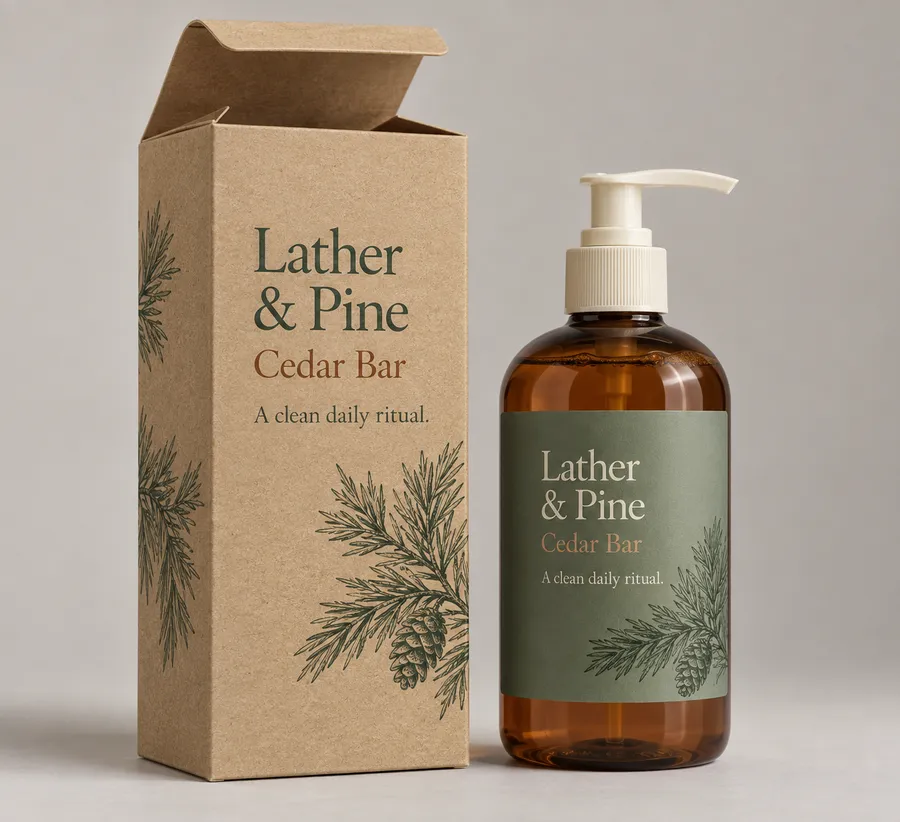
Natural kraft hand-soap bottle box with cedar print, tuck flap, and amber pump dispenser
Soap Boxes
Hand soap bottle boxes are printed paperboard cartons sized around the filled bottle, pump, label, and any wrap or support needed for the route to market. Choose a tuck carton, sleeve, window panel, or protective insert according to how the dispenser should stand, what the shopper should see first, and which brand, scent, ingredient, and use information belongs on the pack. Share the finished bottle details and quantity for a product-specific review.
Last updated
Working quote
Product brief
Hand soap bottle boxes should be developed from the bottle that will actually be packed. Measure the filled bottle at its height, widest body point, shoulder, base, cap or pump, and label overlap. Record the pump head's width and height in both its locked and dispensing positions, and note any overcap, shrink band, neck label, or protective wrap that remains inside the carton. A short round bottle, a tall square dispenser, and an oval bottle can need very different side clearances even when their stated volume is similar. If the pump projects beyond the body, include that projection in the first brief so a tuck flap or sleeve does not collide with it.
The carton must also suit the way the bottle is handled. A close-fitting tuck carton can give one dispenser a readable front face, while a sleeve can leave more of the label visible. A window can show the bottle silhouette or pump without opening the package; a solid panel leaves more uninterrupted room for the brand, scent, ingredients, directions, volume, and required market copy. The correct choice follows the selling moment and the information hierarchy rather than a generic soap-box template.
A pump bottle needs a clear opening route and enough headroom around the actuator. Decide whether the pump ships locked, covered, or ready to use, then describe the neck, overcap, and any collar that the carton must clear. A shallow top lock can work for a low-profile dispenser, while a taller carton or an internal paperboard support may be considered when the pump or bottle shoulder needs a defined position. The final clearance, board build, and support are confirmed during specification and dieline review; this page does not claim one universal insert or leak-proof performance.
For retail shelves, the front panel should stay aligned while the bottle remains upright. For direct orders, the retail carton may sit inside an outer mailer, so the brief should identify the handoff and delivery route. If two bottles or a bottle-and-refill set are sold together, set the arrangement first and size the outer carton around the actual footprint. Do not assume that a second cavity, divider, or tray is necessary until the bottle geometry, filled weight, and movement during handling are known.
A window can let a shopper see the liquid color, bottle label, or pump shape before opening. That visibility changes the front-panel area and requires the cut opening, border, and bottle position to agree. A solid front panel preserves more room for a larger brand mark and longer copy, while a side or back panel can hold ingredients, directions, warnings, contact information, and market-specific statements. Map the reading order on the assembled carton so a fold or window does not interrupt the product name.
A window is a presentation choice, not evidence of moisture resistance or product-contact approval. Confirm the window material, placement, formula requirements, and market requirements for the specific order. If a label must remain visible through the opening, supply its final artwork and the bottle orientation so the proof can show the real relationship rather than a generic silhouette.
SBS Paperboard can provide a smooth printed face for small ingredient or direction text. Kraft Paperboard can support a natural paper character for a refill, apothecary, or small-batch line. Corrugated Board can be considered for a more protective outer format around retail cartons or a multi-bottle shipper, but the final construction and handling need must be confirmed for the route. These are category directions, not claims about a fixed board weight, coating, recycled content, liquid resistance, or cosmetic-contact approval.
Matte Lamination can reduce glare on a front panel, while Gloss Lamination changes how color catches light. Spot UV can highlight a scent name, pump icon, or small botanical mark. Foil Stamping can draw attention to a short brand line, and Embossing/Debossing can add a tactile detail where the board and artwork support it. Keep fine information legible and review finish placement around folds, window edges, pump clearance, and cut lines.
Use the main panel for the brand and product cue, then decide which panel carries scent, ingredients, directions, net volume, batch or contact information, and any market-required wording. The final regulatory copy depends on the formula and jurisdiction, so the product owner must review the text before approval. The box can make information easier to find, but it should not be treated as proof that a liquid is safe for every skin type or that the carton prevents leakage.
Send the bottle label artwork, pump position, liquid color, finished height, body width, and preferred first view together. If the box is for a hotel, spa, retail shelf, market, gift set, or subscription shipment, say so at the start. That context helps determine whether a broad solid panel, narrow sleeve, window border, or support feature is worth considering.
A useful quote brief includes the filled bottle height, body width and depth, shoulder shape, pump or cap dimensions, locked position, label and overcap, approximate filled weight, desired orientation, and route to market. Add the quantity and whether you want a window, sleeve, tuck carton, divider, or solid panel. If the bottle must remain upright or the pump must stay locked, state that requirement explicitly.
The standard path starts at 50 units. Production is from 7 business days after digital proof approval, and free US shipping is included. Dieline and proof review are included at no extra charge. A sample kit carries a $44.99 USD shipping charge credited toward the first order when you want to compare board feel, print treatment, window placement, and closure direction in hand. Quote requests are typically answered the same business day and always within 24 hours.
Before approval, inspect the dieline and proof as one physical package. Check the bottle cavity or sleeve clearance, pump headroom, upright orientation, opening route, window position, printed reading order, and finish representation. Confirm that no updated bottle dimension, scent name, ingredient line, volume, or market statement was omitted from the final artwork. A clean front panel cannot compensate for a flap that strikes the pump, and a well-placed window cannot compensate for a bottle that shifts during handling.
Hand soap bottle boxes work for retail dispensers, hospitality amenities, spa counters, refill programs, gift sets, and direct-to-customer orders. The shared decision is to give the finished bottle a defined place while using the printed carton to explain what it is and how it should be used. Send the real bottle geometry, pump details, information panel, presentation preference, quantity, and artwork status together so the quote can address structure, material, finish, and proof as one packaging brief.
Proof points
The proof should make the relationship between the dispenser, pump, opening, printed information, and finish easy to inspect before approval.
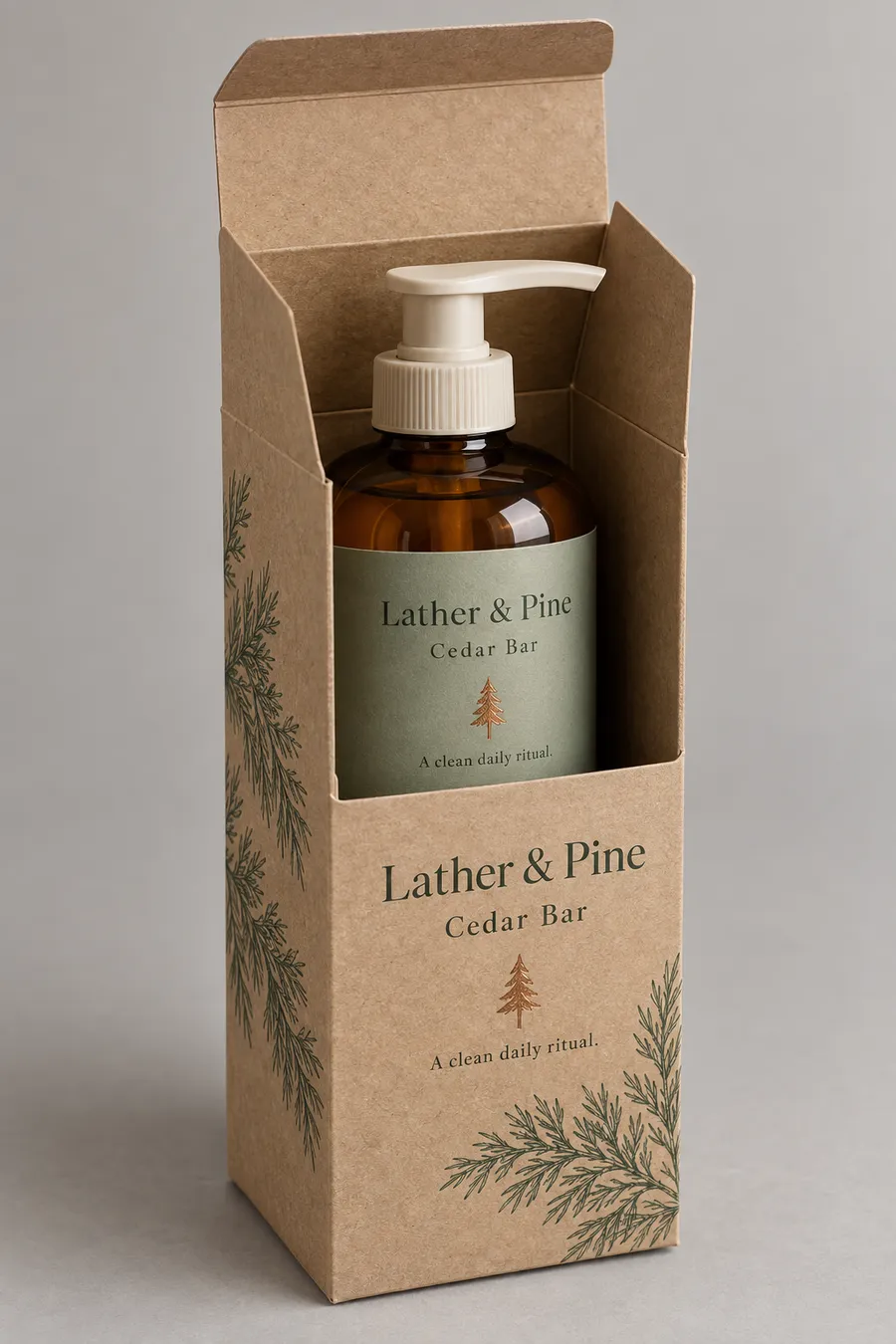
The carton should keep the filled bottle and pump oriented, show the right first view, and leave enough room for the brand and required product information. Start with finished height, body shape, pump position, label, route to market, and quantity so the structure can be reviewed around a real dispenser.
A windowed or solid carton can present one pump bottle with a clear brand and scent cue while protecting the printed panels.
A compact carton can keep a dispenser upright and organize the product name, directions, volume, and contact information.
Kraft or SBS presentation can frame a refill bottle while leaving room for formula-specific copy and handling notes.
A sleeve, window, or solid carton can create a defined first view before the bottle travels inside an outer mailer.
Map artwork on the assembled carton so the brand, scent, ingredient text, window, pump clearance, folds, and finish accents remain correctly oriented when the package is opened.
A hand-soap bottle brief connects the filled bottle to the closure, pump clearance, visible face, printed information, and fulfillment route so the direction can be checked as an assembled carton.
Height, body width, shoulder, pump position, label, overcap, filled weight, and orientation inform the cavity or sleeve.
Brand, scent, ingredients, directions, volume, and market-specific copy are arranged around the window and folds.
The dieline, pump headroom, closure, cut edge, printed panels, and finish treatment are checked before production.
A useful quote starts with the filled bottle, the pump position, and the opening the package needs to create. These steps turn that description into a carton that can be checked before production.
Provide filled height, body width and depth, shoulder, pump or cap dimensions, locked position, label, overcap, weight, and orientation.
State whether the pack is for retail, hospitality, a spa, refill program, gift set, market, subscription, or direct shipment.
Explain whether you prefer a tuck carton, sleeve, window, solid panel, divider, or support and what the customer should see first.
Send the brand, scent, ingredients, directions, volume, required market copy, print coverage, and preferred material or finish.
Check pump headroom, bottle clearance, upright orientation, window position, readable information panels, and finish representation.
Need help with structure, materials, or production planning? See how we manufacture custom packaging.
A sample kit carries a $44.99 USD shipping charge credited toward your first order, useful when you need to compare paperboard feel, closure, window treatment, and finish direction before approving a custom hand-soap bottle box.
Shipping charge: $44.99. Credited toward your first order.
Request a Sample KitFind clear answers about fit, materials, and ordering below.
Measure the filled bottle at its height, body width and depth, shoulder, widest point, pump or cap, locked position, label, overcap, and approximate weight. Include anything that remains inside the carton so the closure and headroom can be reviewed around the finished dispenser.
A window can show the bottle, label, liquid color, or pump shape without opening the carton, while a solid panel leaves more uninterrupted room for brand, scent, ingredients, directions, and volume. Window material and placement are confirmed for the specific order.
The dieline can be reviewed around the pump's locked position, bottle shoulder, filled weight, and handling route. A close-fitting carton, taller headroom, sleeve, divider, or paperboard support may be considered after the actual bottle and delivery context are supplied.
Kraft Paperboard, SBS Paperboard, and Corrugated Board are category material directions. The final board construction, lining, window, and any handling or formula requirements are confirmed during specification review.
Matte Lamination, Gloss Lamination, Spot UV, Foil Stamping, and Embossing/Debossing can be considered for selected panels and artwork. Placement remains subject to review around folds, pump clearance, windows, and small information text.
The standard path starts at 50 units. Production begins from 7 business days after digital proof approval, and free US shipping plus dieline and proof review at no extra charge are included. Your final unit price is confirmed in a quote because the bottle, structure, artwork, finish, and quantity determine the specification.
Orders start at 50 units and scale up to 500,000 for bulk runs, with pricing from $0.35 per unit on larger quantities. Standard production is from 7 business days after digital proof approval.
Compare nearby products and request the format that best fits your next run.
Available product
Available product
Available product
Available product
Plan the dispenser presentation
Send the filled bottle dimensions, pump position, label, route, opening preference, information panels, artwork status, and finish direction. Easy Box Packaging can then review the fit, closure, print surface, and support as one quote-ready specification.
Add your product details to see a quote summary.