Spa and wellness gifting
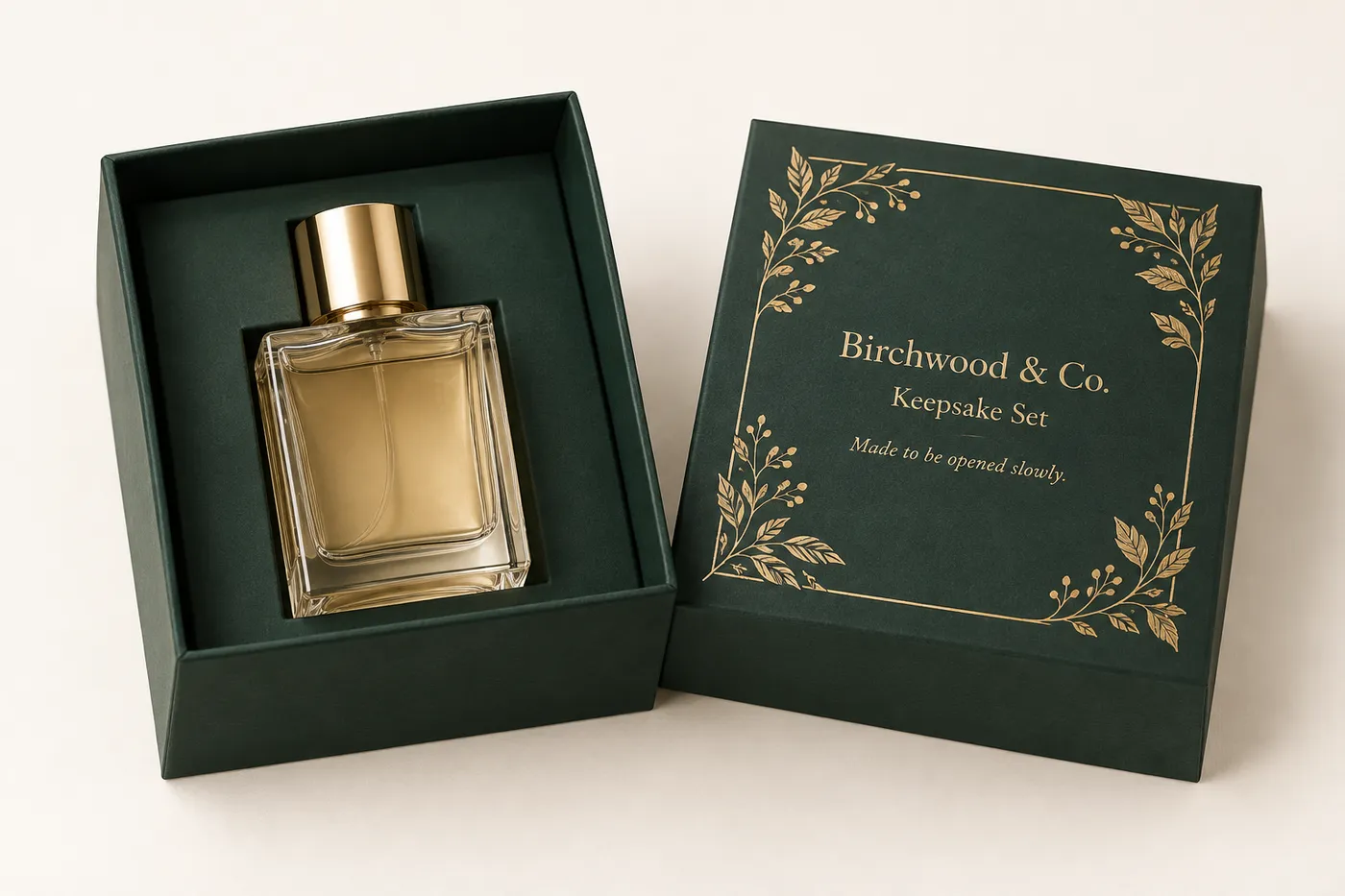
A bottle-and-jar combination can be arranged in a printed box that keeps the care message and product reveal together for a considered handoff.

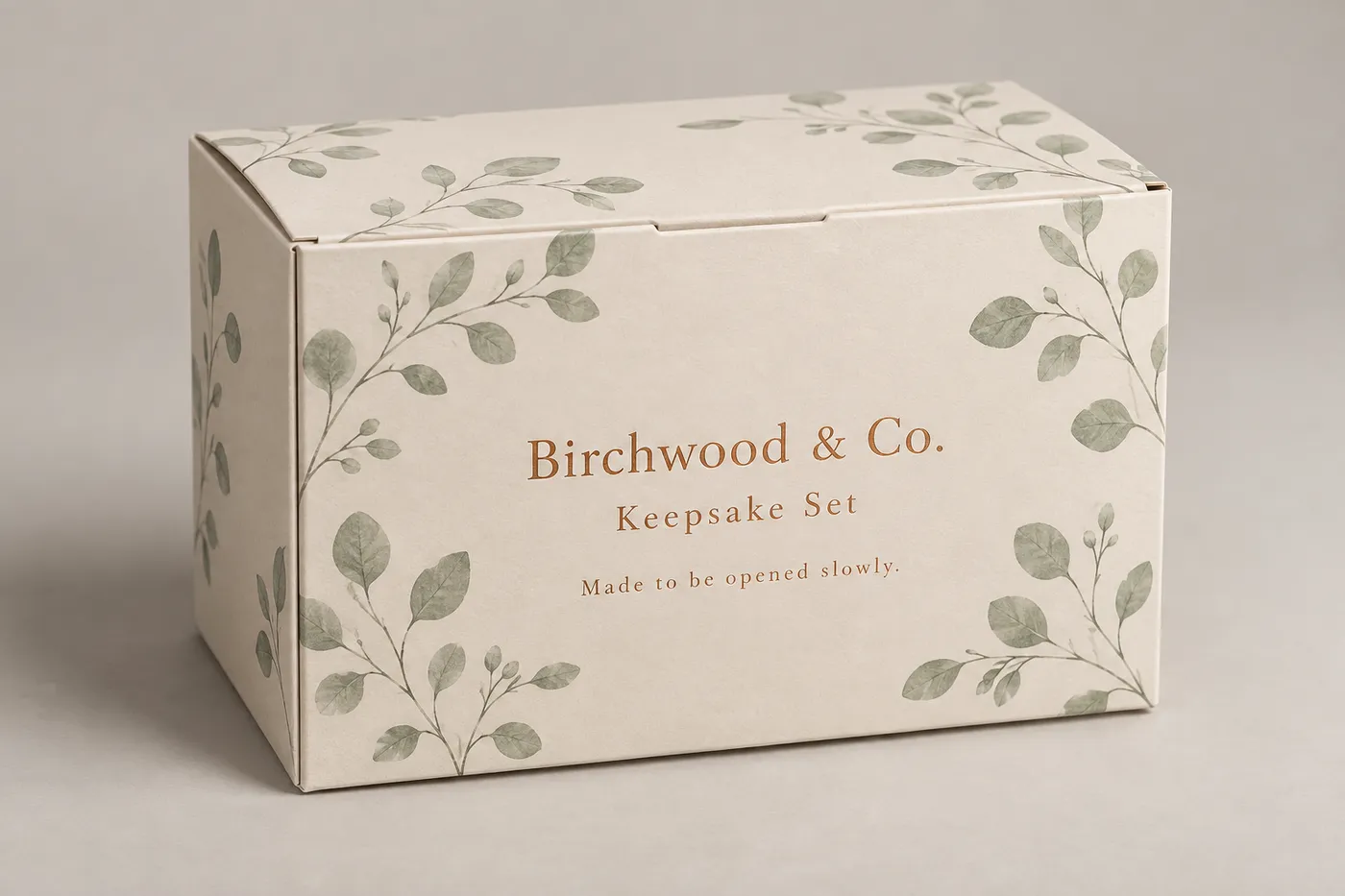
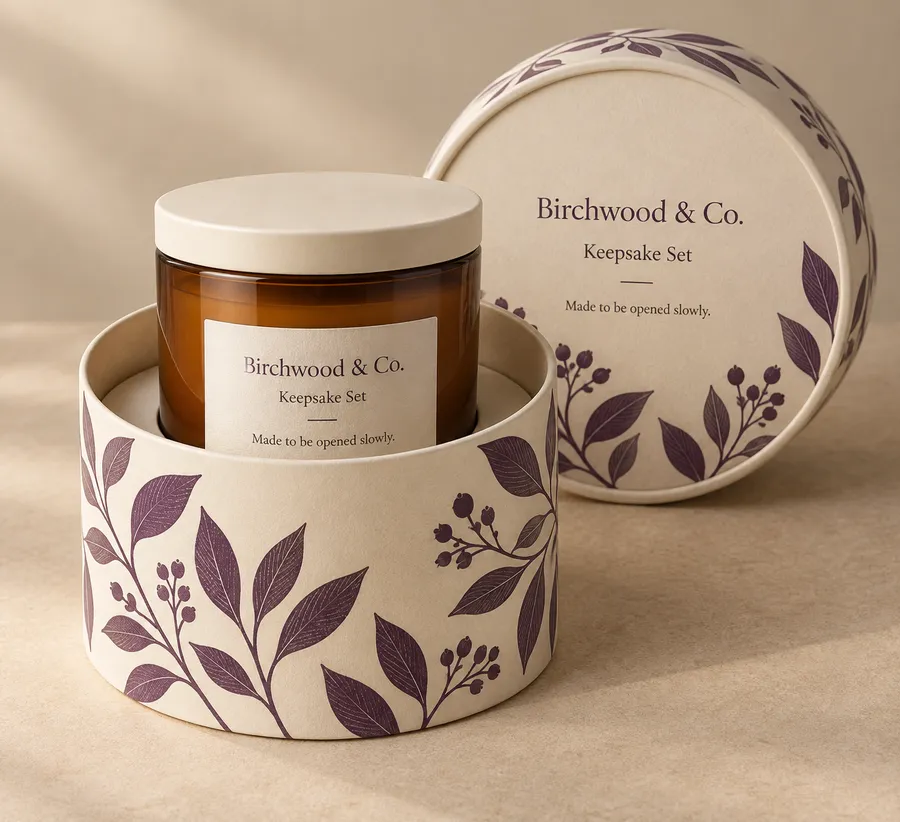
Warm ivory printed box for a lotion gift set with botanical panels
Gift Boxes
Lotion gift sets use a presentation-led paperboard box to keep bottles, jars, and small skincare accessories arranged as one considered gift. The outer size, fitted tray, board, printed panels, and finish are reviewed around the packed set rather than a generic stock format. Share the product arrangement, opening route, artwork direction, and preferred surface so the box can be scoped for the actual handoff.
Last updated
Working quote
Product brief
A lotion gift set usually contains more than one piece, so the box has to do two jobs at once: keep the products in a deliberate arrangement and make the first view feel like a complete gift. A bottle, jar, folded card, and small accessory do not occupy the same footprint or carry the same handling needs. The outer box and its internal tray should therefore be planned around the finished set, not selected from the product name alone.
A printed folding gift-set box with a fitted paperboard tray can create separate landing positions for upright lotion containers. The tray may help keep a pump bottle from leaning into a jar, preserve a front-facing label, and leave a clear reveal when the top opens. The final construction depends on the actual product shapes, closures, weight, orientation, and the loading route. If the set includes tissue, a card, a sleeve, or a small tool, those pieces should be included in the brief because they change the available space and the order in which the recipient sees the contents.
Start with every item as it will be packed. Share the length, width, and height of each bottle, jar, tube, card, or accessory, along with the cap or pump profile that extends above the main container. Note whether the products stand upright, lie flat, or sit at an angle. A pump can need clearance above its shoulder, while a wide jar can determine the tray footprint even if it is shorter than the bottle beside it. The number of components matters as much as the name of the set.
Describe the intended opening moment as well. Some lotion gift sets should show the brand panel first and the products second; others should reveal the full tray immediately. That choice affects lid height, tray position, inside printing, card placement, and the amount of clearance around each product. If the box will be filled on a packing bench, explain whether the tray is inserted before the products or loaded after the outer box is folded. The practical loading sequence can change what a suitable structure looks like.
There is no responsible universal interior size for lotion gift sets. Send a physical sample, clear drawings, or product photographs when the containers have unusual shoulders, pumps, raised caps, uneven bases, or a soft pouch. A sample or accurate product file gives the packaging team a better basis for discussing tray wells, side clearance, lid movement, and the finished reveal than a generic skincare label would.
SBS Paperboard and Kraft Paperboard are the category material directions to discuss for this product. SBS can support a bright printed surface when the brand palette, product names, and usage information need a clean background. Kraft Paperboard can support a warmer paper character for a botanical, apothecary, or natural-looking presentation. The final material conversation belongs alongside the folding structure, tray approach, print coverage, handling, and desired surface; neither board is a universal answer for every set.
The fitted tray should be treated as part of the presentation, not as an afterthought. Its wells, landing areas, or separators can be reviewed around the bottle and jar positions, the card, the opening view, and how the products are removed. If the contents are likely to move during handling, the team should know which pieces need a more defined position and which may sit in an open area. The tray direction remains subject to the supplied geometry and the confirmed specification.
Map the artwork on the assembled box before finalizing a flat dieline. The lid, front panel, side panels, tray edge, and visible inside surface each have a different job. A short brand name may belong on the lid, while product names, a gift message, or care information can be placed where the recipient sees them after opening. Keep folds, tray edges, and closure lines on the artwork review so a botanical motif or border does not appear to stop accidentally at a crease.
Foil Stamping can be considered for a short name or selected line detail. Embossing/Debossing can introduce tactile contrast to a mark or botanical element. Spot UV can create localized surface contrast, while Matte Lamination and Gloss Lamination create different overall surface directions. The correct choice depends on the board, artwork, the areas touched during packing, and the effect the brand wants under gift-table or retail lighting. A restrained treatment is often easier to read than applying every finish to one small set.
A lotion gift set can suit a skincare launch, a spa or wellness handoff, a seasonal retail bundle, a client appreciation package, or a coordinated self-care collection. The use case changes the information hierarchy. A retail set may need the product names and a clean front panel; a client gift may prioritize a message and the moment of opening; a launch kit may need a card, sample, or insert positioned beside the lotions. These are different presentation decisions even when the outer box remains rectangular.
The packed arrangement should be described before the box is quoted. Identify which product is largest, which piece should face forward, whether the set includes a card or accessory, and whether the recipient should remove one item at a time or lift the whole tray. If the products have liquid contents, the brief should also identify the primary container type and closure so the packaging discussion stays focused on fit, clearance, and presentation rather than making unsupported claims about the formula.
The standard fulfillment path starts at 50 units. Production is from 7 business days after digital proof approval, and Free US shipping is included on that path. A sample kit carries a $44.99 shipping charge credited toward the first order, which can help a buyer examine paper feel, printed coverage, tray fit, and opening sequence before approving a larger run. Pricing remains quote-only because the set size, box construction, board, tray, print coverage, finish, quantity, and destination determine the scoped specification.
A useful quote brief includes the packed dimensions, component count, target quantity, product orientation, artwork status, preferred board, tray or separator direction, requested finish, and delivery destination. The digital proof should then be checked as an assembled presentation: confirm that the lid clears the tallest closure, the tray keeps the products in their intended positions, the front panel faces the recipient, the card or accessory is visible where planned, and the print remains legible around folds. If the product arrangement changes, the structure should be reviewed again instead of treating the first proof as a fixed template.
Dieline and proof review give the project a clear decision point before production. The goal is not to force every lotion set into the same box. It is to give the packaging team enough information to connect the outer presentation, internal tray, printed surface, and recipient's opening sequence. Once the product files, set layout, quantity, and artwork direction are clear, the quote can reflect the actual variables while the finished package stays connected to the lotions inside it.
Proof points
The proof should show the box as an assembled presentation. Compare the product positions, tray clearance, lid movement, panel orientation, paperboard choice, and finish placement with the information supplied for the quote.
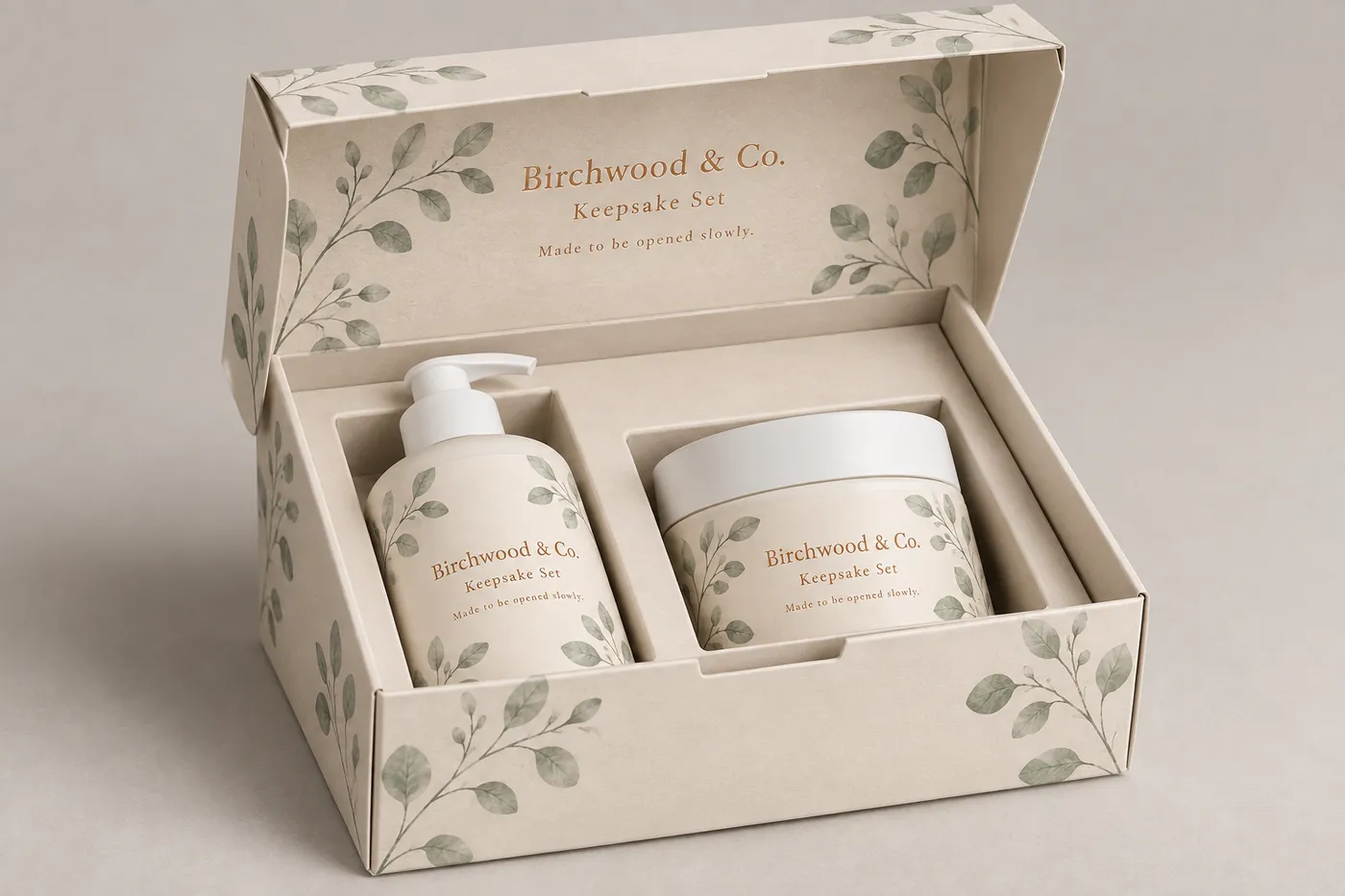
Start with the packed bottle, jar, card, and accessory arrangement, then describe the opening route and loading sequence. The fitted tray, lid clearance, inside print, and front-facing reveal can be reviewed around the real set instead of a generic skincare size.
A bottle-and-jar combination can be arranged in a printed box that keeps the care message and product reveal together for a considered handoff.
Several coordinated lotions, a card, or a small accessory can share one outer identity when their positions and order of reveal are known before sizing.
A structured tray and printed lid can frame a product group for a store or online bundle while keeping labels and brand information organized.
A custom presentation box can carry a branded lotion collection, message card, or introductory set for an event, client handoff, or product launch.
Map artwork across the lid, front panel, tray edge, and visible inside surface so the brand message remains oriented after assembly. Finish choices should be checked against the board, folds, tray, and final artwork.
A quote-ready brief connects the gift set geometry to the tray, outer box, and opening moment. Share the details that change the footprint, clearance, panel order, or print treatment before the dieline is finalized.
Provide the dimensions, weight, orientation, and arrangement of each lotion container, card, sleeve, tissue, or accessory that stays inside the box.
Explain which item should be seen first, how the recipient should lift or remove the products, and whether a fitted tray or separator is needed.
Identify the lid, front, side, and inside panels, then note the brand message, product names, and finish direction that should remain clear after folding.
The process begins with the packed containers and intended reveal, then moves through tray structure, artwork, proof, and production approval.
Provide product dimensions, closure profiles, set arrangement, orientation, weight, accessories, and any card, sleeve, tissue, or wrap that changes the loading position.
State which panel should be seen first, how the recipient should remove the products, and whether the set needs a fitted tray, separator, or visible card.
Discuss SBS Paperboard or Kraft Paperboard, artwork coverage, and any Foil Stamping, Embossing/Debossing, Spot UV, Matte Lamination, or Gloss Lamination request.
Check tray clearance, lid movement, panel orientation, printed message, product positions, inside support, and the way the set is revealed before approval.
The standard fulfillment path starts at 50 units, and production begins from 7 business days after digital proof approval.
Need help with structure, materials, or production planning? See how we manufacture custom packaging.
A sample kit carries a $44.99 shipping charge credited toward your first order, useful when you need to examine paperboard feel, tray fit, printed surface, and the way lotion containers sit inside a custom package.
Shipping charge: $44.99. Credited toward your first order.
Request a Sample KitFind clear answers about fit, materials, and ordering below.
It is a presentation-led box for a coordinated group of lotion containers and related pieces. The outer structure and fitted tray are reviewed around the product geometry, opening route, artwork, and desired reveal rather than treated as one universal size.
Send the dimensions and weight of each bottle, jar, tube, card, or accessory; the packed arrangement; quantity; artwork status; preferred paperboard; tray direction; finish request; and delivery destination.
It can be considered for a mixed set when the component positions and opening sequence are known. The quote should identify the tallest closure, widest footprint, required clearance, and whether a fitted tray or separator is needed.
SBS Paperboard and Kraft Paperboard are the category material directions. Foil Stamping, Embossing/Debossing, Spot UV, Matte Lamination, and Gloss Lamination can be reviewed with the artwork and construction.
The standard fulfillment path starts at 50 units, with production from 7 business days after digital proof approval. Timing applies after the proof is approved and remains subject to the confirmed specification.
A sample kit is available with a $44.99 shipping charge credited toward the first order. It can help you examine board feel, tray fit, print treatment, and the packed presentation before a larger run.
Orders start at 50 units and scale up to 500,000 for bulk runs, with pricing from $0.34 per unit on larger quantities. Standard production is from 7 business days after digital proof approval.
Compare nearby products and request the format that best fits your next run.
Available product
Available product
Available product
Available product
Plan the skincare presentation
Send the packed containers, quantity, opening preference, artwork status, material direction, tray request, and finish preference to start a quote-ready packaging brief.
Add your product details to see a quote summary.