Single higher-value item presentation
A bottle, jar, or boxed keepsake positioned as a considered gift.

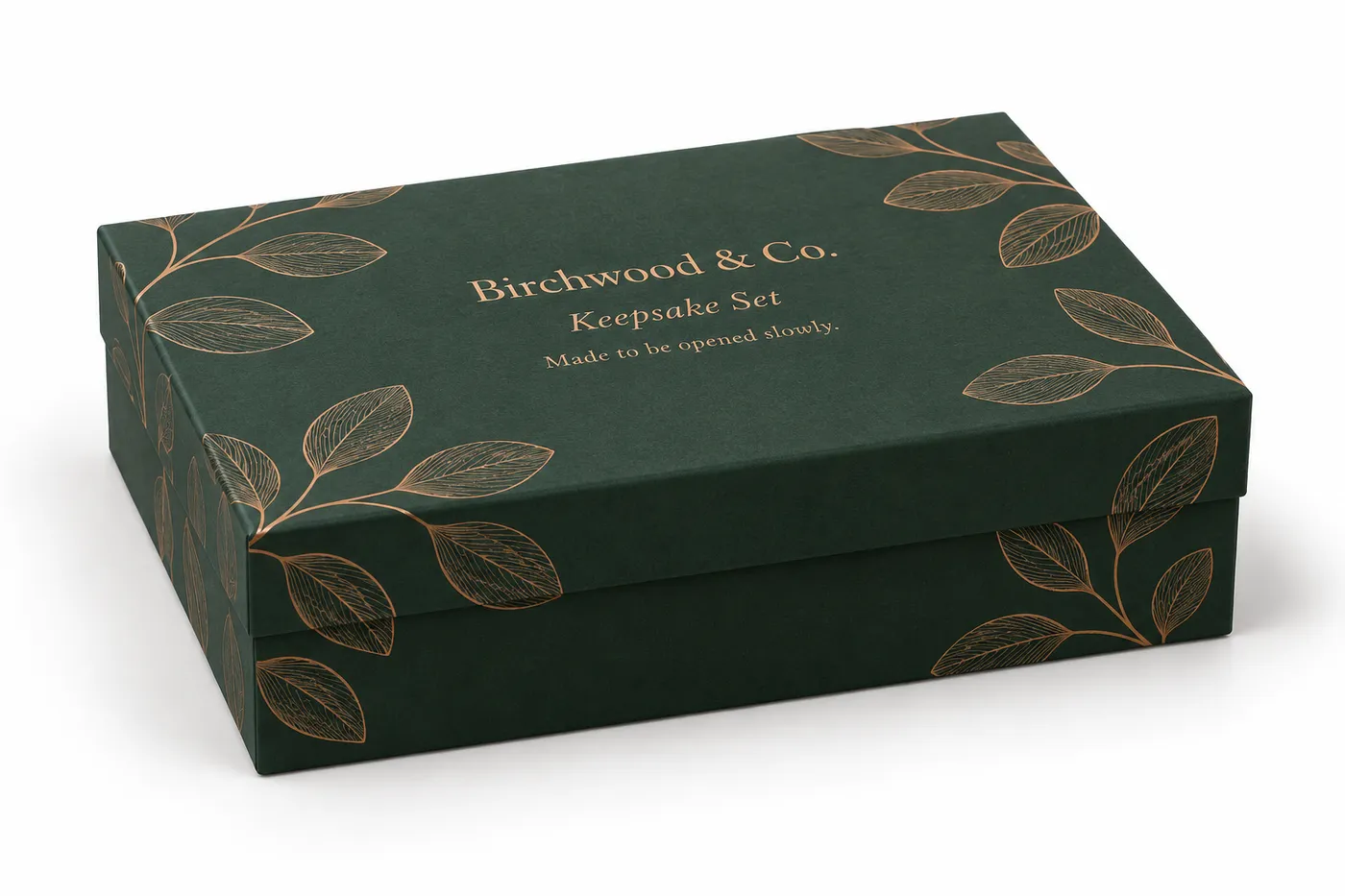
Closed forest-green rigid gift box with a copper foil leaf motif and Birchwood & Co. lid mockup
Gift Boxes
A rigid two-piece gift box with a lift-off lid for a single keepsake, bottle, or jar. Choose SBS or kraft paperboard, then size the base and any insert around the item so the finished presentation has the structure and finish the gift calls for.
Last updated
Working quote
Product brief
A rigid two-piece box gives a single keepsake or other higher-value item a formed base and a separate lift-off lid. Wrapped paperboard over a solid core holds its shape after opening, so the box itself remains part of the presentation. A folding carton takes a different route: it can ship flat and be formed at packing time, which can help when storage space and a lighter package matter more than a substantial box in hand.
The choice depends on how the item will be presented and handled. A rigid box can suit a gift intended to be opened slowly and kept with the product; a folding carton may be a better fit when flat storage or simpler packing carries more weight. This product page covers the rigid format, with its base-and-lid construction and custom finish options. If the choice is still open, compare both structures using the packed item, the planned fulfillment method, and the role the box should play after unboxing.
Start with the product as it will be packed. Record its height, width, and depth at the widest points, including a jar lid, bottle shoulder, handle, or other part that changes how it sits. For a glass keepsake jar, for example, the widest point may be the lid rather than the glass body. Note the intended orientation as well: an item that stands upright needs a different internal layout from one presented on its side.
If the product includes a sleeve, wrap, or other component that stays inside the box, include that in the measurement notes. Share the item’s weight and a reference photo when its outline is irregular. Those details help the specification review settle the inside dimensions and any insert approach. Final clearance is set against the real product during dieline review; a generic allowance cannot account for every shoulder, closure, or fragile surface.
SBS paperboard gives the wrapped box a clean surface for custom print and finish work. Kraft paperboard offers a more natural-looking surface when that better fits the gift’s presentation. An FSC-certified paper option is available as a material choice; it does not mean every box is made from certified stock. The substrate and finish should be considered together, since the visible result depends on both the board surface and the artwork applied to it.
Tell the packaging team whether the box should read as crisp and bright or keep a more understated paper character. That direction narrows the material discussion without asking you to select a technical grade before the item and artwork have been reviewed.
An insert is a separate decision from the outer box. Its role can be to keep an item positioned, separate fragile surfaces from the walls, or shape the way the product is revealed when the lid comes off. Whether that support is useful depends on the item’s geometry, weight, orientation, fragility, the available internal space, and the presentation you want.
A glass jar may need a fitted cavity or riser to keep it in place; a stable, lighter object may need a simpler support. Depending on the specification, internal support can be built into the paperboard structure or supplied as a separate insert. Send the actual product or its dimensions and weight so the insert can be considered with the box, rather than choosing a cavity from an image alone.
The flat lid and side panels provide areas for a brand name, product name, or restrained artwork. Foil stamping can pick out selected lettering or a small motif; embossing or debossing adds a raised or pressed detail for review with the artwork. Spot UV, matte lamination, and gloss lamination are also available. Each changes how the printed surface reads, so choose with the color, board, and intended handling in mind.
The dieline and proof review are included on every order at no extra charge. Use that stage to check how the art sits across the lid and walls and to confirm the box’s construction before production. Production begins after digital proof approval, so the approved proof is the reference for the finished print. Specific artwork and finish combinations remain subject to review against the selected material.
Send the packed item’s dimensions and weight, the intended order quantity, and any preference you already have for SBS or kraft paperboard. If you expect to use an insert, describe what it needs to hold and how the item should face when the lid is removed. A logo or rough artwork direction and preferred finish will help scope the print discussion; the dieline and proof review can then resolve the layout. Quotes are typically answered the same business day, always within 24 hours.
For context, the published EBP Earring Boxes product is a comparable small rigid two-piece format with a live reference range of $0.44–$8.00 per unit. Treat that as an indicative sibling range, not a fixed quote for every size or specification: dimensions, order quantity, insert, board, print coverage, and finish all affect the configured box. The standard minimum order is 50 units, production is from 7 business days after digital proof approval, and US shipping is free. A sample kit carries a $44.99 shipping charge, credited toward your first order, if you want to review material and finish options before placing production.
Proof points
Real construction choices for single-item rigid gift box presentation.
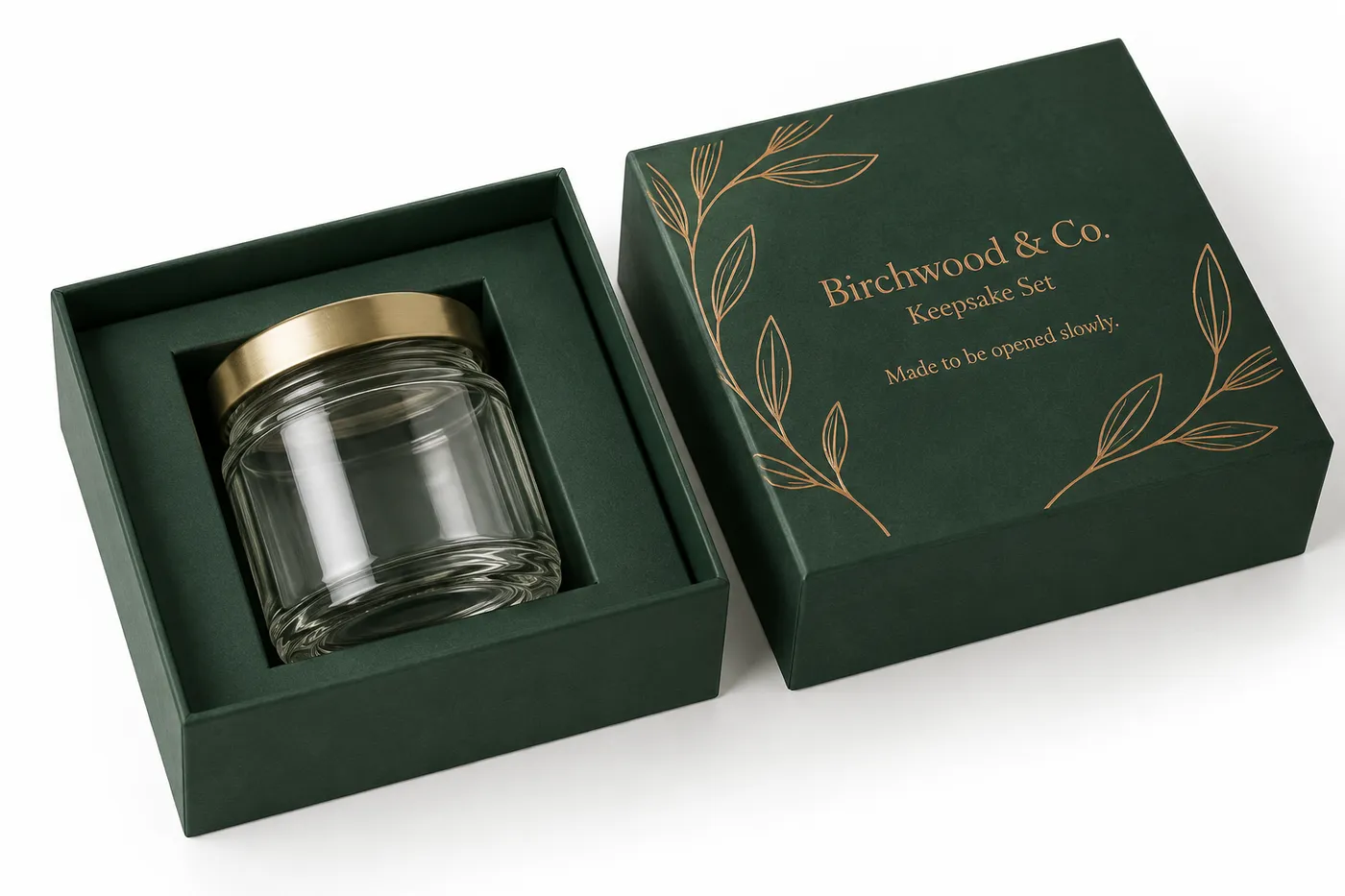
A rigid box is wrapped paperboard built around a solid core, so it holds its shape permanently and arrives pre-assembled, while a folding carton ships flat and folds into shape at packing time. The two constructions differ in wall thickness, assembly, and handling weight, the choice depends on whether the gift is meant to be handled and kept or produced at higher volume.
A bottle, jar, or boxed keepsake positioned as a considered gift.
A branded item presented with a lift-off-lid unboxing moment.
Shelf-ready single-item packaging for in-store display.
Where the unboxing itself is part of the gift experience.
Finish choices available on this construction, subject to artwork review.
Insert need depends on several factors together, the item's geometry, weight, orientation, and fragility, not any single variable alone.
A heavier glass or ceramic item usually benefits from a fitted riser or cavity that keeps it from shifting.
How the item sits and how fragile it is both change what kind of support the specification calls for.
Some inserts are built to control how the item is first seen when the lid comes off, not just to hold it in place.
The real steps between a quote request and production.
Dimensions, weight, and material or finish direction.
Box sizing and insert approach are confirmed against the real item.
Digital proof is reviewed and approved before production starts.
Typically from 7 business days after proof approval.
Need help with structure, materials, or production planning? See how we manufacture custom packaging.
If you want to compare material and finish directions before specifying the box, ask for a sample kit. Its $44.99 shipping charge is credited toward your first order.
Shipping charge: $44.99. Credited toward your first order.
Request a Sample KitFind clear answers about fit, materials, and ordering below.
A rigid box is wrapped paperboard built around a solid core, so it holds its shape permanently and arrives pre-assembled with a lift-off lid. A folding carton ships flat and folds into shape at packing time, the choice depends on whether the gift is meant to be handled and kept or produced at higher volume.
It depends on the item's geometry, weight, orientation, and fragility together, not any one factor alone. A heavier glass or ceramic item usually benefits from a fitted riser, while a lighter, more stable item may sit securely with less internal structure.
Start with the item's own height, width, and depth at its widest points, plus any unusual shoulders or handles that change how it sits in the cavity. Final clearance is confirmed during specification and dieline review rather than fixed to a generic number in advance.
Foil stamping and embossing or debossing both work cleanly on the flat panels of a rigid box, and spot UV or matte and gloss lamination are also available. Which finish suits the gift depends on the material and artwork, confirmed during artwork review.
Standard orders start at a minimum of 50 units, with production beginning after digital proof approval and typically running from 7 business days, and free US shipping is included.
Common uses include single higher-value item presentation, corporate and branded gifting, retail premium presentation, and seasonal and occasion gifting. The final specification is set by the packed product and how it will be handled.
Production runs from 7 business days after digital proof approval. Complex or high-volume orders can take longer, and the timing is confirmed in your quote.
Compare nearby products and request the format that best fits your next run.
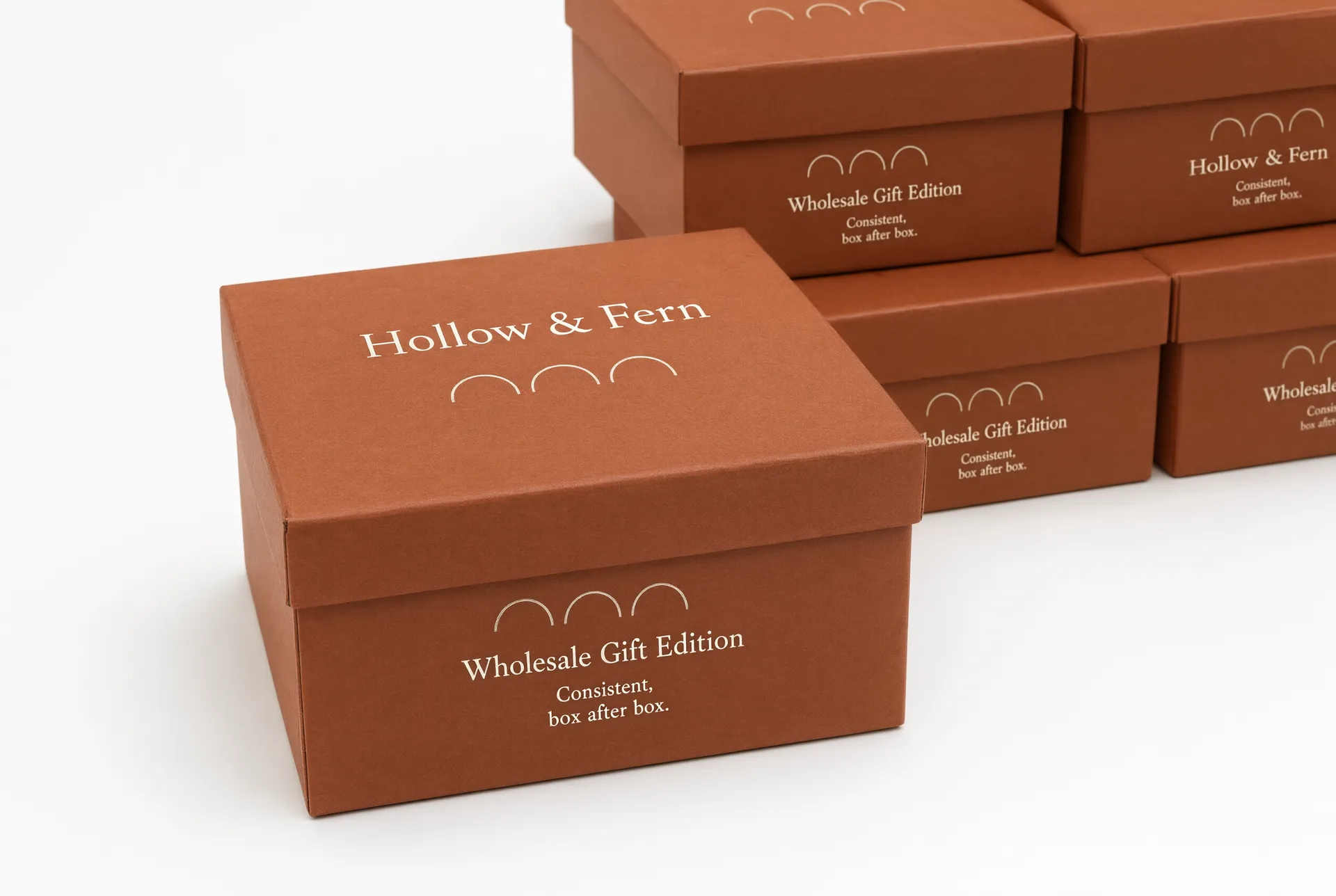
Available product
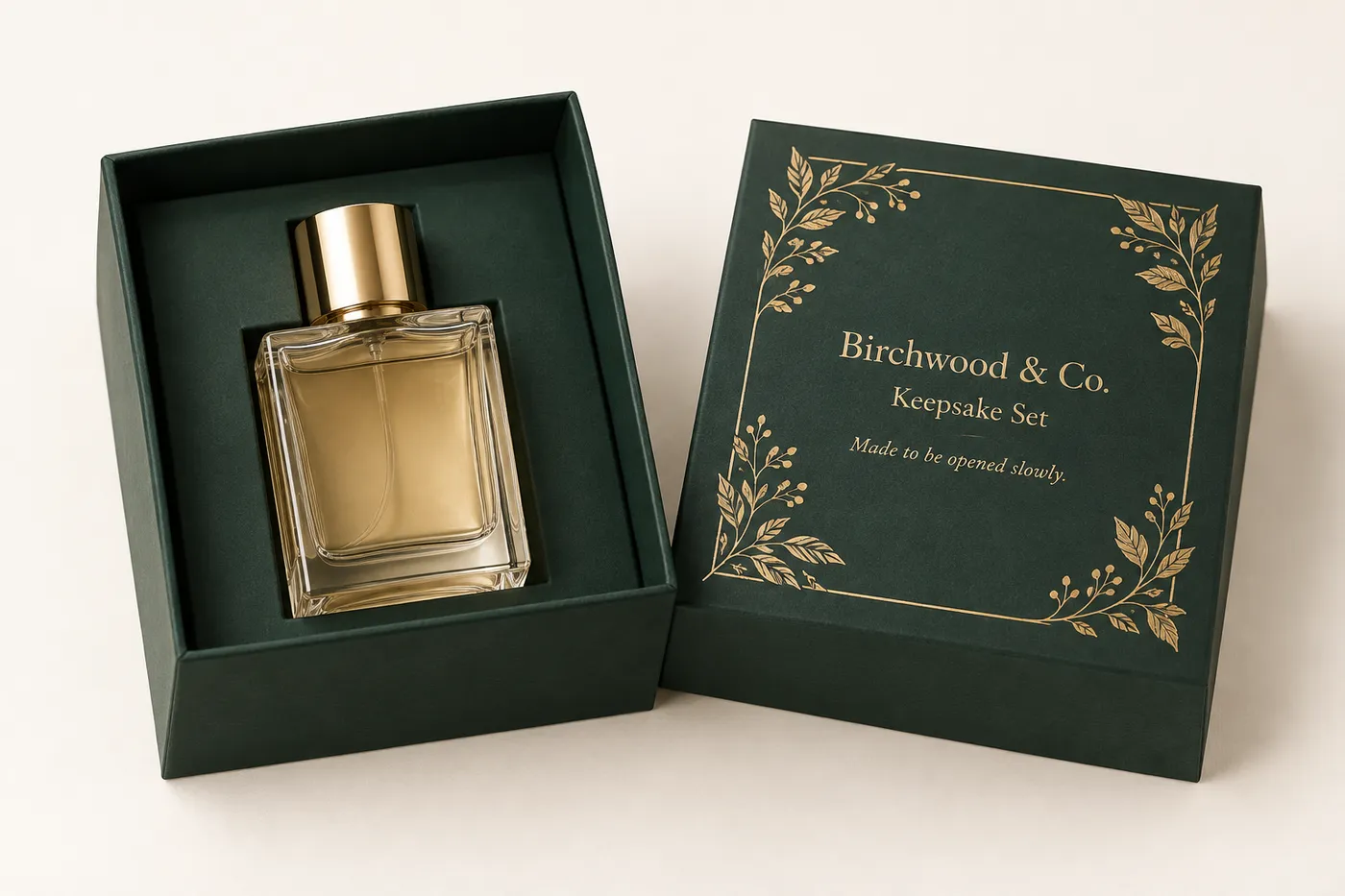
Available product
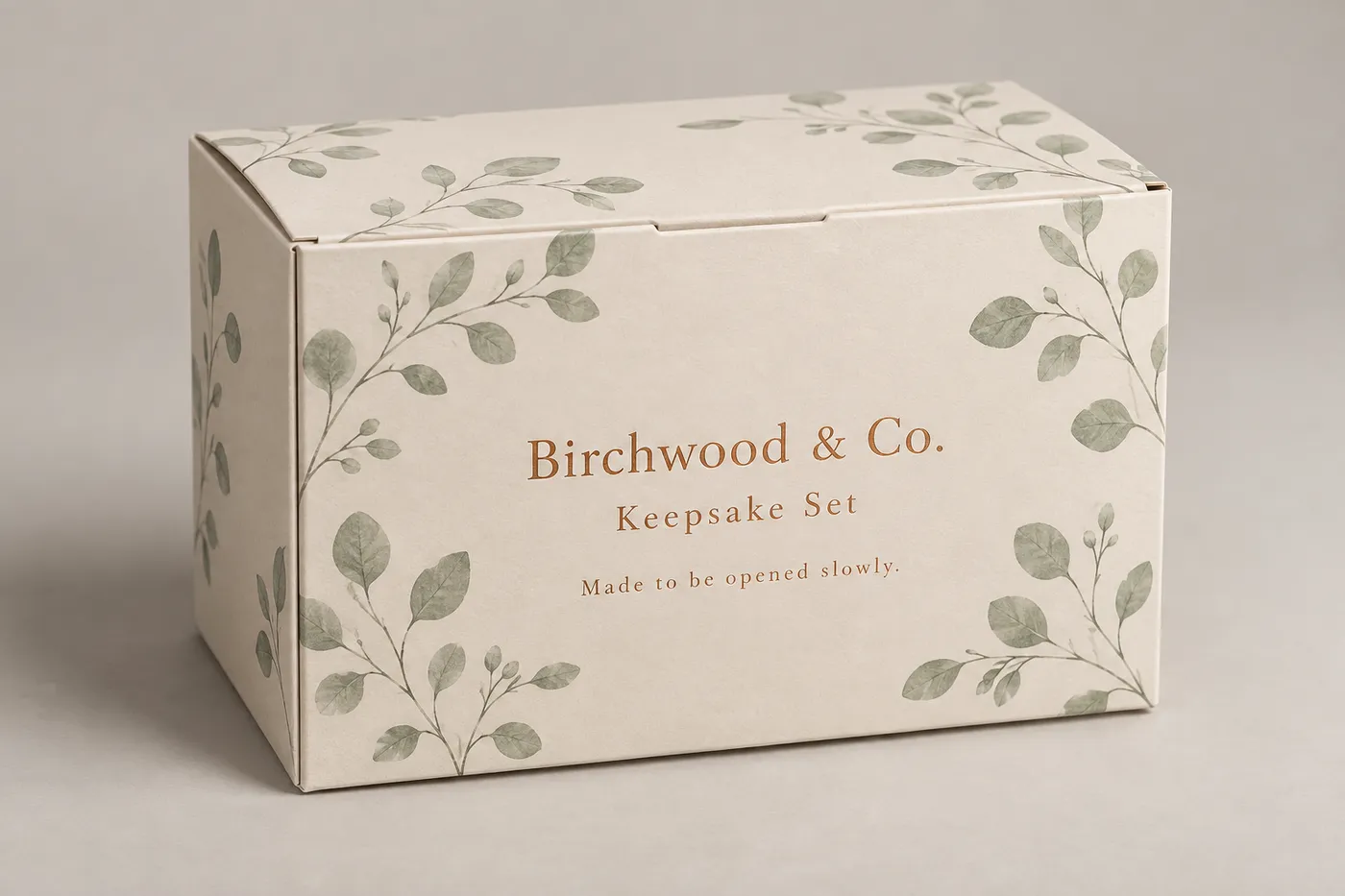
Available product
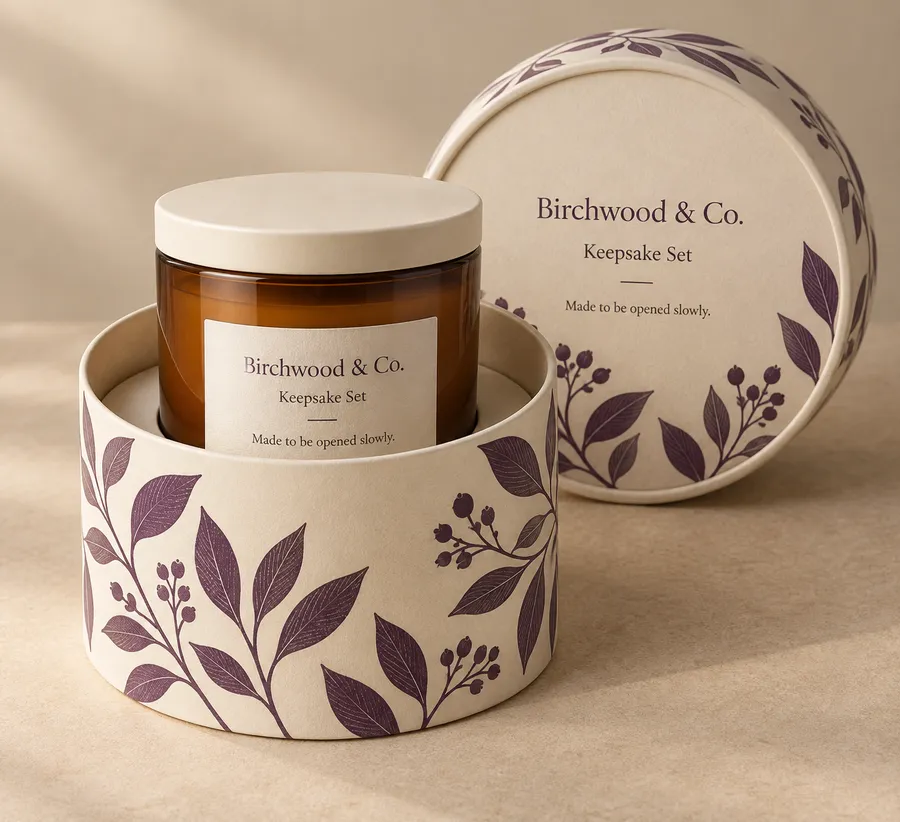
Available product
Ready to configure your box
Share the item's dimensions, weight, and finish direction to start a specification and insert review.
Add your product details to see a quote summary.