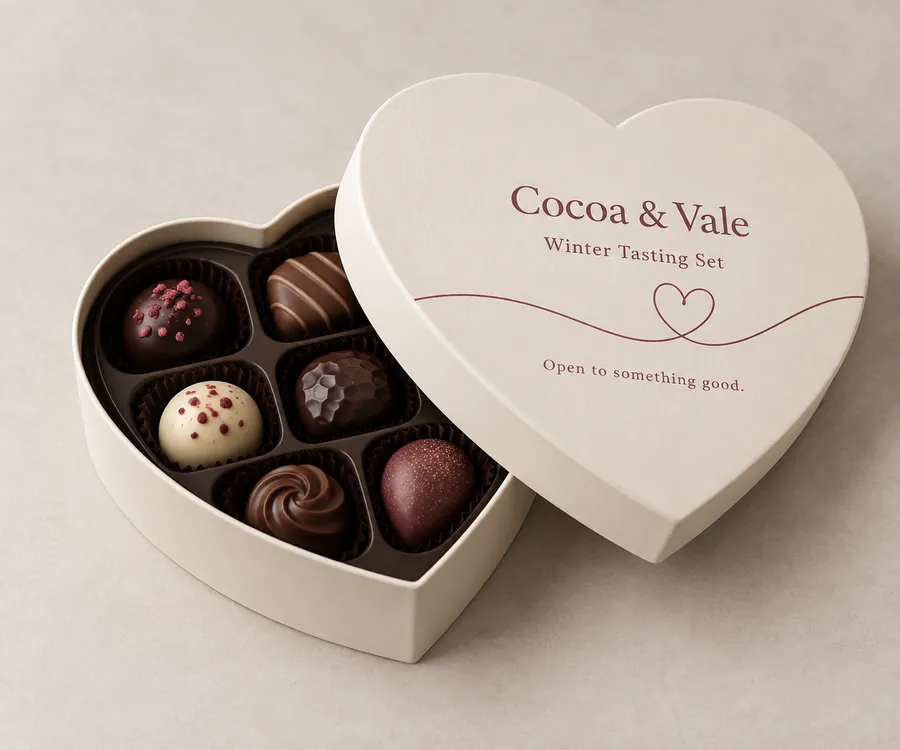
Gift-led truffle assortments
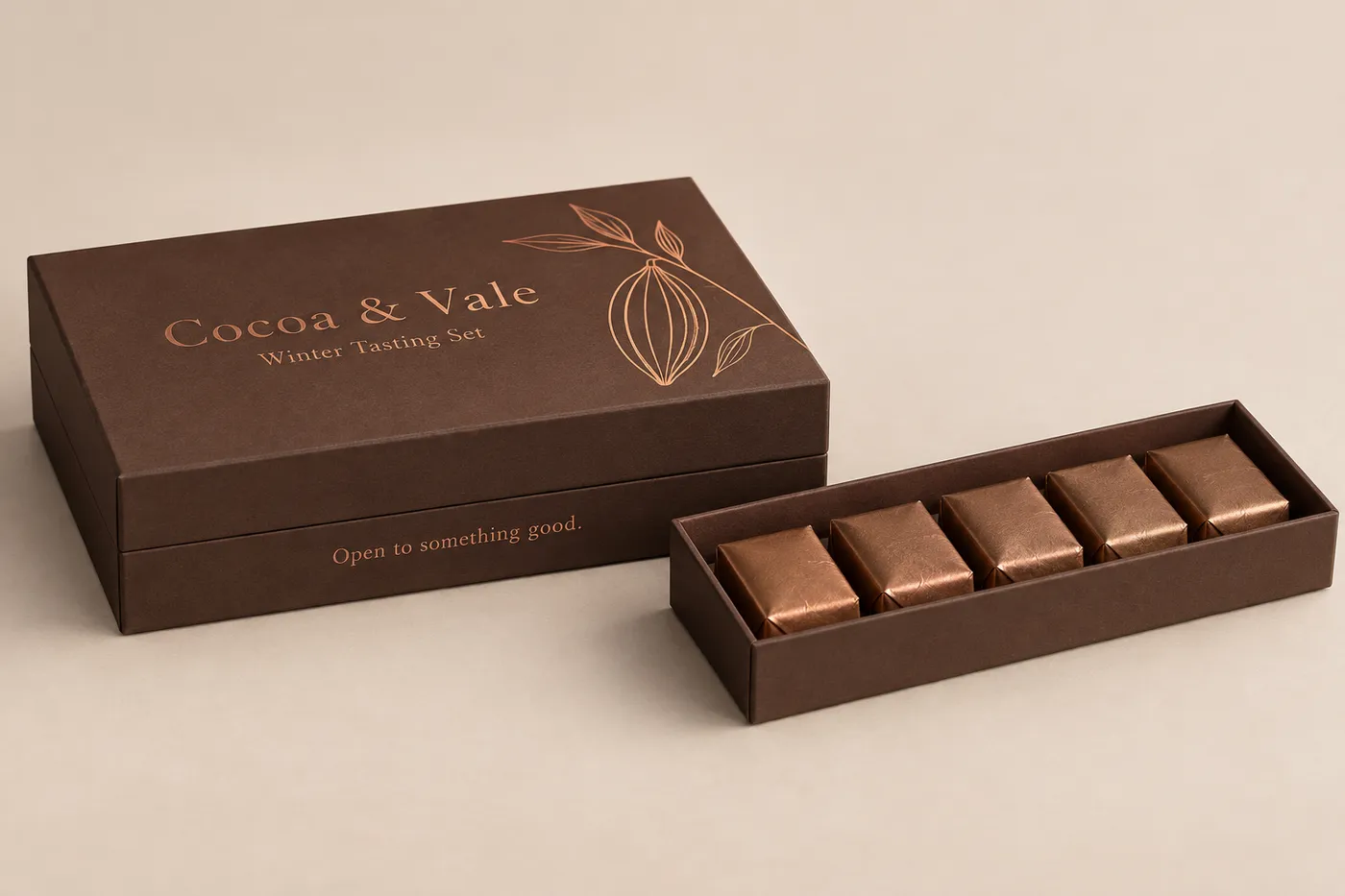
A rigid base-and-lid presentation with a tray can show a mixed collection in a deliberate opening sequence.

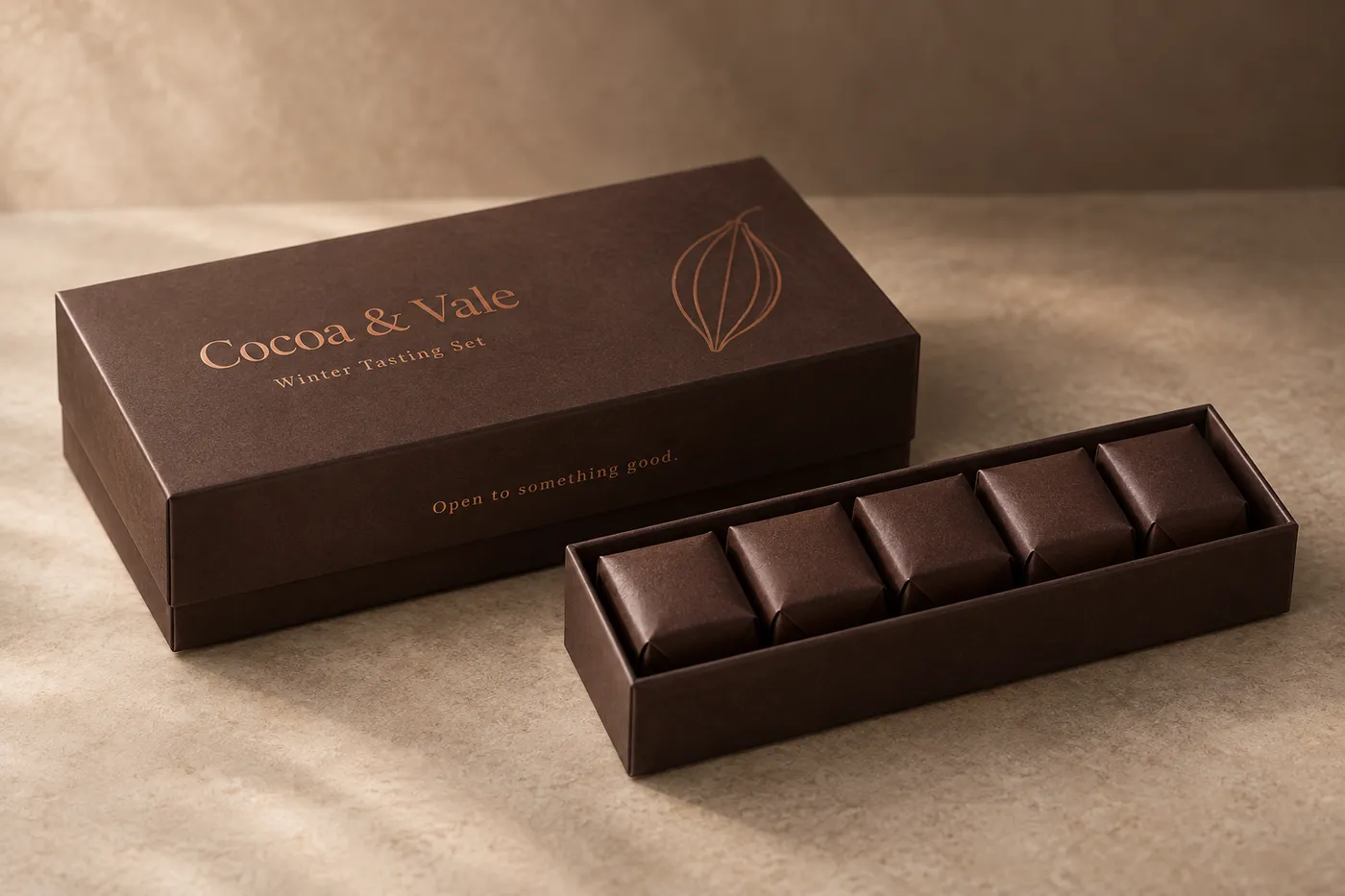
Closed cocoa-brown rigid luxury chocolate box beside a tray of wrapped chocolate pieces
Chocolate Boxes
Luxury chocolate boxes made to order around the finished assortment, piece count, tray or divider, opening route, and printed panel plan. A rigid base-and-lid presentation can create a considered gift reveal, while a folding carton may suit a compact retail format. The right structure follows the chocolates and the way they will be handed over.
Last updated
Working quote
Product brief
Luxury chocolate boxes should be scoped around the packed pieces rather than an assumed stock footprint. A row of bonbons, a mixed truffle selection, and a tasting set with raised decorations each change the useful length, width, depth, and cavity arrangement. Share the completed packed dimensions, piece count, packed weight, wrap or pouch, tray, and orientation before the outer box is specified. If a chocolate has a topping, cup, wrapper, or uneven profile, include that detail because it changes the interior clearance and the visual reveal.
The handoff also changes the brief. A gift-led box may need an opening that shows the full assortment at once. A retail pack may need a front panel that reads clearly on a shelf, with a compact footprint for replenishment. A direct-to-customer program may use the luxury box as a presentation pack inside a separate shipper. Name the route early so the structure, panel hierarchy, and internal arrangement are reviewed for the real use instead of a generic luxury label.
A rigid base-and-lid box gives a luxury assortment a deliberate lift-off opening and a defined outer shape. It can suit a collection where the package is part of the gift moment and the tray needs a stable relationship to the lid. A folding carton uses a connected printed structure and may suit a bar, a small count, or a seasonal run that needs compact storage before filling. Neither format is universally right: the choice follows piece count, product height, opening route, storage, handling, and the amount of printed surface required.
Review the base, lid overlap, tray depth, and loading direction together. If an inside-lid message, belly band, or card is planned, include it in the first brief so it is not forced into a space that the final structure cannot support. A different assortment size normally needs its own dimensions and dieline review even when the visual family stays the same.
Provide the widest and tallest packed profile of each chocolate, together with count and desired arrangement. Two rows of three pieces create a different interior plan from a single row of six. Record whether pieces should sit in individual positions, share a wider cavity, or be layered with a paperboard tray. Top and side views, a clear photograph, or a packed sample can clarify raised decoration and irregular shapes that a product name does not explain.
Final clearance is confirmed during specification and dieline review. Too little space can make loading awkward or obscure a printed reveal; too much can leave pieces moving within the presentation. If the recipe, mold, wrapper, or count changes after the first brief, recheck the package because the cavity plan, tray footprint, and outer proportions may change with it.
A shallow tray, row divider, shaped paperboard support, or simpler open layout each solves a different presentation problem. Separation can help when a mixed assortment should arrive in the order it was packed or when contrasting finishes need distinct positions. A stable wrapped piece may need a different arrangement from a tall molded chocolate with a delicate decoration. Support depends on geometry, weight, orientation, outer structure, desired reveal, and the route after packing; it is not selected from one variable alone.
Describe the assortment before choosing the support. The team can then review whether the support should be integrated into the paperboard construction or treated as a separate component. The category context does not establish food-contact approval, barrier performance, or temperature control, so any such requirement should be raised separately rather than assumed from the word luxury.
SBS Paperboard, Kraft Paperboard, and Corrugated Board are category-listed material directions to review against the construction and handling route. SBS Paperboard can suit a clean printed face for a color-led collection, while Kraft Paperboard can bring a warmer paper character. Corrugated Board may be considered when a different board direction or more transit-oriented construction is needed. The selected material should be discussed with the packed weight, tray, print coverage, and intended handoff. These are directions for review, not a promise that every board suits every assortment.
Foil Stamping can draw attention to a short collection name or selected linework subject to artwork review. Matte Lamination and Gloss Lamination change the surface appearance and handling feel. Spot UV can concentrate contrast on a defined detail, while Embossing/Debossing adds a tactile change that should be reviewed with the board, panel position, and artwork. Fine type, flavor variants, and dates should be checked on the digital proof.
The standard minimum order is 50 units. Production is estimated from 7 business days after digital proof approval, and Free US shipping is available on the standard fulfillment path. A sample kit carries a $44.99 shipping charge credited toward the first order, which can help compare board feel, print treatment, lid fit, tray position, and the opening sequence before a larger run. Product-specific pricing remains quote-based because no approved luxury-chocolate-box price range is in the current sourcing record.
Dieline and proof review are included at no extra charge. For a useful quote, send the packed chocolate dimensions, weight, count, arrangement, wrap or tray details, quantity, intended route, preferred structure, artwork status, and finish direction. If there are several sizes, identify which dimensions change between variants. The ordering path is practical: confirm the specification, review the dieline or rigid-box layout, approve the digital proof, and then begin production.
For a retail shelf, start with the face that must be read from the display and the opening that explains the collection. For a corporate, wedding, or hospitality gift, describe the handoff and the amount of copy that belongs on the lid or sleeve. For a seasonal assortment, identify the artwork that changes between variants and the construction that should remain consistent. For direct shipment, explain whether the chocolate box travels inside a separate outer pack and how it is handled before delivery.
Before approval, inspect the assembled front and side panels, lid or flap, tray position, product clearance, opening sequence, and smallest printed details. Confirm that the box still reads correctly when folded or closed and that the pieces sit where the artwork and reveal expect them to sit. A complete brief turns a luxury concept into a quote-ready specification without claiming a stock size or unverified performance.
Proof points
The assembled package is reviewed as one presentation around the assortment, internal arrangement, printed surfaces, and handoff route.
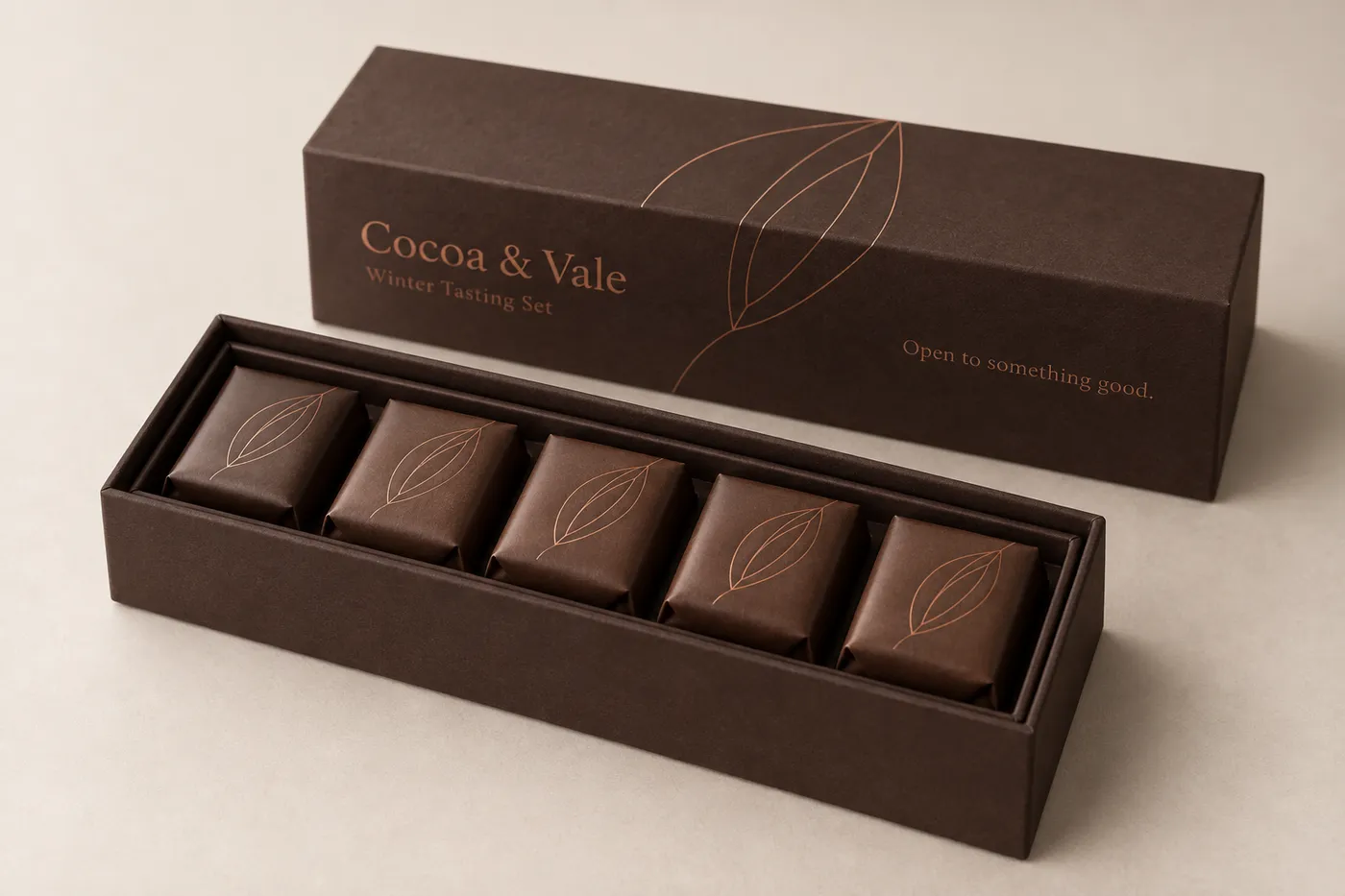
Sizing starts with the finished pieces: packed length, width, height, weight, count, arrangement, wrap, tray, and opening reveal. The outer footprint and lid relationship are then reviewed against the real assortment rather than a generic stock size.
A rigid base-and-lid presentation with a tray can show a mixed collection in a deliberate opening sequence.
A printed lid or folding carton can carry a seasonal treatment while variants share a reviewed structure.
A compact printed box can present a defined chocolate portion with a short greeting or collection message.
The luxury box can serve as a shelf-facing pack or an inner presentation box inside a separate shipper.
Artwork is mapped to the assembled box so the collection name, variant, front or lid hierarchy, folds, opening, and finish remain intentional after closure.
A useful brief links the chocolate arrangement to the structure and to the moment when a recipient will open or receive it.
Share finished dimensions, weight, piece count, wrap or pouch, tray, divider, orientation, and any uneven height.
Explain whether the box is a rigid lift-off gift, folding carton, shelf pack, favor, or inner presentation box inside a shipper.
Identify lid or front priorities, inside messaging, artwork status, material preference, and preferred foil, lamination, spot UV, or embossing direction.
The quote process becomes clearer when the chocolate is described as a packed assortment with a defined arrangement, opening, and gifting or shipping route.
Provide packed dimensions, weight, piece count, arrangement, wrap or tray, orientation, and any uneven height.
Explain whether the box is shelf-facing, gift-led, a favor, handed over in a shop, or placed inside a direct-shipment pack.
Discuss a rigid base-and-lid or folding carton with SBS Paperboard, Kraft Paperboard, or Corrugated Board.
Send collection name, variant wording, brand artwork, panel priorities, and any lid or inside message.
Check lid or flap, folds, tray position, product clearance, printed panels, and finish coverage against the packed assortment.
Need help with structure, materials, or production planning? See how we manufacture custom packaging.
A sample kit carries a $44.99 USD shipping charge credited toward your first order, useful when you need to review board feel, printed surface, lid action, tray position, and the opening sequence before approving a luxury chocolate box run.
Shipping charge: $44.99. Credited toward your first order.
Request a Sample KitFind clear answers about fit, materials, and ordering below.
A rigid base-and-lid format suits a lift-off gift reveal around a defined tray, while a folding carton can suit a compact printed format or seasonal run. The choice depends on assortment, height, opening route, storage, and handling rather than the word luxury alone.
Measure the completed packed assortment, including pieces, wrap or pouch, tray, divider, and any raised profile. Include packed weight, orientation, count, and a simple top-and-side view when the arrangement changes interior clearance.
That decision depends on geometry, count, weight, orientation, clearance, presentation, outer structure, and handling route together. A tray or divider can be reviewed when pieces need separation or a defined opening reveal.
SBS Paperboard, Kraft Paperboard, and Corrugated Board are category material directions. Foil Stamping, Matte Lamination, Gloss Lamination, Spot UV, and Embossing/Debossing are finish directions reviewed against the artwork and structure.
The standard minimum order is 50 units. Production is estimated from 7 business days after digital proof approval, and free US shipping is available on the standard fulfillment path.
Pricing remains quote-based because no approved product-specific range is on file. Include the packed dimensions, quantity, structure, artwork status, material, finish, and delivery destination so the box can be scoped accurately.
Orders start at 50 units and scale up to 500,000 for bulk runs, with pricing from $0.22 per unit on larger quantities. Standard production is from 7 business days after digital proof approval.
Compare nearby products and request the format that best fits your next run.
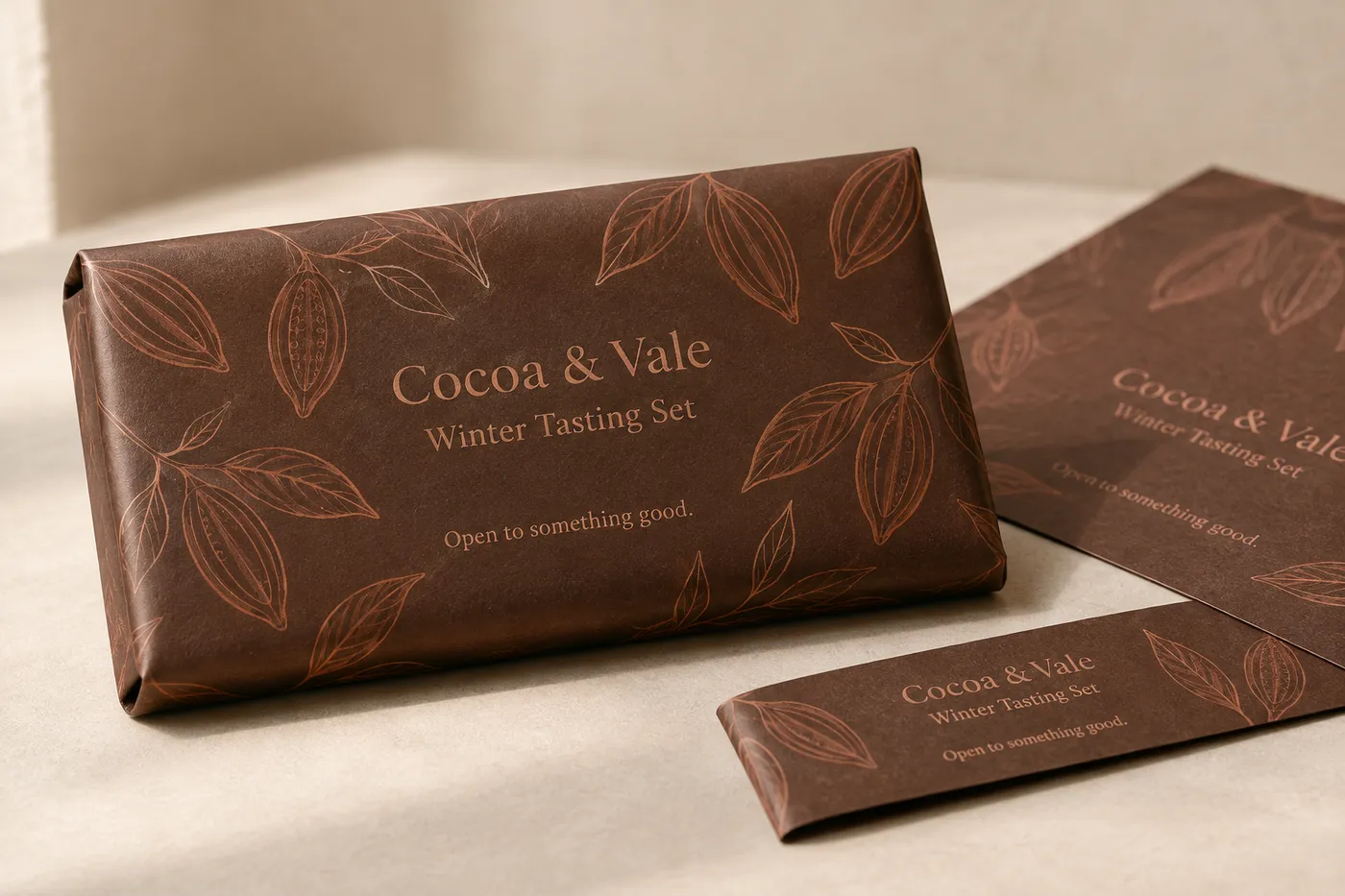
Available product
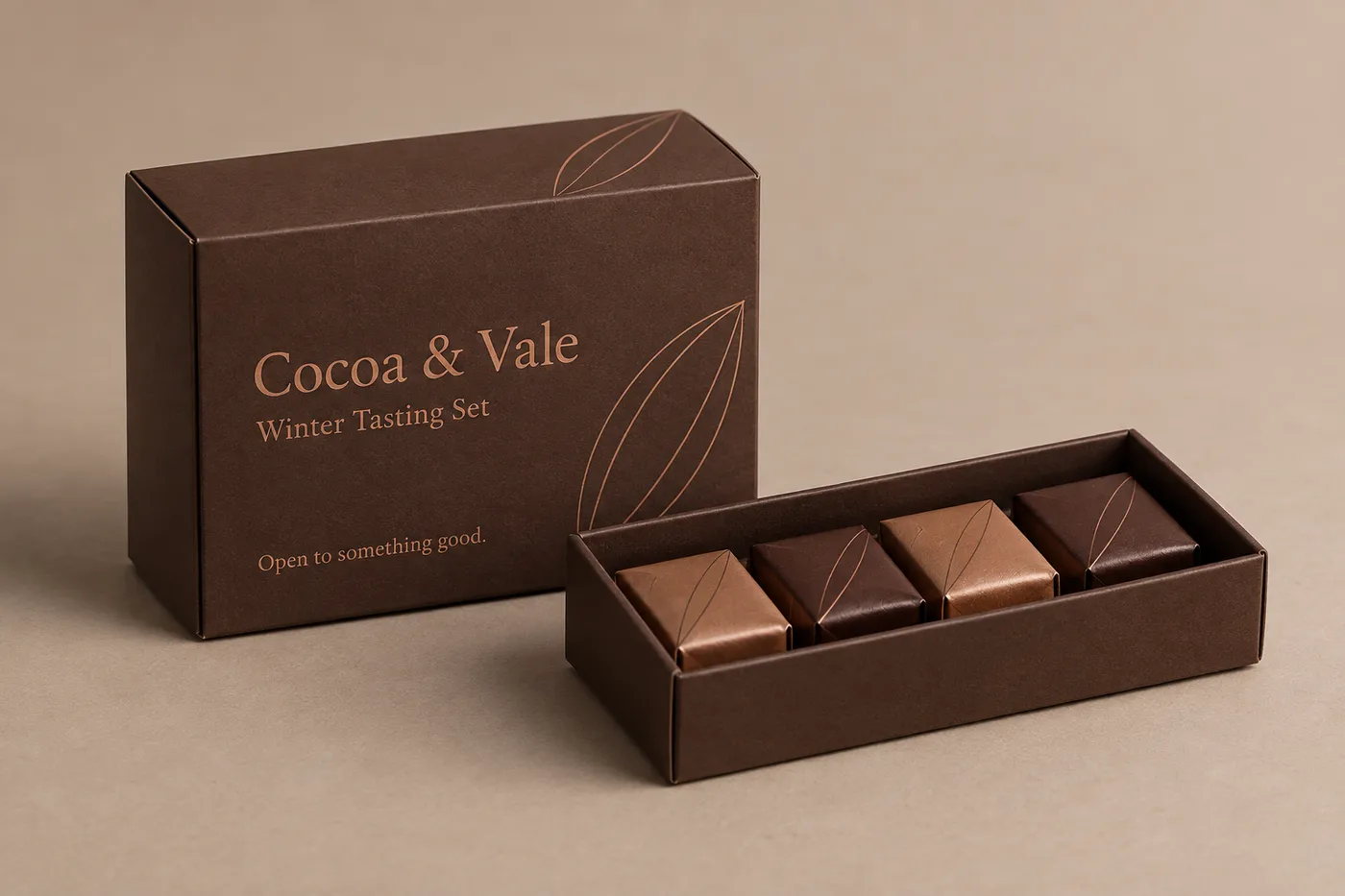
Available product
Available product
Available product
Plan the luxury chocolate presentation
Send the packed chocolate details, intended route, quantity, artwork status, preferred structure, material direction, and finish preference so Easy Box Packaging can review the box as one quote-ready specification.
Add your product details to see a quote summary.