Dense product sets
A set of compact goods can use a structured base and reviewed support when several items need to travel together in one opening sequence.

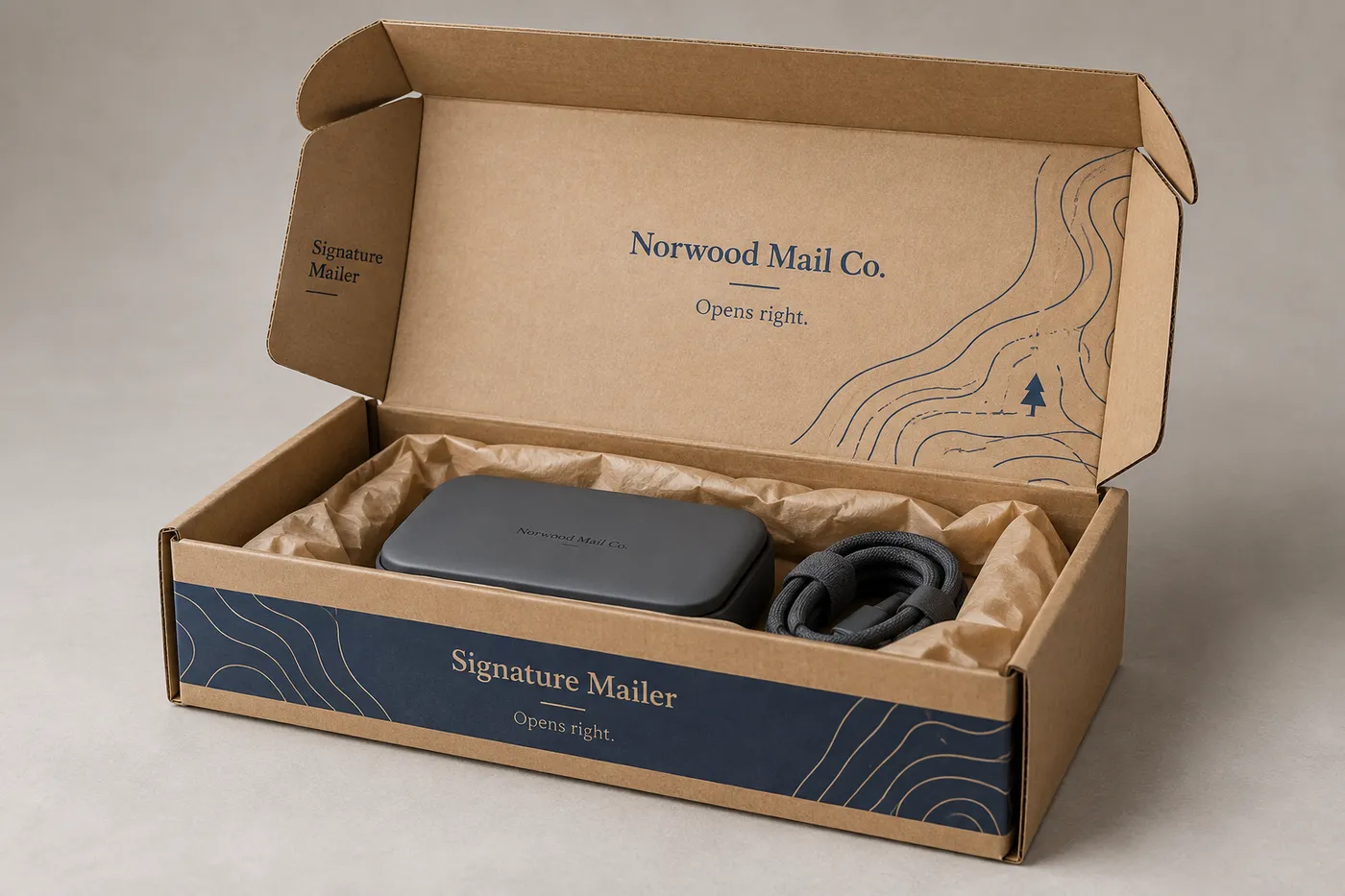
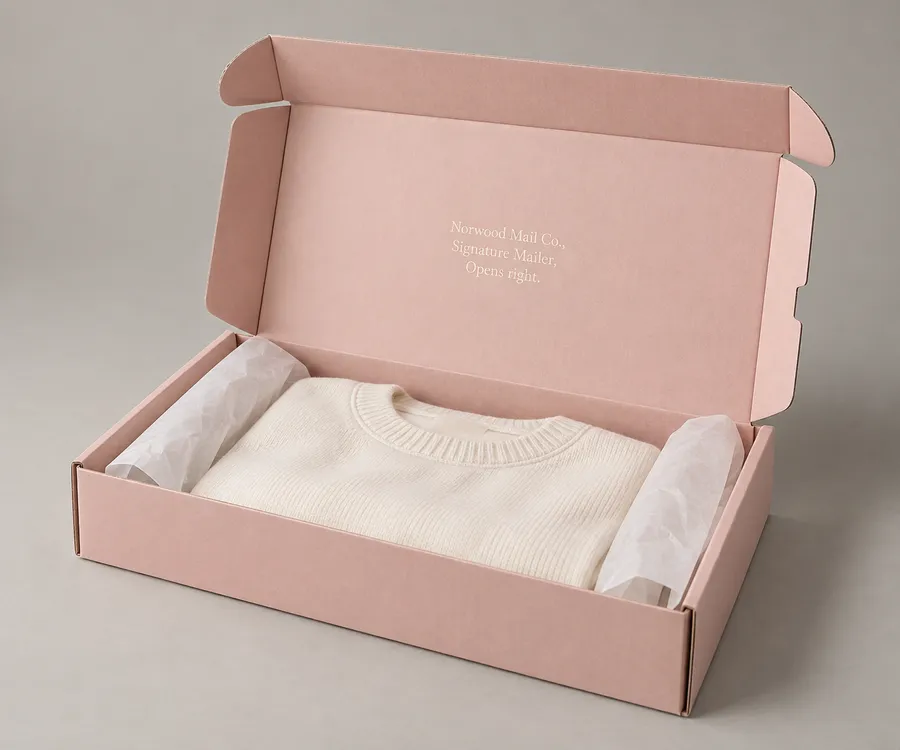
Open rigid corrugated mailer with a slate-gray accessory set, sturdy side walls, and Norwood Mail Co. print
Mailer Boxes
Custom heavy-duty mailer boxes are made-to-order folding corrugated mailers for compact, dense, or higher-value shipments that need a structured outer package. The packed product determines the interior footprint, while the board direction, closure, internal support, print coverage, and finish are reviewed together so the box is built for its actual shipping route.
Last updated
Working quote
Product brief
A rigid heavy-duty mailer is useful when the shipment needs more structure than a flexible mailer can provide, but still needs the compact opening sequence of a one-piece box. The format is planned around the packed product, not a generic outer carton: the base, side walls, lid, and locking panels are coordinated so the parcel can be assembled and opened as one package. A heavier-duty direction can suit dense goods, bundled products, or longer handling routes, while the final construction still depends on the product's weight, geometry, and shipping conditions.
The useful question is not whether a mailer sounds strong; it is which parts of the construction need more structure for the shipment in front of you. Corrugated board is the starting material direction for this format because it can create a firm folding shell with a defined base and side walls. The board selection, fold pattern, closure depth, and any reinforcement are then reviewed against the packed product. A larger box is not automatically a heavier-duty box. If extra empty space is added around a dense item, the box may need a different support approach rather than simply a bigger footprint. The quote should therefore describe the product and the handling route together.
Send the finished packed length, width, and height, not just the product name. Include the total packed weight, the number of items in the mailer, their orientation, any tissue or wrap that remains inside, and any component that projects beyond the main body. For a product set, measure the set as it will be packed and identify whether a card, insert, pad, or other support changes the stack. A dense item may sit low in the base, while a mixed set may need a divider or a formed paperboard support to keep its parts in the intended position. Final clearance is confirmed during specification and dieline review rather than guessed from a category average.
The integrated tuck-in lid and locking panels determine how the mailer is loaded, closed, and opened. For a heavier product, the side folds and base relationship deserve the same attention as the visible top panel because those parts establish the route from an open blank to a closed parcel. The closure should be considered with the fulfillment method, the packed height, and the recipient's opening direction. If the pack includes an internal support, the support must leave the lid and locking panels able to fold through their intended path. The same mailer style can be adapted to different product footprints, but each materially different size still needs its own specification and dieline review.
Internal support is a product-specific decision rather than a default promise. A bottle, book set, device accessory, or dense gift bundle can create different requirements based on its center of mass, corners, surface sensitivity, and orientation. Depending on those variables, the quote may consider a paperboard riser, divider, pad, or shaped locking feature inside the mailer. The support should be designed around the packed contents and the way the fulfillment team places them into the box. If no internal support is requested, the packed product and any existing wrap still need to be described so the available space is not treated as an afterthought.
Corrugated board is the primary material direction for a structured shipping mailer. Kraft paperboard or SBS paperboard can be considered when the product and handling route allow a different surface or print character, but material choice should not be separated from packed weight and closure geometry. Exterior print can carry the main brand surface, while inside-lid or base print can shape the opening moment. Matte lamination, gloss lamination, and foil stamping are available finish directions to review against the artwork and fold lines. FSC-certified paperboard is available as a material option, but the final stock and finish remain part of the product-specific quote.
The standard path starts at 50 units. Production is from 7 business days after digital proof approval, and free US shipping is included on the standard fulfillment path. Dieline and proof review are included on every order at no extra charge, allowing the packed footprint, closure route, artwork placement, and any internal support to be checked before production. A sample kit carries a $44.99 USD shipping charge credited toward the first order when board feel, fold quality, or finish direction needs to be reviewed in hand. For a quote, send the packed dimensions, weight, count, orientation, intended shipping use, artwork status, material preference, and support requirements. The product remains quote-only because no product-specific unit-price range is confirmed in the available sourcing record.
Proof points
The rigid direction is not just a visual label. These are the construction choices that make the quote specific to the shipment.
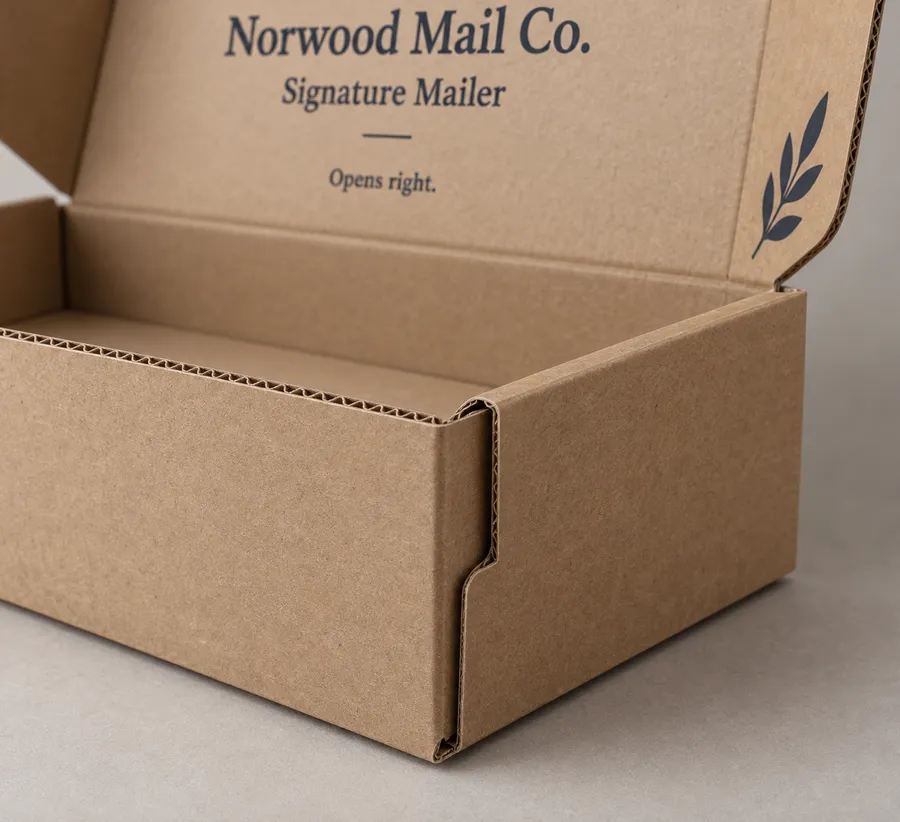
This format gives a compact shipment a firm folding shell while keeping the lid, base, closure, and printed panels in one coordinated construction. Share the packed product and handling context so the heavy-duty direction is tied to real requirements rather than an assumed board thickness or generic box size.
A set of compact goods can use a structured base and reviewed support when several items need to travel together in one opening sequence.
A recurring assortment can be built around the actual packed footprint, with the lid and interior print shaping a consistent unboxing route.
A heavier book or flat-goods bundle can be reviewed in a shallow rigid format when its packed thickness, corners, and any wrap are provided.
Compact accessories can use a firm mailer shell when the product geometry, surface sensitivity, and any internal divider are part of the brief.
Printing should follow the opening sequence and construction lines. A strong outer panel can be paired with a quieter interior, or the inside lid can carry a secondary message that appears after the customer opens the box.
The strongest starting brief combines the packed product with the way the mailer will be handled. These three inputs keep the box decision specific.
Finished dimensions, total weight, count, orientation, wrap, and projections establish the interior space and the load the structure must accommodate.
The lid, locking panels, base folds, and opening direction are reviewed with the fulfillment method and packed height.
A divider, pad, riser, or other paperboard feature can be considered when product geometry and handling make it useful.
A clear quote brief connects the packed product to the structure, support, artwork, and shipping context. The following actions keep the review in the right order.
Provide packed length, width, height, total weight, product count, orientation, wrap, and any projection that changes the fit.
Explain the intended shipping use, fulfillment method, opening direction, and any known need for a divider, pad, or other internal support.
Share the preferred board character, exterior or interior print coverage, artwork status, and any finish direction you want reviewed.
Check the packed footprint, closure, panel orientation, artwork placement, and support details before production begins.
Confirm the reviewed product, dieline, proof, material direction, and finish so the order can move into production.
Need help with structure, materials, or production planning? See how we manufacture custom packaging.
A sample kit ships for a $44.99 USD charge credited toward your first order, useful when you need to compare board feel, fold quality, print surface, or a selected finish before approving the rigid mailer.
Shipping charge: $44.99. Credited toward your first order.
Request a Sample KitFind clear answers about fit, materials, and ordering below.
The heavy-duty direction starts with a rigid corrugated mailer shell, then reviews the packed weight, base, side walls, lid, closure panels, and any internal support together. The final board and fold configuration depend on the actual product and handling route rather than a universal grade claimed for every order.
Provide the finished packed length, width, and height, total weight, product count, orientation, existing wrap, and any component that projects beyond the main body. For a set, measure it as it will be packed and note whether a card, pad, divider, or other support changes the stack.
Internal support can be reviewed when product geometry, weight, orientation, or surface sensitivity makes it useful. Depending on the brief, the discussion may include a paperboard divider, pad, riser, or shaped feature. The support is specified with the packed product and fulfillment sequence, not selected as a generic add-on.
Yes, exterior panels, the inside lid, and the base can be reviewed as part of the artwork direction. Print placement needs to respect fold lines, locking panels, and the opening sequence, so the digital proof is the right point to check how the artwork reads on the assembled box.
The approved standard estimate is from 7 business days after digital proof approval. Orders start at 50 units, and free US shipping is included on the standard fulfillment path. Dieline and proof review are included on every order at no extra charge, while the final schedule follows the approved specification.
Your final unit price is confirmed in a quote because no defensible product-specific unit-price range is confirmed in the available sourcing record. Send the packed dimensions, weight, quantity, material direction, support needs, artwork status, and finish request so the construction and order can be scoped before pricing is returned.
Orders start at 50 units and scale up to 500,000 for bulk runs, with pricing from $0.35 per unit on larger quantities. Standard production is from 7 business days after digital proof approval.
Compare nearby products and request the format that best fits your next run.
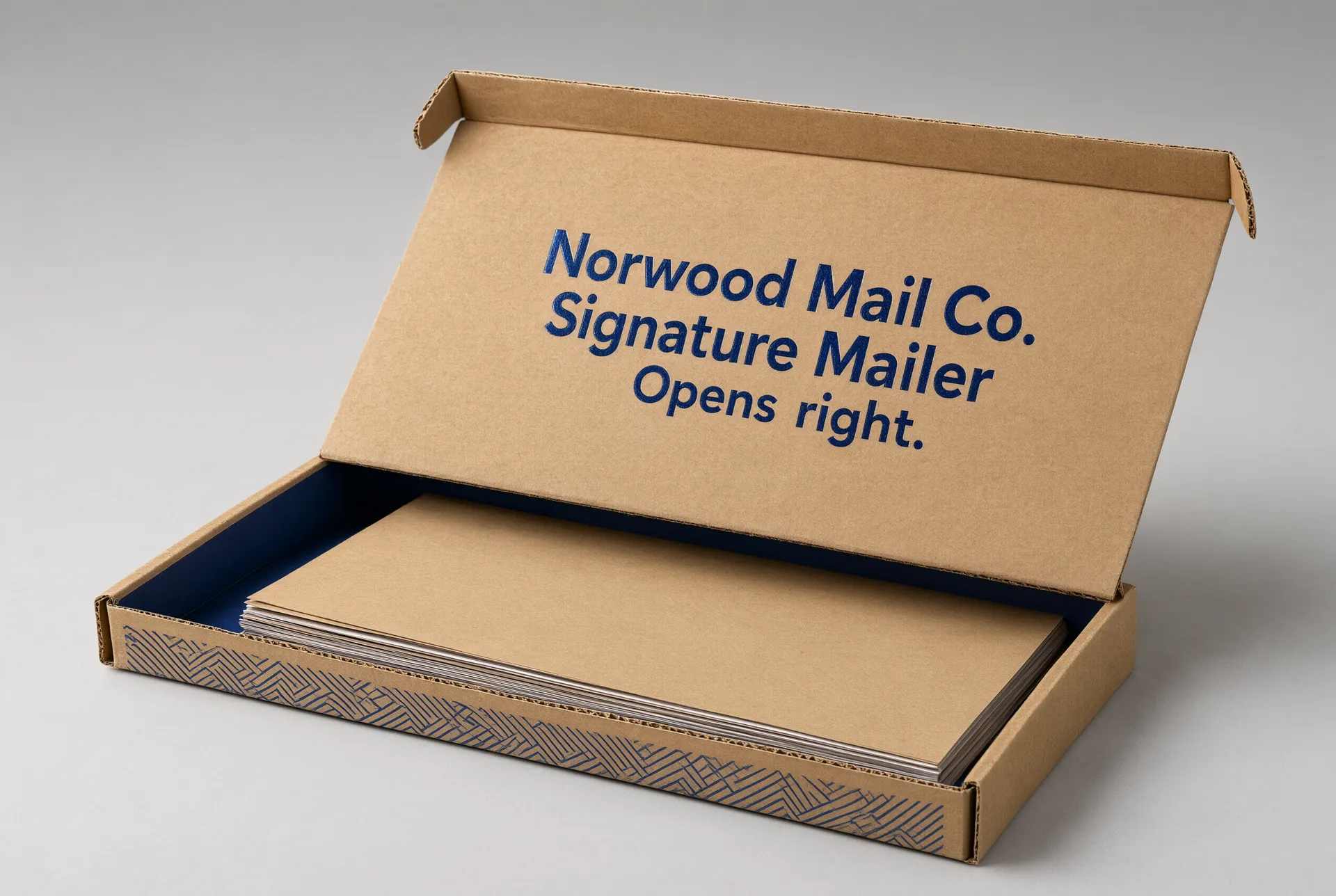
Available product
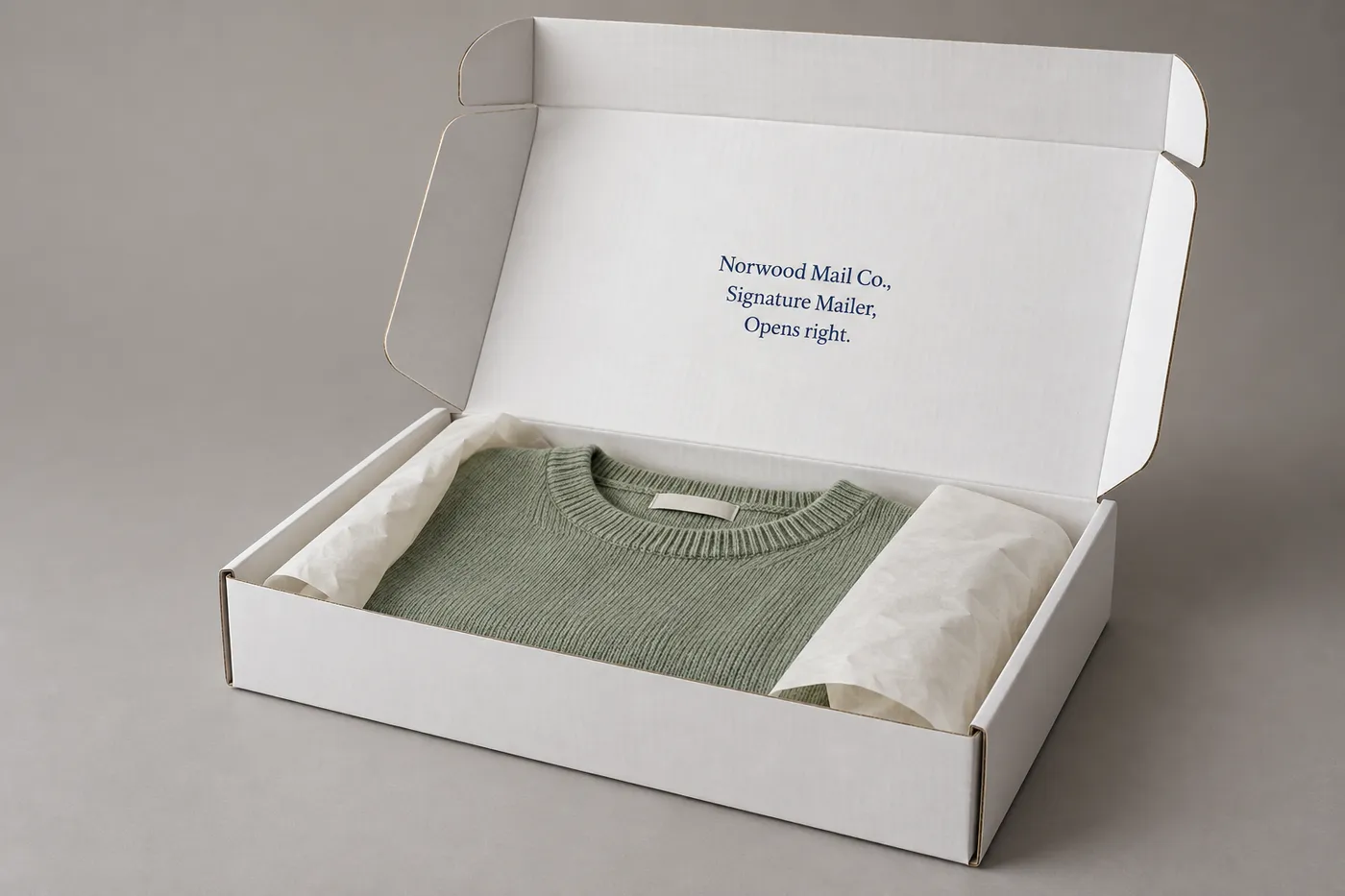
Available product
Available product
Available product
Build around the shipment
Send the packed dimensions, weight, count, intended route, artwork status, and support requirements. Easy Box Packaging can then review the mailer shell, closure, board, print, and internal structure as one quote-ready specification.
Add your product details to see a quote summary.