Apparel and Soft Goods
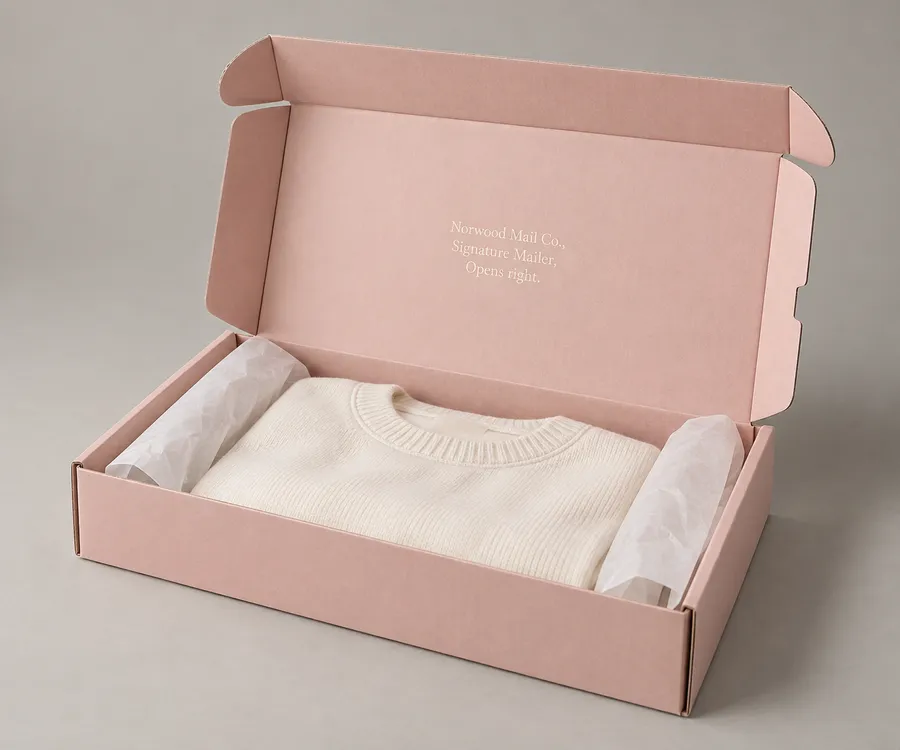
A shallow rigid mailer can organize a folded garment or textile order while giving the lid and printed panels a deliberate opening sequence.

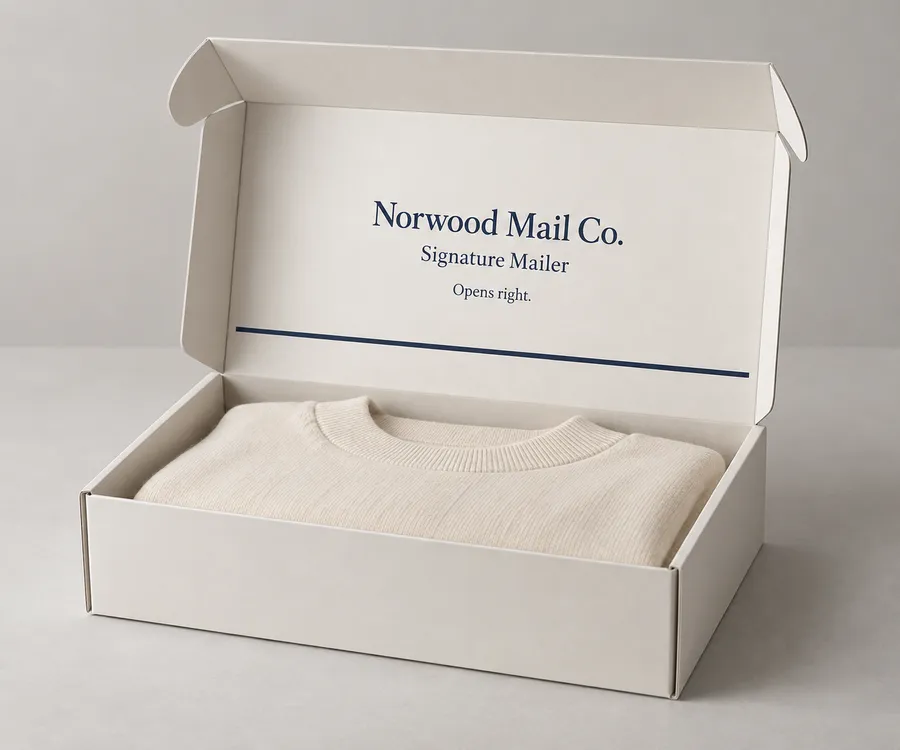
Open rigid paperboard mailer box with folded apparel inside
Mailer Boxes
Rigid mailer boxes give shipped products a more structured paperboard presentation than a flexible mailer, with a fold-over closure, planned internal clearance, and printed surfaces shaped around the order. Choose the material direction, opening style, interior support, and finish with the packed product and shipping route in view.
Last updated
Working quote
Product brief
Rigid mailer boxes are made-to-order shipping boxes for a product that needs a defined opening presentation as well as a practical way to move through fulfillment. The rigid format starts with the packed product, not a generic box size. Product length, width, height, wrapping, packed quantity, and the way the lid should open all affect the dieline. A mailer that is too loose can let the contents move during handling, while a mailer that is too tight can make filling and closing awkward. The right brief gives the structural review something useful to work from.
A rigid mailer box should be sized around the product in its actual shipping configuration, including any wrap, sleeve, card, or support that will remain inside the order. Share the packed length, width, and height, then explain how the product should sit in the base and how much opening clearance the customer should see. A shallow mailer can suit a folded garment, printed kit, or compact accessory, while a deeper profile may be needed for a bundled order. The box profile should follow that use case rather than forcing every product into the same proportions.
The quote brief should also identify whether one product or an assortment sits in each mailer. That choice changes the internal arrangement and may change the closure geometry. If the product can rotate, shift, or arrive with a delicate exposed surface, describe the orientation that should be maintained. Internal support depends on the product geometry, weight, fragility, orientation, structure, fulfillment method, clearance, and the desired reveal. Support can be integrated into the paperboard structure or considered as a separate insert after those factors are reviewed together.
A rigid mailer is defined by its firm board profile and planned folding structure. The visible construction may use a fold-over lid, tuck-style flap, side flaps, locking tabs, or another compatible closure direction selected for the product and dieline. Those parts should be considered as one opening sequence: the base needs to hold its shape, the lid needs to close without fighting the contents, and the printed panels need to remain legible when the box is opened.
The category material direction can be developed around Corrugated Board, SBS Paperboard, or Kraft Paperboard. Corrugated Board brings a visible board character and can suit a shipment that needs a more substantial profile. SBS Paperboard gives artwork a smooth, controlled surface direction. Kraft Paperboard keeps the surface closer to a natural paper character. The final choice depends on the product, the required folds, the print brief, the shipping route, and the surface treatment. These are material directions to review, not a promise that every stock behaves identically in every construction.
Exterior printing can carry the brand name, product information, handling artwork, or a restrained pattern across the lid and base. Interior printing can turn the first opening into a second branded surface, especially when the inside of the lid is visible before the product is lifted out. Send both sides of the artwork if the interior message is part of the brief. The dieline will show which panels fold, which edges are hidden, and where important text should stay clear of a crease.
Matte Lamination, Gloss Lamination, and Foil Stamping are available finish directions in this category. Lamination changes the surface appearance and handling character of the printed panel. Foil Stamping can highlight selected lettering or linework, subject to artwork and production review. The useful decision is not to collect every finish. It is to identify which surface should carry the main brand signal, which panels need quiet readability, and which details deserve a small accent.
Start with the product or a packed sample, the packed dimensions, the quantity per mailer, and the shipping destination. Add the preferred material direction, closure preference, print coverage, finish direction, and whether the box needs integrated support or a separate insert. If the final artwork is not ready, a brand reference, color direction, and panel-by-panel message still help the structural discussion begin. A digital proof review follows the dieline so the printed layout and folds can be considered together.
The standard fulfillment path starts at a minimum order of 50 units. Production starts from 7 business days after digital proof approval. Free US shipping applies on the standard fulfillment path. If you want to check the board feel, fold behavior, closure, and printed surface first, the sample kit carries a $44.99 USD shipping charge credited toward the first order. The final quote remains dependent on the approved specification, artwork, quantity, and destination.
A useful rigid mailer brief answers three practical questions: what must stay protected or oriented inside, what should the customer see first when the lid opens, and which board and print choices fit the shipment. Include photographs when the product has an unusual profile, a fragile finish, or a bundle that is difficult to describe with words alone. That information lets the dieline review focus on fit, closure, and presentation together instead of treating them as separate decisions.
Proof points
The finished direction is defined by the mailer profile, fold-over closure, material choice, printed panels, and surface treatment selected for the packed order.
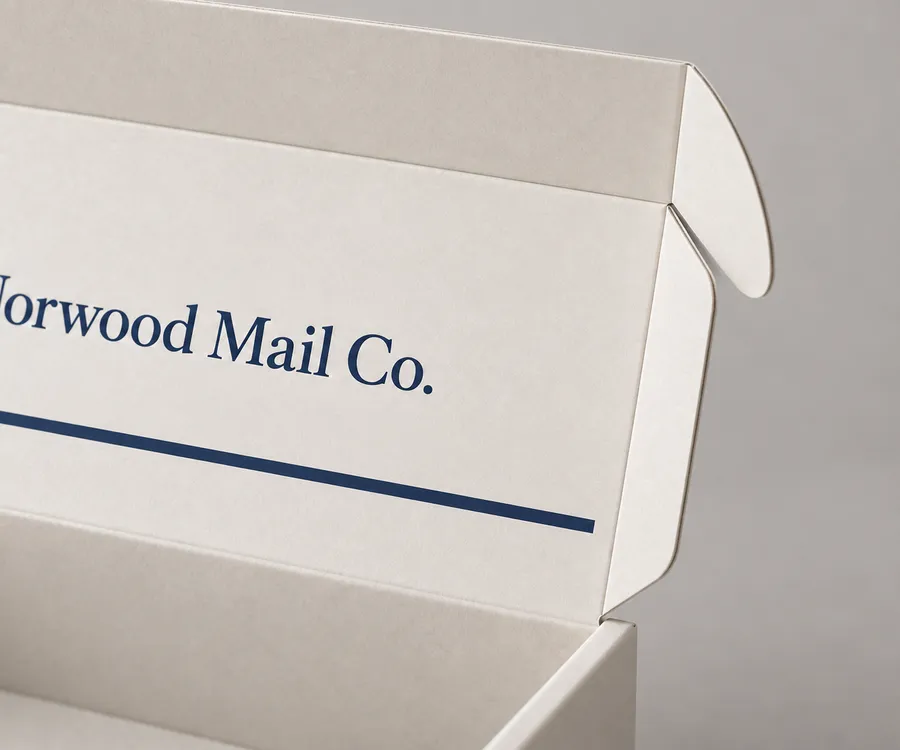
Rigid mailer boxes should be scoped from the packed product, the quantity inside each order, and the opening sequence you want the customer to experience. Share the packed length, width, height, wrapping, and any support that must stay with the product so the base, lid, and clearance can be reviewed as one structure.
A shallow rigid mailer can organize a folded garment or textile order while giving the lid and printed panels a deliberate opening sequence.
A repeatable mailer can hold a recurring assortment when the packed quantity, internal arrangement, and printed interior message are known in advance.
The firm profile works for a curated shipment containing a product, printed insert, or small set of related pieces that should arrive as one presentation.
A made-to-order rigid mailer can organize compact accessories or small boxed items when a flexible envelope does not provide the desired opening structure.
Use the outer panels for the primary brand and product information, then decide whether the inside of the lid or base should carry a second message. The dieline keeps the print plan tied to folds, closure panels, and the actual opening sequence.
Internal support is a product decision, not a standard add-on. The right approach depends on the product geometry, weight, fragility, orientation, clearance, fulfillment method, and the desired reveal when the lid opens.
Explain which face should remain visible and whether the product may rotate or shift while the order is handled.
A paperboard riser, divider, or locking feature can be considered when the mailer structure needs to hold a specific arrangement.
The lid, internal clearance, and product reveal should be reviewed together so support does not obstruct the first view.
The quote process turns the packed product and artwork brief into a reviewed rigid mailer specification.
Send the product or a packed sample with length, width, height, wrapping, and quantity per mailer.
Explain the preferred lid movement, visible product face, interior message, and any clearance needed at the opening.
Identify a preferred Corrugated Board, SBS Paperboard, or Kraft Paperboard direction and note the shipping route.
Specify exterior or interior printing, matte or gloss lamination, foil stamping, and the artwork status.
Review the structural dieline and digital proof at no extra charge before production.
Need help with structure, materials, or production planning? See how we manufacture custom packaging.
Check board feel, fold quality, closure behavior, and print finish before committing to a full run. The sample kit carries a $44.99 USD shipping charge credited toward your first order.
Shipping charge: $44.99. Credited toward your first order.
Request a Sample KitFind clear answers about fit, materials, and ordering below.
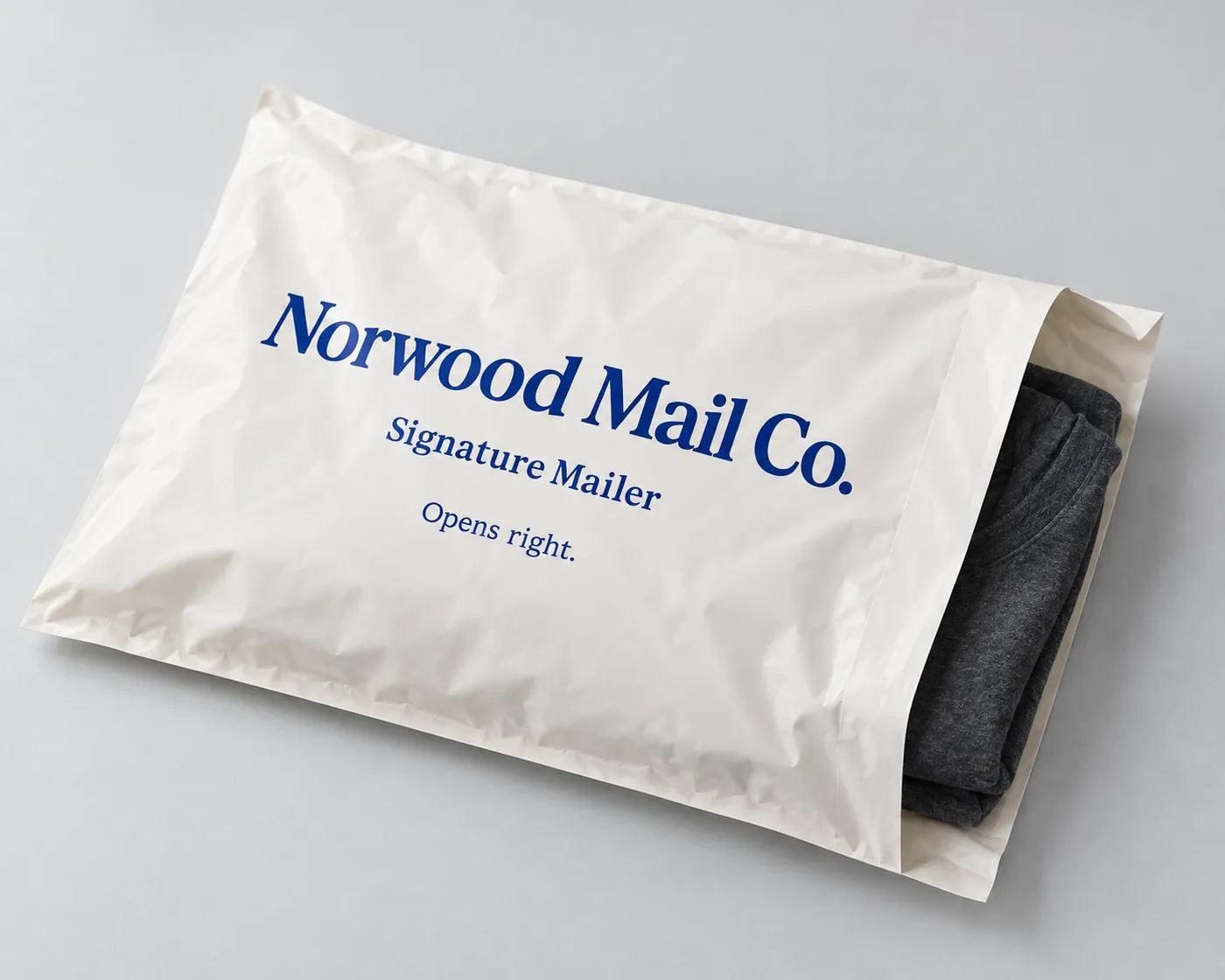
A rigid mailer uses a firm board structure with a planned base and lid, while a poly mailer is a flexible envelope format. The rigid construction suits a shipment where the outer profile, printed panels, and opening sequence matter. A flexible mailer may be appropriate when the contents are soft and do not need a defined box presentation.
Measure the product in the condition that will actually ship, including wrap, sleeve, or a packed bundle. Share length, width, height, quantity per mailer, and any card or support that will remain inside. Photos are useful when the product has an unusual profile or a surface that should not contact the board.
Yes. Exterior printing can carry the primary brand and product information, while interior printing can add an opening message or pattern to printable panels. The dieline should be checked before artwork approval so important text stays clear of folds, closure areas, and hidden edges.
Not automatically. Internal support depends on the product geometry, weight, fragility, orientation, clearance, fulfillment method, structure, and desired reveal. Support may be integrated into the paperboard construction or provided as a separate insert after the packed arrangement has been reviewed.
The standard fulfillment path starts at a minimum order of 50 units. Production starts from 7 business days after digital proof approval. Free US shipping applies on the standard fulfillment path, and the final schedule depends on the approved construction, artwork, quantity, and destination.
Orders start at 50 units and scale up to 500,000 for bulk runs, with pricing from $0.38 per unit on larger quantities. Standard production is from 7 business days after digital proof approval.
Common uses include apparel and soft goods, subscription assortments, press and partner kits, and E-commerce accessories. The final specification is set by the packed product and how it will be handled.
Compare nearby products and request the format that best fits your next run.
Available product
Available product
Available product
Available product
Get Started
Send the packed product dimensions, quantity per mailer, preferred closure, material direction, print coverage, finish preference, and artwork status to request a quote.
Add your product details to see a quote summary.