Apparel replenishment
Folded shirts, knitwear, and similar garments can use the landscape envelope profile when the packed fold remains consistent across wholesale orders.

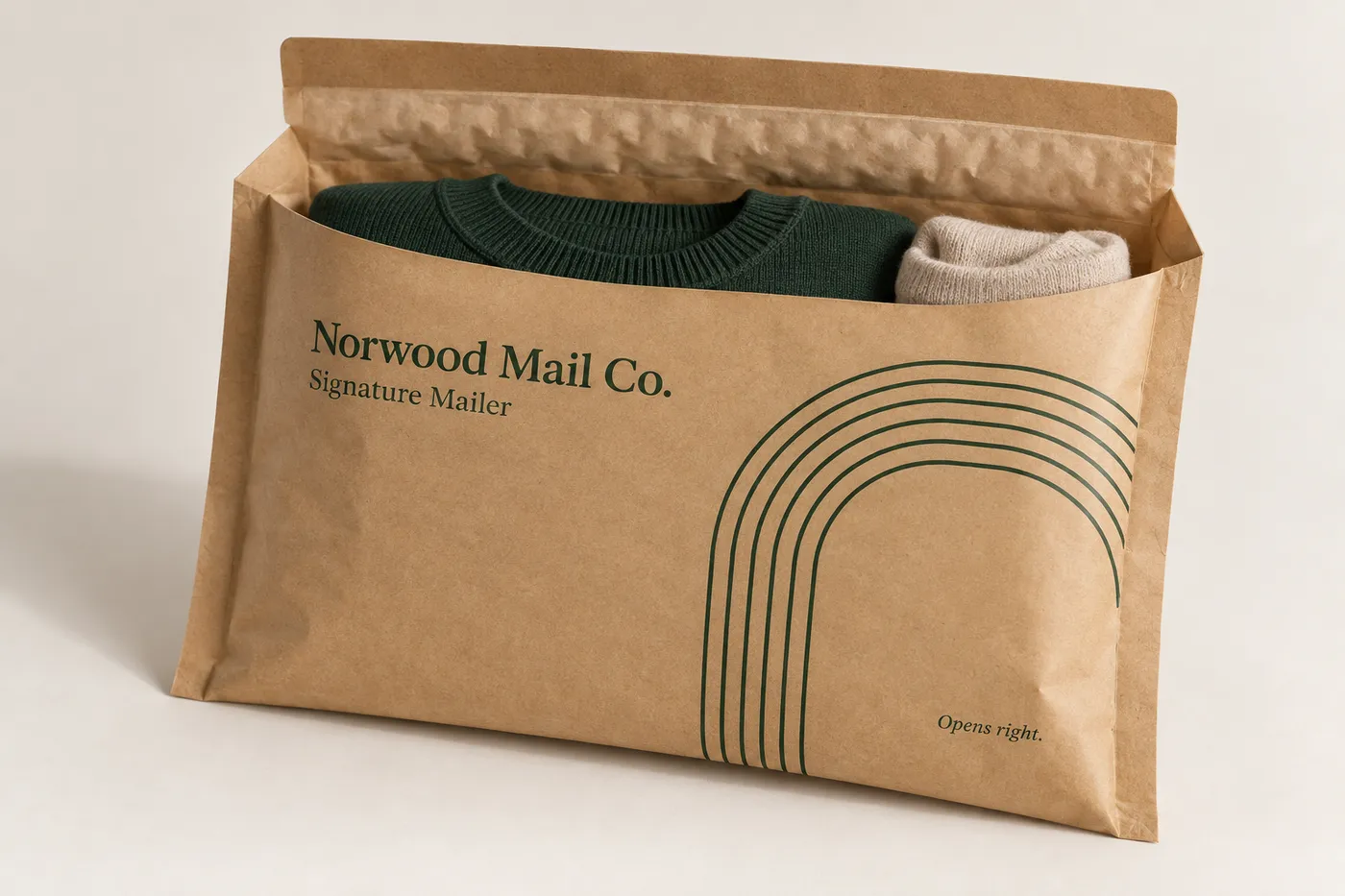
Warm kraft paper padded mailer with green branding and soft contents visible at the open flap.
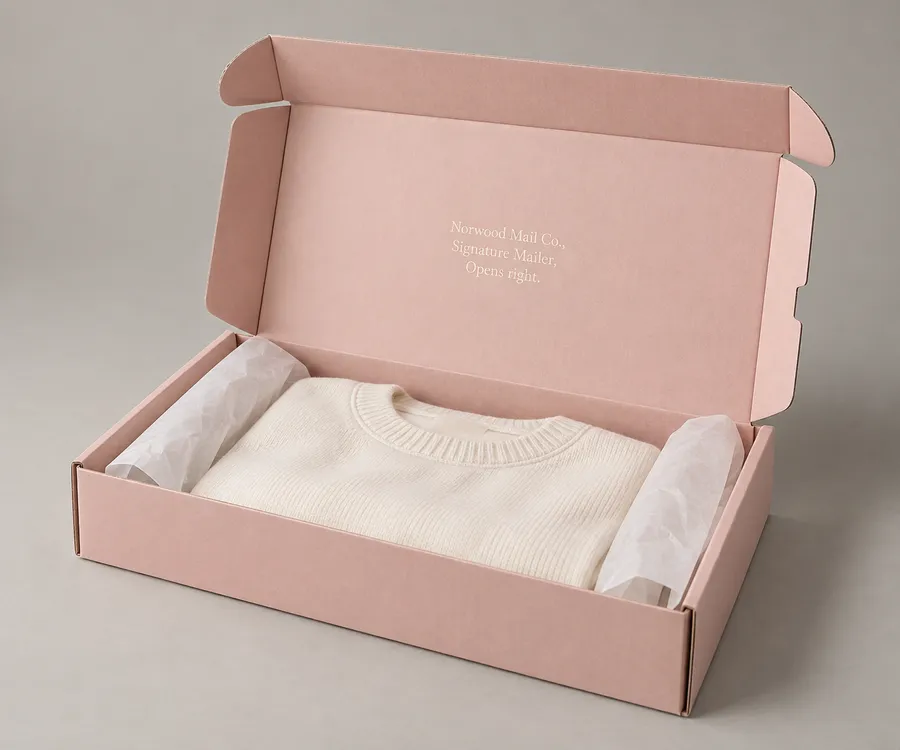
Mailer Boxes
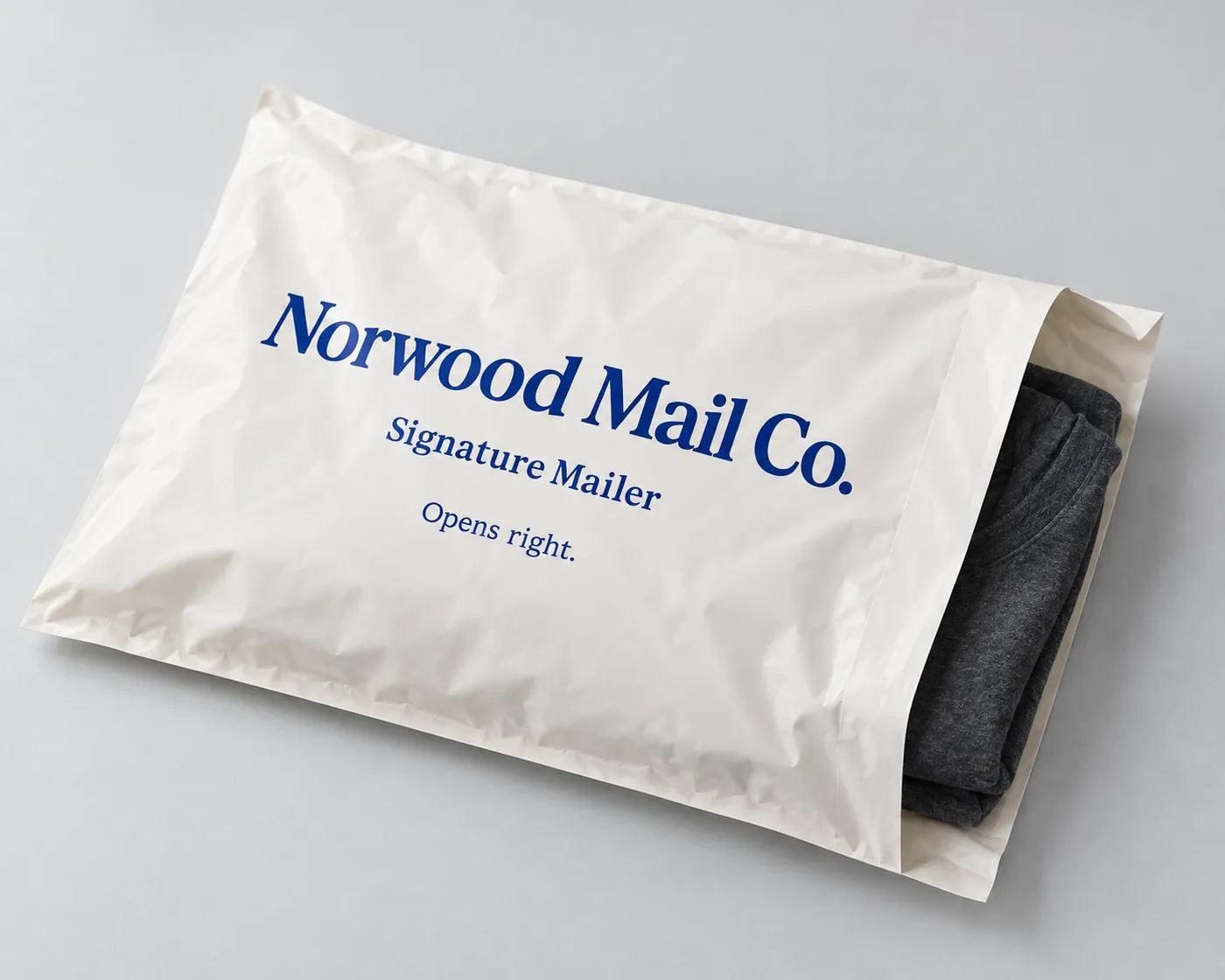
Wholesale custom paper padded mailers give repeat shipments a printed paper exterior and a cushioned interior without the rigid footprint of a box. They suit apparel, soft goods, stationery bundles, and small non-fragile accessories when the packed profile is consistent. Size, self-seal flap, print coverage, paper appearance, and finish are reviewed around the product you ship.
Last updated
Working quote
Product brief
Wholesale custom paper padded mailers give a repeat-order program a recognizable outer face and a layer of cushioning around the packed item. The format is flexible rather than box-like, so it can make sense for folded apparel, fabric accessories, stationery bundles, and other small products that do not need a rigid cavity. The paper exterior also gives a wholesale brand a physical surface for its wordmark, handling message, color field, or repeat artwork before the recipient opens the package.
The important first decision is whether the product can travel in a flexible padded envelope at the planned scale. A product with sharp projections, a fragile finish, or a shape that must stay fixed may need a different construction or a more structured internal plan. For a repeat program, compare the largest and smallest packed profiles instead of treating the first sample as the only input. If the same mailer will serve several products, explain the range, the packed orientation, and the amount of variation that the fulfillment team sees.
Wholesale packaging works better when the package is planned around the way the item is actually packed. Measure the product after its inner wrap, folded insert, grouped components, or retail sleeve has been added. Share the packed length, width, and thickness, then note whether the item enters flat, portrait, or landscape. The orientation affects the opening direction, the visible printed area, and the way the self-seal flap meets the contents.
Also describe any corner, handle, clasp, zipper, or other feature that cannot be compressed. The padded mailer needs practical room for insertion without forcing the flap or seams, while excessive empty space can change how the product shifts inside the envelope. The quote team can review the working clearance from the real packed profile. That is more useful than choosing a generic envelope size that happens to match one measurement. For wholesale replenishment, send the profile of the current pack and flag any planned product change before a repeat order is quoted.
Paper padding adds cushioning, but it does not turn a flexible mailer into a rigid protective box. The suitable construction depends on product geometry, packed weight, fragility, orientation, shipping conditions, and how the order is handled in the warehouse. A folded garment and a small rigid accessory can have a similar footprint but create different requirements at the seams and flap. Describe the item honestly so the paper padded format can be confirmed or compared with another mailer construction.
The self-seal flap keeps the opening route simple and gives the outer artwork a defined front face. Closure details still need to be reviewed with the packed thickness and fulfillment method. If operators fill the mailer by hand, describe the insertion sequence. If the product arrives to the packing station already bundled, include that bundle in the dimensions. These details help the wholesale format remain consistent from the first production run through later replenishment orders.
A wholesale mailer should be recognizable across the shipment series without making the artwork difficult to update. Send the brand mark, product name, color direction, repeat pattern, handling message, and any panel that must remain clear for a label or shipping mark. The printed face can carry the brand before opening, while an inside message or pattern can make the same package feel considered when the flap is lifted.
Decide early whether the artwork should cross the flap, continue onto the side areas, or stay within one primary face. The paper surface, fold lines, closure area, and reading order should be reviewed together. Matte lamination can be considered for a lower-glare surface, gloss lamination for a higher-sheen face, and foil stamping for a selected accent, subject to paper behavior and artwork review. A repeat program benefits from a clear approved proof because later orders should follow the same panel logic unless the product or artwork brief changes.
The standard minimum order is 50 units. Production is from 7 business days after digital proof approval, and free US shipping is included on the standard fulfillment path. Quote requests are typically answered the same business day and always within 24 hours. Those facts provide planning anchors for a new wholesale mailer, while the final quote remains dependent on the packed size, paper construction, print coverage, finish, and order details.
Dieline and proof review are included on every order at no extra charge. That review is useful for checking the padded profile, flap relationship, printed panels, and any artwork change before the production reference is approved. If the paper feel or padding needs to be examined in hand, a sample kit carries a $44.99 USD shipping charge credited toward the first order. The sample is a way to inspect the material direction; it does not replace reviewing the finished packed product and intended artwork.
Folded apparel can make good use of the flexible landscape profile when the packed fold is consistent across replenishment runs. Fabric accessories, soft organizers, and small textile goods can also benefit from a printed paper exterior without the depth of a rigid carton. Stationery bundles may fit when the corners, thickness, and grouped count are understood before the dieline is prepared. A subscription or wholesale add-on can use the same format when the combined packed profile stays within the agreed specification.
These are starting points rather than a universal approval. Glass, exposed corners, heavy components, and products that must remain perfectly fixed should be described before the paper padded construction is selected. If a product range includes both soft and rigid items, separate pack profiles may be more practical than forcing every SKU into one envelope. The quote should reflect the item that creates the limiting fit condition.
Include the packed length, width, and thickness; product count per mailer; order quantity; intended orientation; product weight; artwork status; print faces; and any closure or finish preference. Explain whether the shipment contains one item, a bundle, or a changing assortment. Add a product photo or short description when a corner, handle, clasp, or rigid edge is difficult to capture in measurements.
For an existing wholesale program, include the current package or its outer dimensions, the reason for changing it, and the part of the opening experience that should stay the same. If the new mailer will be used across more than one product, send the largest packed profile and identify the products that may need a separate size. With those inputs, Easy Box Packaging can review the flexible construction, prepare a product-specific dieline, and send a digital proof that brings the fit, closure, artwork, and finish into one decision before production.
Proof points
A useful proof should show the flexible profile as a working package, not only as an empty printed envelope. Check the packed position, padded interior, self-seal flap, printed panel order, and the surface direction against the way the wholesale shipment will be filled.
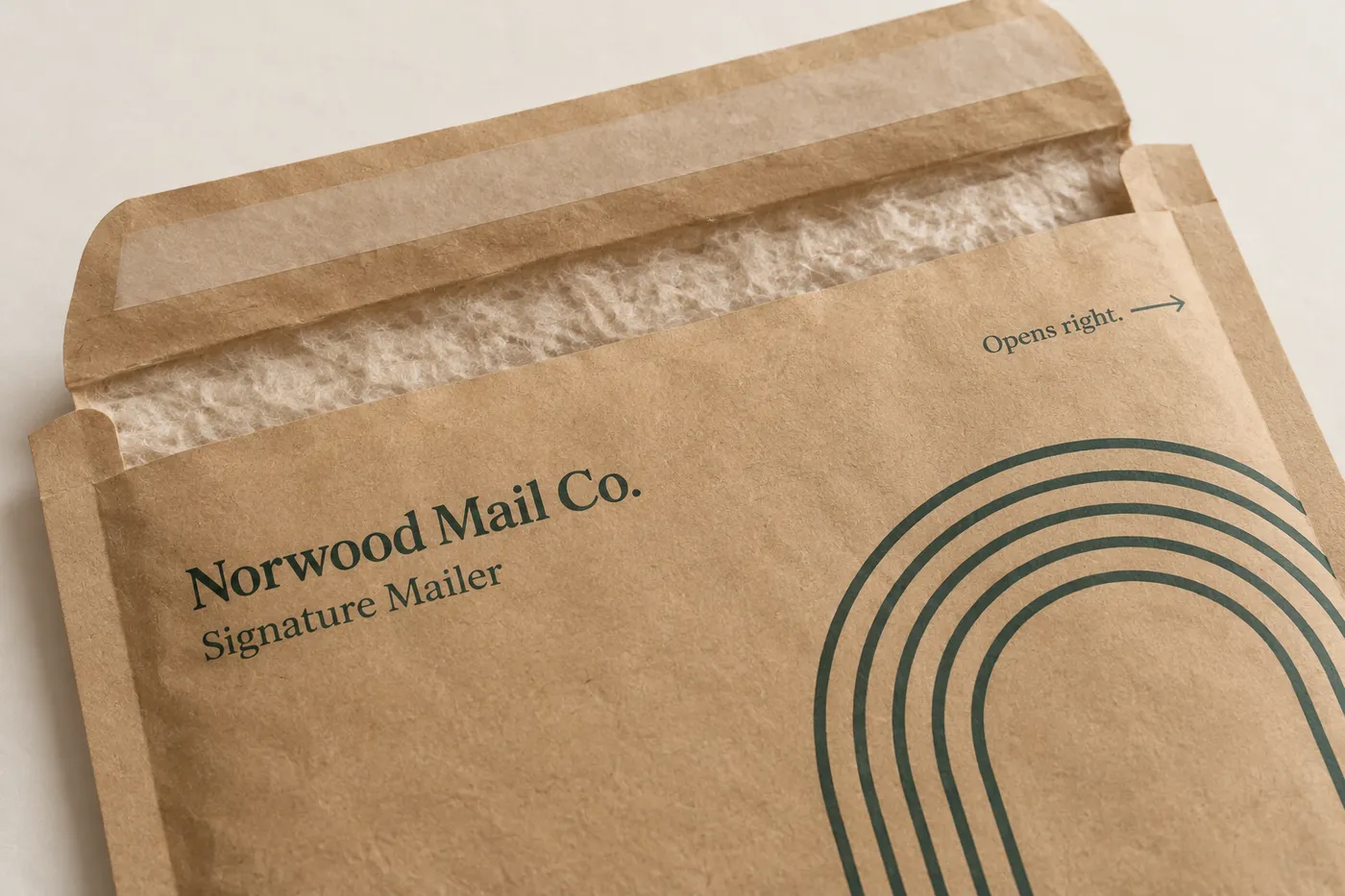
The flexible envelope format gives a repeat shipment a consistent printed face without the rigid footprint of a box. Start with the product as it is packed, including wraps, grouped components, and the thickness that reaches the self-seal flap. That packed profile guides the mailer size, opening direction, and practical clearance for the production proof.
Folded shirts, knitwear, and similar garments can use the landscape envelope profile when the packed fold remains consistent across wholesale orders.
Fabric accessories, small organizers, and textile goods can share a printed mailer when their grouped profile does not create rigid pressure points.
Flat paper goods can suit the padded format when the bundle thickness, corners, and product count are supplied before the dieline is prepared.
Lightweight non-fragile additions can travel in the same branded format when the combined profile and opening sequence are understood.
Start with the faces that need to identify the wholesale shipment, then review the artwork against the flexible paper surface, flap, folds, and label-clear areas. The proof should show the reading order and surface direction together.
A repeat-order package needs a stable packing routine as well as a recognizable printed surface. The useful support decisions are tied to the actual product range and the way operators fill the mailer.
Share the packed shape for the current assortment and identify any product or bundle that creates the largest fit condition.
The self-seal flap can suit hand-filled wholesale orders when the insertion direction and packed thickness are understood before proof approval.
Keep the primary face, flap relationship, label-clear areas, and interior message defined so later orders can follow the approved print plan.
A clear wholesale brief starts with the packed product and ends with an approved proof that the fulfillment team can repeat. Keep the fit, closure, print, and finish decisions together as the package moves toward production.
Send packed length, width, thickness, orientation, product count, weight, and any corners or closures that cannot be compressed.
Explain whether the mailer serves one product, a bundle, a changing assortment, or a replenishment program with more than one packed profile.
Provide artwork status, exterior and interior print preferences, flap coverage, label-clear areas, and any finish reference.
Check the padded profile, self-seal flap, packed position, printed panel order, and surface treatment before approval.
After digital proof approval, production is from 7 business days on the standard path, with the final schedule following the confirmed quote.
Need help with structure, materials, or production planning? See how we manufacture custom packaging.
A sample kit has a $44.99 USD shipping charge credited toward the first order. Use it to examine the paper surface, padded interior, flap behavior, and printed presentation before finalizing a wholesale specification.
Shipping charge: $44.99. Credited toward your first order.
Request a Sample KitFind clear answers about fit, materials, and ordering below.
Folded apparel, soft goods, stationery bundles, and small non-fragile accessories can be starting points when their packed profile suits a flexible envelope. Rigid, fragile, or projecting items should be reviewed with their actual packed geometry before the format is confirmed.
Measure the item as it will enter the mailer, including any inner wrap, retail sleeve, or grouped components. Share packed length, width, thickness, orientation, product count, weight, and any corner, handle, clasp, or closure that cannot be compressed.
Interior print coverage can be reviewed when the opening experience calls for it. Share the desired inside artwork and any flap-crossing treatment early so the quote and proof can confirm the suitable faces and reading order.
There is no single default. Support depends on product geometry, packed weight, fragility, orientation, closure, presentation, and fulfillment handling. Review the packed item before deciding whether the padded construction is enough or a more structured format is appropriate.
The standard minimum order is 50 units. After digital proof approval, production is from 7 business days on the standard fulfillment path, while the final schedule follows the confirmed quote.
Orders start at 50 units and scale up to 500,000 for bulk runs, with pricing from $0.17 per unit on larger quantities. Standard production is from 7 business days after digital proof approval.
Yes. Free US shipping is included on the standard fulfillment path. Delivery timing and carrier details are confirmed when your quote is prepared.
Compare nearby products and request the format that best fits your next run.
Available product
Available product
Available product
Available product
Plan the next shipment
Send the packed product details, quantity, artwork status, print coverage, and preferred paper or finish direction. The quote team can then review a repeatable padded mailer format around the way your product is filled and shipped.
Add your product details to see a quote summary.