Retail shelf presentation
A front-facing printed panel can organize the wine identity and product information while the carton keeps the bottle enclosed.
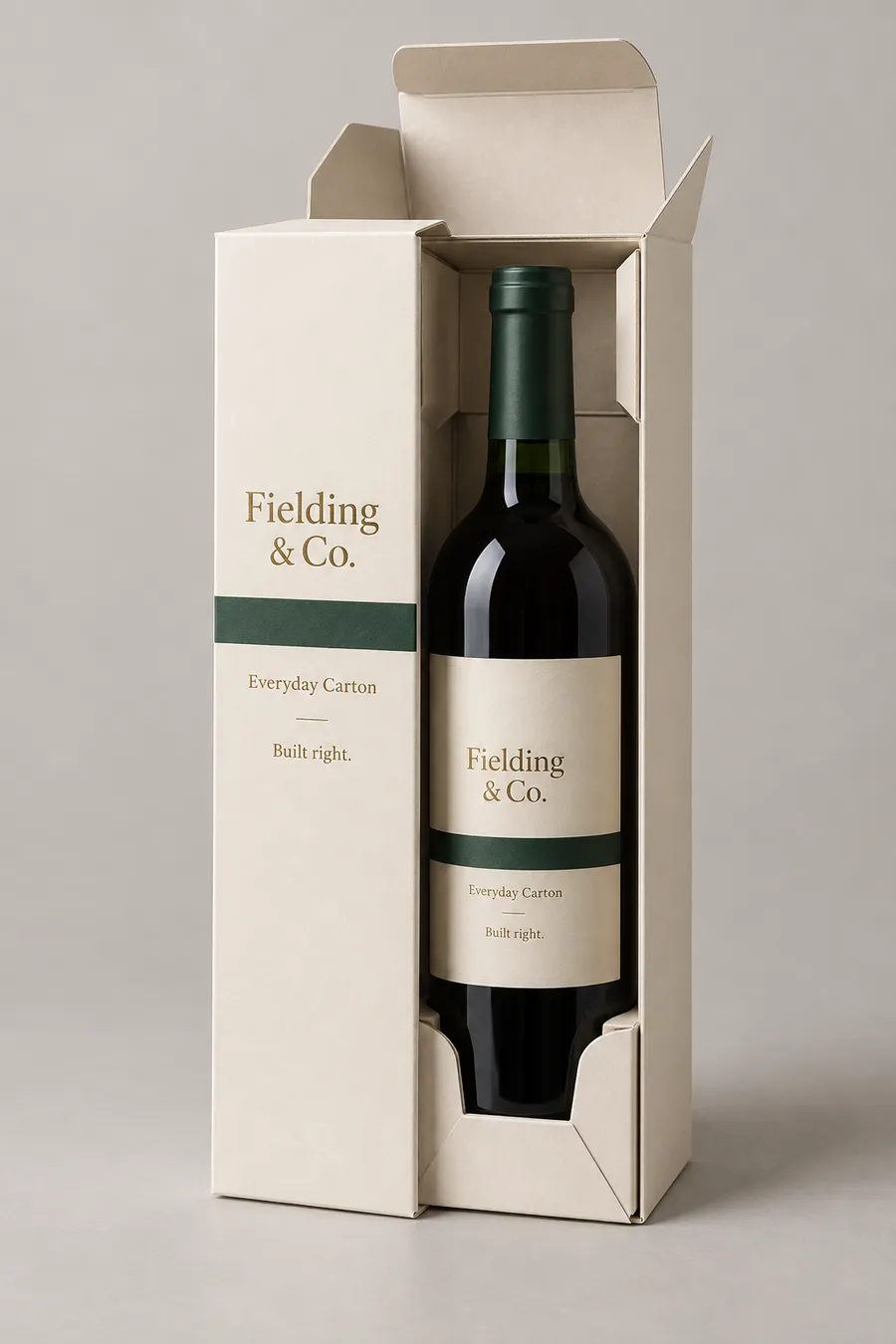
Open tall ivory cardboard wine box with one dark-green bottle in a paperboard cradle
Cardboard Boxes
Custom cardboard wine boxes shaped around a bottle or defined bottle set, with a printed exterior and a structure selected for shelf presentation, gifting, or transit. Share the packed bottle geometry and intended handoff so the closure, internal support, board direction, and finish can be reviewed together.
Last updated
Working quote
Product brief
A cardboard wine box works best when its interior is planned around the filled bottle or defined bottle set. Share the bottle height, body diameter, shoulder shape, closure, packed weight, orientation, and the number of items in the finished pack. A bottle with a long neck creates a different top-panel and clearance question from a shorter bottle or a grouped presentation set. The interior dimensions should follow the product geometry and practical clearance, then the structure can be developed around that space. This is why a wine bottle box should be quoted from the actual packed product rather than from a generic bottle category.
The same printed wine packaging can be used for several handoff routes, but the design decision changes with the job. A shelf-facing carton may put the front label panel and opening sequence first. A gift presentation may give more attention to the reveal, the top closure, and how a bottle is lifted from the pack. A transit-oriented format may need a paperboard or corrugated construction that is reviewed with the shipping route and internal support. Kraft paperboard can provide a natural surface direction, SBS paperboard can suit a smoother printed face, and corrugated board can be considered when the packed route calls for a more structured construction. The selected board remains part of the quote and specification review.
A bottle can shift, rotate, or present an awkward reveal if the interior is treated as an empty rectangle. Internal support depends on the bottle geometry, weight, orientation, fragility, structure, presentation, fulfillment route, product-to-box clearance, and desired reveal. Depending on those variables, support may be integrated into the paperboard structure or provided as a separate insert. The goal is a considered relationship between the bottle, base, side walls, neck area, and opening rather than an unsupported promise of an unnecessarily loose or tight fit. If the pack contains more than one bottle, share the arrangement and separation requirement so the divider or internal layout can be reviewed with the outside panels.
The top of a wine box has to close in a way that suits the bottle neck, the opening experience, and the printed panel that customers see first. A tuck-top, locking flap, or another folding route can be reviewed against the chosen board and the way the carton will be handled. The front panel can carry the fictional or customer-supplied wine identity, while side panels can hold product information, serving notes, origin details, or the retail information your product needs depending on formulation and destination market. Send the artwork status early so the dieline can show fold lines, cut edges, glue areas, and the reading direction before print is approved.
Foil stamping can highlight selected lettering or linework on a wine carton, subject to artwork review. Matte lamination can create a low-glare surface, while gloss lamination can provide a higher-sheen treatment. Those options should be considered with the front panel, neck area, folds, and any internal support that may be visible during opening. A natural kraft direction may call for a different ink and contrast approach from a smooth SBS face. The finished panel plan should leave clear room for the brand name and product information without turning the closure, label area, or structural seams into afterthoughts.
Orders start at 50 units, and production begins from 7 business days after digital proof approval. Free US shipping and dieline and proof review are included on the standard fulfillment path. A sample kit ships for a $44.99 charge credited toward the first order when you need to compare board feel, print treatment, or support direction in hand. Send the bottle or packed-set dimensions, weight, quantity, orientation, intended route, board preference, finish direction, and artwork status with the quote request. Quotes are typically answered the same business day and always within 24 hours.
A proof should show the bottle-facing panels, closure route, internal support, and artwork orientation as one package. Review those details before production begins so the approved specification reflects the actual bottle and the way it will be presented or moved.
Proof points
The strongest proof is specific enough to show how the bottle sits, how the carton opens, and where the customer-facing information will be read.
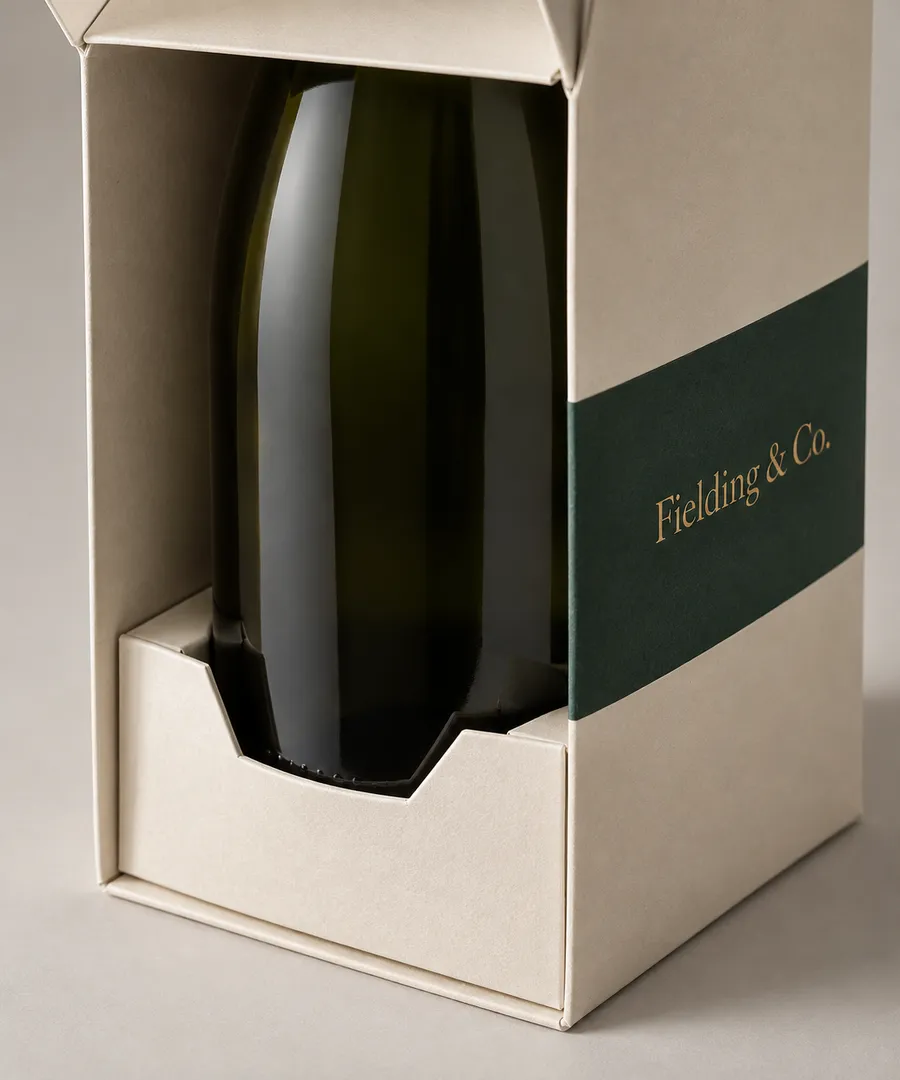
The outer panel is only one part of the package. Bottle geometry, neck clearance, base support, closure route, and the intended reveal all affect the finished carton. Share the packed product so the structural direction can be reviewed before the artwork is treated as final.
A front-facing printed panel can organize the wine identity and product information while the carton keeps the bottle enclosed.
A bottle-specific structure can give a release pack a considered opening sequence and a clear surface for the supplied artwork.
A defined bottle arrangement and internal divider can be reviewed when the pack is intended to be opened as a presentation.
A transit-oriented board direction and support plan can be considered when the finished box is moving through a delivery route.
The front panel, neck area, side walls, and closure create different reading angles for the wine identity. Choose the treatment with folds, support visibility, and artwork scale in mind.
A bottle box needs the interior and exterior to agree. The review links the packed product to the support, opening, and printed panels before production.
Height, body diameter, shoulder, closure, weight, and orientation inform the interior footprint and top-panel clearance.
A divider, cradle, or integrated paperboard feature can be considered when the product arrangement and desired reveal call for it.
Tuck or locking panels are reviewed with the bottle neck, front-facing artwork, and the way the pack will be presented or moved.
A quote is easier to evaluate when the bottle, route, structure, and artwork are described together rather than reduced to the product name alone.
Provide bottle or set height, body diameter, shoulder, closure, packed weight, quantity, orientation, and any projection that changes the interior fit.
Explain whether the box is intended for shelf presentation, gifting, a release pack, or direct-to-customer transit.
Share artwork status and any preference for kraft paperboard, SBS paperboard, corrugated board, foil stamping, matte lamination, or gloss lamination.
Confirm the bottle position, support or divider, closure route, printed panel orientation, and finish representation before production begins.
A sample kit ships for a $44.99 USD charge credited toward your first order, useful when you need to compare board feel, print treatment, or support direction before approving the wine carton.
Shipping charge: $44.99. Credited toward your first order.
Request a Sample KitCustomer reviews
5 out of 5 from 25 reviews.
We're pleased with our custom cardboard box. It protects and presents our product well, and the custom sizing made a noticeable difference for our business.
We compared several packaging options before ordering cardboard boxes. The lightweight board with accurate sizing gives our product a cleaner presentation and makes the customer experience feel more considered.
The artwork on our custom cardboard box came through clearly, and the structure feels right for retail products and small shipments. We were happy with the communication and the finished packaging.
Our team needed lightweight board with accurate sizing for our products, so we chose Easy Box Packaging for cardboard boxes. The result is sturdy, practical, and well suited to our daily packing process.
We ordered custom Cardboard Boxes for our retail products and small shipments, and the fit worked well. The lightweight board with accurate sizing made packing straightforward and the finished custom cardboard box looks professional.
We’re pleased with our custom packaging order from Easy Box Packaging. The boxes suit our products well, and we’d be happy to order again.
Find clear answers about fit, materials, and ordering below.
Share the packed height, body diameter, shoulder shape, closure, weight, orientation, and quantity. A bottle photo or side view is useful when the neck, shoulder, or base changes the interior support question.
A multi-bottle format can be reviewed when the arrangement, separation requirement, packed weight, and intended presentation are defined. The divider or internal layout should be considered with the outer carton rather than added as an assumed standard.
Kraft paperboard, SBS paperboard, and corrugated board are the category material directions. The appropriate choice depends on the bottle arrangement, printed surface, presentation, and fulfillment route described in the quote request.
Foil stamping, matte lamination, and gloss lamination are available finish directions. The chosen treatment remains subject to artwork review, especially where it meets folds, cut edges, the closure, or small lettering.
The approved standard estimate is from 7 business days after digital proof approval. Orders start at 50 units, and free US shipping is included on the standard fulfillment path.
Orders start at 50 units and scale up to 500,000 for bulk runs, with pricing from $0.22 per unit on larger quantities. Standard production is 5–7 business days from art or dieline approval.
Compare nearby products and request the format that best fits your next run.
Available product
Available product
Available product
Available product
Plan the bottle presentation
Send the packed bottle details, intended route, structure preference, and artwork status. Easy Box Packaging can then review the support, closure, board direction, and finish as one quote-ready specification.
Add your product details to see a quote summary.