Retail shelf grouping
Use the outer face for pack identification and supplied flavor information.

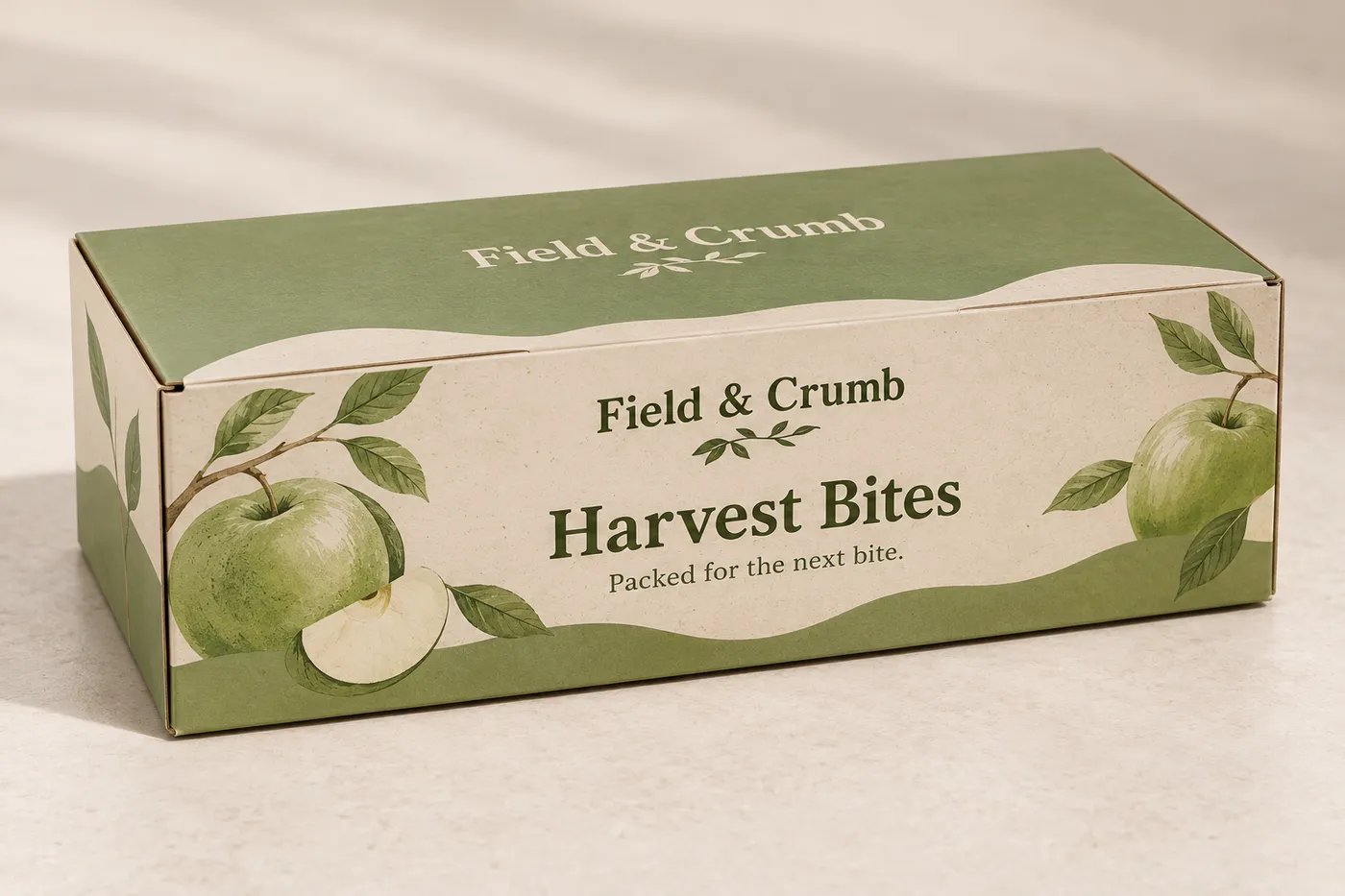
Cream and green applesauce cup carton with Field & Crumb branding and small apple illustrations.
Food Boxes
Custom applesauce cup boxes group sealed portions for retail packs, meal kits, or assortments. Discuss a printed folding carton or an outer-pack format around your cup arrangement, with board, opening, and internal support chosen for the loaded pack. The carton is secondary packaging around the cups, with space for your supplied product information.
Last updated
Working quote
Product brief
An applesauce cup box groups already sealed portions into an outer pack for presentation and handling. Start by deciding whether the carton is a retail multipack, a meal-kit component, or a small assortment. Those uses change how the cups should be revealed and removed. The cup and its lid remain the primary container; the printed carton does not replace their seal or establish the food's shelf life.
For a shelf pack, an enclosed face gives room for product identification and pack information. For a portion assortment, the opening should let a buyer see how the cups are arranged without pulling against the lid tabs. Decide which face will be presented first before laying out the carton artwork. A sideways product name may suit one display orientation but become awkward when the same pack is stacked upright.
Measure the filled, sealed cup rather than an empty container alone. Record the widest lid or rim diameter, base diameter, overall height, and any projecting pull tab. Share the intended cup count and arrangement, together with the loaded pack weight. Tapered cups can leave space around their bases even when their rims sit close together, so a drawing of the top footprint alone does not describe the whole pack.
The opening needs attention too. Tell us whether cups will be lifted individually, removed together, or taken out by staff before service. Allowance around the cup and closure should be resolved during dieline review rather than selected from a generic clearance number. A change in cup supplier, lid shape, or portion size warrants another fit review even when the printed design stays the same.
A folding carton can be discussed for a compact retail grouping, while a corrugated outer format may be relevant to a heavier delivery pack. These are specification choices, not interchangeable versions of a finished carton. The loaded weight, handling route, opening style, and cup arrangement should be considered together before selecting the structure.
Internal support may be integrated into the carton or discussed as a separate component. Its purpose depends on cup geometry, weight, orientation, clearance, presentation, and how the pack is handled. Ask that the proposed arrangement be checked for access to the lids as well as support around the cup bodies. An attractive top view alone cannot establish how a loaded pack behaves when carried or placed on its side.
Kraft paperboard and SBS paperboard are category options to discuss for the printed carton; corrugated board is another category option for an outer pack. State whether the sealed cups are packed at room temperature or handled chilled, and describe any condensation expected on the cup surfaces. The specification should address those conditions rather than imply that every printed board has a moisture barrier.
Keep direct food contact separate from outer-pack appearance. If applesauce could touch any packaging surface, identify that contact during the specification discussion. Food-contact suitability, any lining, and market requirements need confirmation for the actual use. No coating, certification, or shelf-life performance is implied by the illustration of this carton.
Give the broad face a clear product name and reserve space for your supplied pack information. Keep important wording away from the opening and folds in the proposed layout. For assortments, decide how flavor identification will work before approving the proof so the same outer design does not obscure the distinction between variants.
Matte or gloss lamination can be discussed for surface appearance, subject to the selected board and artwork review. If selected, spot UV or foil stamping may highlight a name or motif; they should not compete with small informational text. Dieline and proof review are included on every order at no extra charge. Approve the cup arrangement, opening, and printed panels together before production.
Send the cup measurements, loaded weight, pack count, intended handling conditions, order quantity, and artwork status. Include a cup sample or clear views of the sealed rim and pull tab if available. Easy Box Packaging's minimum order is 50 units. Production is from 7 business days after digital proof approval, and free US shipping is available on the standard fulfillment path. Quote requests are answered within 24 hours, typically the same business day. Unit pricing is quoted for the agreed carton specification; there is no confirmed product-specific price range to display here. The sample kit has a $44.99 shipping charge, credited toward your first order; use it to explore packaging samples while reviewing fit separately with your own cups.
Proof points
Review the applesauce pack layout and artwork before committing the design to production.
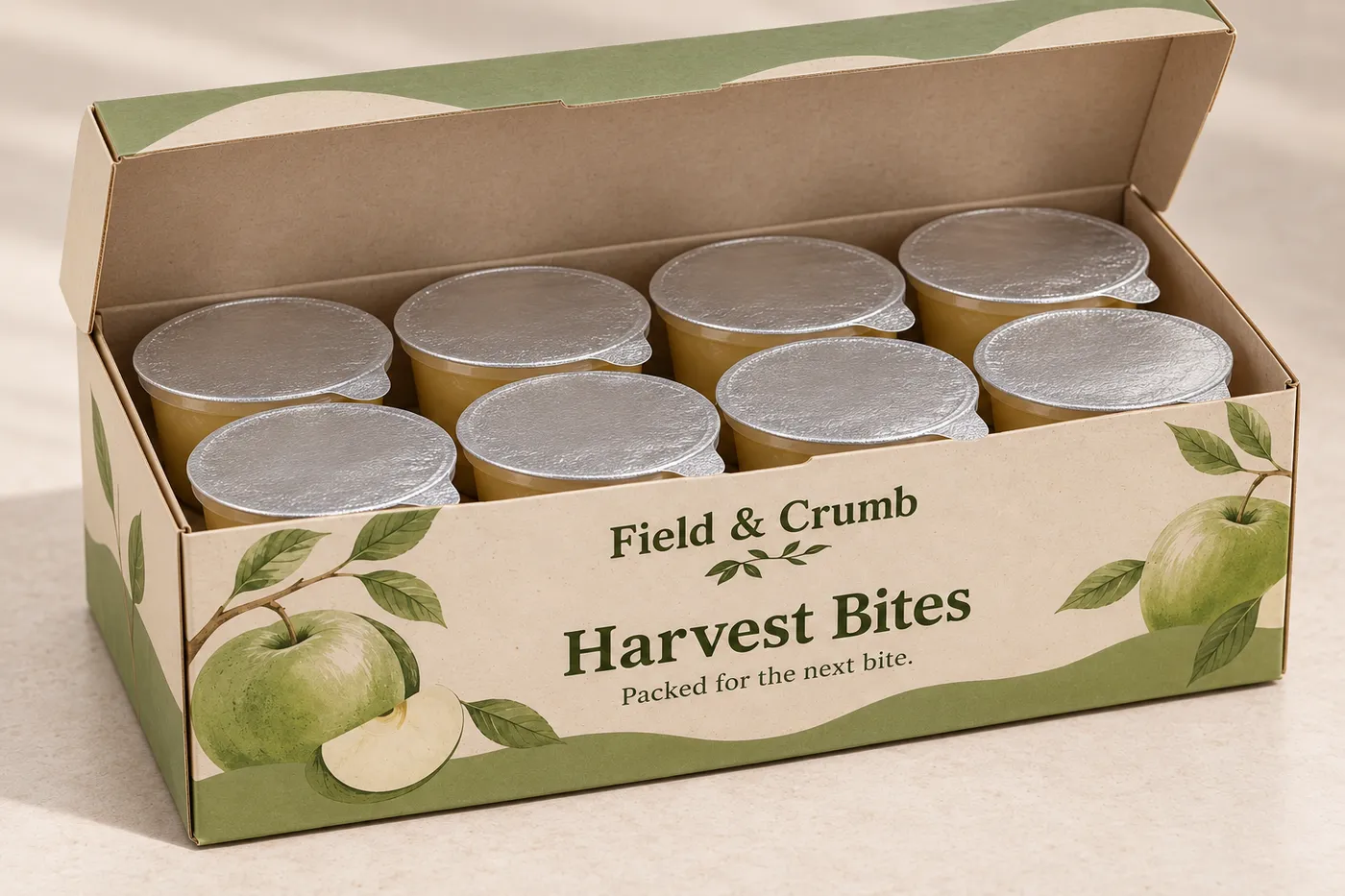
A retail face and an accessible opening serve different jobs. Identify which panel faces the shelf and how the sealed cups will be removed before approving the carton layout.
Use the outer face for pack identification and supplied flavor information.
Identify the applesauce component without covering the cups with extra individual labels.
Plan variant identification so a mixed pack can distinguish the enclosed portions.
Balance the printed name with space for your supplied pack information. Finish choices should be reviewed against the folds, opening panel, and selected board.
Cup rims, tapered bodies, and lid tabs all affect a multipack. Assess internal support with the actual loaded weight, orientation, clearance, and handling route.
Show where the pull tabs project so the proposed opening can be reviewed around them.
Describe whether the applesauce pack is carried by hand, placed in a meal kit, or sent inside another box.
Bring the sealed cup format and artwork into the same review so production follows an agreed pack design.
Provide cup measurements, loaded weight, count per pack, handling conditions, and order quantity.
Check the arrangement, opening, and any internal support against the cups.
Confirm printed wording and panels before production begins.
Need help with structure, materials, or production planning? See how we manufacture custom packaging.
The sample kit has a $44.99 shipping charge, credited toward your first order. It does not replace a fit review with your applesauce cups.
Shipping charge: $44.99. Credited toward your first order.
Request a Sample KitFind clear answers about fit, materials, and ordering below.
No. This is an outer carton around sealed portion cups; it does not establish the cup seal or food shelf life.
Recheck the rim, base, height, and lid tab before reusing artwork. A changed cup format may require a new dieline even when the structural style stays similar.
Describe temperature and condensation conditions before choosing the board. Moisture performance and any lining require confirmation for the intended use.
Your final unit price is confirmed in a quote for the agreed dimensions, construction, quantity, and print specification. No confirmed product-specific range is available.
Custom applesauce cup boxes group sealed portions for retail packs, meal kits, or assortments. Each order is made to order around your packed product and artwork, and the specification is confirmed against a digital proof before production.
Common uses include retail shelf grouping, meal-kit portion sets, and flavor assortments. The final specification is set by the packed product and how it will be handled.
The standard minimum order for Applesauce Cup Boxes is 50 units. Each order is built around your packed product, artwork, and quantity, and the details are confirmed in your quote.
Compare nearby products and request the format that best fits your next run.
Available product
Available product
Available product
Available product
Your sealed cups, your carton brief
Send the cup format, intended pack count, handling conditions, and artwork status to scope your order.
Add your product details to see a quote summary.