Retail jar cartons
A single scented jar can sit behind a measured opening with the label and fragrance name facing the intended shelf view.

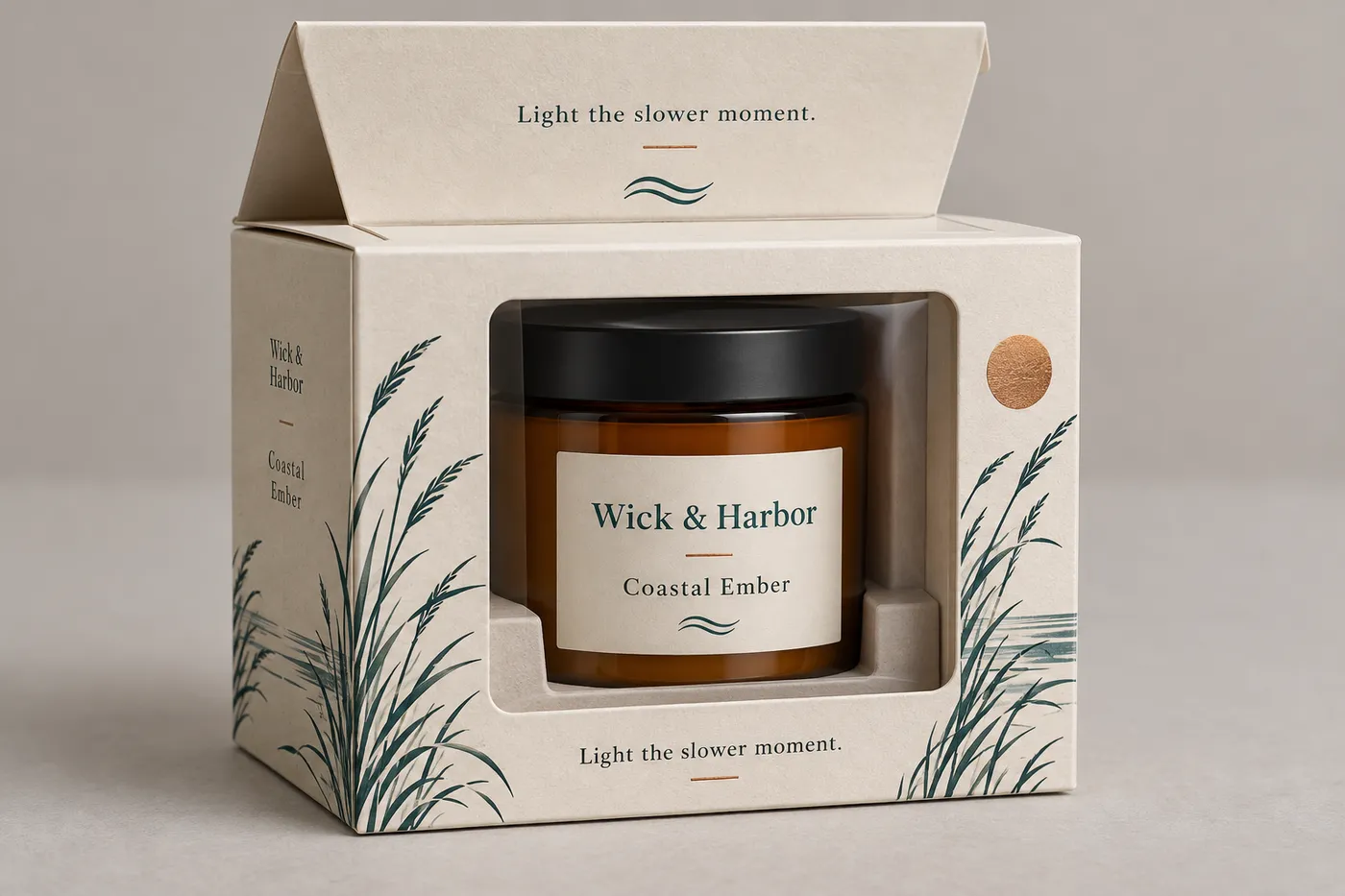
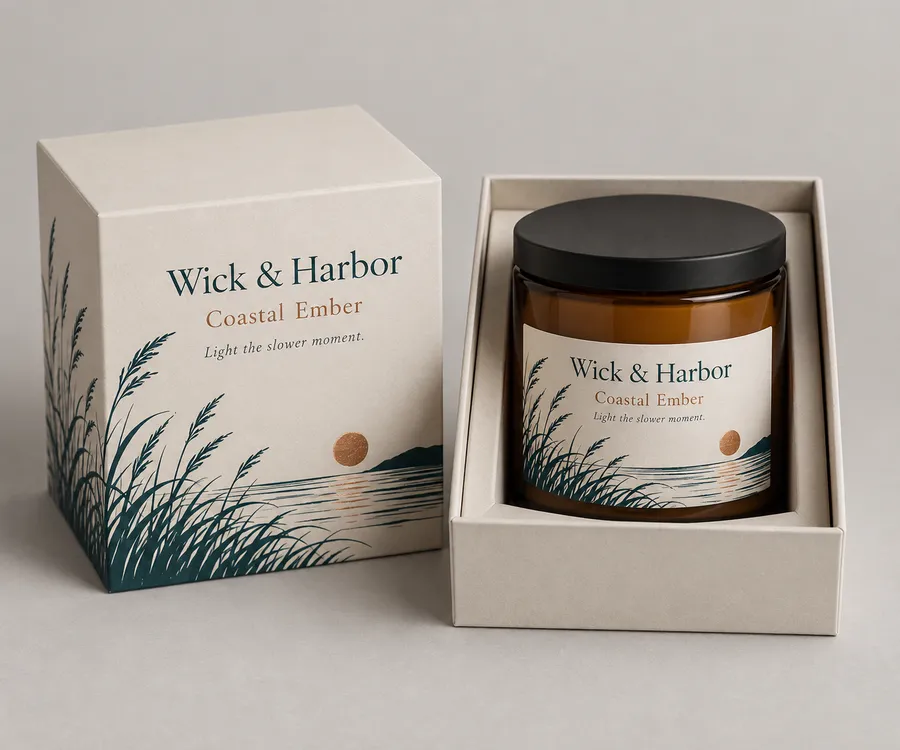
An ivory candle carton displays an amber jar through its clear front window.
Candle Boxes
Candle boxes with a window let customers see the jar or tin while the printed carton carries the fragrance story and brand system. The window opening, film, closure, and any insert are planned around the vessel's widest point and full height, including the lid. Share the packed dimensions, material direction, finish priorities, and shelf or shipping route so the box is reviewed as one assembled product.
Last updated
Working quote
Product brief
Candle boxes with a window give a shopper a controlled view of the jar, tin, or label without asking them to open the carton. That visibility is useful only when the opening is placed around the product that should be seen. The starting point is the packed candle, not a nominal small or medium size. Measure the vessel at its widest point and include the lid, label, wrap, and any insert that changes the view. A well-positioned window can show the candle surface or front label while the surrounding printed panel carries the fragrance name, care copy, and brand artwork.
A window is a construction choice, not a promise that every candle should be fully exposed. A small die-cut opening can reveal a label and keep more of the carton available for copy. A wider opening can show the vessel material or wax, but it also reduces the printable area and may need a clear film to control dust and handling. The window shape, corner radius, fold location, and closure must be reviewed together so the cut does not cross a seam or weaken the handhold.
The standard fulfillment path starts at 50 units, and production is from 7 business days after digital proof approval. Pricing is quote-only because the carton footprint, window size, film or open cut, insert choice, print coverage, finish, quantity, and destination change the specification. Free US shipping and dieline and proof review at no extra charge are included on the standard path.
Send the outside diameter or packed length and width at the widest points, overall height including the lid, approximate weight, label or sleeve thickness, and any shoulder, taper, rim, or closure that changes the profile. A round jar can have a projecting lid or stepped base that shifts the useful view. The window should be sized against the part of the product customers should identify, while the carton leaves enough board around folds and edges. If a paperboard insert raises the jar toward the opening, include that height in the assembled review.
A product photo or physical sample is useful when the vessel has a curved shoulder, unusual base, glossy lid, or label that needs to align with the window. Note which face should lead the opening and whether the customer should see the fragrance label, wax surface, or a secondary mark. If the pack includes matches, a card, or another accessory, show the actual arrangement and the spacing between pieces rather than assuming the window can reveal all contents at once.
An open die-cut window can keep the pack simple when the route is short and the visible product can be handled without scuffing. Clear film can protect the opening when the carton will travel through retail handling or an e-commerce parcel. The film choice should be considered with the board, adhesive area, label position, and the way the customer will touch or lift the pack. A fitted paperboard insert can keep a jar centered and place its label behind the opening; it can also prevent the vessel from moving into a cut edge.
SBS Paperboard can provide a smooth printed face for a fragrance name, burn instructions, and a clean window border. Kraft Paperboard can support a warmer fiber-led direction when the artwork should retain more paper character. Corrugated Board can be considered when the pack also needs a more shipping-oriented outer structure. The board decision belongs with vessel weight, window span, support relationship, carton size, and fulfillment route. No single material is assumed for every candle format.
A folding carton can keep one candle light and easy to assemble. A more substantial base or divided construction can be considered when the opening sequence, set arrangement, or shipping route needs additional support. The window, insert, closure, and printed panels should be evaluated as one assembled pack. Share whether the box will sit on a retail shelf, travel in a parcel, be handed over at a market, or arrive as part of a seasonal subscription.
The outside panels should carry the brand, product name, scent description, burn or care information, and any required customer-facing copy supplied in the artwork. Leave a deliberate quiet area around the window so the product remains legible instead of competing with dense text. Matte Lamination can create a low-glare surface for small reading copy, while Gloss Lamination changes the way the printed face reflects light. Spot UV can isolate a logo or line detail outside the viewing area. Foil Stamping and Embossing/Debossing can be reviewed for a name, border, or tactile mark when the artwork and board support the treatment. Finish placement remains subject to artwork review around folds, seams, cut edges, and small text.
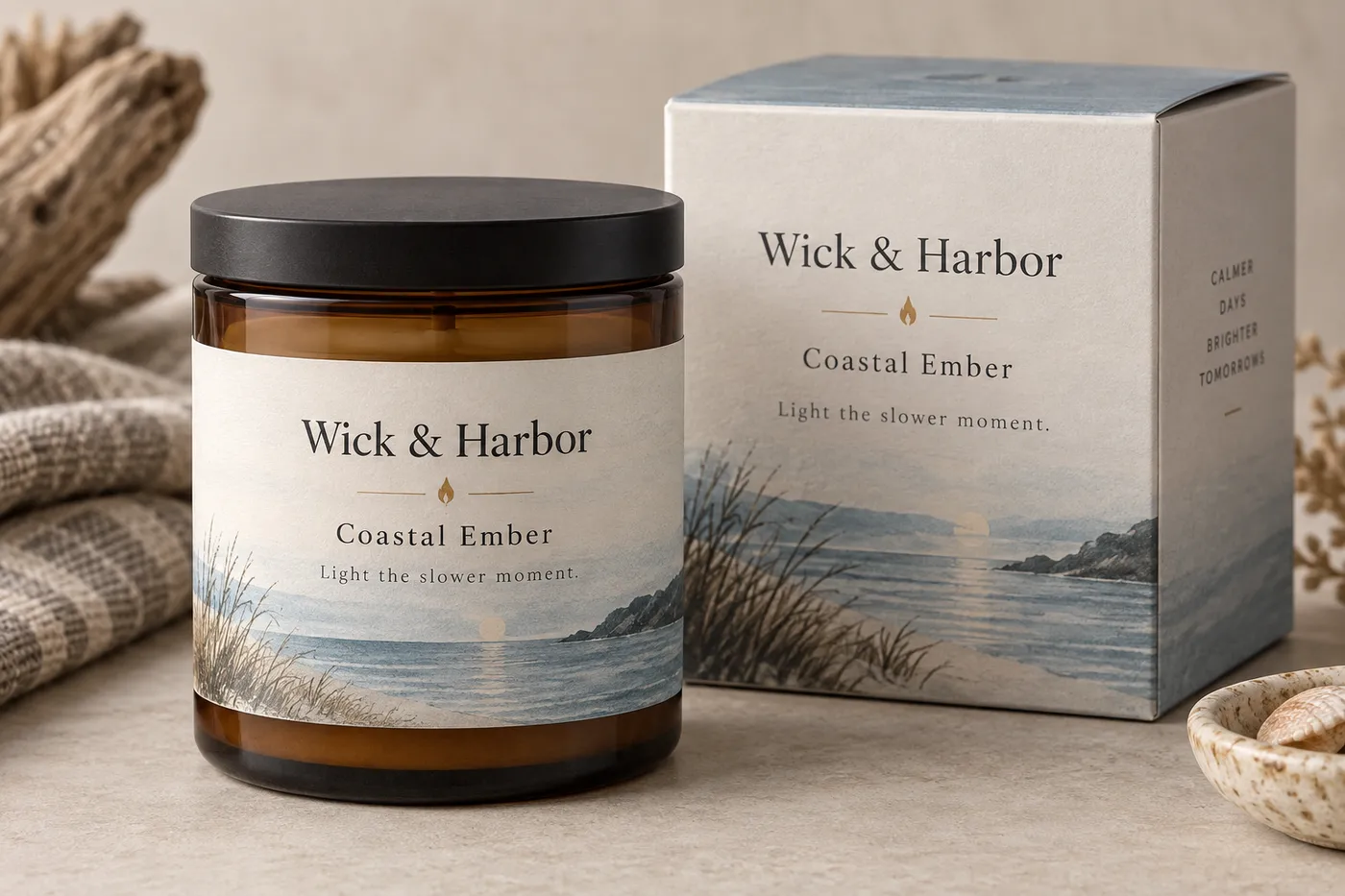
The images illustrate how print can sit on the package. Replace it with approved brand, fragrance, ingredient, safety, and regulatory copy for production. Reviewing the artwork on the assembled box helps keep the front panel, window reveal, side copy, film edge, and closure orientation in the right relationship.
A single jar for a retail shelf can use a window that keeps the label facing the intended presentation side while the carton protects the remaining surfaces. A shallow tin can use a smaller opening that confirms the product without giving up all the printable area. A candle-and-matches gift set may use a window for the candle and a separate printed panel for the accessory. A seasonal or subscription candle may repeat one outer identity while changing the cavity and window placement for a different jar or tin. An e-commerce pack can use film and an insert when the route makes an open cut vulnerable to dust or scuffing.
For each use case, provide the number of items, packed orientation, desired opening, and any tissue, card, sleeve, or divider inside the carton. The customer-facing result should feel considered because the product and viewing area agree, not because the copy promises an outcome outside the packaging specification.
Send the vessel measurements, window preference, quantity per box, insert or film preference if known, artwork status, material direction, finish priorities, and delivery destination. Easy Box Packaging can review the outer construction, window location, film or cut edge, printed panels, and removal path against that brief. Quote requests are typically answered the same business day and always within 24 hours.
After the dieline is prepared, check the assembled view rather than only a flat artwork file. Confirm the vessel clearance, lid relationship, window registration, film edge, label orientation, fold positions, finish areas, and copy legibility. Production starts from 7 business days after digital proof approval. The standard fulfillment path starts at 50 units, and a sample kit carries a $44.99 USD shipping charge credited toward the first order when you need to compare board feel, print, window clarity, and handling in hand.
A useful candle pack makes the vessel easy to identify, keeps the opening sequence understandable, and gives the printer a specific surface to reproduce. A clear measurement brief lets the window, insert, carton, material, and artwork be reviewed as one product instead of as disconnected options.
Proof points
Review the assembled pack so the outer carton, window, film or cut edge, vessel, and printed panels can be checked as one product before approval.
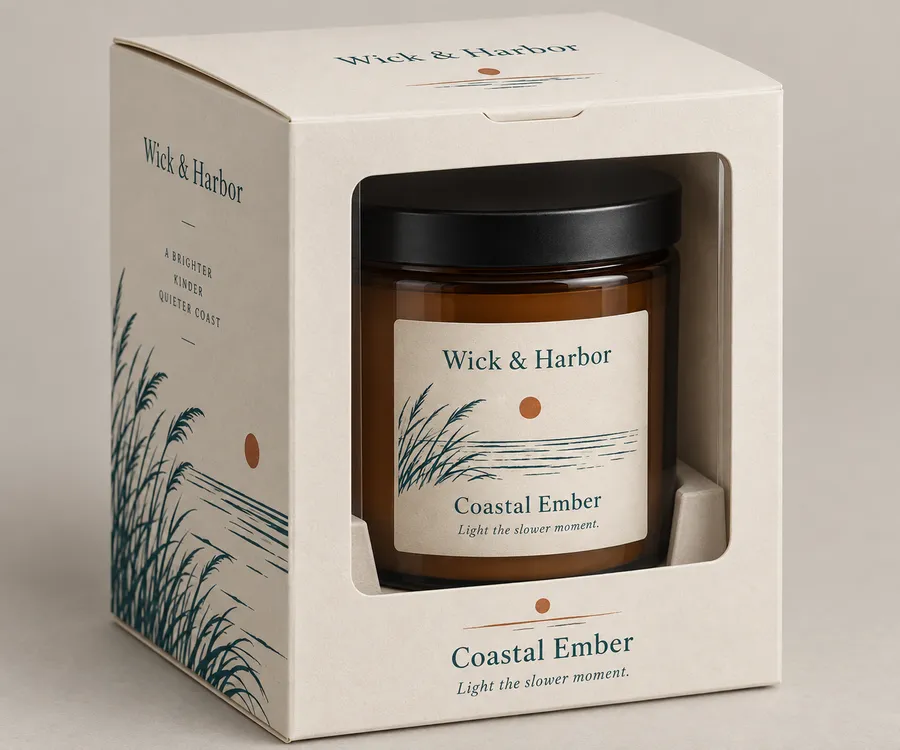
The opening should frame a useful part of the jar or tin while leaving enough board for structure and copy. Start with the full packed profile, desired reveal, film or open-cut direction, and shipping route so the support and outer carton can be reviewed together.
A single scented jar can sit behind a measured opening with the label and fragrance name facing the intended shelf view.
A shallow tin can use a restrained window that confirms the product while leaving board for care copy and brand artwork.
A window can reveal the candle while a separate printed panel or divided support organizes matches and a card.
A repeatable printed carton can carry seasonal artwork while the cavity and window are checked against the vessel used for that edition.
Map fragrance, care, and brand information on the assembled box so the front, sides, window border, folds, and closure remain correctly oriented. Finish choices should be reviewed with the artwork and board together.
A window can show a label, wax surface, or vessel material, but its size and position depend on geometry, weight, fragility, orientation, and handling. A measured insert may center the product and hold the reveal in place, while clear film can protect an opening on a longer route.
A die-cut opening can frame the jar or tin label while the surrounding carton carries fragrance, care, and brand copy.
An open cut or clear film can be considered with the route, touch points, dust exposure, and the desired product visibility.
An insert can center the vessel and keep the lid, label, and visible face aligned with the window rather than moving into a cut edge.
A useful quote starts with the candle as it will actually be packed. These steps give the structural and print review enough information to distinguish an open-cut carton from a filmed, insert-supported window pack.
Provide packed diameter or length and width, overall height including the lid, approximate weight, widest points, label, rim, taper, and closure.
State whether the window should show a label, wax surface, vessel material, or another face, and identify the opening orientation.
Share whether an open cut, clear film, insert, or divided support is preferred, along with the desired handling route.
Note any preference for SBS Paperboard, Kraft Paperboard, Corrugated Board, Matte Lamination, Gloss Lamination, Spot UV, Foil Stamping, or Embossing/Debossing.
Check the assembled panels, window registration, film edge, vessel position, fold areas, finish placement, and copy legibility in the digital proof.
Need help with structure, materials, or production planning? See how we manufacture custom packaging.
A sample kit carries a $44.99 USD shipping charge credited toward your first order, useful when comparing paperboard feel, printed color, finish direction, window clarity, and how a vessel sits behind an opening.
Shipping charge: $44.99. Credited toward your first order.
Request a Sample KitFind clear answers about fit, materials, and ordering below.
Send the outside diameter or packed length and width at the widest points, overall height including the lid, approximate weight, label or sleeve, and any shoulder, taper, rim, or closure. Note the product face the window should reveal and include the arrangement when more than one item will be packed.
Either direction can be considered. An open cut may suit a short route and a protected shelf setting, while clear film can help control dust and handling on a longer route. The choice depends on the board, window size, touch points, and fulfillment path.
No. An insert depends on vessel geometry, weight, fragility, orientation, window alignment, shipping route, outer structure, and desired reveal. A single jar, shallow tin, and multi-item set can each call for a different support decision.
SBS Paperboard, Kraft Paperboard, and Corrugated Board are the category material directions. Matte Lamination, Gloss Lamination, Spot UV, Foil Stamping, and Embossing/Debossing can be considered for selected artwork, subject to review around the opening, folds, seams, cut edges, and small text.
The standard fulfillment path starts at 50 units. Production begins from 7 business days after digital proof approval, with free US shipping and dieline and proof review included at no extra charge. Your final unit price is confirmed in a quote because the vessel, window, support, structure, artwork, finish, and quantity determine the specification.
The outer identity can be adapted, but each vessel and window should be reviewed as its own packed profile. A jar diameter, lid height, label position, or set arrangement can change the cavity, opening, support, closure, and visible artwork area.
Orders start at 50 units and scale up to 500,000 for bulk runs, with pricing from $0.35 per unit on larger quantities. Standard production is from 7 business days after digital proof approval.
Compare nearby products and request the format that best fits your next run.
Available product
Available product
Available product
Available product
Plan the visible candle
Send the candle measurements, desired reveal, cut or film preference, artwork status, material direction, and finish priorities. Easy Box Packaging can then review the carton, window, support, printed panels, and removal path as one quote-ready specification.
Add your product details to see a quote summary.