Individual scented candle
A single jar can sit in a measured base with the label, lid, and opening reveal treated as one presentation.

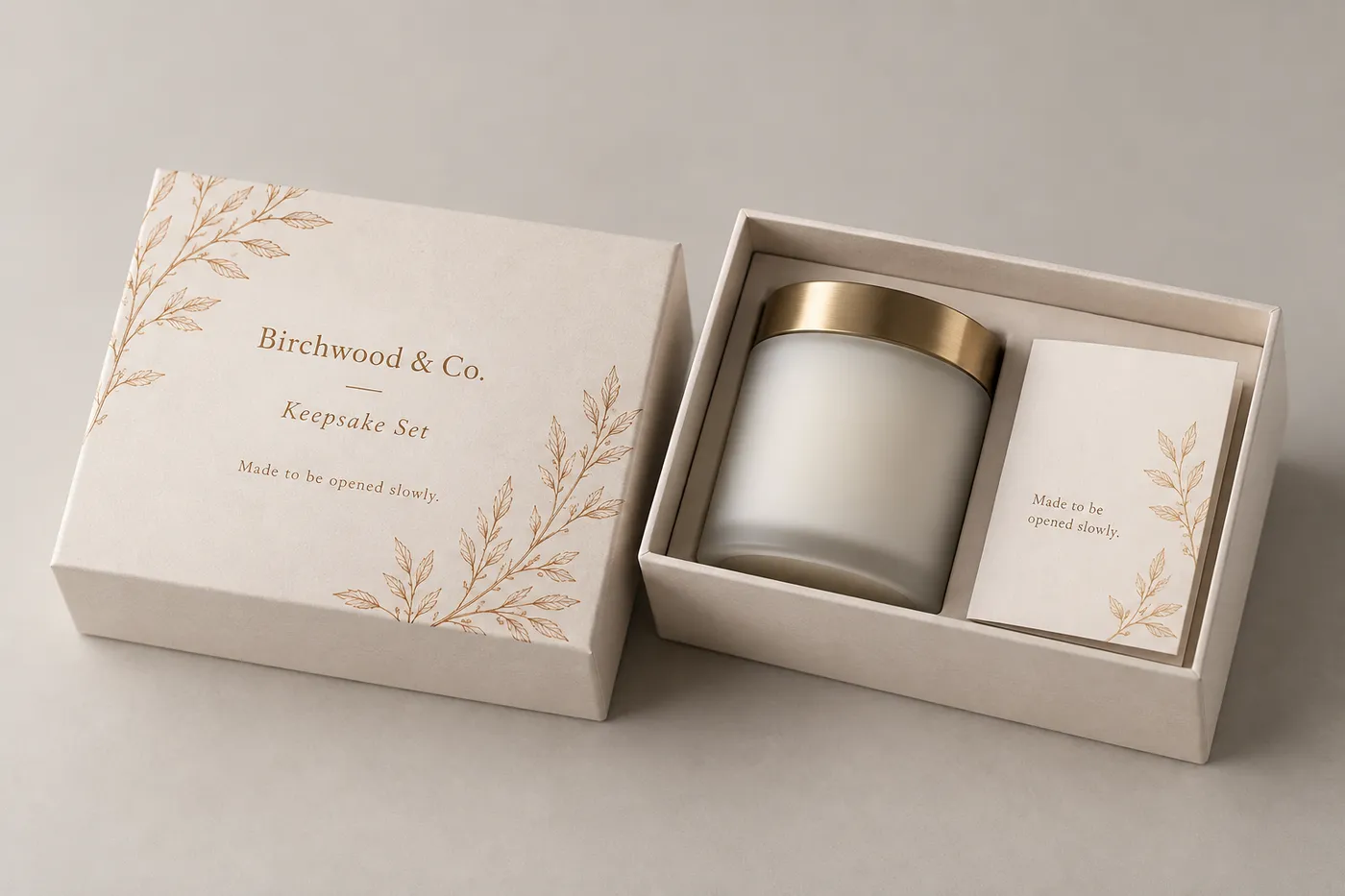
Open warm-ivory rigid candle gift box with a candle jar, card, and lift-off lid
Gift Boxes
Custom candle gift boxes developed around one candle jar, its lid, and the moment the recipient opens the package. A rigid two-piece base and lift-off lid create a defined presentation, while paperboard choice, internal support, artwork, and finish are reviewed against the actual jar rather than a stock size.
Last updated
Working quote
Product brief
Candle gift boxes are presentation packaging for a candle that needs to arrive as a complete gift rather than as a jar placed in a generic carton. The useful starting point is the filled candle, its lid, and the way the recipient should encounter it. A compact glass jar with a flat lid creates a different brief from a tall vessel with a raised cover, and a candle packed with a message card needs a different interior relationship from a candle packed alone. Describe the real item before choosing a nominal box size.
For a single candle, a rigid two-piece box with a separate lift-off lid can make the opening sequence part of the presentation. The base gives the jar a defined place, while the lid carries the printed identity before it is removed. A folding construction may suit a different storage or handling brief, but this page focuses on the rigid gift-box direction so the structure, support, and printed surface tell one story. Candle gift boxes for a multi-jar collection should be scoped as a set because each additional container changes the interior layout and outer footprint.
Send the filled jar diameter, widest point, overall height with the lid on, base shape, lid profile, and any label or collar that changes how the container sits. If the candle has a raised lid, a handle, an uneven shoulder, or a vessel that tapers toward the base, include those details rather than relying on a product photo alone. The packaging team also needs to know whether the jar stands upright, whether the lid stays on during packing, and whether a message card or care card travels in the same box.
The outer box is then considered around the packed footprint and the intended removal path. A close presentation may keep the candle visually centered, while a card or support component may change the available space around it. Product-to-wall clearance, base depth, and the lid-to-base relationship are confirmed during specification and dieline review; they should not be guessed from the phrase candle box. If the candle vessel changes after the first brief, the size-specific review should be revisited because a new height or diameter can change both the cavity and the outer proportions.
A paperboard insert or fitted support is not a default promise and should not be selected from jar weight alone. The decision can involve the vessel geometry, filled weight, glass fragility, lid shape, orientation, outer structure, product-to-box clearance, desired reveal, and the way the completed gift will be handled. Depending on that combination, support may be integrated into the paperboard structure or supplied as a separate paperboard component.
For one straight-sided jar, a simple base relationship may keep the opening clear and let the label remain the focal point. A tapered vessel, a heavy filled candle, or a jar with a projecting lid may need a more deliberate support arrangement. If a card is included, its position should be considered with the insert and the lid so it does not hide the first view of the candle. Share a photo or sample description of the filled vessel and state what the recipient should see when the lid lifts. That information is more useful than asking for a generic insert.
SBS Paperboard and Kraft Paperboard are the category material directions to review. SBS Paperboard can suit a clean printed face when the candle label and outer artwork need a controlled surface. Kraft Paperboard can suit a warmer paper character when the brand direction calls for a natural-looking presentation. The board direction should be considered with the rigid structure, packed candle, printed coverage, and handling route rather than chosen from color alone.
Foil Stamping can call attention to a selected brand line, border, or small area of lettering, subject to artwork review. Embossing/Debossing can add a raised or recessed tactile treatment when the board and design are suitable. Spot UV can create localized contrast, while Matte Lamination and Gloss Lamination offer different surface directions for the printed panels. These finishes should be checked against the artwork, lid edge, folds, and the scale of the printed message. No finish should be treated as a universal answer for every candle label or every vessel shape.
A single candle gift box gives one jar the visual space to lead the opening. It can suit an individual scented candle, a seasonal release, a client gift, a wedding favor with one vessel, or a small keepsake candle where the label and lid should remain easy to recognize. A candle gift set is a different structural job: multiple jars or tins need separate positions, and the box must be planned around the count and combination of containers. If the brief includes two or more candles, say so before quotation so the interior is evaluated as a set rather than treated as a larger single cavity.
The same distinction applies to the message inside. One candle with a folded card can use the card as a secondary reveal, while a collection of scents may need dividers, a stepped arrangement, or a different opening order. The packaging should follow the actual product experience instead of stretching one single-candle structure across every gift format.
On the standard fulfillment path, the minimum order is 50 units, production starts from 7 business days after digital proof approval, and free US shipping is available. A sample kit carries a $44.99 shipping charge credited toward the first order, which can help you compare paperboard feel, printed coverage, and finish direction before committing to the final candle gift box. This product remains quote-only because the approved source material does not provide a defensible candle-specific unit price.
To request a quote, send the filled jar dimensions, lid profile, vessel material, intended quantity, orientation, message-card details, preferred rigid structure, artwork status, paperboard direction, finish preference, and delivery destination. Explain whether the box will be handed over at an event, placed in a retail presentation, shipped as a customer gift, or used for a seasonal launch. Those details help the specification review address the actual opening and handling context.
After the structure and packed contents are understood, the dieline and artwork can be reviewed together. Mark the lid panel, base panels, interior area, card position, and any foil, embossing, debossing, Spot UV, Matte Lamination, or Gloss Lamination direction that should be considered. A digital proof is approved before production, and the standard estimate begins from 7 business days after that approval. If the jar, lid, card, quantity, or finish changes before approval, share the change so the box can be reviewed against the updated brief.
Proof points
The package is assessed as one presentation object: rigid structure, filled vessel, support, printed panels, and surface finish need to work together around the actual candle.
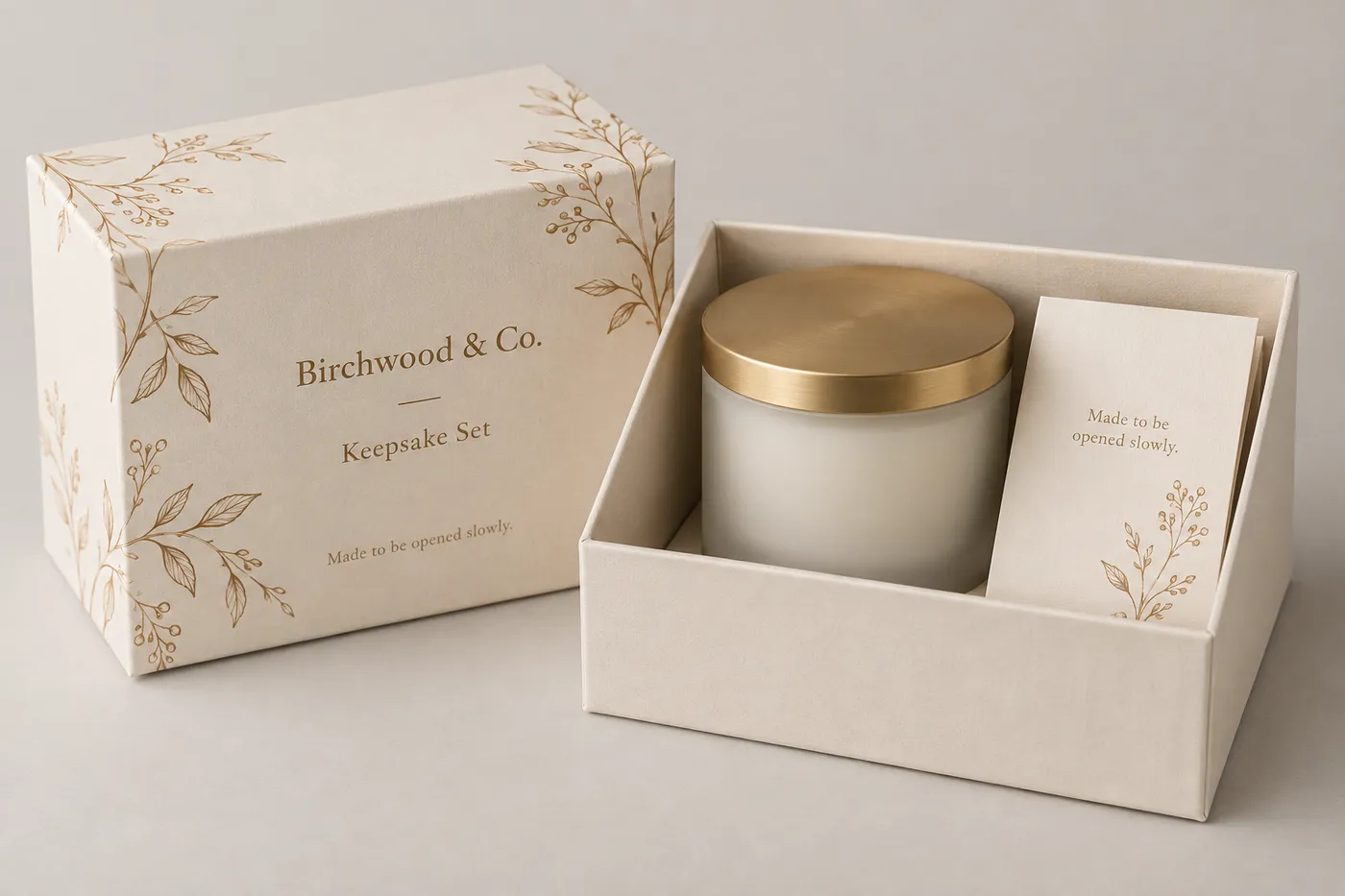
The base is reviewed around the filled jar diameter, widest point, height with the lid on, vessel shape, and removal path. The separate lift-off lid is then matched to the base, with any card or paperboard support included in the packed specification rather than added after the outer size is chosen.
A single jar can sit in a measured base with the label, lid, and opening reveal treated as one presentation.
A seasonal printed lid and selected finish can frame one vessel without changing the need to review its exact height and diameter.
One compact candle and a folded message card can share a rigid gift box when the handoff and card position are defined before quotation.
A single candle can use the lift-off opening and printed panels to create a considered handover for a launch or client presentation.
The lid and base panels can carry a coordinated candle identity, with material and finish choices reviewed against the artwork scale, vessel context, and desired surface character.
A useful candle-box brief connects the vessel, opening moment, and printed surface before artwork is locked. That keeps the support decision tied to the real jar instead of a generic insert assumption.
Provide the jar diameter, widest point, height with lid, base profile, taper, collar, and any raised or projecting lid feature.
Describe whether the jar should appear immediately, whether a folded card sits alongside it, and how the lift-off lid should frame the first view.
Mark the lid, base, interior, card position, and any selected Foil Stamping, Embossing/Debossing, Spot UV, Matte Lamination, or Gloss Lamination direction.
The ordering path starts with the filled vessel, then confirms the rigid structure, support, printed panels, and digital proof before production.
Provide filled jar diameter, widest point, height with lid, base shape, lid profile, orientation, and any card or collar.
Describe the lift-off opening, desired reveal, paperboard direction, and whether the box is for one candle or a larger set.
Confirm any paperboard support, card position, visible panels, artwork status, and selected finish direction.
Check the dieline, lid-to-base relationship, print placement, and interior arrangement before production begins.
Need help with structure, materials, or production planning? See how we manufacture custom packaging.
Request a sample kit to compare paperboard feel, printed coverage, and finish direction before placing an order. The sample-kit shipping charge is $44.99 and is credited toward the first order.
Shipping charge: $44.99. Credited toward your first order.
Request a Sample KitFind clear answers about fit, materials, and ordering below.
Share the filled jar diameter, widest point, height with the lid on, base profile, lid shape, orientation, and any card or collar packed with the candle. A photo or sample description helps clarify unusual shoulders, tapers, or projecting features.
A rigid two-piece base and lift-off lid can suit a single candle when the opening moment and presentation structure matter. The final fit is reviewed around the real vessel, its lid, any support, and the way the recipient will remove the candle.
Not necessarily. Support depends on the vessel geometry, filled weight, glass fragility, lid profile, orientation, outer structure, clearance, desired reveal, and handling context together. An integrated or separate paperboard support can be reviewed when those factors call for it.
Yes, a folded message or care card can be included in the packaging brief. Its size and position should be reviewed with the jar, support, lid, and desired first view so it does not alter the intended opening sequence unexpectedly.
Your final unit price is confirmed in a quote because the approved source material does not provide a defensible candle-specific unit price. The quote can reflect the vessel profile, rigid structure, support, quantity, artwork, finish, and destination rather than applying a generic price.
Yes. A sample kit has a $44.99 shipping charge credited toward the first order, allowing you to compare paperboard feel, printed coverage, and finish direction before production.
Orders start at 50 units and scale up to 500,000 for bulk runs, with pricing from $0.23 per unit on larger quantities. Standard production is from 7 business days after digital proof approval.
Compare nearby products and request the format that best fits your next run.
Available product
Available product
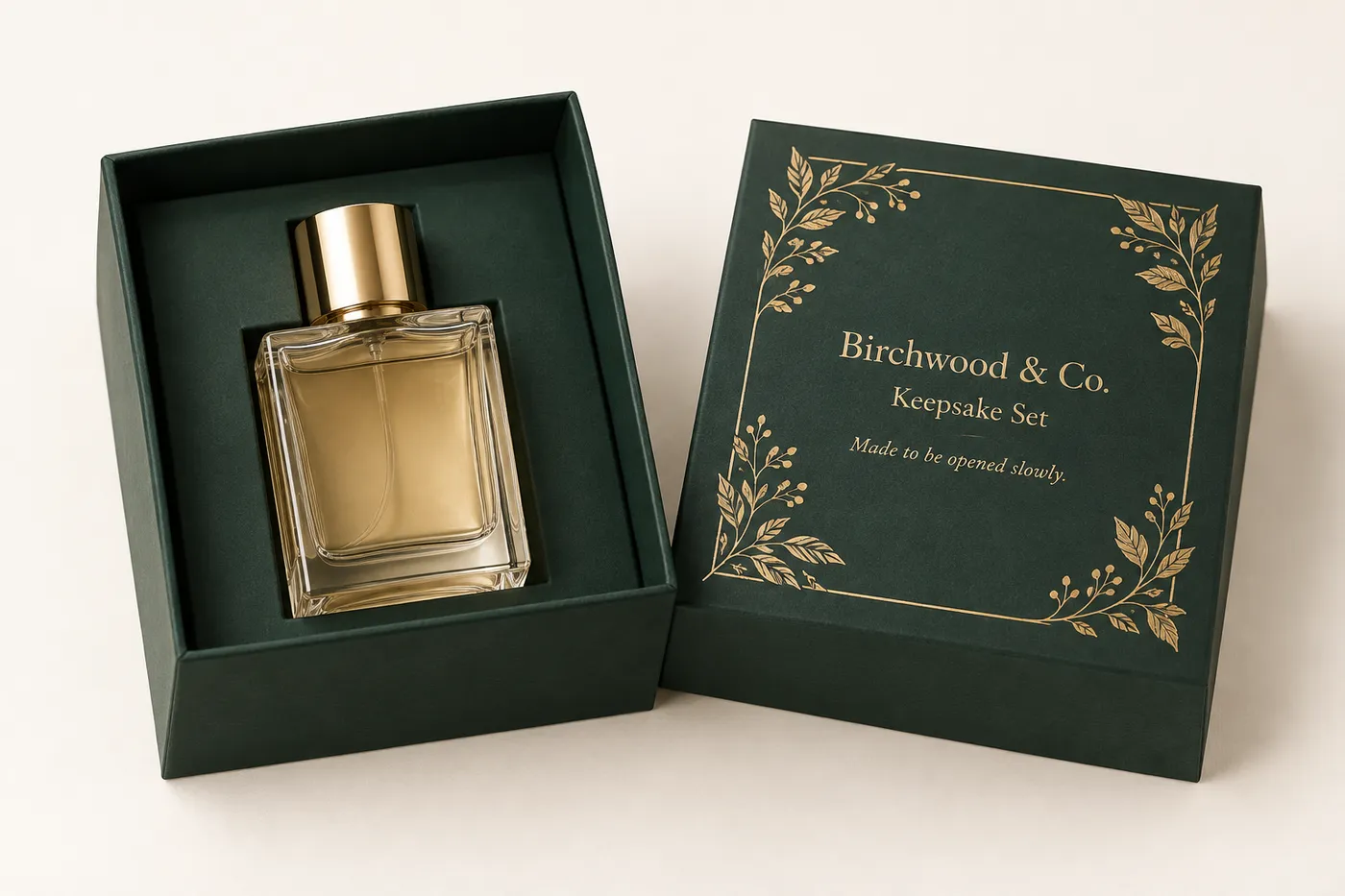
Available product
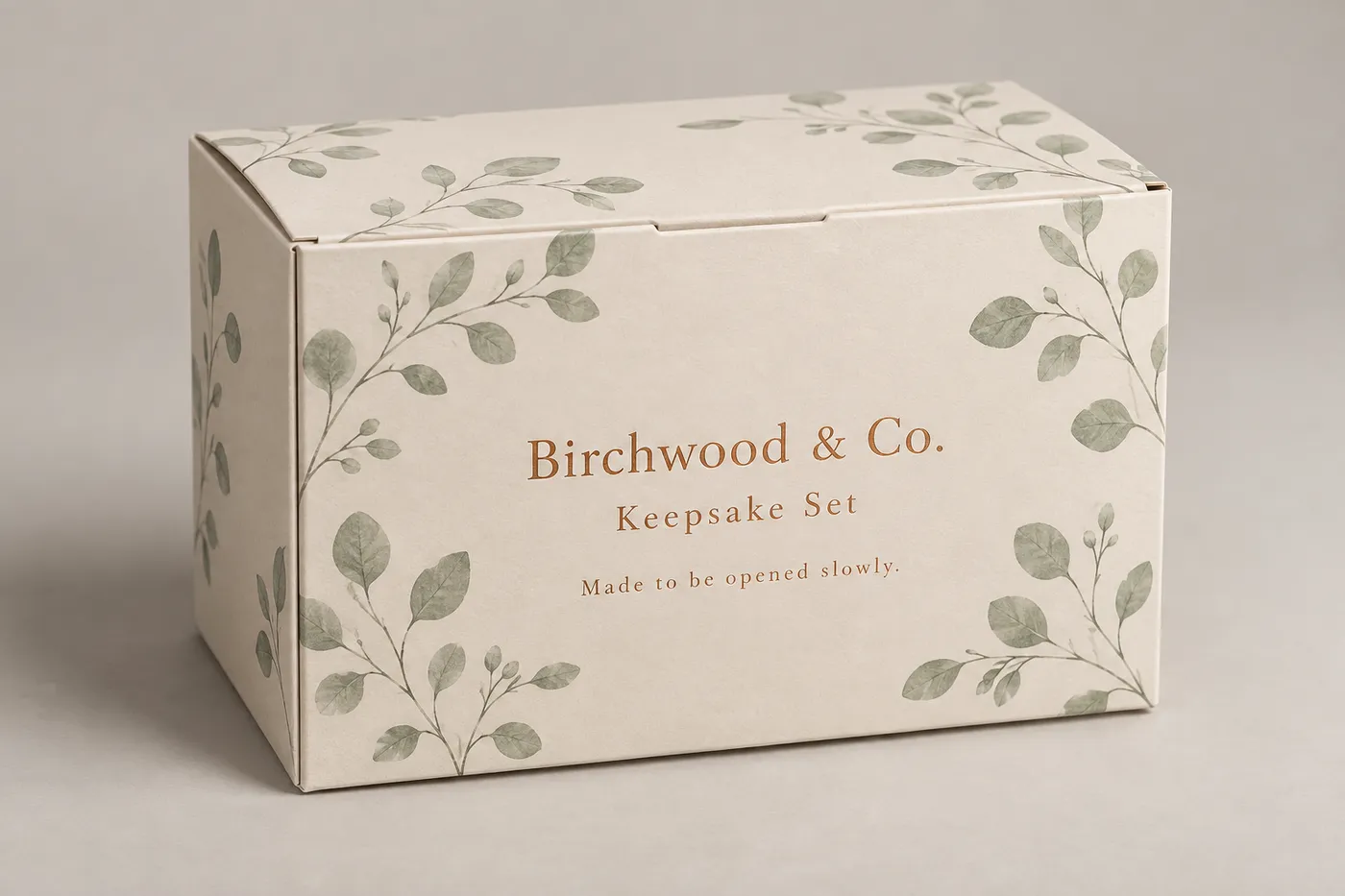
Available product
Prepare a candle packaging brief
Send the candle dimensions, lid profile, intended quantity, support needs, artwork status, and finish direction for a quote-ready review.
Add your product details to see a quote summary.