Skincare and fragrance
A bottle or jar can be revealed from the tray with the outer sleeve carrying the brand story and the inner space protecting the presentation.

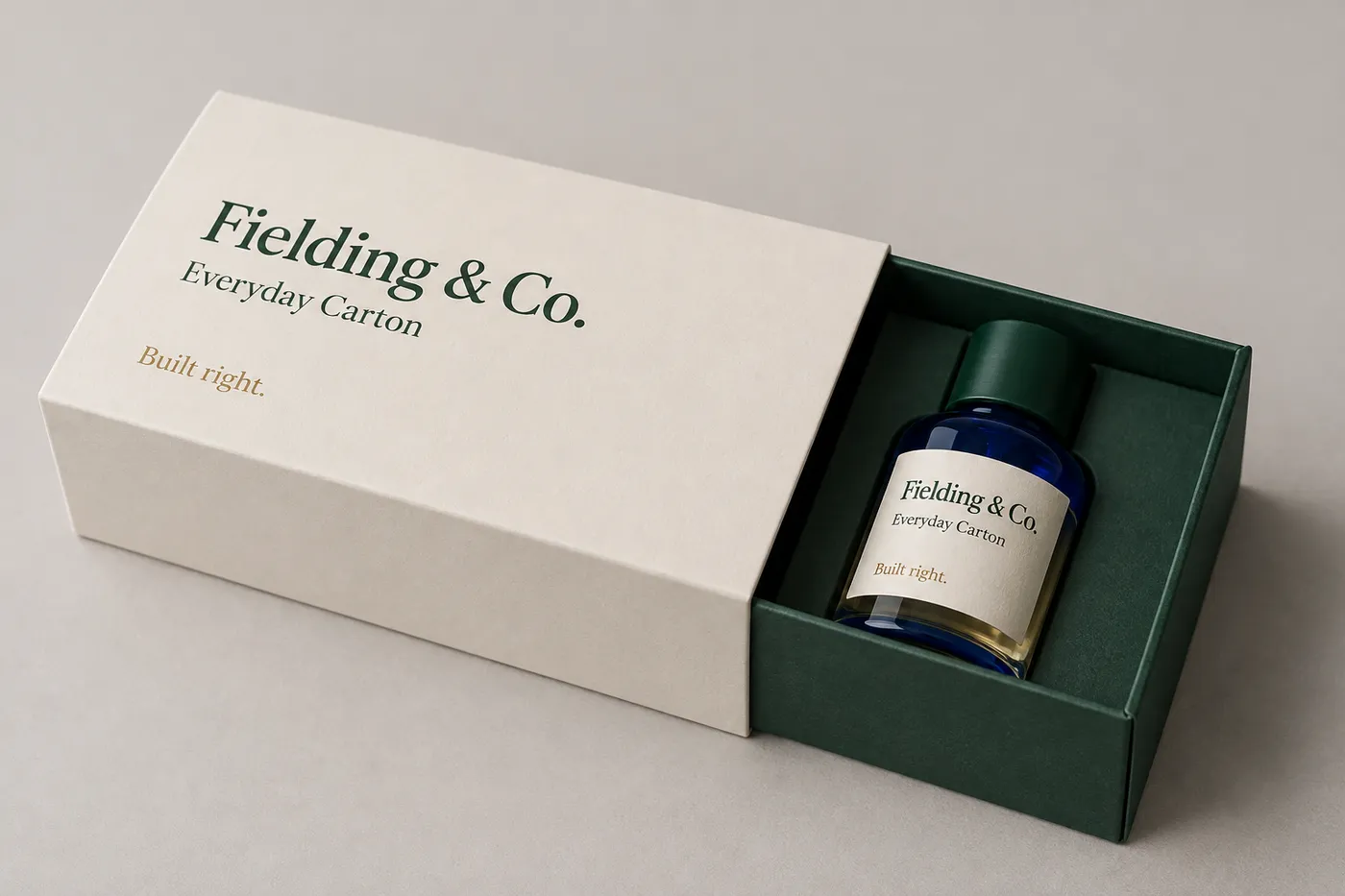
Open cardboard drawer box with sliding tray and blue skincare bottle
Cardboard Boxes
Custom cardboard drawer boxes built as a two-piece paperboard format: an outer sleeve guides a sliding inner tray around the packed product. The drawer-style opening gives cosmetics, jewelry, small gifts, and other presentation-led products a deliberate unboxing motion, while the board, print coverage, finish, and internal support can be reviewed around the actual product dimensions and handling route.
Last updated
Working quote
Product brief
A cardboard drawer box is a two-piece paperboard package made from an outer sleeve and a sliding inner tray. The tray carries the product, while the sleeve controls how the package opens, closes, and presents the printed exterior. That separation is useful for compact products where the act of pulling a tray forward is part of the handoff: a skincare bottle, jewelry piece, candle, gift set, or small retail item can be revealed without lifting a lid from above. The right format still depends on the packed product's footprint, height, weight, and presentation needs.
Unlike a standard tuck carton, the drawer format has a visible movement between two parts. The sleeve needs enough clearance for the tray to travel smoothly, but the fit cannot be chosen from the product name alone. Product dimensions, protective wrapping, an insert, and the way a customer will hold the package all affect the internal layout. Easy Box Packaging manufactures the carton to the order, so share the finished product or a reliable packed sample when the fit matters.
The outer sleeve is the stationary printed frame. It may carry the front wordmark, side information, and a pattern that continues around the opening. The inner tray is the moving portion, so its front edge, pull area, base, and side walls need to be considered together. A cutout or finger access feature can be discussed when the intended opening motion calls for one; it should be drawn into the structure rather than treated as a decorative detail after the dieline is complete.
The tray can be sized around a single item or a grouped set. If the product has a cap, shoulder, handle, or other projection, those details belong in the measurement brief because they change the usable interior space. An insert may be appropriate when the product is delicate, needs a defined presentation position, or must stay separated from other pieces. The need is conditional on geometry, weight, and the way the package will be displayed; the drawer format itself does not promise a particular insert type.
Board selection should follow the drawer's moving parts and the product's handling route. Kraft paperboard can create a natural printed surface, SBS paperboard can support a smoother presentation, and corrugated board may be considered when the product and transit conditions call for a fluted construction. The final board direction is a quotation decision tied to the dimensions, packed weight, print requirements, and how often the tray will be opened. An FSC-certified paper option is available as a material choice; that option does not mean every pictured or quoted box is automatically FSC-certified.
The sleeve and tray can carry the same visual system or use contrast to make the opening sequence easier to read. Foil stamping can reserve a metallic accent for a wordmark or selected linework. Matte lamination reduces glare across a broad printed panel, while gloss lamination creates a higher-sheen surface. Finish selection should account for fold lines, sliding contact, the legibility of small artwork, and the surfaces a customer touches. The category's common finish directions are available for review; the final treatment remains tied to the artwork and construction.
Start with the packed length, width, height, weight, product count, and orientation. Add photographs or a sketch if the product has a shoulder, cap, handle, fragile projection, or unusual center of gravity. Tell us whether the package will sit on a retail shelf, be handed over as a gift, or travel inside another shipping carton. That use context helps separate the requirements of presentation from the requirements of transit.
Send the preferred board direction, artwork status, print coverage, and finish preference if you already have them. If the artwork is not ready, a logo, color direction, and panel priorities are still useful for the first conversation. Easy Box Packaging includes dieline and proof review on every order at no extra charge, so the sleeve opening, tray fit, panel orientation, and finishing boundaries can be checked before production.
The standard fulfillment path starts at 50 units. Production is from 7 business days after digital proof approval, with the timing beginning once the structure and artwork are approved. Quotes are answered within 24 hours and are typically handled the same business day, so include the product measurements and desired quantity in the first message if the schedule is important. A sample kit is available for a $44.99 USD shipping charge credited toward the first order; it can help compare board feel and finish direction before committing to the drawer format.
A clear brief gives the quote team the information needed to prepare the drawer around the product rather than around a generic box category. Once the dimensions, material direction, print plan, and intended use are understood, the sleeve and tray can be reviewed as one package system. That makes the important decisions visible early: how the tray moves, what the customer sees first, where the brand sits, and what support the product needs inside.
Proof points
A drawer box is more than a printed sleeve around a tray. These are the decisions to confirm before the proof is approved.
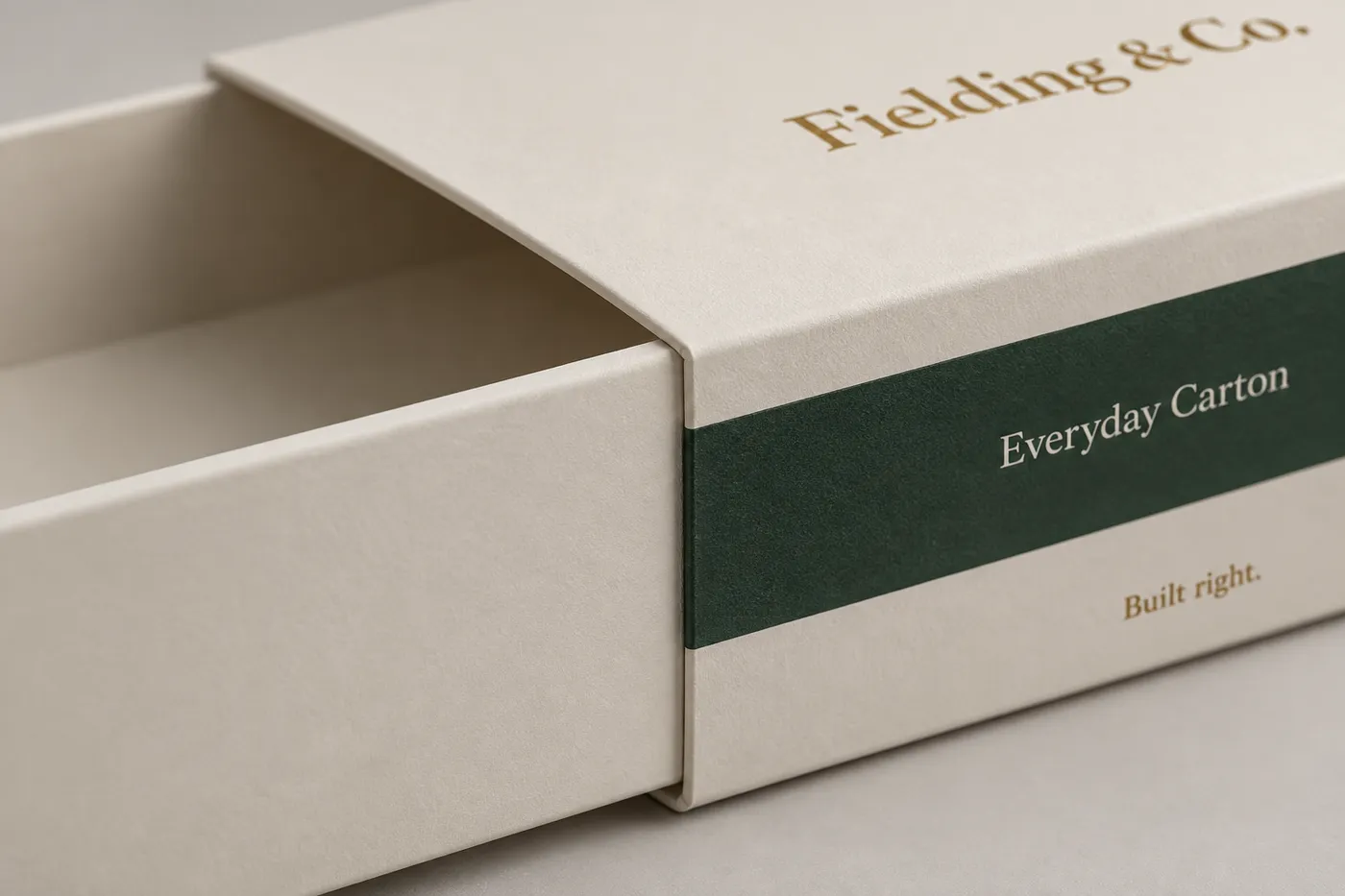
A cardboard drawer box opens by pulling its inner tray forward through an outer sleeve. That simple motion separates the printed frame from the product-carrying compartment, giving the opening sequence a clear beginning and end. The sleeve, tray, front pull area, and any insert are planned as one structure around the packed product. A drawer format is a considered option for compact goods that benefit from a top-down reveal without relying on a hinged lid.
A bottle or jar can be revealed from the tray with the outer sleeve carrying the brand story and the inner space protecting the presentation.
Small pieces benefit from a defined opening sequence when the tray and internal support are planned around the item rather than left loose.
A compact candle or home accessory can use the drawer motion to make the printed pack part of the gift handoff.
Grouped items can share a tray when their count, orientation, and separation needs are included in the first measurement brief.
Foil stamping, matte lamination, and gloss lamination are available finish directions for the sleeve-and-tray format. The choice should follow how the customer sees and touches the package: foil can focus attention on a wordmark, matte can reduce glare across a broad sleeve panel, and gloss can add a higher-sheen surface to selected artwork. Artwork is reviewed against folds, sliding contact, tray edges, and small details before production.
An insert depends on the product's geometry, weight, fragility, and presentation position. The tray can be reviewed with an internal support when the item needs separation, a defined facing, or extra control during handling; a simple tray may suit a stable product that already has its own pack. The quote brief should show the actual item and any protective wrap so the interior choice follows the product rather than a default assumption.
Share the packed length, width, height, projections, and orientation so the tray is sized around the real item.
Explain how the drawer will be pulled and handed over; the front edge and access area should support that movement.
Use an insert discussion when the product needs to face a particular way or remain separated from a grouped set.
Send the packed product measurements first, then describe the drawer motion, presentation setting, and artwork direction. Those inputs let the quote team review the sleeve and tray as one package rather than assuming a generic carton size.
Provide packed length, width, height, weight, orientation, product count, and any cap, shoulder, handle, or other projection that changes the fit.
Explain how the drawer will be pulled, handed over, displayed, or placed inside another shipping carton.
Share any preference for kraft paperboard, SBS paperboard, or corrugated board, along with the intended handling route.
Send finished artwork or a brand, color, and panel brief, then note any preference for foil stamping, matte lamination, or gloss lamination.
Confirm the sleeve opening, tray fit, panel orientation, internal support, and finishing boundaries before production begins.
Need help with structure, materials, or production planning? See how we manufacture custom packaging.
A sample kit ships for a $44.99 USD charge credited toward your first order, useful when you need to compare board feel or finish direction before approving a drawer-style carton.
Shipping charge: $44.99. Credited toward your first order.
Request a Sample KitFind clear answers about fit, materials, and ordering below.
A drawer box uses an outer sleeve and a sliding inner tray, so the product is revealed by pulling the tray forward. A tuck carton opens through hinged panels and tucked flaps. The drawer format suits a presentation where the sliding motion is part of the package experience.
Measure the packed length, width, and height, then provide the packed weight, item count, orientation, and any cap, shoulder, handle, or other projection. Include protective wrapping or a proposed insert when those details change the tray space.
No single insert choice applies to every product. The need depends on geometry, weight, fragility, grouping, and the desired presentation position. Share the actual item and opening use so the tray-only and internal-support directions can be compared during the quote.
Kraft paperboard, SBS paperboard, and corrugated board can be reviewed for the intended use. Finish directions include foil stamping, matte lamination, and gloss lamination, with the final selection checked against artwork, folds, tray movement, and the surfaces the customer touches.
The approved standard estimate is from 7 business days after digital proof approval. Orders start at 50 units, and free US shipping is included on the standard fulfillment path.
Yes, when the grouped items, count, orientation, and separation needs are included in the measurement brief. The tray can then be reviewed around the set rather than around one item, with internal support considered if the pieces need a defined position.
Orders start at 50 units and scale up to 500,000 for bulk runs, with pricing from $0.40 per unit on larger quantities. Standard production is from 7 business days after digital proof approval.
Compare nearby products and request the format that best fits your next run.
Available product
Available product
Available product
Available product
Plan the opening experience
Send the packed product details, intended opening route, artwork status, and preferred board or finish direction. Easy Box Packaging can then review the sleeve, tray, internal support, and printed surfaces as one quote-ready specification.
Add your product details to see a quote summary.