Retail footwear presentation
A printed lid and side panel can identify the shoe style and size while the pair remains organized inside the carton.

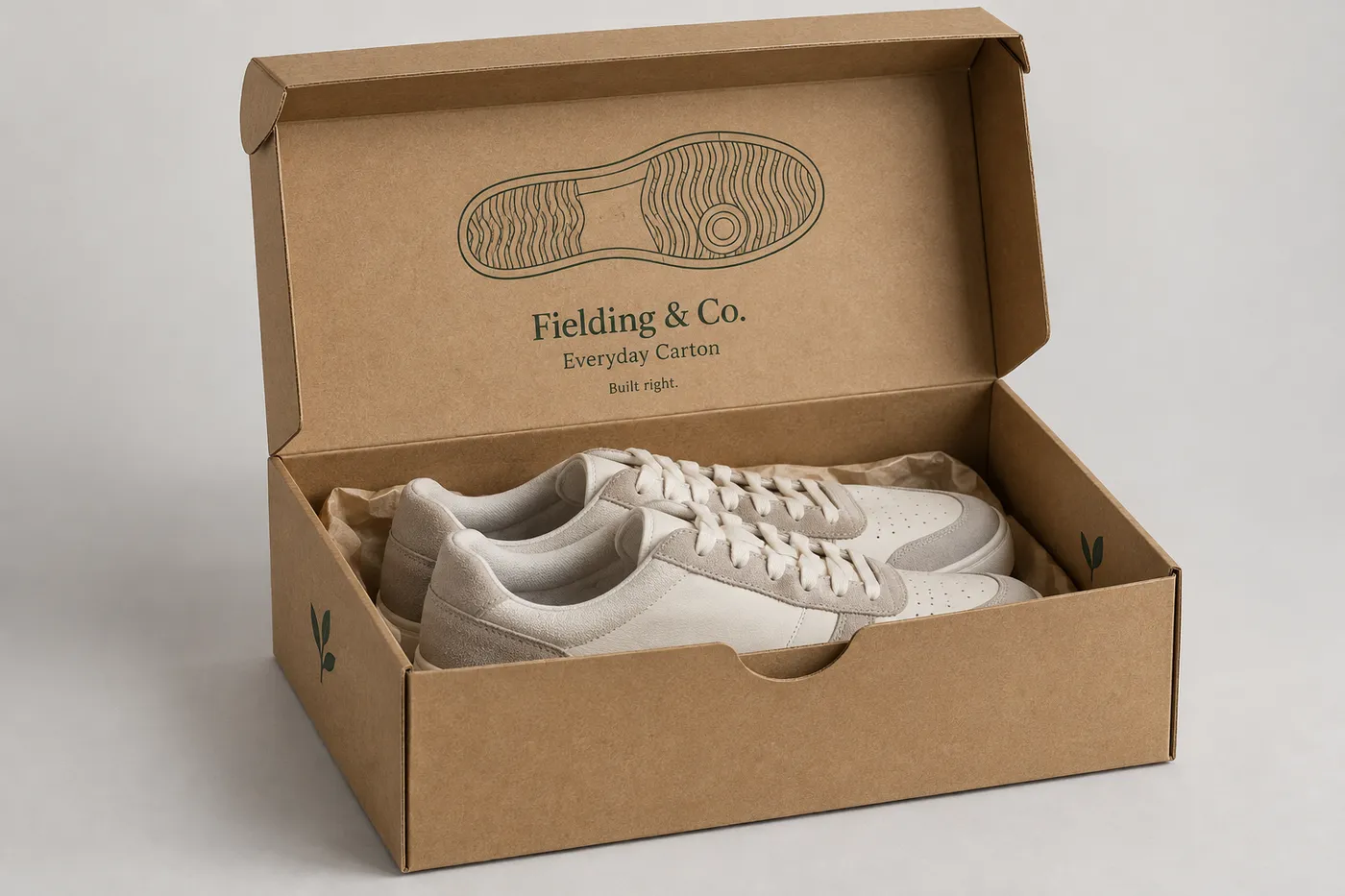
Open printed cardboard shoe box with neutral sneaker pair and Fielding & Co. lid
Cardboard Boxes
Custom cardboard shoe boxes made to order around the pair, from paperboard style and closure through print and finish. Share the footwear dimensions, quantity, artwork status, and intended sales or shipping use so the carton can be sized and reviewed for a practical fit.
Last updated
Working quote
Product brief
Cardboard shoe boxes begin with the packed pair, not an assumed footwear size. Measure the shoes as they will sit inside the carton, including the longest sole, the widest point, and the tallest part of the pair when positioned for packing. Note whether tissue, a paper insert, or another packing layer sits around the shoes, because those details change the space the interior needs. The orientation matters too: a low-top pair laid side by side calls for a different footprint from a pair placed heel to toe or stacked with a divider. Include the packed product photographs or a clear sketch when the sole profile, ankle height, or decorative hardware changes the outline. The resulting length, width, and depth are then translated into a carton interior with practical clearance. The outside dimensions follow that product geometry and the chosen construction, rather than an arbitrary standard shoe size.
A folding paperboard carton gives a shoe brand a defined lid, base, front wall, side panels, and printable exterior without requiring the finished boxes to be stored in their assembled form. The opening direction should match how staff load the shoes and how a customer removes them. A tuck-style or locking top can be considered when a clean retail opening matters, while a more protective closing route may suit a box that travels through fulfillment before it reaches the buyer. The closure is part of the dieline, so its flaps and fold lines need to be reviewed with the pair's height and the desired reveal. If the shoes need separation, heel clearance, or a more deliberate presentation, internal support can be integrated into the paperboard structure or considered as a separate paperboard component. That decision depends on shoe geometry, weight, orientation, fragility, structure, fulfillment, and presentation requirements together.
Board selection should connect the shoe box's handling route with the printed face the buyer will see. SBS paperboard can be considered when a smooth, clean print base is important. Kraft paperboard can be considered when a natural fiber character belongs in the brand direction. Corrugated board may be reviewed when the box needs a different transit-oriented construction. These are material directions from the cardboard-boxes range, not a substitute for checking the actual packed pair and shipping route. An FSC-certified paperboard or kraft option is available when that stock direction fits the order; it does not mean every finished box uses certified material. Surface treatment can be considered after the board and artwork are understood. Matte Lamination, Gloss Lamination, and Foil Stamping are available finish directions, with the selected treatment reviewed against folds, cut edges, small lettering, and the way the lid is handled.
The lid is the natural place for the brand name or collection mark, while the front and side panels can carry the shoe style, size information, colorway, care details, or a short brand message supplied by the customer. Artwork should be prepared with the carton panels and fold lines visible, so important type does not cross a closure edge or disappear into a corner. A shoe box also has a useful inside-lid opportunity when the opening structure leaves a suitable printable surface, such as a welcome message or product story. Print coverage, color treatment, and finish should be described in the quote request rather than left to an assumption. A digital proof gives the buyer a chance to check panel orientation, copy, logo placement, and the visual relationship between the printed lid and the pair inside.
The order starts with the packed footwear details, intended use, quantity, and artwork status. Easy Box Packaging prepares a carton direction and dieline around that information, then reviews the structure and printed panels before production. Dieline and proof review are included on every order at no extra charge. The standard minimum order is 50 units, and production is from 7 business days after digital proof approval. Free US shipping is included on the standard fulfillment path. A sample kit carries a $44.99 shipping charge credited toward the first order when the board feel, print treatment, or construction needs to be assessed in hand. Keep the quote process focused by identifying whether the pair is for retail shelf presentation, direct-to-customer fulfillment, or another defined handoff. That use route helps the carton structure and surface choices answer the same practical brief.
Send the packed length, width, and height of the pair, its orientation inside the box, and any tissue or internal component that must be included. Add the packed weight, quantity, shoe style, size range, and whether different sizes need separate carton formats. A different size is a different dieline decision even when the same overall carton style is retained. Include the artwork file or say whether artwork is still being prepared. Identify the panels that need branding, size information, product details, or an inside-lid message, and mention any preference for SBS paperboard, kraft paperboard, Corrugated Board, Matte Lamination, Gloss Lamination, or Foil Stamping. The standard minimum is 50 units. If you want to inspect a physical reference first, ask about the sample kit and its $44.99 credited shipping charge. With those inputs, the quote can address structure, print, finish, and production timing without guessing at the shoe box size.
Proof points
A cardboard shoe box earns its place when the pair, the printed panels, and the handling route agree. These are the details to confirm before production.
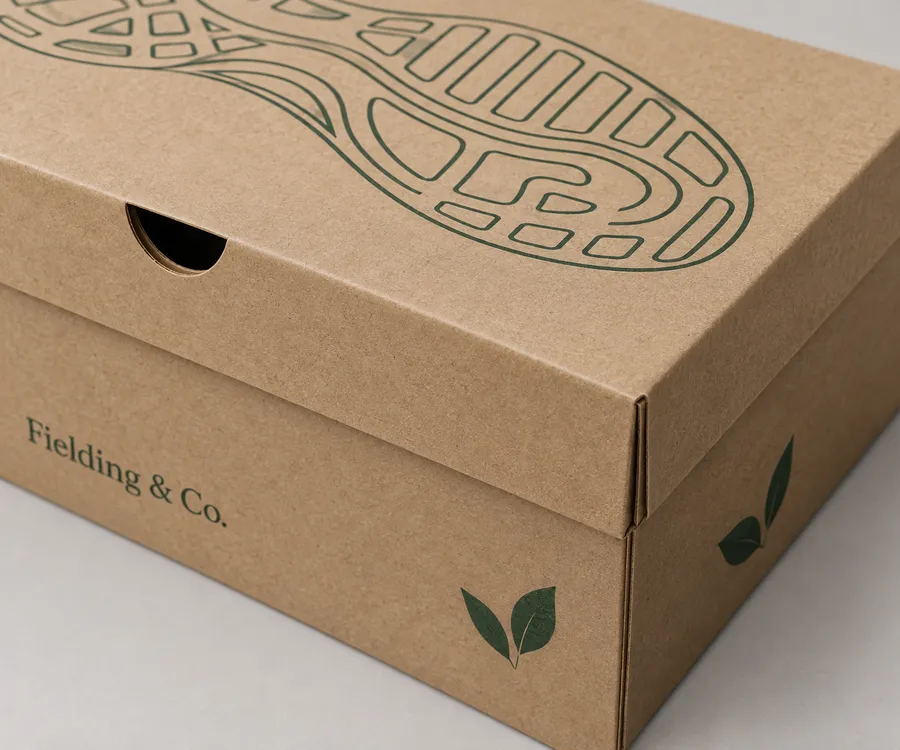
Cardboard shoe boxes work when the inside follows the packed pair rather than an assumed footwear size. The closed carton can present a low rectangular footprint, while the opening and lid are arranged for how the shoes are loaded, removed, stored, or shipped. Share the packed pair dimensions, orientation, and use route so the dieline review can coordinate the footprint, depth, closure, print panels, and any paperboard support.
A printed lid and side panel can identify the shoe style and size while the pair remains organized inside the carton.
The structure can be reviewed around the packed pair and the route the carton takes before it reaches the buyer.
A custom printed carton gives a defined home to a specific collection, colorway, or size range when the artwork is ready.
A paperboard shoe box can keep the opening, printed message, and pair presentation together for a considered handoff.
The lid, front face, side walls, and inside opening can each play a role in the printed presentation. Choose the treatment with fold lines, cut edges, reading angle, and the artwork's smallest details in mind.
A shoe carton has to account for the pair's outline and the way the box will be handled after it is packed. The review connects the product geometry, closure, printed panels, and fulfillment route before the artwork is finalized.
The sole profile, ankle height, and loading direction inform the interior footprint and lid clearance.
Top flaps and fold lines are considered with the intended opening experience and the height of the packed shoes.
A divider or shaped paperboard support can be considered when geometry, separation, or presentation needs call for it.
The quote process becomes clearer when the footwear is described as a packed pair rather than only by its retail size or product name.
Provide the packed length, width, depth, weight, orientation, shoe style, size range, and any tissue or divider that must be included.
Explain whether the box is for retail presentation, direct-to-customer fulfillment, boutique handoff, or another defined route.
Send the artwork status and any preference for SBS paperboard, Kraft Paperboard, Corrugated Board, Matte Lamination, Gloss Lamination, or Foil Stamping.
Confirm the pair orientation, opening, panel layout, print placement, and internal space before the proof is approved.
Approve the reviewed carton artwork and structure so production timing can begin.
Need help with structure, materials, or production planning? See how we manufacture custom packaging.
A sample kit ships for a $44.99 USD charge credited toward your first order, useful when you need to review board feel, print treatment, or carton construction before approving the shoe box run.
Shipping charge: $44.99. Credited toward your first order.
Request a Sample KitFind clear answers about fit, materials, and ordering below.
Measure the packed pair in its intended orientation, including the longest sole, widest point, tallest part, and any tissue, divider, or other packing layer. Include the packed weight and a photograph or sketch when the ankle profile, sole, or hardware changes the outline.
The same overall carton style can be prepared for different sizes, but each size needs its own dieline when the product dimensions change materially. Share the size range so the interior footprint and panel proportions can be reviewed format by format.
That decision depends on the shoe geometry, weight, orientation, fragility, structure, fulfillment route, and presentation requirements together. A divider or shaped paperboard support can be considered when the pair needs separation, heel clearance, or a more deliberate reveal.
SBS paperboard, Kraft Paperboard, and Corrugated Board are material directions in the category pack. Matte Lamination, Gloss Lamination, and Foil Stamping are available finish directions, with the selected combination reviewed against the artwork, folds, cut edges, and handling route.
The standard minimum order is 50 units. Include the quantity, packed pair dimensions, intended use, artwork status, and material or finish preferences in the quote request so the carton can be scoped around the actual order.
The approved standard estimate is from 7 business days after digital proof approval. Free US shipping is included on the standard fulfillment path, and dieline and proof review are included at no extra charge.
Orders start at 50 units and scale up to 500,000 for bulk runs, with pricing from $0.27 per unit on larger quantities. Standard production is from 7 business days after digital proof approval.
Compare nearby products and request the format that best fits your next run.
Available product
Available product
Available product
Available product
Plan the footwear carton
Send the packed footwear details, intended handoff route, quantity, and artwork status. Easy Box Packaging can then review the carton structure, material direction, print panels, and finish as one quote-ready specification.
Add your product details to see a quote summary.