Compact Retail Products
A printed cube carton for a small product where balanced faces, a tidy closure, and readable front-panel information matter.

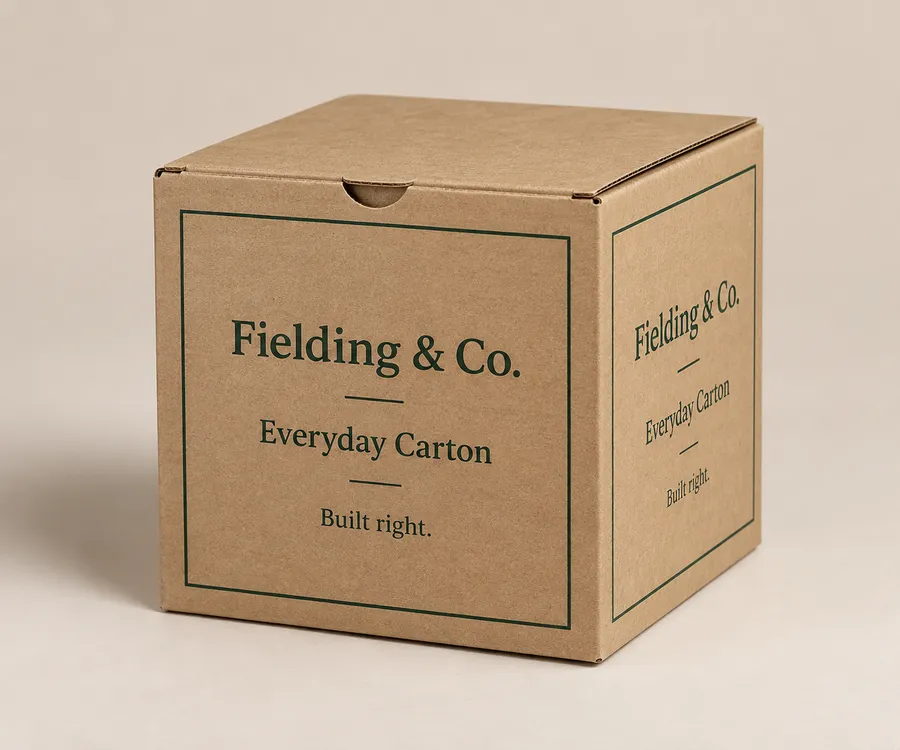
Closed kraft cube cardboard box with printed front and side faces and a tuck closure
Cardboard Boxes
Cube cardboard boxes made to order around a product that needs balanced faces and a defined footprint. Choose a printed paperboard carton for shelf or counter presentation, or review corrugated construction when the handling route calls for a different board direction and closure.
Last updated
Working quote
Product brief
Cube cardboard boxes work best when the balanced outside shape reflects the way the packed product actually sits inside. Start with the product footprint, assembled height, widest point, weight, and orientation. Note any wrap, tray, divider, or insert before the outside faces are set. A package that looks square from the front can still need different depth, closure space, or internal support once the product is placed inside. The goal is a clean cube-like presentation with a practical interior, not an exact geometric claim that ignores the packed item.
A folding paperboard carton can suit a cube-shaped package that will be seen on a shelf, placed on a counter, or handed to a customer. Its folded faces give the artwork a clear rhythm, and a tuck closure can keep the opening compact when that format fits the product. A corrugated cube box may be a better direction to review when the package will move through parcel handling or needs a different balance of board structure and printed surface. Neither option is automatically right for every cube. The construction should be discussed with the product weight, orientation, fragility, fulfillment route, and desired opening experience in view.
The structural style also needs to stay tied to the final size. A cube-shaped carton at one scale may use a different panel arrangement, closure, or internal support at another scale. The same visual idea does not mean one dieline can cover every size. Share the intended product range early so the faces, folds, and opening sequence can be reviewed as one package rather than adjusted after artwork is finished.
Record the packed product rather than only a loose product component. Measure length, width, height, widest point, and weight; note whether the product must stand upright, lie flat, or sit at an angle. If the item has a shoulder, handle, irregular corner, protective wrap, or secondary piece, include it in the brief. A cube-like outer form may need a slightly different depth or internal arrangement to keep the product from pressing against the printed faces. Final allowance and clearance are confirmed during specification and dieline review, so the brief should describe the real item instead of guessing a tolerance.
Also identify the face that should carry the main product information and the face the customer should see first. That choice affects artwork orientation, fold placement, closure position, and the order in which the box is opened. For a small set, describe whether pieces should sit side by side, stack, or remain separated. Internal support depends on geometry, weight, orientation, fragility, structure, fulfillment, and presentation requirements; it may be integrated into the paperboard structure or handled with a separate insert after the specification is understood.
Kraft paperboard can give the cube a natural printed surface, while SBS paperboard can be considered when the artwork calls for a cleaner white base. Corrugated board is another direction when the handling route and board structure need to be considered together. These are options for review, not a promise that one material will suit every product or shipment. The final board choice belongs with the product footprint, closure, weight, print coverage, and expected handling.
The visible faces can carry custom artwork across the front, sides, top, and any interior panel that matters to the opening sequence. Foil stamping can highlight a short mark or detail subject to artwork and surface review. Matte lamination can create a lower-sheen presentation, while gloss lamination can create a brighter reflective surface where the artwork supports it. Finish selection should be reviewed with folds, closure, coverage, and the reading angle of each face rather than added as a separate afterthought.
Before artwork is placed, confirm the face order, closure, panel proportions, product name, required copy, and any side or top information. A digital proof is reviewed before production so the assembled cube can be checked for orientation, folds, closure, print placement, and the relationship between the artwork and the packed product. This is the point to resolve a face that reads upside down, a mark that crosses a fold, or information that disappears behind a closure.
The standard minimum order is 50 units. Production starts from 7 business days after digital proof approval, and free US shipping is included on the standard fulfillment path. If you want to inspect the board feel, printed surface, closure, face proportions, and fit before a full run, a sample kit carries a $44.99 shipping charge credited toward the first order. Those details give the quote a clear starting point without pretending that an exact price can be known before the product and construction are reviewed.
Include the packed product footprint, height, widest point, weight, quantity, intended handling route, preferred material direction, closure preference, artwork status, and any insert or divider requirement. A photo or physical sample can help explain unusual geometry, but the written measurements still matter. If the box will be displayed, describe the viewing angle and the first face the customer should notice. If it will ship, describe the route and any outer case or fulfillment arrangement that changes how the cube will be handled. With that information, the quotation can focus on the actual product, structure, face layout, and proof rather than an abstract box shape.
Proof points
The cube footprint sets a visual starting point, while the product geometry and handling route determine the practical construction decisions.
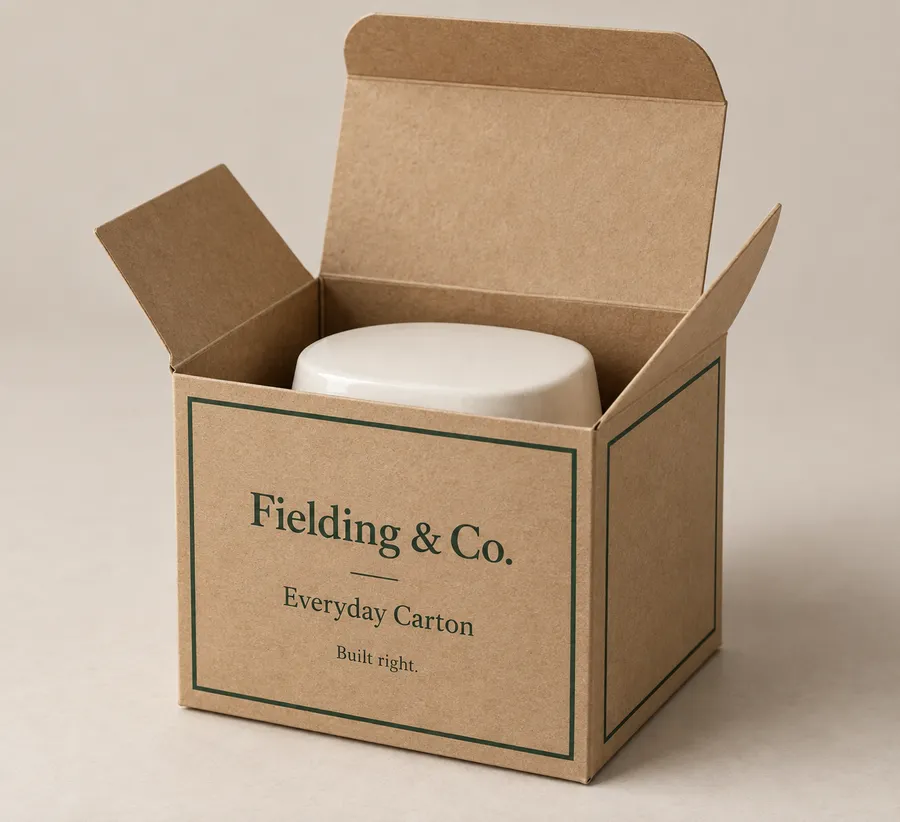
A cube shape is only useful when the packed product sits in the right orientation. Share the product's length, width, height, widest point, weight, and any wrap or insert; the dieline can then keep the faces balanced while allowing for board thickness, folds, closure clearance, and the intended opening sequence.
A printed cube carton for a small product where balanced faces, a tidy closure, and readable front-panel information matter.
A structured presentation box for a single item or compact set when the opening sequence and face layout are part of the handoff.
A defined package for a small sample or accessory that needs a stable place inside the box rather than excess empty space.
A cube-shaped corrugated format reviewed around product movement, parcel exposure, closure, and the protection needed for the route.
The artwork should be mapped across the assembled faces so the brand name, product information, folds, closure, and finish remain intentional when the box is viewed from different angles.
A useful cube-box brief describes how the product sits inside the package and how the finished box will be handled, not just the desired outside shape.
Share the product footprint, height, weight, orientation, and any wrap, tray, divider, or insert that must fit inside the cube-shaped box.
Explain whether the box will sit on a shelf, be handed across a counter, ship through parcel handling, or move inside a larger case.
Identify the front face, opening face, closure position, and artwork status so the assembled cube can be reviewed as a complete package.
The order path turns the product brief into a confirmed cube structure, face layout, and production-ready proof.
Provide the product footprint, height, widest point, weight, quantity, intended use, and any insert or divider.
Discuss kraft paperboard, SBS paperboard, or corrugated board against the handling route and the desired printed surface.
Describe how the customer should access the package and which face should carry the primary product information.
Send the artwork or describe its status so the face panels, folds, closure, and print coverage can be mapped.
Check the assembled proportions, face order, closure, clearances, and artwork placement against the real product.
Need help with structure, materials, or production planning? See how we manufacture custom packaging.
Check board feel, print surface, closure, face proportions, and fit before committing to a full run; the $44.99 sample-kit shipping charge is credited toward the first order.
Shipping charge: $44.99. Credited toward your first order.
Request a Sample KitFind clear answers about fit, materials, and ordering below.
Start with the packed product's length, width, height, widest point, weight, orientation, and any inner wrap, tray, divider, or insert. The dieline then accounts for board thickness, folds, closure clearances, and the faces that need to remain readable after assembly.
Choose the material direction around the job. Kraft or SBS paperboard can suit a compact printed presentation, while corrugated board can be reviewed when the box will face more demanding handling or transit exposure.
It can be reviewed when the product geometry, weight, orientation, fragility, presentation, and fulfillment route make internal support useful. Share the packed arrangement early so the box and support are considered together.
The standard minimum order is 50 units. Production starts from 7 business days after digital proof approval, and free US shipping is included on the standard fulfillment path.
Yes. Custom printed faces can be reviewed with foil stamping, matte lamination, or gloss lamination, subject to the artwork, board direction, folds, closure, and surface coverage.
Orders start at 50 units and scale up to 500,000 for bulk runs, with pricing from $0.33 per unit on larger quantities. Standard production is from 7 business days after digital proof approval.
Common uses include compact retail products, giftable items, samples and accessories, and short-route shipping. The final specification is set by the packed product and how it will be handled.
Compare nearby products and request the format that best fits your next run.
Available product
Available product
Available product
Available product
Get Started
Send the packed product footprint, height, weight, quantity, handling route, material direction, closure preference, and artwork status to request a quote.
Add your product details to see a quote summary.