Retail jar presentation
Give a single scented jar a defined top face that keeps the fragrance name and brand mark visible on a shelf.

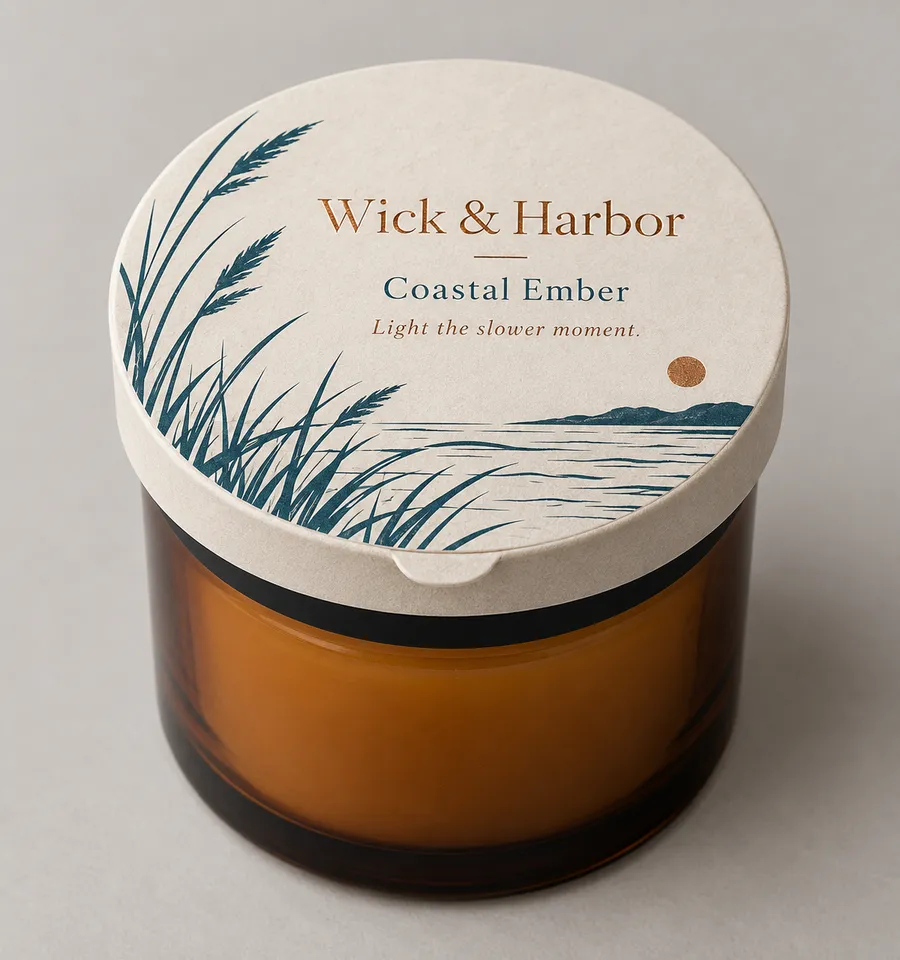
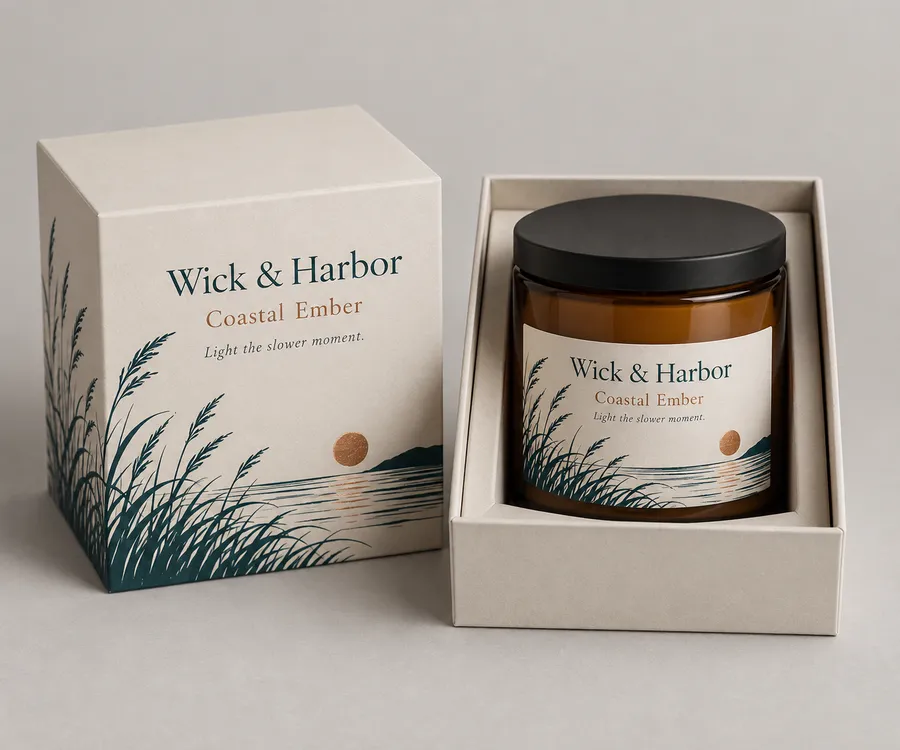
Warm ivory printed candle dust cover resting over an amber jar with Wick & Harbor artwork.
Candle Boxes
Custom candle dust covers give jars or tins a fitted printed top that keeps the vessel presentation tidy between handling and highlights the fragrance or brand story. The cover can be reviewed around the outside diameter, rim, lid relationship, and opening routine, with board, artwork, and finish choices considered together for a retail or gift-ready candle program.
Last updated
Working quote
Product brief
A custom candle dust cover gives the top of a jar or tin a defined printed surface while keeping the pack easy to handle. It can cover the wax-facing opening between display, storage, or an unboxing step and provide a place for a scent name, burn note, or short brand message. The useful starting point is the vessel as it will actually be presented, not a generic round silhouette. Share whether the cover sits over an existing lid, replaces a loose top piece, or is intended as a decorative layer so the edge, clearance, and opening sequence can be discussed accurately.
The cover should be treated as part of the candle pack's geometry. A shallow tin, straight-sided jar, and vessel with a shoulder or rolled rim each present a different outside profile. A cover that looks right on the top face may still interfere with the rim, label, or handhold if the side relationship is not checked. Describe the face that should remain visible after the cover is applied, the direction a customer will lift it, and whether the candle travels inside a carton, mailer, or gift arrangement. Those details keep the printed piece aligned with the way it will be used.
Provide the outside diameter or packed length and width at the widest point, overall height with any existing lid, and the shape of the rim or shoulder. Include the approximate filled weight, the label or sleeve that remains on the candle, and any tab, notch, sidewall, or overlap in the proposed cover. If the cover is for a square or rectangular vessel, note corner radii and the direction the artwork should face. If a single design will be adapted to several jar sizes, list each packed profile separately; changing the diameter or rim can change the cover footprint and its relationship to the outer carton.
The opening routine matters as much as the top artwork. A slip-over cover, a shallow sidewall, or a cover that is lifted from a defined edge can each create a different handoff. The intended clearance is confirmed during the specification and dieline review rather than assumed from the keyword. Where the cover is paired with a separate lid, describe which part a customer removes first and how the printed face should sit when the candle is back on a shelf.
SBS Paperboard can be considered when a smooth face needs a fragrance name, fine care copy, or clean color blocks. Kraft Paperboard can support a warmer paper character when the identity uses natural tones. Corrugated Board may be discussed when the cover is being coordinated with a sturdier packed configuration, although the final choice depends on the cover span, edge form, and handling route. These are approved category directions, not a promise of a fixed grade or load rating; the selected board is reviewed with the actual vessel and cover construction.
Matte Lamination can offer a lower-glare surface direction for small top-panel copy, while Gloss Lamination gives selected artwork a more reflective appearance. Spot UV can isolate the brand mark or a small scent detail. Foil Stamping can create a focused accent, and Embossing/Debossing can add a tactile change where the artwork and board support it. Finish placement should be shown on the assembled cover so it does not land across a fold, edge, tab, or the area a customer grips.
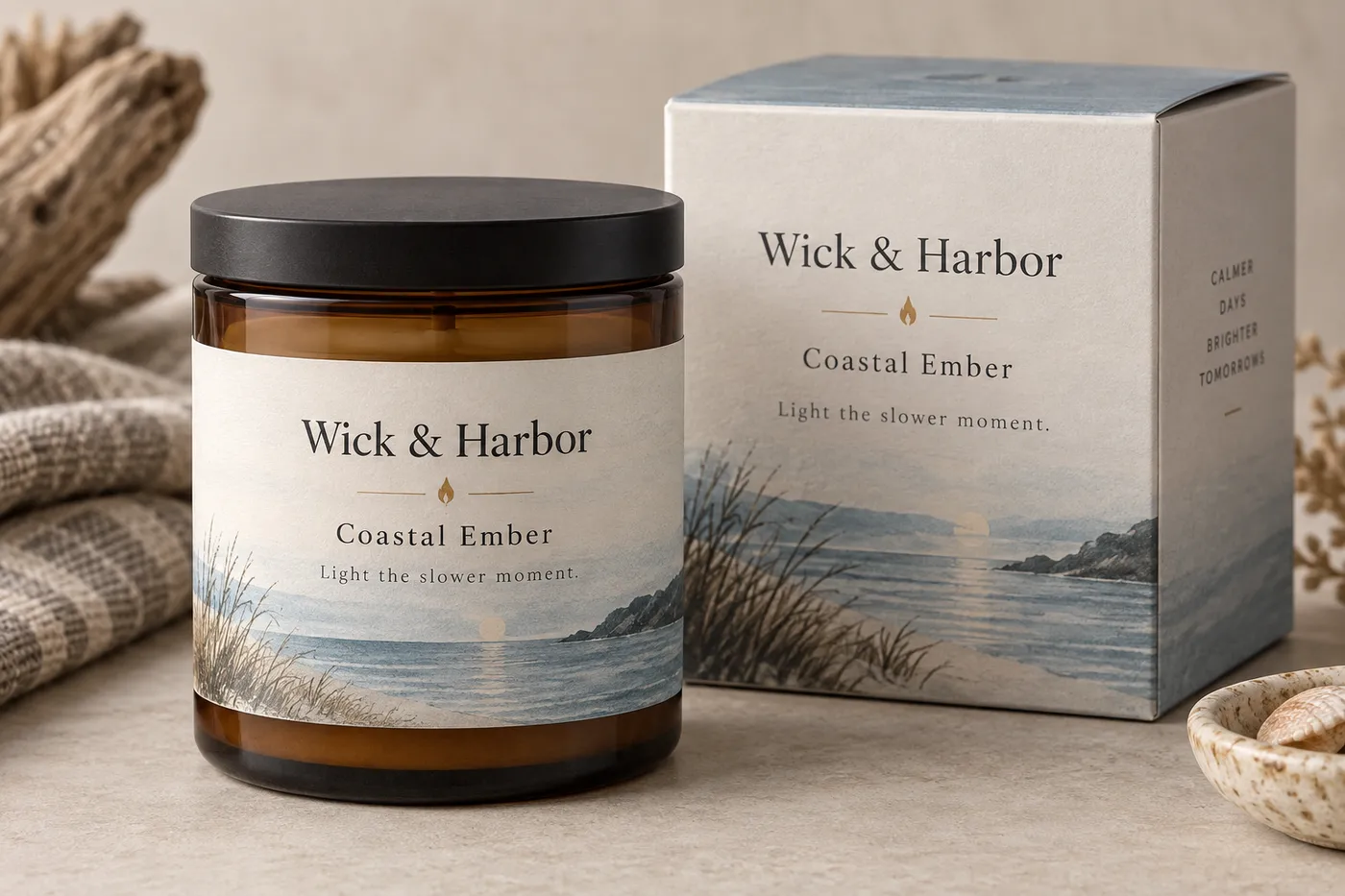
The top face usually carries the fastest recognition: the candle name, fragrance, or short brand line. Side or edge panels, when present, can hold a smaller care note or collection cue without crowding the main face. The printed example in the images shows print placement only, and production uses your approved artwork. The digital proof should show the flat artwork and the assembled cover so orientation, edge treatment, and readable type can be checked together.
A cover is small, so every element needs a defined job. Avoid placing a long paragraph near a curved rim or narrow sidewall where the reading angle changes. If the candle will be photographed, note which face should point toward the camera and whether a foil or spot gloss detail must remain visible after the cover is fitted. Artwork review can then account for the actual top shape rather than treating the cover as an isolated label.
The standard fulfillment path starts at 50 units. Production is from 7 business days after digital proof approval, and Free US shipping is available on the standard fulfillment path. A sample kit has a $44.99 USD shipping charge credited toward your first order. Pricing stays quote-only because the vessel profile, cover structure, board, print coverage, finish, quantity, and destination can change the specification.
Send the filled vessel dimensions, rim or lid details, cover concept, quantity, artwork status, material direction, finish request, intended use, and delivery destination. Easy Box Packaging can then review the cover footprint, edge relationship, printed face, and opening routine as one quote-ready specification. The result should be a dust cover that reads clearly, sits in the intended relationship to the candle, and fits the wider retail, gift, or shipping presentation without claiming a performance certification that has not been confirmed.
Proof points
Review the flat art and assembled cover together so the top face, edge treatment, vessel relationship, and opening sequence are visible before production approval.
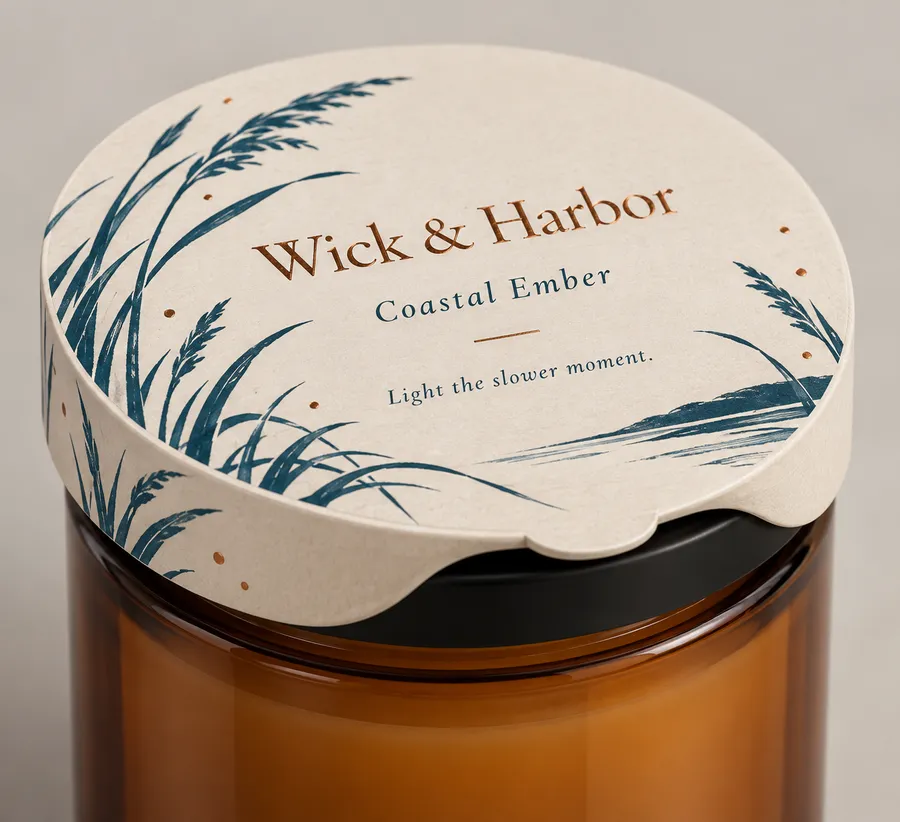
A dust cover should give the vessel a clear top identity without obscuring the way the candle is opened or handled. The outer diameter, rim, shoulder, existing lid, cover edge, and intended presentation are reviewed together so the printed piece belongs to the actual candle pack.
Give a single scented jar a defined top face that keeps the fragrance name and brand mark visible on a shelf.
Use coordinated covers across shallow tins while reviewing each diameter, rim, and artwork face separately.
Carry a seasonal scent story on the cover and coordinate its edge with a carton, sleeve, or insert-led gift arrangement.
Add a clear printed top to a candle that is handled directly, with the lift direction and care message easy to understand.
Keep the product name and fragrance message on the face that remains visible after the cover is fitted. Material and finish directions can then be compared with the artwork scale, edge treatment, and handling context.
The cover decision depends on vessel geometry, rim shape, weight, orientation, existing closure, presentation, and the route the candle takes. A flat top, shallow sidewall, or defined lift edge can be considered after the actual profile is shared.
A round jar, shallow tin, or squared vessel can receive a cover footprint reviewed around its widest point and corner or rim shape.
Describe whether the cover sits over an existing lid or acts as a separate printed layer, and which edge a customer should lift.
If the covered candle travels in a carton or gift set, the cover edge and visible artwork can be coordinated with the surrounding pack.
A complete vessel and artwork brief lets the quote focus on the cover's actual footprint and opening relationship instead of a generic circular top.
Provide diameter or length and width, height with any lid, widest points, rim or shoulder, approximate weight, and label or sleeve details.
State whether the cover sits over an existing lid, acts as a separate layer, or uses a sidewall, tab, notch, or overlap.
Identify the shelf, gift, subscription, market, or shipping context and the face that should remain visible.
Note any preference for SBS Paperboard, Kraft Paperboard, Corrugated Board, Matte Lamination, Gloss Lamination, Spot UV, Foil Stamping, or Embossing/Debossing.
Check the flat dieline and assembled cover for footprint, orientation, edge treatment, readable copy, and finish placement.
Need help with structure, materials, or production planning? See how we manufacture custom packaging.
A sample kit carries a $44.99 USD shipping charge credited toward your first order, useful when comparing paperboard feel, printed color, finish direction, and how a cover sits over a vessel rim.
Shipping charge: $44.99. Credited toward your first order.
Request a Sample KitFind clear answers about fit, materials, and ordering below.
Send the outside diameter or packed length and width at the widest points, overall height including any lid, approximate weight, and the rim, shoulder, label, or sleeve details that remain on the candle. Include the cover edge or sidewall concept if one is already defined.
It can be reviewed as a separate printed layer when the existing lid, rim, clearance, and opening sequence are provided. The cover relationship should be confirmed against the actual vessel rather than assumed from a top-view drawing.
SBS Paperboard, Kraft Paperboard, and Corrugated Board are the category material directions. The selected board is considered with the cover span, edge form, artwork, and handling route.
Matte Lamination, Gloss Lamination, Spot UV, Foil Stamping, and Embossing/Debossing can be considered for selected artwork. Placement remains subject to review around edges, folds, small type, and grip points.
The standard fulfillment path starts at 50 units. Production begins from 7 business days after digital proof approval, with Free US shipping available on the standard fulfillment path. Your final unit price is confirmed in a quote because the vessel, cover structure, artwork, finish, and quantity determine the specification.
The printed identity can be adapted, but each jar or tin profile should be reviewed separately. A change in diameter, rim, lid height, corner radius, or cover edge can change the footprint and the way the artwork sits on the vessel.
Orders start at 50 units and scale up to 500,000 for bulk runs, with pricing from $0.25 per unit on larger quantities. Standard production is from 7 business days after digital proof approval.
Compare nearby products and request the format that best fits your next run.
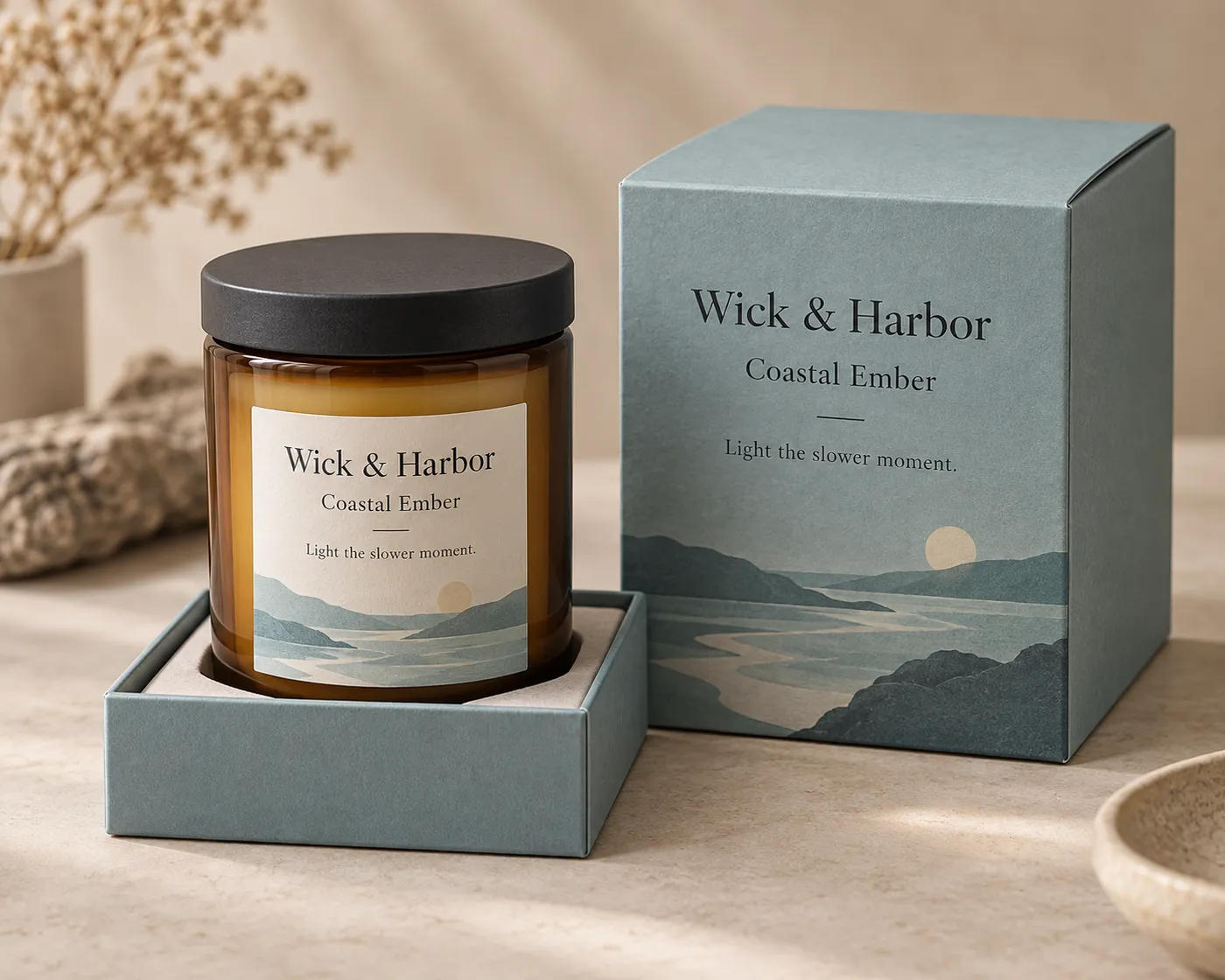
Available product
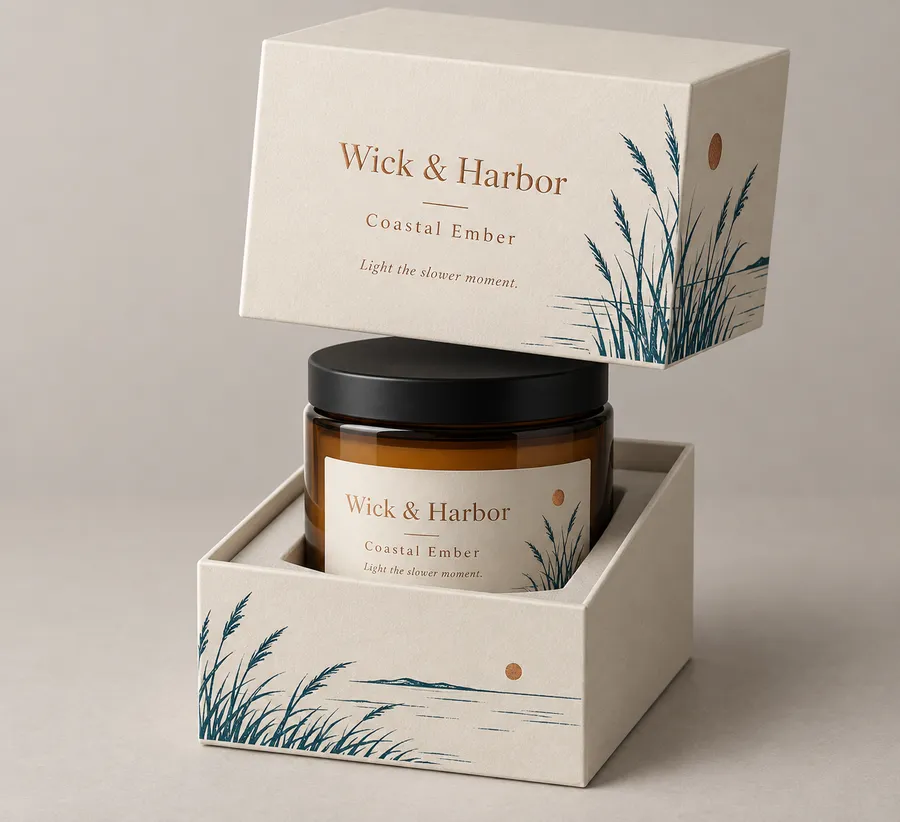
Available product
Available product
Available product
Plan the candle top
Send the candle measurements, rim or lid details, cover concept, artwork status, material direction, and finish priorities. Easy Box Packaging can then review the printed face, edge relationship, and opening routine as one quote-ready specification.
Add your product details to see a quote summary.