Retail shelf presentation
A front-facing panel can organize the cigar identity and product information while the carton keeps the defined arrangement enclosed.

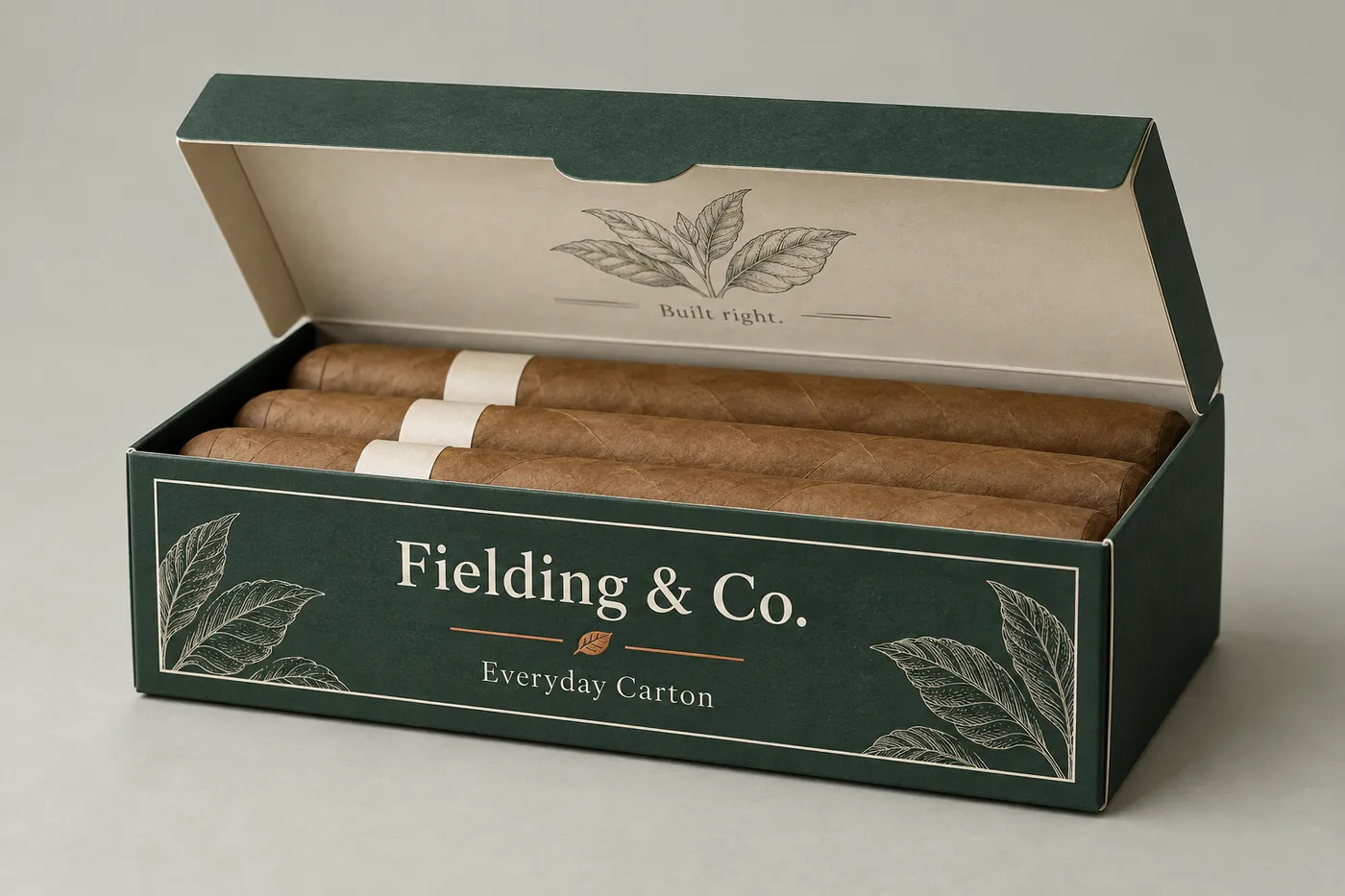
Open forest-green cardboard cigar box with three banded cigars and Fielding & Co. print
Cardboard Boxes
Custom cardboard cigar boxes shaped around the cigar count, packed arrangement, and presentation your brand needs. Choose a paperboard direction, closure, printed panel layout, and finish around the actual pack rather than forcing cigars into a generic carton; the final structure is reviewed with the product, handling route, and artwork.
Last updated
Working quote
Product brief
A custom cardboard cigar box should be planned around the finished arrangement inside it. Send the cigar length, ring gauge, count per box, bundle layout, any sleeve or band that remains on the product, and whether the cigars sit in a single row, two rows, or a defined presentation set. The clearance around the cigars affects how the box closes, how the printed panels align, and whether an internal divider or tray is useful. A carton for 10 cigars has a different footprint from a smaller sampler, even when both are described as cigar boxes. Quote the packed product so the structural direction follows the actual contents rather than a generic tobacco-package assumption.
Cigar packaging may be opened at a retail counter, handed over as a gift, included in a subscription shipment, or packed into a larger fulfillment carton. Those situations do not put the same pressure on the box. A shelf-facing pack needs a clear front panel and a closure that presents the identity without hiding key artwork. A gift or limited-release pack may put more attention on the reveal, the lid sequence, and the tactile finish. A box entering direct fulfillment may need its board and internal support reviewed with the route, packed weight, and outer shipping protection. The useful question is not whether one structure is universally best; it is which job the package needs to perform after the cigars are packed.
The inside should keep the arrangement intentional without claiming a fit that has not been reviewed. A single-layer layout, grouped sampler, or two-row set can call for different base support, side clearance, and presentation details. Depending on the packed geometry, a paperboard insert, divider, shoulder, or integrated fold may be considered. The correct choice depends on the cigar count, product dimensions, banding, orientation, movement during handling, and whether the box is a display pack or an outer transit pack. If the cigars are supplied in a sleeve or wrapped bundle, include that layer in the dimensions. A proof can then show the interior footprint, closure route, and the visible relationship between the product and the front-facing artwork.
A straight-tuck, tuck-top, or another folding closure can be reviewed around the opening experience and the panel customers see first. A tuck panel may be part of the front face, top face, or rear of the carton depending on the dieline. If the box needs a stronger base or must hold a defined arrangement during handling, an auto-bottom or another reinforced folding route may be considered during structural review. These are options to discuss against the chosen board and packed use, not promises that every configuration is interchangeable. The proof should make the folds, cut edges, glue areas, opening direction, and artwork reading order easy to inspect before production.
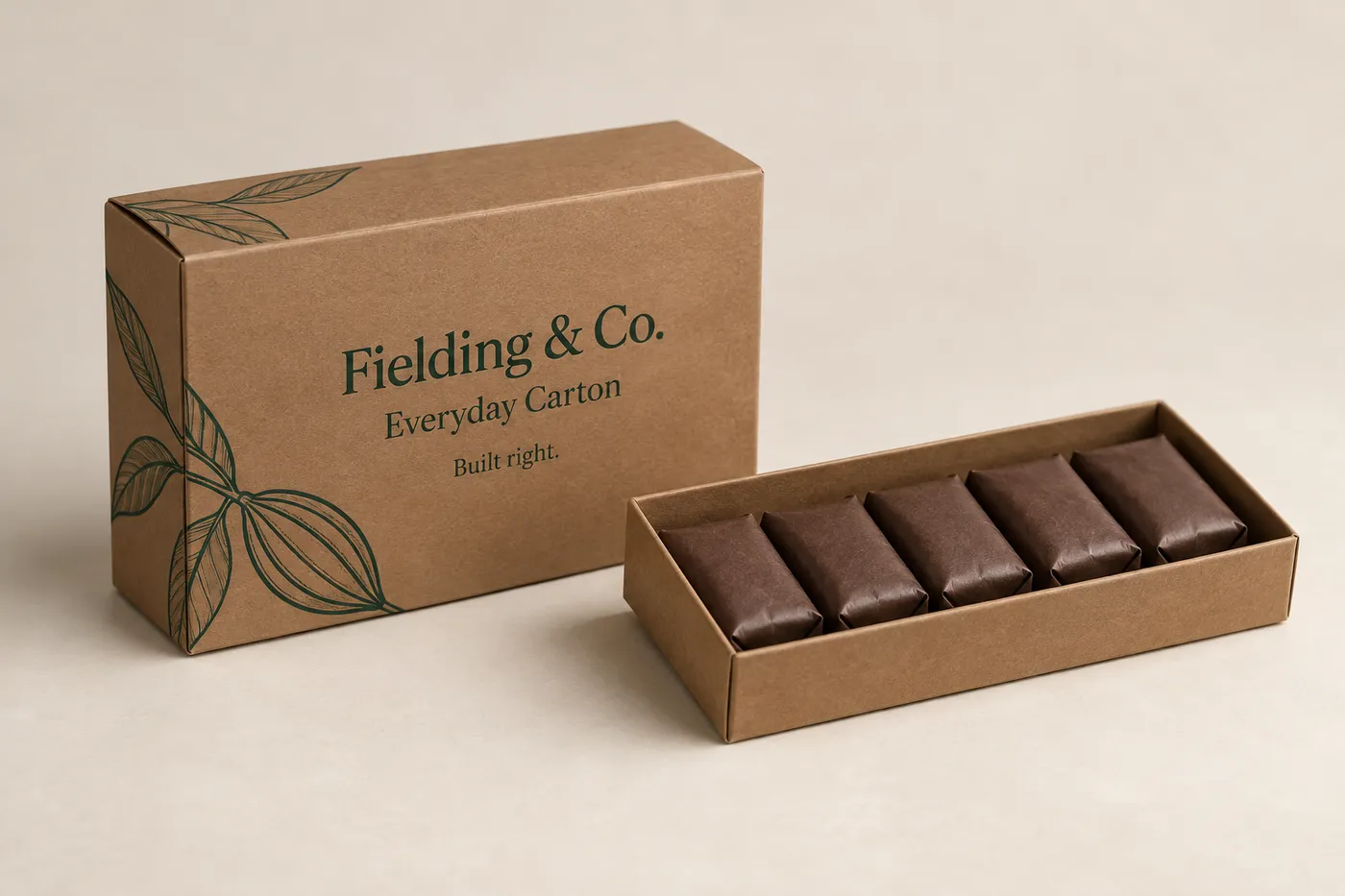
The outside of a cigar box has several useful reading surfaces: front, lid, side walls, and sometimes an interior panel visible during opening. The supplied brand artwork can be mapped to those surfaces so the main identity is not split across a fold or hidden under a tuck flap. The printed example in the images shows print placement only, and production uses your approved artwork. Share the logo, product name, required information, color references, and any regulatory or market-specific copy with the quote request. Artwork should be reviewed on the actual dieline, not on a flat rectangle that ignores folds and glue areas.
Kraft paperboard can support a natural surface direction, SBS paperboard can provide a smoother printed face, and corrugated board can be considered when the packed route calls for more structure. The selected material depends on the product arrangement, display use, handling route, and desired surface. Foil stamping can highlight a name or small line of artwork when the design supports it. Matte lamination reduces glare across a broad panel, while gloss lamination gives the printed surface a higher sheen. Finish choice should be checked around fold lines, tuck panels, edges, and the surface customers touch during opening.
Orders start at 50 units, and production begins from 7 business days after digital proof approval. Free US shipping and dieline and proof review are included on the standard fulfillment path. If you want to compare paper feel, print coverage, or closure direction before committing, a sample kit ships for a $44.99 charge credited toward the first order. Send the cigar dimensions, count, packed arrangement, wrapper or sleeve details, box orientation, intended use, board preference, finish direction, quantity, and artwork status. Quote requests are typically answered the same business day and always within 24 hours.
The best review connects the inside and outside in one pass. Confirm the cigar layout, the opening sequence, the front panel, the finish, and the way the packed box will be handled before the digital proof is approved. That keeps the final carton tied to the product it is meant to present, rather than treating the artwork and the structure as separate jobs.
Proof points
A useful proof shows how the cigars sit, how the carton opens, and where the customer-facing identity will be read rather than treating the dieline as a blank template.
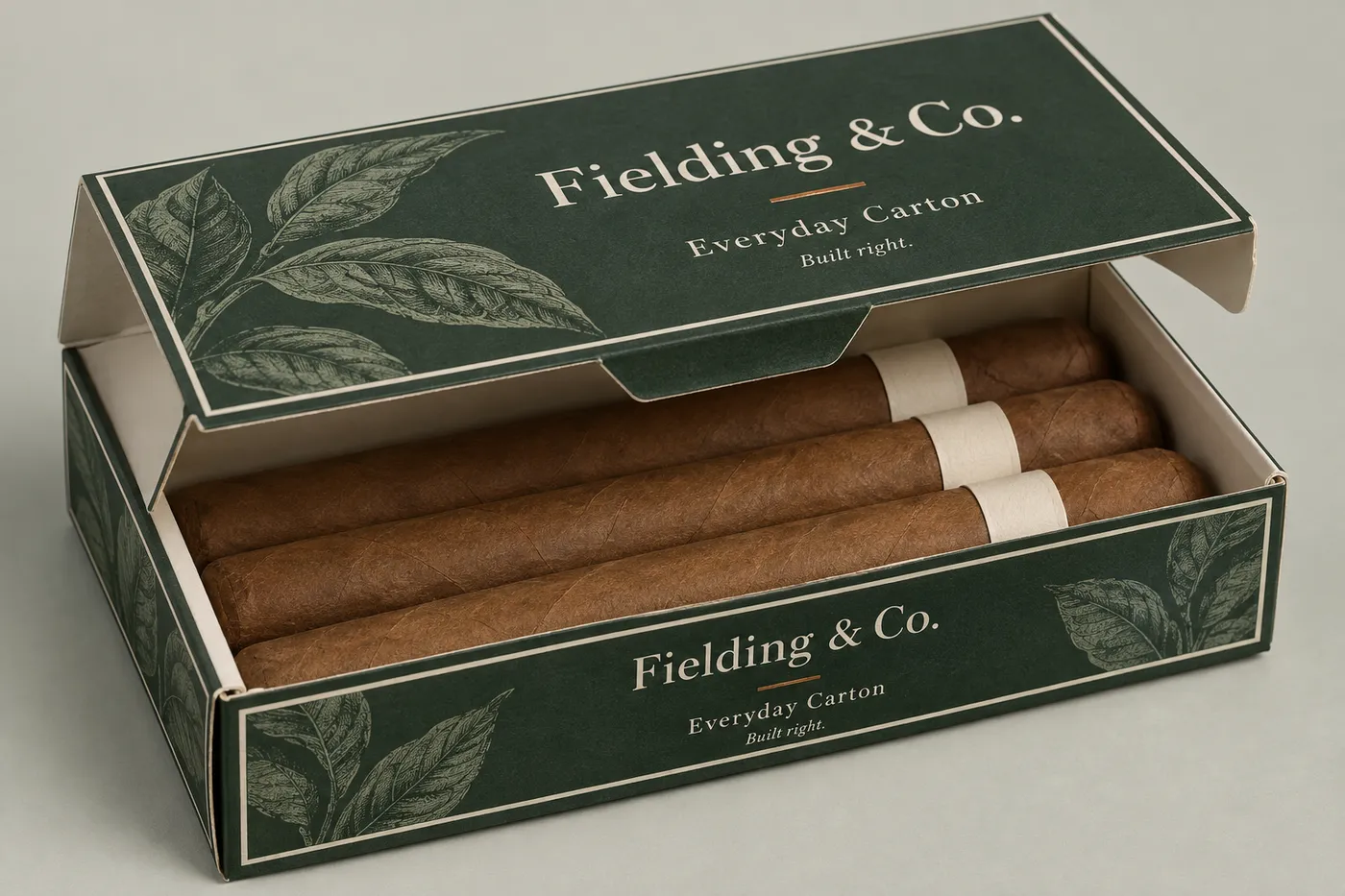
The printed outer face is only one part of the package. Cigar count, product dimensions, wrapper or sleeve, base support, closure route, and opening sequence all affect the finished carton. Share the packed product so structure and artwork can be reviewed together.
A front-facing panel can organize the cigar identity and product information while the carton keeps the defined arrangement enclosed.
A grouped layout, divider, or internal feature can be reviewed when several cigar styles need a deliberate presentation inside one pack.
A considered closure, lid panel, and tactile finish can support an opening sequence built around the release rather than a plain shipping carton.
The board, support plan, and outer shipping protection can be considered together when the finished box moves through a delivery route.
The front, lid, side walls, and interior can create different reading angles for the cigar identity. Choose the treatment with folds, tuck panels, support visibility, and the opening sequence in mind.
A cigar box works as a complete pack when the interior arrangement, closure, printed panels, and handoff route agree before the proof is approved.
Count, length, ring gauge, banding, sleeve layers, orientation, and bundle layout inform the interior footprint and clearance.
Straight-tuck, tuck-top, or another folding route can be considered with the board, opening sequence, base, and front-facing artwork.
Front, lid, side, and interior panels are planned around folds, cut edges, glue areas, and the reading angle during opening.
A complete brief helps the packaging review address fit, opening, print, and handling in the same conversation.
Share cigar dimensions, count, ring gauge, bundle layout, wrapper or sleeve layers, packed weight, and the orientation you want inside the box.
Tell us whether the pack is for retail display, gifting, a sampler, subscription fulfillment, or a direct-to-customer route.
Provide the artwork, brand identity, board preference, closure preference, print coverage, and finish direction for review on the dieline.
Check the arrangement, folds, opening direction, printed panels, glue areas, and finish notes before approving production.
Need help with structure, materials, or production planning? See how we manufacture custom packaging.
Request a sample kit when you need to compare paper feel, printed coverage, finish direction, or folding structure before finalizing the cigar box brief. The kit ships for a $44.99 charge credited toward the first order.
Shipping charge: $44.99. Credited toward your first order.
Request a Sample KitFind clear answers about fit, materials, and ordering below.
Send the cigar length, ring gauge, count, bundle layout, wrapper or sleeve details, packed weight, orientation, intended use, quantity, board preference, finish direction, and artwork status. Those details help the structural and print review start from the actual pack.
Yes, a grouped sampler or multi-cigar arrangement can be reviewed as its own interior layout. Share the number of cigars, how they are grouped, and any divider or support requirement so the footprint and opening sequence can be considered together.
A straight-tuck, tuck-top, or another folding closure can be discussed with the product arrangement, board direction, and intended handoff. A reinforced base or internal feature may also be reviewed when the packed route calls for it; the final choice is confirmed on the dieline.
Foil stamping, matte lamination, and gloss lamination are available finish directions in the category pack. The selected treatment should be checked against artwork, folds, tuck panels, edges, and the surface customers touch during opening.
The standard fulfillment path starts at 50 units. Production begins from 7 business days after digital proof approval. Free US shipping and dieline/proof review are included, and quote requests are typically answered the same business day and always within 24 hours.
Orders start at 50 units and scale up to 500,000 for bulk runs, with pricing from $0.36 per unit on larger quantities. Standard production is from 7 business days after digital proof approval.
Common uses include retail shelf presentation, sampler and tasting sets, limited-release gift packs, and direct-to-customer fulfillment. The final specification is set by the packed product and how it will be handled.
Compare nearby products and request the format that best fits your next run.
Available product
Available product
Available product
Available product
Build the carton around the cigar pack
Send the packed arrangement and artwork direction so the closure, board, finish, and printed panels can be reviewed against the product before the digital proof is approved.
Add your product details to see a quote summary.