Lip balm and cosmetic stick tubes
A push-up or fixed-fit tube sized around a lip balm or similar stick product.

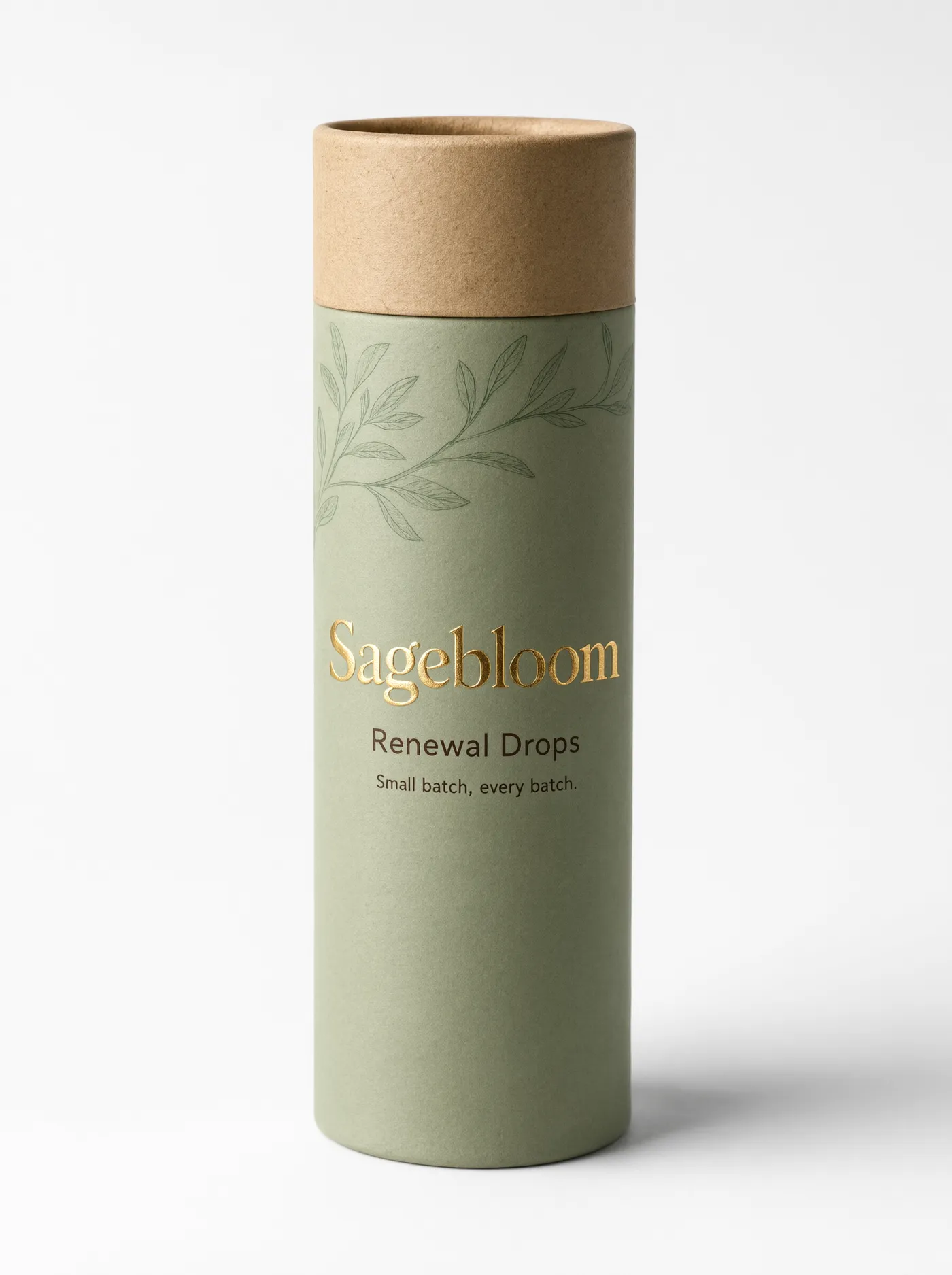
Closed sage green paperboard cosmetic tube with a kraft brown cap and botanical print
Custom Cosmetic Boxes
A cylindrical paperboard tube built around a solid or stick-format cosmetic product — lip balm, deodorant, solid perfume, a cosmetic pencil — with a spiral-wound or convolute-wound construction and a cap or plug closure sized to the product inside. Available in kraft or SBS paperboard, printed and finished to match the brand.
Last updated
Working quote
Product brief
A cosmetic paper tube solves a different packaging problem than a folding carton or a rigid box: the product inside is typically a solid stick, though it might just as easily be a roll-on base or a small cosmetic pot, and the tube itself serves as both the outer branding surface and the structure holding that product in place. Getting a paper tube right starts with matching the construction and closure to the actual product format — a lip balm stick, a deodorant bar, or a solid perfume — rather than treating every cylindrical container as interchangeable.
Spiral-wound construction wraps a paperboard strip in a continuous spiral down the tube's length, while convolute-wound construction wraps the paperboard straight along the length in overlapping layers — the two methods produce a genuinely different surface and cost profile, not just a manufacturing preference. Spiral winding is typically the more cost-efficient approach for higher-volume runs and works well with bold graphic prints that visually absorb the faint spiral seam line running around the tube. Convolute winding produces a smoother, seamless-looking surface that holds fine linework, foil stamping, and spot UV detail with noticeably better clarity, which matters most on a product positioned for gift or shelf presentation rather than one built primarily for cost efficiency. Neither construction is universally better — the right one depends on the finish detail the artwork actually needs and where the product sits in a brand's line.
The tube's internal diameter and length are set by the product going inside it — a lip balm stick, a deodorant bar, or a solid cosmetic pencil each has its own diameter and fill height, and the tube is built around that, not the other way around. Share the product's own diameter, its filled length, and whether it uses a push-up mechanism at the base or sits as a fixed-fit component, since a push-up format needs additional internal clearance a fixed-fit tube doesn't. Closure orientation also matters: a slip-on cap that covers the full tube head needs different tolerances than a smaller plug cap seated inside the tube's rim.
Kraft board gives a visibly natural, uncoated surface that takes foil stamping and spot finishes well but doesn't hold fine multi-color print detail as predictably, while SBS (solid bleached sulfate) stock takes color print and fine detail more predictably because of its smoother, brighter coated surface. FSC-certified paper option available on either substrate, for brands who want that sourcing detail confirmed on the material itself rather than only stated in marketing copy. Which one to use depends on whether the tube is meant to read as a minimally processed kraft surface or as a fully color-branded surface — both are genuine, common choices for this format, not one universal default.
A cosmetic tube's printable surface wraps around a cylinder, which changes how a finish behaves compared with the flat panel of a folding carton or rigid box. Foil stamping and spot UV both read cleanly on a wrapped tube surface when the artwork is prepared around the tube's actual circumference, since the press has to register against a curve rather than a flat plane. Matte or gloss lamination applied over the full wrap changes handling character and surface reflectivity, which is worth deciding early since it affects how legible fine print stays once the finish is applied. Fine embossed or debossed detail can behave differently on a curved wrap than on a flat lid, so specific finish combinations are confirmed against the actual artwork during review rather than assumed universally available.
A change to the tube's diameter or length changes its dieline — every distinct size gets its own tooling, even when it's the same tube style scaled up or down. Closure style is a separate driver: a slip-on cap and a plug-style base cap need their own dieline detail at the tube's open end, on top of whatever the diameter and length already require. If a brand plans multiple sizes across a product line — a full-size lip balm tube and a smaller travel version, for example — each size gets its own dieline prepared around its own dimensions, the same discipline that applies across every Easy Box Packaging format.
Share the product's diameter and filled length, the closure style (slip-on cap or plug base), your preferred paperboard (kraft or SBS), and any print or finish requirements, and that's enough to start a specification and dieline review. Standard orders start at a minimum of 50 units, with production beginning after digital proof approval and typically running from 7 business days, and US shipping is included on standard orders. Dieline and proof review are included on every order at no extra charge, and quote requests are typically answered within 24 hours, often the same business day. A $19.99 sample kit, credited toward your first order, is available if you want to check the paperboard and finish before committing to a full production run.
Proof points
Real construction choices for solid and stick-format cosmetic products.
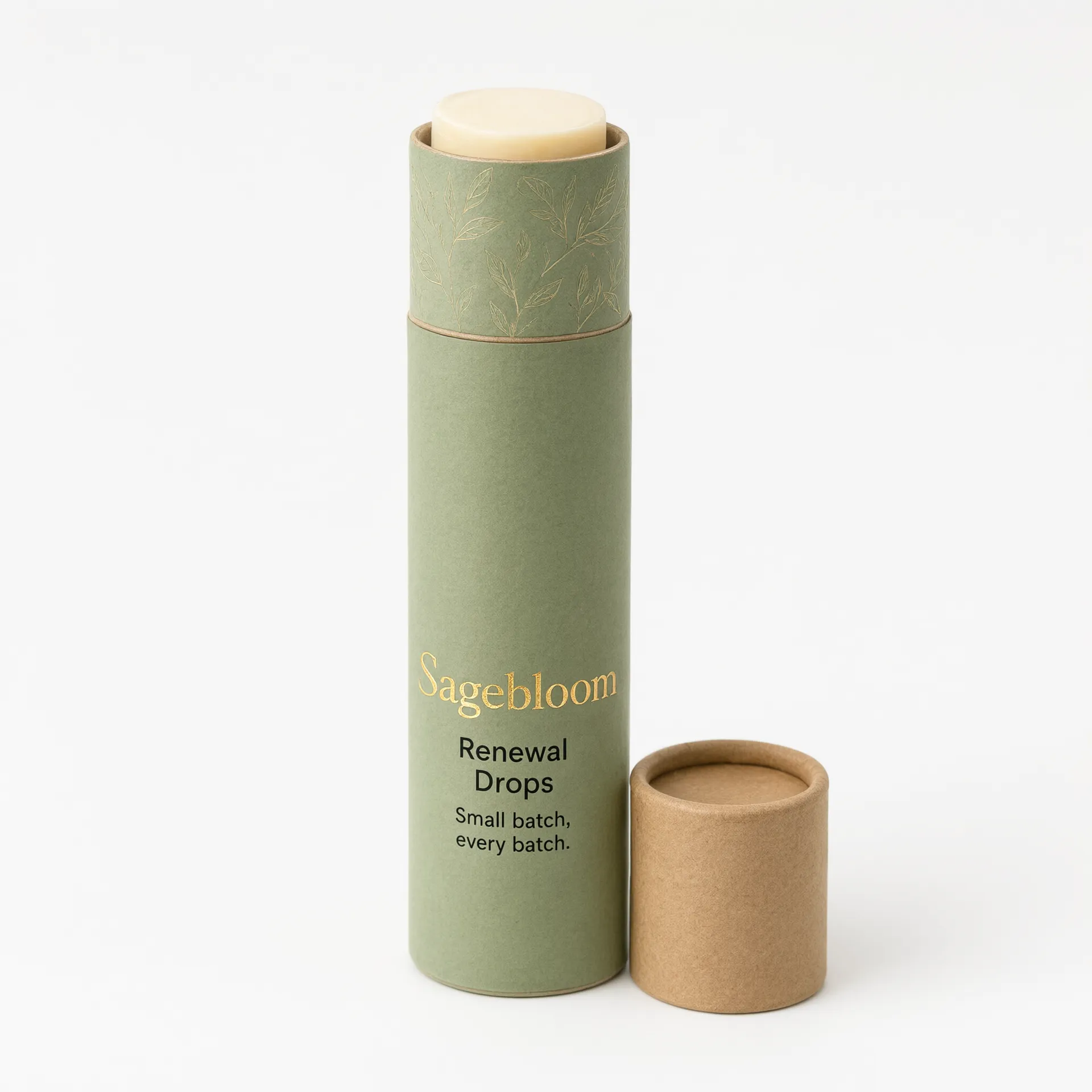
A matched cap or plug closure, sized to the product's own diameter and fill height, holds a solid stick or cosmetic pencil in place inside the tube. Matching the closure type to the product's format matters more than the tube's outer dimensions alone.
A push-up or fixed-fit tube sized around a lip balm or similar stick product.
A paperboard tube built around a solid deodorant bar and its push-up base.
A compact tube for a solid perfume or balm, often positioned as a gift item.
A slim tube sized around a cosmetic pencil rather than a bottle or jar.
A tube built around a solid sunscreen stick's diameter and fill height.
Finish choices available on this construction, subject to artwork review on the tube's curved surface.
Three factors together determine the closure: the product's own format, whether it uses a push-up mechanism, and the tube's diameter — not the outer tube size alone.
A solid stick, roll-on base, or cosmetic pencil each fits and closes differently.
A push-up format needs additional internal clearance a fixed-fit tube doesn't.
A slip-on cap and a plug-style base cap need different tolerances at the tube's open end.
The real steps between a quote request and production.
Diameter, filled length, and whether the product uses a push-up mechanism.
Winding method and closure style are confirmed against the real product.
Digital proof is reviewed and approved before production starts.
Typically from 7 business days after proof approval.
A sample kit ships a real paperboard tube sample and finish reference so you can check weight, texture, and print quality before ordering.
Shipping charge: $19.99. Credited toward your first order.
Request a Sample KitCustomer reviews
Category-wide customer review
We’re pleased with our custom packaging order from Easy Box Packaging. The boxes suit our products well, and we’d be happy to order again.
Category-wide customer review
Our bakery items look lovely in these bakery boxes. The packaging is simple to use and makes each order feel well presented.
Category-wide customer review
What I liked most was being able to get custom boxes made to our measurements. They fit our products well and give them a professional look.
Category-wide customer review
We were looking for printed packaging that would make our products look more polished. Really happy with how these custom boxes came out.
Category-wide customer review
The printed boxes look good both in photos and in person. They’ve made our product packaging feel more consistent and professional.
Category-wide customer review
Our products sit nicely inside the custom cardboard boxes, and the packaging is easy for our team to put together. A good result for our order.
Find clear answers about fit, materials, and ordering below.
Spiral-wound tubes wrap a paperboard strip in a continuous spiral, leaving a faint seam line and suiting cost-efficient, higher-volume runs with bold graphics. Convolute-wound tubes wrap the paperboard straight along the length, producing a smoother surface that holds fine foil or spot UV detail more cleanly.
A paper tube is built for solid or stick-format products — lip balm, deodorant bars, solid perfume — where the tube itself contains and supports the product. Liquid or cream formulas typically need a separate inner container that the paper tube wraps around or covers rather than holding the product directly.
A slip-on cap that covers the full tube head, or a smaller plug-style cap seated inside the tube's rim, are the two common approaches. Which one applies depends on the product's format and whether it uses a push-up mechanism at the base.
Yes — FSC-certified paper option available on either kraft or SBS paperboard, for brands that want that sourcing detail confirmed on the material itself rather than only stated in marketing copy.
Standard orders start at a minimum of 50 units, with production beginning after digital proof approval and typically running from 7 business days.
Compare nearby products and request the format that best fits your next run.
Available product
Available product
Available product
Available product
Ready to configure your tube
Share the product's diameter, fill height, and closure style to start a specification and dieline review.
Add your product details to see a quote summary.