Rolled prints and posters
A round format can organize rolled artwork when the tube length, diameter, end closure, and recipient opening sequence are reviewed around the print.

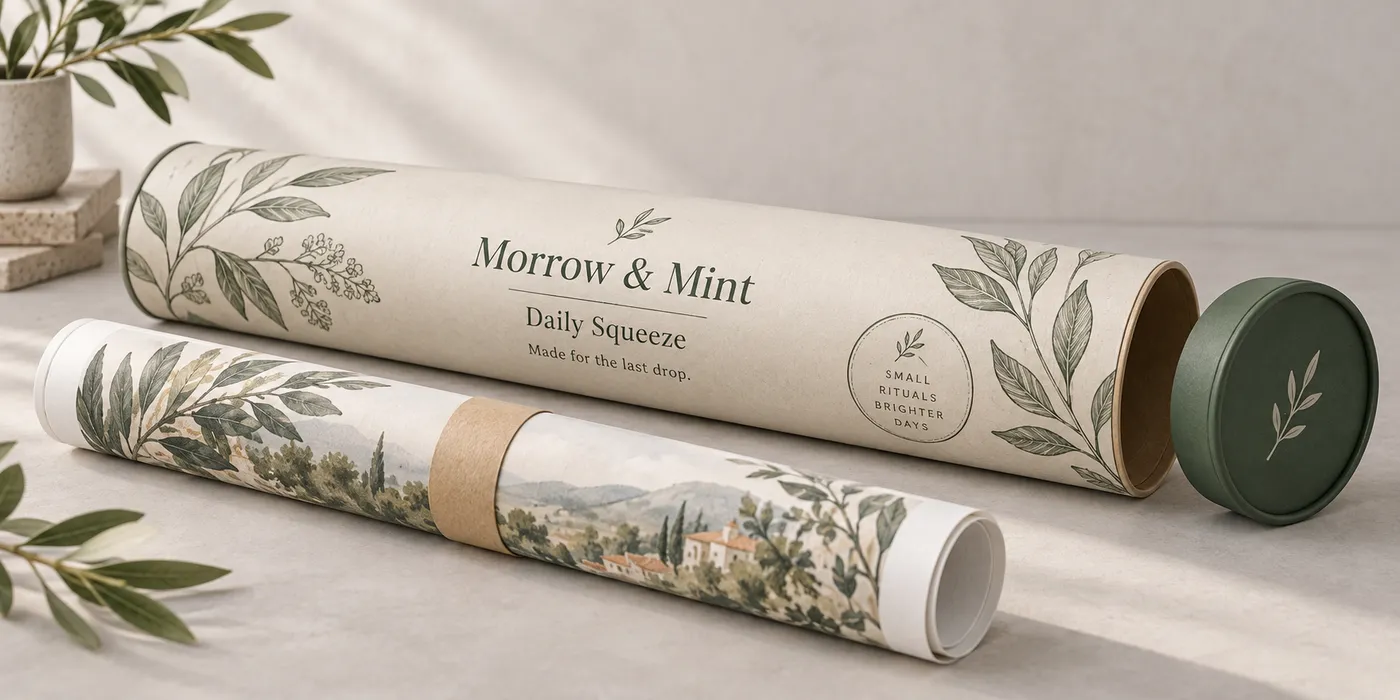
Custom cylindrical mailing tube with a sage closure, printed curved wrap, and rolled art print beside the open end.
Tubes and Jars
Custom cylinder mailing tubes give a product, poster, bottle, or promotional item a round shipping format with a defined diameter, length, end closure, and printable outer surface. The useful brief starts with the packed item and the way it will be handled in transit, then connects tube fit, closure choice, artwork wrap, material direction, and finish. Share the item dimensions and mail route so the proof is reviewed around the real package.
Last updated
Working quote
Product brief
Custom cylinder mailing tubes are specified around a round body rather than a flat carton footprint. That makes the packed item, its longest point, its orientation, and the way the tube will be handled important from the first quote conversation. A poster, bottle, rolled print, apparel accessory, sample kit, or promotional item may each need a different relationship between tube diameter, usable length, end closure, and interior clearance. Share the packed dimensions and handling route before choosing artwork or a finish.
The tube should be large enough for the intended item without leaving an unexplained void that changes how the contents move. At the same time, the fit should leave room for the closure method and any insert, wrap, or protective component that is part of the packing sequence. The final clearance is a product-specific decision, not a generic claim about every mailing tube. A simple sketch or photograph of the item can help the team understand which surfaces, corners, or rolled edges need attention.
A cylinder is governed by a round cross-section and a length, so both dimensions should be recorded with the packed item in its intended orientation. State the outside or inside reference you are using, identify the longest packed point, and note whether the contents are rigid, flexible, rolled, or nested. If the item has a cap, neck, handle, or irregular end, include that detail because it can change the practical fit even when the main body appears simple.
End closures deserve the same attention as the tube body. A removable cap, fitted end, plug, or other reviewed closure changes how the pack opens, how the contents are inserted, and how the tube is handled at a packing station. Do not assume that a closure is leakproof, tamper-evident, or suitable for a particular formula without a confirmed construction. For a mailing application, describe how the operator will close the tube and whether the recipient needs an easy opening point.
The outer cylinder gives the brand a continuous curved panel, but artwork still needs a clear orientation. Identify the primary reading direction, where the front message should sit, and whether the design should wrap all the way around or leave a quieter area for handling information. A logo, product name, destination label, and small instructions may not all read equally well across a curved surface. The proof should show the seam or joining area, the closure relationship, and the portion of the wrap that carries the main message.
Matte Lamination, Gloss Lamination, Spot UV, Foil Stamping, or Embossing/Debossing can be considered where the chosen construction and artwork support them. These are options for a reviewed print direction, not automatic performance upgrades. Fine type, metallic detail, and high-contrast areas should be checked at the finished scale and across the curve. If the tube will be stacked, carried, or placed in a display, mention that handling context so the visual hierarchy is not designed in isolation from the way the package will be seen.
The category context includes paperboard, PE or multilayer plastic, and aluminum tube directions, but the correct construction depends on the item, closure, fill or insert method, and market requirements. A paperboard mailing tube may suit a rolled print or presentation mailer, while another product may need a different tube material or an outer carton. Do not describe the pack as food-contact suitable, cosmetic-compliant, moisture-proof, or barrier-rated until the exact construction and use have been confirmed.
Share whether the tube is the primary package, a shipping sleeve, a presentation layer, or one part of a larger mailer. That distinction changes what the outer surface needs to communicate and how the contents should be protected during packing. If a liner, inner wrap, label, or end insert is required, include it in the brief instead of treating the tube as a standalone shape.
The standard fulfillment path starts at 50 units. Production begins from 7 business days after digital proof approval, and Free US shipping is included on the standard path. Dieline and proof review are included at no extra charge, while quote requests are answered within 24 hours. If a physical print direction or closure sample would help, the sample-kit program carries a $44.99 USD shipping charge credited toward the first order. No product-specific unit price is stated here because no defensible live EBP sibling or approved price source was supplied for this cylinder format.
Before approving the proof, check the packed item orientation, diameter reference, usable length, closure placement, wrap alignment, seam or joining area, small type, finish areas, and any handling label. If the item or mail route changes, send that change before approval because it can alter the fit and artwork panel. The quote becomes more useful when it reflects the actual packing sequence rather than only the phrase mailing tube.
A cylindrical mailer can carry rolled posters, prints, calendars, labels, textiles, long promotional pieces, or other items that benefit from a round format. It can also serve as a branded presentation tube for a sample or gift when the closure and interior fit are reviewed around the contents. A direct-to-customer shipment may need a clear recipient label and a practical opening point, while a retail display tube may prioritize the printed wrap and how the item is seen before opening.
The same outer shape can support different jobs, so the use case should guide the brief. Tell the quoting team whether the tube will be packed by hand, placed inside another shipper, displayed upright, stored flat, or sent directly to the recipient. Those details help connect the cylinder, closure, print direction, and handling notes to the real workflow without promising a performance attribute that has not been verified.
Send the packed item dimensions, preferred diameter and length reference, item weight if known, closure preference, quantity, intended mail route, artwork status, and whether the tube is primary packaging or an outer shipping layer. Include a sketch or photo showing the item orientation, any insert or liner, and where the main artwork should face. Mention the reading distance and any small information that must remain legible on the curve.
The review can then connect fit, closure, material direction, print coverage, and finish before the digital proof is prepared. Once the proof is approved, production can begin from 7 business days under the standard estimate. This sequence keeps the cylindrical construction tied to the packed item and the mail route while leaving the final product-specific price to the quote.
Proof points
The digital proof should make the cylinder, packed-item orientation, closure relationship, artwork wrap, and intended handling clear enough to review.
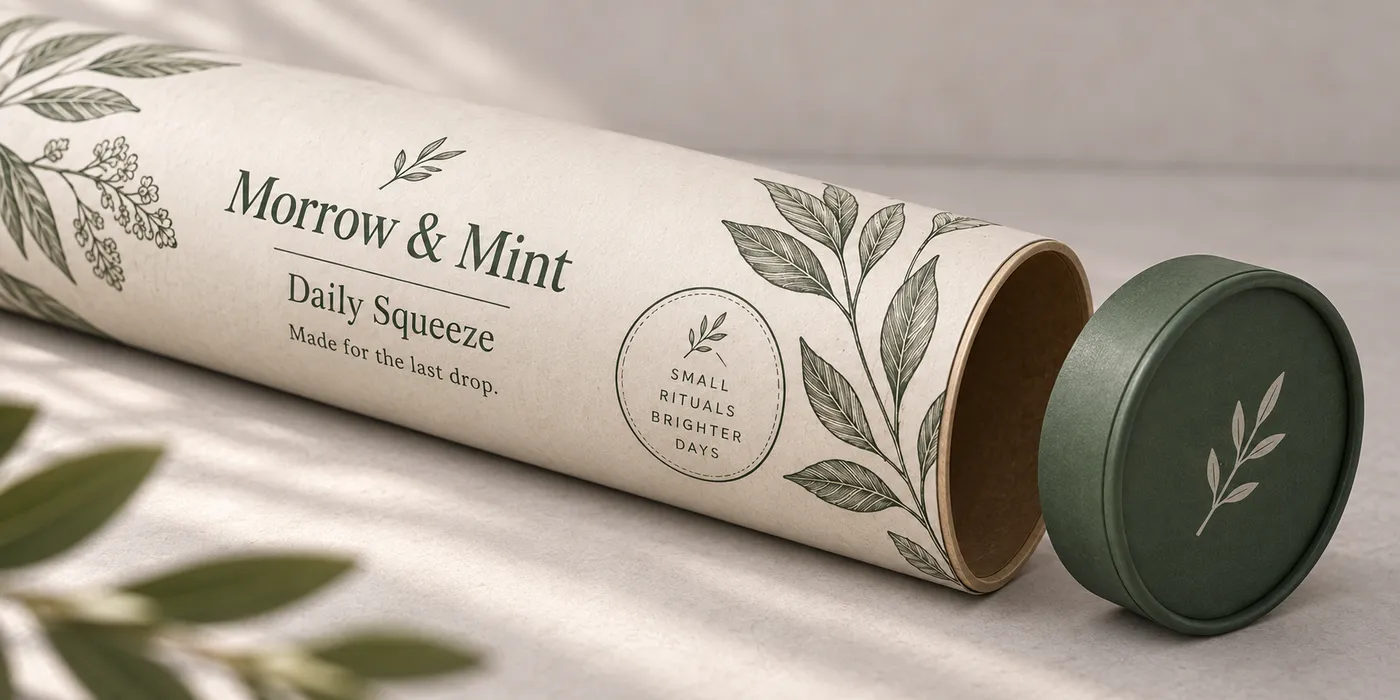
Custom cylinder mailing tubes pair a round body with a reviewed length, end closure, printable wrap, and handling plan. The specification starts with the packed item and mail route, then connects fit, material direction, artwork orientation, and finish so the proof reflects the actual package rather than a generic tube.
A round format can organize rolled artwork when the tube length, diameter, end closure, and recipient opening sequence are reviewed around the print.
A branded tube can present a sample or campaign item when the insert, packed orientation, printed wrap, and closure are treated as one package.
Items with a cylindrical or elongated profile can be evaluated for a tube when the actual fit, end treatment, and mail route are supplied.
A display-oriented tube can put the printed brand panel forward while keeping the opening, storage position, and contents clear in the brief.
A curved surface needs a clear front, joining area, and information hierarchy before the finish is chosen. The proof should show how the brand message travels around the tube.
A useful proof brings the physical fit and the printed presentation into one view. These are the decisions that help a buyer check the cylinder before production.
The item orientation, diameter reference, usable length, clearance, and any insert or liner are described together so the tube is reviewed around the real contents.
The cap, plug, or other reviewed end treatment determines how the tube is filled, closed, opened, and handled at the packing station.
The artwork wrap identifies the primary reading direction, joining area, finish locations, and information that must remain legible across the cylinder.
A focused request lets the quote and proof address the physical cylinder and the printed presentation together.
Send the item dimensions, orientation, preferred diameter and length reference, weight if known, insert or liner details, and the intended mail route.
State the closure preference, primary reading direction, joining-area requirements, artwork status, quantity, and finish direction.
Check fit references, closure placement, wrap alignment, small type, finish areas, and handling labels before approval.
After proof approval, production can begin from 7 business days under the standard estimate; the final quote remains product-specific.
Need help with structure, materials, or production planning? See how we manufacture custom packaging.
A sample kit can help compare the printed wrap, surface treatment, or closure direction before a larger run. Shipping is $44.99 and is credited toward the first order.
Shipping charge: $44.99. Credited toward your first order.
Request a Sample KitFind clear answers about fit, materials, and ordering below.
Share the packed item diameter, usable length, orientation, irregular ends, insert or liner details, and the way the tube will be mailed or displayed. Those details let the fit and closure be reviewed together.
A wrap can be planned around the curved surface, but the proof should identify the primary reading direction, joining or seam area, closure relationship, and any information that must stay legible.
The closure depends on the opening sequence, packed item, tube construction, and handling route. A cap, plug, or fitted end can be reviewed after the contents and packing method are described; no closure performance should be assumed without confirmation.
Material and finish directions can be discussed before the proof, then checked against the artwork scale, curved panel, closure, handling context, and actual construction. Paperboard, plastic, and aluminum directions should not be treated as interchangeable.
The standard fulfillment path starts at 50 units. Production begins from 7 business days after digital proof approval, with Free US shipping and dieline/proof review included on the standard path.
The unit price range shown on this page is a starting guide. Your final unit price depends on the dimensions, material, print coverage, finish, and order quantity, and it is confirmed in a quote.
Orders start at 50 units and scale up to 500,000 for bulk runs, with pricing from $0.31 per unit on larger quantities. Standard production is from 7 business days after digital proof approval.
Compare nearby products and request the format that best fits your next run.
Available product
Available product
Available product
Available product
Plan the cylinder around the contents
Send the packed dimensions, closure preference, artwork, quantity, and intended handling context so the team can review fit, print coverage, and finish together.
Add your product details to see a quote summary.