Creams and balms
A wide-mouth jar can suit a thicker cream or balm when the opening, liner, closure, and access method are reviewed around the formula.

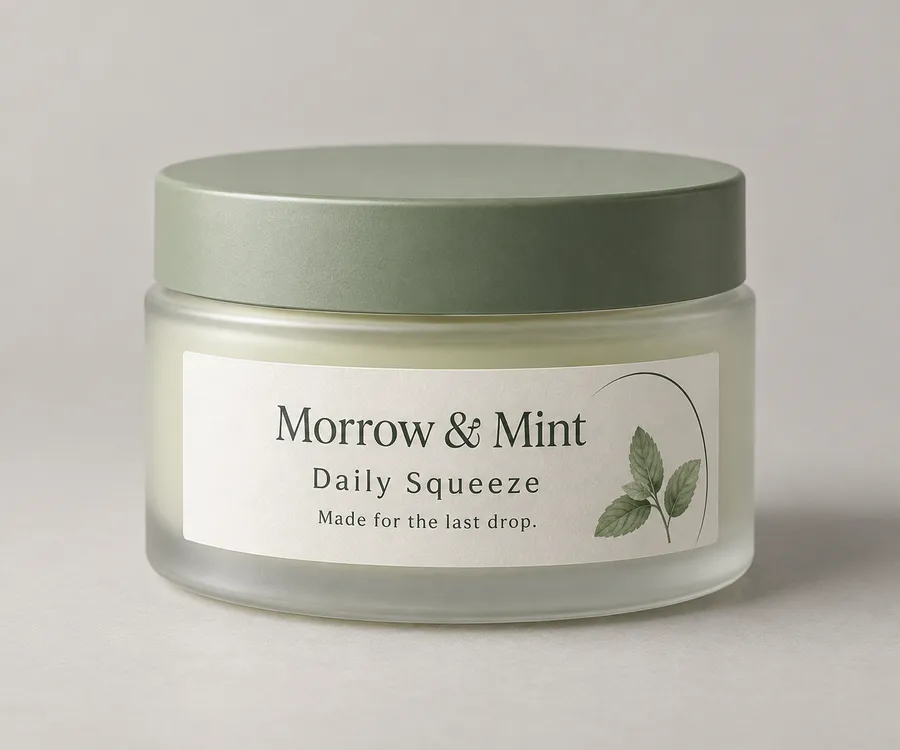
Low frosted glass jar with sage lid and Morrow and Mint balm label
Tubes and Jars
Custom frosted glass jars give creams, balms, lotions, pastes, and other suitable formulas a wide-mouth primary pack with a soft, diffused surface appearance. Start with the filled height, outside diameter, closure, liner or seal, fill volume, and dispensing access, then review the jar, print surface, and optional outer carton around the way it will be filled, displayed, carried, and shipped.
Last updated
Working quote
Product brief
Custom frosted glass jars are primary containers for formulas that benefit from a broad opening and a visible, considered vessel. The frosted surface creates a diffused appearance, but the useful specification begins with the filled product and the way a customer will access it. A low, wide cream jar creates a different brief from a taller balm jar, even when both are described as cosmetic jars. The outside diameter, assembled height, shoulder profile, closure, and any label or seal that changes the widest point should be reviewed together.
Share the intended fill volume and the formula's approximate viscosity before choosing the opening or closure direction. A thick balm may need an opening that allows filling and access without scraping against a narrow neck, while a lotion or paste may need a dispensing decision that is checked against the closure and the way the product is used. These are specification questions, not universal promises about every frosted glass jar. The actual liner, seal, thread, cap, and glass construction should be confirmed for the formula and destination market before production.
Provide the jar's filled height with the closure fitted, the outside diameter at the body and shoulder, and the diameter of any lid or cap that projects beyond the glass. Note whether the jar has a rounded shoulder, straight wall, stepped base, or another profile that changes how it sits on a shelf or in an outer carton. If a label, tamper feature, inner seal, or overcap will be applied, include its finished thickness and the area that must remain visible. A nominal fill is not enough to size the outside package because two vessels with the same fill can have different diameters and heights.
The same measurements help the team check artwork space and packing. A short, broad jar can leave a large circular lid panel but limited vertical label height; a taller jar may offer a longer side panel while creating a different center-of-gravity and shipping brief. If the jar will be packed in a printed carton, sleeve, gift set, or sample kit, share the packed arrangement, insert or divider, and the orientation the customer should see first.
A frosted glass jar is often chosen for creams, balms, scrubs, lotions, sauces, pastes, or other products that are filled and accessed through a wider mouth. The appropriate opening depends on viscosity, fill method, tool or fingertip access, headspace, and the closure selected for the project. A screw cap, overcap, liner, or inner seal can change the assembled height and the way the jar is handled, so it should be part of the quote brief rather than added after artwork.
Do not assume that a frosted appearance confirms a particular glass grade, barrier performance, seal integrity, food-contact approval, cosmetic compliance, or leakproof result. The category context does not establish those claims. Confirm the actual glass construction, closure components, liner, seal, formula compatibility, and regulatory requirements for the market where the product will be sold. This keeps the jar recommendation tied to evidence instead of a generic promise.
The frosted glass body can provide a quiet base for a label, direct decoration, or another reviewed print route, while a paperboard carton can carry longer product information when the primary vessel has limited space. Matte Lamination, Gloss Lamination, Spot UV, Foil Stamping, and Embossing/Debossing are category finish directions for reviewed printed surfaces such as an outer carton or approved label treatment. Their placement should be checked against the actual surface, artwork scale, curvature, reading direction, and production process.
The pictured print is an example of artwork placement. Your artwork should replace that mockup with approved brand, product, ingredient, usage, and market information. Keep the jar's frosted body, closure, label panel, and any carton artwork oriented together so the product name can be read when the jar is displayed or removed from a set.
The jar's weight, glass profile, closure, label, and shipping route all affect whether it travels alone, inside a carton, or in a coordinated set. Internal support may be unnecessary for one close-fitting retail carton and useful for a heavier vessel or multi-jar arrangement; that decision depends on geometry, weight, fragility, orientation, clearance, and presentation requirements together. A divider or fitted support should be specified from the real jar and closure, not assumed from the phrase glass jar.
If the product will be carried in a subscription kit, hospitality set, retail carton, or direct-to-customer mailer, describe how it will be lifted, displayed, and packed. A jar intended for hand filling may need a different access discussion from one filled on a line. Include the intended order quantity, packed count, destination, and any sample or existing vessel that helps the team understand the handling route.
The standard fulfillment path starts at 50 units. Production is from 7 business days after digital proof approval, free US shipping is included, and dieline and proof review are included at no extra charge. A sample kit carries a $44.99 USD shipping charge credited toward the first order, which can help compare the frosted appearance, closure direction, label or carton surface, and handling feel before approving a larger run. Pricing remains quote-only because the glass profile, closure, fill volume, decoration, outer packaging, and quantity change the specification.
For a useful quote, send the filled height, body and lid diameters, target fill volume, formula type, closure preference, liner or seal requirement, label or carton artwork, quantity, and delivery destination. Quote requests are typically answered the same business day and always within 24 hours. During digital proof review, check the vessel silhouette, readable brand panel, closure fit, label position, carton cavity, and any requested finish before approval.
A custom frosted glass jar works best when its soft surface appearance is treated as one part of a complete primary-pack decision. The jar, opening, closure, seal, print area, outer packaging, and handling route should agree with the formula and the customer's first use. Supplying the real vessel details gives Easy Box Packaging enough context to recommend a specific, quote-ready direction without inventing an unsupported capacity, material grade, or performance claim.
Proof points
The proof should show the vessel, closure, printable area, and any outer packaging as one consistent specification. Compare the assembled dimensions and artwork with the filled product information supplied for the quote.
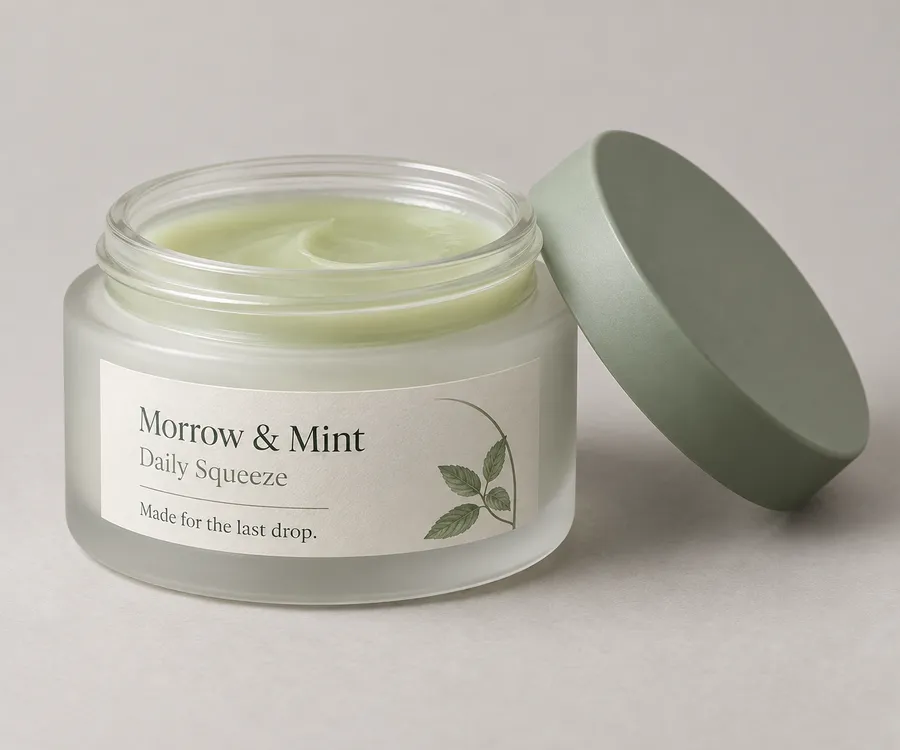
The jar should be reviewed around the filled formula, body and lid diameter, assembled height, opening access, closure, liner or seal, and the way it will be displayed or packed. Share those details before choosing artwork so the surface and outer packaging are designed around a real vessel.
A wide-mouth jar can suit a thicker cream or balm when the opening, liner, closure, and access method are reviewed around the formula.
The frosted vessel can give a lotion or scrub a soft shelf presence, with the fill volume and dispensing access established before artwork.
A compact jar can be paired with an outer carton or kit when the packed count, closure height, and handling route are known.
A jar may suit a sauce, paste, or culinary formula only after the actual material, liner, seal, and destination-market requirements are confirmed.
Map the brand, product name, use information, and any required copy on the real jar surface or an outer carton. Finish placement should account for the vessel's curvature, label area, artwork scale, and how the jar is viewed in hand or on a shelf.
A wide-mouth glass jar can suit a thicker product, but the opening and closure still depend on viscosity, fill method, headspace, tool access, and market requirements. The actual glass, liner, seal, and closure are confirmed during specification review.
Body diameter, shoulder profile, lid diameter, and assembled height define the jar and any carton cavity more reliably than nominal fill alone.
A screw cap, overcap, liner, or inner seal changes access and assembled height, so it belongs in the quote brief with the formula and fill method.
The frosted body, label or decoration, and optional outer carton should be planned together so the first readable brand panel remains visible in the intended display.
A useful quote starts with the filled vessel and the way it will be accessed, displayed, and shipped. The following information turns that description into a reviewable jar specification.
Provide filled height, body and lid diameters, shoulder or base profile, target fill volume, formula type, and any label, seal, or overcap.
Explain the desired opening, closure, liner, headspace, fill method, and whether a fingertip, tool, or controlled dispensing route is expected.
State whether the jar will be sold at retail, placed in a travel or sample kit, packed in a carton, or shipped direct to a customer.
Share artwork status and any preference for label, direct decoration, outer carton, Matte Lamination, Gloss Lamination, Spot UV, Foil Stamping, or Embossing/Debossing.
Check vessel silhouette, closure fit, readable panels, label or carton position, support, and finish representation before approval.
Need help with structure, materials, or production planning? See how we manufacture custom packaging.
A sample kit carries a $44.99 USD shipping charge credited toward your first order, useful when you need to compare frosted appearance, vessel feel, closure direction, and printed presentation before approving a custom jar run.
Shipping charge: $44.99. Credited toward your first order.
Request a Sample KitFind clear answers about fit, materials, and ordering below.
Provide the filled height with the closure fitted, body and lid diameters, shoulder or base profile, target fill volume, and any label, inner seal, or overcap that changes the outside footprint. A nominal fill alone does not define the vessel dimensions.
A wide-mouth jar can suit a thicker cream or balm, but the opening, liner, closure, headspace, fill method, and formula compatibility should be reviewed together. The final direction is product-specific rather than a universal performance claim.
A liner or inner seal may be considered when appropriate to the formula, closure, fill method, and market requirements. Confirm the actual component and seal specification during quotation rather than assuming it from the jar name.
Branding can be planned on a reviewed label or direct-decoration route, and longer product information can be carried by an outer carton. Matte Lamination, Gloss Lamination, Spot UV, Foil Stamping, and Embossing/Debossing are category finish directions for reviewed printed surfaces.
A jar may suit a sauce, paste, or culinary formula only after the actual material, liner, seal, formula compatibility, and destination-market requirements are confirmed. The category context does not by itself certify food-contact suitability.
The standard fulfillment path starts at 50 units. Production begins from 7 business days after digital proof approval, and free US shipping plus dieline and proof review at no extra charge are included. Your final unit price is confirmed in a quote because the vessel, closure, decoration, packaging, and quantity determine the specification.
Orders start at 50 units and scale up to 500,000 for bulk runs, with pricing from $0.25 per unit on larger quantities. Standard production is from 7 business days after digital proof approval.
Compare nearby products and request the format that best fits your next run.
Available product
Available product
Available product
Available product
Specify the filled vessel
Send the filled dimensions, target fill volume, formula type, closure preference, print route, artwork status, quantity, and delivery destination. Easy Box Packaging can then review the jar, surface, and any outer packaging as one quote-ready specification.
Add your product details to see a quote summary.