Takeaway fries and fried portions
A printed liner can cover the base and turn up the sides of a basket used for fries or fried snacks when the grease condition is described during specification.

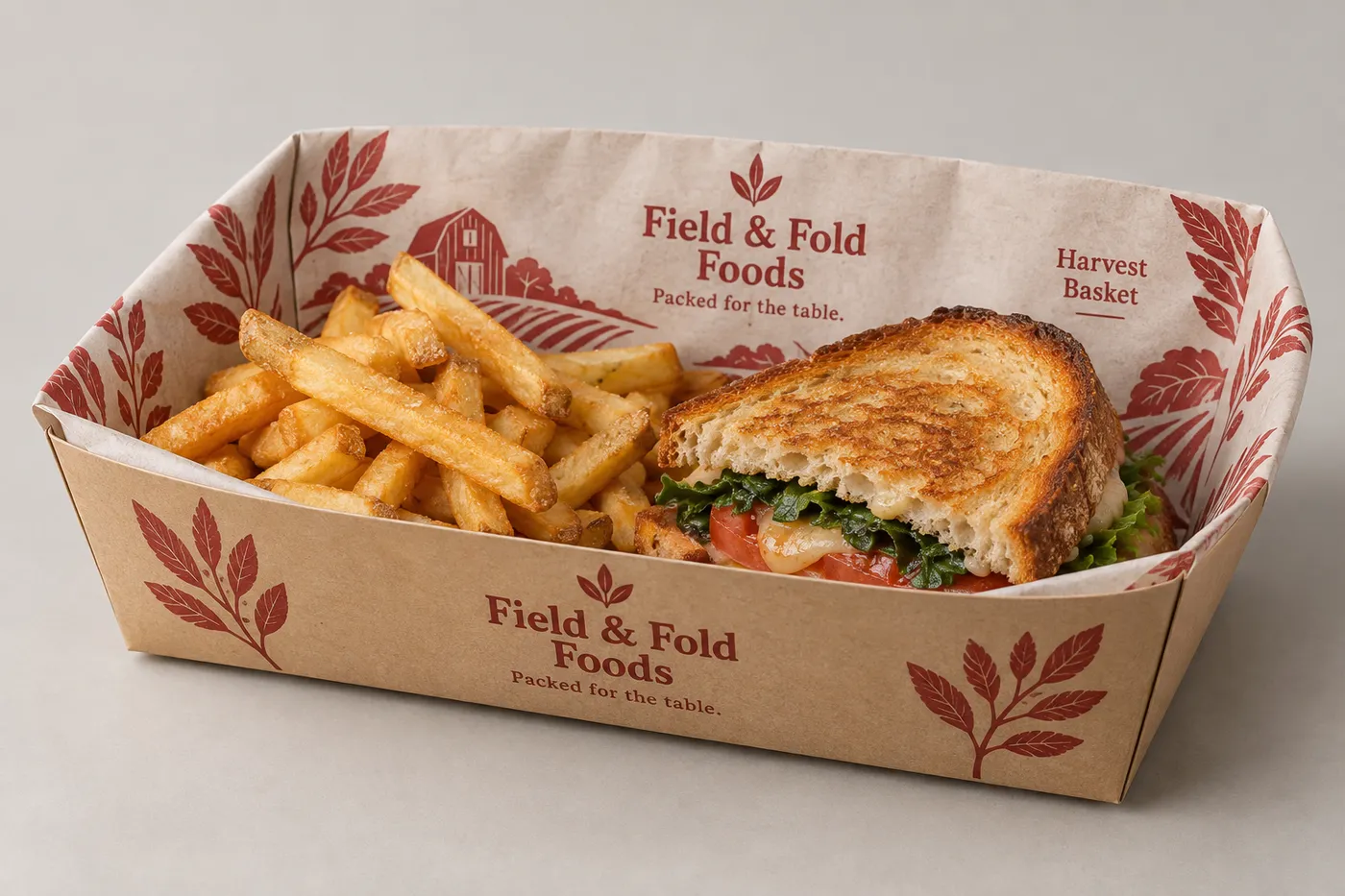
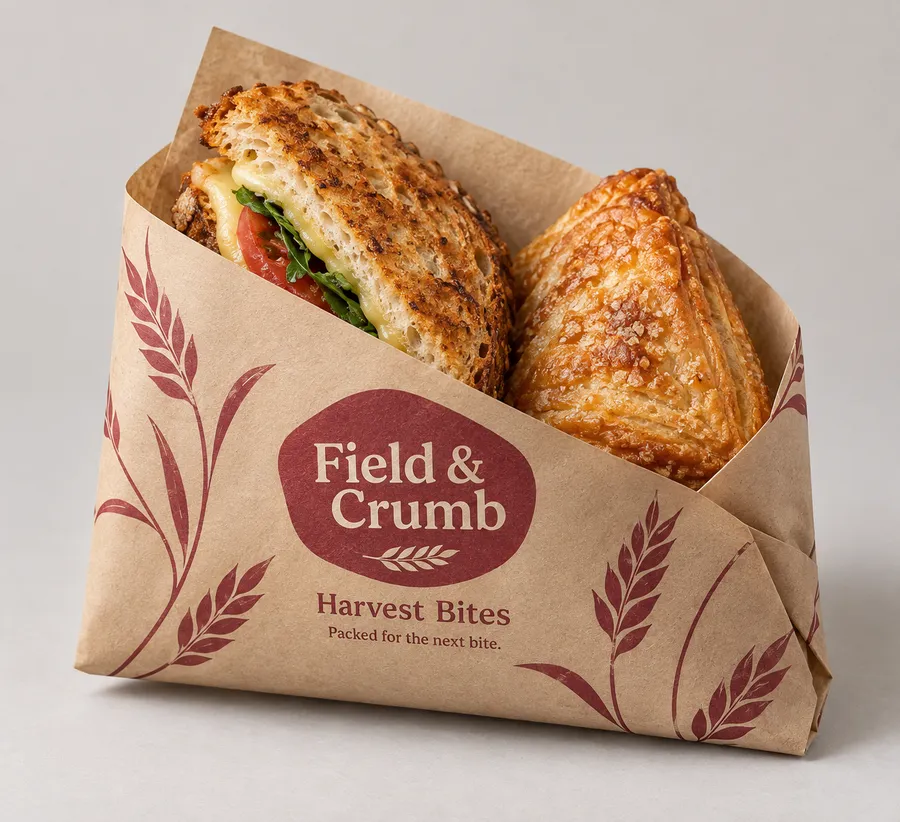
Printed kraft food basket liner under fries and a toasted sandwich in an open takeaway basket
Food Boxes
Custom food basket liners add a printed, food-packaging surface inside open baskets and trays for takeaway, café, bakery, and event service. The sheet or fitted liner is planned around the basket footprint, food weight, fold or tuck points, and grease or moisture exposure. Share the filled dimensions and artwork direction so the print remains visible without crowding the serving space.
Last updated
Working quote
Product brief
A custom food basket liner gives an open basket or tray a defined printed surface while the food remains visible and easy to serve. It can be a flat sheet, a folded wrap, or a fitted insert that follows the base and side walls. The useful format depends on the basket geometry, the food portion, and the way staff or customers will lift and carry it. A liner changes the visible interior without turning the basket into a closed carton.
Start with the filled basket rather than a generic paper size. Record the base length and width, wall height, rim shape, fold or tuck points, and the food's occupied area after it is portioned. Note whether fries, sandwiches, pastries, fried snacks, or a shared serving will sit directly on the liner. Food weight, grease, moisture, heat at packing, and the desired reveal all affect the paper direction and the amount of overlap. A liner that is too short exposes the basket base; one that is too large can bunch against the food or interfere with service.
The liner should follow the way the basket is actually assembled and carried. For a flat base, the key measurements are the inside length and width plus the fold allowance at each wall. For a tapered basket, capture the top opening as well as the smaller base so the side folds do not pull the sheet out of position. If the basket has a rolled rim, handle cutout, divider, or nested tray, show those features in the brief. The same product name can describe several shapes, so the dieline or fold plan must follow the real container.
Decide which areas should remain visible after the food is placed. A repeating pattern can run through the base and side folds, while a logo field or short handling message may be positioned where a customer sees it before the first bite. The artwork map should account for the fold direction, the basket's front edge, and any area hidden under the portion. A clear flat layout is more useful than a nominal sheet dimension when the liner will be folded or tucked.
Grease-Resistant Kraft Paper is a practical category direction when the food can leave oil on the liner, while Kraft Paperboard can suit a more structured insert or a heavier printed panel. SBS Paperboard offers a smooth printed surface for a fitted tray or divider. Corrugated Board belongs to the broader food-box category when the liner is paired with a sturdier shipping or display structure, not as an assumption for every open basket. Food-Grade Flexible Pouch Film may be relevant to a separate sealed component and should not be treated as a paper liner by default.
Material choice should be reviewed with food contact, grease or moisture exposure, packing temperature, basket structure, and the intended handling route. Do not infer a universal barrier, certification, or shelf-life result from a material name alone. If the food is wet or heavily sauced, describe that condition in the quote brief so the proposed liner construction can be checked with the actual basket and service method. An FSC-certified paper option may be requested as a stock direction; that does not mean every finished liner uses certified stock.
A liner's print is seen on a moving, folded surface rather than a single billboard-like panel. Matte Lamination or Gloss Lamination can change the surface appearance and handling feel where the specification permits. Spot UV can highlight a selected logo or mark, while Foil Stamping and Embossing/Debossing can be considered for a limited graphic area subject to artwork review. Keep fine artwork away from a fold or tuck that will be hidden, compressed, or repeatedly handled.
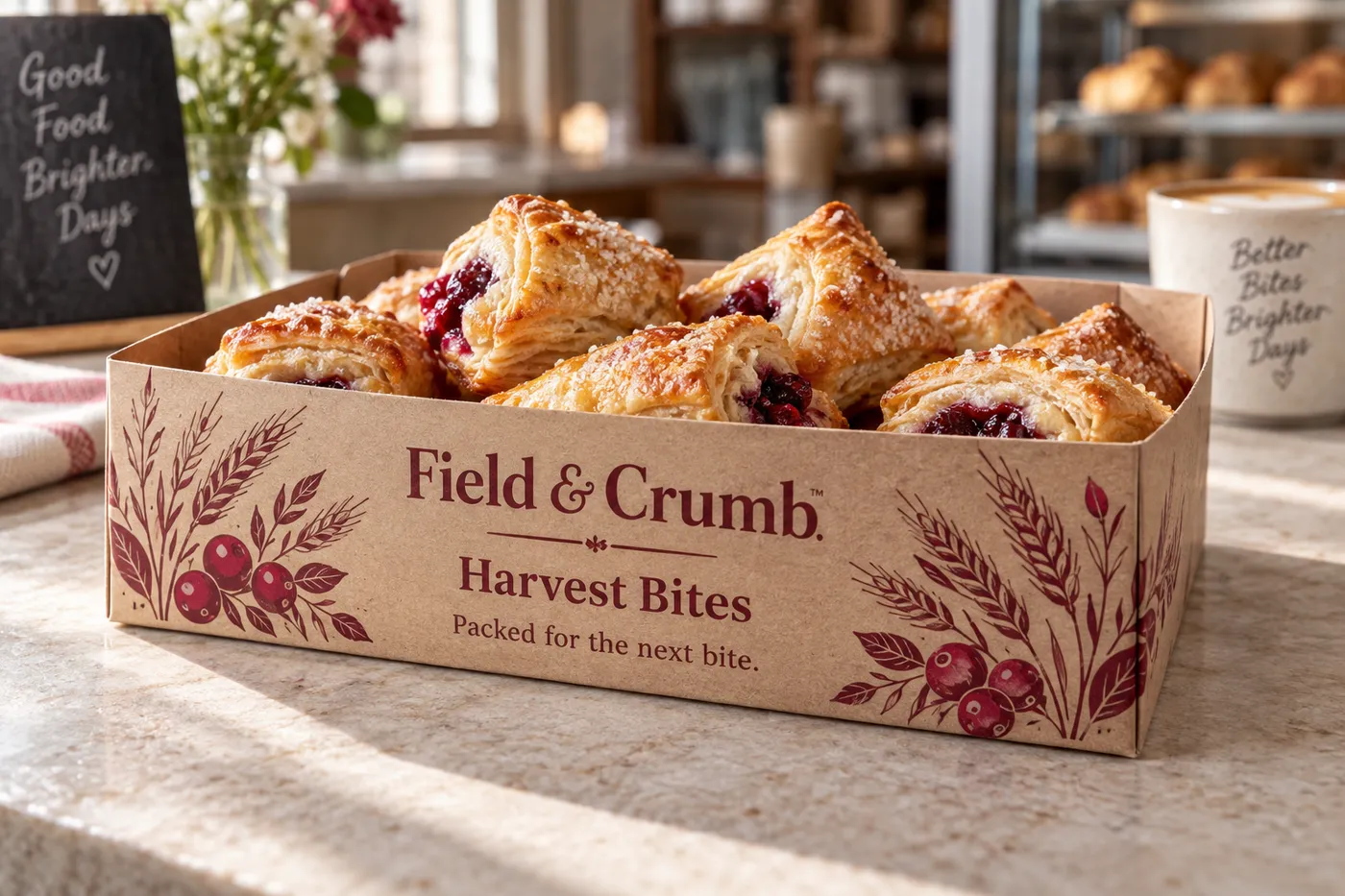
The product images show an illustrative print layout. Your artwork should replace the mockup with approved brand, product, allergen, or service information. Review the design on the assembled basket so the mark is upright from the customer's viewing side and does not disappear beneath the food portion.
The standard fulfillment path starts at 50 units, and production is from 7 business days after digital proof approval. Free US shipping and dieline and proof review are included at no extra charge. A sample kit carries a $44.99 USD shipping charge credited toward the first order if you need to compare paper feel, fold behavior, print coverage, and basket presentation in hand. Pricing remains quote-only because the basket footprint, liner style, material direction, print coverage, finish, and quantity change the specification.
Send the basket's inside length, width, wall height, opening shape, rim or handle details, filled food type, approximate portion weight, grease or moisture exposure, fold or tuck preference, artwork status, and destination. Quote requests are typically answered the same business day and always within 24 hours. After the liner layout is prepared, check the flat artwork, fold orientation, visible logo area, contact surface, and assembled basket view in the digital proof before approval.
A useful custom food basket liner is a small structure with a specific job: give the open basket a clean printed interior while fitting the real food and the way it is served. Accurate measurements and a clear handling brief let the material, folds, print, and finish be reviewed together without inventing a stock size or a generic food-contact promise.
Proof points
The proof should show the flat artwork and the assembled basket view. Compare the fold direction, coverage, visible print, contact surface, and filled presentation with the brief supplied for the quote.
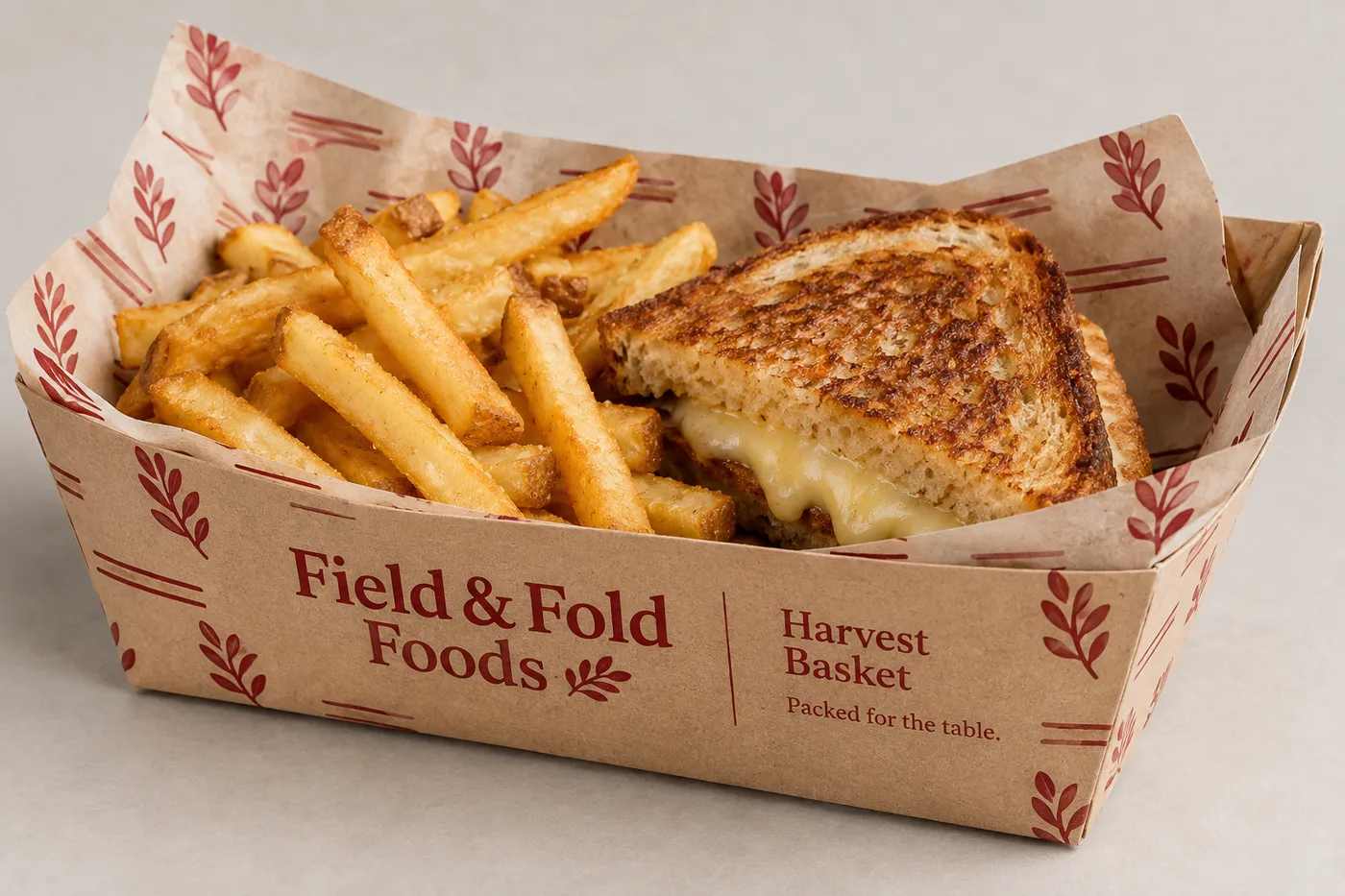
The liner should cover the intended interior, keep the printed side visible, and stay compatible with the basket's folds, rim, handles, and serving route. Start with the filled footprint, food condition, and desired reveal so the sheet or fitted insert can be reviewed around the real container.
A printed liner can cover the base and turn up the sides of a basket used for fries or fried snacks when the grease condition is described during specification.
A folded or tucked liner can create a consistent branded interior for sandwiches, wraps, or café portions without closing the open basket.
A printed paper surface can frame pastries, cookies, or small baked assortments when the food footprint and contact surface are mapped clearly.
Repeat artwork or a short handling message can keep open baskets consistent across event portions, food trucks, cafés, and hospitality service.
Map artwork on the flat sheet and on the assembled basket. The front edge, side folds, tuck points, and hidden areas all affect how a logo, pattern, or service message is seen after filling.
The base, side folds, rim, and food portion are considered together. Depending on the basket geometry and handling method, the liner may be a flat sheet, a folded wrap, or a fitted paperboard insert after the packed presentation is reviewed.
Inside length and width establish how much of the basket base is covered and where a repeat pattern or logo field remains visible.
Taper, wall height, rim, handle cutouts, and tuck points determine how the liner turns up the sides without crowding the food.
The front edge and food portion should be mapped together so key print is not hidden once the basket is filled and carried.
A useful quote starts with the basket, the filled portion, and the view the liner needs to create. These steps turn that service description into a reviewable liner format.
Provide inside base length and width, wall height, top opening, taper, rim, handles, dividers, and any fold or tuck points.
State the food type, approximate weight, grease or moisture exposure, packing temperature, contact time, and how the portion sits in the basket.
Explain whether you need a flat sheet, folded wrap, or fitted insert and which areas should remain visible after filling.
Share preferences for Grease-Resistant Kraft Paper, Kraft Paperboard, SBS Paperboard, and any listed lamination, Spot UV, foil, or embossing direction.
Check the flat layout, fold orientation, visible logo area, contact surface, and assembled basket view in the digital proof.
Need help with structure, materials, or production planning? See how we manufacture custom packaging.
A sample kit carries a $44.99 USD shipping charge credited toward your first order, useful when you need to compare paper feel, fold behavior, print coverage, and basket presentation before approving a custom liner.
Shipping charge: $44.99. Credited toward your first order.
Request a Sample KitFind clear answers about fit, materials, and ordering below.
It is a printed sheet, folded wrap, or fitted insert placed inside an open food basket or tray. The format is sized around the basket geometry and food portion so the interior remains covered and the printed surface is visible where intended.
Send the inside base length and width, wall height, top opening, taper, rim, handles, dividers, fold or tuck points, and the filled food footprint. Include the food type, approximate portion weight, grease or moisture exposure, and packing method.
Grease-Resistant Kraft Paper is a category direction to discuss when the food can leave oil on the liner. The proposed material still needs to be reviewed against the actual food, moisture, heat, contact time, basket structure, and intended service method.
Yes, the artwork can be planned across the flat sheet and the assembled basket view, but fold, tuck, rim, handle, and hidden areas change what remains visible. The proof should confirm orientation and logo placement after filling.
Matte Lamination, Gloss Lamination, Spot UV, Foil Stamping, and Embossing/Debossing can be considered for selected artwork and surfaces. Placement remains subject to review around folds, contact areas, and the chosen liner construction.
The standard fulfillment path starts at 50 units. Production begins from 7 business days after digital proof approval, with free US shipping and dieline and proof review included at no extra charge. Your final unit price is confirmed in a quote because the basket and liner specification determine the work.
Orders start at 50 units and scale up to 500,000 for bulk runs, with pricing from $0.30 per unit on larger quantities. Standard production is from 7 business days after digital proof approval.
Compare nearby products and request the format that best fits your next run.
Available product
Available product
Available product
Available product
Plan the serving surface
Send the basket measurements, filled food details, liner format, artwork status, material direction, and finish choice. Easy Box Packaging can then review the folds, coverage, print visibility, and assembled serving view as one quote-ready specification.
Add your product details to see a quote summary.