Bakery and confectionery
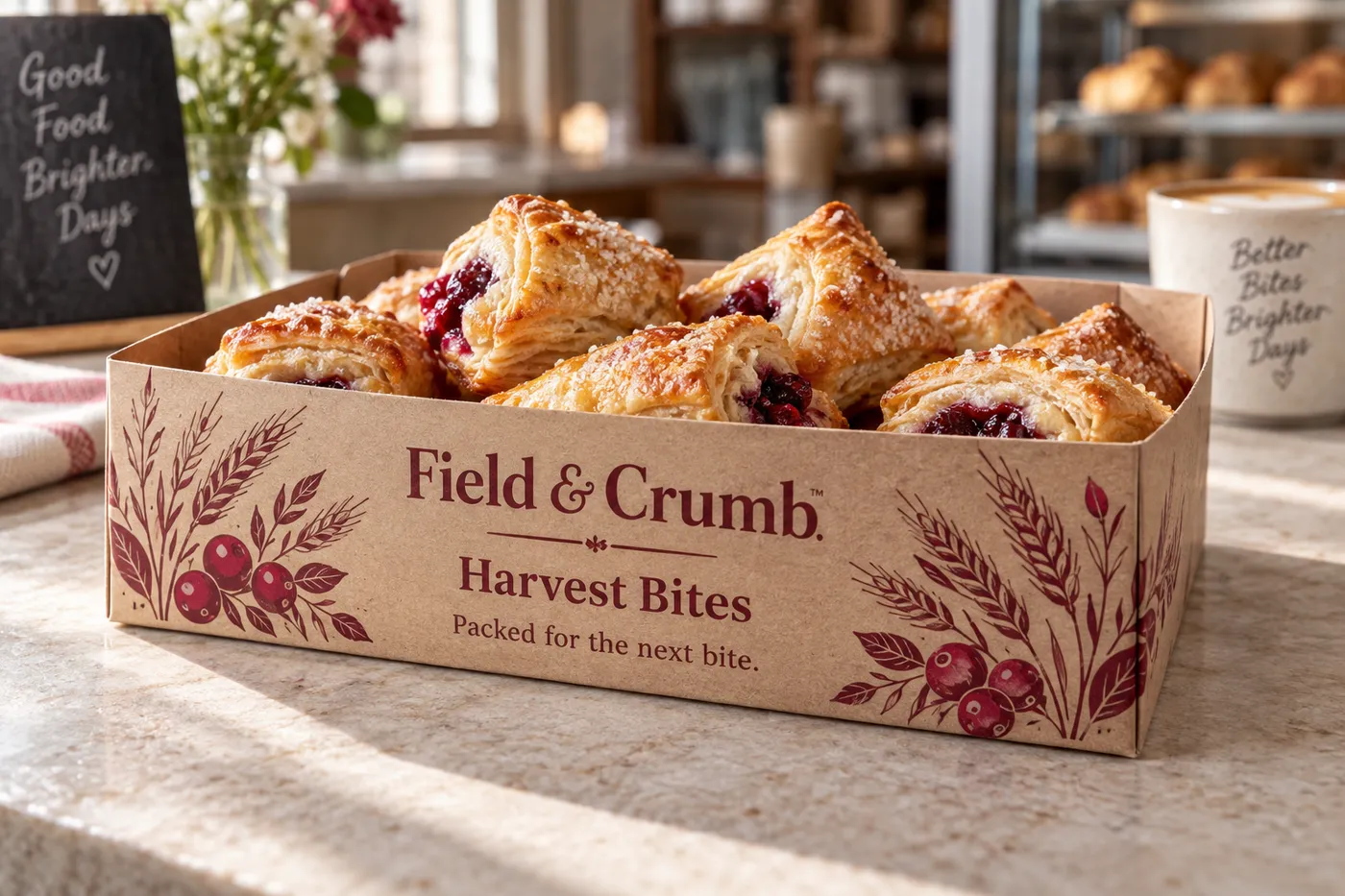
Folding paperboard or grease-resistant kraft structures can present pastries, cookies, slices, and confectionery portions at a counter or event service.

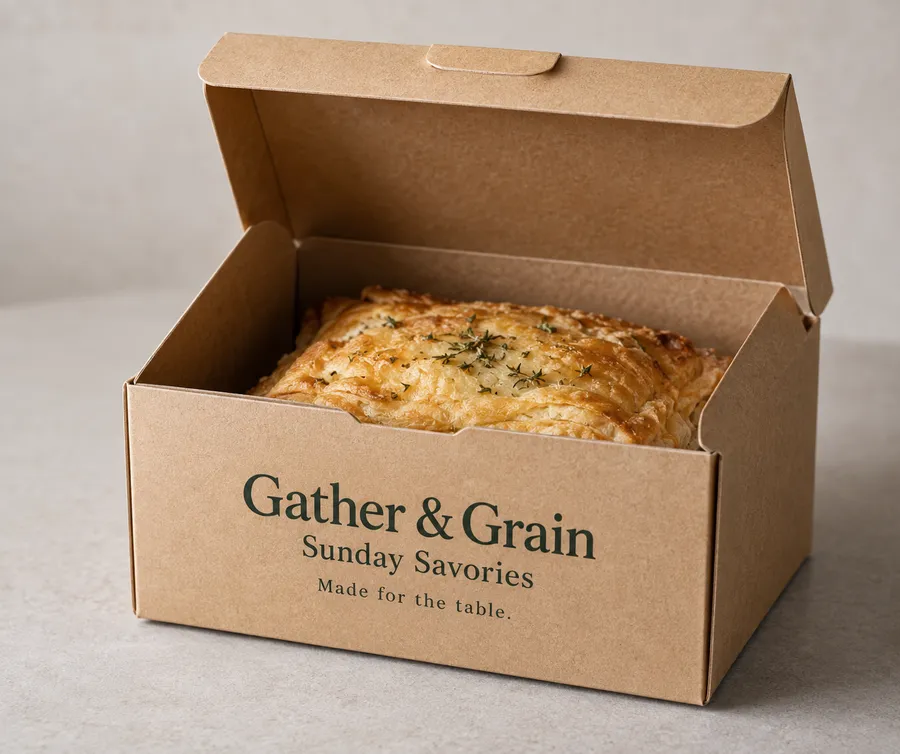
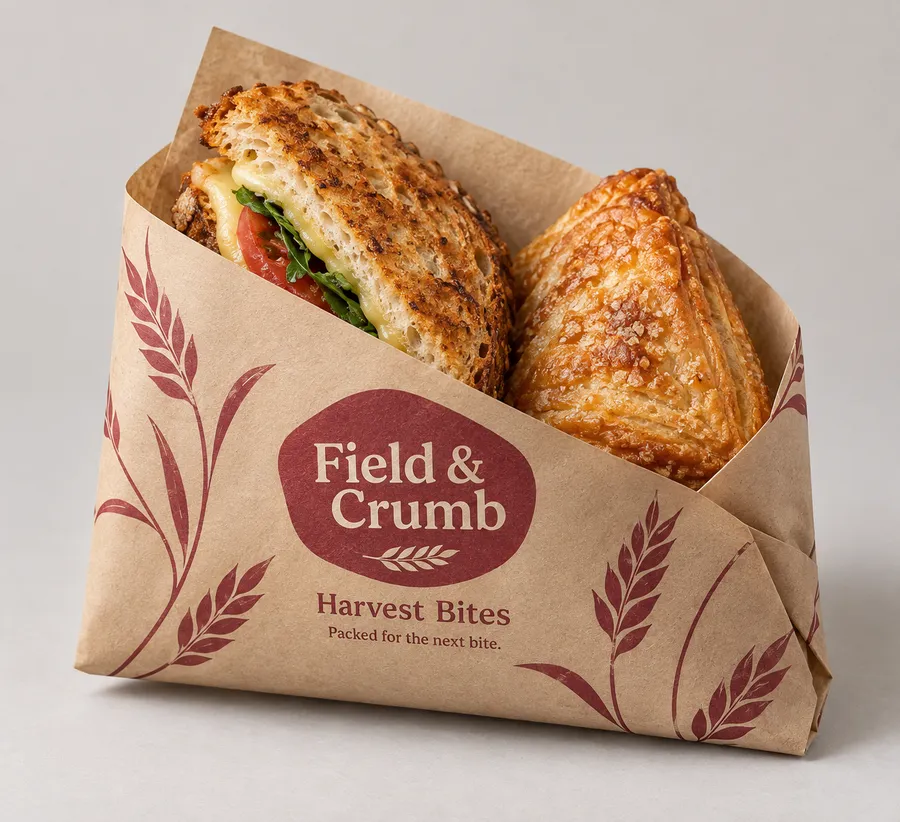
Printed kraft food box with a pastry portion and fictional Gather and Grain branding
Food Boxes
Custom food-grade paper packaging gives bakeries, takeaway operators, snack brands, and food-adjacent businesses a printed paper or board format planned around the packed product. Define the finished length, width, depth, closure, grease or moisture conditions, print panels, quantity, and service route so Easy Box Packaging can review a practical carton or pouch direction rather than treating every food box as interchangeable.
Last updated
Working quote
Product brief
Custom food-grade paper packaging is a made-to-order printed paper or board format for food that needs a defined footprint, a presentable handoff, or a controlled retail panel plan. Depending on the product, the format may be a folding carton, a tuck-end takeaway box, a grease-resistant kraft structure, a corrugated outer box, or a food-grade flexible pouch film direction. The phrase describes the intended packaging use; the final material, coating, barrier, and food-contact suitability still need to be reviewed against the product, filling process, destination, and applicable requirements.
Start with the food and the way it is handled. Share whether the item is dry, warm, greasy, moist, chilled, fragile, individually portioned, or packed as an assortment. A cookie, sandwich, confectionery piece, prepared meal, snack mix, or bakery slice can require a different depth, headroom, opening, or internal support even when the front panel looks similar. Include the filled product dimensions, not only a nominal product name, because the packed shape determines how the panels fold and how much clearance is available around the food.
The finished length, width, and depth should be measured around the product in its packed orientation. Note where the top flap, tuck tab, locking tab, seam, or fold will sit, and explain whether the box is handed over at a counter, stacked for catering, placed on a retail shelf, or shipped inside an outer carton. A shallow tuck-end carton can suit a single pastry or snack portion, while a deeper folding box may be better for a meal or an assortment that needs separation. If the item is warm, describe the desired ventilation and whether the closure should stay partly open during a short handoff.
Do not size from an empty template. Provide the filled product, a sketch, or clear measurements that show the food's height, width, depth, orientation, and any irregular points. Also identify the information that must remain on each panel: brand and product name on the front, ingredients or handling text on the back or side, and a barcode or service instruction where it belongs. A dieline review can then check safe areas around folds, glue or seam zones, closure tabs, and any window or cut-out direction before print.
Kraft paperboard gives a natural paper appearance and can work for a short counter handoff or a dry-food presentation when the structure is matched to the filled product. SBS paperboard offers a smooth printed surface for dense artwork and panel information. Grease-resistant kraft paper is a category direction for bakery or takeaway uses where surface contact with oily food needs to be discussed. Corrugated board can add a more protective outer structure for catering, delivery, or a shipper around a printed inner pack. Food-grade flexible pouch film is another direction when a sealed or resealable flexible format is more appropriate than a folding carton.
These names are starting points, not a blanket claim that every stock is suitable for every food, temperature, or region. Tell us what touches the package, whether the food is hot or cold, how long it is held, and whether condensation or grease is expected. The material and any finish should be confirmed during specification and proof review. If a lamination, foil stamping, spot UV, or embossing/debossing treatment is requested, the artwork and food-contact surfaces need to be considered together so the decorative treatment stays where it is intended.
The product images show an illustrative print layout; your approved artwork replaces it at the proof stage. Use the back and side panels for ingredients, preparation, storage, serving, barcode, or handling information that needs more room. Keep type away from folds and closures, and send artwork with the intended reading orientation for every panel. Matte lamination can provide a low-glare appearance, gloss lamination can change reflection, spot UV can reserve selective shine, foil stamping can add a controlled accent, and embossing/debossing can create a tactile mark; each option remains subject to artwork and material review.
Printing should show the actual box geometry, not just a flat label. A front panel that looks balanced before folding may become crowded when a flap or side seam moves through the design. Share the logo or wordmark, product name, color references, required copy, barcode, and any legal or handling text early. A proof should confirm the panel map, closure clearance, folds, finish placement, and the printed area that will actually be visible after filling.
The standard fulfillment path starts at 50 units. The approved production estimate is from 7 business days after digital proof approval, and free US shipping is available on that standard path. Dieline and proof review are included on every order at no extra charge. If you want to compare board feel, print density, closure behavior, or finish before choosing a construction, a sample kit carries a $44.99 USD shipping charge credited toward the first order. Quote requests are typically answered the same business day and always within 24 hours.
For a useful quote, send the filled product dimensions, quantity, destination, food condition, preferred paper or board direction, closure or opening route, artwork status, and any required panel copy. Explain whether the box will be filled by hand or on a line, whether it will be stacked, and whether an outer shipper is involved. Easy Box Packaging can then review the dimensions, construction, material direction, artwork, and finish as one specification instead of quoting a generic food box.
Custom food-grade paper packaging can support bakery counter service, takeaway meals, snack and confectionery portions, dry-food retail cartons, catering assortments, event service, and direct-to-customer packs placed inside an outer shipper. The format is also useful when a food-adjacent product needs a printed paperboard presentation but the final product is not directly exposed to the package surface. The decision turns on the packed geometry and service route: a short handoff, a stacked catering order, and a parcel shipment can need different closure, headroom, and outer protection.
A careful brief prevents a common mismatch: specifying a paper look without explaining the food condition or the route from filling to customer. Give the finished dimensions, food state, quantity, artwork, and intended handoff first. Then use the proof to confirm what folds, what closes, what remains readable, and which surfaces receive the chosen finish before production starts.
Proof points
A useful proof shows how the food box folds, closes, reads, and handles after filling rather than treating the artwork as a flat rectangle.
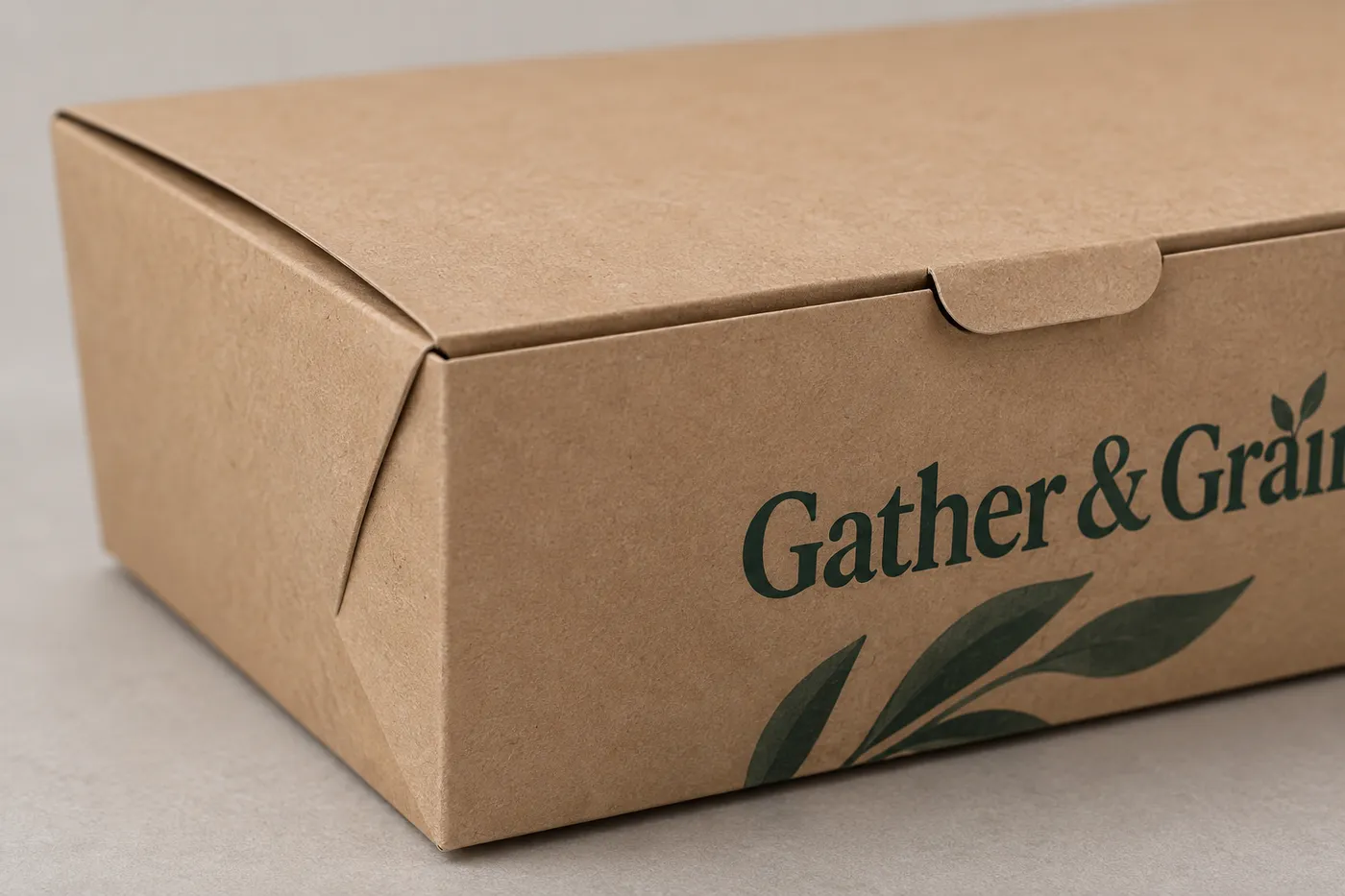
Food condition, filled dimensions, opening route, service distance, and panel requirements all influence the finished package. Share the packed product and intended handoff so the paper or board direction can be reviewed with the box geometry and artwork.
Folding paperboard or grease-resistant kraft structures can present pastries, cookies, slices, and confectionery portions at a counter or event service.
A tuck-end or locking carton can organize a prepared meal or snack portion when the closure, headroom, and ventilation match the food condition.
SBS or kraft paperboard panels can carry a product name, serving cue, ingredients, barcode, and handling information for a shelf or direct order.
Corrugated or reinforced outer structures can be considered when filled boxes are stacked, carried together, or shipped around a printed inner pack.
Use the broad front panel for the brand and food cue, then reserve the side, back, and flap areas for information that must remain readable after folding and filling.
A food box is easier to quote when the food, structure, print map, and fulfillment route are considered together before a dieline is finalized.
Dry, warm, greasy, moist, chilled, fragile, or assorted contents change the material, clearance, ventilation, and closure discussion.
Finished length, width, depth, folds, tabs, seams, and headroom determine how the filled package closes and stacks.
Front, side, and back panels are mapped for the brand, product name, ingredients, handling copy, barcode, and other required details.
A quote is easier to evaluate when the food, filled dimensions, construction, route, and artwork are described together rather than reduced to the keyword alone.
Provide finished length, width, depth, portion or fill weight, temperature, grease or moisture condition, orientation, and product photos or a sketch.
Explain whether the pack is handed over at a counter, stacked for catering, placed on a shelf, or shipped inside an outer carton.
Share the preferred kraft or SBS appearance, artwork status, panel copy, closure, and any matte, gloss, spot UV, foil, or embossing/debossing request.
Confirm product fit, fold and closure clearance, panel orientation, required information, and finish placement before production begins.
Need help with structure, materials, or production planning? See how we manufacture custom packaging.
A sample kit ships for a $44.99 USD charge credited toward your first order, useful when you need to compare paper or board feel, print treatment, closure behavior, or finish before approving the food package.
Shipping charge: $44.99. Credited toward your first order.
Request a Sample KitFind clear answers about fit, materials, and ordering below.
It means the paper or board direction is being considered for a food packaging application. The final material, coating, barrier, and food-contact suitability still need to be reviewed against the food, temperature, hold time, destination, and applicable requirements.
Share the filled length, width, depth, portion or fill weight, orientation, temperature, grease or moisture condition, closure preference, quantity, destination, product photos, and artwork status.
Kraft paperboard, SBS paperboard, grease-resistant kraft paper, corrugated board, and food-grade flexible pouch film are category directions. The final choice depends on the filled product and intended service route.
Warmth, grease, moisture, hold time, ventilation, and the package surface that touches the food should be described before a structure is chosen. A paper or board direction is not a blanket guarantee for every food condition.
The approved standard estimate is from 7 business days after digital proof approval. Orders start at 50 units, and free US shipping is available on the standard fulfillment path.
Dieline and proof review are included on every order at no extra charge. The proof should confirm the folds, closure, panel map, required copy, and finish placement.
Orders start at 50 units and scale up to 500,000 for bulk runs, with pricing from $0.16 per unit on larger quantities. Standard production is from 7 business days after digital proof approval.
Compare nearby products and request the format that best fits your next run.
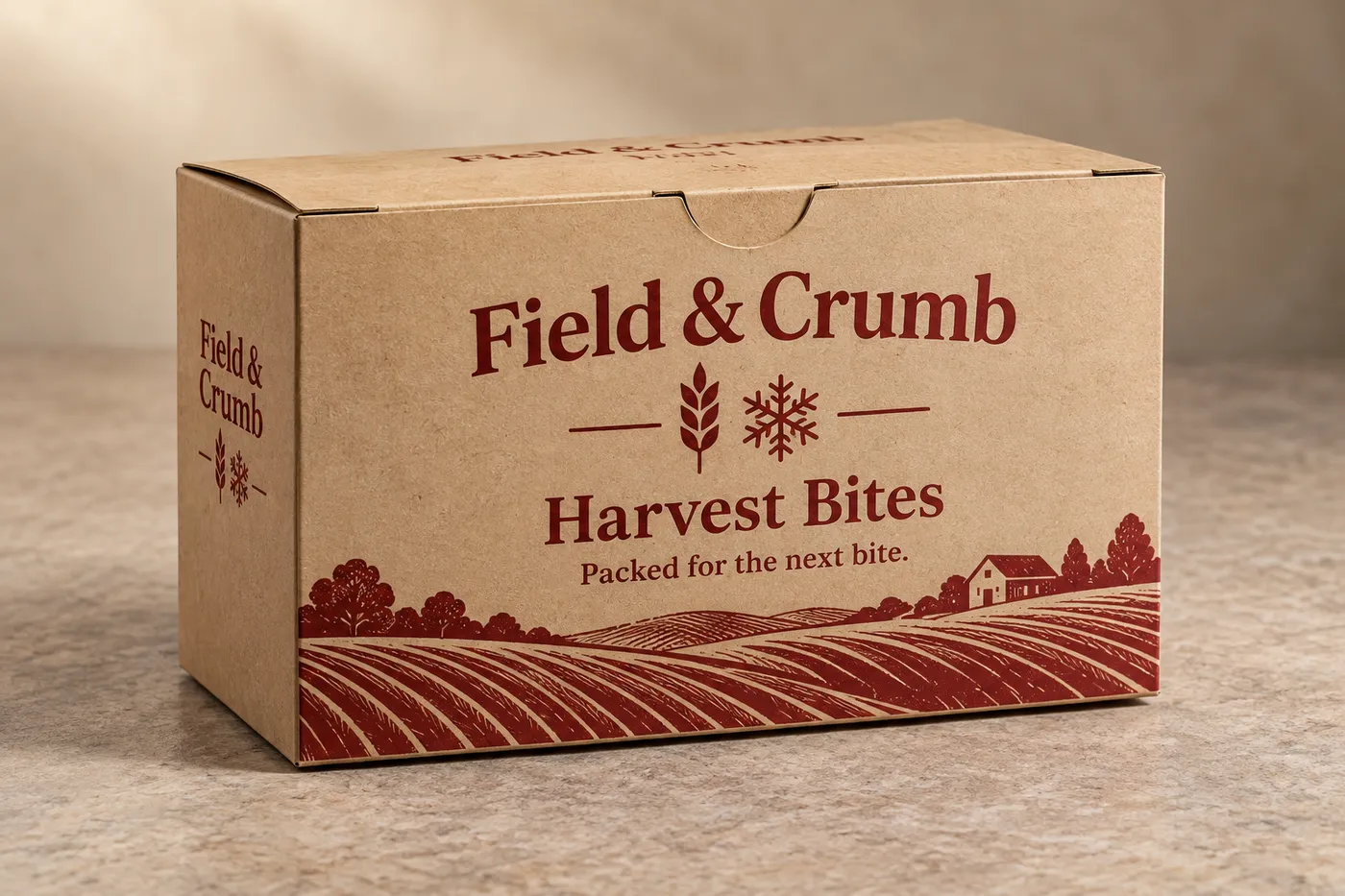
Available product
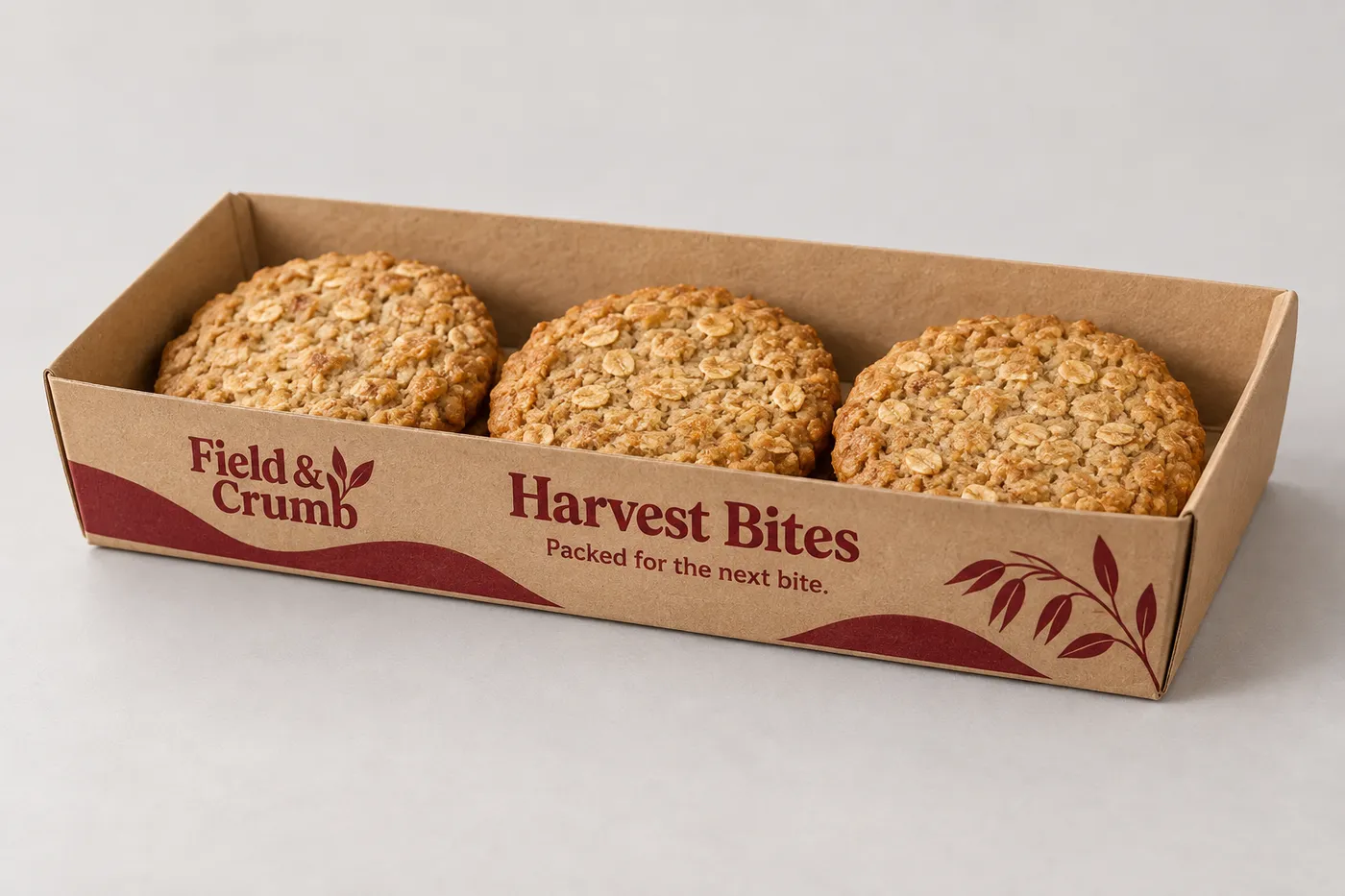
Available product
Available product
Available product
Plan the package around the food
Send the filled product details, intended route, paper or board direction, closure preference, quantity, destination, and artwork status. Easy Box Packaging can then review the construction, printed panels, and finish as one quote-ready specification.
Add your product details to see a quote summary.