Counter-service meals
A printed carton can carry a burger, sandwich, pastry, or prepared meal through a quick handoff when the cavity and closure suit the food's height and warmth.

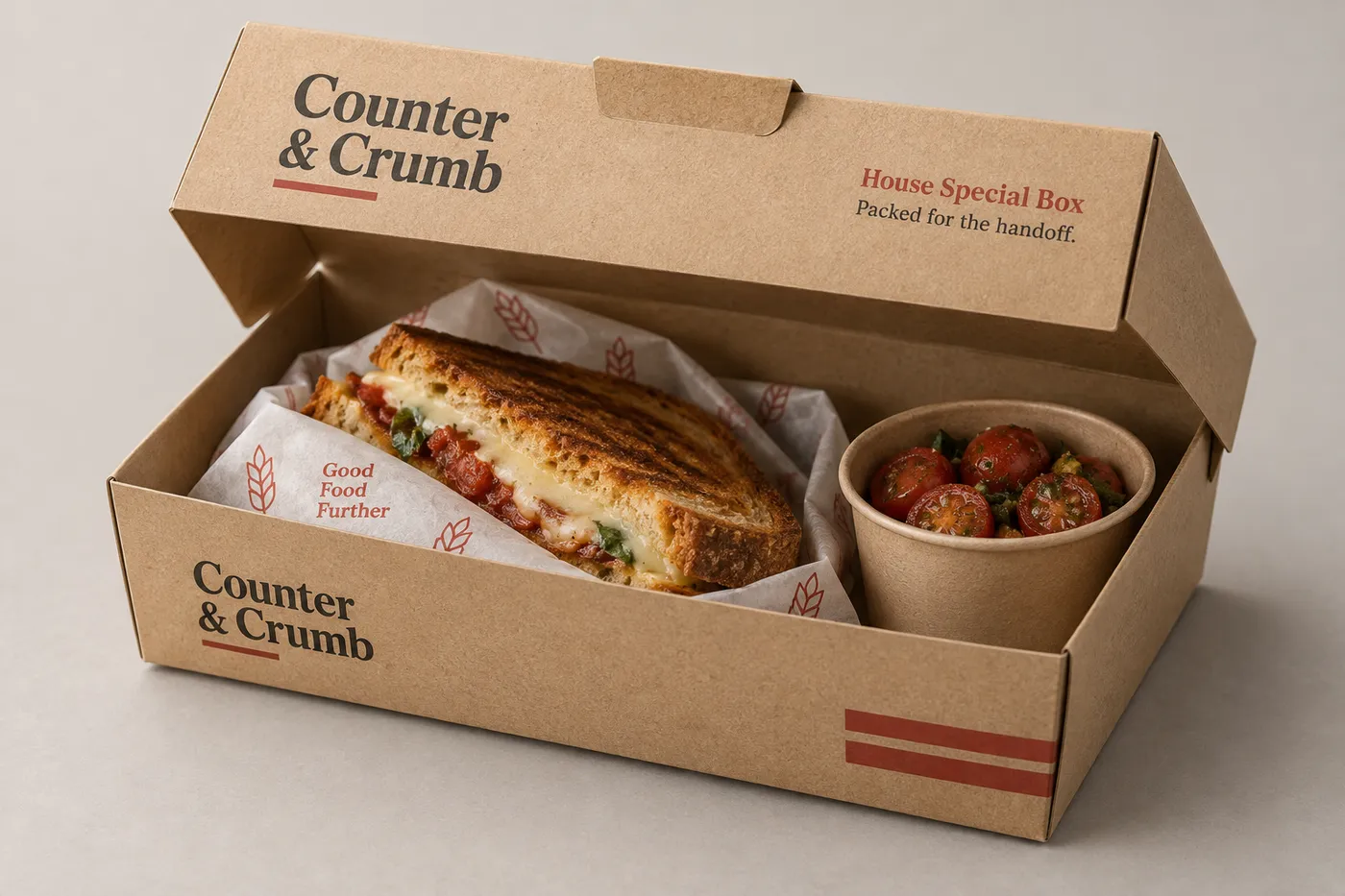
Natural kraft restaurant carton with a printed tomato motif and a sandwich inside
Food Boxes
Custom food restaurant boxes are printed paperboard cartons sized around the meal, snack, or bakery item your team hands over. Choose the cavity, closure, ventilation approach, board direction, and artwork around the actual food and route from counter to customer. Share packed dimensions, portion count, heat and grease conditions, print coverage, and quantity so Easy Box Packaging can prepare a quote-ready structure.
Last updated
Working quote
Product brief
Custom food restaurant boxes give a prepared item a defined place from kitchen pass to customer. The useful format is not chosen from the word restaurant alone. A shallow carton for fries, a taller box for a sandwich, a divided pack for several portions, and a mailer-style structure for a chilled delivery each ask different questions about height, closure, ventilation, and movement. Start with the food as it will actually be packed, then set the outer profile and printed panels around that handoff.
A folding carton can be designed for a quick counter exchange, a takeaway bag, or a short delivery route. The opening should be easy for staff to close without crushing the item, while the cavity should leave enough working room for the food and any liner, napkin, sauce cup, or card that travels inside. If steam needs an escape path, the construction and opening can be reviewed with that requirement in mind. No single vent, closure, or cavity is right for every menu; the food's shape, warmth, oil level, and route determine the useful combination.
Send the finished length, width, and height of the food at its widest points. Include the way it sits in the box, the portion count, approximate weight, and anything packed alongside it. A burger with a tall bun, a sauced noodle bowl, a pastry with a fragile topping, and a group of small sides occupy their cartons differently even when the footprint looks similar. Note handles, skewers, protruding toppings, cups, wraps, or a paper liner that changes the clearance.
The closure should match the way staff use the pack. A tuck flap may suit a quick handoff, while a more contained lock or reinforced panel can be considered when the box is carried farther. If several items share one carton, describe their actual arrangement and whether separation matters. A divided structure may keep portions apart, but it also uses space that a single open cavity would leave available. These decisions are checked against the packed product rather than assumed from a generic restaurant size.
Grease-Resistant Kraft Paper is a category material direction for food where oil contact is part of the brief. Kraft Paperboard can provide a natural paper appearance, SBS Paperboard can provide a smooth printed face, and Corrugated Board can be considered when a more structured shipping or delivery format is required. Those names describe available directions, not a blanket claim about temperature limits, barrier performance, or food-contact approval for every finished box. The selected stock and construction should be reviewed against the actual menu item and handling route.
Warm food can change the inside of the pack as it travels. Steam, sauces, and contact with a hot surface may affect how much headroom, ventilation, or internal separation is useful. A box intended for a few minutes at a counter is a different brief from one that spends 30 minutes in a delivery bag. Share the handoff time, whether the item is sealed immediately, and whether stacking is expected so the structure can be discussed with the real operating conditions in view.
The artwork should help staff and customers orient the package. Put the restaurant mark, item name, handling note, or reheating direction on panels that remain readable when the box is folded. A simple side mark can identify a stack of closed cartons; a larger top panel can carry the main printed identity when the package is placed on a counter. Map the artwork on the assembled carton so folds, tucks, vents, and opening edges do not interrupt the information that matters.
Matte Lamination and Gloss Lamination create different surface directions. Spot UV can call attention to selected artwork, Foil Stamping can accent a short mark or line, and Embossing/Debossing can add a tactile detail where the artwork and board support it. Finish placement remains subject to artwork review near scores, corners, closure tabs, and any area that will be handled repeatedly. The pictured print is an example of artwork placement, and your approved brand artwork takes its place once the proof is signed off.
For a single meal, confirm which face should be seen first and whether the product should sit centered, snug, or with room for a liner. For an assortment, state the number of portions and the order in which staff should load them. Internal support depends on geometry, weight, fragility, orientation, stacking, fulfillment, product-to-box clearance, and the desired reveal. It may be integrated into the paperboard structure or supplied as a separate component after the packed contents are reviewed.
If the carton will move through a delivery bag, include the bag's approximate clear space and the way boxes are stacked. If the carton is mainly a counter pack, explain how staff open, close, label, and hand it over. A restaurant package should work in that real sequence, not just look correct in a flat dieline. The quote and proof review are the points to resolve those operating details before production.
The standard fulfillment path starts at 50 units. Production is from 7 business days after digital proof approval, with free US shipping and dieline and proof review included at no extra charge. Pricing remains quote-only because the food dimensions, board direction, closure, print coverage, finish, quantity, and delivery destination change the specification. A sample kit carries a $44.99 USD shipping charge credited toward the first order if you want to compare paper feel, fold definition, surface direction, or printed coverage in hand.
Send the packed dimensions, portion count, approximate weight, heat and grease conditions, closure preference, artwork status, finish direction, and destination. Quote requests are typically answered the same business day and always within 24 hours. In the digital proof, check the assembled silhouette, loading order, opening route, printed panels, any vent or separation detail, and the way the sample print layout has been replaced by your production artwork.
A custom restaurant box is successful when its structure, surface, and workflow agree with the food. Describe the item and service route clearly, and the resulting carton can be reviewed as a real counter or delivery tool rather than an anonymous stock shape.
Proof points
The proof should show the assembled food carton in the operating context described for the quote. Compare the packed fit, opening route, board direction, artwork orientation, and any separation or ventilation detail with the restaurant brief.
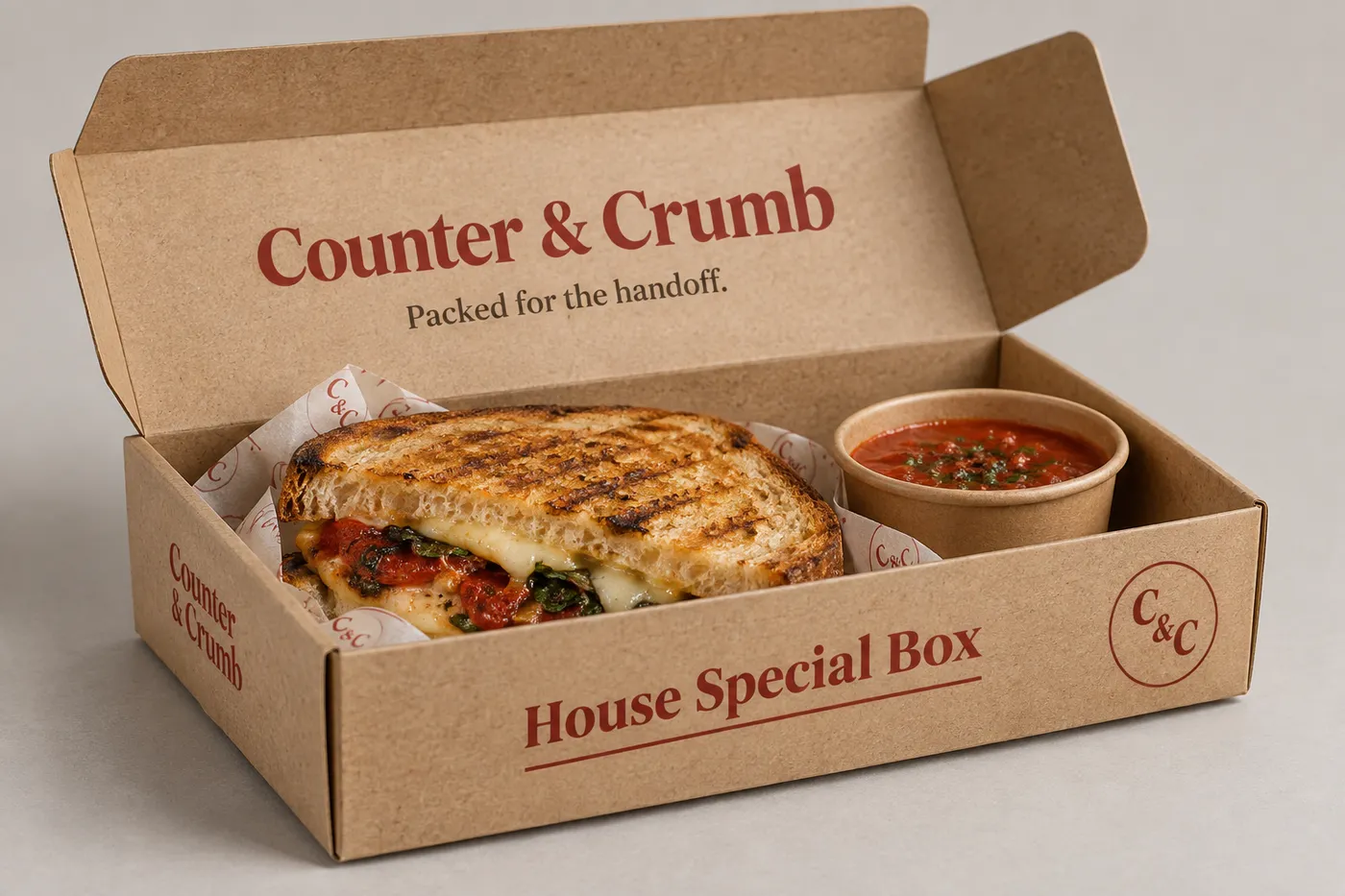
The box should contain the actual food, open and close in the staff's working sequence, and keep the printed information facing the right way. Start with the meal dimensions, portion count, heat, grease, closure, and route from counter to customer so the structure can be reviewed around a real service task.
A printed carton can carry a burger, sandwich, pastry, or prepared meal through a quick handoff when the cavity and closure suit the food's height and warmth.
A shallow or divided structure can organize fries, pastries, cookies, or small portions when oil, steam, and separation are part of the brief.
A more contained profile can be reviewed for a delivery bag, stacking route, and the time between packing and customer opening.
A smooth printed face can carry product naming and handling information when a prepared food item is displayed or gifted beyond the counter.
Map the restaurant artwork on the folded box so marks, item names, handling notes, folds, tucks, and opening edges remain readable in the actual handoff. The sample print layout in the images demonstrates printed output only; production artwork should use your approved identity.
A food carton is reviewed as a system of cavity, closure, ventilation, and printed panels. Depending on the product geometry, weight, fragility, orientation, stacking, fulfillment, and desired reveal, support may be integrated into the paperboard structure or supplied as a separate component.
A burger, pastry, or boxed meal can be sized around its widest points, topping height, liner, and the way the item should be seen when opened.
A divided layout can keep several portions apart when the item count and loading order justify the extra structure.
The closure and outer profile can be reviewed around the delivery bag, stacking route, and distance the packed food travels.
A useful quote starts with the packed menu item and the service route. The following details turn that description into a carton that can be checked in a digital proof before production.
Provide packed length, width, height, widest points, portion count, approximate weight, toppings, liners, cups, and any protruding components.
Explain whether staff use the box at a counter, into a bag, for delivery, or for retail display, and how long the food typically travels.
State whether the item needs one open cavity, separate portions, a tuck or lock closure, headroom, or a ventilation discussion.
Share any preference for Kraft Paperboard, Grease-Resistant Kraft Paper, SBS Paperboard, Corrugated Board, or listed print finishes.
Check the assembled silhouette, loading order, panel orientation, closure, printed identity, and finish representation in the digital proof.
Need help with structure, materials, or production planning? See how we manufacture custom packaging.
A sample kit carries a $44.99 USD shipping charge credited toward your first order. Use it to compare paper feel, fold definition, surface direction, and printed coverage before approving a custom restaurant carton.
Shipping charge: $44.99. Credited toward your first order.
Request a Sample KitFind clear answers about fit, materials, and ordering below.
It is a made-to-order printed food carton sized around a restaurant's prepared item, portion arrangement, closure, and handoff route. The cavity, material direction, artwork, and finish are reviewed around the actual food rather than a generic stock shape.
Send the packed length, width, and height at the widest points, portion count, approximate weight, orientation, toppings, liners, cups, handles, and any item packed alongside the food. Explain how staff load and close it.
Heat, steam, sauce, and grease should be described during quoting. Grease-Resistant Kraft Paper is one category material direction, but the final stock, cavity, closure, and ventilation discussion must be reviewed against the actual menu item and route.
A divided structure or separate paperboard component can be considered when the portion count, spacing, weight, orientation, stacking, and desired reveal call for it. A single open cavity may be simpler for one item.
Matte Lamination, Gloss Lamination, Spot UV, Foil Stamping, and Embossing/Debossing can be considered for selected artwork. Placement is reviewed around folds, scores, tucks, corners, and repeatedly handled panels.
The standard fulfillment path starts at 50 units. Production begins from 7 business days after digital proof approval, with free US shipping and dieline and proof review included at no extra charge. Your final unit price is confirmed in a quote because the food, structure, artwork, finish, and quantity determine the specification.
Orders start at 50 units and scale up to 500,000 for bulk runs, with pricing from $0.38 per unit on larger quantities. Standard production is from 7 business days after digital proof approval.
Compare nearby products and request the format that best fits your next run.
Available product
Available product
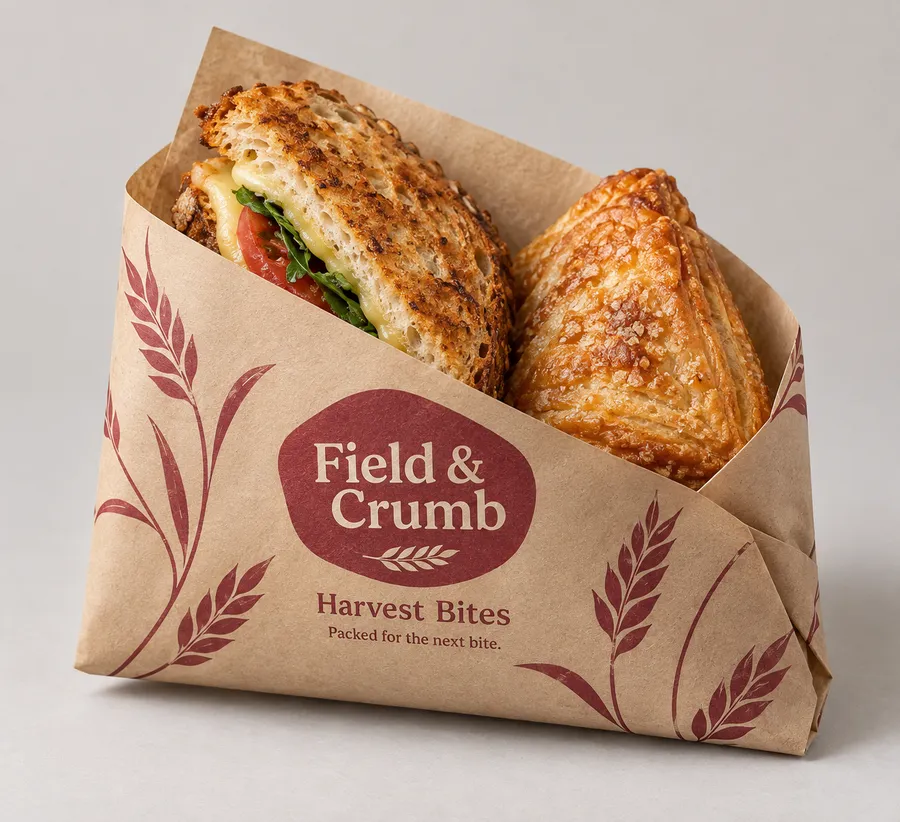
Available product
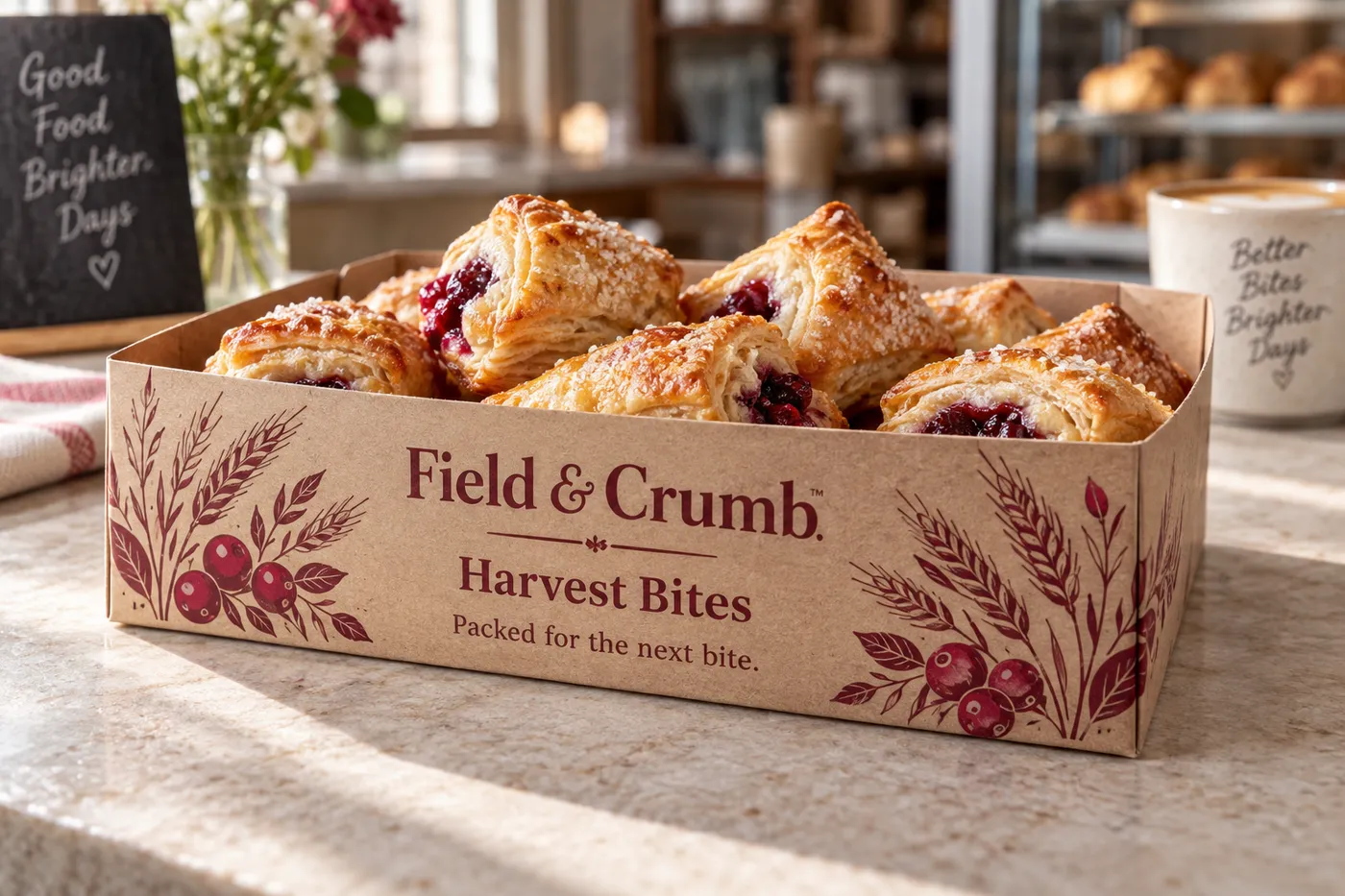
Available product
Plan the restaurant handoff
Send the packed dimensions, portion arrangement, heat and grease conditions, closure preference, artwork status, finish direction, and destination. Easy Box Packaging can then review the cavity, printed panels, and opening sequence as one quote-ready specification.
Add your product details to see a quote summary.