Bakery and snack portions
Give a cookie, pastry, bar, or dry snack a contained carton with room for flavor and handling information.

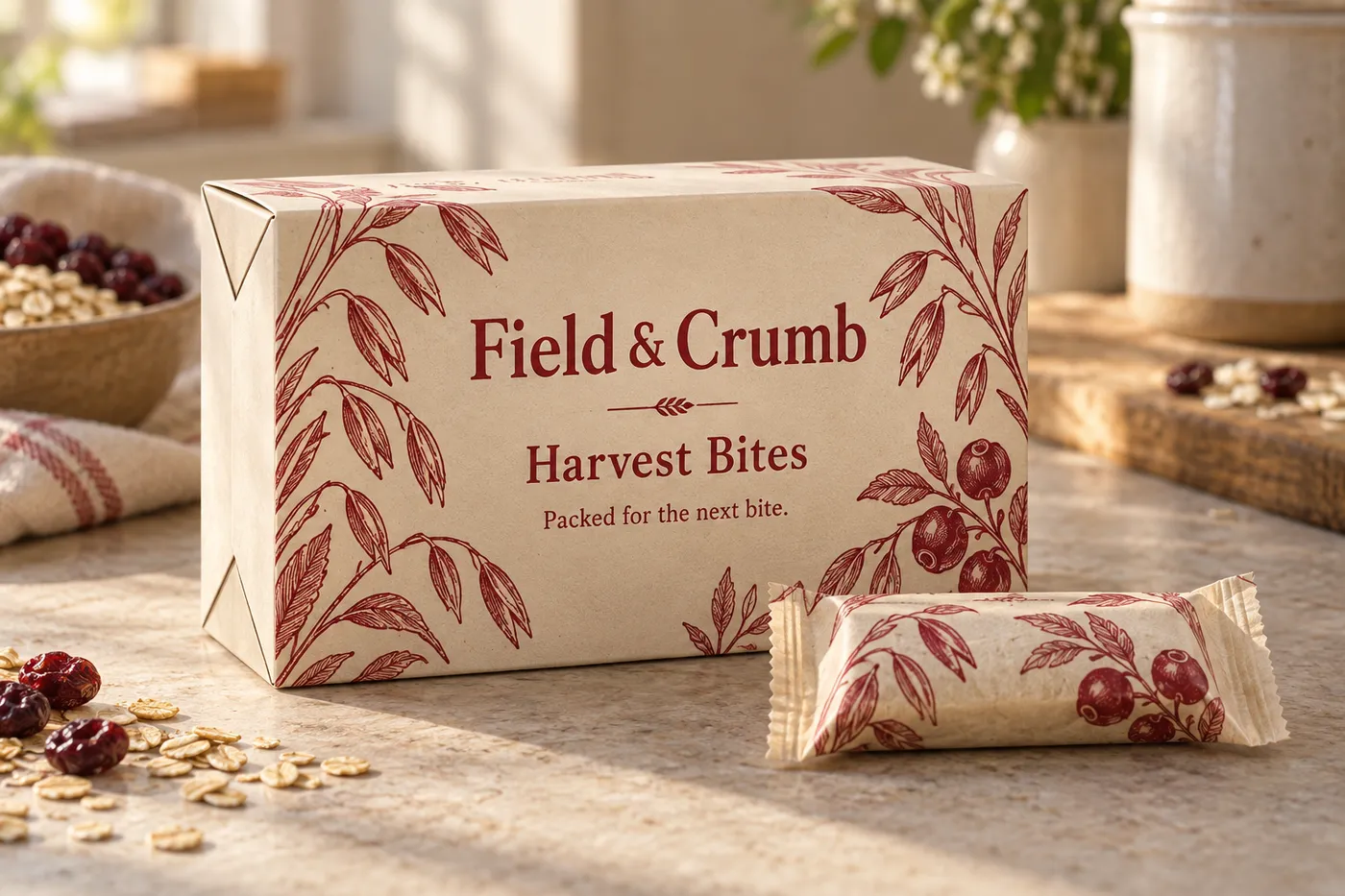
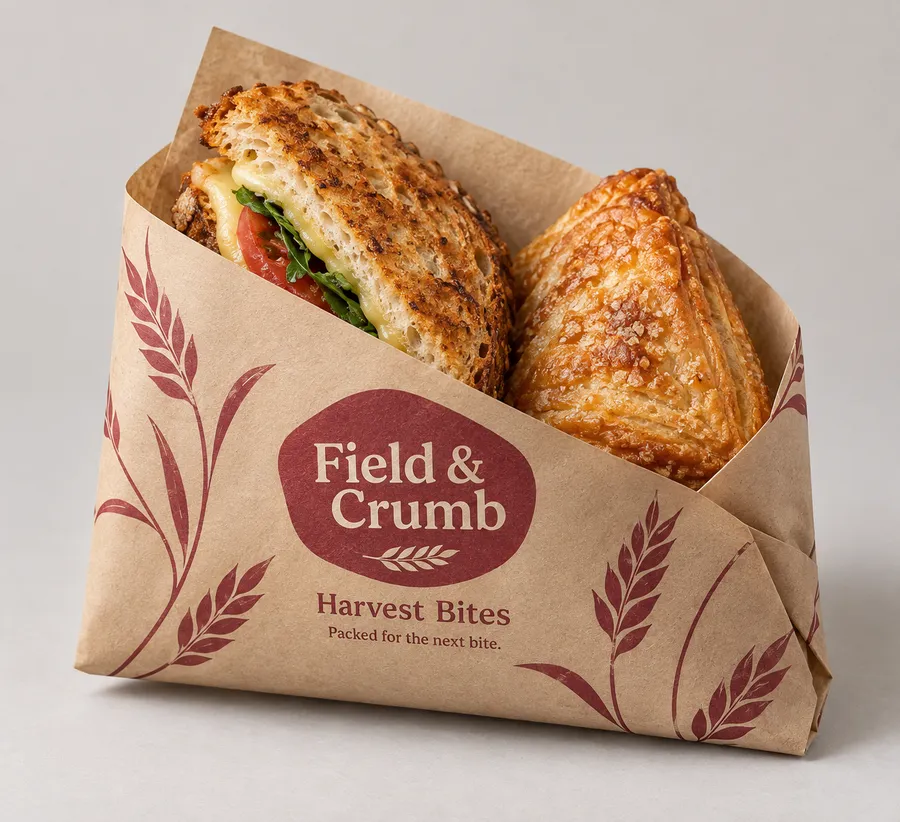
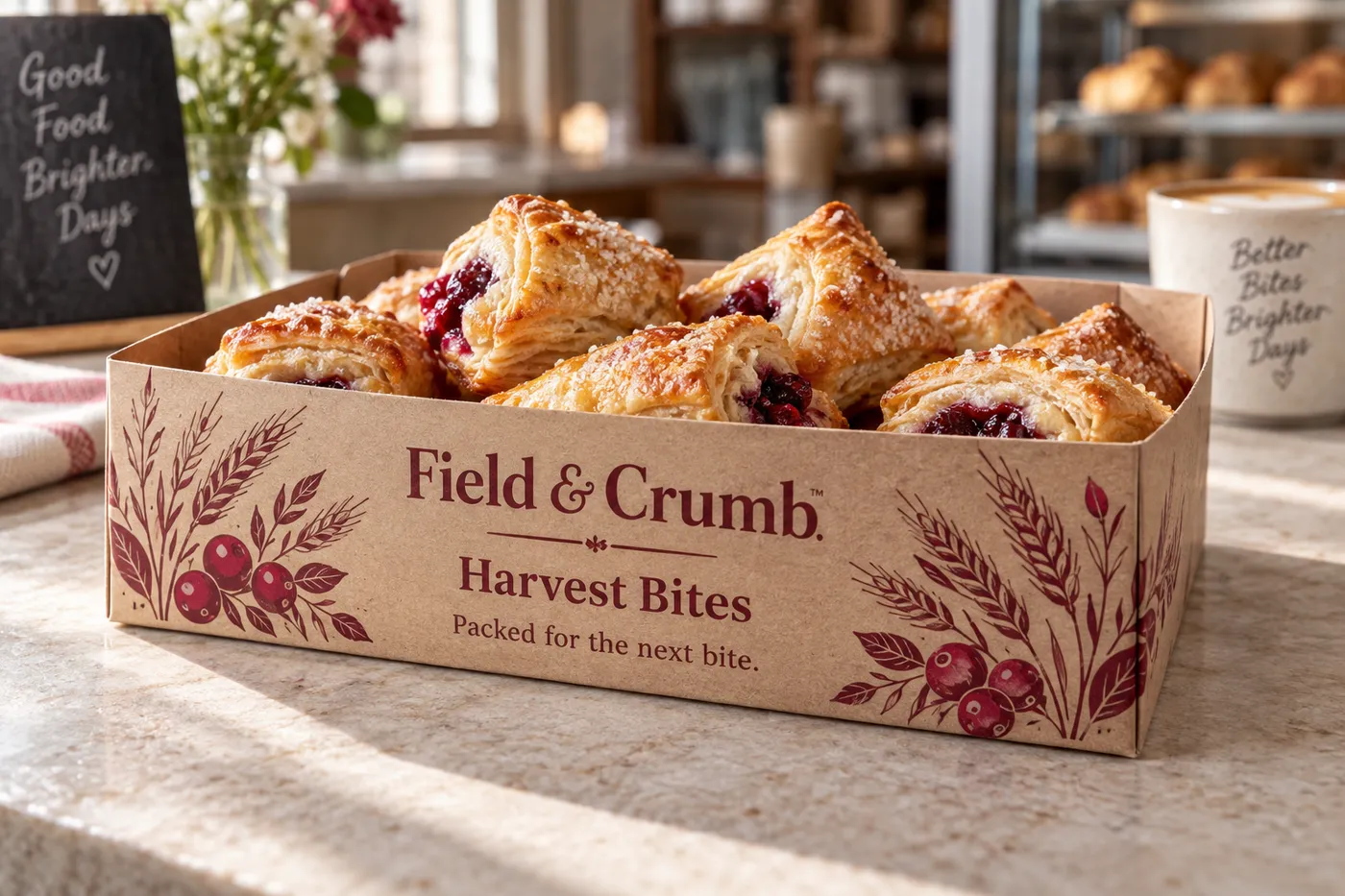
Printed seal-end food carton with Field & Crumb Harvest Bites artwork beside a wrapped snack bar
Food Boxes
Custom food seal end boxes use locking end panels to hold a snack, bakery portion, or prepared food in a tidy folding carton for counter service, retail presentation, or short-distance delivery. Choose the footprint around the packed item, then review kraft or SBS board, print coverage, and any liner or insert needed for warmth, grease, moisture, or direct food contact.
Last updated
Working quote
Product brief
Custom food seal end boxes are folding cartons with end panels that close into a seal rather than relying on a separate lid. That structure gives a food seller a defined footprint for a snack, pastry, sandwich component, or sampler portion while keeping the main printed face visible. The useful starting point is the packed food: measure its length, width, height, fill weight, headspace, and any topping or garnish that needs clearance. A box that fits the product closely is easier to stack and less likely to let a portion slide, but the fit still needs to leave room for closing panels and practical hand packing.
The closure suits counter service and short-distance delivery when the goal is a contained handoff without a loose top. Seal-end panels can be specified around the opening direction and the way staff load the product. For a dry snack or bakery item, a straightforward folding carton can keep the front and side panels available for a name, flavor, ingredients, or serving note. For a warmer or greasier item, ask for a suitable paper treatment, liner, or inner wrap and confirm the contact surface for the actual food and market. The outer print does not by itself establish food-contact suitability.
Kraft paperboard brings a natural face and a tactile look that can suit bakery, snack, and takeout brands. SBS paperboard offers a smoother white surface when fine type, color matching, or a cleaner retail presentation matters. The appropriate board depends on the packed item's weight, the box span, stacking conditions, and whether the carton is carried from a counter or sent through a courier network. Corrugated construction can be discussed when the outer pack needs more structure, but the seal-end format here is primarily a folding-carton decision.
Describe the product route before artwork is finalized. A dry granola portion can prioritize a crisp print panel and easy opening. A warm pastry may need headspace and a barrier or liner review so condensation and grease are considered. A sauce-heavy or moist item may call for an inner pack rather than direct contact with the printed board. If a window, vent, insert, or divider is needed, it should be shown on the dieline and checked against the closing sequence. These are specification decisions, not assumptions that every food format shares the same performance.
The seal-end carton gives a brand several faces to organize. The printed example in the images shows print placement only. A top or end panel can identify the product when cartons are stacked. Artwork should reserve clear space around folds, locking tabs, and glue or seal areas; the final printable region follows the approved dieline. Matte or gloss lamination, foil accents, spot UV, and embossing can be considered when their use fits the board and budget. Finish effects should be reviewed as options, not treated as proof of barrier performance.
For a first run, the commercial path is intentionally clear: the standard minimum order is 50 units, and the registry-backed production estimate is from 7 business days after digital proof approval. A quote is still needed for the actual size, board, print coverage, finishing, packing method, and destination. Easy Box Packaging can review a dieline and proof before production, so the artwork and the closure can be checked together instead of treating print as a separate task.
A sample kit costs $44.99 to ship and that charge is credited toward the first order. Use the sample to check the packed food's clearance, the end-panel closure, loading speed, print scale, and the way the carton sits in a handoff bag or delivery tote. A blank structural sample can answer fit questions; a printed proof can answer color, text, and finish questions. Keep the questions tied to the food route: warmth, grease, moisture, stacking, ventilation, and whether the item is placed inside a liner.
Ordering normally starts with the packed-product details and the target footprint. Next, Easy Box Packaging prepares or reviews the dieline, confirms the board and print choices, and sends a digital proof. After approval, production follows the quoted schedule from 7 business days, with shipping and pack-out confirmed for the destination. The result is a seal-end food carton that is sized and printed for the real handoff rather than a generic box selected by name alone.
Proof points
A digital proof should show the approved panel layout and closure relationship. A sample can then test the real packed food, print scale, and handoff route before the order is released.
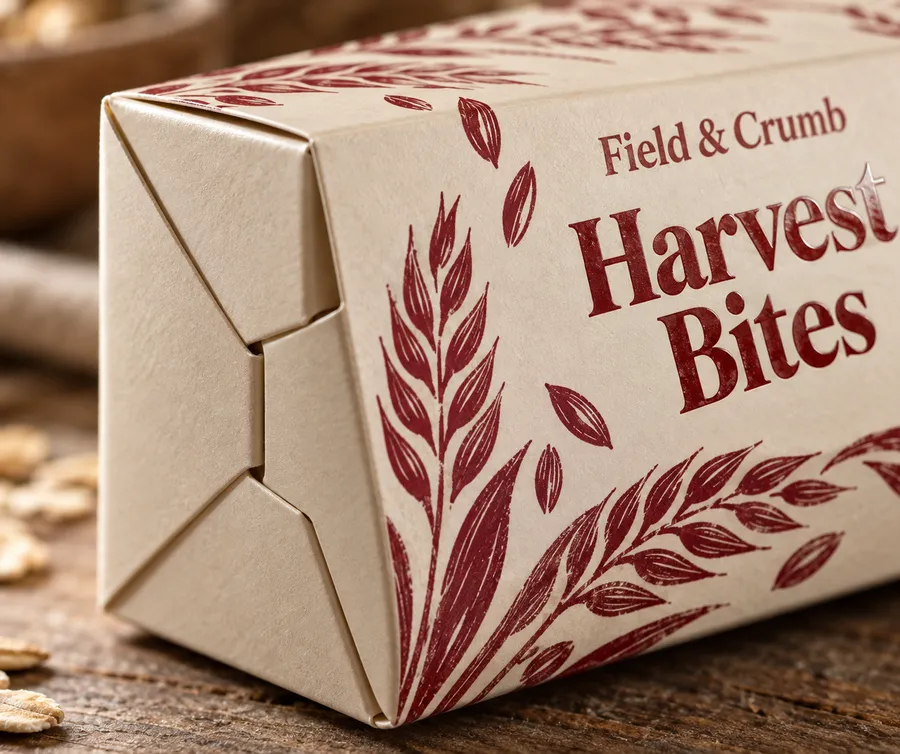
Locking end panels keep a shaped snack, bakery portion, or prepared-food pack contained while the broad outer faces remain available for print. The dieline should be built from the packed item's footprint, height, headspace, loading motion, and route rather than from a generic menu size.
Give a cookie, pastry, bar, or dry snack a contained carton with room for flavor and handling information.
Use a closing carton for prepared portions that need a tidy transfer from staff to customer.
Plan the footprint and any divider or insert around multiple small portions before committing to the dieline.
Review closure, stacking, warmth, and moisture variables when the carton travels in a delivery bag or tote.
The images illustrate how print can sit on the package; your own brand artwork is placed on the dieline during proofing. Finish options should be checked against board, fold locations, and the intended food presentation.
A practical specification connects the food format to the carton: board and surface for the print, closure for the handoff, and any liner, insert, window, or vent needed for the actual temperature, grease, moisture, and presentation conditions.
Share the packed length, width, height, fill weight, and clearance needs before the dieline is drawn.
Confirm the food-contact surface, barrier, liner, or inner wrap for the actual food and market; printed board alone is not a compliance claim.
Review how staff load, close, stack, carry, and deliver the seal-end carton before approving the structure.
Bring the food format and route into the first conversation so the carton is quoted around a real use case.
Provide the footprint, height, fill weight, headspace, temperature, grease or moisture concerns, and delivery route.
Confirm seal-end direction, board option, liner or insert needs, and any window, vent, or divider on the dieline.
Check the concept, panel text, folds, tabs, finish notes, and digital proof before release.
The standard minimum is 50 units; production is from 7 business days after digital proof approval, with the quote confirming destination details.
Need help with structure, materials, or production planning? See how we manufacture custom packaging.
A sample kit ships for $44.99, credited toward your first order. Use it to review fit, loading, print scale, and the handoff route with your own food format.
Shipping charge: $44.99. Credited toward your first order.
Request a Sample KitFind clear answers about fit, materials, and ordering below.
The format can suit dry snacks, bakery portions, prepared foods, and sampler packs when the footprint, closure, and contact conditions are specified for the actual item.
That depends on the food, temperature, contact surface, and chosen liner or barrier. Review those variables before treating the printed carton as the food-contact surface.
Kraft Paperboard and SBS Paperboard are useful starting options; the final choice depends on the packed item's weight, span, print needs, and route.
The standard minimum order is 50 units. A quote confirms the final size, construction, print coverage, and destination.
The registry-backed estimate is from 7 business days after digital proof approval. The quote confirms the schedule for the approved specification.
Yes. A sample kit ships for $44.99, and that charge is credited toward your first order. Use the sample to check fit, closure, loading, and presentation.
Orders start at 50 units and scale up to 500,000 for bulk runs, with pricing from $0.18 per unit on larger quantities. Standard production is from 7 business days after digital proof approval.
Compare nearby products and request the format that best fits your next run.
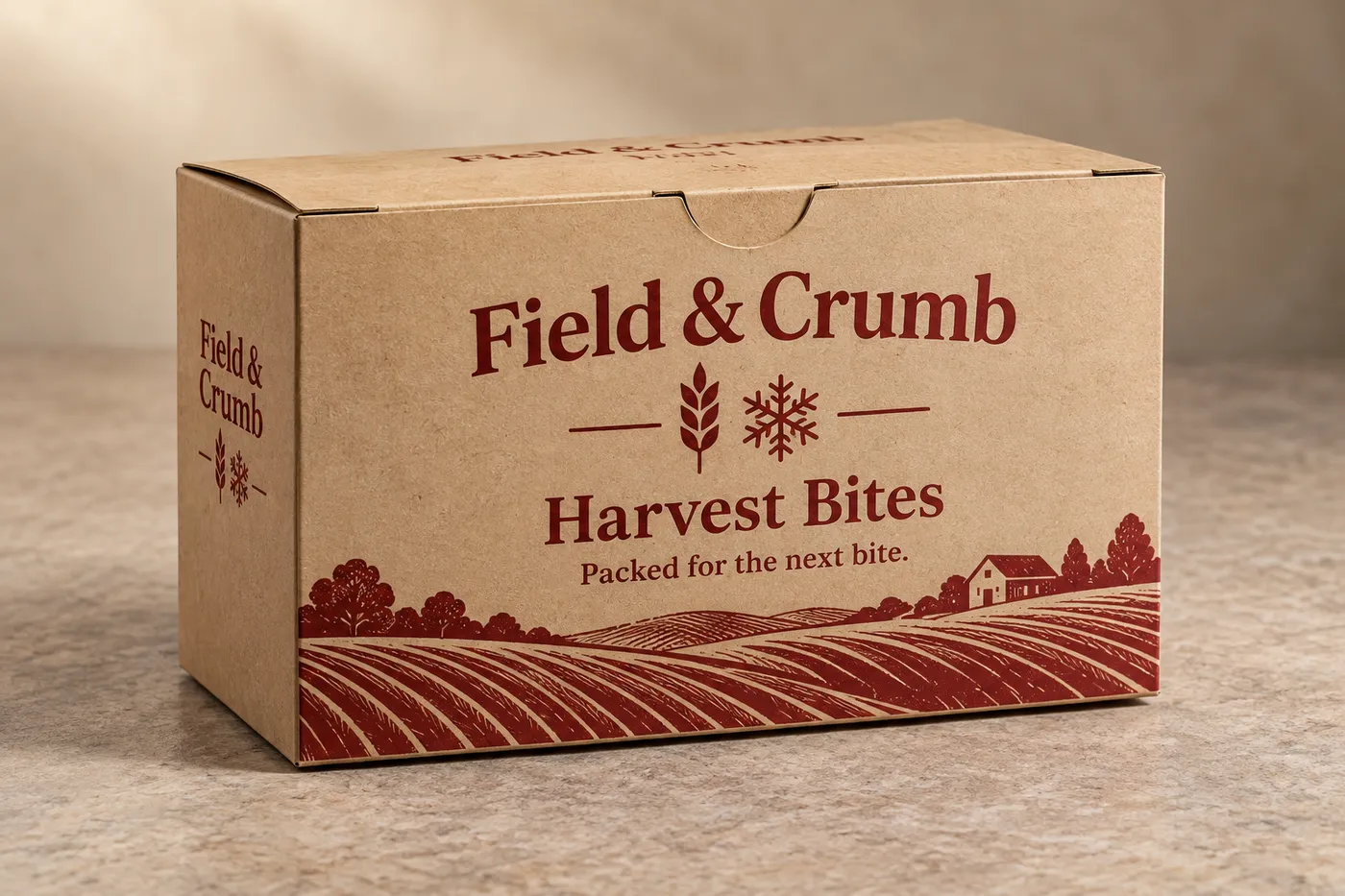
Available product
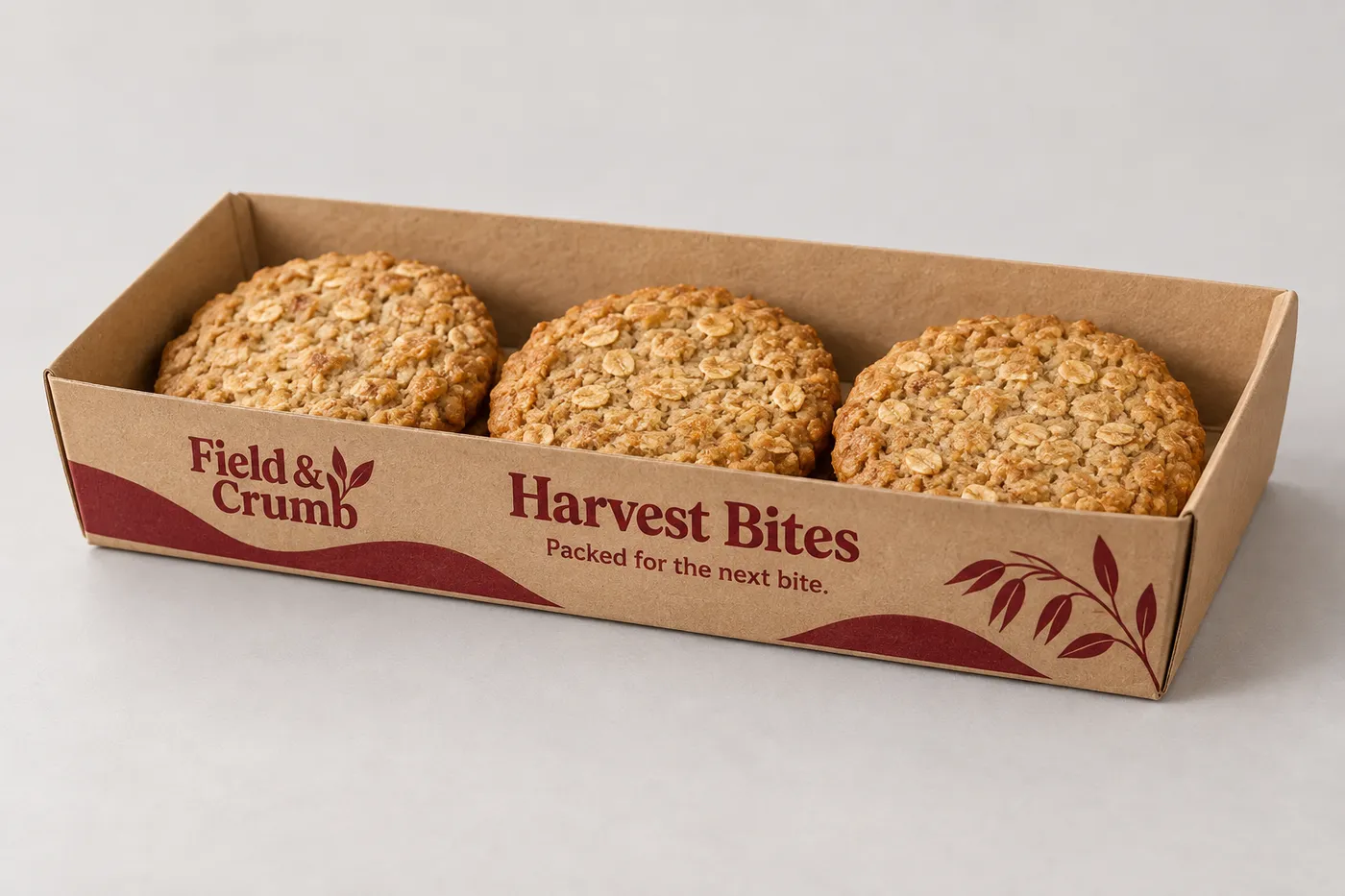
Available product
Available product
Available product
Plan the right food carton
Tell us the food format, footprint, route, and print goals. Easy Box Packaging can then review the seal-end structure and the practical options around it.
Add your product details to see a quote summary.