Frozen meal portions
Printed flat or gusseted bags can present single-serve meals when fill weight, headspace, seal, storage directions, and reheating information are mapped.

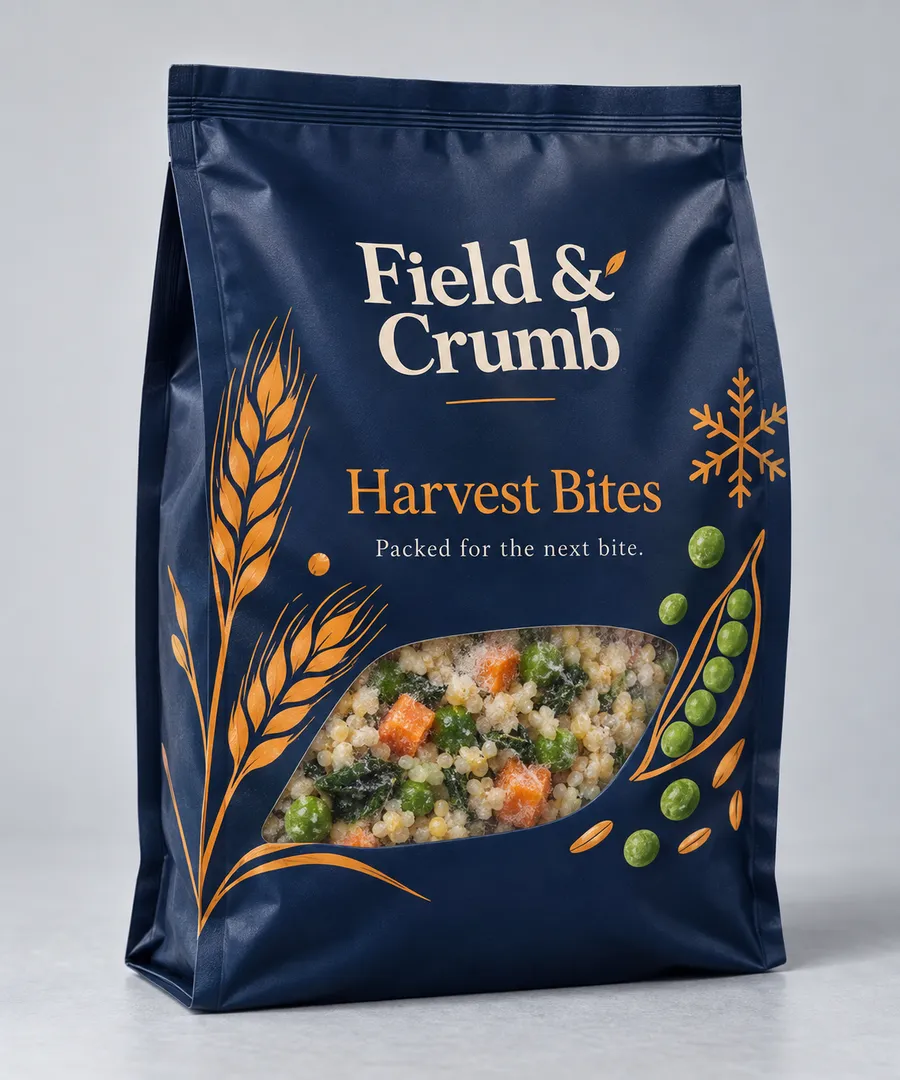
Printed navy frozen food bag with gusset, sealed top, and visible frozen meal window
Food Boxes
Custom frozen food bags give prepared meals, vegetables, proteins, and snack portions a printed flexible format planned around the filled product, seal area, opening route, and cold-chain handling brief. Food-Grade Flexible Pouch Film can be considered with the required barrier and contact review. Share the packed dimensions, fill weight, freezer conditions, and artwork so the bag structure and print panels are scoped together.
Last updated
Working quote
Product brief
Custom frozen food bags are flexible printed packs for products that need to be portioned, sealed, stored, or handed over in a cold-food route. The useful format may be a flat pouch, a gusseted bag, or another reviewed flexible construction, depending on the filled shape, seal area, opening method, and how the food moves from filling to freezer, delivery, retail, or customer use. A printed exterior can identify the product while the structural and material decisions remain tied to the actual food.
Start with the food as it will be packed, not an empty category image. Record the filled length, width, and thickness; fill weight; product orientation; headspace; sharp edges or irregular pieces; and any sauce, frost, or loose particulate. Note whether the bag is filled warm before freezing, filled cold, vacuumed, or simply sealed. These conditions change the usable footprint, the seal land, and the artwork area. A small sample portion and the intended case or carton route help clarify whether the bag is a primary package, an inner pack, or a printed layer inside a larger shipper.
A practical bag brief explains how the food sits inside the package. For a flat format, provide the packed face width and height plus the fullest thickness and top seal zone. For a gusseted format, describe the front and back panels, gusset depth, bottom shape, and how the product settles after filling. Include the closure edge, tear or opening feature if required, and any area that must remain clear for a label, date code, ingredient panel, or handling message. Do not assume a stock size: two products sold in the same category can need different panel proportions because their fill shape and headspace differ.
The printed layout should be checked on the formed bag rather than only on a flat artwork file. A front logo can be sized for the customer-facing panel, while preparation guidance, allergens, storage directions, or a barcode may need the back or side panel. If the bag is folded, gusseted, or sealed near the artwork, keep important text away from the fold, seam, and seal boundaries. The dieline should show the intended front, back, gusset, opening edge, and safe print area so the proof represents the finished pouch rather than a generic rectangle.
Food-Grade Flexible Pouch Film is the category material direction most closely associated with a printed frozen-food bag. The final film or laminate should be discussed with the food-contact context, freezer temperature, moisture or frost, aroma sensitivity, oxygen or light concerns, seal method, and local handling route. A material name alone does not confirm food-contact approval, freezer performance, shelf life, or a particular barrier. Those requirements belong in the quote brief and must be reviewed for the actual product and market.
The bag may be a clear, opaque, matte, gloss, or layered appearance direction depending on the print plan and what needs to be visible. If the product must be seen through a window, identify the window location and its relationship to the seal, artwork, and code area. If the pack needs a more structured outer presentation, compare the flexible inner bag with an SBS Paperboard or Kraft Paperboard carton rather than forcing the bag to do the work of a shipping box. An FSC-certified paper option is a material direction for paperboard components, not a blanket certification of every frozen-food bag.
The opening route is part of the customer experience and the production brief. A heat-sealed top, tear notch, zipper, or another reviewed closure changes the seal zone, panel clearance, and how the bag is handled after opening. State whether the customer needs a one-time tear, repeat access, portioning, or a separate inner seal. Closure choices should be reviewed with filling equipment, product edges, frost, and the amount of space needed above the food. Do not present one closure as universally suitable.
Print and finish choices should follow the flexible surface and the artwork scale. Matte Lamination or Gloss Lamination can change surface appearance and handling feel where the construction allows it. Spot UV may highlight a selected logo or illustration, while Foil Stamping or Embossing/Debossing can be considered for limited graphic areas subject to artwork review. Keep fine type and mandatory information clear of gussets, seams, and the top seal. Review the assembled bag at the intended viewing angle so a front mark is not lost when the product settles or the bag is stacked.
The printed example in the images shows print placement only. Replace it with approved brand, product, ingredient, storage, and handling information for the actual pack. The digital proof should show the flat layout and a formed-bag view, with the front panel, back information, closure route, and any window or code area easy to inspect.
The standard fulfillment path starts at 50 units, and production is from 7 business days after digital proof approval. Free US shipping and dieline and proof review are included at no extra charge. A sample kit carries a $44.99 USD shipping charge credited toward the first order when you need to compare film feel, print coverage, seal placement, opening behavior, and the formed bag in hand. Pricing remains quote-only because the film direction, bag geometry, fill, closure, artwork, finish, and quantity determine the specification.
Send the filled length, width, thickness, and weight; product temperature at filling; freezer and delivery conditions; moisture, frost, aroma, oxygen, or light concerns; closure preference; panel and code requirements; artwork status; and the intended outer case or carton. Quote requests are typically answered the same business day and always within 24 hours. After the dieline and artwork are prepared, check the front and back panels, gusset orientation, seal clearance, opening feature, required information, and formed-bag view in the digital proof before approval.
A well-scoped custom frozen food bag is a specific package, not a generic pouch with a food name added. When the packed product, cold route, seal, material direction, and printed panels are described together, the review can focus on the actual frozen-food job and the choices that still need confirmation.
Proof points
The proof should show both the flat artwork and the formed bag. Compare the packed silhouette, front and back panels, gussets, seal clearance, opening feature, required information, and intended handling route with the quote brief.
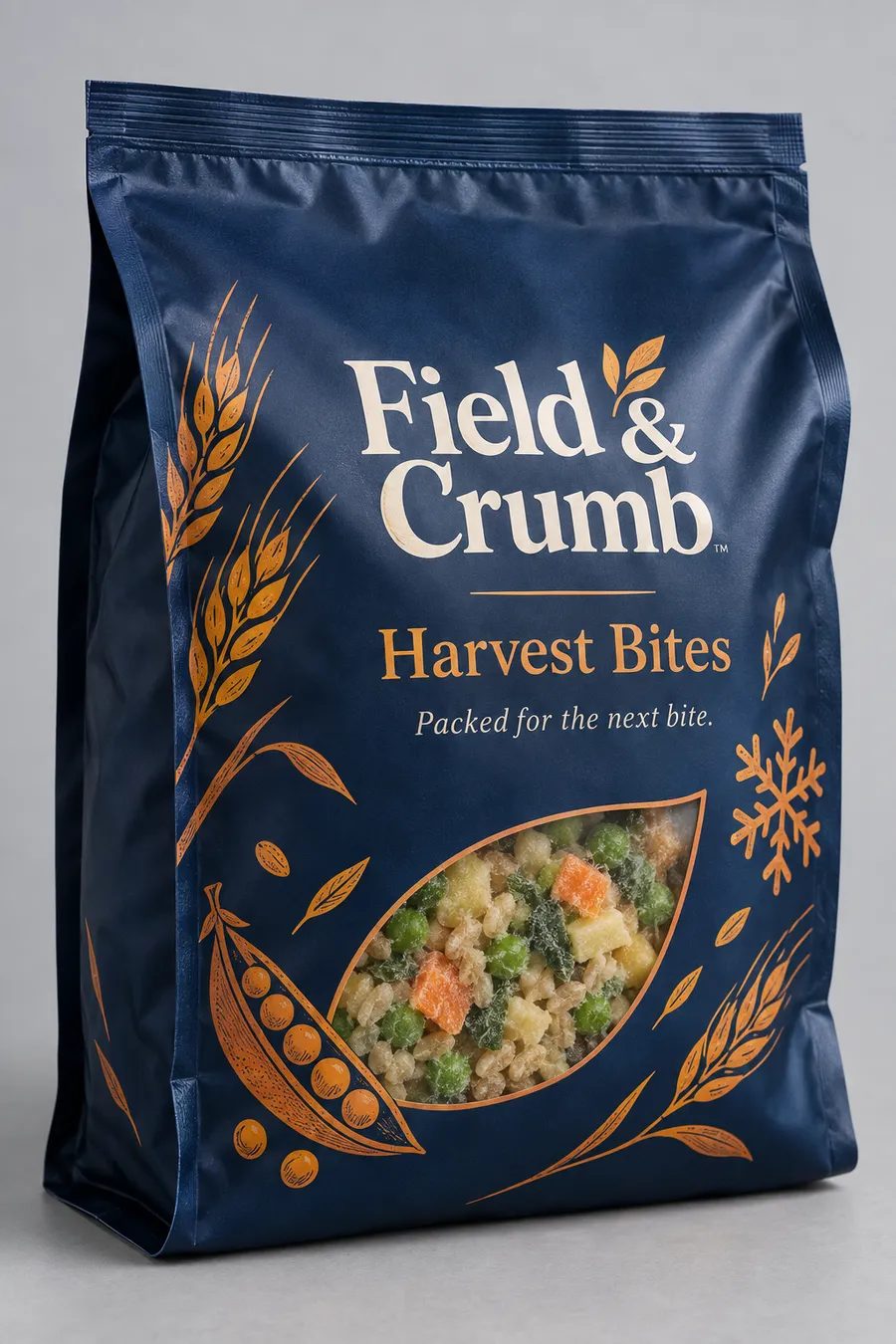
The bag must fit the filled food, leave a workable seal area, and keep the intended panels readable through filling, freezing, storage, and handoff. Start with product shape, fill weight, temperature route, closure, and required information so the flexible format is reviewed around a real frozen-food job rather than a stock pouch.
Printed flat or gusseted bags can present single-serve meals when fill weight, headspace, seal, storage directions, and reheating information are mapped.
A flexible bag can organize loose or portioned produce when frost, moisture, fill settling, front visibility, and the required code or ingredient panel are part of the brief.
Meat, seafood, or prepared ingredient packs need the product shape, sharp edges, temperature route, closure, and contact questions reviewed together.
A printed frozen-food bag can sit inside a carton, case, or delivery route when the inner footprint and outer handling requirements are specified together.
Map the artwork on the flat layout and the formed bag. Front and back panels, gussets, seams, top seal, window or code area, and the customer viewing angle all affect what stays readable after filling and freezing.
The product, film direction, seal, artwork, and outer handling route are considered together. Depending on fill shape and access needs, the bag may use flat panels, gussets, a tear feature, a zipper, or another reviewed construction after the filled package is understood.
Packed width, height, fullest thickness, headspace, irregular pieces, and fill weight establish the bag footprint and panel proportions.
Top seal width, tear notch, zipper, or another opening route is checked with filling method, frost, product edges, and repeat-access expectations.
Freezer temperature, moisture, frost, aroma, light, delivery distance, and the outer case or carton define the questions for material and barrier review.
A useful quote starts with the filled food and the cold route, then connects the bag geometry, closure, artwork, and outer handling needs. These steps turn that information into a reviewable package.
Provide filled length, width, fullest thickness, fill weight, headspace, orientation, irregular edges, and whether the bag is flat, gusseted, or another format.
State filling temperature, freezer conditions, moisture or frost, aroma, oxygen or light concerns, delivery distance, and the outer case or carton.
Explain whether the pack needs a heat seal, tear notch, zipper, repeat access, a window, a code area, or another reviewed closure feature.
Identify front branding, back ingredients or storage information, allergen or preparation copy, barcode, date code, seam, gusset, and seal boundaries.
Share the Food-Grade Flexible Pouch Film direction and any listed lamination, Spot UV, foil, or embossing preference for artwork review.
Need help with structure, materials, or production planning? See how we manufacture custom packaging.
A sample kit carries a $44.99 USD shipping charge credited toward your first order, useful when you need to compare film feel, print coverage, seal placement, opening behavior, and the formed frozen-food bag before approving a custom run.
Shipping charge: $44.99. Credited toward your first order.
Request a Sample KitFind clear answers about fit, materials, and ordering below.
They are printed flexible bags planned around a frozen product’s filled profile, seal area, opening route, and information panels. The final material and structure depend on the product, temperature route, contact context, and handling brief.
Send filled length, width, fullest thickness, fill weight, headspace, orientation, product edges, and the intended outer case or carton. Include filling temperature, freezer conditions, moisture or frost, and the required front, back, gusset, seal, and code areas.
Food-Grade Flexible Pouch Film is the relevant category direction to discuss. The proposed film or laminate still needs review against the actual food, freezer temperature, moisture, frost, aroma, oxygen or light concerns, contact context, and market requirements.
A heat seal, tear notch, zipper, or another opening route can be considered when it suits filling, seal clearance, product edges, frost, and repeat-access expectations. The proof should show the opening feature and the space it uses.
Map the front, back, gussets, seam, top seal, window or code area, and fold direction on the dieline, then check the formed-bag view. Keep important branding and required information clear of boundaries that may hide or distort it.
The standard fulfillment path starts at 50 units. Production begins from 7 business days after digital proof approval, with free US shipping and dieline and proof review included at no extra charge. Your final unit price is confirmed in a quote because the frozen-food specification determines the work.
Orders start at 50 units and scale up to 500,000 for bulk runs, with pricing from $0.20 per unit on larger quantities. Standard production is from 7 business days after digital proof approval.
Compare nearby products and request the format that best fits your next run.
Available product
Available product
Available product
Available product
Plan the cold-food pack
Send the packed dimensions, fill weight, temperature route, closure preference, artwork status, material direction, information panels, and outer handling plan. Easy Box Packaging can then review the film, seal, print coverage, and formed bag as one quote-ready specification.
Add your product details to see a quote summary.