Stacked packs or dry snacks
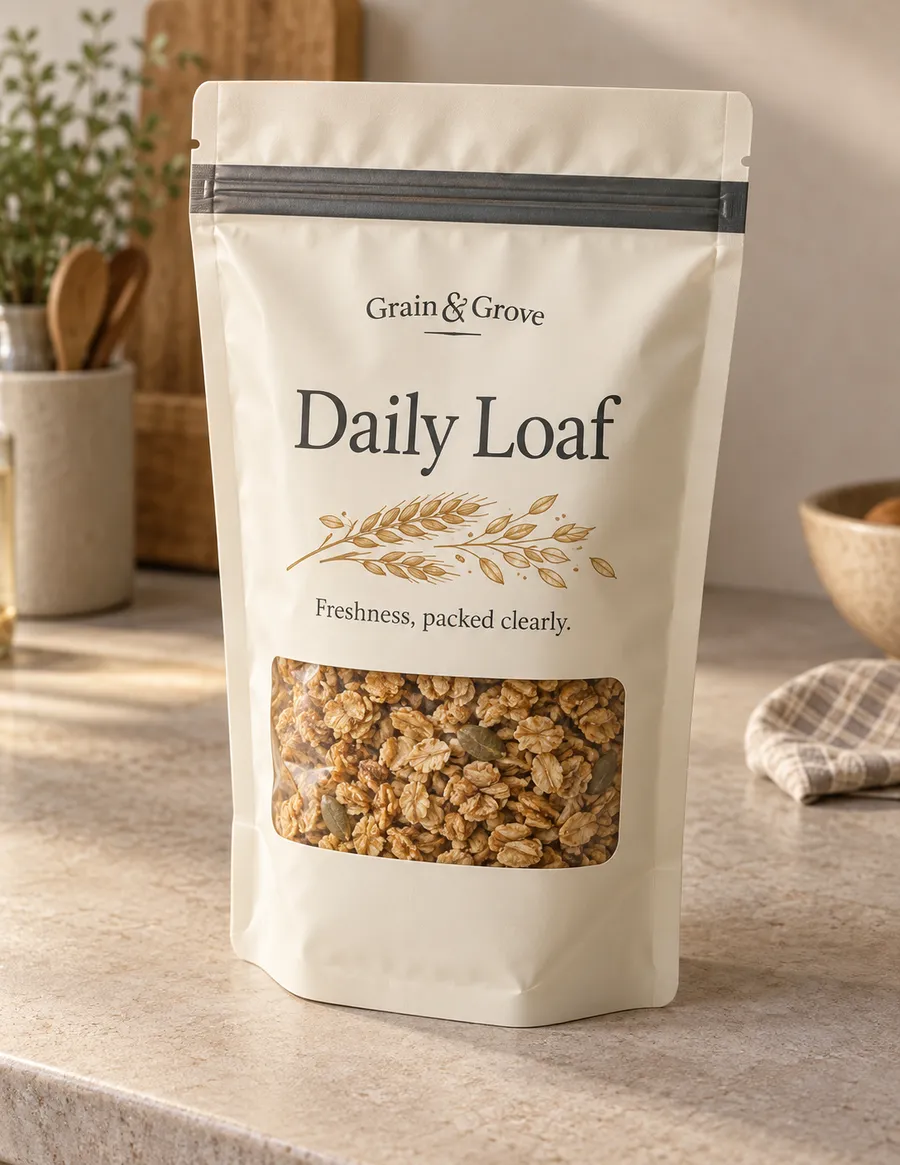
A gusseted pouch can give a regular stack room to sit upright while the front panel carries the product cue and storage information.

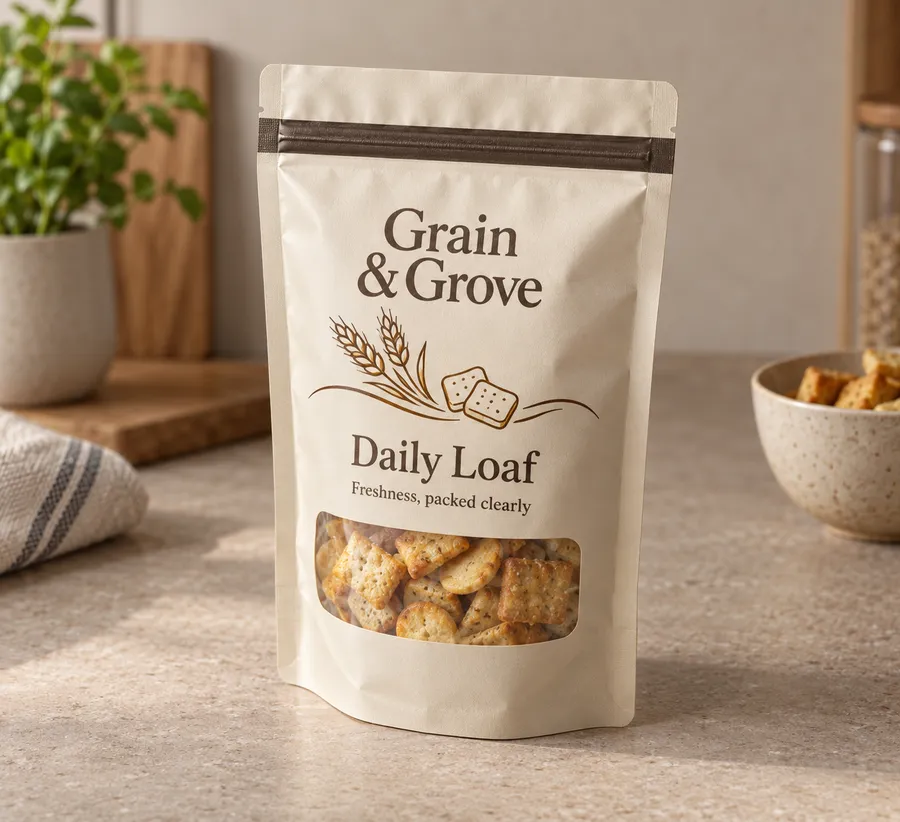
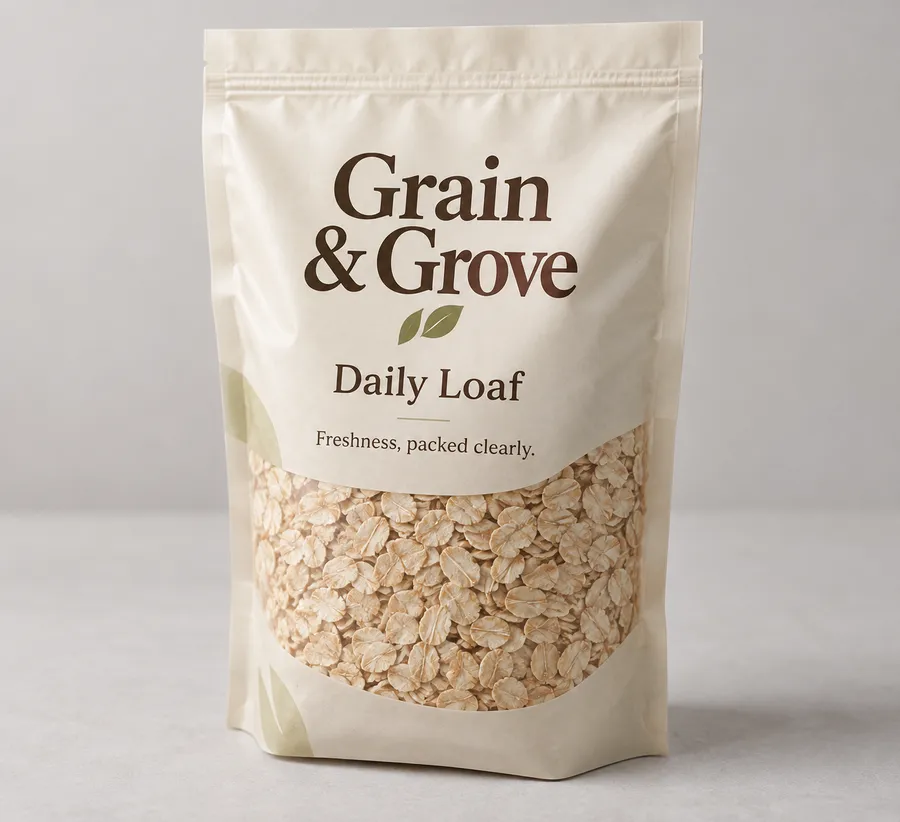
Printed warm ivory mylar mylar bag with window with a zipper, clear window, and stacked packs or dry snacks inside.
Mylar Bags
Custom mylar bags with window are food-grade flexible pouches printed around the pack format, closure, and storage routine. Choose a flat or gusseted profile, a zipper or heat-seal finish, and a barrier laminate that matches the product. Share the packed pack dimensions, weight, seal area, artwork, and finish direction so the dieline is built around the real dry-food pack.
Last updated
Working quote
Product brief
Custom mylar bags with window give a bakery a printable flexible format that can be sized around a dry product pack, counted assortment, or small pouch of bite-size pieces rather than forcing the product into a generic sleeve. The first decision is the packed shape: a flat stack, a tall pack tower, a single large pack, or a mixed assortment each changes the width, gusset, headspace, and seal area. Send the packed length, width, height, widest points, approximate weight, and number of packs or dry snacks before the dieline is drawn.
A food-grade flexible pouch film can be specified around the product's moisture, aroma, and light sensitivity. A metalized or foil barrier laminate may help protect texture and aroma, but the right structure depends on the recipe, fat content, filling temperature, storage route, and intended time in market. The page does not promise a universal shelf-life result; those variables need to be reviewed with the actual bakery process. If the bag will be opened repeatedly at home, a zipper can make the pack practical after the first serving. If the bakery seals each order for same-day sale, a heat-seal area and tear notch may be the more useful combination.
The front panel should answer the shelf question quickly: what is the pack, who made it, and what should the customer notice? The back can carry ingredients, allergens, storage guidance, serving notes, barcode placement, and required product information. Artwork should leave a clean zone around the top seal and zipper, because critical copy can be lost in a crimp or folded gusset. A matte field can keep a pack photograph and illustrated ingredients readable under retail lighting; a gloss field can increase color contrast on a simple mark. Spot gloss or spot UV is best reserved for a small logo or pack illustration that needs a change in surface rather than a whole-panel effect.
The product images show an illustrative print layout; your approved artwork replaces it at the proof stage. On a production proof, check the logo scale, front and back orientation, zipper location, seal margin, gusset folds, and the way the pouch stands or lies when filled. A digital proof is the point to correct copy and panel placement before production begins.
The standard fulfillment path starts at 50 units, with production from 7 business days after digital proof approval. Free US shipping is an approved service fact for the standard path, and dieline and proof review are included at no extra charge. Quotes are typically answered the same business day and always within 24 hours. Pricing remains quote-only here because film structure, bag dimensions, closure, print coverage, finish, and quantity change the actual cost.
For a useful review, send one filled sample or a measured dummy, the packed weight, target count per case, storage conditions, and the artwork status. Note whether the bag needs a window, a degassing feature, a tear notch, a zipper, or a simple top seal. A sample kit has a $44.99 USD shipping charge credited toward the first order, so you can compare film feel, opacity, seal behavior, and finish before approving a custom run.
A clear brief prevents the most common pack-bag surprises: a stack that pushes into the seal, a label that disappears into a gusset, or a zipper placed where the filled pouch cannot close flat. Mark the intended front panel, the opening edge, and the reading direction. If the packs or dry snacks are sold as a pair, a dozen, or a small set, show the complete arrangement rather than one unit. The resulting proof can then be reviewed for fit, readability, and the handling routine together.
Product texture also affects the brief. Fragile pieces need enough headspace and a filling route that avoids crushing decoration; dense granules or powders may need a sturdier profile and a different barrier conversation. Describe whether the product is individually wrapped, separated by paper, or loaded directly into the pouch. Those details help the team review the seal area, closure, window, and print map as one assembled package instead of treating artwork and construction as separate decisions.
Proof points
The proof should show the filled pouch and the artwork on the assembled pack. Compare the closure, seal margin, panel orientation, and finish placement with the bakery brief.
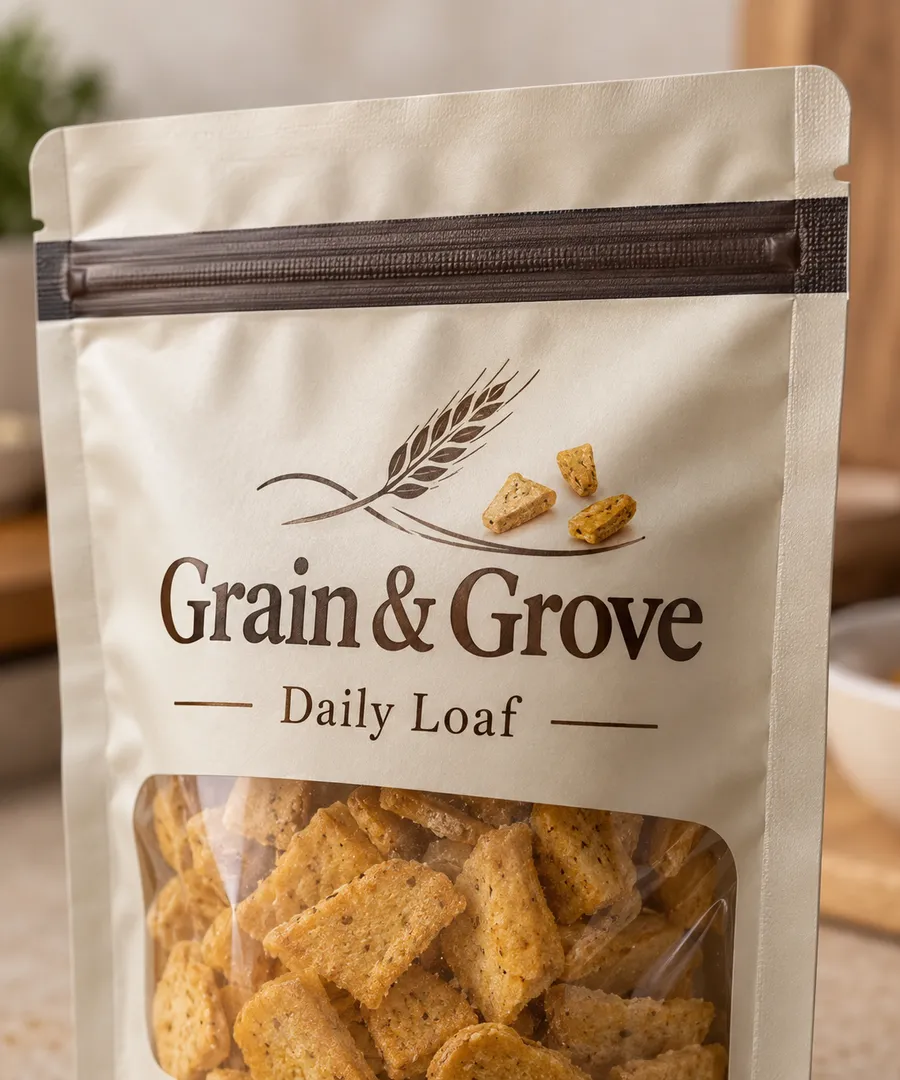
Start with the filled packs or dry snacks and the moment after opening. The film, closure, seal margin, and printed panels should keep the product practical to handle while making the pack name, ingredients, and storage guidance easy to read.
A gusseted pouch can give a regular stack room to sit upright while the front panel carries the product cue and storage information.
Mixed sizes can be reviewed with a wider profile, clear headspace, and a closure that does not crush icing or decoration.
A smaller flat pouch can frame one decorated pack when the filled dimensions, protection needs, and opening sequence are supplied together.
Printed pouches can present biscuits, shortbread, or dry inclusions when the seal, barrier, and labeling requirements are defined for the contents.
Map artwork on the filled bag so the brand, pack illustration, ingredients, allergen notes, storage guidance, and required information remain readable when the pouch is sealed or folded.
The bag is reviewed as a filled package, not as a flat artwork file. The chosen profile, window, closure, and barrier direction depend on the product shape, moisture, aroma, storage route, and repeat-opening routine.
Use the packed length, width, height, widest points, count, and weight to set the pouch profile, gusset, headspace, and seal area.
A zipper, tear notch, or heat-seal route can be considered around how the customer opens and stores the packs or dry snacks after the first serving.
Keep brand, pack cue, ingredients, allergen notes, storage guidance, and required information oriented away from folds, seals, and zipper tracks.
A useful quote starts with the filled packs or dry snacks and the way the customer will open and store them. These steps turn that routine into a pouch specification that can be checked before production.
Provide packed length, width, height, widest points, pack count, approximate weight, decoration profile, and any unusual shape.
State whether the bag needs a zipper, tear notch, heat seal, or a simple top seal, and show the intended storage routine.
Mark the front, back, gusset, seal, zipper, barcode, ingredient, allergen, and storage-information zones in the artwork or brief.
Check the film direction, pouch profile, closure position, seal margin, print orientation, and finish placement on a filled-pack proof.
Need help with structure, materials, or production planning? See how we manufacture custom packaging.
A sample kit carries a $44.99 USD shipping charge credited toward your first order, useful when you need to compare film feel, opacity, seal behavior, and finish direction before approving a custom mylar bag with window.
Shipping charge: $44.99. Credited toward your first order.
Request a Sample KitFind clear answers about fit, materials, and ordering below.
Send the packed length, width, height, widest points, approximate weight, pack count, and any moisture, aroma, or light sensitivity that changes the profile. Include the way the packs or dry snacks will be stored and any paper, insert, or inner wrap that shares the pouch.
It depends on the opening routine. A zipper can support repeat opening at home, while a heat seal can suit individually packed packs or dry snacks sold for same-day or short-cycle use. A tear notch can be considered with either route.
Yes, the artwork can be mapped across front, back, gusset, and selected seal-safe zones. Keep ingredients, allergen notes, and storage guidance away from folds, zipper tracks, and the top crimp.
No universal shelf-life result should be assumed. Film and barrier selection depend on the recipe, moisture, fat content, light exposure, filling temperature, and storage route, so those variables should be reviewed with the actual product.
The standard fulfillment path starts at 50 units. Production starts from 7 business days after digital proof approval; the final schedule is confirmed with the quote and proof.
Orders start at 50 units and scale up to 500,000 for bulk runs, with pricing from $0.21 per unit on larger quantities. Standard production is from 7 business days after digital proof approval.
Common uses include stacked packs or dry snacks, assorted dry-food packs or dry snacks, single large packs or dry snacks, and biscuit and dry snack portions. The final specification is set by the packed product and how it will be handled.
Compare nearby products and request the format that best fits your next run.
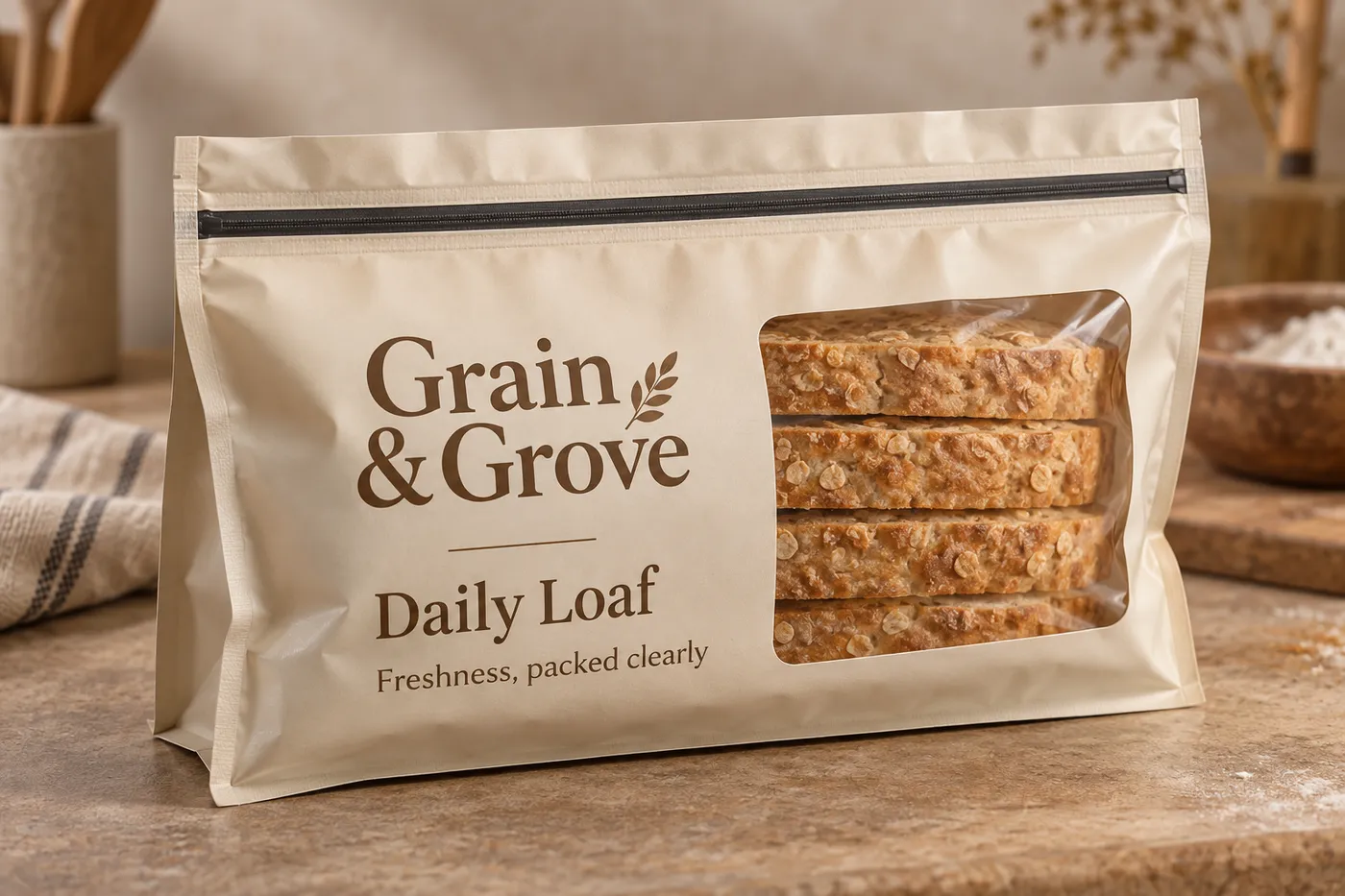
Available product
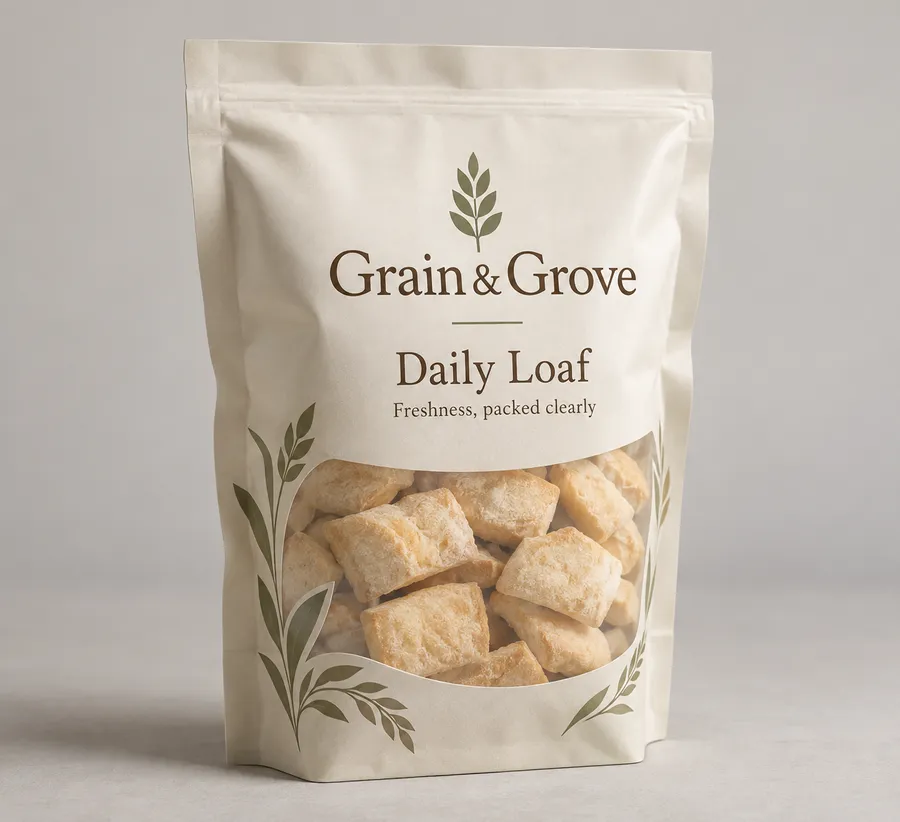
Available product
Available product
Available product
Plan the dry-food pack
Send the filled dimensions, weight, pack count, closure preference, storage routine, artwork status, and finish direction. Easy Box Packaging can then review the film, pouch profile, seal-safe print map, and proof as one quote-ready specification.
Add your product details to see a quote summary.