Client and Team Gifts
A printed rigid or folding package for a branded item, keepsake, or small collection handed over at a New Year event or milestone.

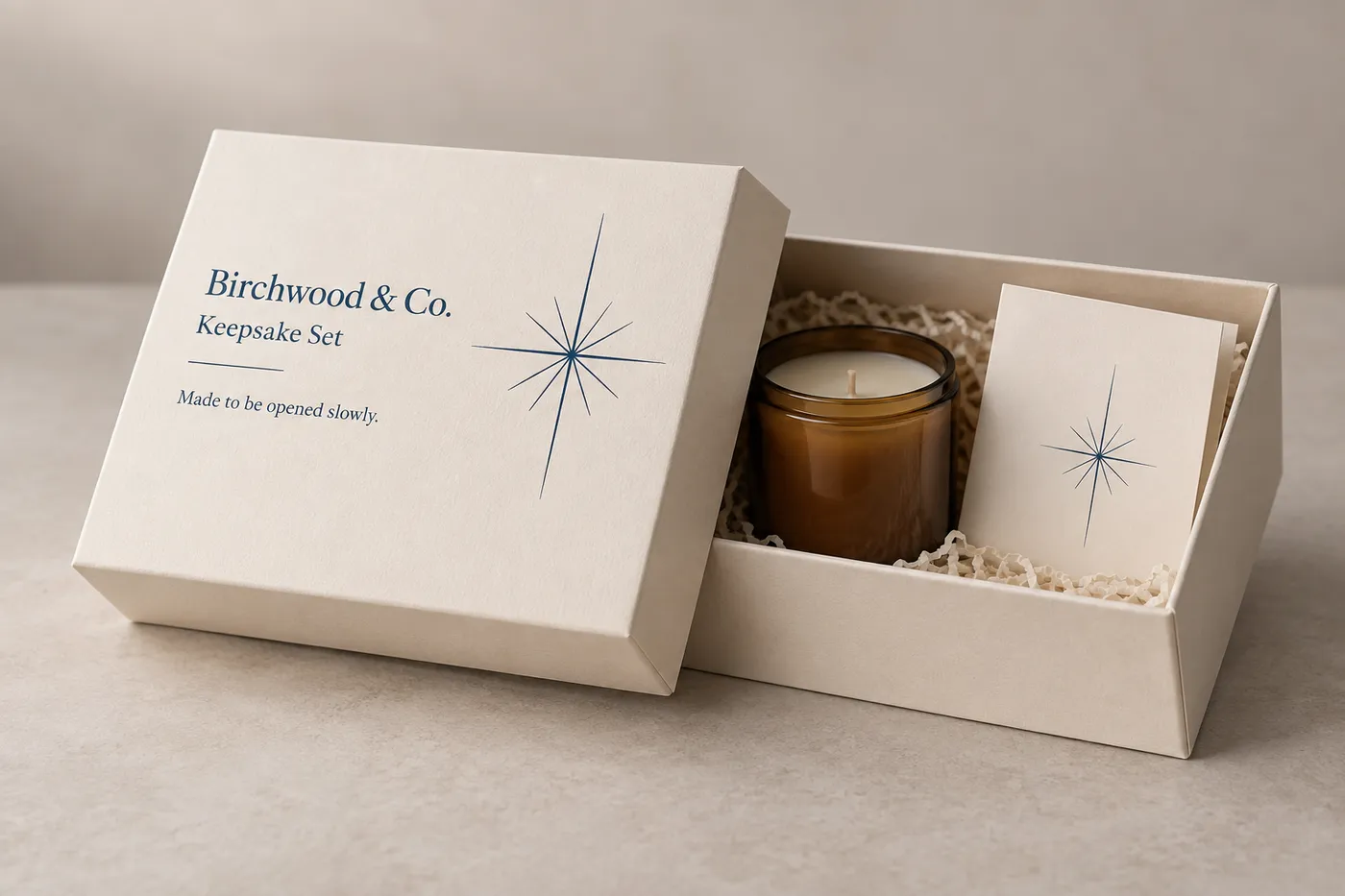
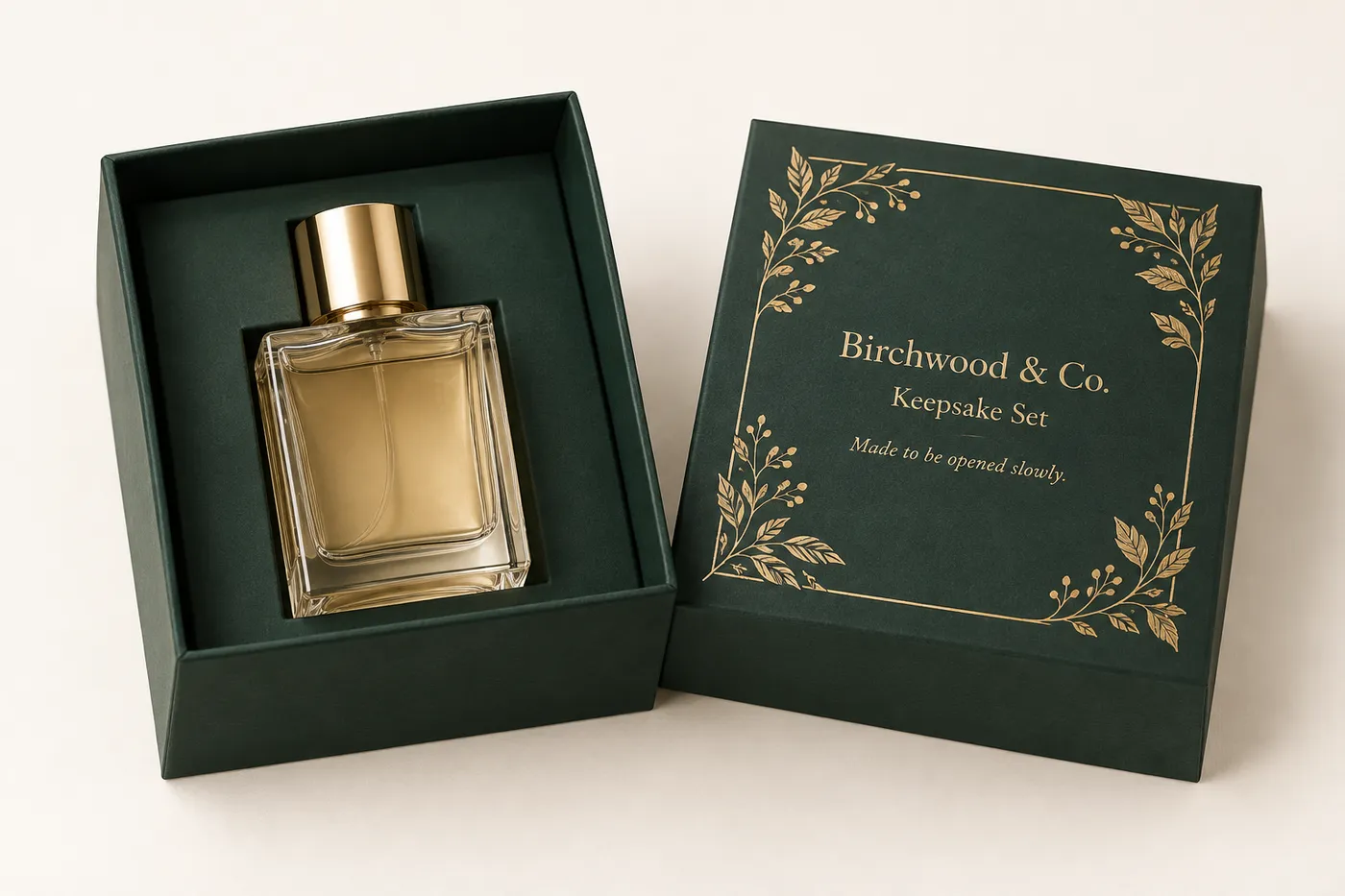
Printed rigid New Year gift box with lift-off lid, candle jar, and celebration card
Gift Boxes
Custom New Year gift boxes are planned around the product, set arrangement, and first-opening moment behind the celebration. Use a rigid two-piece box for a defined lift-off-lid presentation or consider a folding paperboard format when the package needs a folded construction. Board, print coverage, finish, and interior support follow the actual gift rather than a seasonal graphic alone.
Last updated
Working quote
Product brief
New Year gift boxes should make the first few seconds of the handoff feel intentional while still giving the packing team a practical package to fill. Begin by describing what the recipient should see: a separate lid lifting from a base, a folded front panel opening toward a product, or several small items arranged as a set. A single candle, bottle, jar, keepsake, or boxed accessory can need a different opening sequence from a collection of samples, treats, or welcome gifts. That decision affects the visible panels, the interior space, the closure, and the way the New Year artwork is encountered.
The seasonal message is only one part of the brief. Packed product dimensions, orientation, closures, unusual shoulders or handles, the number of components, and any card or tissue all change the specification. A rigid two-piece box arrives as a separate base and lid, so it can create a clear lift-off moment around one item or a compact arrangement. A folding paperboard direction can suit a package that needs a folded construction, defined tuck route, or different storage and handling path. Both formats need to be reviewed around the contents instead of selected from a square dieline or a decorative pattern.
A rigid New Year gift box can suit a single higher-value item or a small set where the lid and base should read as part of the occasion. The lid may carry the primary New Year message, while the base holds the item and any card in a controlled presentation. Separate surfaces give the artwork a useful order: the lid can introduce the occasion, the front wall can identify the brand or product, and the interior can reveal the gift. The box proportions still come from the packed contents, the desired opening, and the way the recipient will handle it.
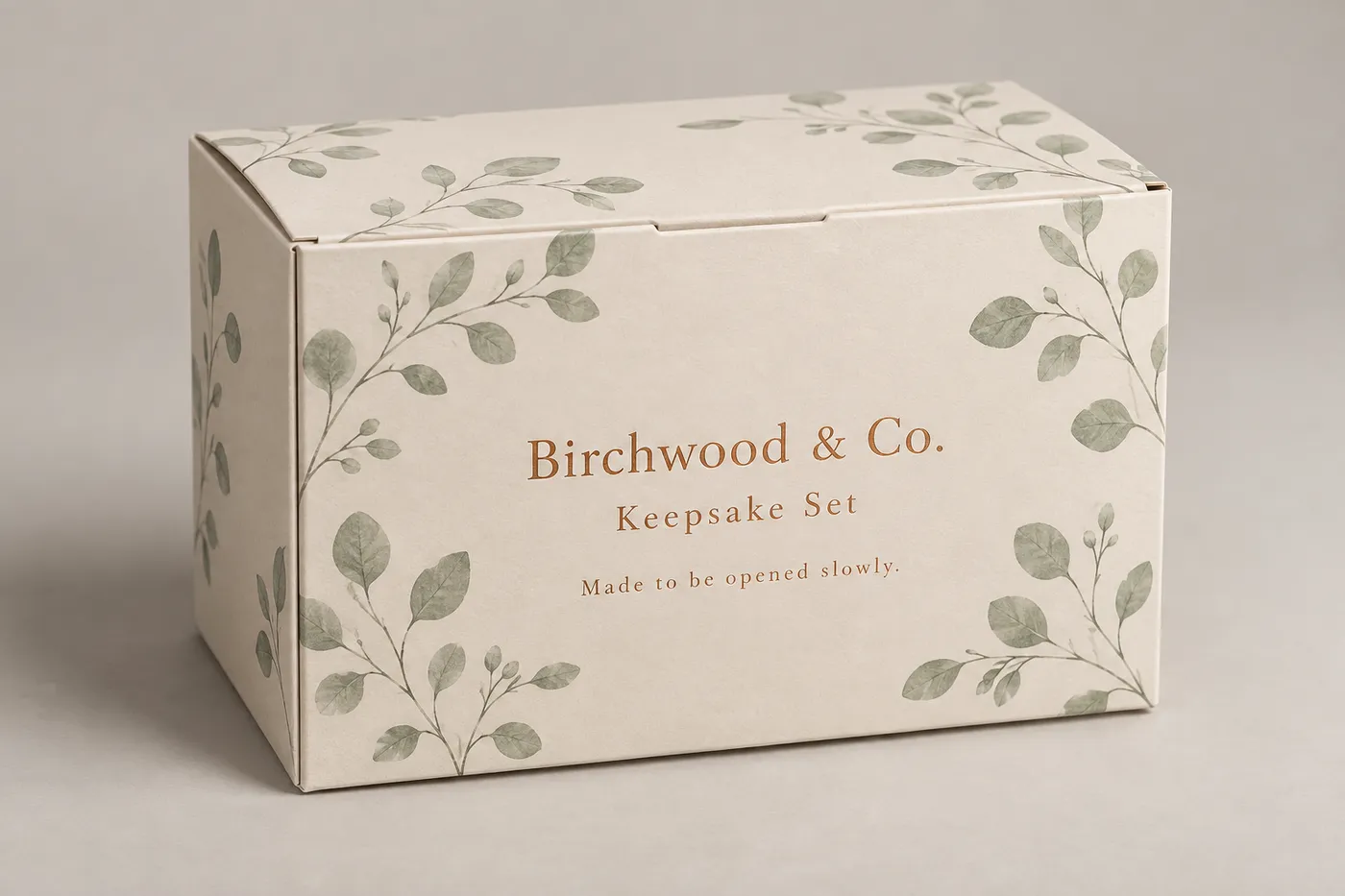
A folding box may make sense when the gift needs a folded paperboard construction, a particular tuck or locking route, or a different packing sequence. It can put the brand message on the first-view panel and use the remaining panels for product information, a short New Year note, or artwork that wraps around the package. The exact panel order depends on the dieline. Share the widest points, protrusions, orientation, and any card or tissue so the fold lines and closure are considered with the gift in its actual packed position.
A gift set introduces another choice: whether the interior should remain an open cavity or include a paperboard feature that separates or raises the contents. Support depends on product geometry, weight, fragility, orientation, outer structure, packing route, available clearance, and the desired reveal together. A bottle and card may need a different arrangement from three small jars placed side by side. A delicate keepsake may need its position defined before the lid height is set. The suitable support is established from the real set layout rather than from one assumption about weight or a generic insert rule.
Send the packed length, width, and height at the widest points, not only the nominal product label dimensions. Include caps, shoulders, handles, tapered sides, closures, tabs, and any part that changes the loading position. If the gift is a set, provide the component count and the actual arrangement. Note which item should be seen first, whether a card lies on top, whether tissue changes the packed height, and whether the recipient removes the components in a planned order.
The internal dimensions are derived from the product geometry and the clearance needed for the intended presentation. Those internal dimensions then inform the construction allowance and the external box size. A master-case quantity can be reviewed later as a logistics question, but it does not determine the gift box depth or the space required around the product. If the same New Year artwork will be used across different product sizes, each size still needs its own dimensional review and dieline; the same seasonal style does not mean one physical tool covers every format.
The opening route should be described as carefully as the dimensions. Explain whether the lid should lift off completely, whether a fold should stay attached, whether the product is picked up by hand or sits beneath a card, and whether the recipient should see the brand message before the item. These details help connect the structure to the actual handoff. They also prevent a visually balanced flat layout from becoming awkward after the lid overlap, divider, tissue, or standing card occupies space in the assembled box.
SBS Paperboard and Kraft Paperboard are the approved category material directions for this product family. The appropriate direction depends on the chosen structure, packed gift, span, handling path, artwork coverage, and the surface character the New Year design needs. SBS Paperboard can be considered for a clean printed direction. Kraft Paperboard can be considered when the design should work with a more visible paper character. The material decision belongs with the construction and printed surface rather than being added after the artwork is complete.
Foil Stamping can be considered for a selected year mark, border, star, or line of type, subject to artwork review. Embossing/Debossing can add a raised or impressed treatment to a chosen mark or pattern when the board and design support it. Spot UV can create localized surface contrast for a selected detail. Matte Lamination and Gloss Lamination are available as different surface directions to review with the palette, handling route, and other finish accents. None of these choices replaces the need to check the assembled package: a finish that looks balanced on a flat panel may need a different placement near a fold, lid rim, corner, or opening edge.
The finish map should identify which panels carry the New Year message, where the brand name sits, which areas remain quiet, and which elements need to stay legible at the first reveal. A restrained date or seasonal line can have more value when it is placed on the surface the recipient sees first rather than repeated on every panel. A digital proof gives the buyer a chance to review orientation, panel breaks, artwork placement, and the relationship between the lid and base before production begins.
Share the brand guidelines, product name, New Year message, palette, motif, artwork status, and any copy that must appear on the box with the packed product details. Map the design against the lid, base, front, sides, interior, folds, closures, and any card or divider. This keeps the visual hierarchy aligned with the way the package is opened. If a New Year collection includes several product sizes, identify which artwork elements stay consistent and which panels change with the dimensions.
The product images show an illustrative print layout. Your own artwork can replace it once the structure and panel map are reviewed. The same discipline applies to seasonal motifs: decide whether the pattern stops at the lid edge, continues across a base panel, or stays on one first-view surface, then check that choice on the assembled box rather than treating the flat file as the finished experience.
A useful quote brief includes packed length, width, and height; component count; orientation; approximate weight; widest points; caps, handles, tapers, or unusual corners; the desired opening; board direction; print coverage; finish preference; artwork status; quantity; and delivery destination. For a set, include the actual arrangement and every card, tissue, divider, or insert that occupies space. If the boxes are for a New Year event or gifting window, share the required ready date so proof approval and the intended fulfillment route can be discussed early.
The standard fulfillment path starts at 50 units. Production begins from 7 business days after digital proof approval, and dieline and proof review are included at no extra charge. Pricing remains quote-only because the structure, packed dimensions, material, print coverage, finish, quantity, and set arrangement change the specification. A sample kit carries a $44.99 USD shipping charge credited toward the first order when you need to check paperboard feel, printed color, lid movement, or finish direction in hand.
Once the structure and artwork are reviewed, check the assembled reading order rather than only the flat panels. Confirm that the lid or closure works with the packed gift, the New Year message sits on the intended first-view surface, the seasonal motif does not compete with necessary product information, and the interior arrangement matches what the packing team will place inside. Those checks connect the celebration, the product, and the package before the production file is approved.
Send product photos or a physical sample when the shape is difficult to describe, together with the packed measurements and the quantity you expect to order. For a multi-item set, a simple top view showing the order of the components is useful. State whether the package should be rigid or folded if you already have a preference, but leave room to compare the structure against the opening and handling requirements. Include the brand artwork or explain whether the design is still being developed.
The goal is a specification that can be read in two ways: the buyer can picture the New Year handoff, and the production team can see the dimensions, panels, support, and approval points that make the package possible. With 50 units as the standard minimum, from 7 business days after digital proof approval as the production estimate, and the $44.99 sample-kit shipping charge credited toward the first order, the remaining quote variables are the real product, construction, artwork, finish, and quantity.
Proof points
The package is reviewed as one presentation system: the product, opening motion, seasonal artwork, material, and selected finish should support the same handoff.
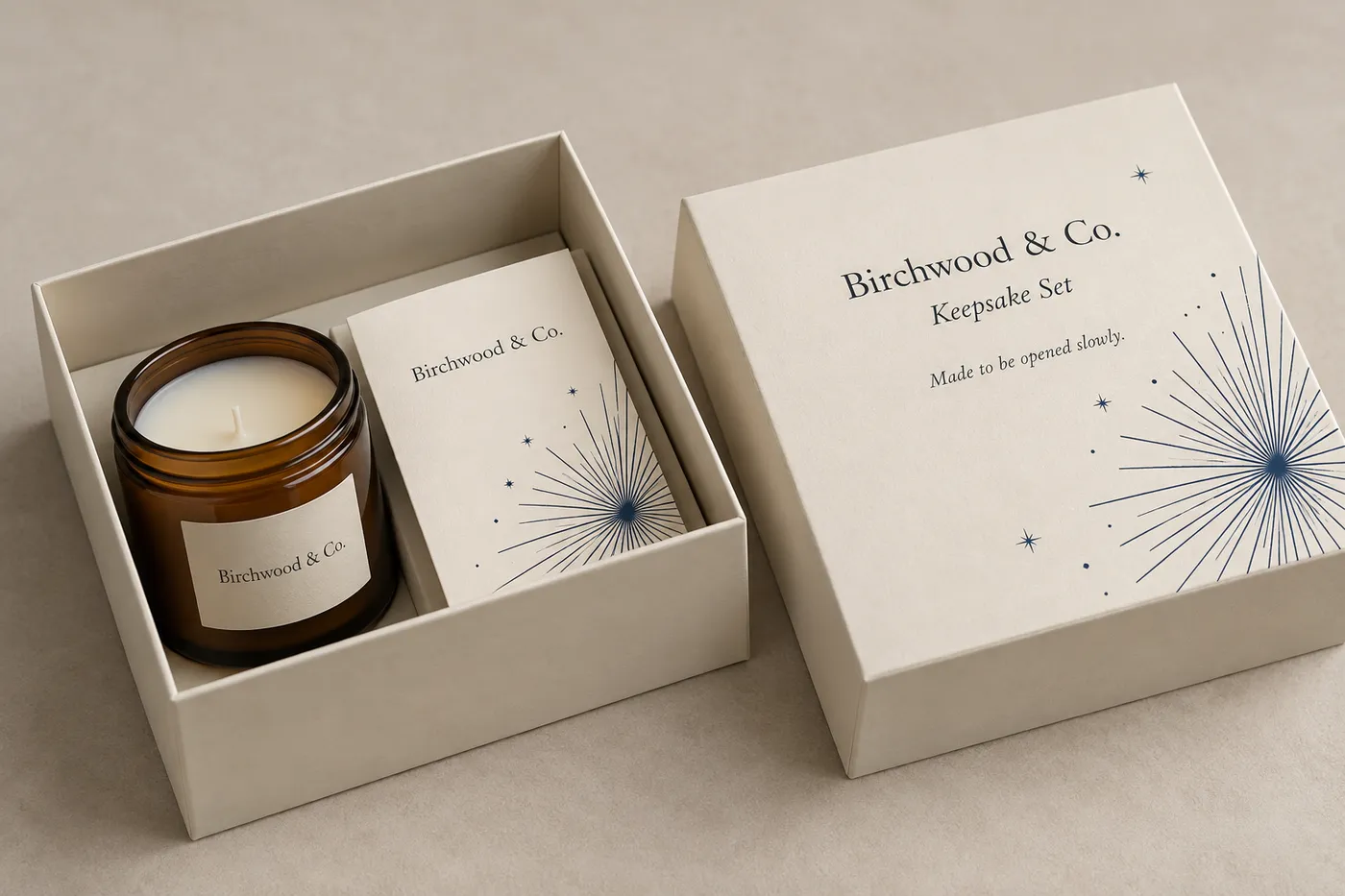
Sizing follows the packed product's widest points, closures, accessories, component count, and intended orientation. The lid, fold, and final clearance are reviewed against the actual contents so the seasonal package opens in the order the buyer intends.
A printed rigid or folding package for a branded item, keepsake, or small collection handed over at a New Year event or milestone.
A box for several components when the item count, arrangement, card position, and order of reveal are known before sizing.
A New Year package that uses the lid, front panel, or first-view surface to introduce a limited seasonal design around the product.
A made-to-order presentation box for a welcome, launch, or hosted occasion where the printed package is part of the handoff.
Map the New Year message, brand name, product information, and seasonal motif on the assembled lid, base, and visible side panels so each finish has a clear job.
A quote-ready brief connects the packed gift, opening route, structure, interior arrangement, artwork, and finish before the proof is approved.
Share the widest points, closures, component count, orientation, weight, and every card, sleeve, or tissue layer that changes the loading position.
Describe the lift-off lid, fold, tuck, or other opening the recipient should encounter first, including the order in which a set is revealed.
Identify the first-view panel, New Year message, printed areas, material direction, and finish details that need to be checked on the digital proof.
Start with the packed gift and the opening it needs to create, then move through the structure, artwork, proof, and production approvals.
Provide packed dimensions, widest points, component count, orientation, approximate weight, closures, accessories, and any card, tissue, or divider.
State whether the box should use a lift-off lid or folding route, what the recipient sees first, and how a set is arranged.
Share preferences for SBS Paperboard, Kraft Paperboard, Foil Stamping, Embossing/Debossing, Spot UV, Matte Lamination, or Gloss Lamination.
Provide the New Year message, brand artwork, product information, printed panel priorities, and current artwork status.
Check the structure, panel orientation, product position, opening route, and artwork map in the proposed dieline.
Need help with structure, materials, or production planning? See how we manufacture custom packaging.
Check paperboard feel, printed color, lid movement, and finish direction in hand; the $44.99 sample-kit shipping charge is credited toward your first order.
Shipping charge: $44.99. Credited toward your first order.
Request a Sample KitFind clear answers about fit, materials, and ordering below.
A rigid two-piece box with a lift-off lid can suit a single item or compact set when the opening moment and defined presentation matter. A folding paperboard format may suit a different storage, assembly, or handling requirement. The choice follows the contents, opening route, and way the package reaches the recipient.
Share the packed length, width, and height at the widest points, together with closures, handles, tapers, accessories, component count, orientation, card, tissue, and the intended reveal. Final clearance is confirmed during specification and dieline review rather than taken from a generic seasonal box size.
That depends on product geometry, weight, fragility, orientation, outer structure, packing route, clearance, and presentation together. Support may be integrated into the paperboard structure or supplied as a separate paperboard component after the packed contents and desired reveal have been reviewed.
Foil Stamping, Embossing/Debossing, Spot UV, Matte Lamination, and Gloss Lamination are category-listed directions to review with the selected paperboard and artwork. The proof review is the place to check the first-view panel, folded edges, lid rim, and how small seasonal details read on the chosen surface.
A shared seasonal design system can be adapted across sizes, but each materially different product size needs its own dimensional review and dieline. The same artwork style is not the same as one physical tool covering every box format.
The standard fulfillment path starts at 50 units. Production begins from 7 business days after digital proof approval, and free US shipping is available on the standard fulfillment path. Your final unit price is confirmed in a quote because the product, structure, artwork, finish, and quantity determine the specification.
Orders start at 50 units and scale up to 500,000 for bulk runs, with pricing from $0.16 per unit on larger quantities. Standard production is from 7 business days after digital proof approval.
Compare nearby products and request the format that best fits your next run.
Available product
Available product
Available product
Available product
Start Your New Year Gift Box Brief
Send the packed dimensions, product or set arrangement, quantity, intended opening, artwork status, material preference, and finish direction to request a quote.
Add your product details to see a quote summary.