Shipping carton seals
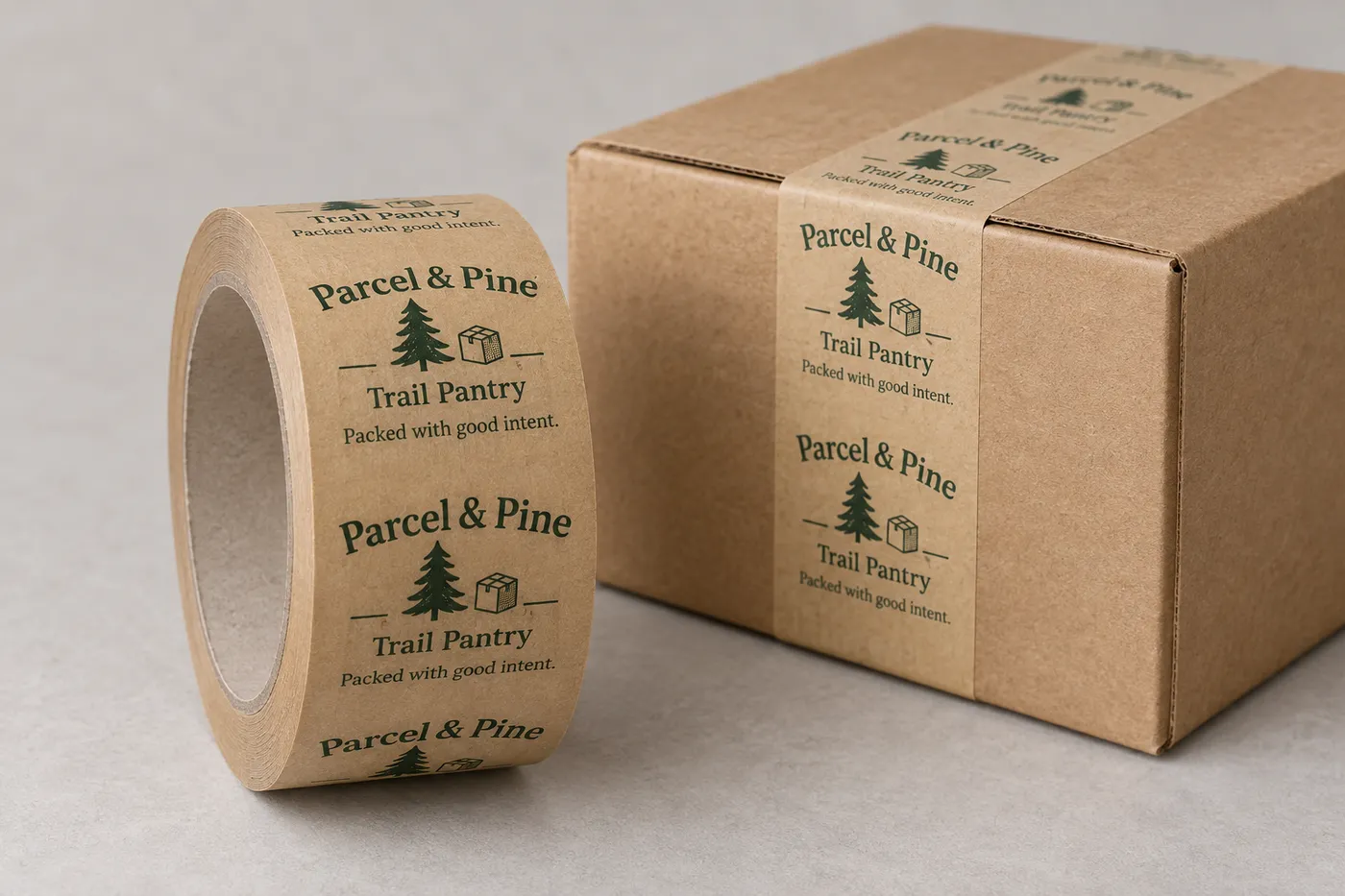
A repeated brand mark can run across a corrugated or kraft carton seam while the overlap and cut point remain part of the packing brief.

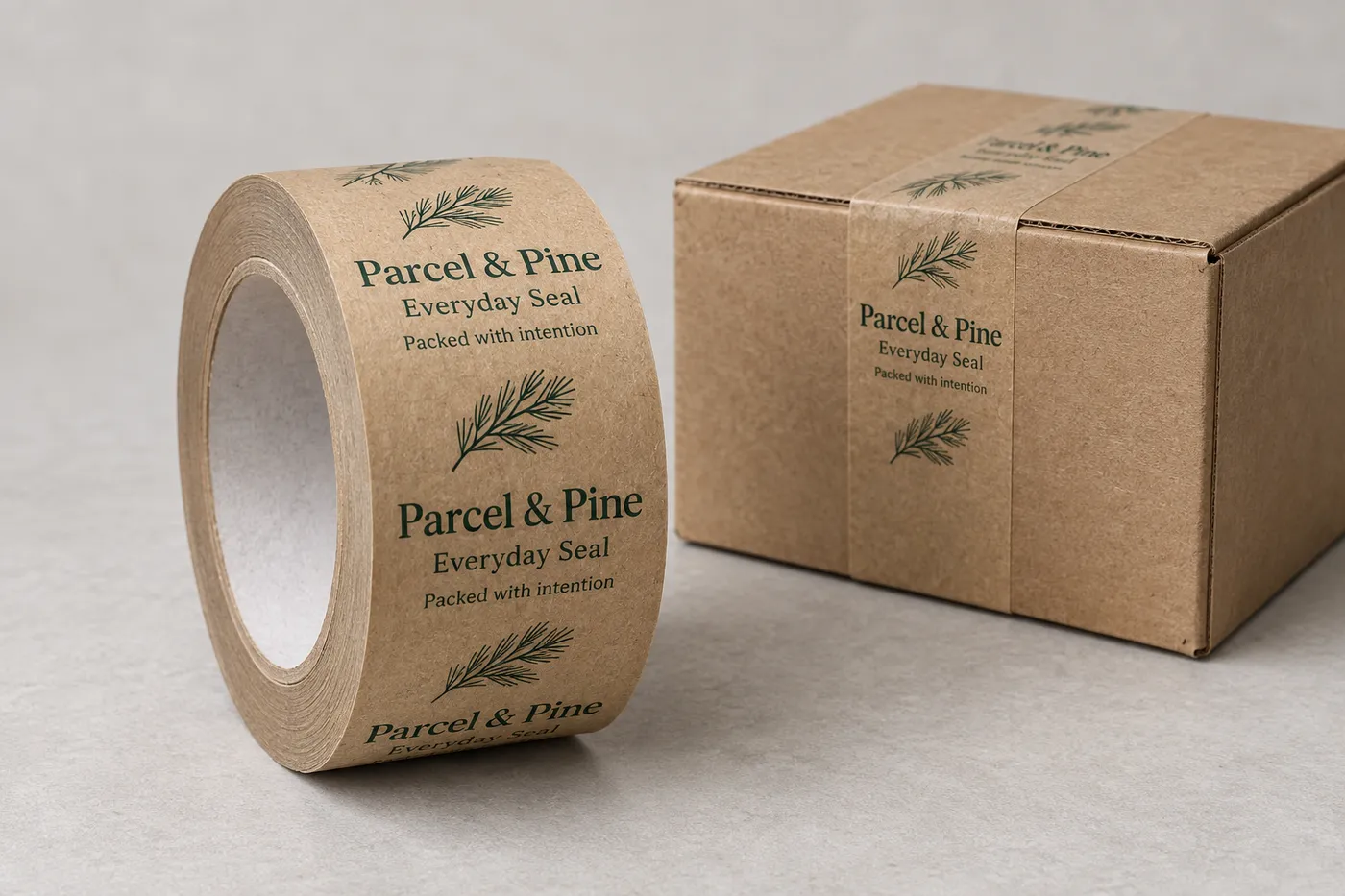
Printed kraft packaging tape roll beside a kraft carton sealed with a green brand repeat
Stickers and Tape
Custom packaging tape turns a carton seam, mailer flap, or tissue closure into a deliberate printed touchpoint. Specify the tape face, adhesive direction, width, roll format, repeat artwork, and application surface together so the digital proof shows how the message will read when the package is actually sealed. The final quote remains tied to the confirmed construction and quantity.
Last updated
Working quote
Product brief
Custom packaging tape is a printed sealing material planned around the package it will close. A strip across a corrugated carton seam has a different visual and handling brief from a short band around tissue, a mailer flap, or a presentation box. Begin with the closure job, the receiving surface, and the way the packer applies the strip. That information gives the proof a physical context instead of leaving the tape as an isolated artwork rectangle.
The standard fulfillment path starts at 50 units, and production begins from 7 business days after digital proof approval. Those figures describe the approved commercial path; the product-specific price is quote-only because width, roll format, face stock, adhesive direction, print coverage, and quantity can change the specification. Free US shipping is included. A sample kit carries a $44.99 shipping charge credited toward the first order when you need to inspect the paper character or printed repeat in hand.
The receiving surface is the first construction decision. Uncoated kraft paperboard, corrugated board, coated cartons, tissue, and mailer panels do not present the same texture or contact area. A paper tape direction may suit a dry paperboard seam, while a film face can be considered when the printed area needs a different surface character. The adhesive direction should be discussed with the actual substrate, pressure applied during packing, storage conditions, and whether the strip is intended to remain as a closure or be removed after opening.
If the tape crosses a score line, flap edge, fold, label, or rough corrugated flute, show that location in the brief. Tell the quoting team whether the strip is the primary closure, a reinforcement over another seal, or a decorative band. A tape that looks clear on a flat sample can read differently when it bends around a corner or meets a textured seam. The applied route, overlap, and cut point are part of the specification.
Packaging tape is seen in sections, not as one uninterrupted poster. Provide the wordmark or message, repeat interval, reading direction, usable width, safe edge area, and the point where the strip is likely to be cut. If one side of the carton must face the customer first, identify that orientation. Keep essential copy away from an edge, overlap, fold, or repeat transition so it remains legible after application.
A restrained one-color mark can let the natural kraft tone carry part of the palette. Broader print coverage can be reviewed when the brand needs stronger contrast, but the proof should show the coverage at the applied scale. For a roll used at a packing bench, also describe the direction the operator pulls, tears, or cuts the strip. For a dispenser, share the core or format requirement if known. These details help the artwork review account for the way the print is handled.
Finish direction should support the application rather than compete with the closure. Matte Lamination can offer a lower-sheen appearance for a quiet paper-led design. Gloss Lamination can be considered when the artwork needs a brighter surface response. Spot UV can create localized contrast on a selected wordmark or line motif, while Foil Stamping can draw attention to a short mark or border. Embossing/Debossing can be discussed for a tactile detail when the stock and artwork scale make it practical.
These are review directions, not universal performance promises. The selected treatment needs to be considered with the tape stock, adhesive, repeat scale, tear or cut action, and package surface. Share the exact artwork, brand colors, variable copy, and any area that must stay unprinted. Dieline and proof review are included at no extra charge, giving the team a place to check edge clearance, repeat transition, orientation, and the relationship between the strip and the closed package.
Before approval, review the tape at the width and direction in which it will be used. Confirm the brand field, repeat spacing, logo orientation, required message, safe margins, and any overlap over a seam. If the strip crosses a fold or wraps around an edge, inspect that transition instead of evaluating only a flat sample. If the tape is paired with a label or another closure, show the placement so the printed mark does not hide required package information.
Quote requests are typically answered the same business day and always within 24 hours. That response timing supports the briefing process, but it does not replace the construction review. Send the package surface, intended closure, width, roll or dispenser information, quantity, artwork status, and preferred finish so the quote reflects the real application.
A repeated mark across a shipping carton can make the opening route immediately legible while keeping the seam visible. A shorter strip can close a mailer flap or tissue wrap where the first visible repeat matters more than a long uninterrupted message. A presentation carton can use a quieter printed band that sits with the box artwork rather than covering it. Subscription and gift packing can use a consistent seal cue across several package sizes, with each size reviewed for its own application area.
The same artwork should not be assumed to fit every package without checking scale and orientation. A narrow mailer flap, a deep carton seam, and a curved wrap expose different parts of the repeat. State the package type, viewing moment, and packing method so the tape width and print direction are evaluated around the actual job.
Send the tape width, approximate roll or dispenser format, core requirement if known, quantity, application surface, closure route, artwork status, repeat direction, required copy, and preferred face stock or finish. Add a photograph or sketch of the seam, flap, fold, or tissue band when it clarifies placement. If the tape should remain removable, or if it must stay as the visible closure, state that expectation for adhesive review.
The final quote is based on the confirmed construction rather than a generic tape name. Once the digital proof is approved, production can begin from 7 business days under the standard estimate. The combination of a 50-unit starting point, free US shipping, $44.99 sample-kit credit, and a clear application brief gives a buyer the practical information needed to move from a repeat idea to a reviewed printed seal.
Proof points
The digital proof should connect the repeat artwork to the real roll and applied package so print, edge clearance, and closure placement can be checked together.
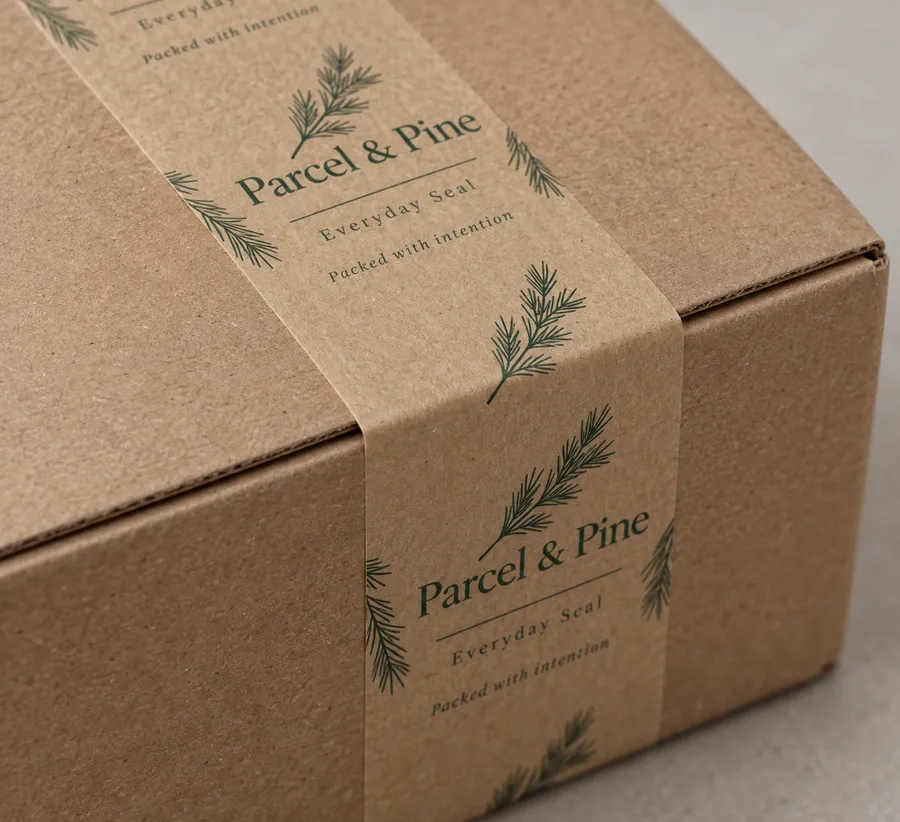
Tape width, face stock, adhesive direction, repeat spacing, edge clearance, and application route affect how the printed seal reads on a carton, mailer, tissue band, or presentation box. Share the real closure job before the artwork is treated as final so the proof reflects the closed package.
A repeated brand mark can run across a corrugated or kraft carton seam while the overlap and cut point remain part of the packing brief.
A shorter printed strip can close a mailer flap or tissue wrap when the first visible repeat and edge clearance matter most.
A quieter printed band can close a gift or presentation box without covering the package artwork that should greet the recipient.
A consistent seal cue can support recurring or seasonal shipments, with each package size reviewed for its own seam, fold, and applied scale.
The natural paper tone or chosen face stock can be part of the visual system. Choose print coverage and finish with the repeat, tear or cut action, edge margins, and package surface in mind.
A useful brief links the visible artwork to the surface and packing method. These inputs give the proof a clear physical context before the final tape direction is approved.
Identify the carton, mailer, tissue, or paperboard surface, the seam or flap being closed, and whether the tape is functional, decorative, or both.
Provide tape width, roll or dispenser format, core requirement if known, hand or bench use, overlap, cut method, and reading direction.
State the repeat, logo or message, required copy, brand colors, safe edge area, and any preference for a matte, gloss, spot, foil, or tactile treatment.
A quote is easier to evaluate when the tape, package surface, repeat, and artwork are described together rather than reduced to a color or logo name.
Provide the carton, mailer, paperboard, tissue, or other surface, plus seam, flap, fold, coating, and the closure job.
State tape width, approximate roll or dispenser format, core requirement if known, hand or bench use, overlap, cut method, and message direction.
Share the repeat, logo or message, required copy, brand colors, safe edge area, and any preference for the natural stock or finish.
Confirm repeat spacing, orientation, package placement, surface appearance, edge clearance, and finish representation before production begins.
Need help with structure, materials, or production planning? See how we manufacture custom packaging.
A sample kit ships for a $44.99 charge credited toward your first order, useful when you need to compare paper character, printed contrast, tear feel, or closure appearance before approving custom tape.
Shipping charge: $44.99. Credited toward your first order.
Request a Sample KitFind clear answers about fit, materials, and ordering below.
Share the application surface, tape width, roll or dispenser format, closure job, quantity, artwork status, repeat direction, required copy, and finish direction. A photo of the package seam or flap helps explain the application.
Those applications can be reviewed when the surface, fold, coating, overlap, and application method are described together. The proof should show where the printed strip sits on the actual package.
State the wordmark or message, repeat interval, reading direction, safe edge area, and the point where the strip will be cut or overlapped. Review the artwork at its applied scale.
Direct printed artwork can be planned around the chosen stock. Matte Lamination, Gloss Lamination, Spot UV, Foil Stamping, and Embossing/Debossing are finish directions subject to artwork, stock, and application review.
The standard minimum is 50 units, and the approved production estimate is from 7 business days after digital proof approval. Free US shipping is included on the standard fulfillment path.
Your final unit price is confirmed in a quote because tape width, roll format, face stock, adhesive direction, print coverage, finish, and quantity define the final specification. Send those inputs for a product-specific quote.
Orders start at 50 units and scale up to 500,000 for bulk runs, with pricing from $0.27 per unit on larger quantities. Standard production is from 7 business days after digital proof approval.
Compare nearby products and request the format that best fits your next run.
Available product
Available product
Available product
Plan the printed seal around the package
Send the tape width, roll information, application surface, closure route, quantity, artwork status, and preferred print or finish direction. Easy Box Packaging can then review the repeat, edge clearance, and handling context as one quote-ready brief.
Add your product details to see a quote summary.