Carton sealing
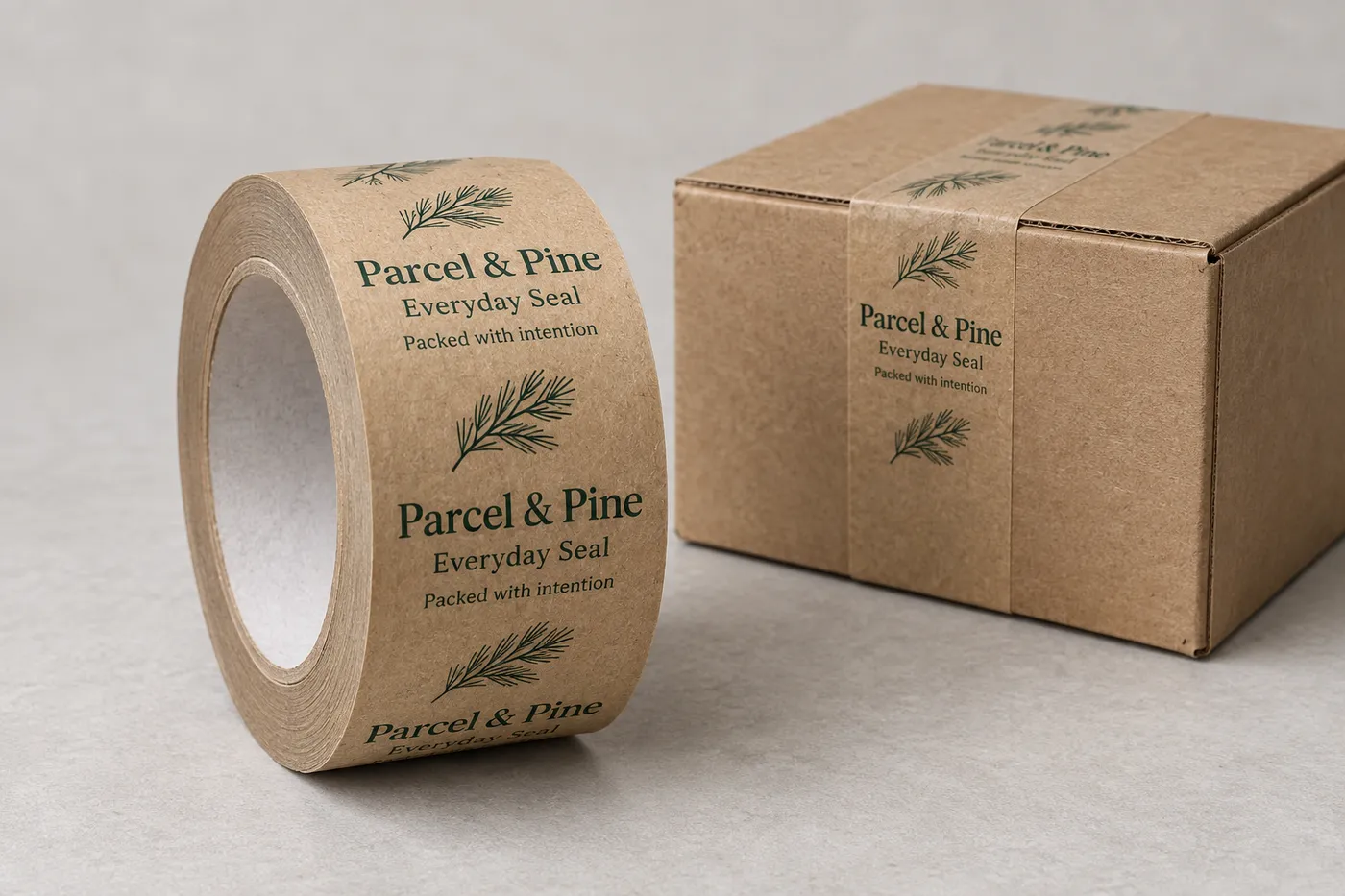
A repeated brand mark can run across a corrugated or kraft carton seam while the overlap and cut point remain part of the packing brief.

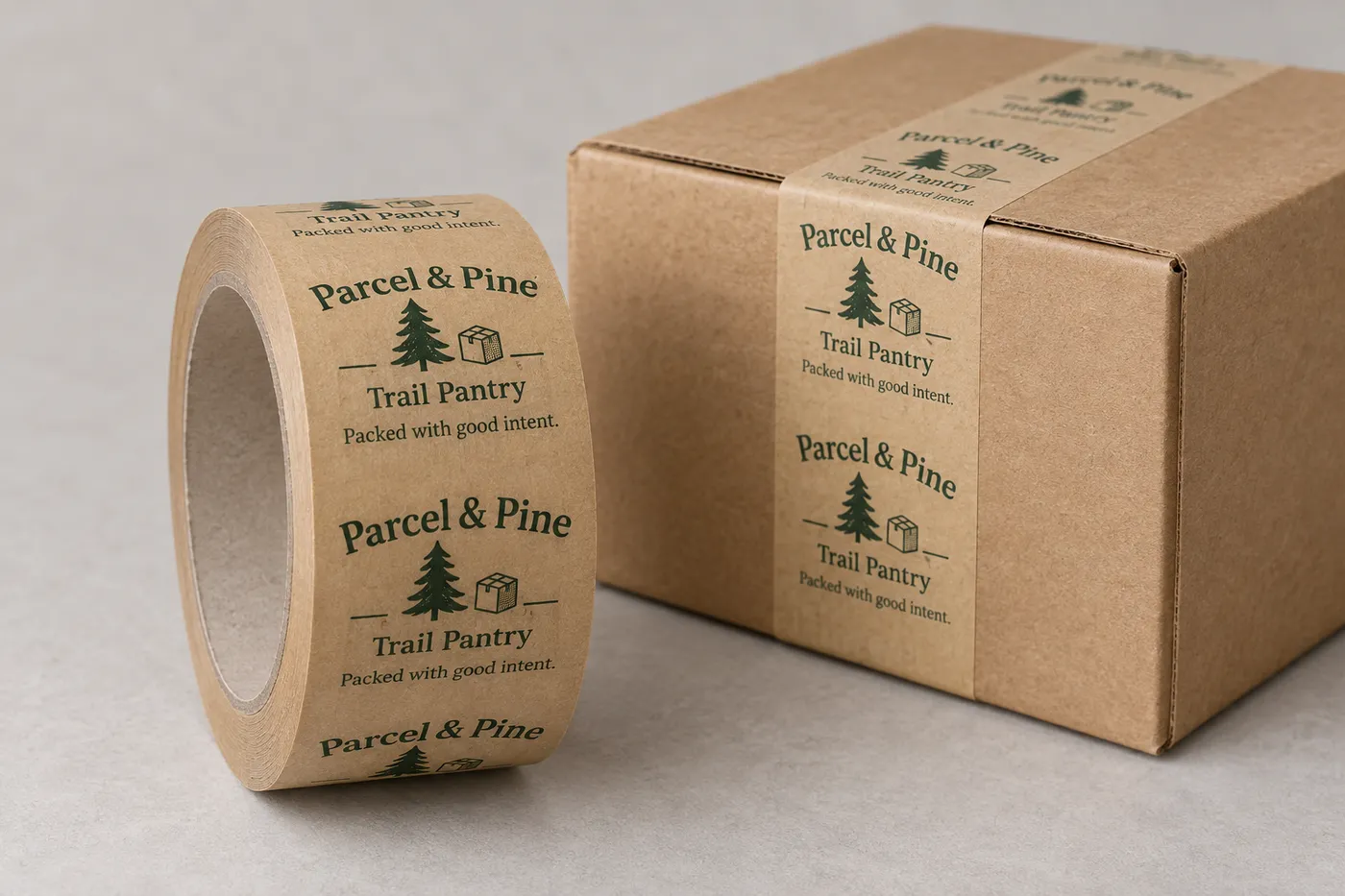
Printed tan packing tape roll beside a kraft carton sealed with a green repeat
Stickers and Tape
Custom packing tape adds a printed strip to carton sealing, mailer closure, or fulfillment identification without changing the box structure. Share the application surface, tape width, roll format, adhesive job, print coverage, and packing route so the repeat artwork and production specification can be reviewed together.
Last updated
Working quote
Product brief
Custom packing tape is a printed roll specified around the package it will touch and the motion used to apply it. It can carry a repeated brand mark across a carton seam, identify a shipment at a packing bench, close tissue around a gift, or add a visible opening cue to a mailer. The artwork is only one part of the brief. Describe whether the strip is expected to hold a flap closed, provide a decorative seal, or simply make an order recognizable, because those jobs lead to different conversations about surface, overlap, and placement.
The standard fulfillment path starts at 50 units. Production is from 7 business days after digital proof approval, so the brief should identify the package surface, tape width, roll direction, application method, and print intent before a proof is prepared. Pricing remains quote-only because width, roll length, adhesive selection, artwork coverage, finish, quantity, and packing route define the final specification.
A printed strip may cross corrugated board, kraft paperboard, a coated mailer panel, tissue, or another described surface. Each one changes how the tape is seen and handled. Send a photo or clear description of the panel, seam, fold, or flap, including whether the surface is rough, smooth, printed, laminated, or interrupted by a score line. If the tape is not the primary closure, say so; the artwork can then be placed for visibility without implying a holding performance that has not been reviewed.
For hand application, explain how an operator tears, cuts, presses, and overlaps the tape. For a dispenser or packing bench, describe the direction of travel and which face of the roll should read first. If the strip closes a presentation carton, the repeat may need a quieter rhythm so the seal supports the opening sequence. If it is used on parcels, note seam placement, label clearance, corner transitions, and the point at which the strip is cut. A practical application description is more useful than a logo file alone.
The visible tape face can carry a wordmark, a short handling note, a repeated pattern, or a panel-based message. State the repeat interval or panel length, reading direction, safe area near both edges, and any mark that must remain upright after the strip wraps around a seam. Keep important information away from the cut and overlap so it is not split between two surfaces. A thin line or small reverse type can disappear when a narrow strip is viewed at a packing station, while a broad, simple mark can remain legible through several applications.
The category finish directions include Matte Lamination, Gloss Lamination, Spot UV, Foil Stamping, and Embossing/Debossing. These are options for review, not automatic requirements for every roll. A selected treatment should be considered with the tape surface, tear or cut action, artwork scale, and the package panel where the print will be seen. Share required copy, brand colors, and whether the natural paper tone or a clear film appearance should remain part of the visual system.
A quote-ready brief includes tape width, approximate roll format or length, core or dispenser needs if known, application surface, closure responsibility, quantity, artwork status, and delivery destination. Add the packed carton size when the tape is designed for one seam or flap. Explain whether one strip, an overlap, or several bands are expected on each package. This tells the reviewer how much of the repeat is likely to be visible and whether direction matters.
Easy Box Packaging includes free US shipping and dieline and proof review on the standard fulfillment path. Quote requests are typically answered the same business day and always within 24 hours. A sample kit carries a $44.99 USD shipping charge credited toward the first order when you need to compare surface character, print contrast, tear feel, or closure appearance in hand. Those service facts do not replace an application review: the proof still needs to show the repeat, reading direction, edge margins, and relationship between the tape and the package.
Before production, review the artwork at the scale and direction in which it will be applied. Confirm the brand field, repeat spacing, logo orientation, required information, edge clearance, and any overlap. If the strip crosses a fold or closes a tuck flap, inspect that transition rather than reviewing only a flat rectangle. The digital proof is also the point to confirm whether the chosen finish belongs on the complete roll or only a selected mark, and whether the print remains readable against the selected tape surface.
Custom packing tape works best when the roll, surface, adhesive job, repeat, print, and application route are treated as one system. Send the width, roll information, surface description, quantity, artwork status, and intended closure to begin a quote-ready review.
Proof points
The digital proof should connect the repeat artwork to the real roll and application direction so print, edge clearance, and package placement can be checked together.
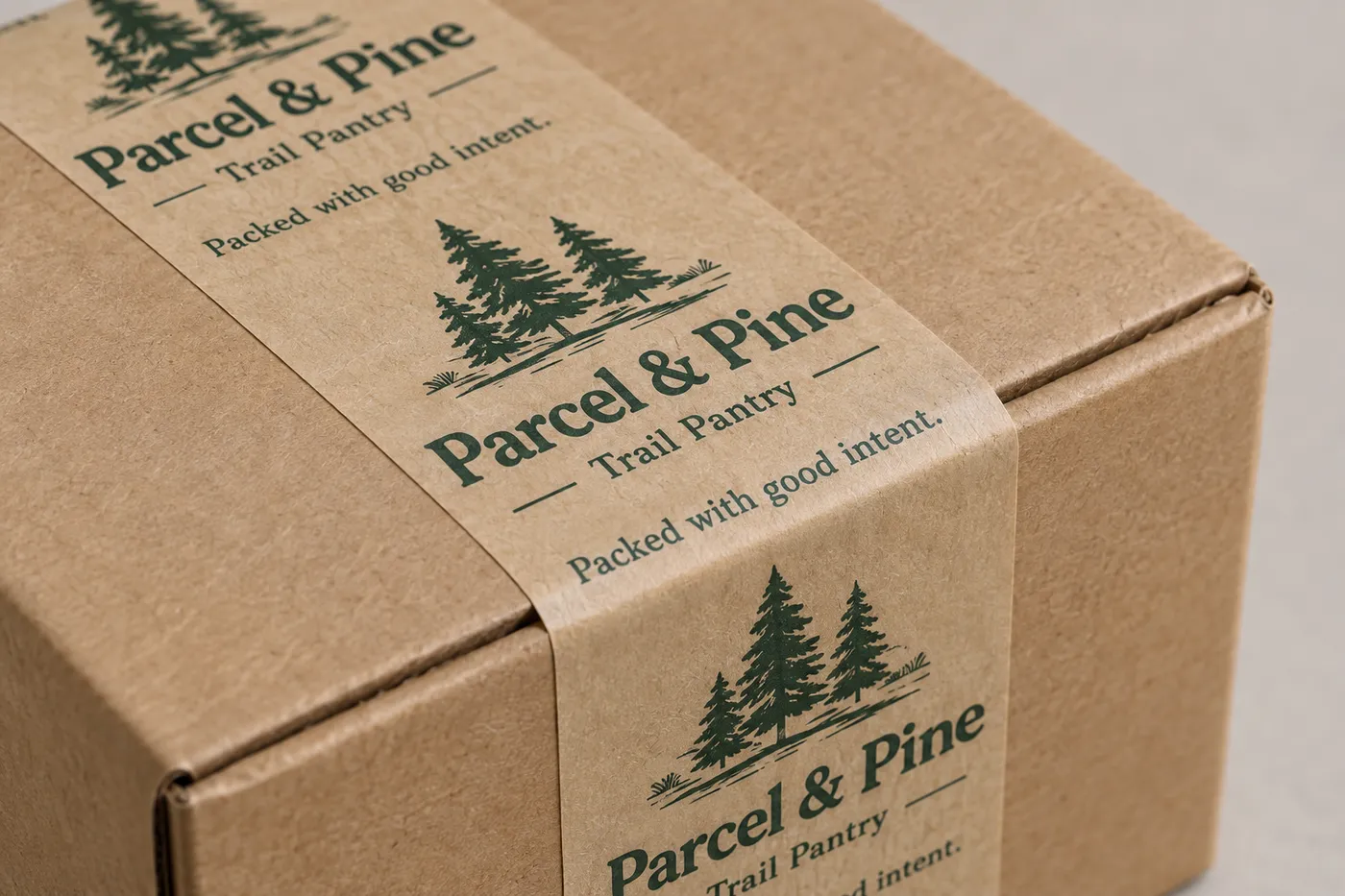
Tape width, repeat spacing, adhesive responsibility, edge clearance, and application direction affect how a branded seal reads on a carton or mailer. Share the surface and closure route before artwork is treated as final so the review reflects the finished package.
A repeated brand mark can run across a corrugated or kraft carton seam while the overlap and cut point remain part of the packing brief.
A printed strip can close a mailer-style package or add a visible opening cue when the tape is planned around the flap and customer-facing panel.
A shorter branded repeat can hold tissue or wrapping paper, with artwork arranged so the first visible mark is intentional rather than hidden in the overlap.
A distinctive print can identify a packed order at the bench while the surface, cut method, and label clearance are reviewed for the actual workflow.
The tape surface can be part of the visual system. Choose artwork coverage and finish with the repeat, tear or cut action, edge margins, and the surface being sealed in mind.
A specific application brief keeps the discussion tied to a workable packing strip instead of a generic roll of branded tape.
Describe the carton, mailer, tissue, or paperboard surface, the seam or flap, and whether the strip is decorative, identifying, or part of closure.
Provide tape width, roll or dispenser format, hand or bench application, overlap, cut method, and the direction the message should read.
State the repeat, customer-facing mark, required copy, edge margins, and the part of the package where the printed tape will be seen.
A quote is easier to evaluate when the tape, application surface, repeat, and artwork are described together rather than reduced to a color or logo name.
Provide the carton, mailer, paperboard, tissue, or other surface, plus seam, flap, fold, coating, and the closure job.
State tape width, approximate roll or dispenser format, hand or bench use, overlap, cut method, and message direction.
Share the repeat, logo or message, required copy, brand colors, edge margins, and preferred surface or finish direction.
Confirm repeat spacing, orientation, package placement, surface appearance, and finish representation before production begins.
Need help with structure, materials, or production planning? See how we manufacture custom packaging.
A sample kit ships for a $44.99 USD charge credited toward your first order, useful when you need to compare surface character, printed contrast, tear feel, or closure appearance before approving custom tape.
Shipping charge: $44.99. Credited toward your first order.
Request a Sample KitFind clear answers about fit, materials, and ordering below.
Share the application surface, tape width, roll or dispenser format, closure job, quantity, artwork status, repeat direction, required copy, and finish direction. A photo of the package seam or flap helps explain the application.
It can be reviewed for a carton seam, kraft paperboard flap, corrugated board, mailer, tissue, or another described surface. The surface, fold, coating, overlap, and application method need to be specified together.
State the wordmark or message, repeat interval, reading direction, edge margins, and the point where the strip will be cut or overlapped. The proof should show the artwork at its applied scale.
Direct printed artwork can be planned around the selected tape surface. Matte Lamination, Gloss Lamination, Spot UV, Foil Stamping, and Embossing/Debossing are finish directions subject to artwork and application review.
The standard minimum is 50 units, and the approved production estimate is from 7 business days after digital proof approval. Free US shipping is included on the standard fulfillment path.
Your final unit price is confirmed in a quote because the tape width, roll format, adhesive job, print coverage, finish, and quantity define the final specification. Send those inputs for a product-specific quote.
Orders start at 50 units and scale up to 500,000 for bulk runs, with pricing from $0.29 per unit on larger quantities. Standard production is from 7 business days after digital proof approval.
Compare nearby products and request the format that best fits your next run.
Available product
Available product
Available product
Plan the printed strip around the package
Send the tape width, roll information, application surface, closure route, quantity, artwork status, and preferred print or finish direction. Easy Box Packaging can then review the repeat, edge clearance, and handling context as one quote-ready brief.
Add your product details to see a quote summary.