Bakery counter portions
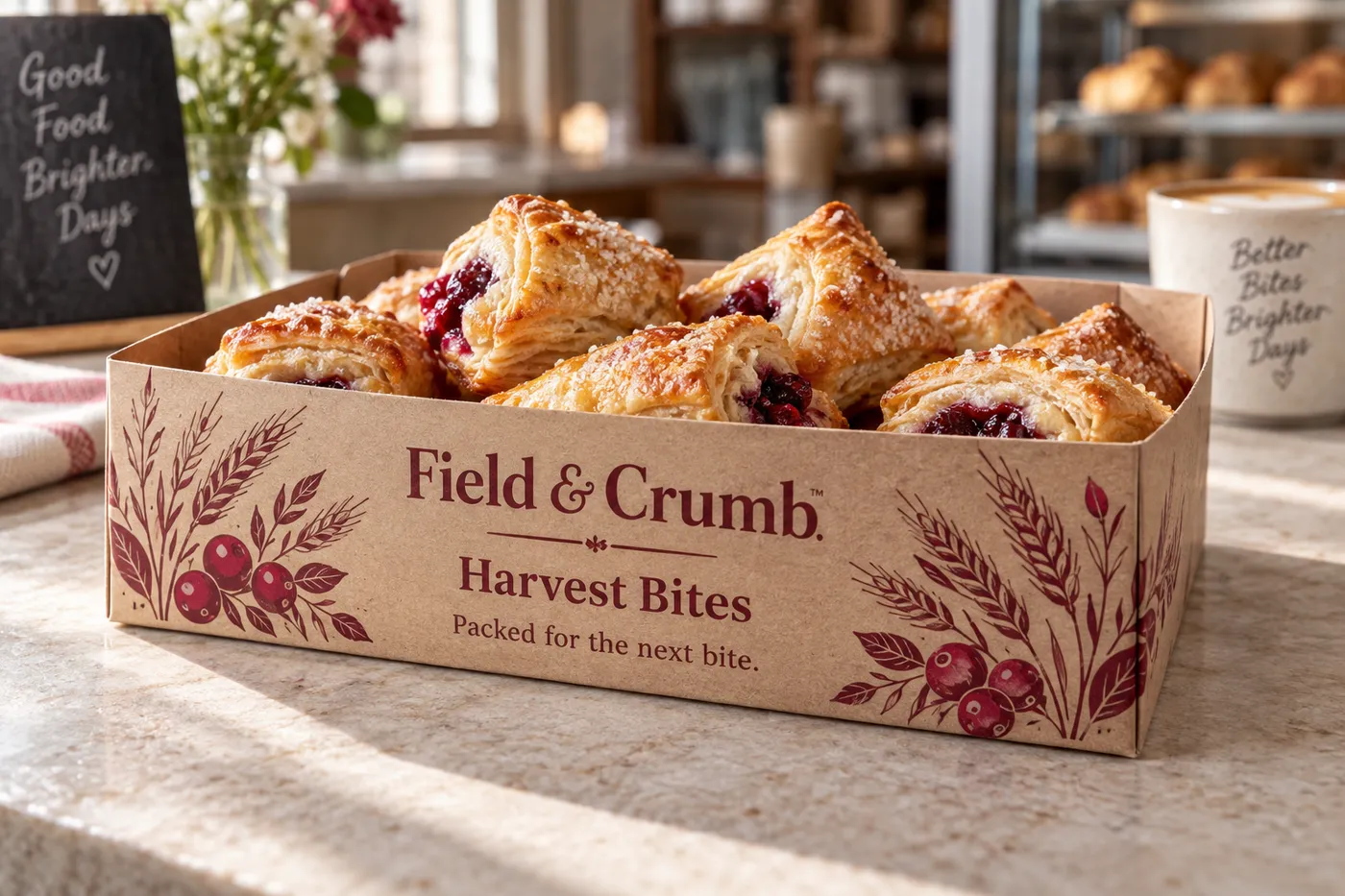
A pastry, cookie group, or small baked item can be presented in an open tray sized around toppings, height, and the handoff at the counter.

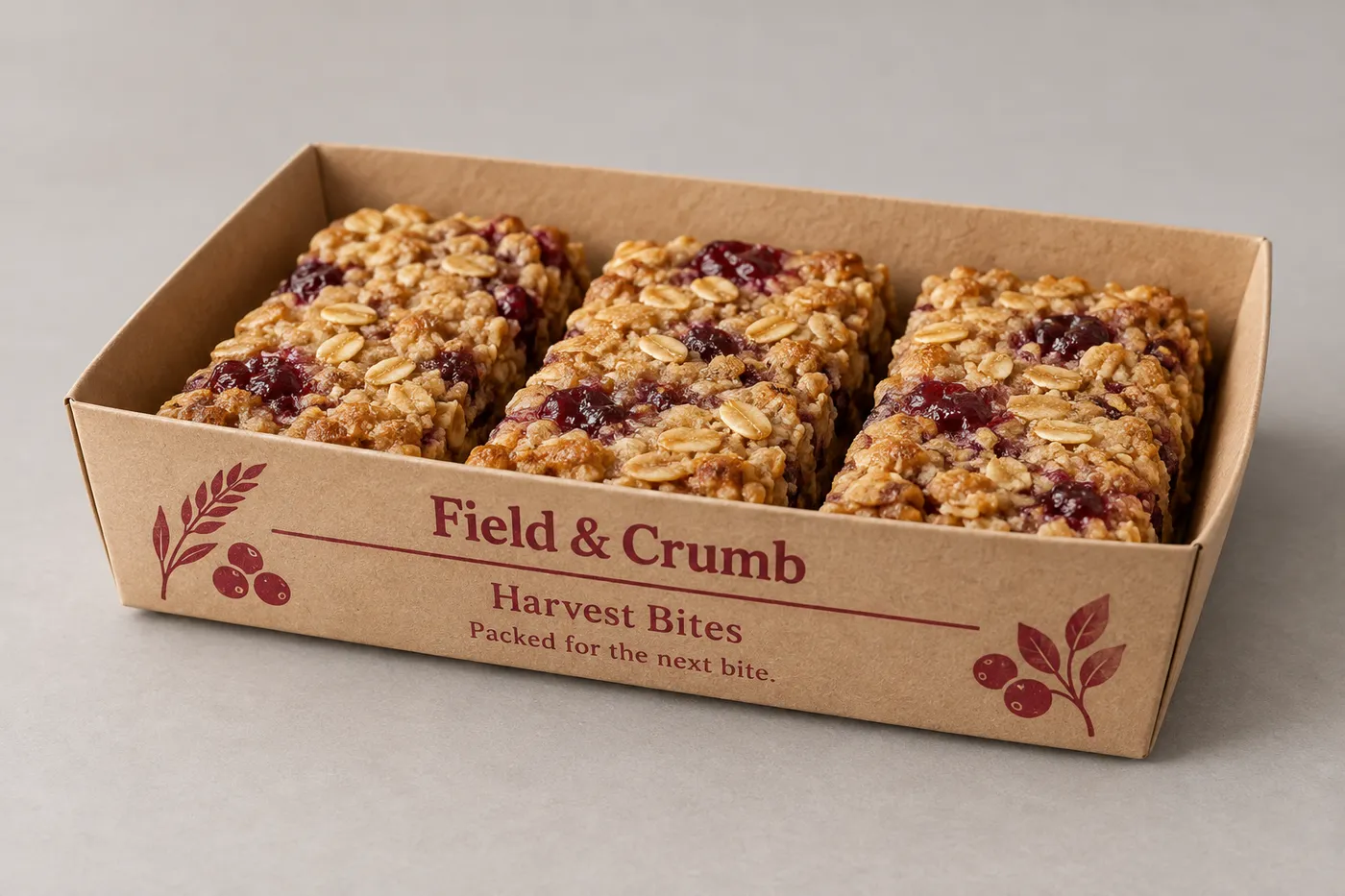
Open kraft paper food tray with printed Harvest Bites mockup and three oat bars
Food Boxes
Custom paper food trays give bakeries, snack brands, and takeaway counters an open-top way to present and carry prepared food. The footprint, wall height, board direction, grease or moisture conditions, print panels, and stacking route are reviewed around the packed item. Share the food dimensions, fill weight, temperature, contact needs, artwork, and delivery route so the tray can be specified without assuming a stock size or barrier.
Last updated
Working quote
Product brief
Custom paper food trays keep the packed item visible while giving a counter or delivery handoff a defined footprint. An open top can suit pastries, fries, sandwiches, snack portions, or a small sampler when the customer benefits from seeing the food before lifting it. The useful tray is not chosen from a menu label alone. Its length, width, wall height, corner treatment, base support, and print area should follow the food as it is actually portioned and handed over.
Start with the packed portion, not an assumed small, medium, or large template. Record the food's length, width, and height at the fullest points, then add the fill weight and whether the item is placed flat, layered, or side by side. Note a bun crown, pastry topping, fry pile, sauce cup, skewer, or other projection that changes the occupied space. If the tray goes into a carrier bag or courier carton, include the clearances needed for that next package.
Board selection should follow the food's condition and the contact surface that needs review. Kraft Paperboard can support a natural printed appearance, while SBS Paperboard offers a smoother face for fine artwork and menu information. Grease-Resistant Kraft Paper is a category direction to discuss for bakery or takeaway items where oil exposure matters. These are material options for specification, not a blanket claim that every finished tray is approved for every food or temperature. Confirm food-contact suitability, any lining, and the market requirements for the actual recipe before production.
Warm fries, glazed pastries, a chilled dessert, and a dry cookie assortment put different demands on a tray. Steam may soften an untreated surface; a wet sauce cup can create a local moisture point; a heavy portion can spread load across the base. The review should cover the food temperature at packing, expected hold time, grease or moisture exposure, and whether the tray is used immediately at a counter or travels across a delivery route.
A shallow tray can make a single pastry easy to reach, while a deeper wall can contain a taller sandwich or a loose snack portion. Side walls can also give a stack a cleaner edge, but the height must leave room for the food to be seen and removed. If multiple trays are nested, check the rim, base clearance, and print orientation together. If the tray is placed in a paper bag, confirm the assembled footprint and any corner that could catch during loading.
For delivery, the tray may need a carrier, sleeve, or outer carton rather than a claim of stand-alone shipping protection. The tray's job can be to separate food from the outer pack, keep a portion aligned, or present a branded surface when the bag opens. A quote-ready brief names that route, the number of portions per tray, and whether the customer eats directly from it. That information is more useful than a generic tray size.
The rim, front wall, base, and side panels can carry a short brand mark, flavor name, allergen note, reheating instruction, or service message where the finished orientation keeps it readable. Map the artwork on the assembled tray so a logo is not hidden under a fold or lost inside a carrier. Matte Lamination or Gloss Lamination can change the surface character, while Spot UV, Foil Stamping, or Embossing/Debossing can be considered for selected artwork subject to the food-contact and production review.
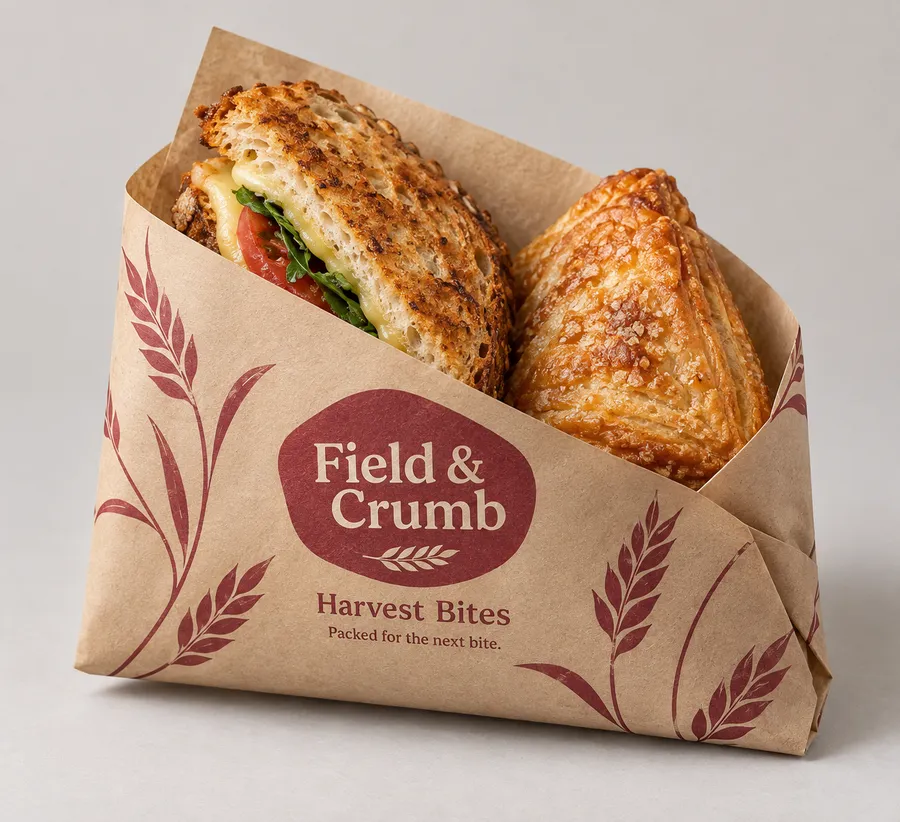
The images illustrate how print can sit on the package. It demonstrates a possible print direction only; production artwork should use the approved brand, food information, and required regulatory text. Keep critical copy away from corners, folds, and the direct food-contact area unless the final construction confirms that placement.
A useful proof should show the open top, base footprint, wall height, corner geometry, stacking or carrier relationship, printed panels, and the position of the packed food. Check whether the portion can be lifted without crushing a topping or catching on a wall. Confirm the board direction, any lining or barrier discussion, the print coverage, and the finish representation. The digital proof is where an assumed tray becomes a defined specification.
The standard fulfillment path starts at 50 units, and production is from 7 business days after digital proof approval. Free US shipping and dieline and proof review are included at no extra charge. A sample kit carries a $44.99 USD shipping charge credited toward your first order if you want to compare board feel, edge definition, print coverage, and the way an open tray nests in a carrier. Pricing remains quote-only because the footprint, wall build, material direction, print, food conditions, and quantity change the specification.
Send the packed length, width, height, fill weight, temperature at packing, grease or moisture exposure, portion count, carrier route, artwork status, print coverage, finish direction, and delivery destination. Quote requests are typically answered the same business day and always within 24 hours. After review, approve the tray only when the structure, food position, printed message, and handling route agree.
A custom paper food tray works when its open presentation and practical containment are designed as one decision. Starting with the actual food gives the board, geometry, print surface, and proof review a clear purpose without inventing a barrier claim, stock dimension, or generic price.
Proof points
The proof should show the tray assembled with the packed portion and its intended route. Compare the open top, base, wall height, print panels, contact discussion, and carrier relationship with the information supplied for the quote.
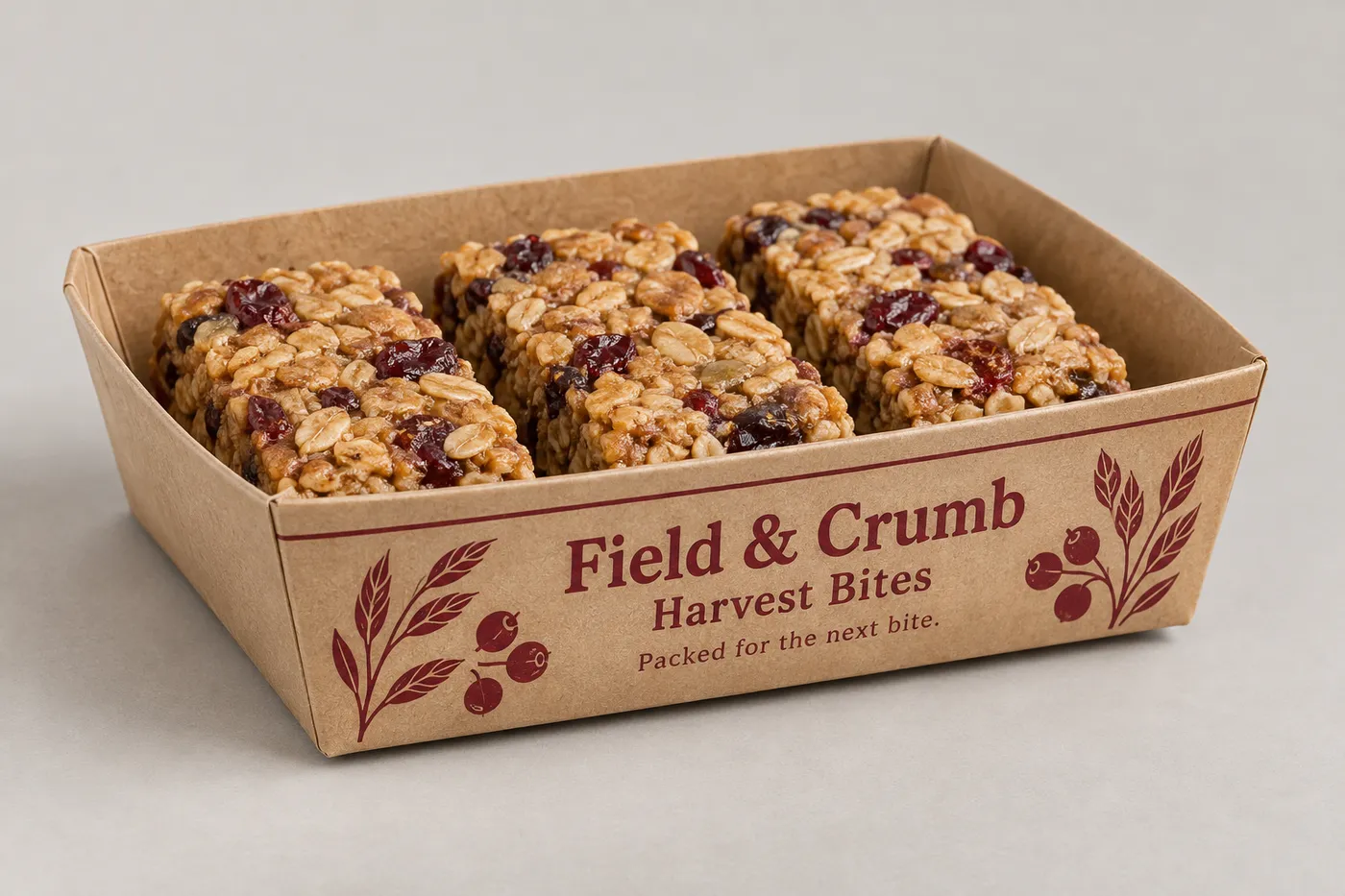
A tray can make a pastry, snack portion, or takeaway item visible and easy to lift while keeping a defined footprint in a bag or carrier. Start with the packed food, its temperature and moisture conditions, the desired wall height, and the handoff route so the structure is reviewed around a real service task.
A pastry, cookie group, or small baked item can be presented in an open tray sized around toppings, height, and the handoff at the counter.
A defined base and side wall can contain a snack portion while a bag or sleeve provides the outer carrying route.
The footprint can be reviewed around a sandwich, wrap, or prepared item with room for the food to be seen and lifted.
A shallow tray can arrange several portions when spacing, nesting, and the order of presentation are known before sizing.
Map artwork on the assembled tray so the front wall, rim, base, and side panels stay readable around the food. Keep critical copy away from folds and the direct food-contact area unless the final construction confirms that placement.
The base, rim, side walls, and carrier relationship are considered together. Depending on the food geometry and route, the tray may be nested, placed in a bag, or used with a sleeve or outer carton after the packed portion and contact requirements are reviewed.
An open top can keep the first view of a pastry, sandwich, fries, or snack portion clear while the wall contains the base.
Length, width, height, fill weight, projections, and portion count set the useful base rather than a generic stock size.
A bag, sleeve, or outer carton can be checked around the tray so loading, nesting, and delivery handling are part of the specification.
A useful quote starts with the portion and the service route. The following information turns the food description into a tray structure that can be checked before production.
Provide packed length, width, height, portion count, fill weight, orientation, toppings, projections, and any sauce cup or accessory.
State temperature at packing, grease or moisture exposure, hold time, direct-contact needs, and any required lining or barrier discussion.
Show whether the tray is used at a counter, placed in a paper bag, nested, sleeved, or carried inside an outer carton.
Share any preference for Kraft Paperboard, SBS Paperboard, Grease-Resistant Kraft Paper, laminations, Spot UV, foil, or embossing.
Check the open top, base, wall height, food position, printed panels, contact area, nesting, and carrier relationship in the digital proof.
Need help with structure, materials, or production planning? See how we manufacture custom packaging.
A sample kit carries a $44.99 USD shipping charge credited toward your first order, useful when you need to compare paper feel, edge definition, print coverage, nesting, and carrier fit before approving a custom food tray.
Shipping charge: $44.99. Credited toward your first order.
Request a Sample KitFind clear answers about fit, materials, and ordering below.
They are open-top paper or paperboard trays for presenting and carrying portions such as pastries, fries, sandwiches, snacks, or small samplers. The base, walls, and footprint are reviewed around the packed food and the next handling step rather than one fixed stock size.
Send the packed length, width, and height at the fullest points, fill weight, portion count, orientation, toppings or projections, sauce cups, and any carrier or bag that will surround the tray. Include the food temperature and hold time as well.
That depends on the food, temperature, hold time, contact surface, and selected construction. Grease-Resistant Kraft Paper is a category direction to discuss, but food-contact suitability, lining, and market requirements must be confirmed for the actual recipe before production.
Often the route includes a paper bag, sleeve, carrier, or outer carton, especially for delivery. The tray can be designed to nest, separate a portion, or present the brand inside that next package; it should not be assumed to provide stand-alone shipping protection.
Matte Lamination, Gloss Lamination, Spot UV, Foil Stamping, and Embossing/Debossing can be considered for selected panels and artwork. Placement is reviewed around folds, rims, corners, and any direct food-contact area.
The standard fulfillment path starts at 50 units. Production begins from 7 business days after digital proof approval, with free US shipping and dieline and proof review at no extra charge. Your final unit price is confirmed in a quote because tray geometry, food conditions, materials, artwork, finish, and quantity determine the specification.
Orders start at 50 units and scale up to 500,000 for bulk runs, with pricing from $0.19 per unit on larger quantities. Standard production is from 7 business days after digital proof approval.
Compare nearby products and request the format that best fits your next run.
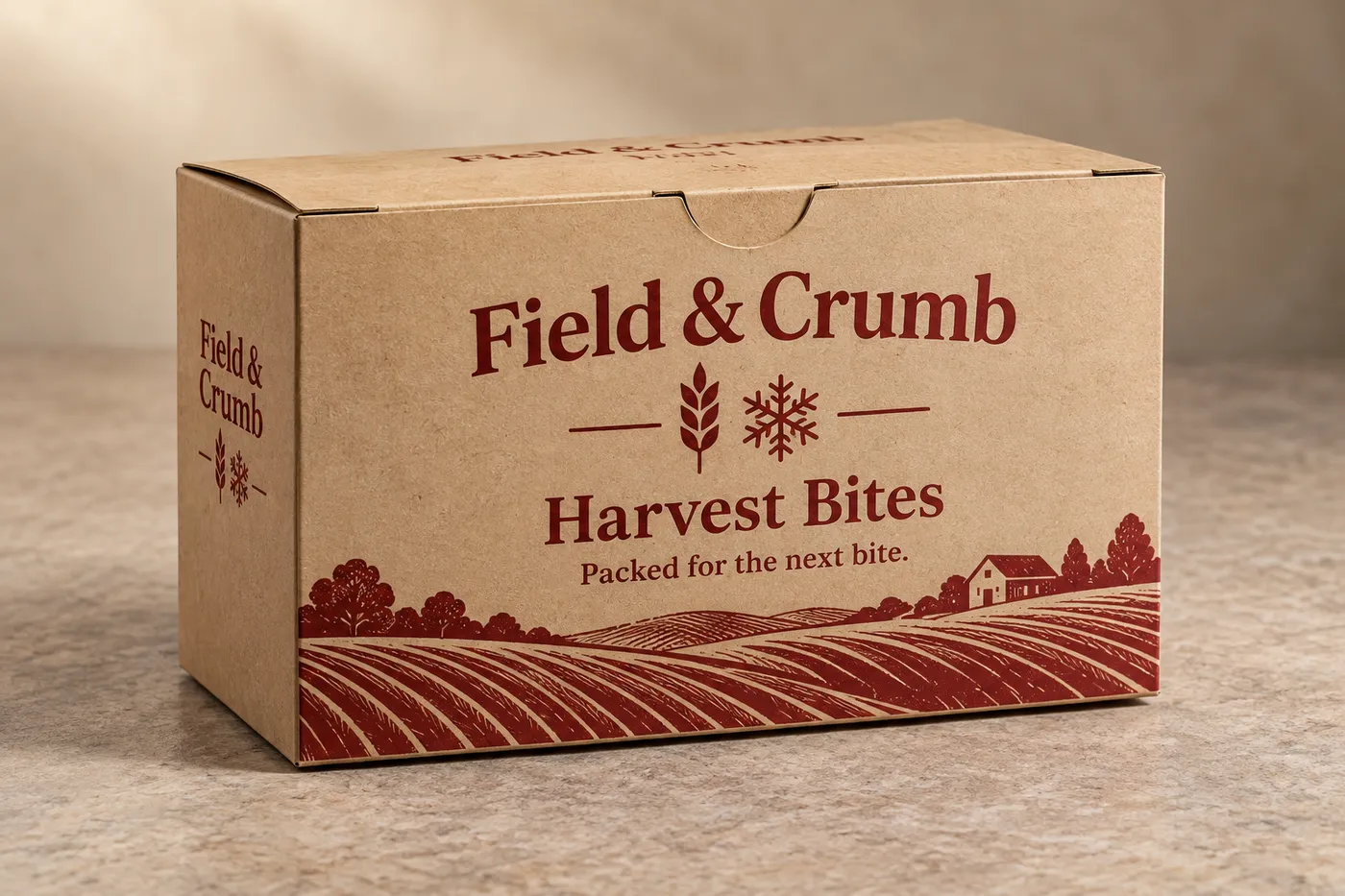
Available product
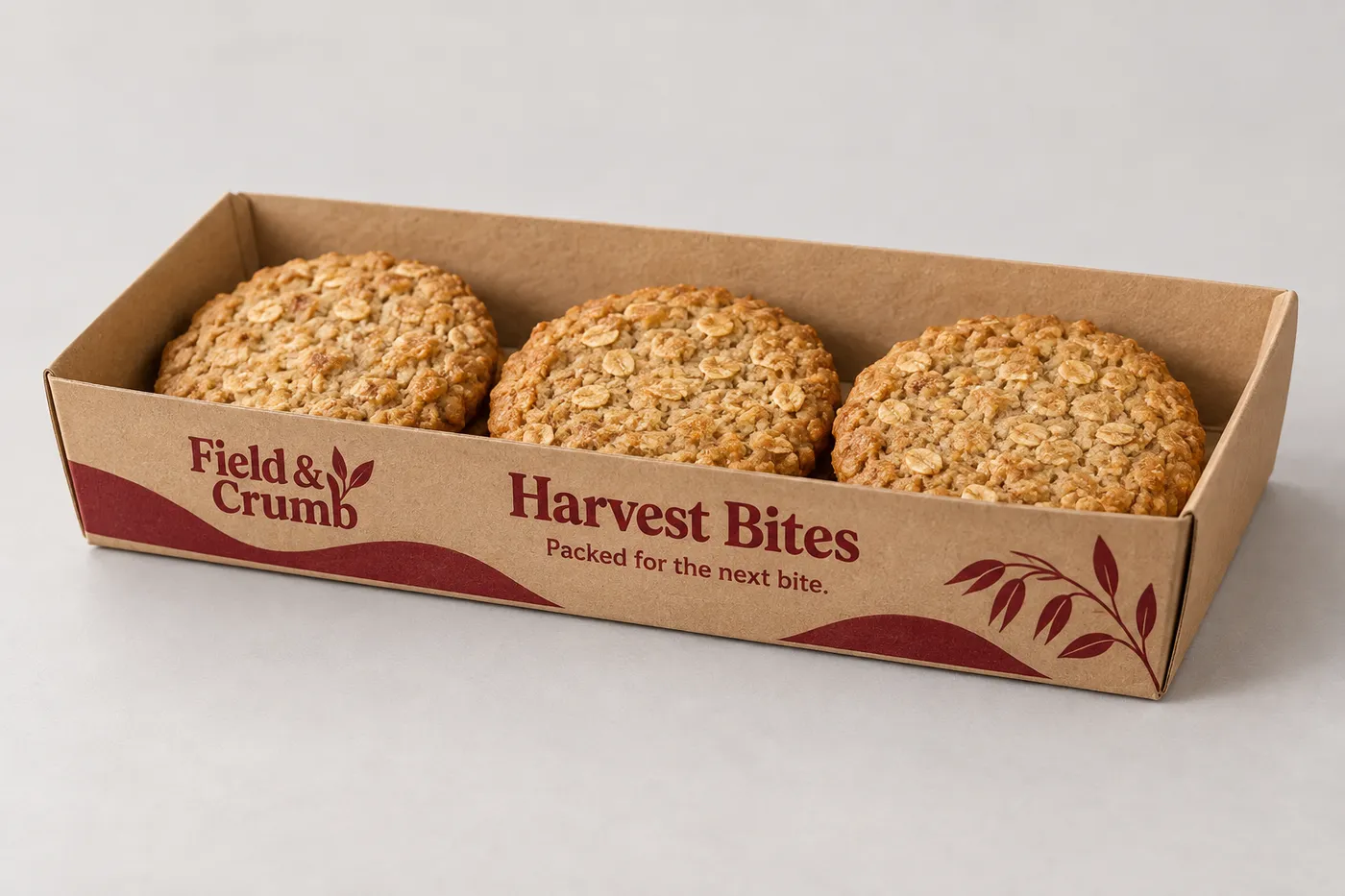
Available product
Available product
Available product
Plan the serving route
Send the packed dimensions, food conditions, portion count, carrier route, material direction, artwork status, and finish choice. Easy Box Packaging can then review the base, walls, print panels, and handling relationship as one quote-ready specification.
Add your product details to see a quote summary.