Client and partner gifts
Present a branded item, note, and accessory as one considered handoff when the recipient relationship is part of the promotion.

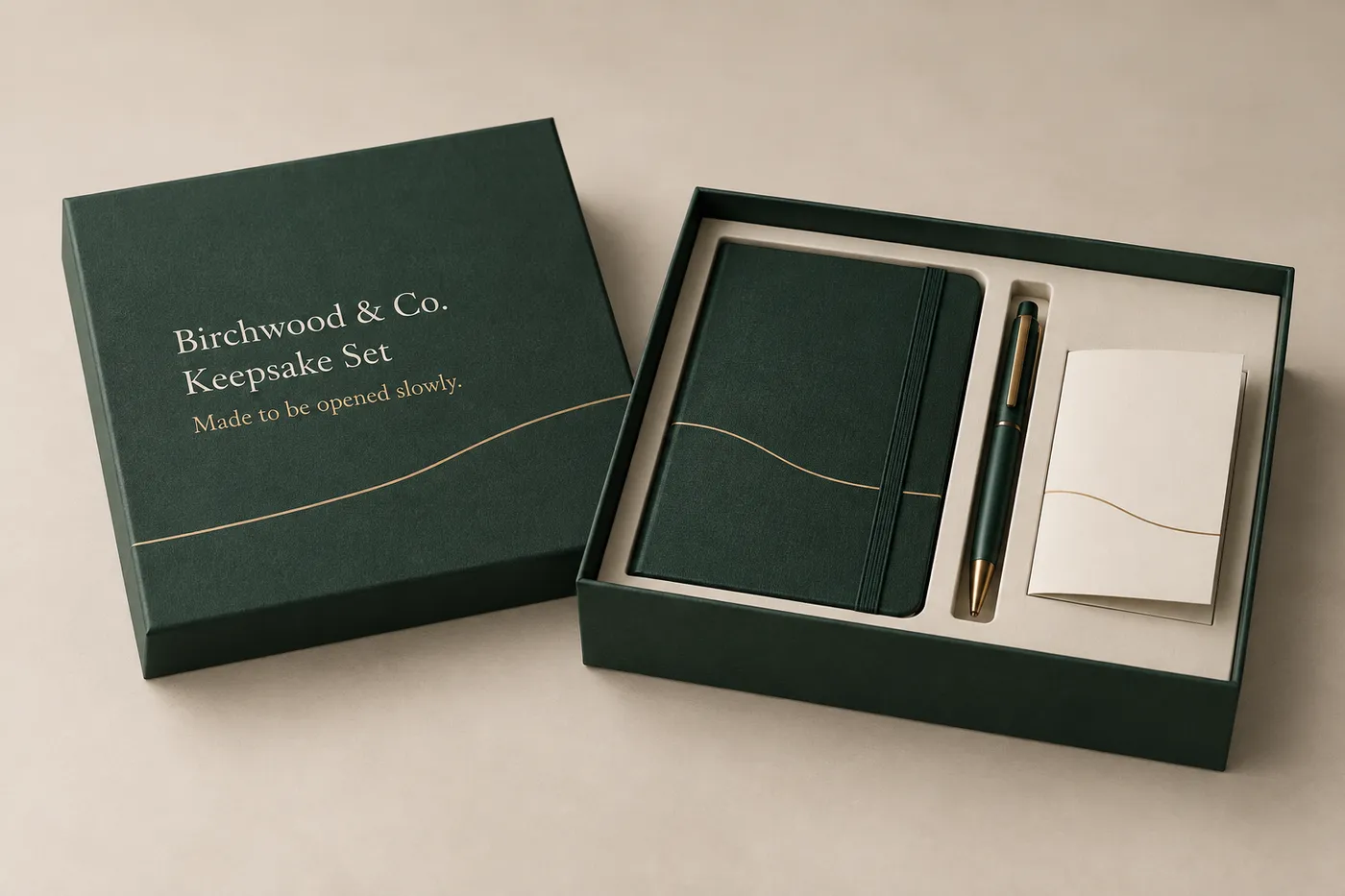
Open rigid promotion gift box with a branded notebook, pen, and insert card in a fitted paperboard tray
Gift Boxes
Custom promotion gift boxes help brands package a giveaway or small campaign kit as one deliberate handoff. Choose a folding carton or rigid two-piece structure, plan the interior around the item mix, and map logos, messaging, and finishes to the panels recipients see. Share packed dimensions and the promotion context so the quote matches the actual presentation.
Last updated
Working quote
Product brief
A promotional gift box should make the contents and the reason for the handoff clear before the recipient removes every item. Start by listing the campaign contents, the recipient-facing message, and the order in which the pieces should appear. A single branded item may need a simple cradle or clean reveal, while a small campaign kit may need separated positions for a notebook, sample, card, or accessory. The box brief should describe the actual set rather than rely on a stock box name.
The distribution route also affects the presentation. A box handed across an event counter may prioritize a quick first reveal, while a client or employee gift may need a more deliberate lift-off-lid sequence. Tell us whether the promotion is being packed by hand, shipped as a completed kit, or presented directly. Those details help connect the outer structure, interior support, artwork panels, and opening direction.
Send the packed length, width, and height of every item that will occupy the box. Include the widest point, unusual corners, handles, closures, sleeves, and any accessory that sits above the main product. State the number of items, their orientation, and which face should remain visible when the lid or flap opens. A top-down photograph or simple placement sketch is useful when the kit contains different shapes or a card that sits above the products.
Measure the contents in the state in which they will be packed, not only the dimensions of an empty pouch, bottle, or accessory. Include tissue, a message card, a folded insert, or a small sleeve if those pieces are part of the intended handoff. The assembled dimensions, interior arrangement, and selected structure guide the dieline review. A new item mix or materially different size needs its own specification review even when the general gift-box style remains familiar.
A folding carton can suit a promotion that needs flat storage before assembly, clear printed panels, or a lighter handoff format. A fitted paperboard tray or integrated folded support can organize the contents once the carton is assembled. A rigid two-piece box can suit a campaign where a separate lid and base create a more deliberate opening sequence and the box remains part of the presentation after the gift is received.
The choice should follow the contents, storage plan, fulfillment route, and desired reveal. Neither construction is a universal default. The two formats use different dieline approaches, and the artwork needs to be mapped after the structure is chosen. If the promotion has several pack sizes, each size normally needs a specification prepared around its own dimensions; the same box style does not mean one physical dieline covers every format.
The interior support depends on the geometry, weight, fragility, orientation, outer structure, presentation goal, and packing method of the promotion kit. A fitted paperboard tray, divider, raised platform, or integrated fold can be considered after those variables are known. A flat card may need a different position from a tall item, and a mixed kit may need a visual hierarchy so the first message is not hidden behind the contents.
Describe what should happen when the box opens. The recipient may see a brand message first, lift one featured item before the accessories, or remove several pieces together. The internal layout can be developed around that sequence, while the final clearance is checked against the actual packed set. This prevents a generic compartment plan from deciding the presentation before the promotional contents have been reviewed.
SBS Paperboard can be considered for a smooth printed face across a logo panel, campaign message, and supporting copy. Kraft Paperboard can suit a natural paper direction when its base tone works with the promotion artwork. An FSC-certified paper option is available as a material choice. The board direction should be considered with the folds, lid edge, tray, and amount of information that must stay readable on the assembled box.
Foil Stamping can highlight selected lettering or linework, subject to artwork review. Embossing/Debossing can give a chosen mark a tactile change, while Spot UV can distinguish selected artwork from its surrounding panel. Matte Lamination and Gloss Lamination offer different surface directions for the printed gift. Map these treatments around folds, cut edges, closures, and the first-view panel so the digital proof represents the assembled package rather than only a flat artwork file.
The standard fulfillment path starts at 50 units. Production is from 7 business days after digital proof approval, and Free US shipping applies on that path. A sample kit carries a $44.99 shipping charge credited toward your first order when you want to compare the paperboard, printed surface, tray concept, or finish direction in hand. Pricing remains quote-only because the contents, packed dimensions, structure, materials, print coverage, finish, and quantity shape each specification.
For a useful quote, send the packed dimensions, item list, quantity, arrangement sketch or photograph, preferred box structure, desired opening sequence, artwork status, print coverage, finish direction, and delivery destination. The dieline and proof review is included on every order at no extra charge. Before approval, check the lid or flap orientation, interior positions, first-view message, readable panels, finish callouts, and the way the completed kit will be packed.
Custom promotion gift boxes work best when the promotional idea and the physical arrangement are developed together. That gives the packaging team enough information to discuss the construction and printed presentation around the real contents instead of forcing a campaign into a generic gift-box format.
Proof points
The proof should let the buyer review the assembled promotional handoff, not only a flat artwork file. Check the relationship between the structure, interior support, first-view message, printed panels, and selected finish before approval.
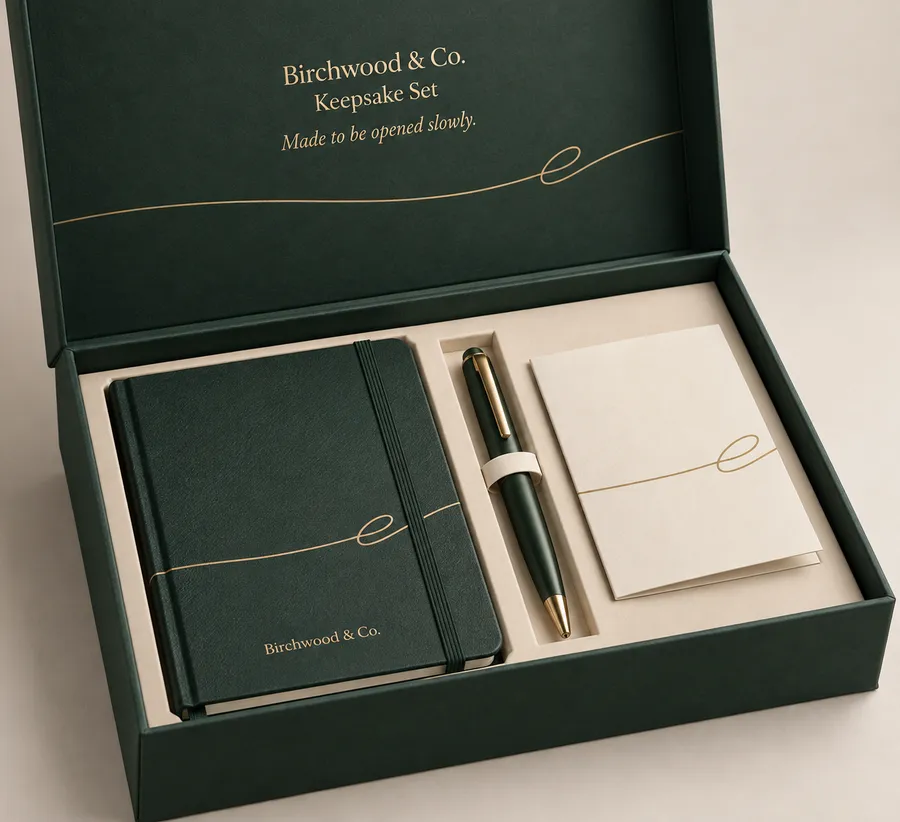
A promotion gift box turns a branded giveaway into a coordinated handoff when the contents, interior positions, and recipient-facing message are planned together. A single item can sit in a focused reveal, while a campaign kit can use a tray or divided layout to separate the featured product, accessories, and printed card without losing the story of the promotion.
Present a branded item, note, and accessory as one considered handoff when the recipient relationship is part of the promotion.
Organize onboarding pieces around a first-view message and a repeatable packing arrangement for a planned internal campaign.
Use a printed folding carton or rigid gift box to frame a product sample, promotional item, and campaign message at an event or launch.
Change the printed story and finish direction around a seasonal promotion while keeping the item arrangement clear for the recipient.
The printed surface can carry the campaign name, logo, message, and supporting copy across the panels recipients see first. Choose materials and finishes around the artwork, folds, lid edge, closure, tray, and readable areas, with placement confirmed during the proof review.
The interior layout follows the real promotion kit rather than a generic item count. The support concept is reviewed around product geometry, weight, orientation, fragility, outer structure, presentation goal, and packing method before the final clearance is confirmed.
A notebook, sample, accessory, and message card can create different positions from a single larger giveaway item or a set of matching products.
The tray, lid, and printed inside panel can be arranged so the campaign message or featured item appears in the intended order when the box opens.
Hand packing, completed-kit shipping, and direct event presentation can each change how the contents are placed and supported inside the box.
A useful quote starts with the completed promotion kit and the job the box needs to do. These steps move from the physical contents to an approved structure and artwork plan before production.
Provide the item list, packed dimensions, widest points, orientation, and every card, sleeve, tissue, or accessory that occupies space.
Explain whether the box is handed over at an event, shipped as a completed kit, or opened as a client or employee gift.
Share a preference for a folding carton or rigid two-piece box, plus the interior support and opening sequence you want to explore.
Provide the campaign message, logo placement, print coverage, material preference, finish direction, and current artwork status.
Check the assembled panels, opening direction, interior positions, readable message areas, and finish representation.
Need help with structure, materials, or production planning? See how we manufacture custom packaging.
A sample kit carries a $44.99 shipping charge credited toward your first order, useful when you want to compare paperboard feel, printed surface, tray direction, and finish before approving a custom promotion gift box.
Shipping charge: $44.99. Credited toward your first order.
Request a Sample KitFind clear answers about fit, materials, and ordering below.
Yes. The box can be scoped around a single branded item or a compact campaign kit with accessories, a card, or a sleeve. Share the packed dimensions and intended arrangement so the interior support is considered around the actual contents rather than a generic item count.
A folding carton can suit flat storage and a lighter assembled handoff, while a rigid two-piece box can suit a separate lid-and-base opening sequence. The contents, storage plan, fulfillment route, and desired reveal should decide the structure before artwork is mapped.
Send the item list, packed length, width, and height, widest points, quantity, interior arrangement, preferred structure, artwork status, print coverage, finish direction, and delivery destination. Add a photograph or placement sketch when the campaign includes different shapes or a message card.
Inside-lid or interior-panel artwork can be considered when it supports the opening sequence and remains readable beside the tray or contents. Include the message in the artwork brief so the proof can show its position with the assembled structure, lid edge, and interior support.
The standard path starts at 50 units, with production from 7 business days after digital proof approval. Timing is tied to the approved specification and proof, so packed contents, structure, artwork, finish, and quantity should be confirmed before approval.
Orders start at 50 units and scale up to 500,000 for bulk runs, with pricing from $0.21 per unit on larger quantities. Standard production is from 7 business days after digital proof approval.
Common uses include client and partner gifts, employee welcome kits, event and launch giveaways, and seasonal branded campaigns. The final specification is set by the packed product and how it will be handled.
Compare nearby products and request the format that best fits your next run.
Available product
Available product
Available product
Available product
Plan the promotional handoff
Send the packed item dimensions, campaign contents, preferred box structure, opening sequence, artwork status, and finish direction. Easy Box Packaging can then review the interior support and printed presentation around the actual promotion kit.
Add your product details to see a quote summary.